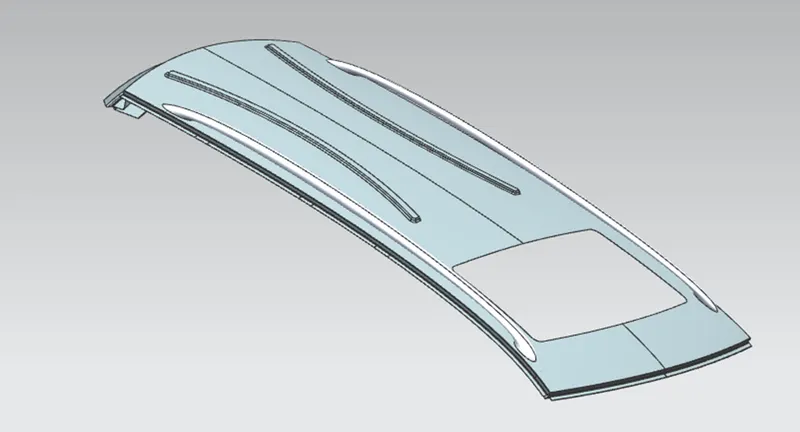
Roof Design
ROOF DESIGN
OBJECTIVES:
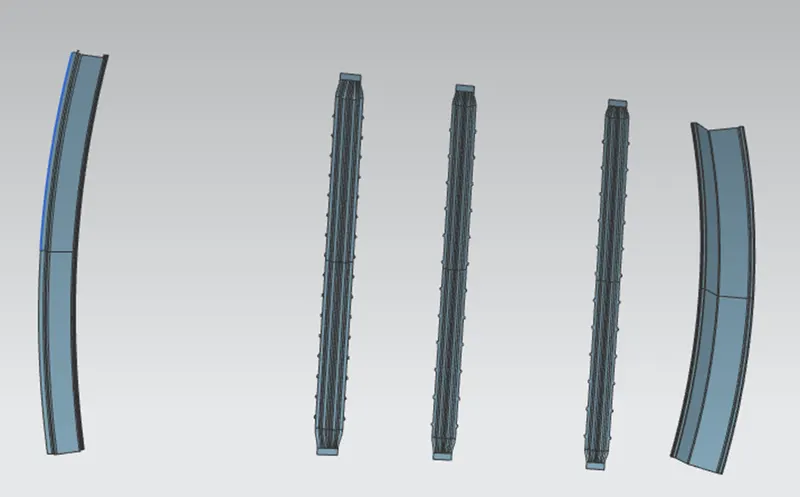
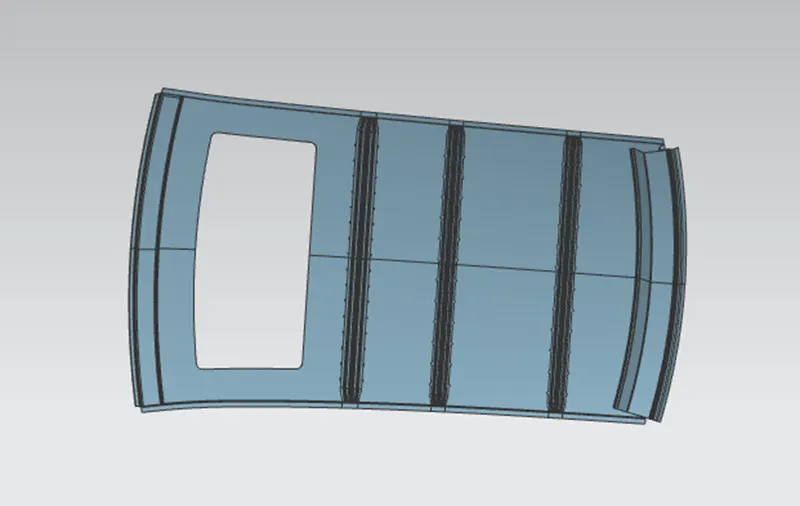
- To Design car roof with essential flanges and reinforcements like ditch area, front roof rail, center roof rail, bow roofs and the rear roof rail for the given styling surface.
- Perform curvature study on the roof and perform the calculations for the heat distortion and snow load criteria to determine whether the bow roofs are at the correct positions.
- Perform the draft analysis for each reinforcements.
ROOF
Roof is the portion of an automobile that sits above the passenger compartment, protecting the vehicle occupants from sun, rain, snow and other external elements.
TYPES OF ROOF
- Hardtops
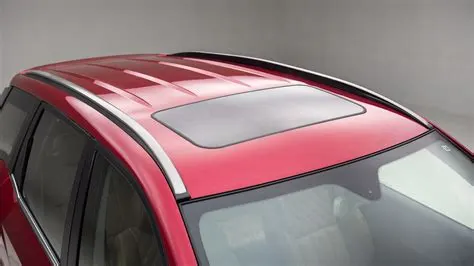
A hardtop is a rigid form of automobile roof, those which are constructed for modern cars from metal.
- Sunroofs
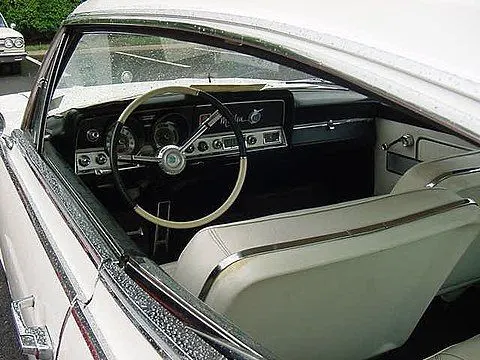
A sunroof is a movable panel that opens to uncover a window in an automobile roof, allowing light and fresh air to enter the passenger compartment. Sunroofs can be manually operated or motor driven and are available in many shapes, sizes and styles.
- Convertible roofs
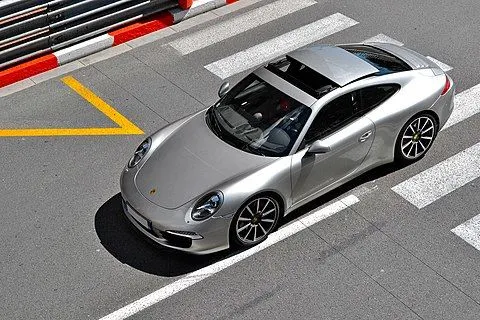
A convertible roofs are made in such a way a car that vcan be driven with or without a roof in place. The method of rfetracting and storing the roof varies with the manufacturers.
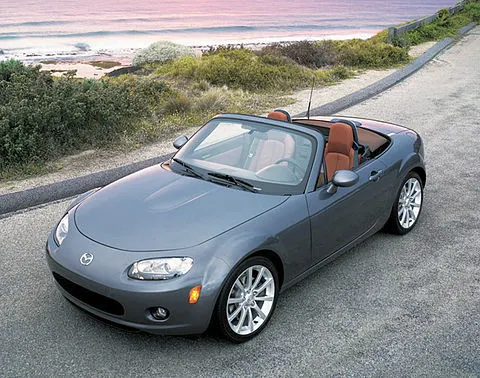
- T-tops
A T-top is an automobile roof with a removable panel on each side of a rigid bar running from the center of front roof rail to the rear roof rail.
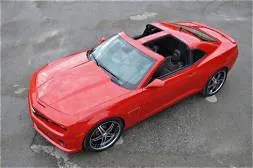
- Targa tops
Targa tops are a semi-convertible car body with a removable roof section and a full width roll bar behind the seats.
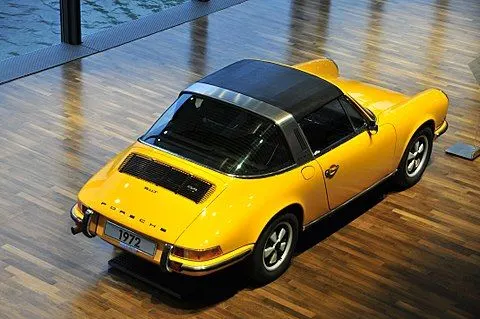
- Vinyl roofs
Vinyl roofs indicates the vinyl covering to a car’s roof.
COMPONENTS OF A ROOF
The Automobile roof consists of the following parts:
- The outer panel
- Front roof rail
- Bow Roof
- Center roof rail
- Rear roof rail
DESIGN CONSIDERATION FOR A ROOF
- Visibility criteria
- Head clearance
- Curvature study
- Heat distortion and snow load criteria
- Draft analysis
PROVIDED MASTER SECTIONS
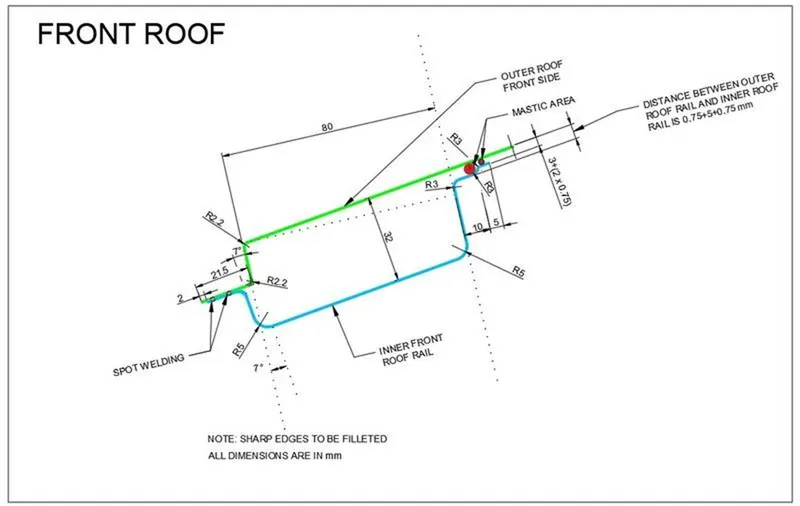
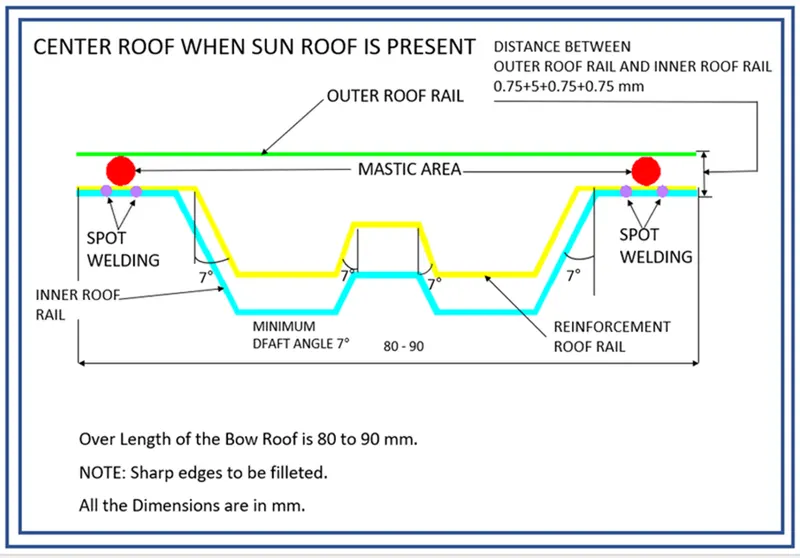
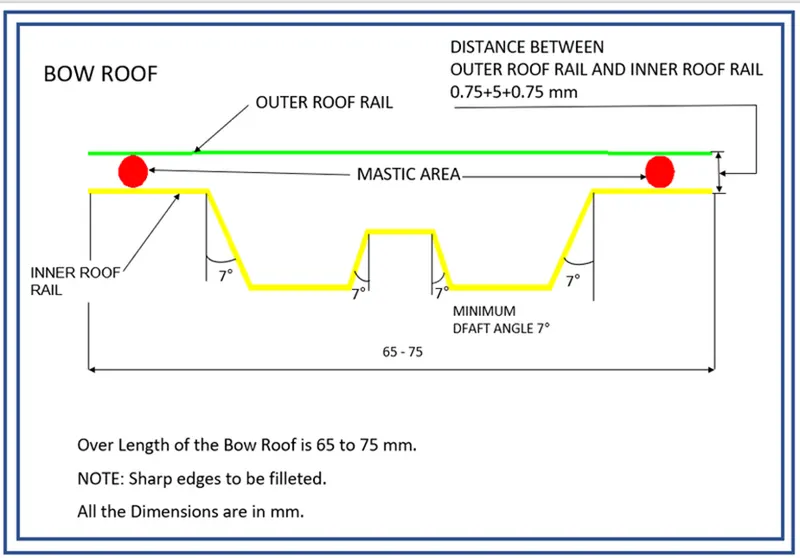
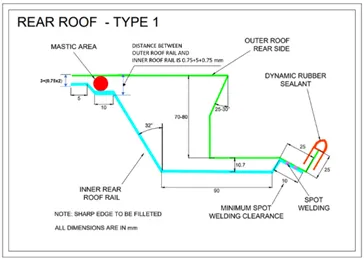
DESIGN
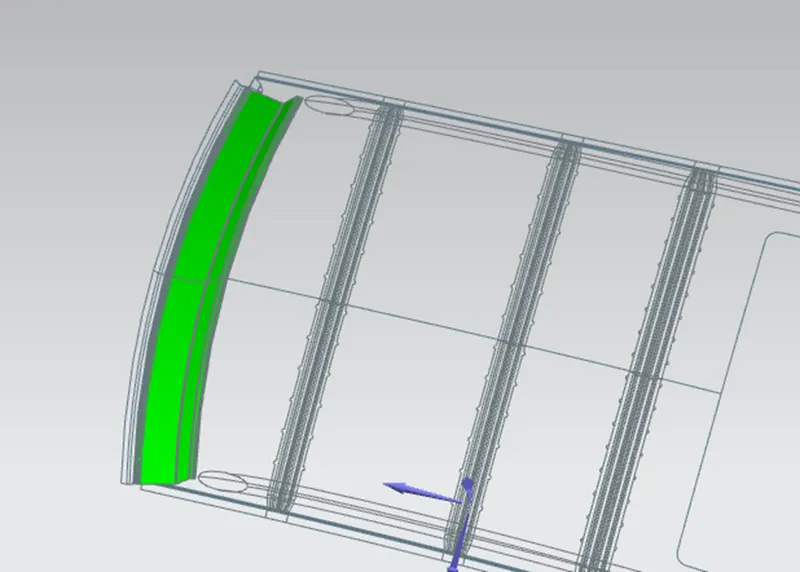
Front Roof rail
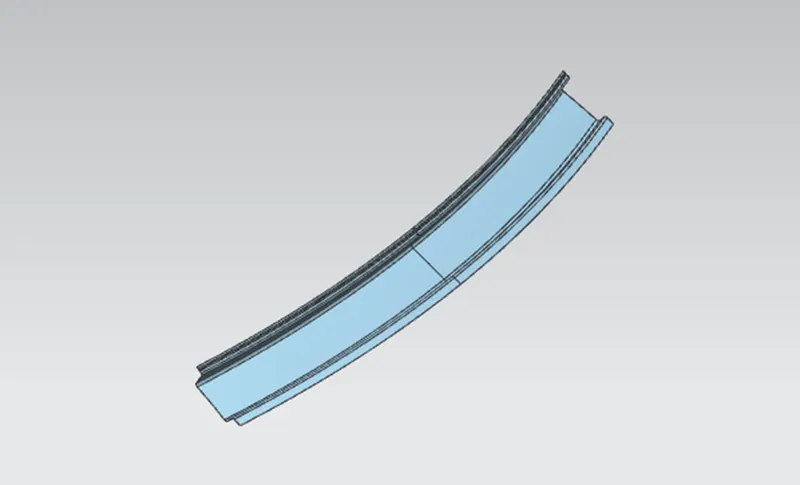
Bow Roof 1
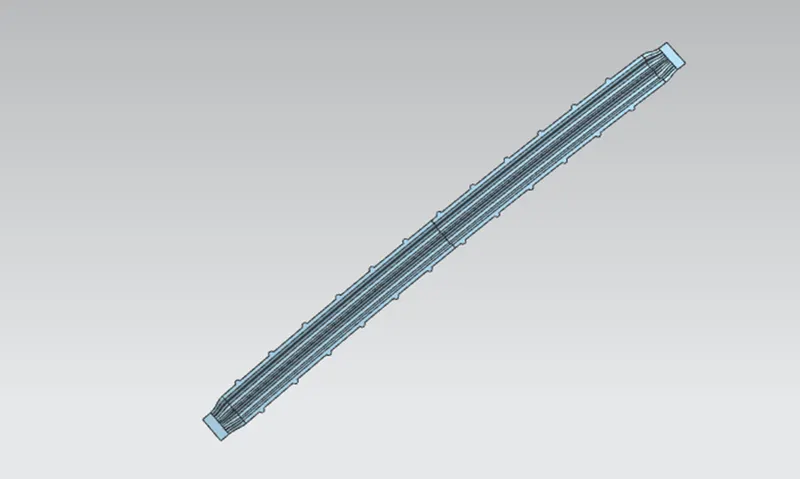
Bow Roof 2
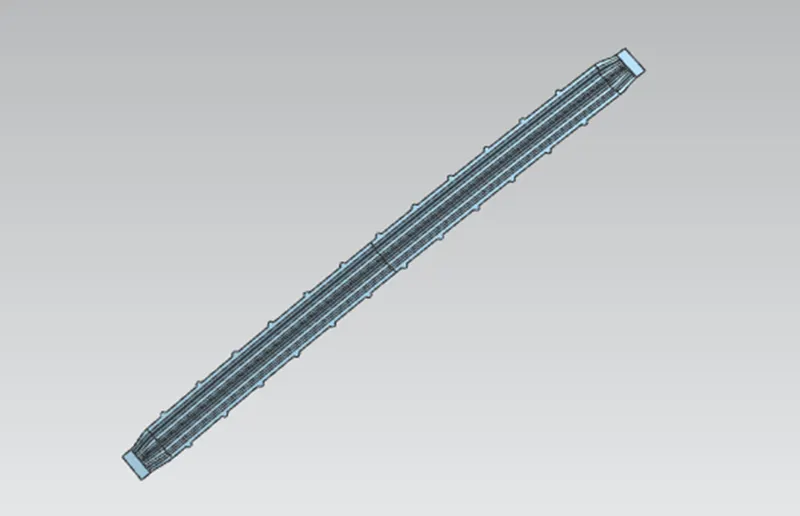
Center Roof rail
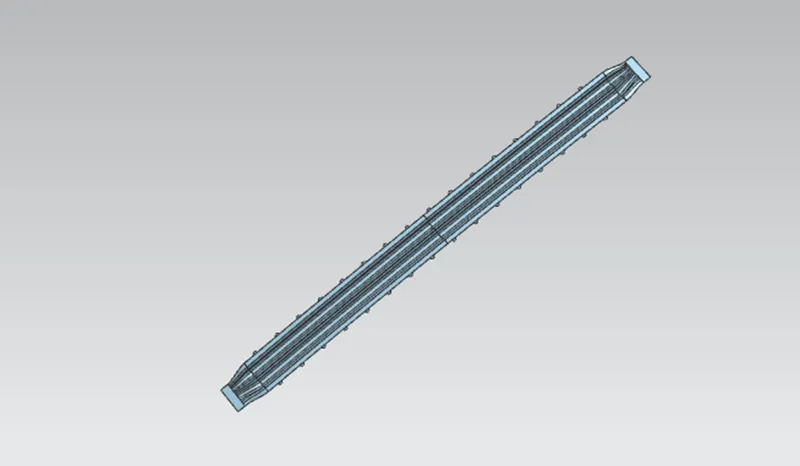
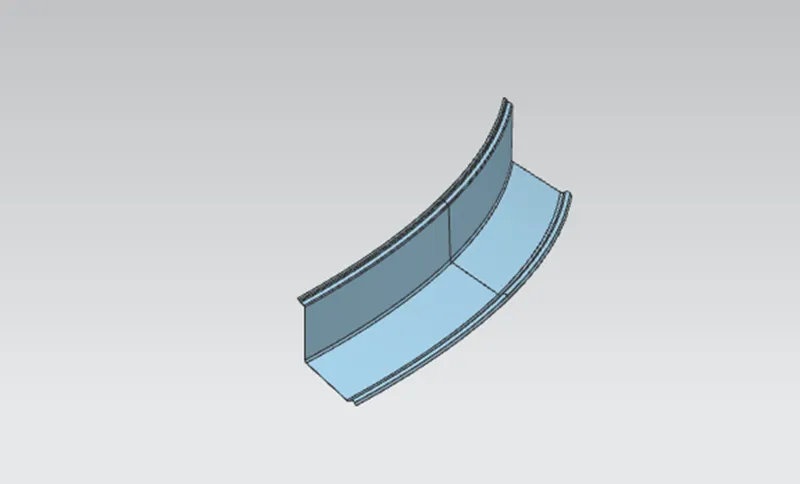
Rear Roof Rail
JOINING THE REINFORCEMENTS
Mastics are introduced between the roof outer panel and the reinforcements for joining. These mastics improves the strength of the roof.
Spot welding is used to join the reinforcements with the outer panel.
Ditch area is the extended portion of the roof styling surface which is used to mount the reinforcements and also ensures proper sealing. The opening angle of the ditch is 7 degrees.
TESTING OF ROOF
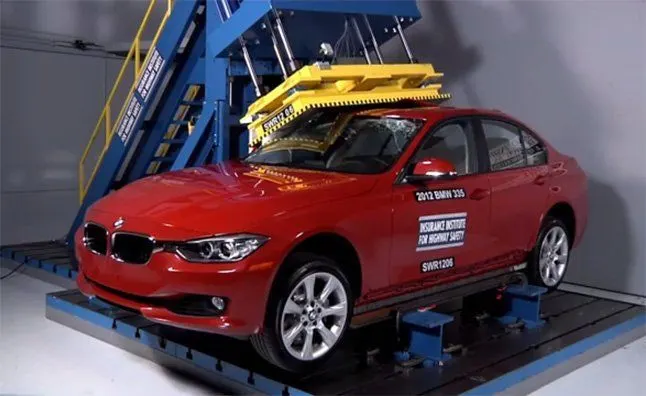
The main goal of the roof crush test is to minimize the protrusion into the occupant compartment. So that the seat belt and the airbags can perform their job more effectively. For this, they consider How fast the car can reform to its original shape after the roll over and How deep is the protrusion after the roll over.
TESTING METHOD
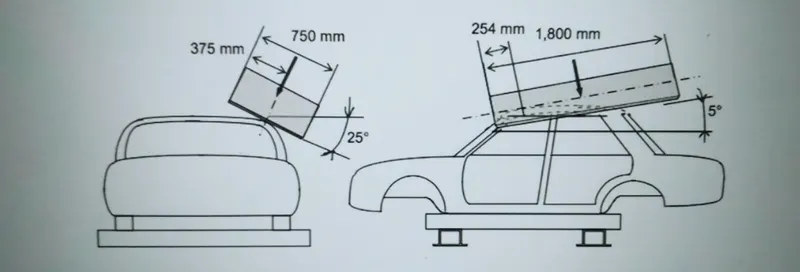
The load which is 1800mm long and 750 mm in width with the weight 1.5 times more than the vehicle is applied to the vehicle for 120 seconds with all the doors and windows closed.
The applied load is tilted 5 degrees along the front roof rail axis and 25 degrees from the flatness of the roof.
CURVATURE STUDY
The curvature study is used for the bow roof calculation. It is an analysis used to determine whether the roof reinforcements are positioned correctly in accordance with the length and curvature of the roof outer panel. This study can be performed by
- Heat Distortion Criteria
- Snow Load Criteria
HEAT DISTORTION CRITERIA
Heat distortion study plays a major role in sheet metal usage. This study is used to predict the change in the metallic regions by the heat radiation from the sun which may cause bending or damages to the roof, In order to avoid such cases and to improve the strength of the roof, the position of the bow roofs are predicted.
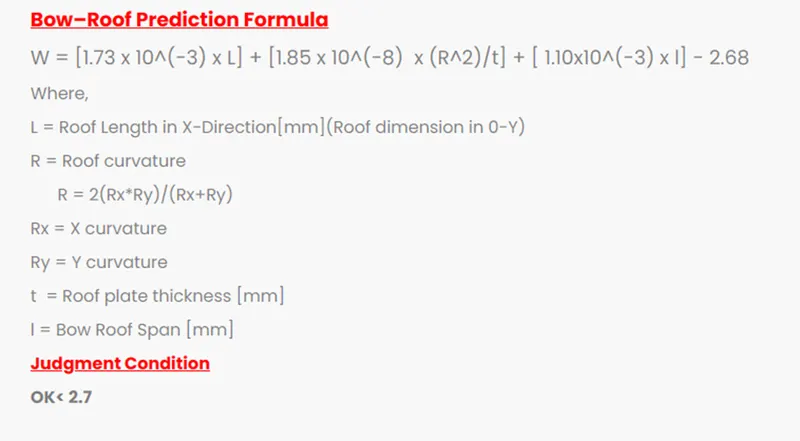
Calculation
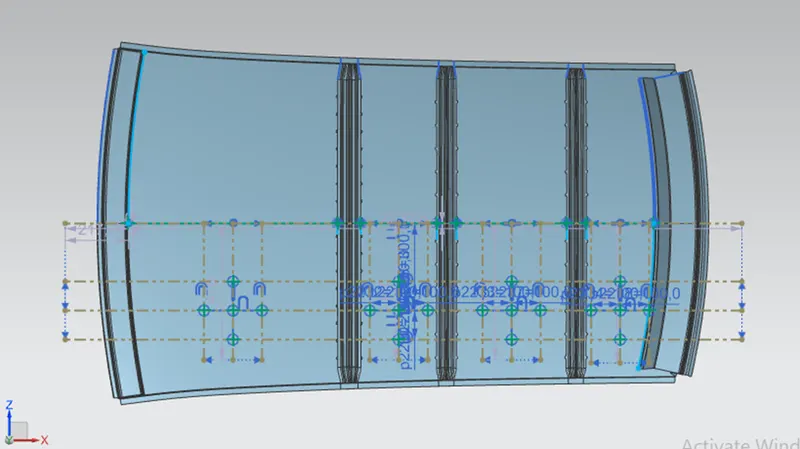
Create a sketch on top of the roof and a horizontal line is drawn at the centre.(Line A)
Offset the line A 300 mm along the –Y direction to create Line B
Offset the line B 100 mm above and below as Line C and Line D respectively and convert all these lines as reference
Project the edges of the reinforcements to the sketch to make the intersection points with the Line A
Connect the intersection points between the reinforcements individually.
Now draw line with the midpoint of those lines got from the intersection points
Offset these lines 100mm right and left
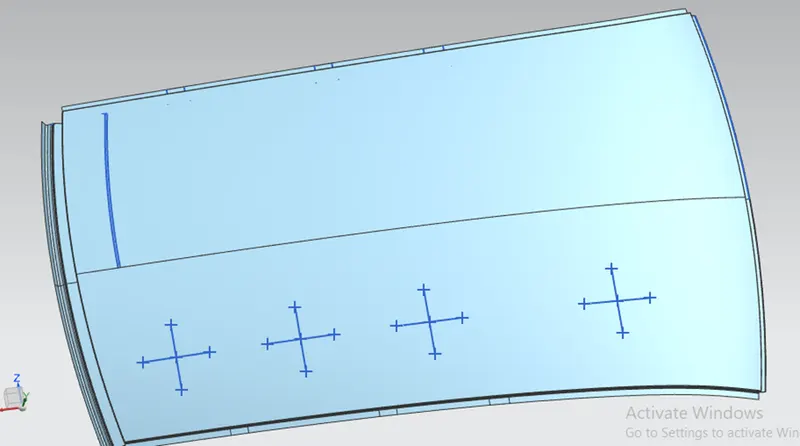
Project the mentioned intersection points formed by the above lines to the roof outer panel.
Draw Arc with the projected points and measure the radius
All the necessary values are tabulated and ‘w’ is calculated and checked with the judgement condition.
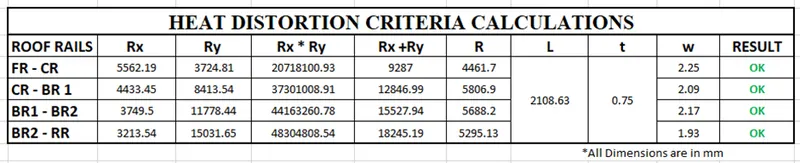
From the table, The Roof Passed the Heat Distortion Criteria
SNOW LOAD CRITERIA
Snow load criteria is considered to predict whether the roof can withstand when there is a snow over. Normally snow fall causes dent over the car roof. So it is necessary that the roof should deform back to its original shape after the snow is removed.
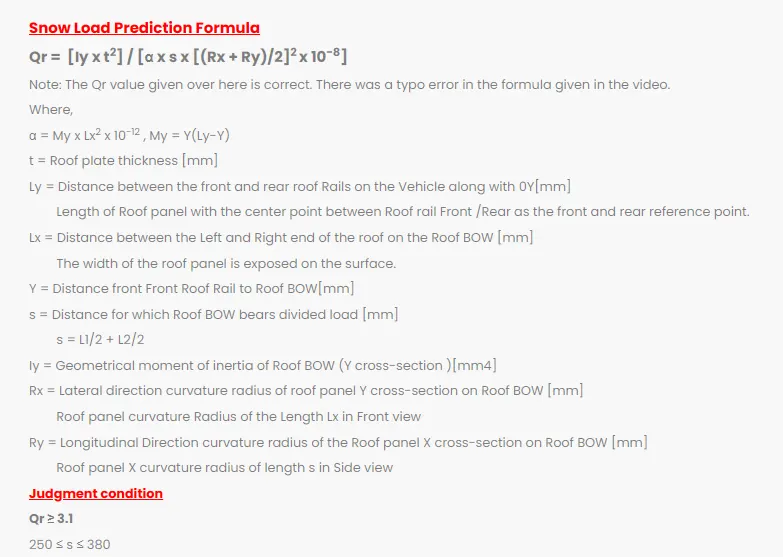
Calculation
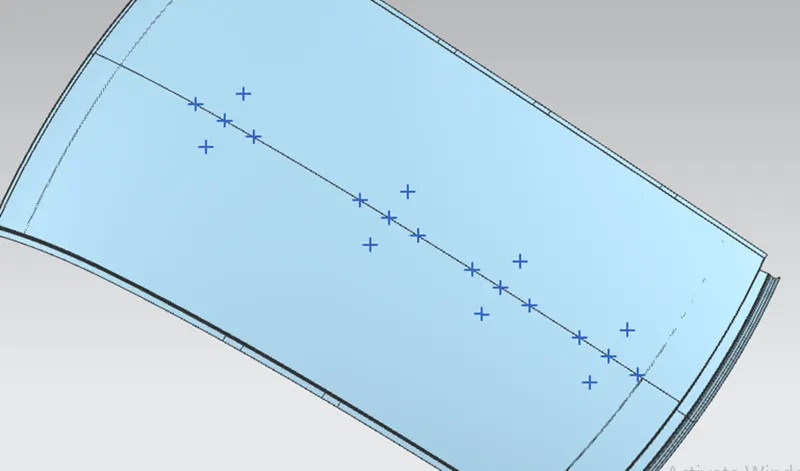
Create a sketch on top of the roof and a horizontal line is drawn at the centre (Line A)
Offset the line 100 mm above and below
Project the edges of the reinforcements to the sketch to make the intersection points with the Line A
Connect the intersection points between the reinforcements individually.
Now draw line with the midpoint of those lines got from the intersection points
Offset these lines 100mm right and left
Project the mentioned intersection points formed by the above lines to the roof outer panel.
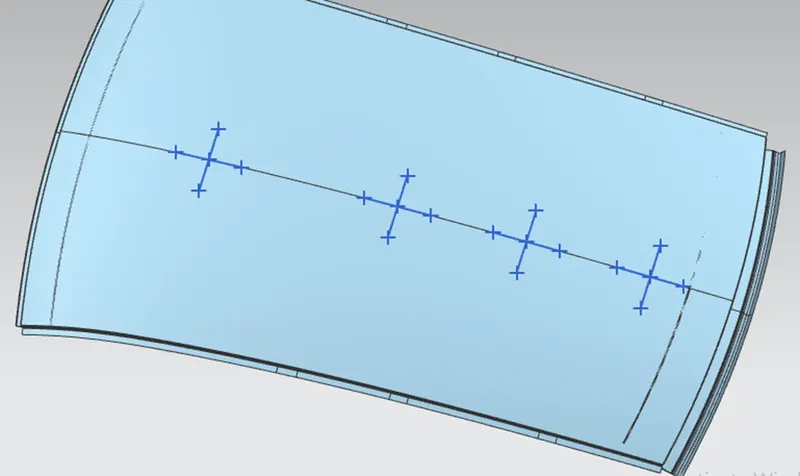
Draw Arc with the projected points and measure the radius
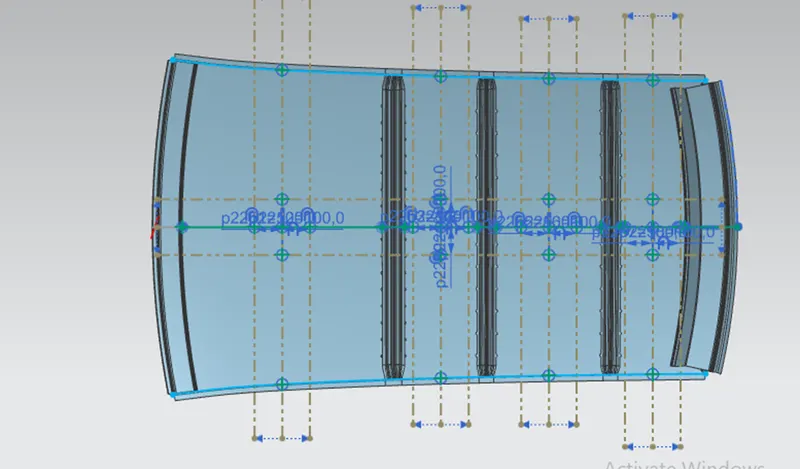
All the necessary values are tabulated and ‘Qr’ is calculated and checked with the judgement condition.

From the table, The Roof Passed the Snow load Criteria
DRAFT ANALYSIS
The Draft Analysis is performed on the reinforcements with the minimum draft angle 7 degrees. As a result, based on the draft condition the part model is manufacturable
Front Roof rail
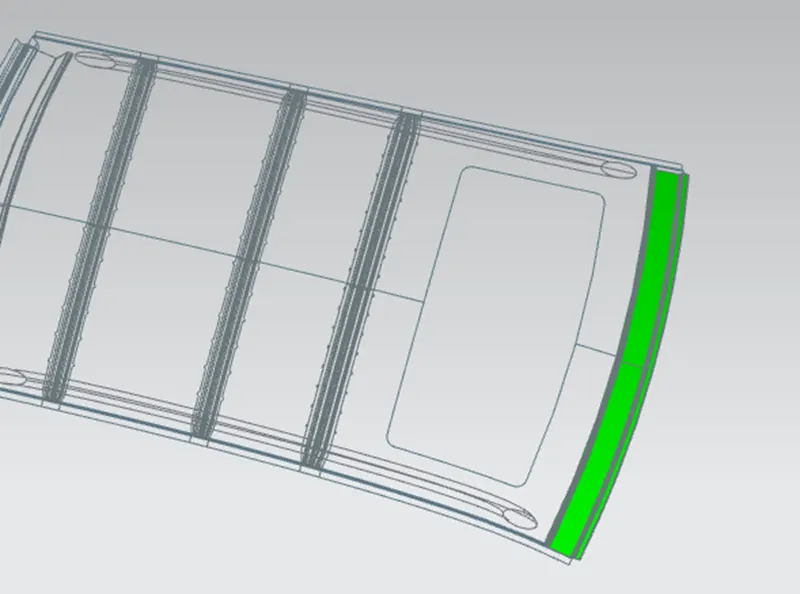
Center roof rail
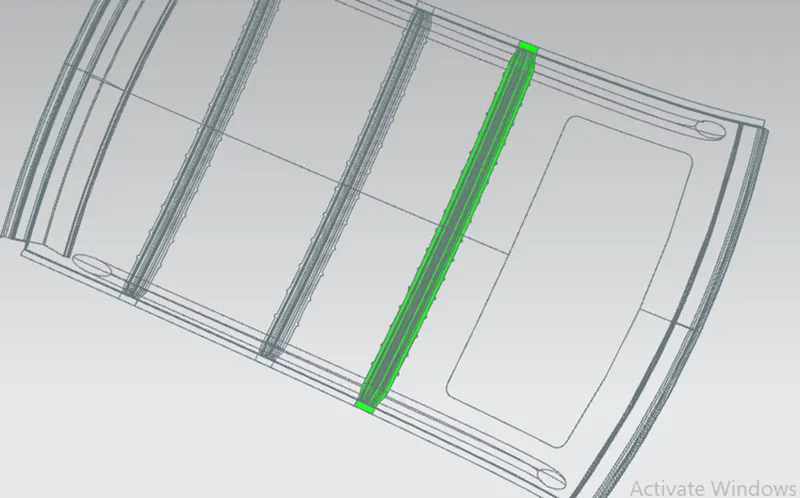
Bow roof 1
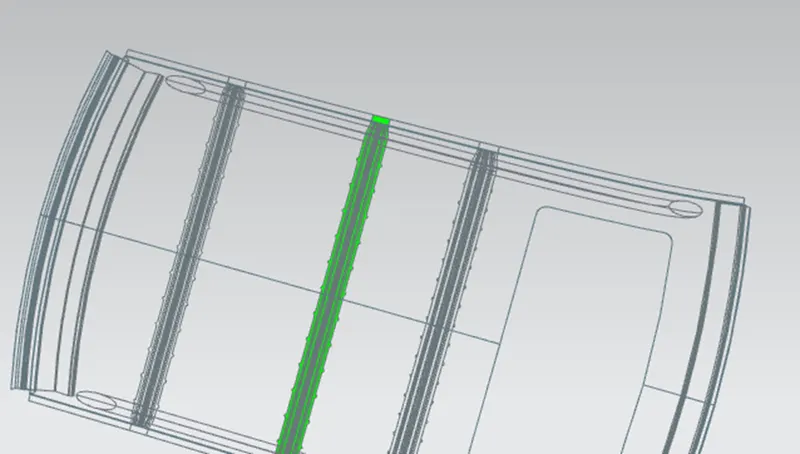
Bow roof 2
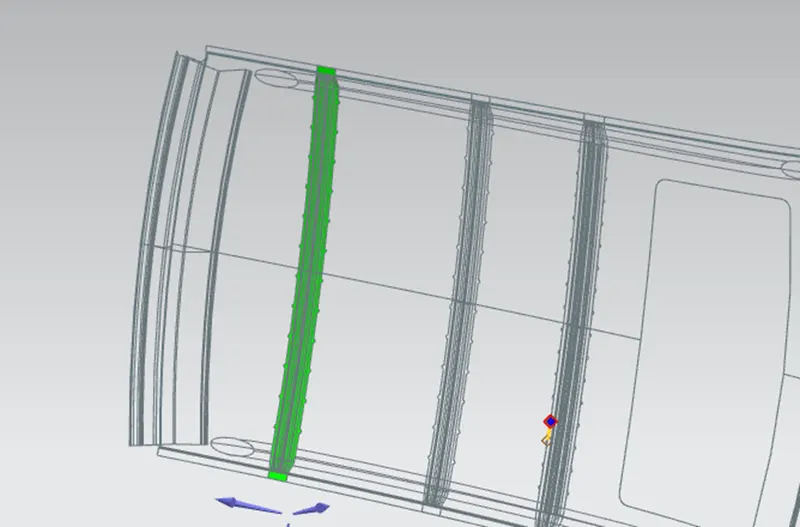
Rear roof rail
CONCLUSION
In order to strengthen the outer panel, embosses are made on the outer panel surface.