Roof Design
AIM:
To design a car roof with all the components using the given master section and Calculating Heat distortion and Snow load on the roof,Section inertia.
OBJECTIVE:
- To design the automotive roof based on the given styling surface and to analyze the prepared model to check the manufacturability and the feasibility of the design.
- To perform the section modulus study for the master sections and create for front roof rail, Bow roofs and center roof rail.
- To create the Ditch area and to perform the draft analy
ROOF:
An automobile roof or car top is the portion of an automobile that sits above the passenger compartment, protecting the vehicle occupants from sun, wind, rain, and other external elements.
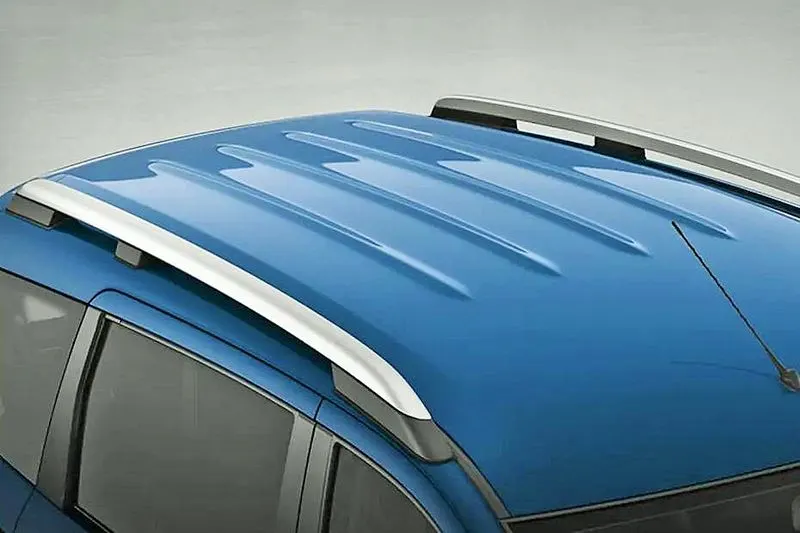
Roof is seen from the outside its looks like a simple constraction.But there are many other structures under the roof like front roof rail, bow roofs, center roof rail, and rear roof rail with different thicknesses which act as a reinforcement for the top.The roof also ensures the safety of the passengers from the collision by imposoing proper roof rail.
DESIGN CRITERIA OF ROOF
- Front Visibility
- Head clearance
- Draft analysis for easy manufacturing
TYPES OF CAR ROOF
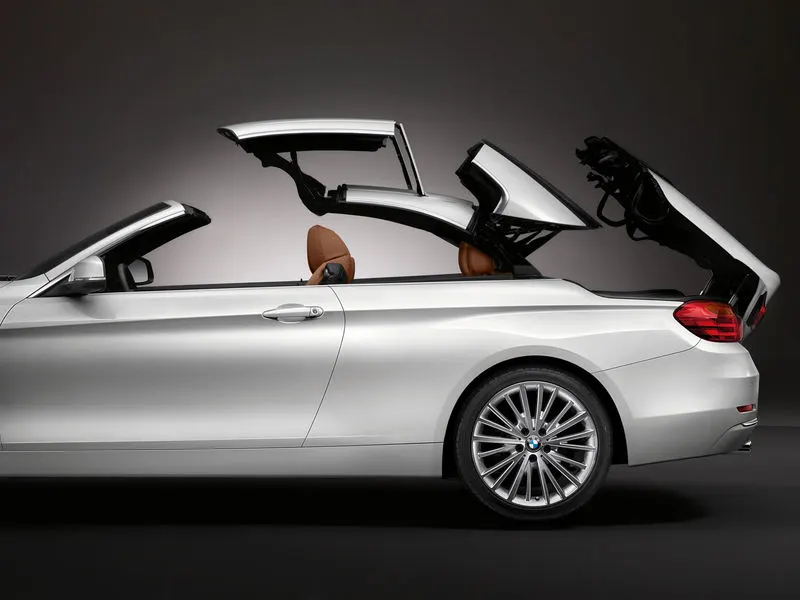
- Convertible roofs
Convertible means the roof can be folded down and removed partially or entirely. The roof can be either folded via electronic or manual control. Alternatively, the top roof panel can be removed and stored in a compartment within the car.Potential drawbacks of convertibles are reducedstructural rigidity.
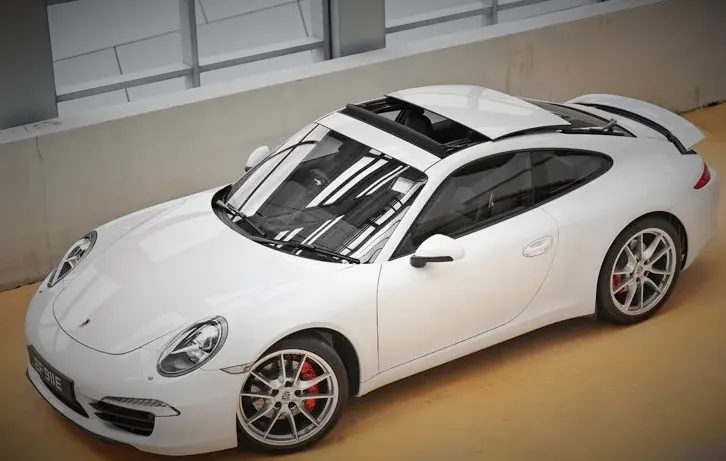
- Sun roofs
A sunroof is a panel on the roof of a car that either slides back or can be taken out to allow light, air or both to come into a vehicle.Sun roof are available in many shapes, sizes and styles.
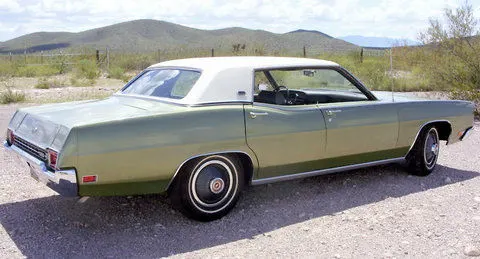
- Hard Tops
A hardtop is a rigid form of automobile roof, which for modern cars is typically constructed from metal. A hardtop roof can be either fixed,detachable for separate storing or retractable within the vehicle itself..
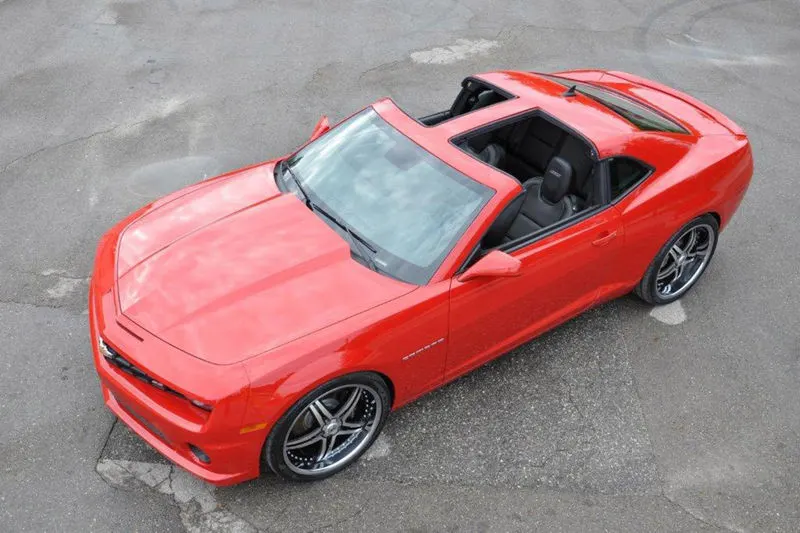
- T- Tops
A T-top is an automobile roof with a removable panel on each side of a rigid bar running from the center of one structural bar between PILLARS to the center of the next structural bar. The panels of a traditional T-top are usually made of auto grade safety glass.
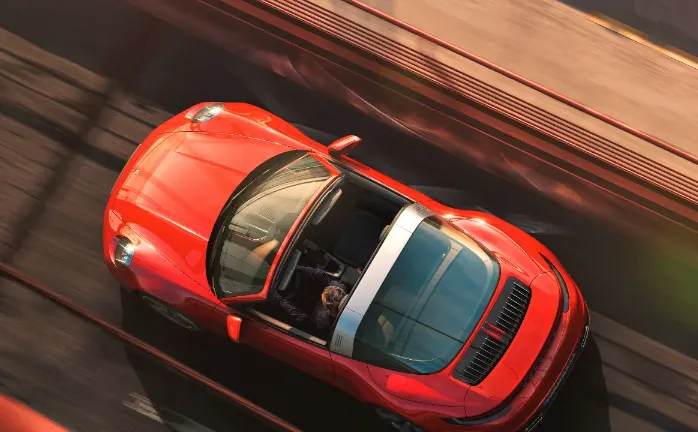
- Target tops
Target top, or targa for short, is a semi-convertible car body style with a removable roof section and a full width roll bar behind the seats.
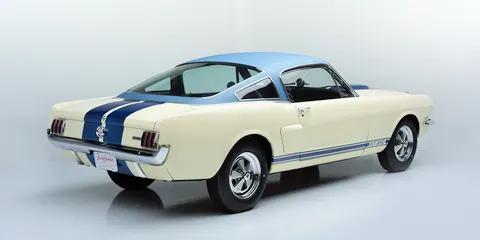
- Vinyl roofs
In modern cars, 'soft-top' convertible roofs can be made out of vinyl, which is usually stamped to look like leather. It was more common on older cars, which didn't have inner waterproof membranes, where vinyl is more waterproof than latex backed fabric.
ROOF SECTIONS:
- Front Roof Rail.
- Rear Roof Rails.
- Center Roof with a reinforcement.
- Bow Roof Rails.
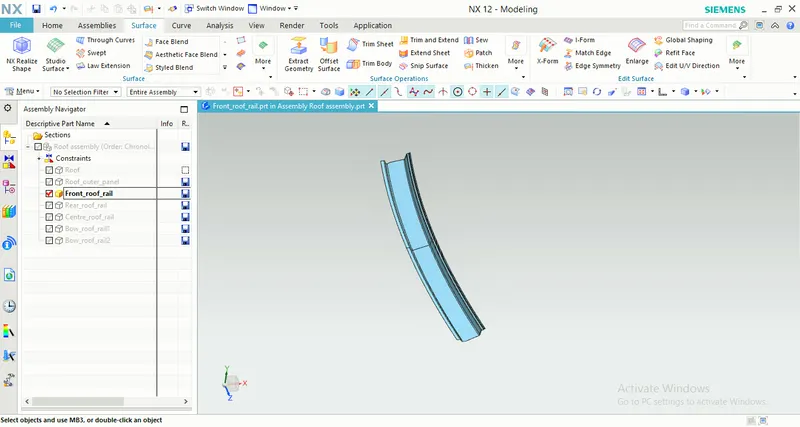
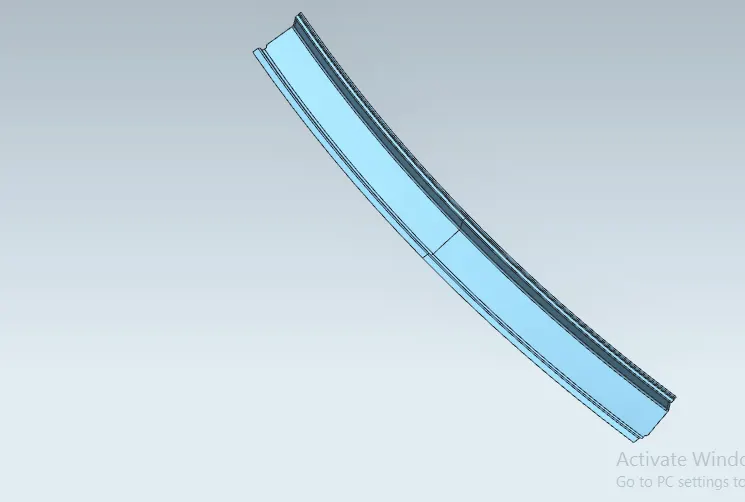
- Front Roof Rail
Front roof rail is the one which joins the wind shield glass, body side outer and the inner panel also. Here the front roof rail is designed based up on the master section given.The visibility criteria and the head room space are the important factors which should be governed while preparing the master section for the front roof rail.
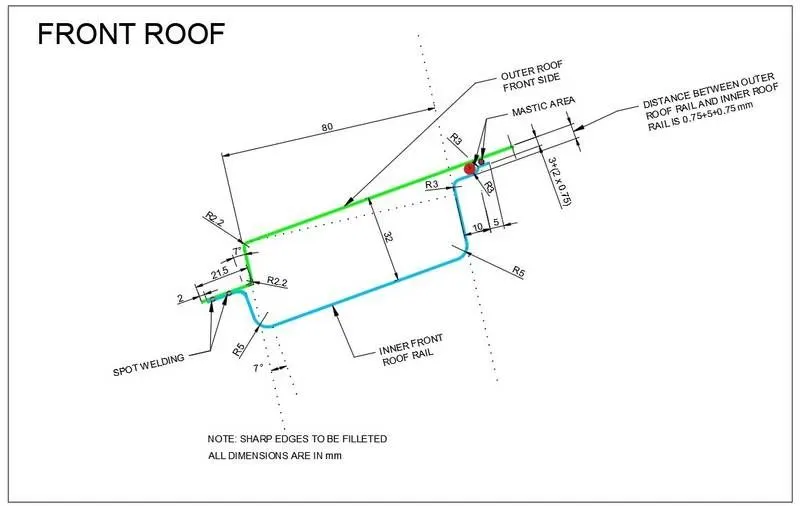
master section
- Rear Roof Rail
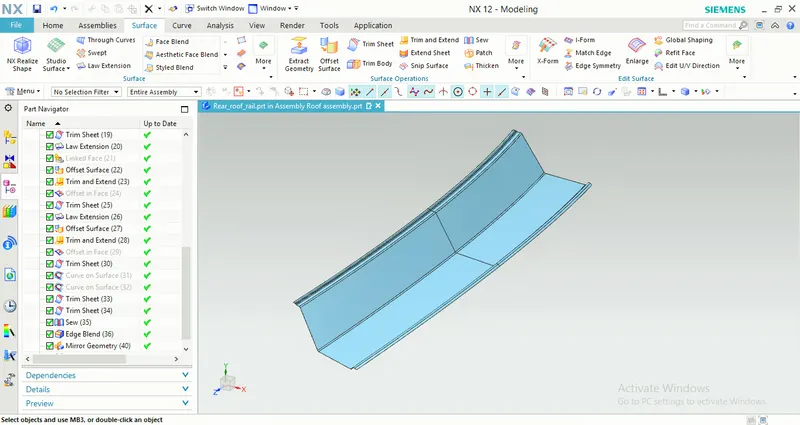
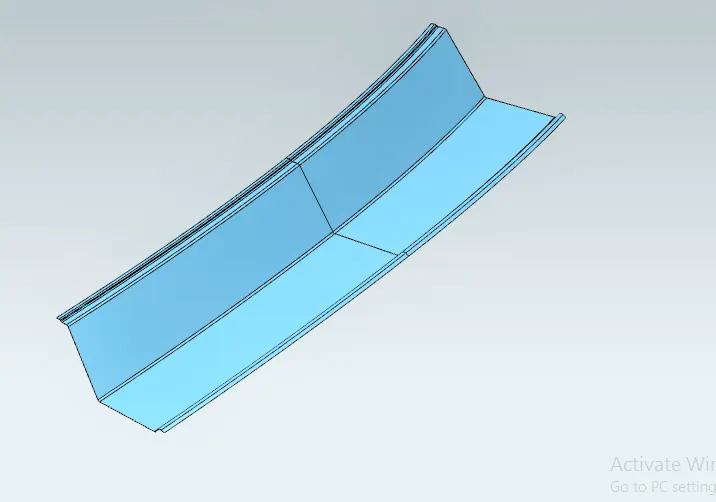
The rear roof rail is connected to the backdoor part so it plays vital role in design of the roof as it is in co-related with the other part as well . Similar to the front rail roof, the rear roof rail is to be designed considering the rear visibility criteria and the rear passenger’s headroom clearance.
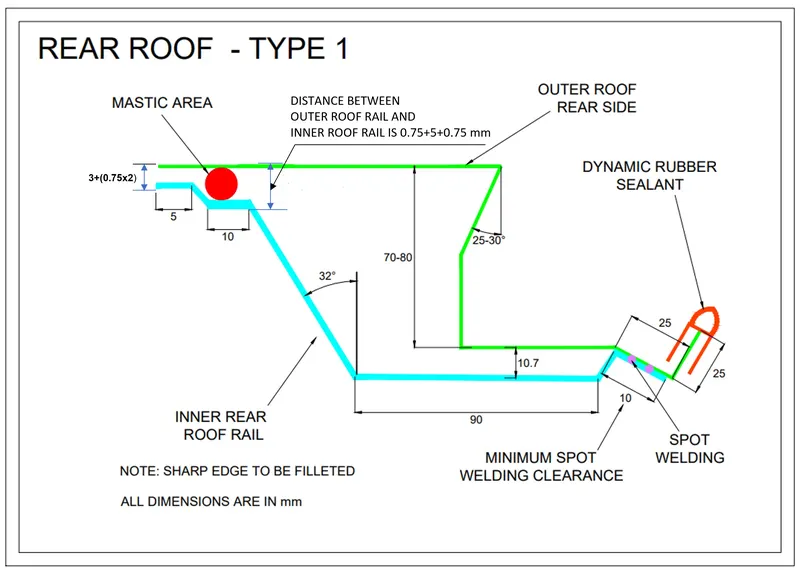
master section
- Center Roof Rail
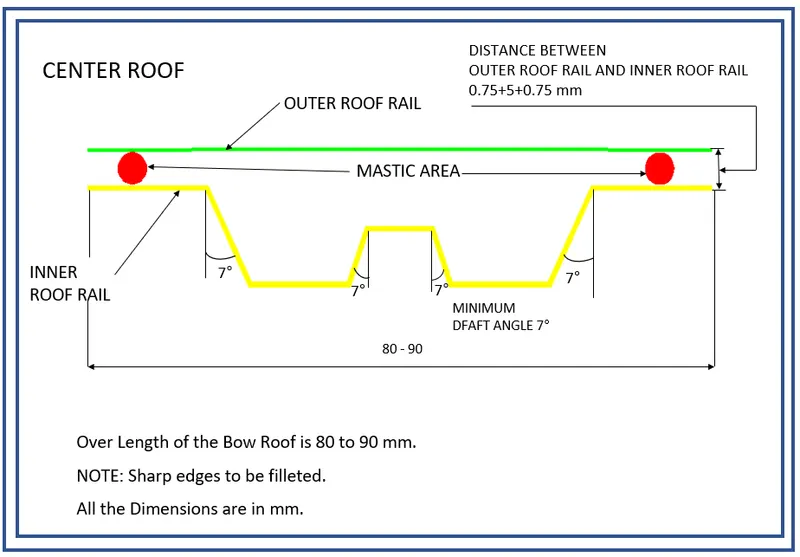
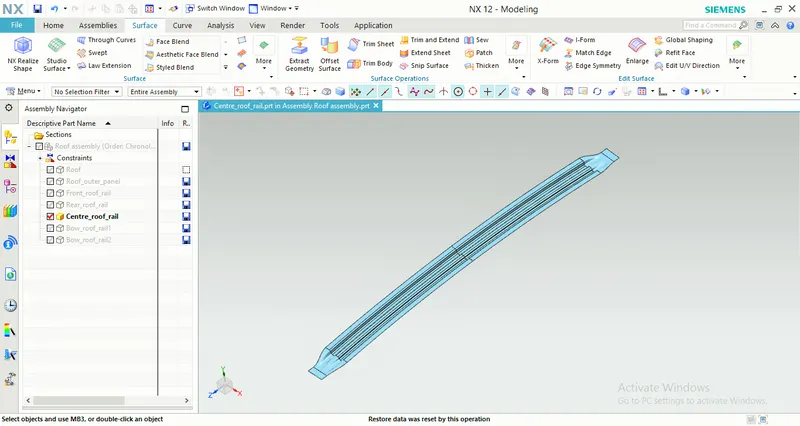
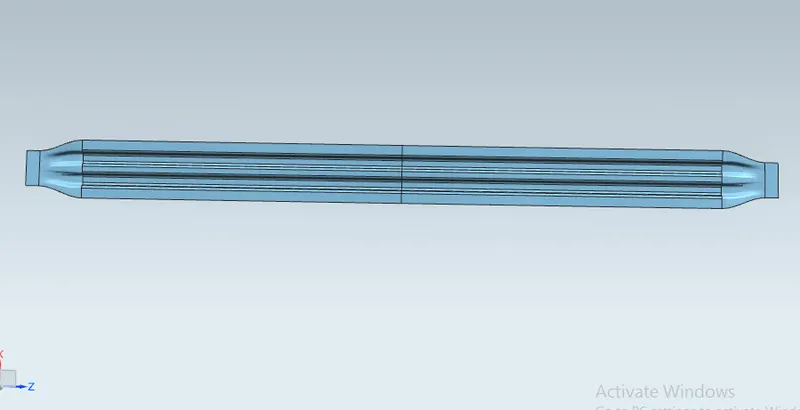
These roof rails are positioned mostly on the center portion of the roof or at the B Pillar of the vehicle i.e, the most flatter region of the car which is susceptible to failure under the action of load.
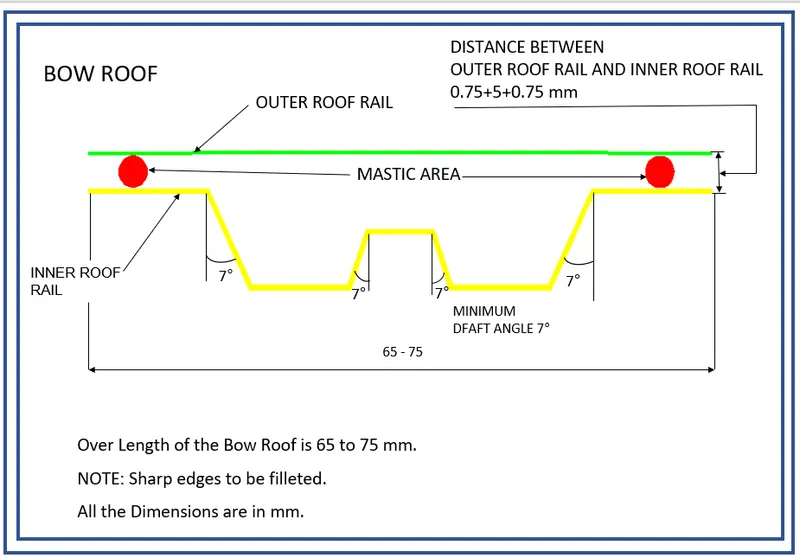
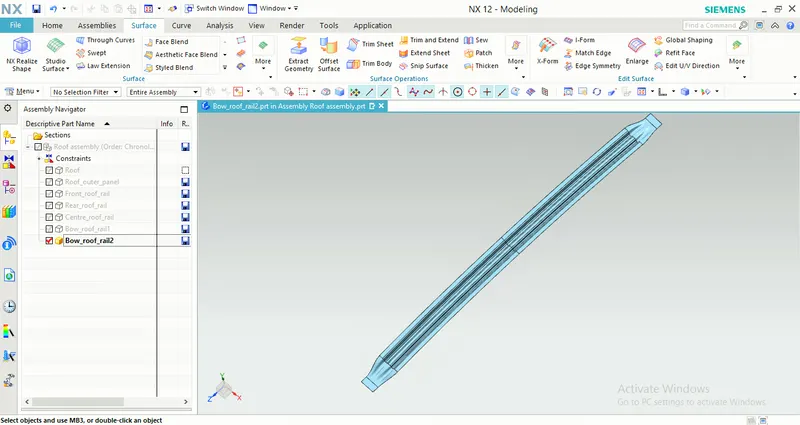
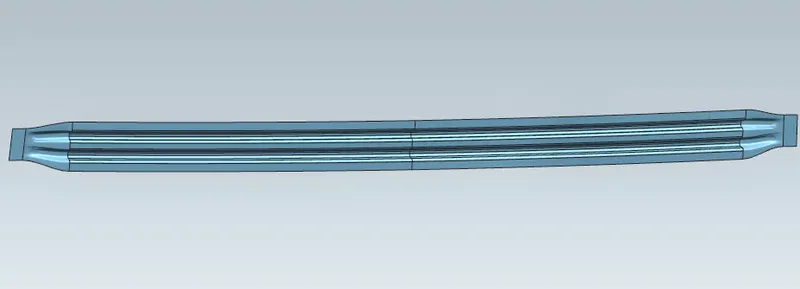
- Bow Roof Rails 1&2
The bow roofs are there to give the strength to the roof of an automobile , the number of bow roofs are governed by the curvature of the roof .If the curvature is nice as provided by the class A surface then only single bow roof and center roof rail are sufficient to provide the strenth to the roof of the automobile.
- Roof Outer Panel
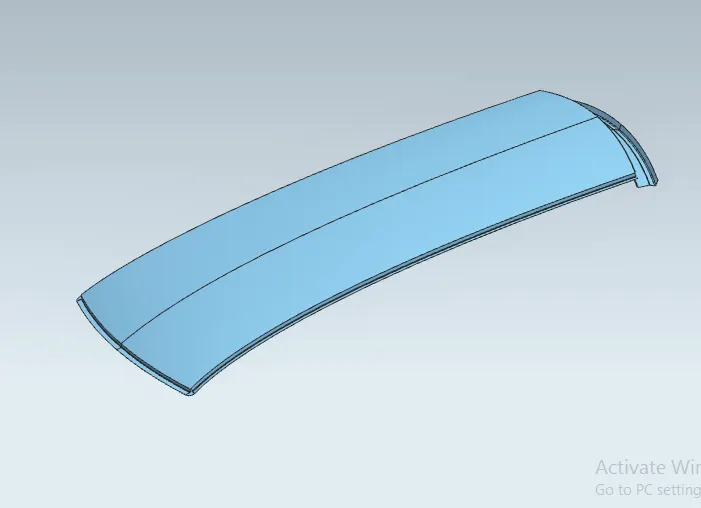
Final View Roof Design,
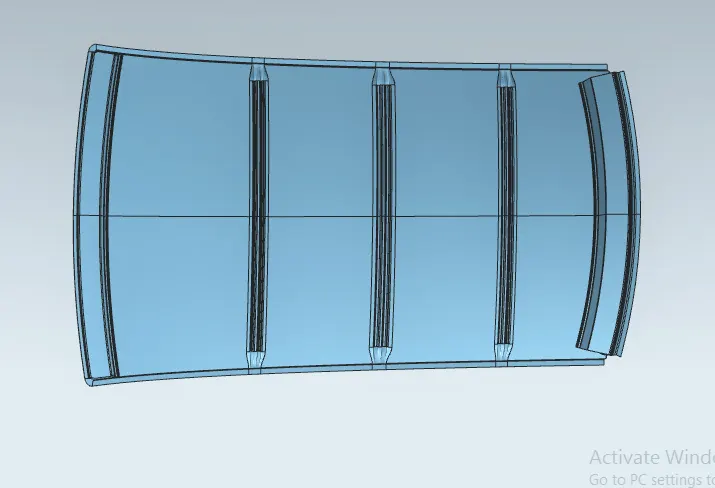
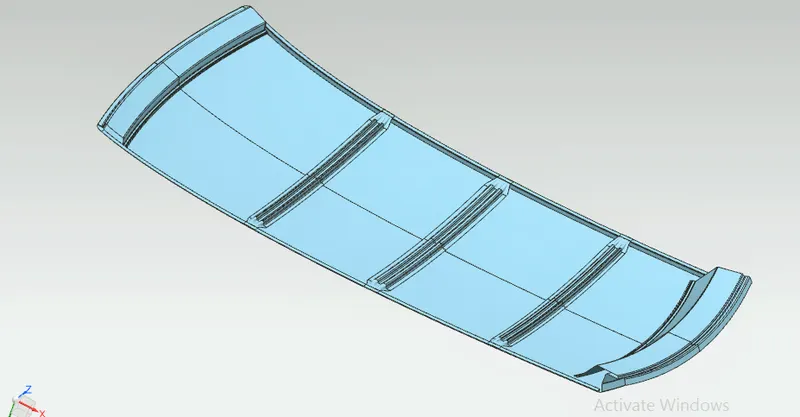
DESIGN CALCULATION OF ROOF:
- Heated Distortion study on the roof
- Snow Load Condition
- Heat Distortion Criteria
This study is used to predict the heat distortions temperature at the material where it start to soften when exposed to a fixed load at elevated temperature. In order to avoid bending or damages on the roof, based on the heat distortion temperature, this study will predict the bow roof position which helps to strengthen the roof.
Formula - HEAT DISTORTION CRITERIA
W = [1.73 x 10^(-3) x L] + [1.85 x 10^(-8) x (R^2)/t] + [ 1.10x10^(-3) x l] - 2.68
Where,
L = Roof strength in X- Direction [mm] (Roof dimension in 0 – Y)
R = Roof curvature
R = 2 (Rx*Ry) / (Rx + Ry)
Rx = X Curvature
Ry = Y curvature
t = Roof plate thickness [mm]
I = Bow Roof span [mm]
Judgement Condition: OK < 2.7 > 3.1
Procedure:
- Create a sketch on Top roof and draw a horizontal line at a center.
- Then offset this line below 300mm and called it as _3y line.
- From the _3y line offset 100 mm above and below and convert all these line into reference line.
- Draw the vertical lines at the middle of each reinforcements and offset it at 100 mm both sides.
- Intersection point is created where the lines are met.
- Project there points the outer roof panel.
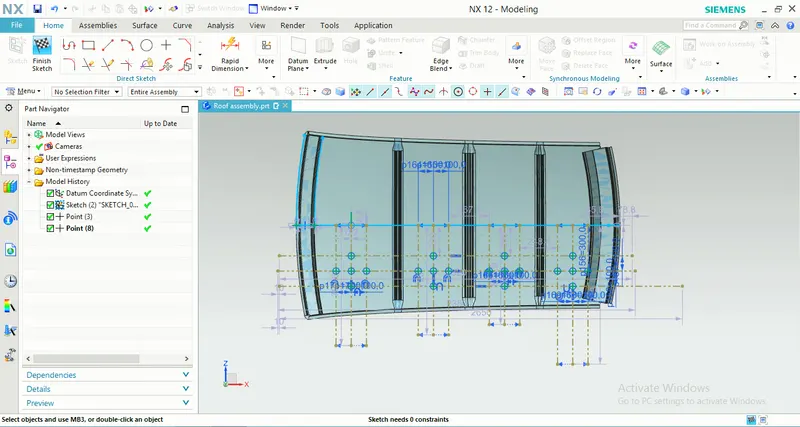
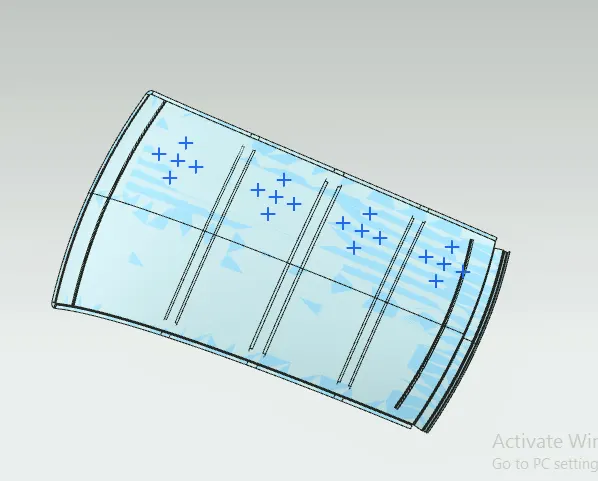
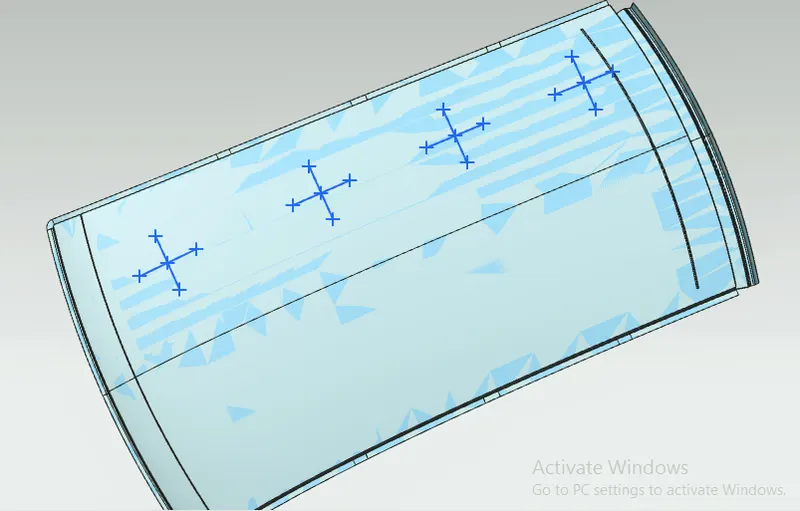
Table of Heat Disortion Caluculation Result
| Sl No | BOW Roof | RX | Ry | R | t | I | L | R^2/t | W | Result |
| 1 | Front to Bow1 | 5707.304 | 2898.748 | 3844.74 | 0.75 | 515.9 | 2033.704 | 19709367.5 | 1.77 | OK |
| 2 | Bow1to Centre | 4719.039 | 7212.687 | 5705.28 | 0.75 | 389.4 | 2033.704 | 43400293.1 | 2.06 | OK |
| 3 | centre to Bow2 | 3851.674 | 11227.42 | 5735.66 | 0.75 | 388.6 | 2033.704 | 43863727.5 | 2.07 | OK |
| 4 | Bow2 to back | 3199.145 | 15121.57 | 5281.02 | 0.75 | 293.2 | 2033.704 | 37185562.9 | 1.22 | OK |
The W value between the adjacent rails is less than 2.7, so the bows position is accurate according to heat distortion criteria.
- Snow Load Criteria
This test is done to know how the roof is behaving when there is a snow over. Normally due to the snow weight the dent will happen. But the roof should be designed in such a way that when the snow is removal the roof should go it its original position. This basic requirement for snow load criteria.
Formula-Snow Load Criteria
Qr = [Iy x t2] / [α x s x [(Rx + Ry)/2]2 x 10-8]
Where,
α = My x Lx2 x 10-12 ,
My = Y(Ly-Y)
t = Roof plate thickness [mm]
Ly = Distance between the front and rear roof Rails on the Vehicle along with 0Y[mm]
Lx = Distance between the Left and Right end of the roof on the Roof BOW [mm]
Y = Distance front Front Roof Rail to Roof BOW[mm]
s = Distance for which Roof BOW bears divided load [mm]
s = L1/2 + L2/2
Iy = Geometrical moment of inertia of Roof BOW (Y cross-section )[mm4]
Rx = Lateral direction curvature radius of roof panel Y cross-section on Roof BOW [mm]
Ry = Longitudinal Direction curvature radius of the Roof panel X cross-section on Roof BOW [mm]
Judgment condition
Qr ≥ 3.1
250 ≤ s ≤ 380
Procedure:
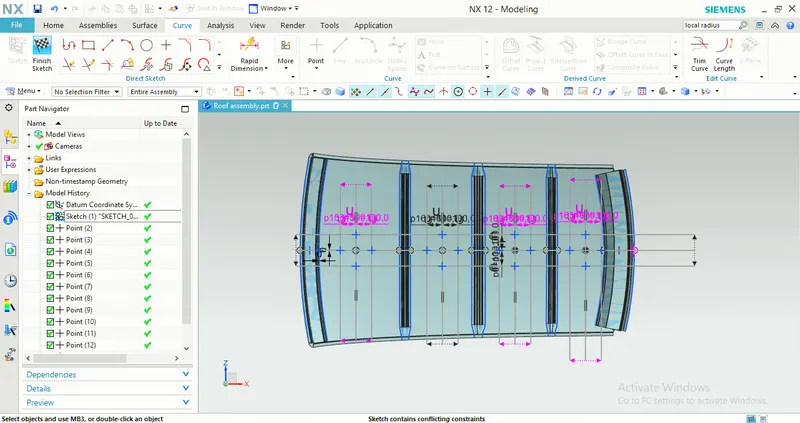
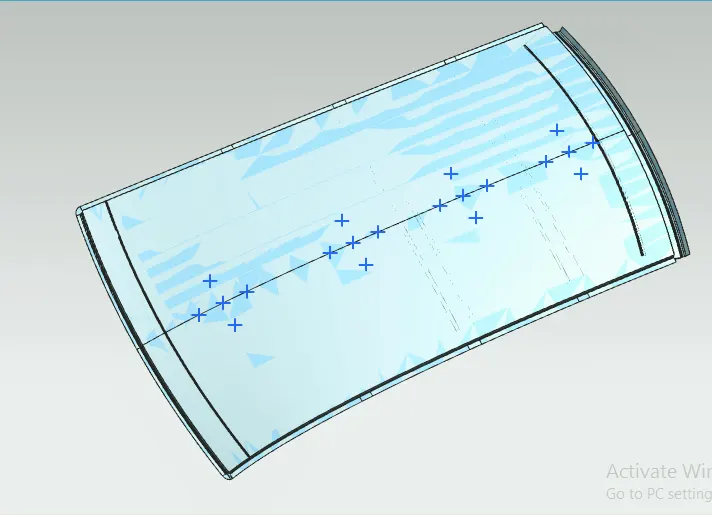
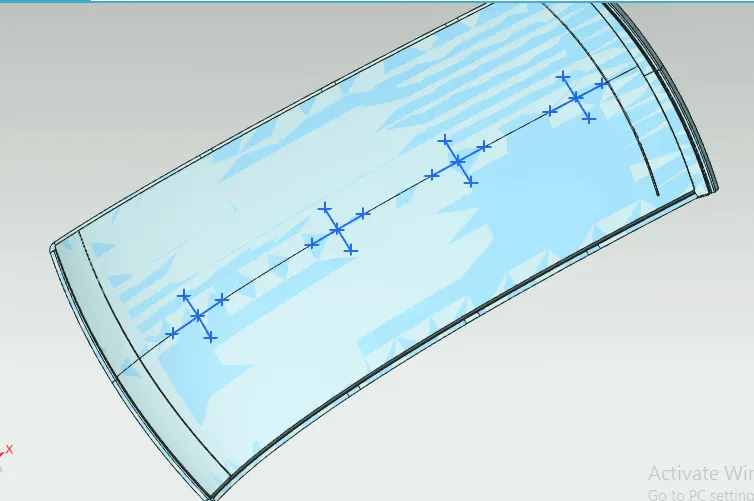
- Create a center line at the 0-Y region of the roof and then offset the same to 100mm on each side.
- Draw a vertical line at the midpoint of the line drawn from the center points of the FRR and BR 1 and followed the same till the rear roof rail.
- Offset the vertical line to a distance of 100mm on each side.
- Create intersection points and project them on the roof.
- From these projected points, make a 3-point arc and the Rx and Ry values.
- Project the extreme edges of the styling surface fro measuring the width at the respected sections.
Section modulus study of the Roof Rails:
A structure that has a larger section modulus than another will be stronger and capable of supporting greater loads.
Section modulus (S) = I/y
Where,
I = Moment of inertia in (mm4)
y = Distance between the neutral axis and the extreme end of the object (mm)
Bow Roof Rail 1,
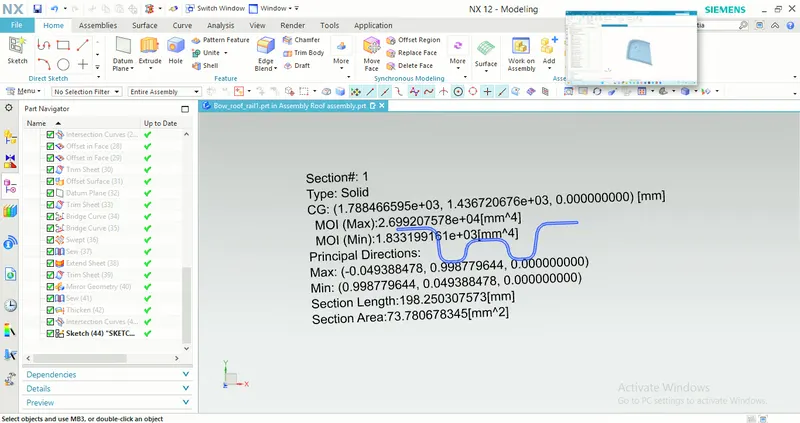
Moment of the inertia minimum, (MIN) I min = 1.83319*10^3 (mm4
Centre Roof Rail,
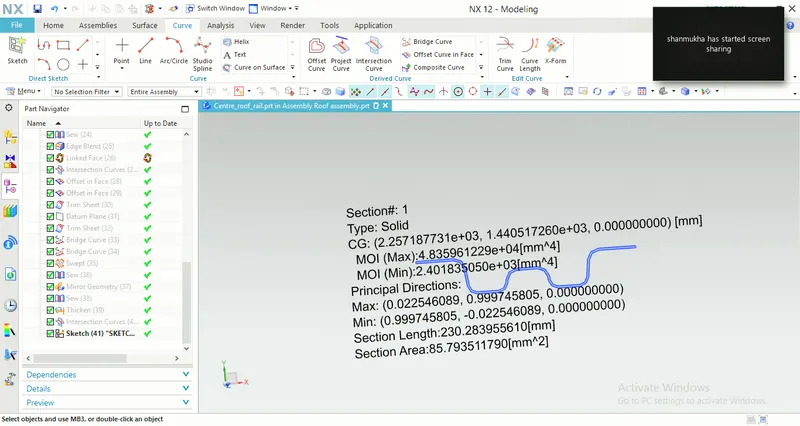
Moment of the inertia minimum, (MIN) I min = 2.40183*10^3 (mm4)
Bow Roof Rail 2,
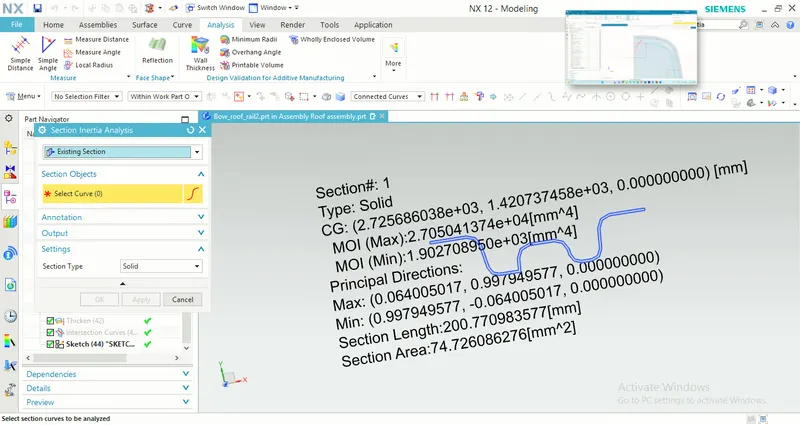
Moment of the inertia minimum, (MIN) I min = 1.9027*10^3 (mm4)
| Sl NO | BOWRoof | RX | Ry | Lx | Ly | Iy | L1 | L2 | t | Y | My | a | S | Qr | Result |
| 1 | Front to Bow1 | 1507.26 | 2883.82 | 1141.9 | 2033.7 | 1833.1 | 942.57 | 859.51 | 0.75 | 942.5 | 1028456.0 | 1.3 | 901 | 8.2 | OK |
| 2 | Bow1to Centre | 3847.54 | 7213.96 | 1080.9 | 2033.7 | 2401.8 | 859.51 | 468.6 | 0.75 | 1076.6 | 1030413.8 | 1.2 | 664 | 5.5 | OK |
| 3 | centre to Bow2 | 3935.88 | 11881.19 | 1058.1 | 2033.7 | 19027 | 468.6 | 427.8 | 0.75 | 1545.3 | 754724.5 | 0.84 | 448.2 | 4.7 | OK |
From the above results, the positioning of the bow roofs satisfies the condition for snow load Criteria.
DRAFT ANALYSIS :
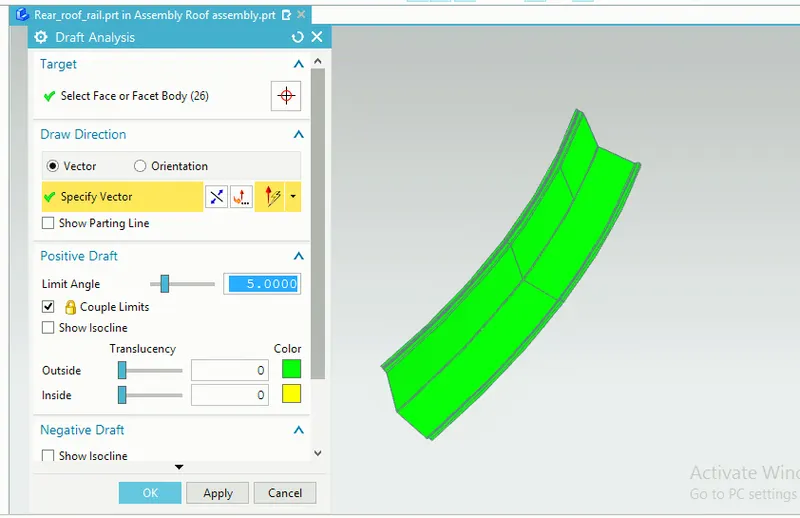
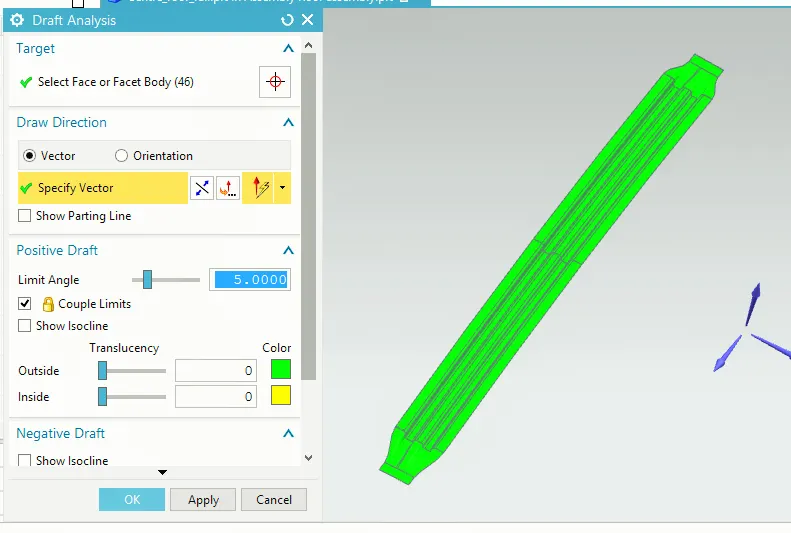
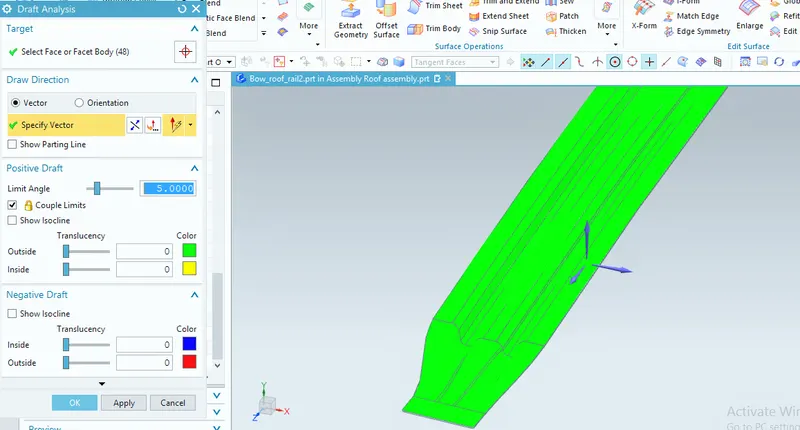
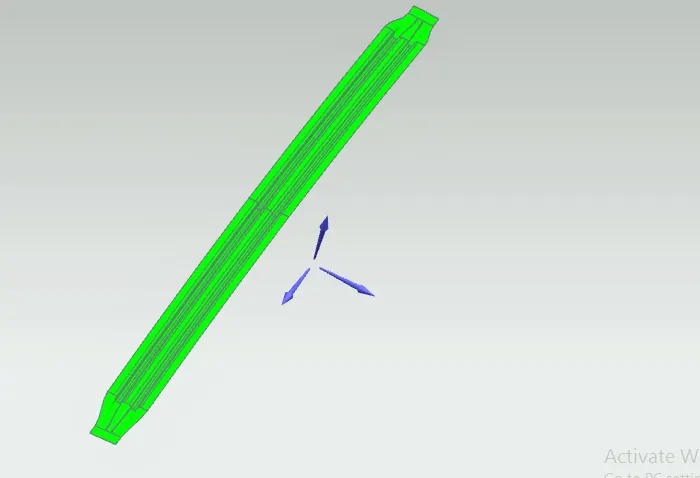
Draft Analysis is carried out to check the manufacturing feasibility of the roof and all the reinforcements rails. All the components should be designed by considering at least the minimum draft value of 7 Degree.
Draft Analysis For Front Roof Rail,
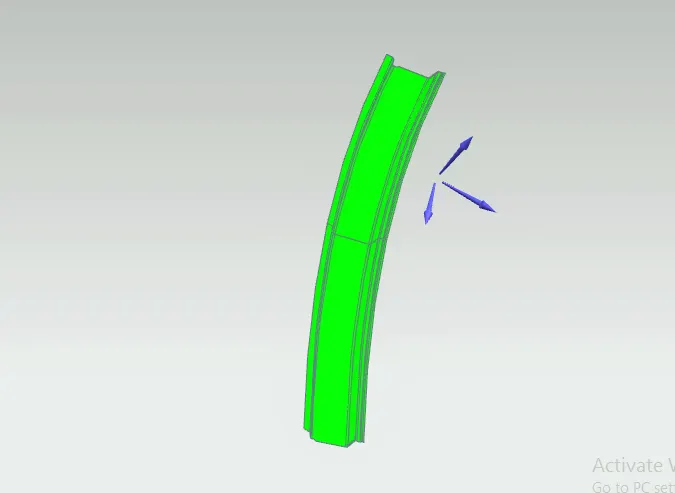
Draft Analysis For Rear Roof Rail,
Draft Analysis For Centre Roof Rail,
Draft Analysis For Bow Roof Rail1&2,
CONCLUSION:
Thus the required reinforcement and the ditch area for the roof were designed and developed from the given Master section. The curvature study was done after performing calculation for the Heat Distortion and Snow load criteria are done with the help of sketch.