Roof Design
REPORT
ROOF OF A CAR
A ROOF is the top most component of a car which protecting car occupants from wind, rain, and other external components. it also have a major role in the asthetic look of car. a lots of safety features are also related to the design of roof. because whenever the car is rolled down in the road the strength of the roof is most important for the safety of passenger.
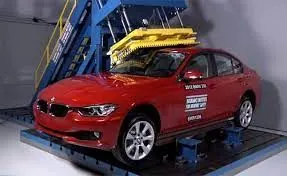
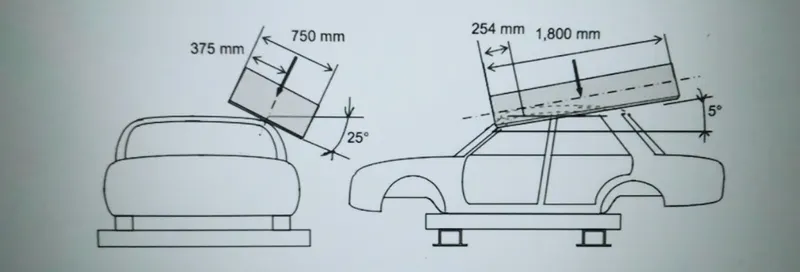
in roof crash test we can calculate the strength of the roof. in roof crash test the load is advanced to the roof with a little bit of inclination and we load is applying until the crash occurs.
we consider two points in crash test, they are,
- how fast a car can reform into original shape after roll over ends.
- how deep is the protrusion after the roll over.
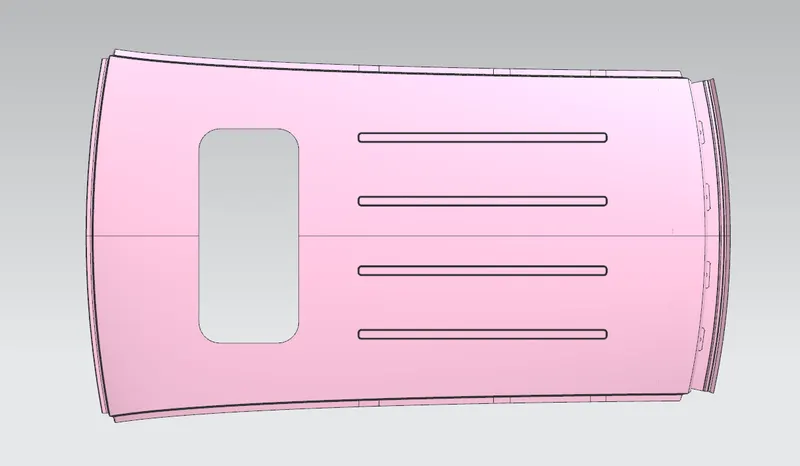
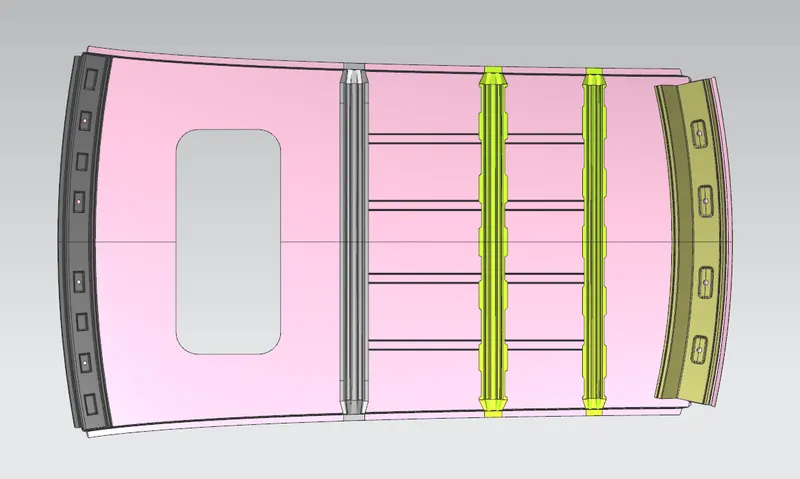
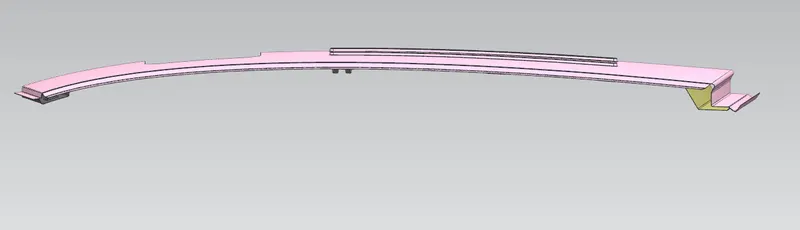
a car roof consist of mainly outer panel, front roof rail, rear roof rail, bow roofs and center reinforcement roof. the outer panel is consist of ditch area surounding its outer surface which is used to attach the roof into the structure. commonly spot welding and mastic sealing is used to attach the roof to car body.
outer panel
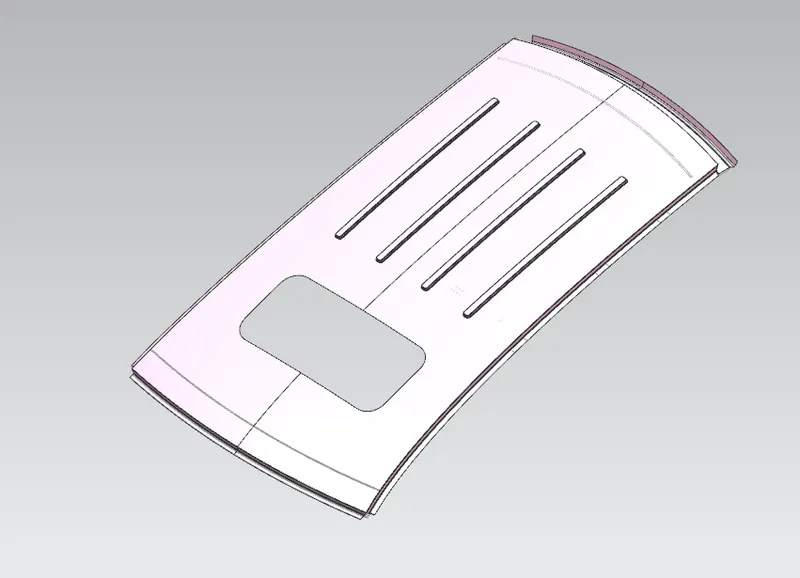
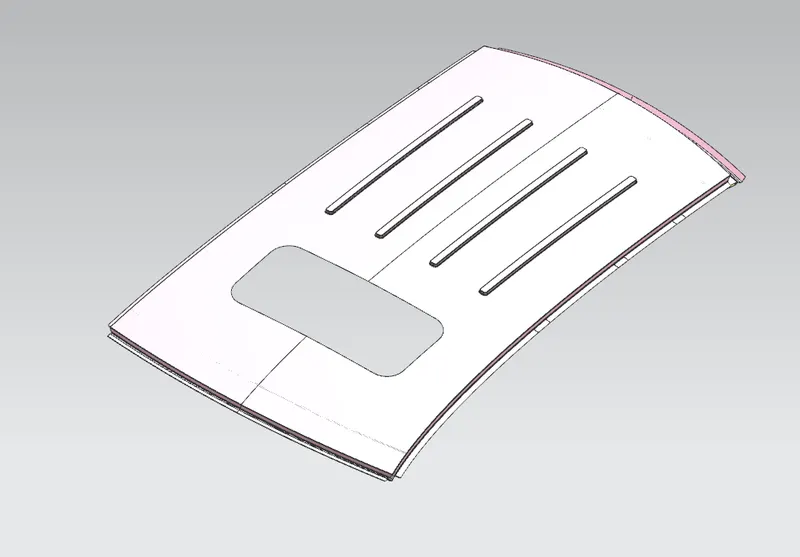
outer panel consist of the aesthetic surface of the roof. it also consist of ditch areas surounding. ditch area provided to attach the front roof rail, bow roofs and center roof, and the rear roof rail. we can create the ditch areas by extending the edges of the outer panel by using law extension command.
front roof rail
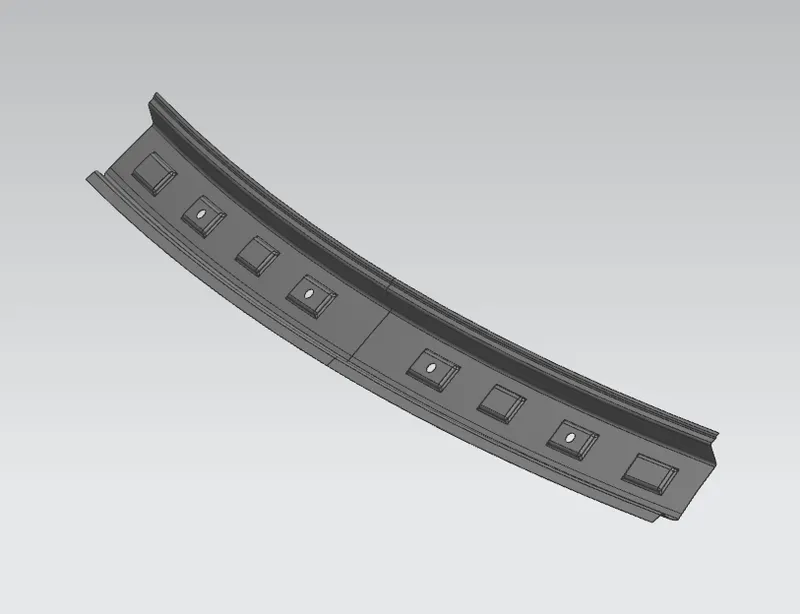
front roof rail is attached to the outer panel by using spot welding. the height of the front roof rail is depends on the head room clearance and the thickness of the head liner which is attached to the outer panel for avoiding a metal contact to the passenger and provide good interior condition. for improving strength we can provide some embosses on the bottom surface of the front roof rail. we can create front roof rail by offsetting front ditch area and outer panel and trim and extend the edges.
rear roof rail
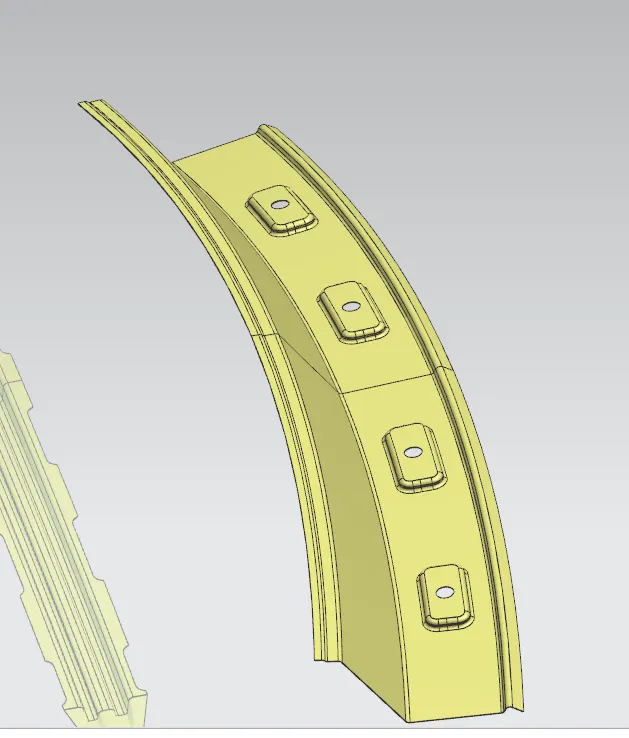
the height of the rear roof rail is also depends on the rear head room clearance. it does not cover the back side view of the driver as well as the passenger. it also contain some embosses to improve its strength. rear side of the rear roof rail is attached to the rear ditch area by using spot welding. and front end is attached to the outer panel by using mastic sealing. we need to provide sufficient gap for mastic sealing as per the master section.
center roof rail
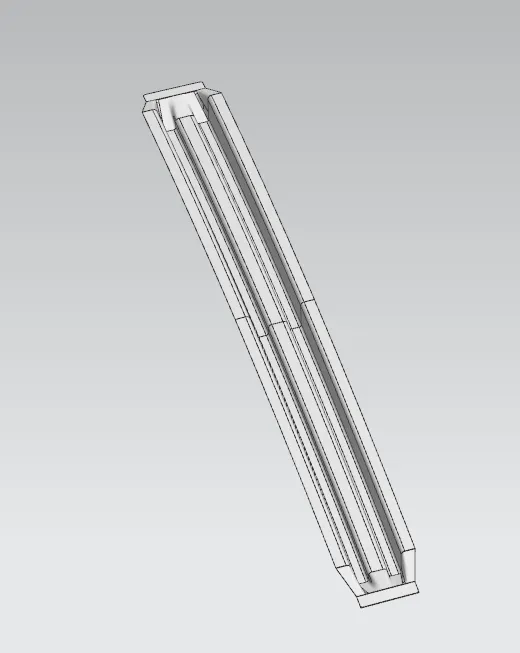
for longer roof we must provide a center roof for the better strength of the roof. center is attached to the outer panel by welding and mastic sealing as well. if sun roof door or sun roof glass need we must provide a reinforcement to the center roof.
center roof reinforcement
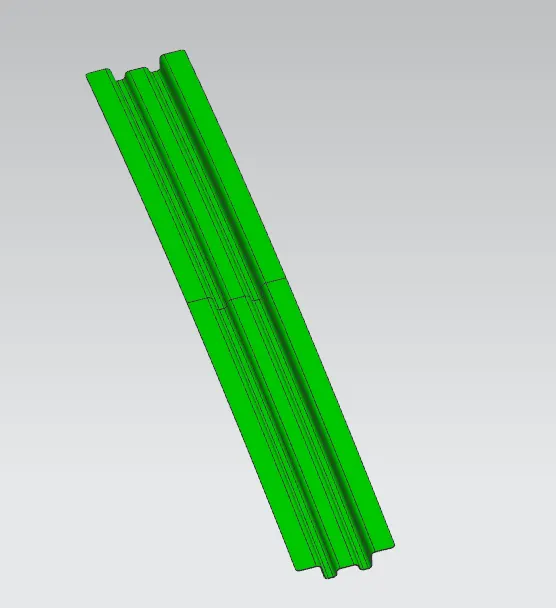
reinforcement is provided in the center roof rail for improving strength when sun roof is needed in the roof.
bow roofs
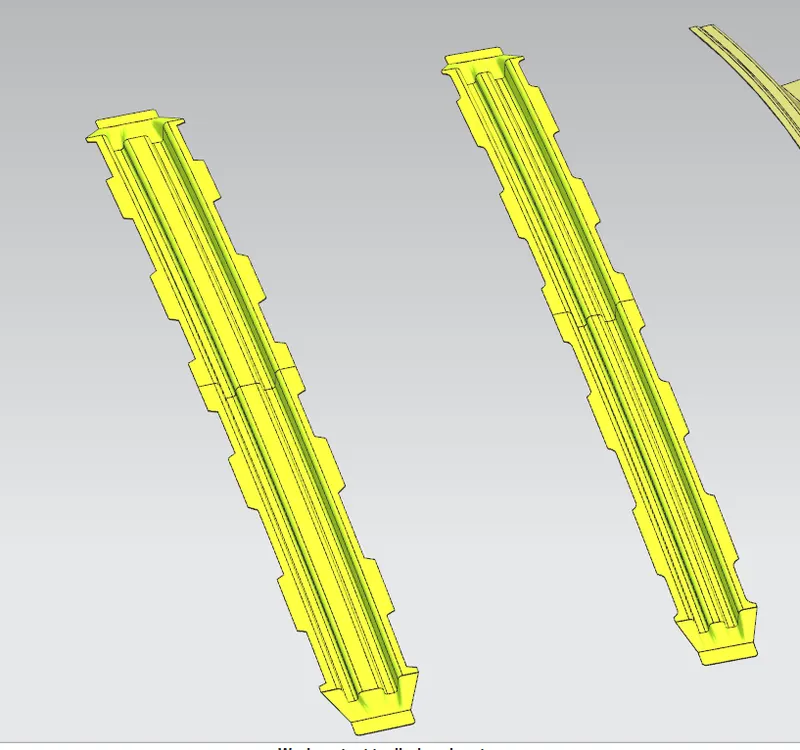
bow roofs are the roof rails which provide better stability and strength to the roof outer panel. the number of roof bows depends upon the length of the roof. bow roof is attached to the outer panel by mastic sealing.
HEAT DISTROSION STUDY ON ROOF
The heat distortion study plays a major role in sheet metal usage . heat distortion temperature is a temperature limit above which the material cannot be used for the structural applications . This study is used to predict the heat distortion temperature at where the material starts to soften when exposed to a fixed load at elevated temperature . In order to avoid bending or damages on the roof, based on the heat distortion temperature , this study will predict the bow roof position which helps to strengthen the roof.
Bow – roof prediction Formula
W = [1.73 x 10^(-3) x L] + [1.85 x 10^(-8) x (R^2)/t] + [ 1.10x10^(-3) x l] - 2.68
Where
L = Roof Length in X-Direction[mm](Roof dimension in 0-Y)
R = Roof curvature
R = 2(Rx*Ry)/(Rx+Ry)
Rx = X curvature
Ry = Y curvature
t = Roof plate thickness [mm]
l = Bow Roof Span [mm]
Judgement Condition : OK< 2.7
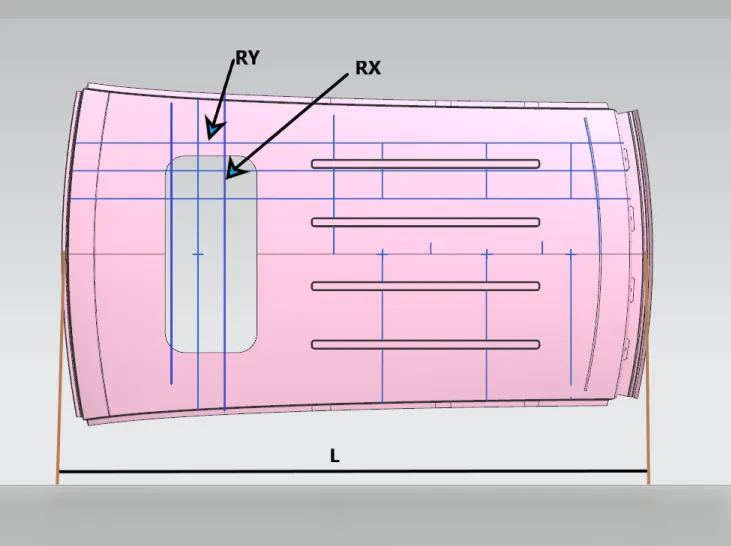
Inorder to find heat distorsion we can apply all the values into the above formula, and tabulated the values.

here we can find that all the values are less than 2.7 . so the current position and design of bow roofs are ok.
SNOW LOAD CRITERIA
This test is done to know how is the roof behaving when there is a snow fall over . normally due to the snow weight the dent will happen. But the roof should be designed in such a way that when the snow is removed the roof should go to its original position . This is the basic requirements for snow load criteria.

Qr = [Iy x t2] / [α x s x [(Rx + Ry)/2]2 x 10-8]
Where
α = My x Lx2 x 10-12 , My = Y(Ly-Y)
Judgement condition = Qr ≥ 3.1
250 ≤ s ≤ 380
t = Roof plate thickness [mm]
Ly = Distance between the front and rear roof Rails on the Vehicle along with 0Y[mm]
Length of Roof panel with the center point between Roof rail Front /Rear as the reference point of the front and the rear.
Lx = Distance between the Left and Right end of the roof on the Roof BOW [mm]
Width of the roof panel exposed on the surface.
Y = Distance front Front Roof Rail to Roof BOW[mm]
s = Distance for which Roof BOW bears divided load [mm]
s = L1/2 + L2/2
Iy = Geometrical moment of inertia of Roof BOW (Y cross-section )[mm4]
Rx = Lateral direction curvature radius of roof panel Y cross-section on Roof BOW [mm]
Roof panel curvature Radius of the Length Lx in Front view
Ry = Longitudinal Direction curvature radius of the Roof panel X cross-section on Roof BOW [mm]
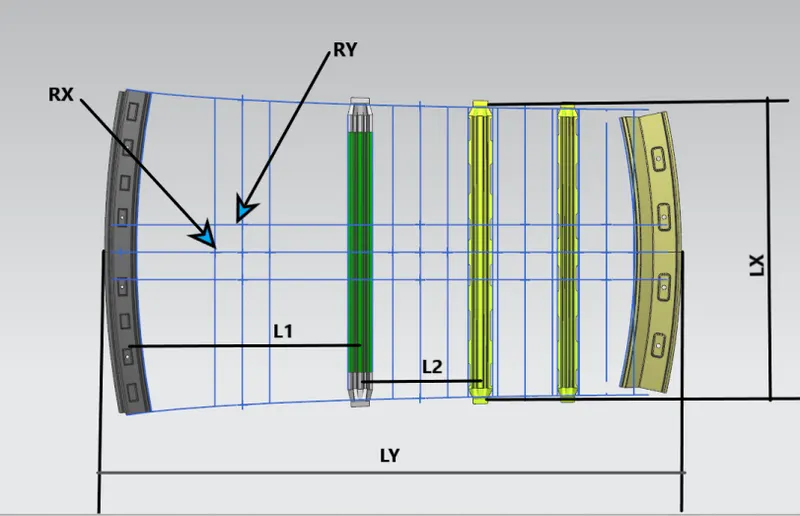
Inorder to find snow load criteria we need to put all the values into the above equation.

here we can observe that bow roof areas are below the required value 3.1 . so inorder to improve strength we need to create some embosses on the outer panel of the roof.
SECTION ANALYSIS
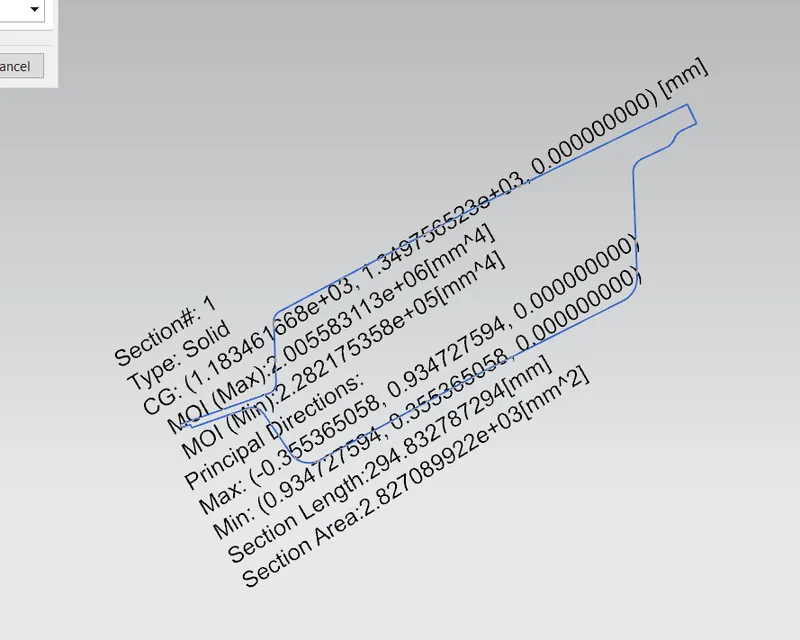
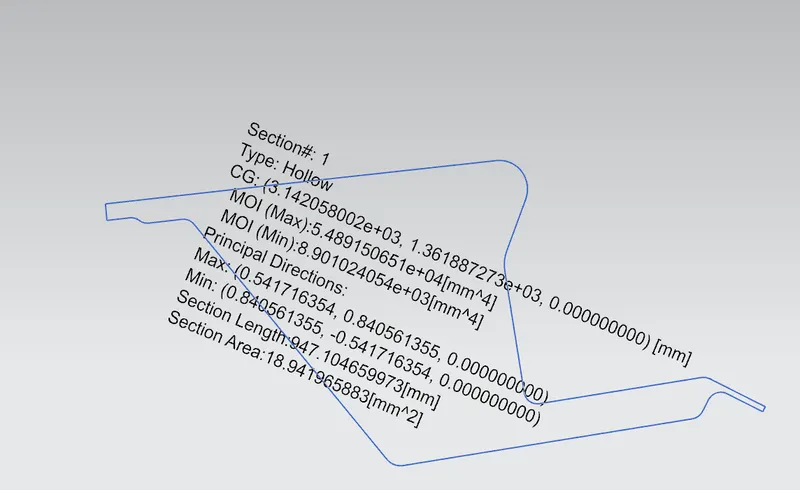
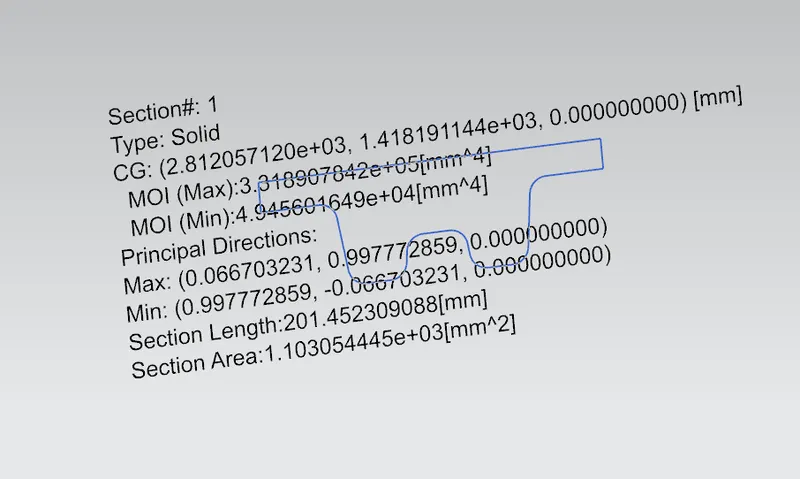
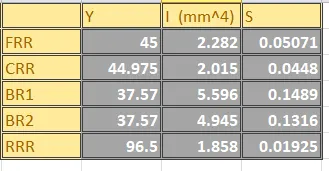
Section moment of inertia is used to predict the amount of deformation and deflection of a part. A higher moment of inertia is preferable as it reduces the amount of deflection for a given force. The thickness of the part and addition of flanges and embosses increase the section inertia of the part. Here the master sections of the roof and roof rails and their section analysis are given.
FRONT ROOF RAIL
REAR ROOF RAIL
CENTER ROOF RAIL
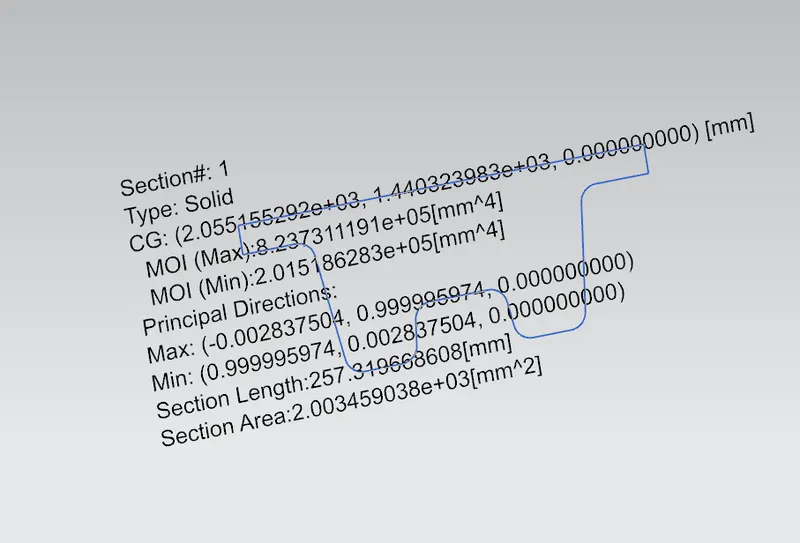
BOW ROOF RAIL 1
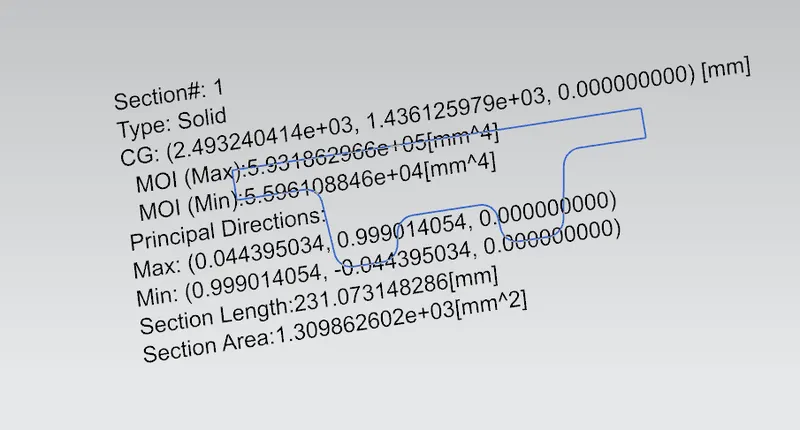
BOW ROOF RAIL 2
section modulas are tabulated in the below table
DRAFT ANALYSIS
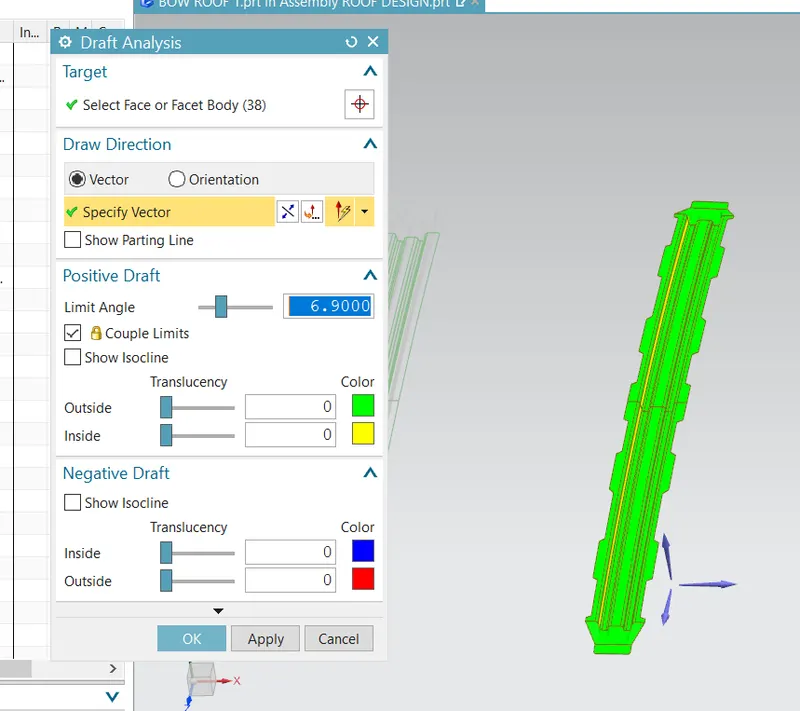
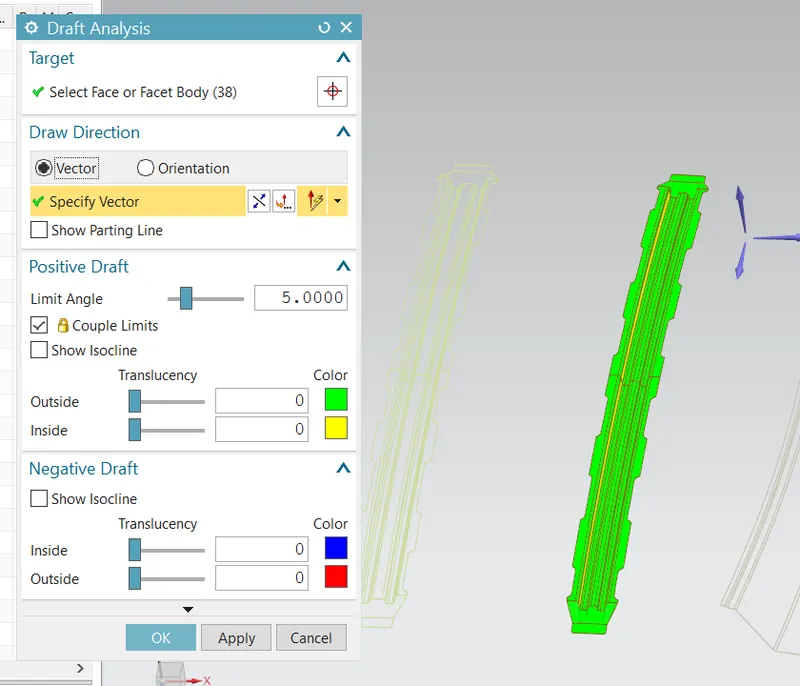
Draft must be provided in the sheet metal body for the easy removal of the sheet metal in stamping operation. The Draft Analysis command enables you to detect if the part you drafted will be easily removed. This type of analysis is performed based on color ranges identifying zones on the analyzed element where the deviation from the draft direction at any point, corresponds to specified values.
Minimum draft angle of 70 is considered for analysis . green colour infer on the parts that all face along the tooling direction has positive draft angle greater than 70 and passed in analysis
FRONT ROOF RAIL
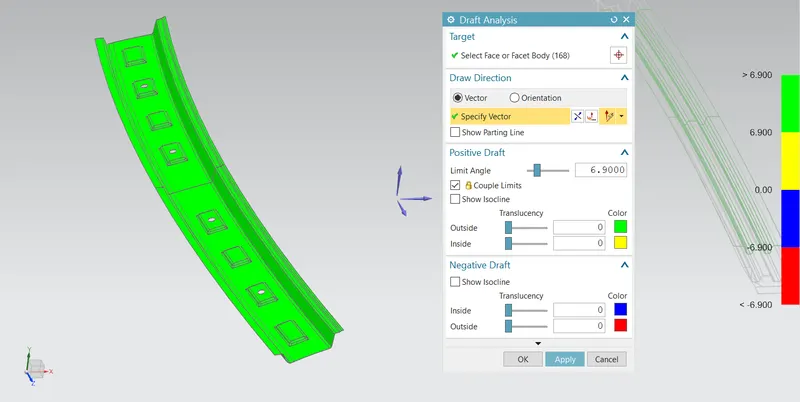
REAR ROOF RAIL
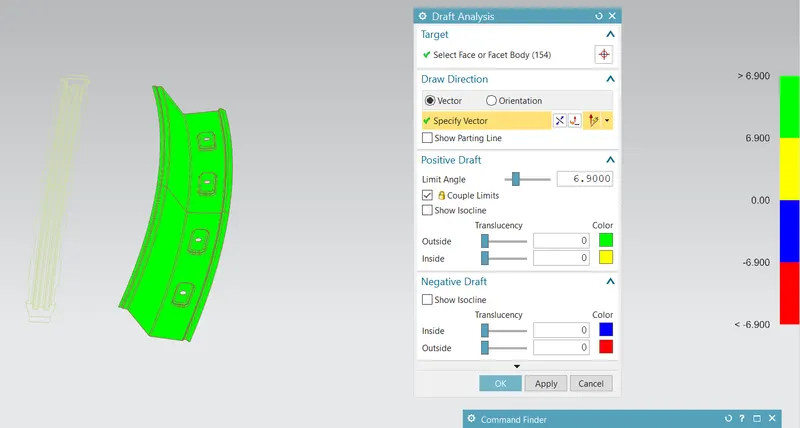
CENTER ROOF RAIL
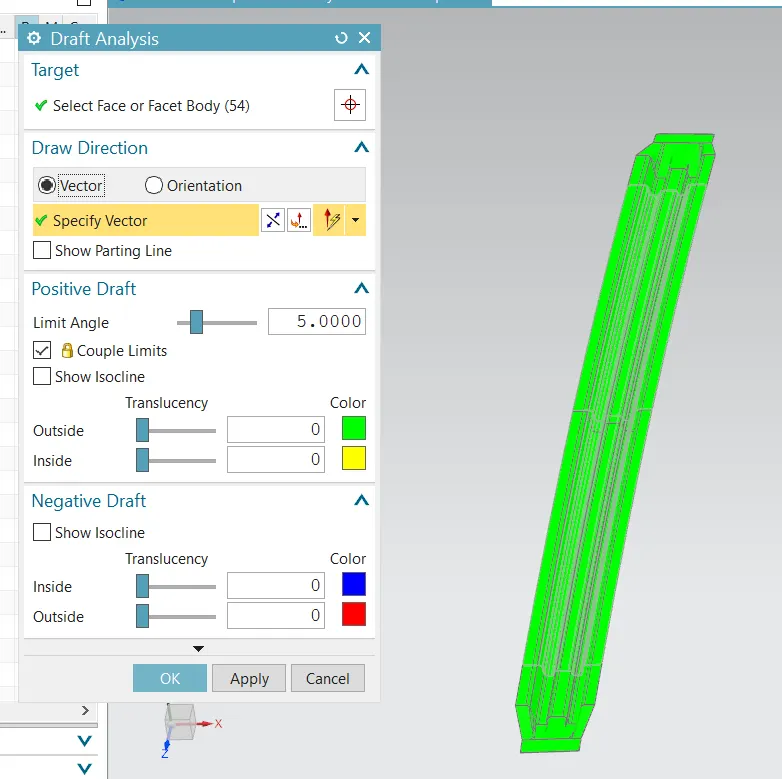
CENTER ROOF RAIL REINFORCEMENT
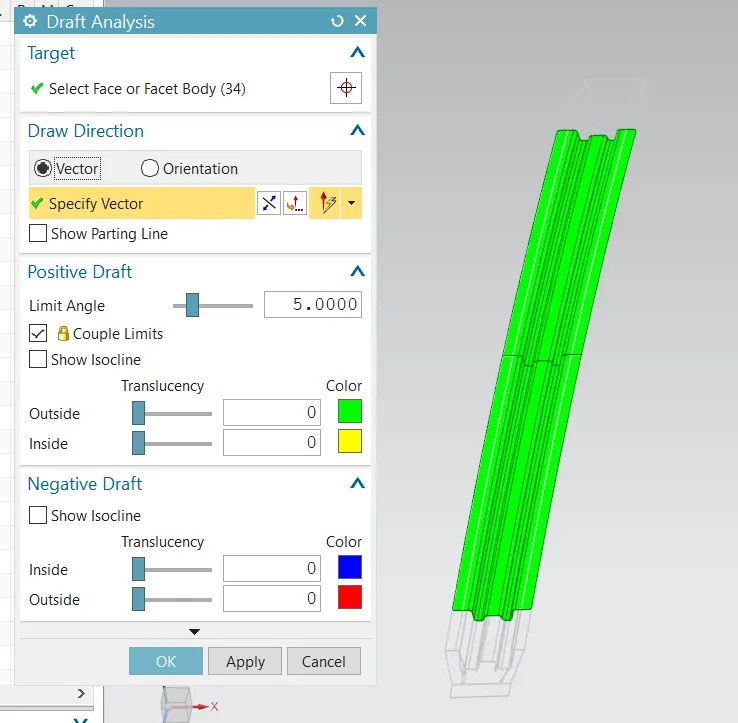
BOW ROOF RAIL 1
BOW ROOF RAIL 2
MANUFACTURING OF ROOF
An automotive roof is manufactured by using various types of metal forming process, they are blanking, deep drawing, stamping etc. The rolled sheet metal is initaily blanking using a sheet metal shearing machine. after that the blank is passes through a number of stamping and deep drawing operations. the outer panel, front roof rail, rear roof rail, bow roofs and center roof are manufacturing by using these operations. and they are joining together by using spot welding and mastic sealing.
ROOF IMAGES