Roof Design using nx
ROOF DESIGN
Introduction:
- Roof
- Type of Roofs
- Components of the roof
- Manufacturing techniques
- Design of Roof
ROOF:
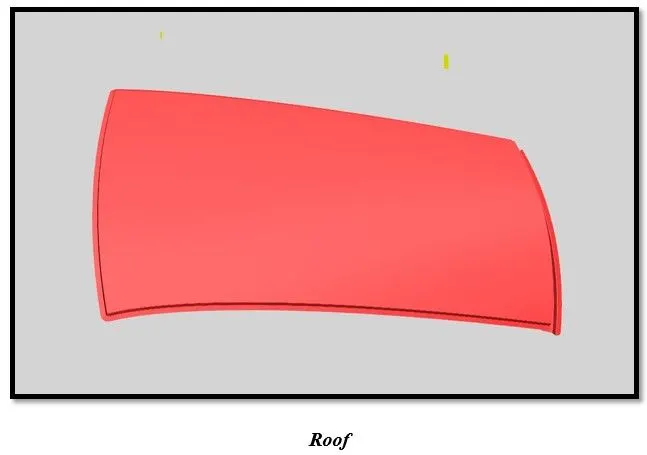
An automobile roof is the portion of an automobile that sits above the passenger compartment, protecting the vehicle occupants from sun, wind, rain, and other external elements. Under the styling surface that is seen from the outside, many other structures under the roof contribute to its strength and stability. The number of such reinforcement structures/supports differs concerning the size of the vehicle. They are primarily installed on flatter areas of the roof to enhance strength.
TYPES OF ROOFS:
Convertible:
A convertible, cabriolet, or spider is a passenger car that can be driven with or without a roof in place.
Hardtop:
A hardtop is a rigid form of automobile roof, which for modern cars is typically constructed from metal. A hardtop roof can be either fixed, detachable for separate storage, or retractable within the vehicle itself.
Sunroof:
An Automotive sunroof is a movable panel that is operable to uncover a window in an automobile roof. Which allows light and fresh air into the passenger compartment.
T-top:
A T-top is an automobile roof with a removable panel on each side of a rigid bar running from the centre of one structural bar between pillars to the centre of the next structural bar. The panels of a traditional T-top are usually made of auto-grade safety glass.
Targa Top:
It is a semi-convertible car body style with a removable roof section and a full-width roll bar behind the seats.
Vinyl roof:
Vinyl roof refers to a vinyl conversion for an automobile’s top. This conversation was originally designed to give the appearance of a convertible to models with a fixed roof but eventually, it evolved into a styling statement in its own right.
COMPONENTS OF THE RAIL:
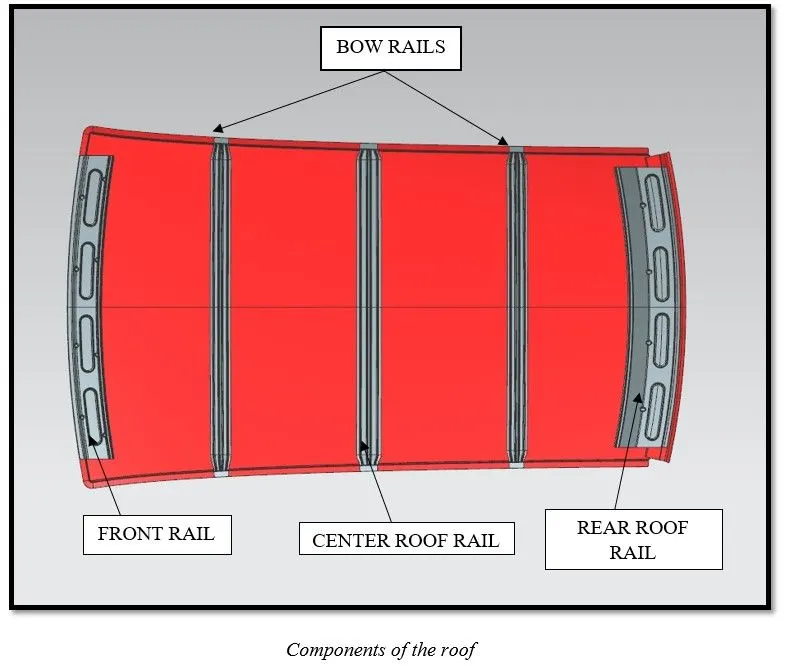
Styling Surface: It is the outer most skin of the roof.
Front Roof Rail: It supports the roof front section that connects with front view screen and a pillar
Centre Roof Rail (Reinforcement): It supports the roof section that connects B pillar.
Bow Roof Rails: It supports the roof at intermediate sections of the roof.
Rear Roof Rail: It supports the roof at section that connects the C pillar and back door.
MANUFACTURING TECHNIQUES:
Deep Drawing: The deep drawing process is a forming process which occurs under a combination of tensile and compressive conditions. A flat sheet metal blank is formed into a hollow body open on one side or a hollow body is formed into a hollow body with a smaller cross-section.
Blanking: Blanking is a metal production process, during which a metal work piece is removed from the primary metal strip or sheet when it is punched. The material that is removed is the new metal work piece or blank.
Deburring: Deburring is the process of removing the small imperfections known as burrs from machined metal products.
Spot welding: Spot welding (also known as resistance spot welding) is a resistance welding process. This welding process is used primarily for welding two or more metal sheets together by applying pressure and heat from an electric current to the weld area.
DESIGN OF ROOF:
Aim:
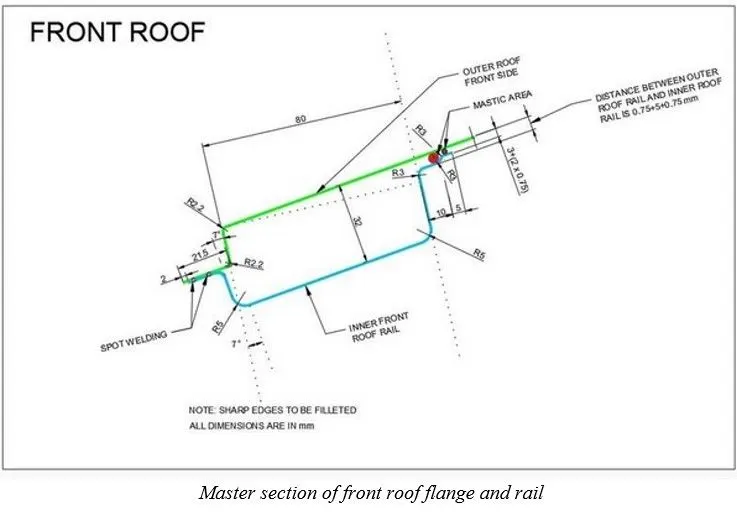
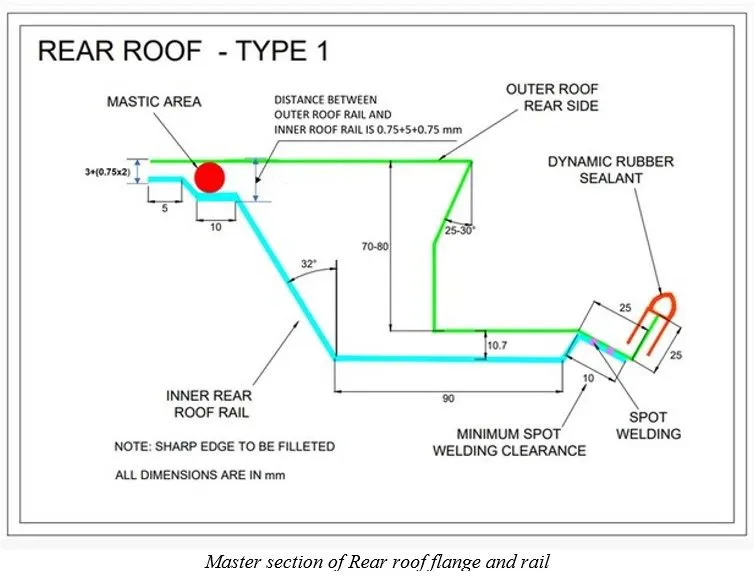
To create a roof assembly by developing the essential flanges for the outer roof and to create the reinforcements for the given roof styling.
Software used:
Siemens NX-12
Excel 2016 (for calculation)
Design parameters:
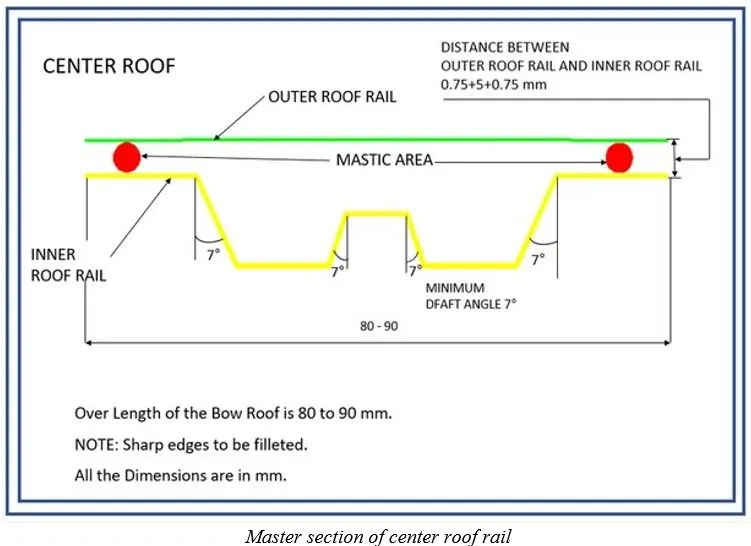
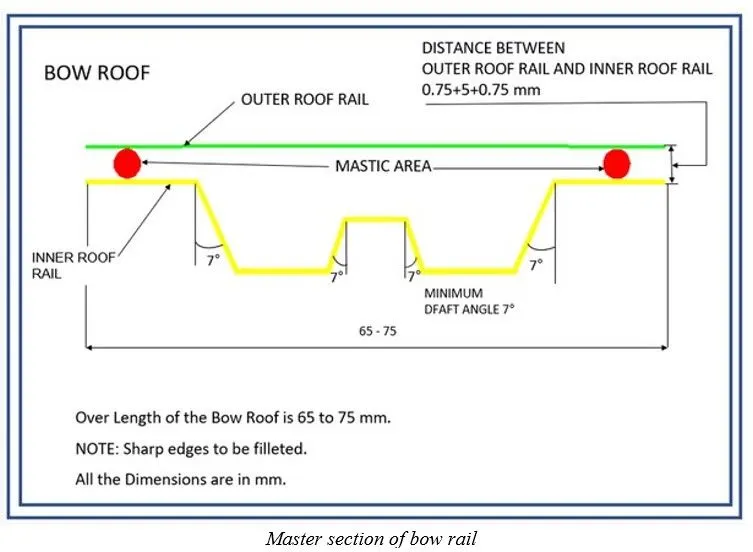
FORMULA USED:
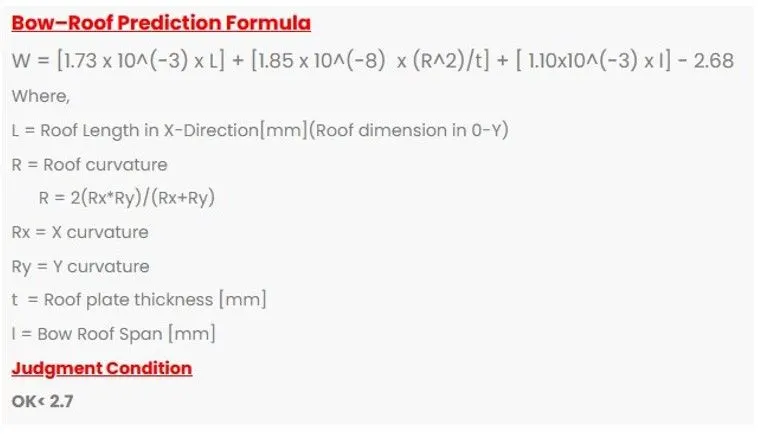
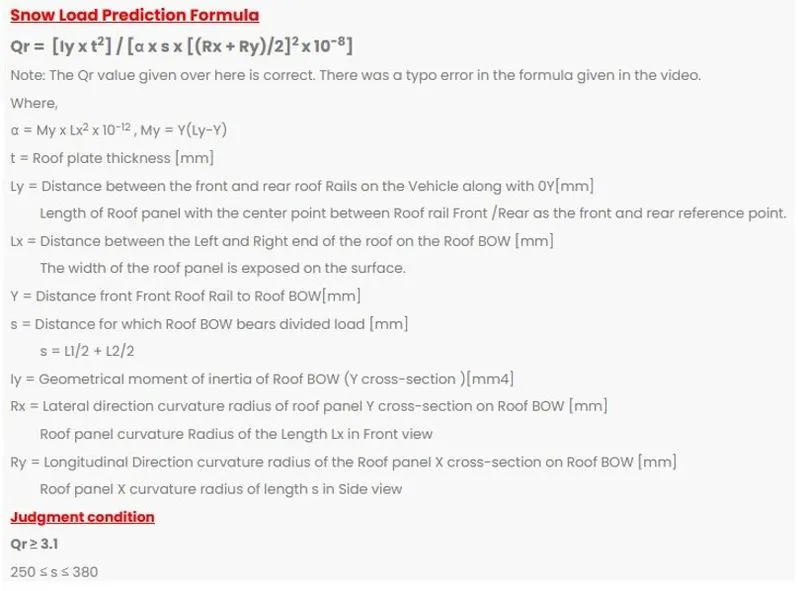
DESIGN CONSIDERATION:
- Visibility Criteria.
- Head Clearance.
- Curvature Study.
- Heat Distortion and Snow Load Criteria.
- Draft Analysis.
- Safety Parameters.
PROCEDURE:
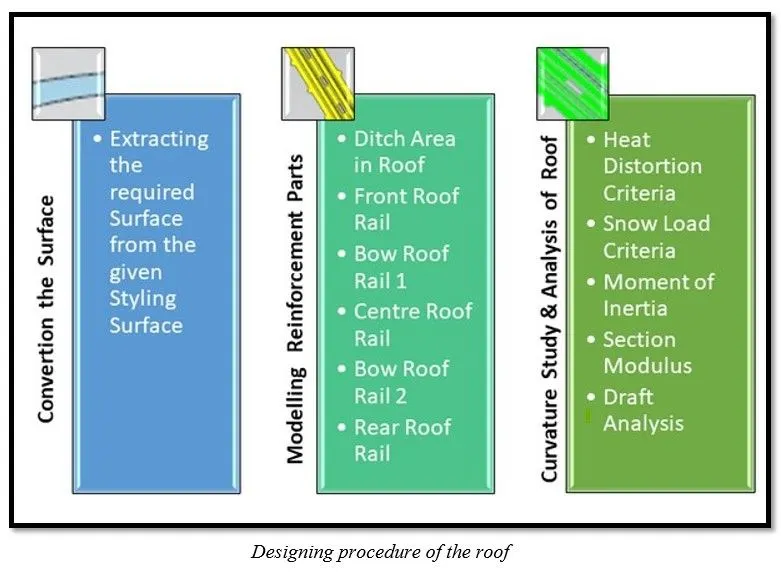
METHOD:
1. Convertion of surface
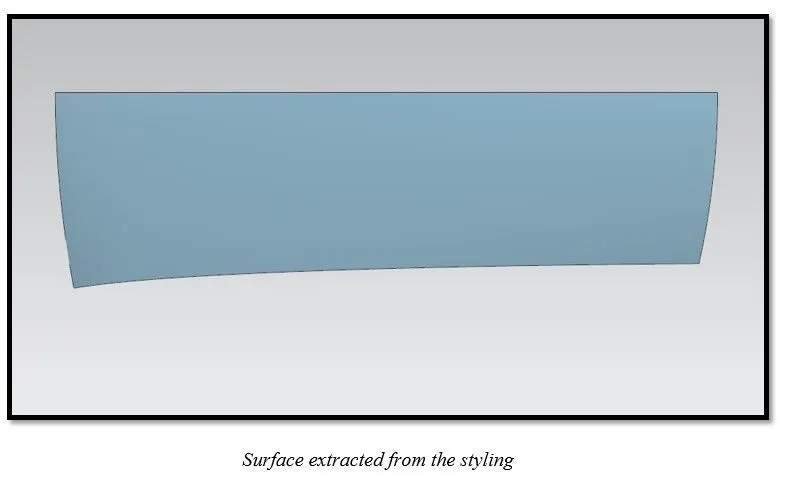
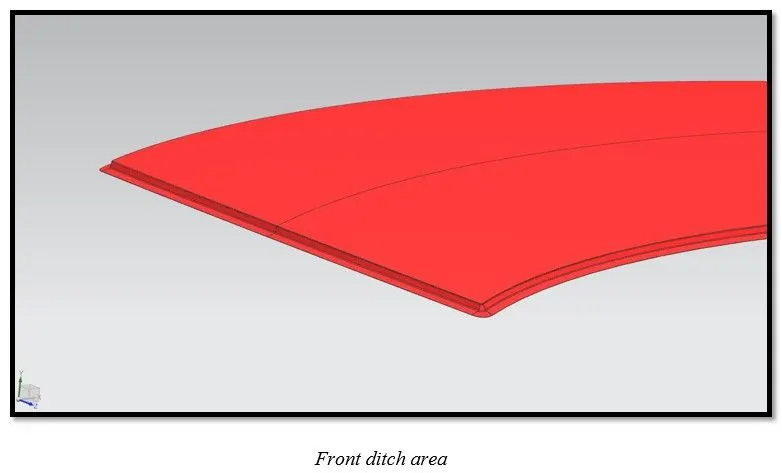
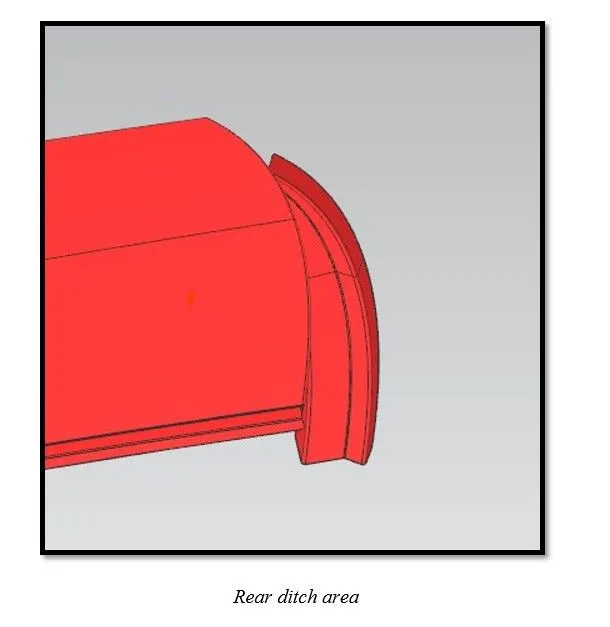
2.Modelling reinforcement parts
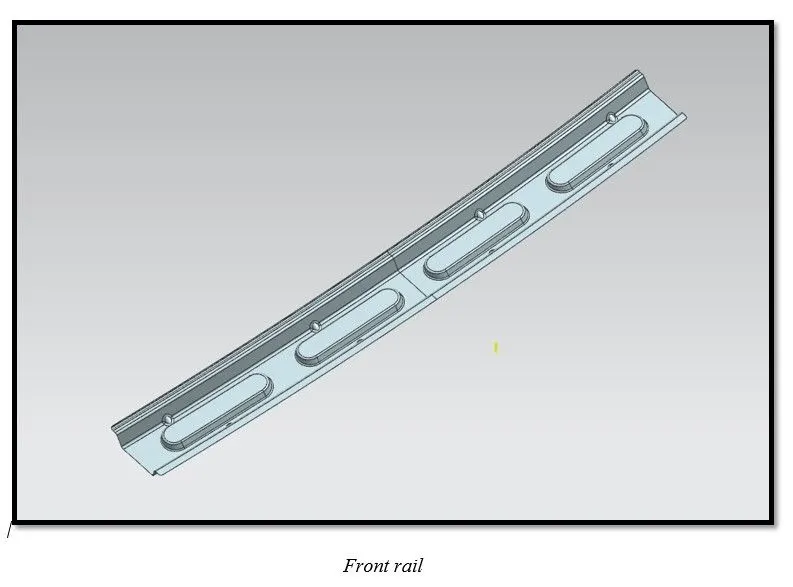
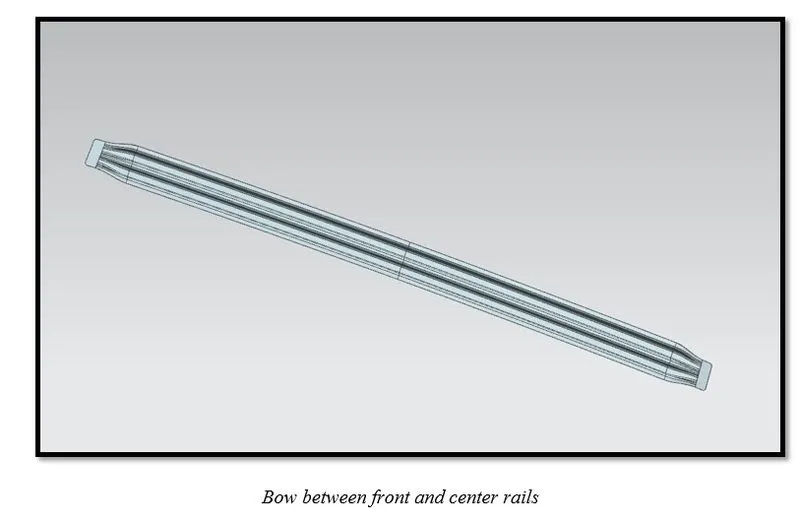
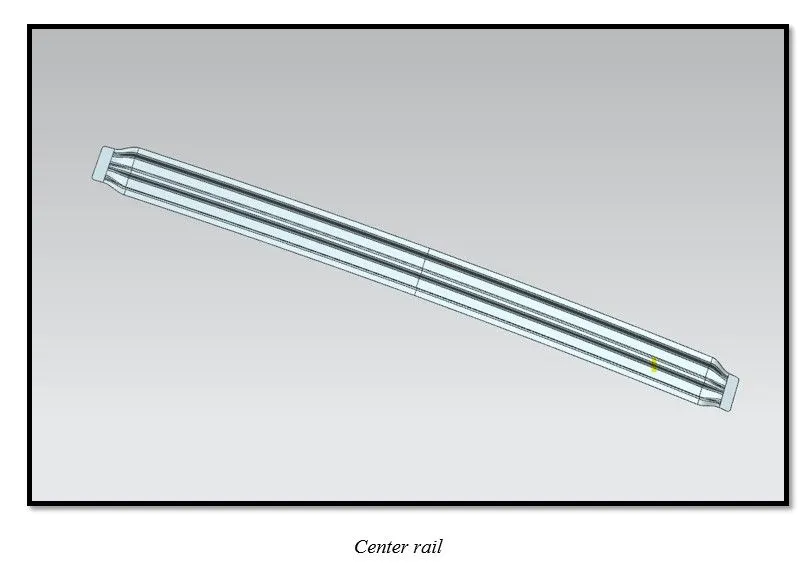
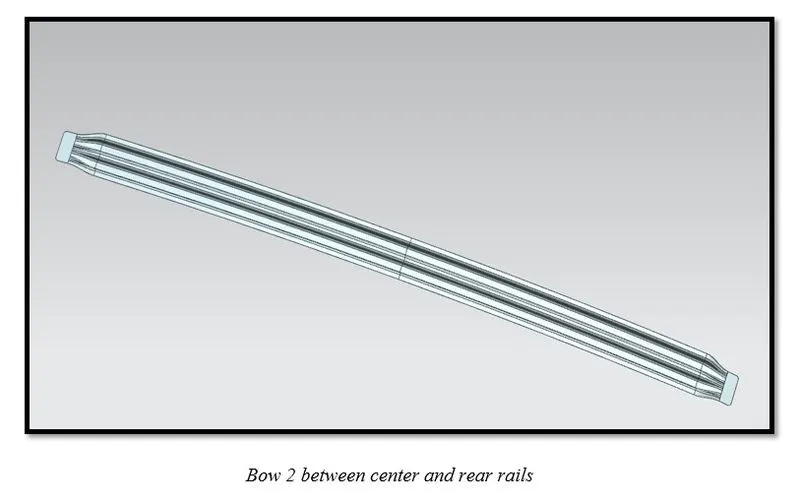
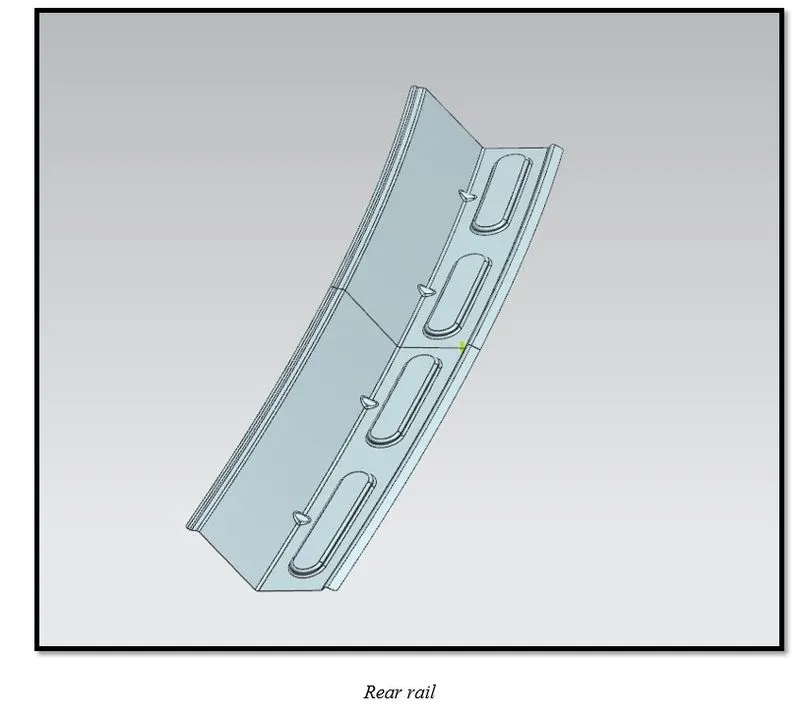
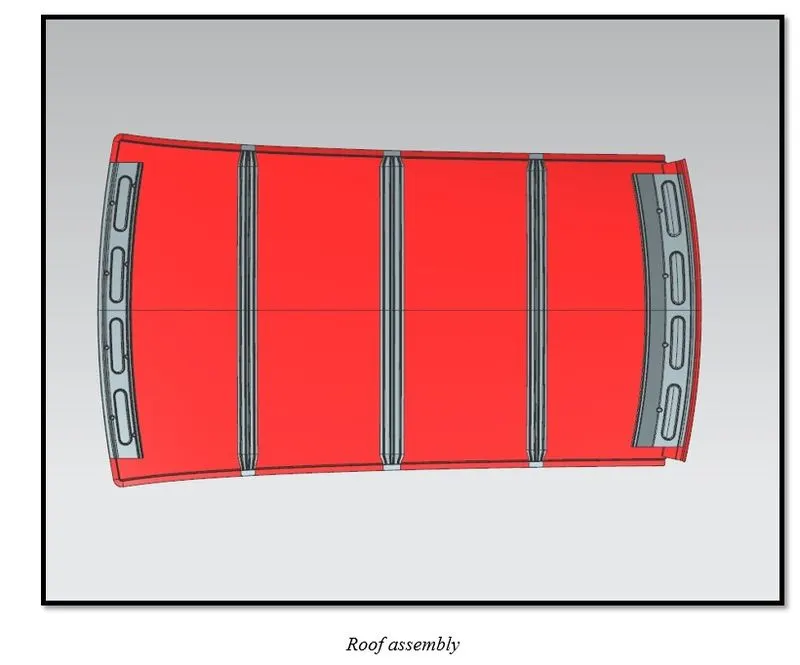
3. Curvacture study & Analysis of Roof
HEAT DISTORTION CRITERIA:
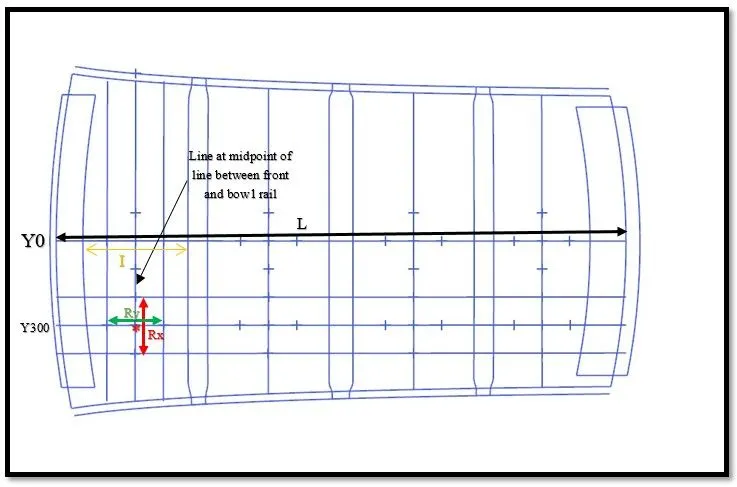
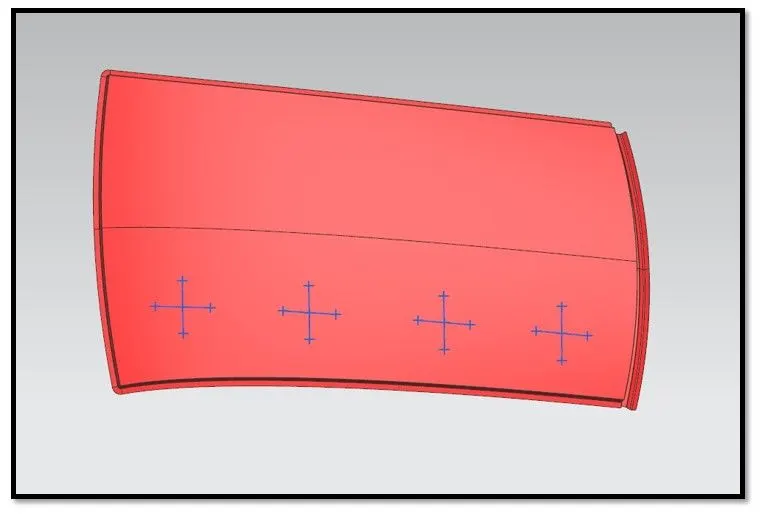
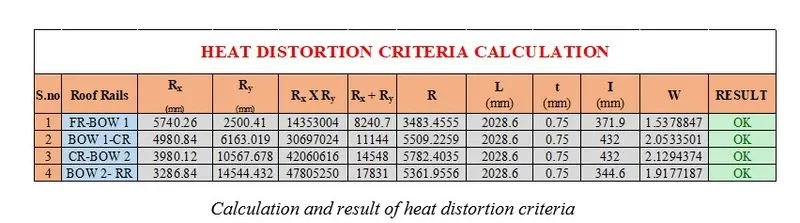
The above table shows that all the rails has passed the requirement condition of heat distortion criteria.
SNOW LOAD CRITERIA:
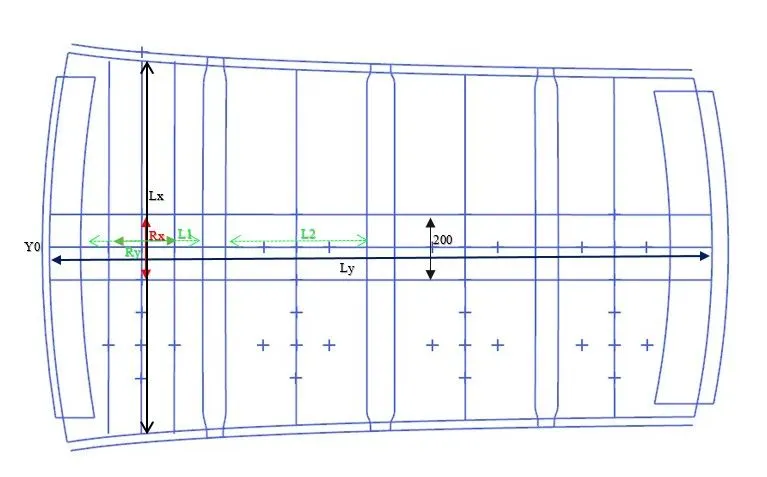
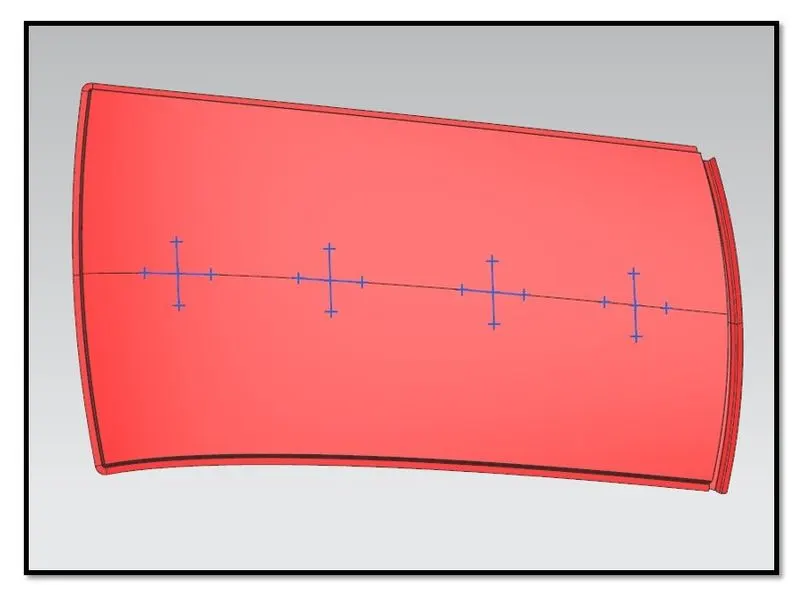
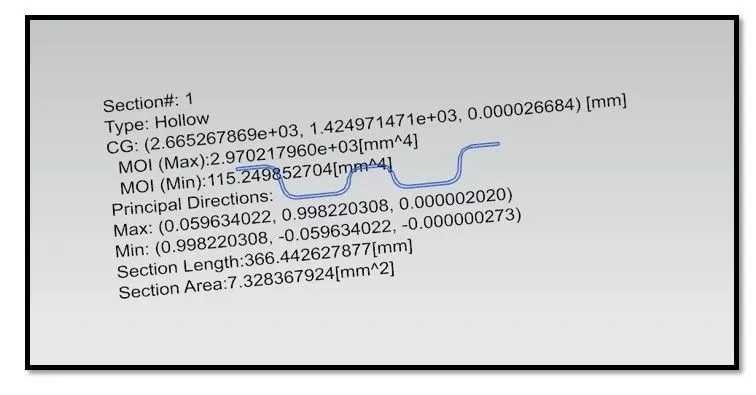
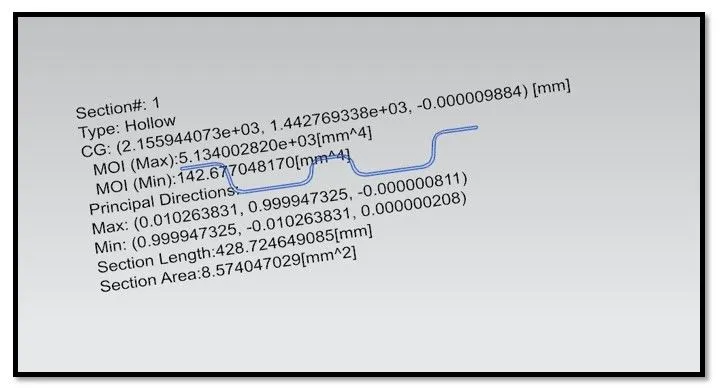
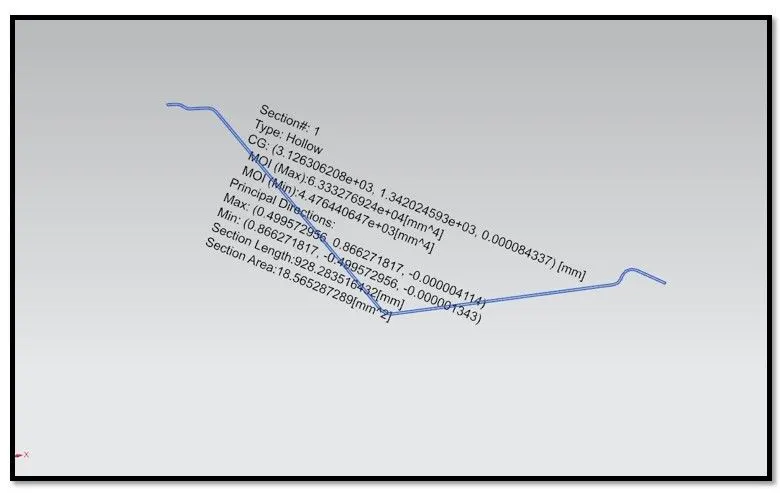
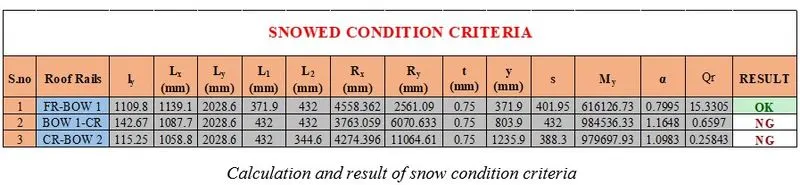
The above table shows that 2nd & 3rd rails does not satisfy the condition so roof is further stiffened to with stand the condition.
DRAFT ANALYSIS:
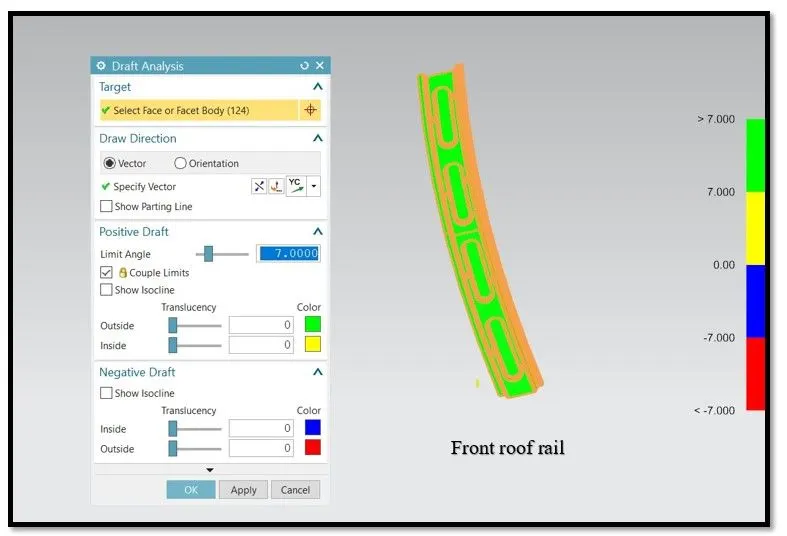
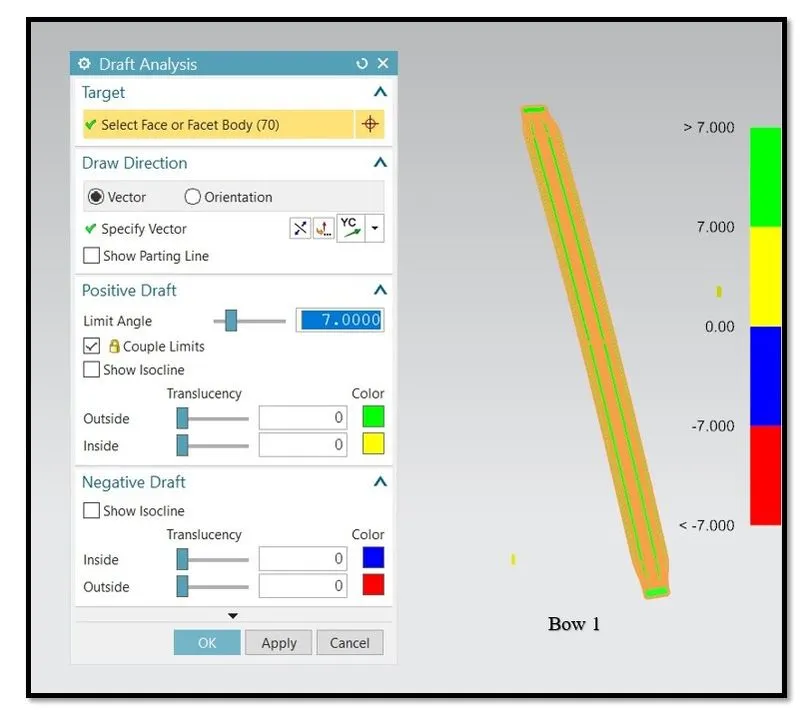
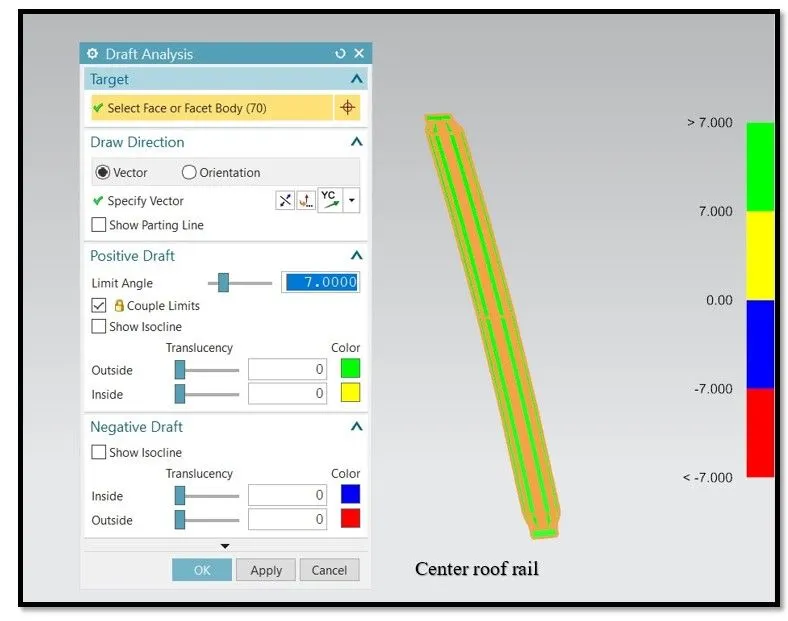
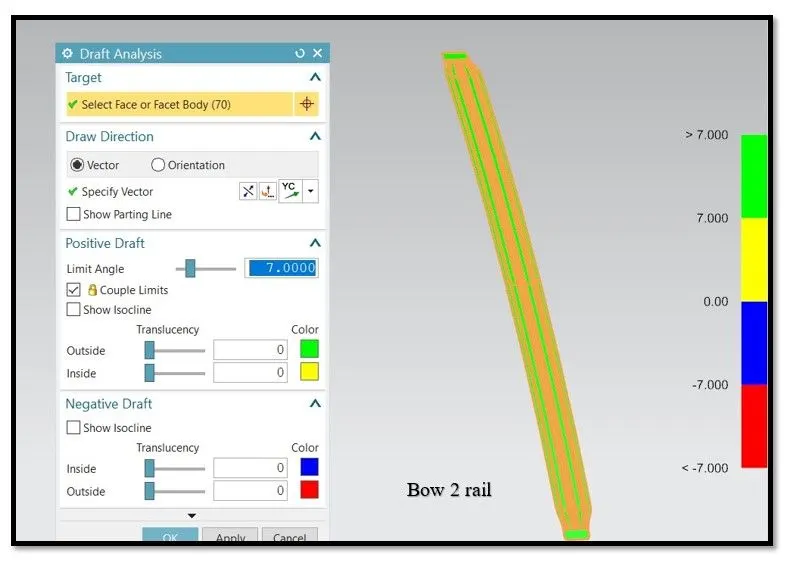
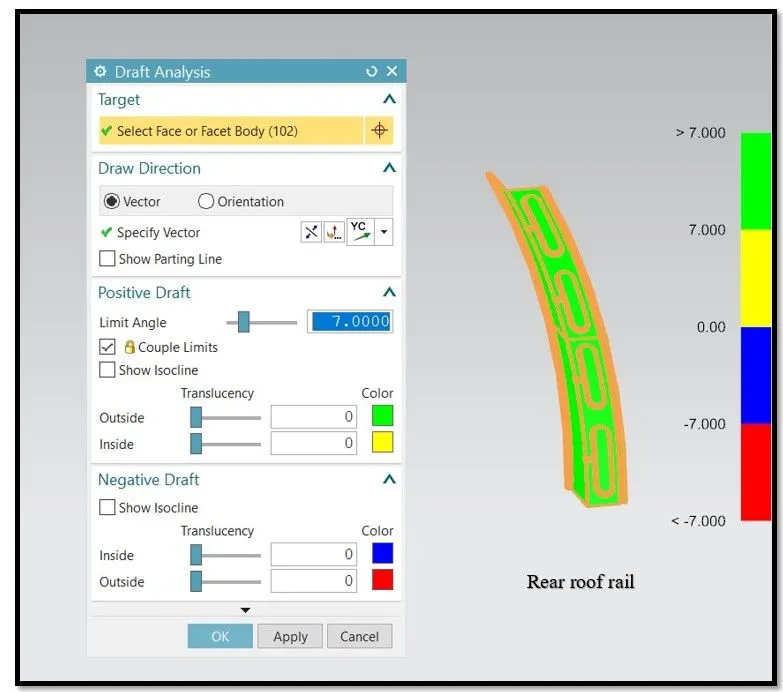
With minimum angle as 7 degree each parts are analysed for error less in further process of manufacturing of our model.
RESULT:
Hence, a roof assembly was created by developing the essential flanges for the outer roof and created reinforcements for the given roof styling, and curvature study on roof assembly and calculation for the position of the bow roofs has been done.