Hood design-Week 2
HOOD DESIGN
INTRODUCTION
- What is HOOD?
- HOOD assembly
- Design consideration of HOOD
- Manufacturing Methods For Production Of Hood
- Hood Designing
Introduction on HOOD
Hood is defined as the front top of a car or other vehicle that covers and protects the engine, or a protective covering that removes fumes or exhaust.
The hood (North American English) or bonnet (Commonwealth English) is the hinged cover over the engine of motor vehicles. Hoods can open to allow access to the engine compartment, or trunk (boot in Commonwealth English) on rear-engine and some mid-engine vehicles) for maintenance and repair.
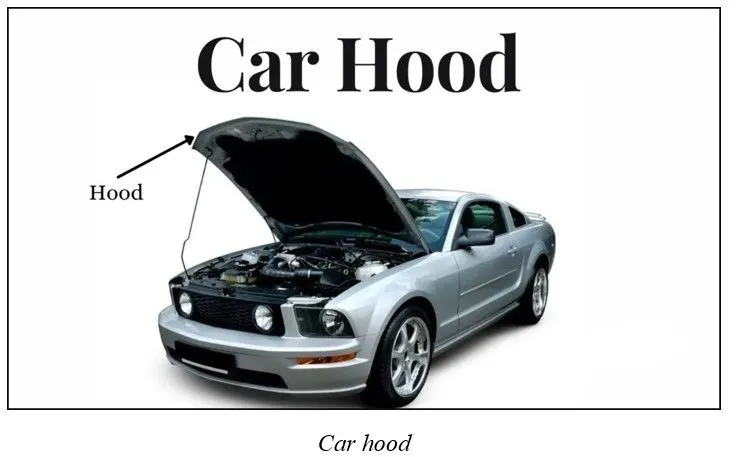
HOOD ASSEMBLY
Hood consists of the following components
- Hood Inner panel
- Hood outer panel or skin of the hood
- Reinforcements
- Latch and striker assembly
- Hinge assembly
- Hood inner panel
It is the skeleton of the hood and provides proper strength to the hood. It accommodates all the
Other components of the hood assembly based on functional requirements.
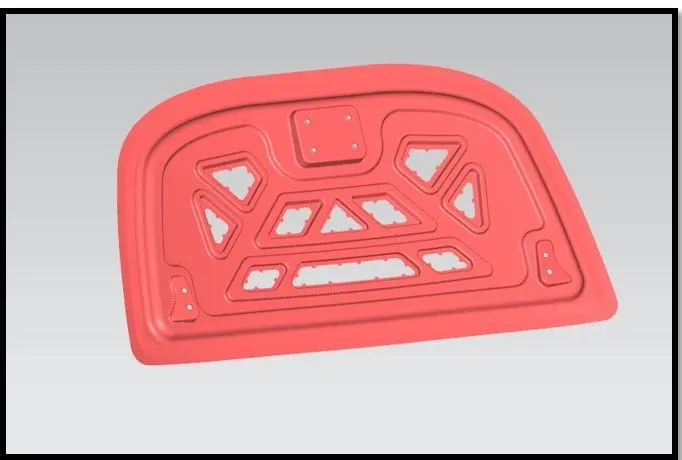
2. Hood outer panel
It is the outer most skin of the hood, covers the automobile's engine compartment and other components. It enhances the overall look of the automobile and provides protection from external corrosive conditions.
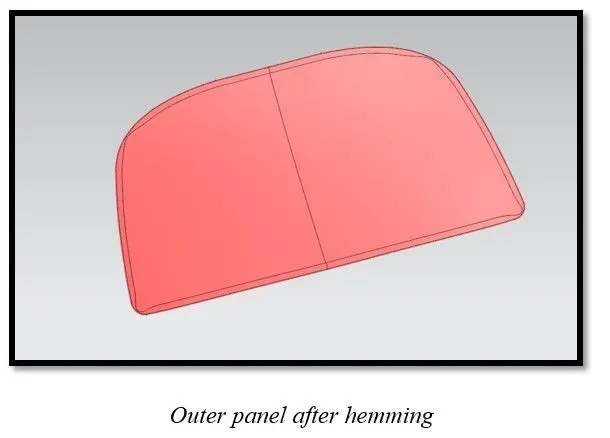
3. Reinforcement
These add extra strength to the areas where attachments for the Latch and striker assembly, Hinge assembly etc., are provided in the inner hood it minimizes the local stresses generated due to attachments.
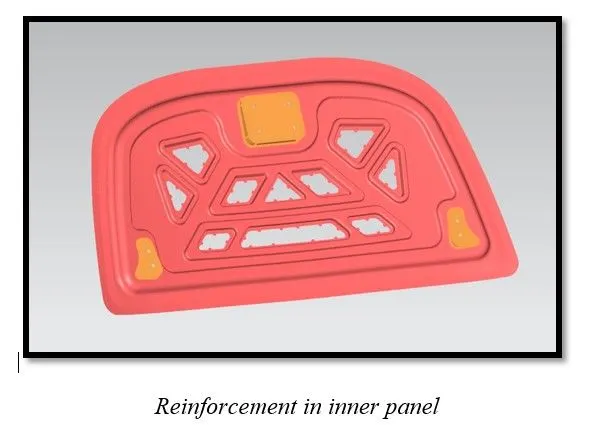
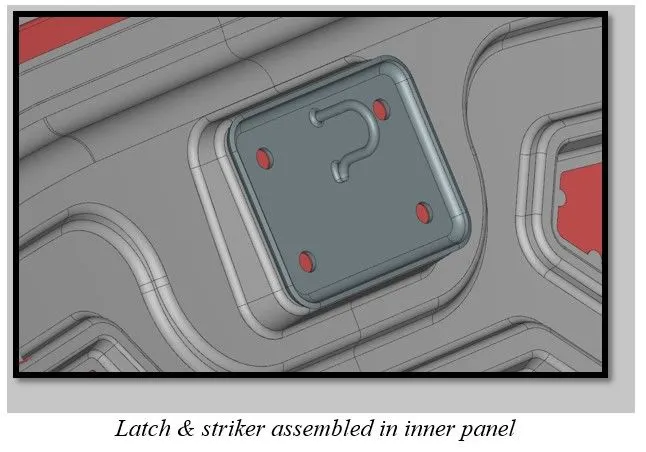
4. Latch and Striker assembly
It is a locking mechanism of the hood attached to the inner panel and to the body of automobile.
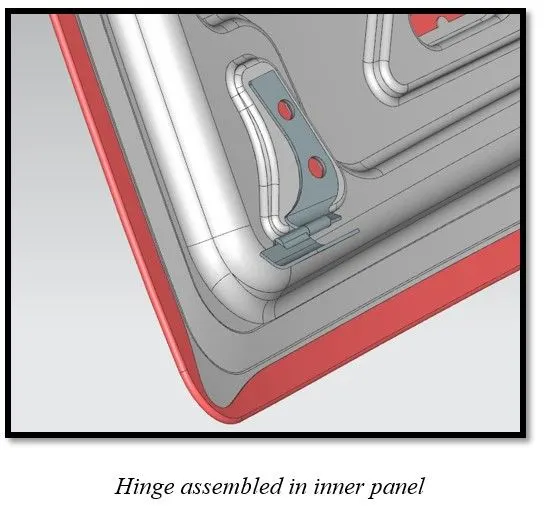
5.Hinge assembly
It provides the rotational degree of freedom to the hood about the hinge axis in order to access the engine compartment of the automobile.
DESIGN CONSIDERATION OF HOOD
- opening angle
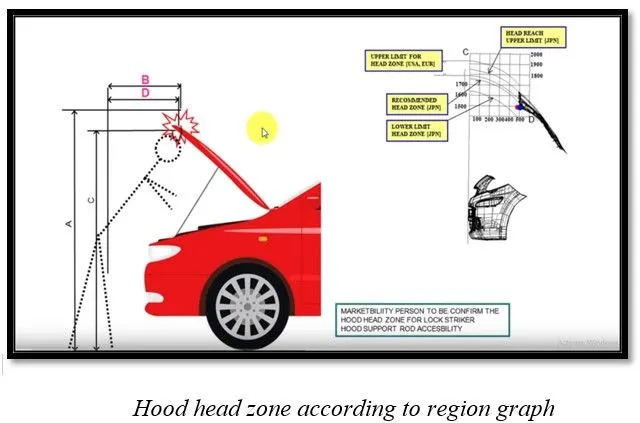
- Hood Head Zone according to the region
- Study on Hood stay
- Better pedestrian safety
- Safety from crash to the passenger
- Mastic Data ( NVH)
1.Opening angle
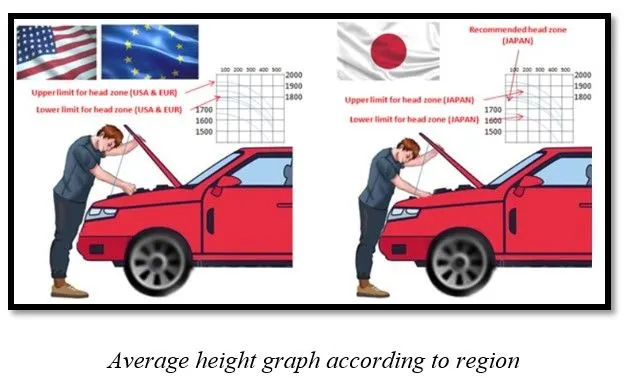
As the opening angle varies from region to region, first we consider the opening angle according to the region where the car is developed.
In India and Japan Market the average height of the Human is 5.5ft (approx.), but in European and US Market the average human height is 6ft.
2.Hood head zone according to the region
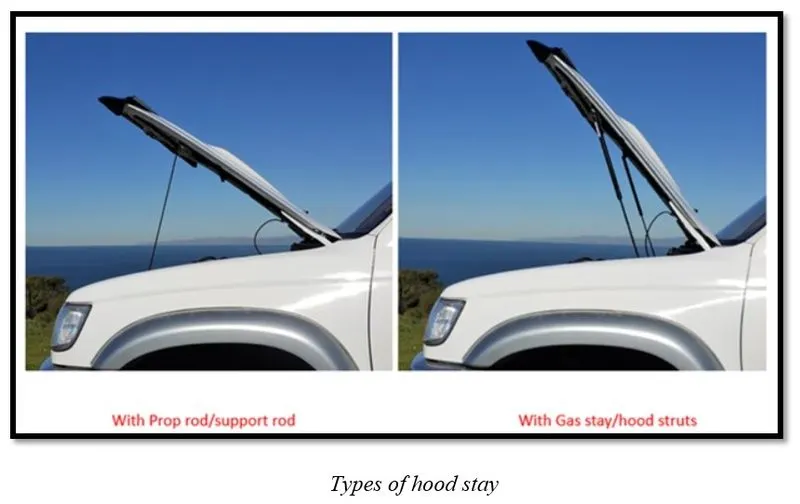
On considering the region, the change in opening angle is controlled by the gas stay or support rod. Whenever you open the hood you will have a rod, used to dismantle and fix it to the engine compartment or you take it from the engine compartment and fix it to the hood. By predefining the length of the support rod varying opening angle can be achieved. Whenever the hood is opened there should be a clearance between the tip points of the hood to the striker.
3. Study on hood stay
A hood stay is an apparatus for an engine room of a car, which can safety keep an engine hood in an open state even if an external force is abruptly generated due to vibration, wind and can facilitate an opening/closing operation of the engine hood. In other term, it’s a device for supporting the engine hood of a motor vehicle in its open position.
Purpose: An automotive engine hood is arranged to be opened for the purposes of inspecting the engine room, replenishing cooling water and / or engine oil, charging parts, making repairs etc.
4. Better pedestrian safety
When we take a 45 degree angle line (i.e. side reference line) from the ground, if the line first touches fender of the car it’s an inlaid type hood and if that line touches the hood first then it’s a wrap around type hood.
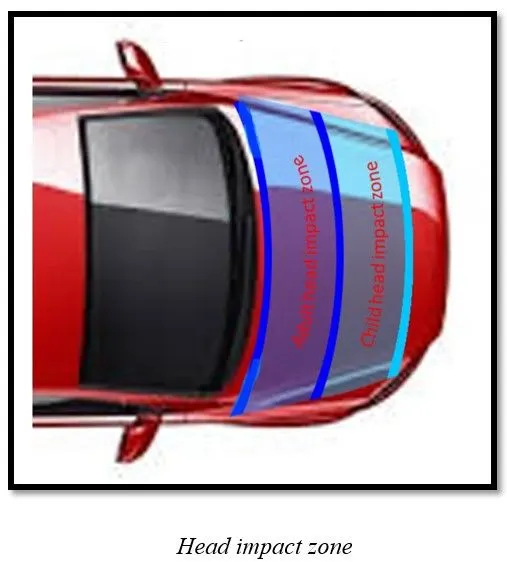
The side reference line is studied to understand the head impact as per EURO NCAP. As we seen earlier EURO NCAP is which analyse the test that got to be carried over to understand how much the car is safer for the pedestrian.
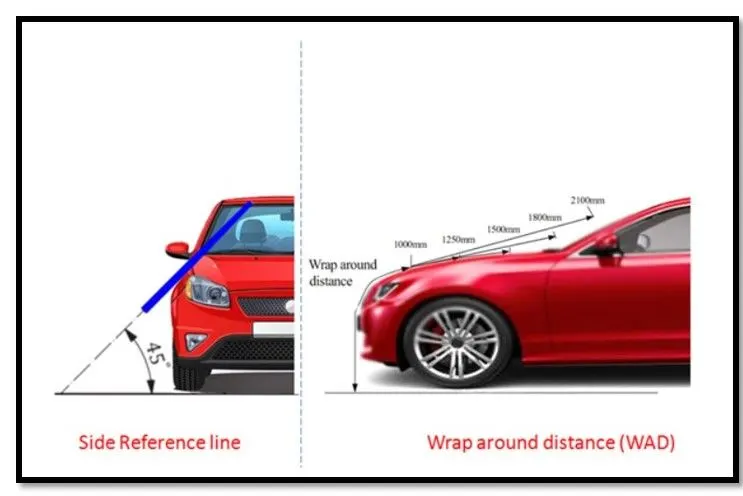
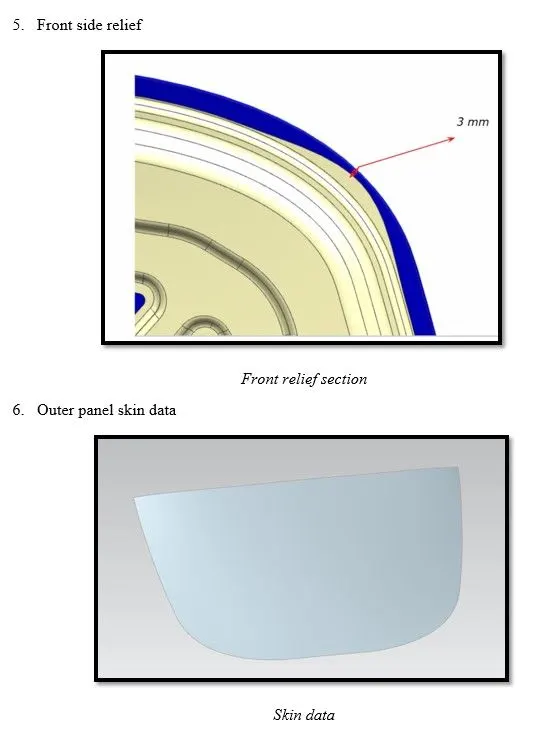
When we get the skin data of the hood we also check this, we will check the side reference line for the car. If the car has a wraparound hood the head impact is less. Whenever there is a collision with the pedestrian, he tent to hit in the hood/bonnet. These hitting is defined with child head impact zone and adult head impact zone. WAD (Wrap around distance) distance is the distance from ground till the hoods end. If my side reference line is falls more outside (on fender), the wrap around distance (WAD) will be more and impact zone will be less. If the side reference line falls on the hood, the WAD will be less and impact zone will be more.
5. Safety from crash to the passenger
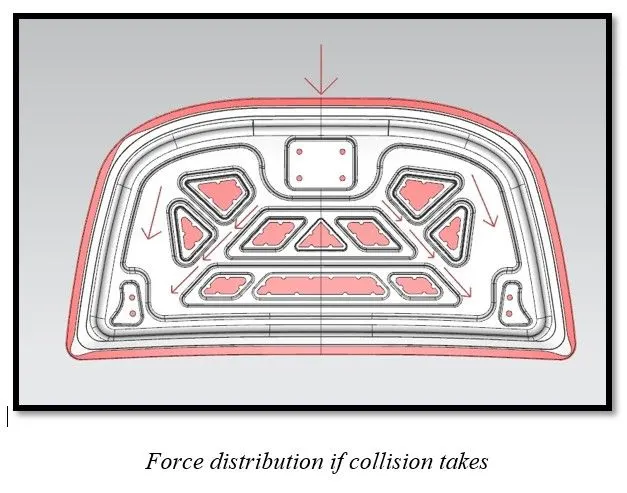
During the crash of an automobile the hood should be crumbled so that it can absorb the forces and directs the force distribution towards the hinges. Ribs are provided to the inner hood to stiffen the hood.
6. Mastic data (NVH)
It is basically an NVH topic mastics are point / surfaces given on embosses for applying mastic sealant to join outer and inner panel and also give good value of NVH.
So mastic sealants are joining material used to join inner and Outer panel and at the same time reduces the NVH value.
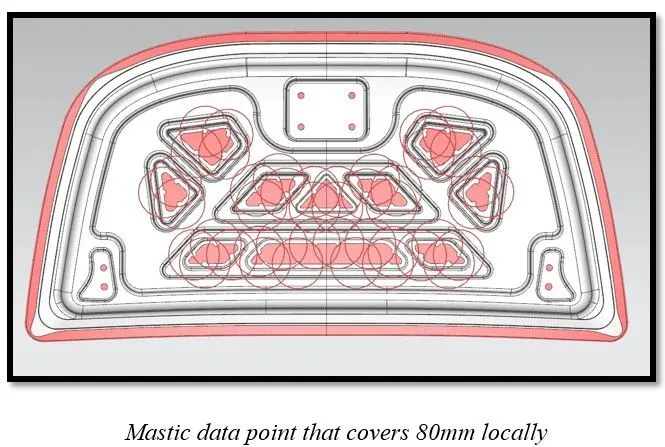
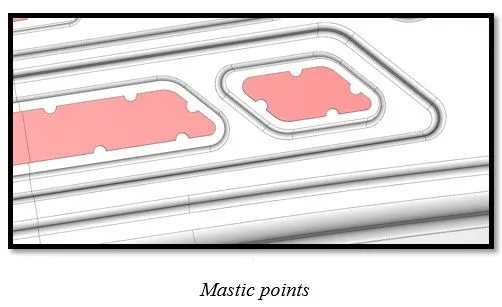
One spot of mastic sealant provides strength locally at around 80 mm so we need to put these mastic points in such a way that it covers the most of the hood region except reinforcement area of latch and hinge because that alone provide good NVH so no worries there.
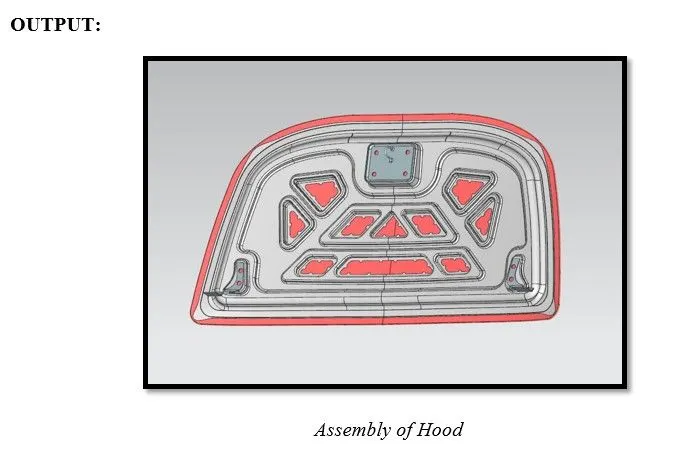
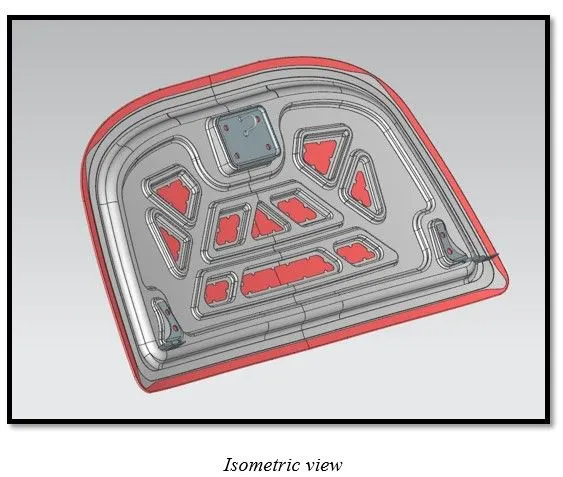
Here I have spotted points where I have applied mastic data when mastic sealant will be applied and while undergoing hot bath it gets hardened & make the joint strong. Designing inner panel one must take care of spaces to provide on panel for latch and hinge.
MANUFACTURING METHODS FOR PRODUCTION OF HOOD
- Hemming
- Deep drawing
- Edge cutting and hole punching
- Deburring
1. Hemming
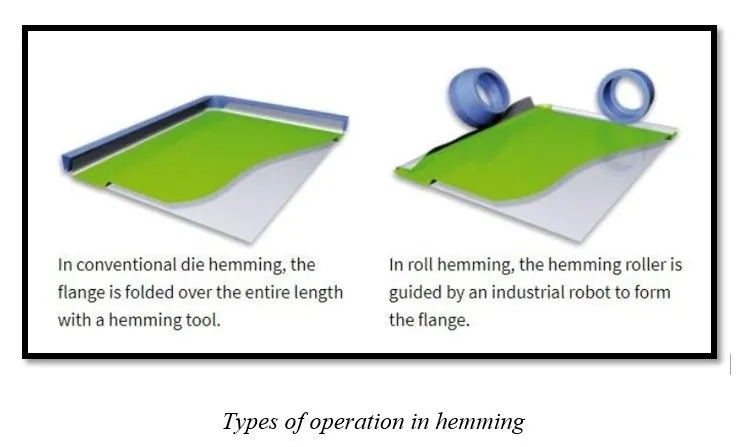
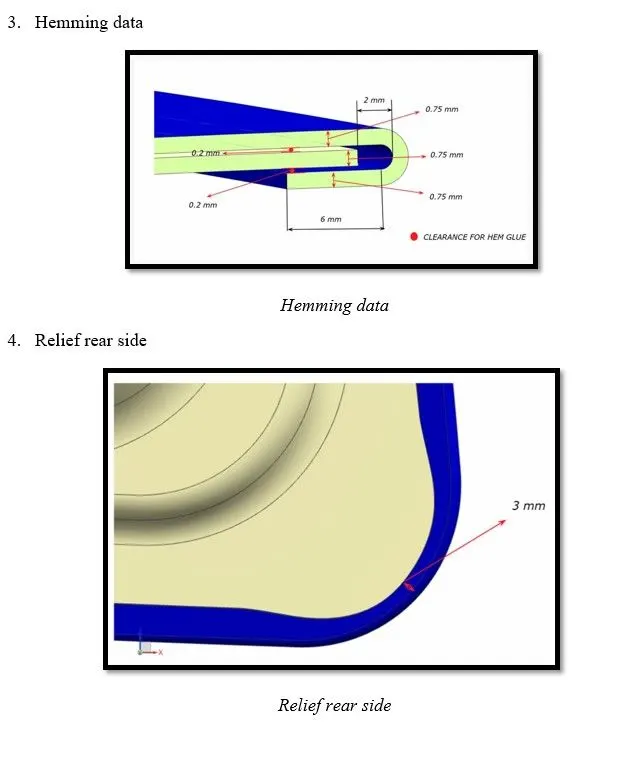
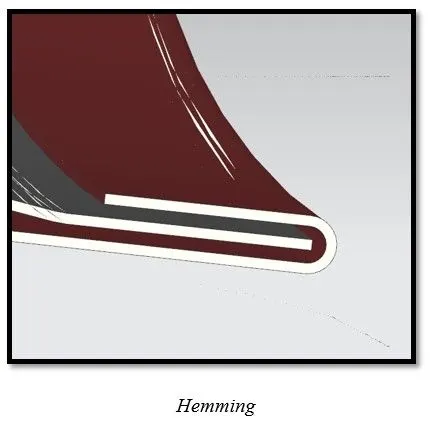
Hemming is a forming process in which the sheet's edges are folded or folded over another section to create a snug fit. Hemming procedures are commonly used to join parts, improve the look of a part, and reinforce part edges. In car part production, hemming is used in assembly as a secondary operation after deep drawing, trimming and flanging operations to join two sheet metal parts (outer and inner) together. Typical parts for this type of assembly are hoods, doors, trunk lids and fenders. There are various types of hemming operations:
Conventional die hemming b) Roll hemming
2. Deep drawing
The deep drawing process is a forming process which occurs under a combination of tensile and compressive conditions. A flat sheet metal blank is formed into a hollow body open on one side or a hollow body is formed into a hollow body with a smaller cross-section. In the automotive industry, deep drawing is usually carried out using rigid tools. When drawing complex car body parts in practice, there is usually a combination of stretch and deep drawing involved. It is necessary that the sheet metal is stretched as well as possible without reaching the material’s limits (e.g. splits, wrinkles).
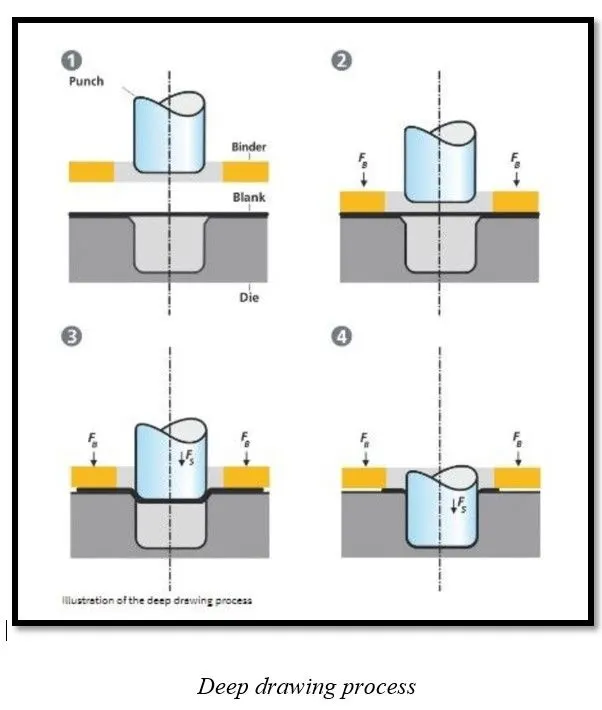
The figure illustrates the deep drawing process. The rigid tools consist of a punch, die and binder. In deep drawing, the plate holder closes after the metal sheet blank has been inserted.
3. Edge cutting and hole punching
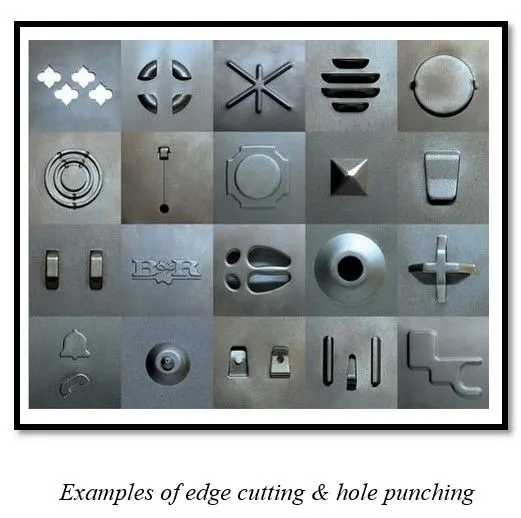
The outer cover plate after stretch forming and inner cover plate are placed on respectively on corresponding trimming and piercing die, carry out trimming shaping and piercing and shaping die, draw accurate overall size, blanking pressure gets 46KN to 68KN
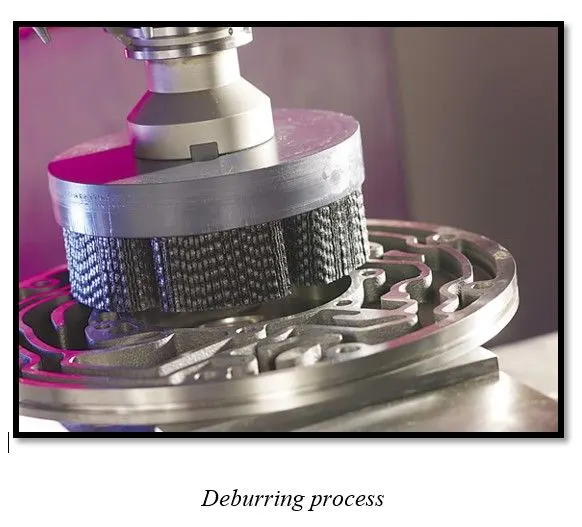
4. Deburring
Outer cover plate and inner cover plate are arranged on corresponding stationary fixture respectively, uses sander to get rid of the punching burr of outer cover plate and inner cover plate.
HOOD DESIGNING
Aim:
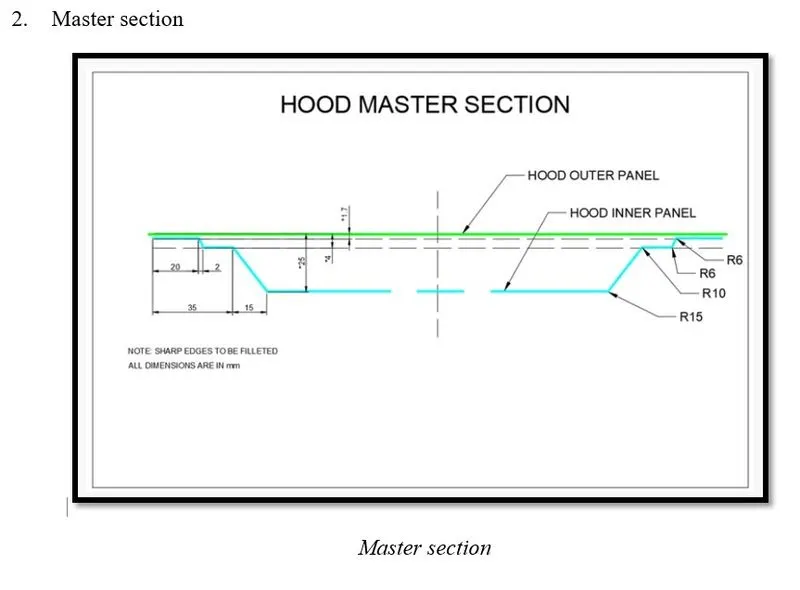
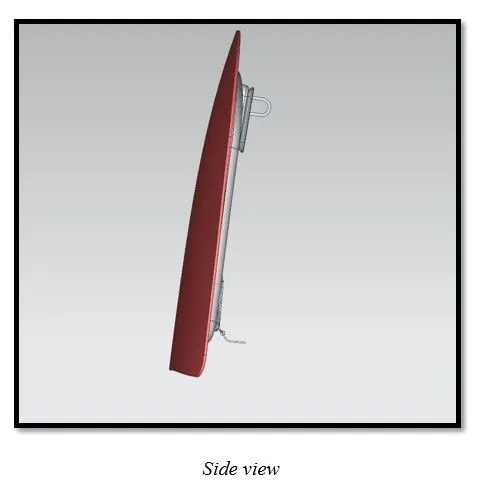
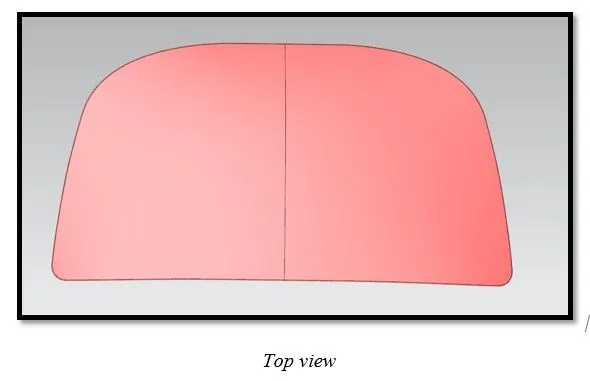
To design Hood Outer Panel, Inner Panel and the necessary reinforcements by following the Master Section mentioned with the Design parameters
Software used:
Siemens NX 12
Design parameters:
- Hood Thickness Information
- Outer Panel Thickness = 0.75mm
- Inner Panel Thickness = 0.75mm
- Reinforcement Thickness = 1.5mm
STEPS INVOVLED FOR INNER PANEL:
- Offsetting the skin of outer panel.
- Creating the flanges with reference to the master section.
- Creating the embosses inside.
- Creating hinge emboss.
- Creating the striker emboss with the help of latch trajectory.
PROCEDURES:
Embosses in the inner panel:
Whenever the collision happening the force goes straight. We as design engineers have to try dissipating the force to outside the car as early as possible. So that we create embosses in such a way, that the force direction changes towards the hinge. As a design engineer, It’s our responsibility to dissipate the forces on the way of embosses. So that it doesn’t goes directly straight and make the force do dissipate towards the hinge.
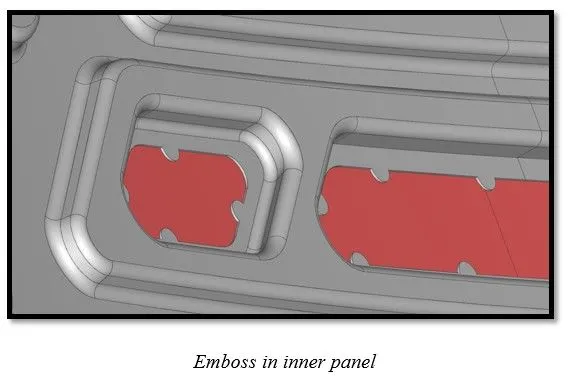
During this situation the energy what we experience during collision will reduce a lot, so that the passengers inside the cabin not get affected. We cannot give 100% guarantee that the passenger will not at all be affected, the force which is getting inside the cabin will reduce drastically with adding embosses like this.
Functional requirement of Latch and Striker assembly
The point of intersection of Striker and Latch should be tangential to the trajectory of the hood with respect to the axis of rotation of hood ( line joining the Hinges axis) and this should be strictly maintained while designing the inner hood striker mounting emboss.
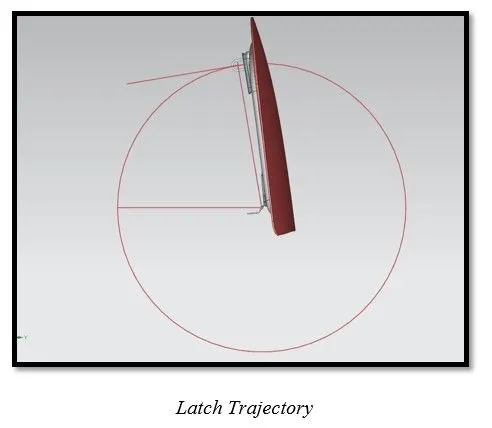
Functional requirement of Hinge assembly:
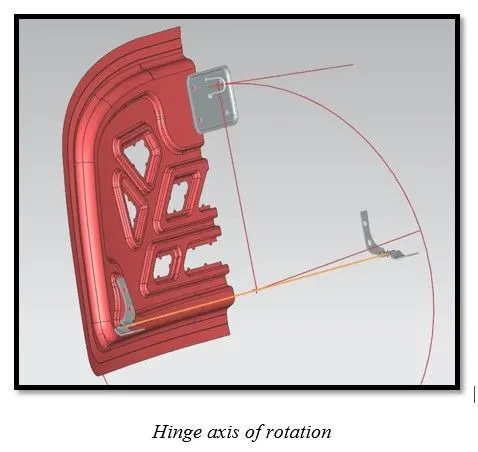
Hinge mounting surface should not have a curvature it should be maintained as plane. Axis of rotation of both the hinges should be same in order to satisfy the functional requirement based on these condition hood inner panel is designed.
Mastic Data
The hood inner panel and outer panel is joined together after the joining there will be a gap which leads to noise and vibrations in order to avoid that mastic seals are provided in between them which improves NVH ( Noise Vibration Harshness). Each mastic Point has influence of 80 mm. It is a Paste like substance which gets hardened by application of heat.
Based on Manufacturing Method (Allowances and tolerances)
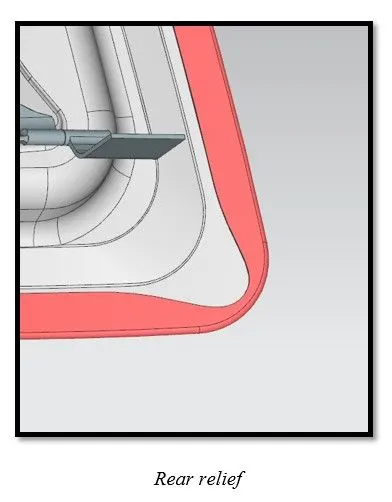
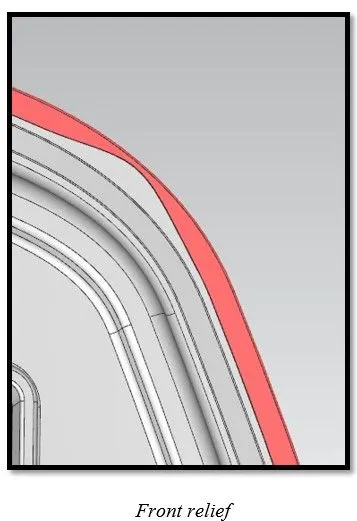
Based on master sketch provided dimensions are taken accordingly for the design using emboss, etc., for manufacturing point of view in deep Drawing a Positive Draft angle should be provided in order to tool for retraction. Hem Reliefs for the outer panel should be given. Proper Allowances and tolerances should be given.
RESULT:
Hence the design of Hood Outer Panel, Inner Panel and the necessary reinforcements by following the Master Section mentioned with the Design parameters are created successfully using Siemens NX12 CAD software.