Roof Design
Introduction
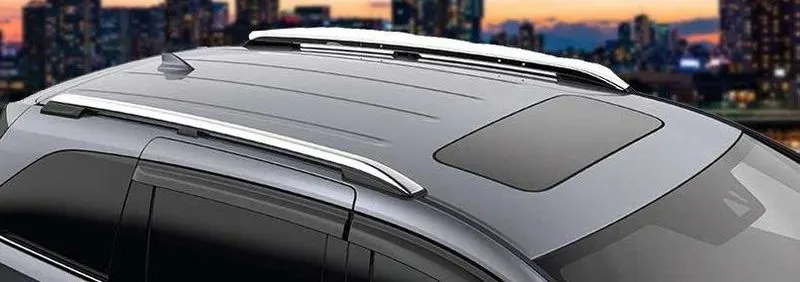
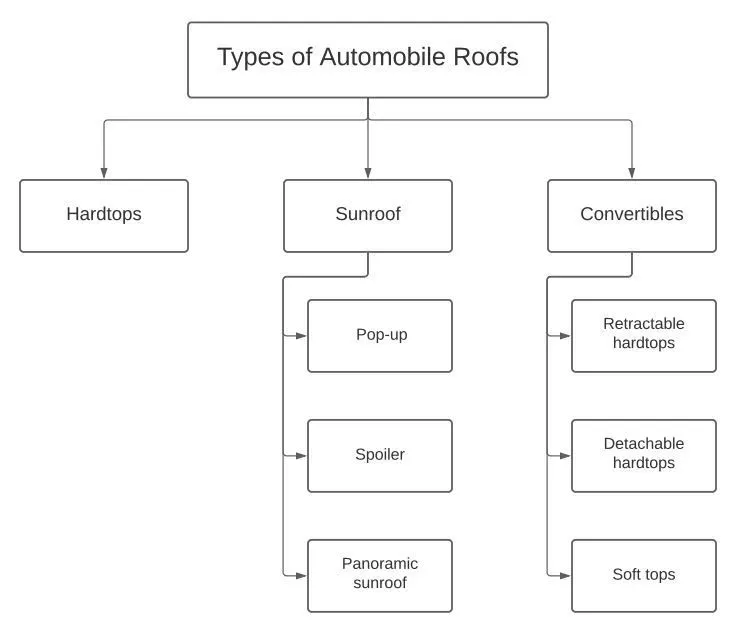
The Roof of a car is the component that encloses the passenger compartment from the top. It protects the Passengers and the interior of the car from sun, wind, rain, and external elements thus providing a safe and isolated cabin. The roof plays an important role in safety, especially in the case of rollover accidents. To achieve better safety results the roof is designed with reinforcement structures such as front and roof cross members
The major components of the Roof
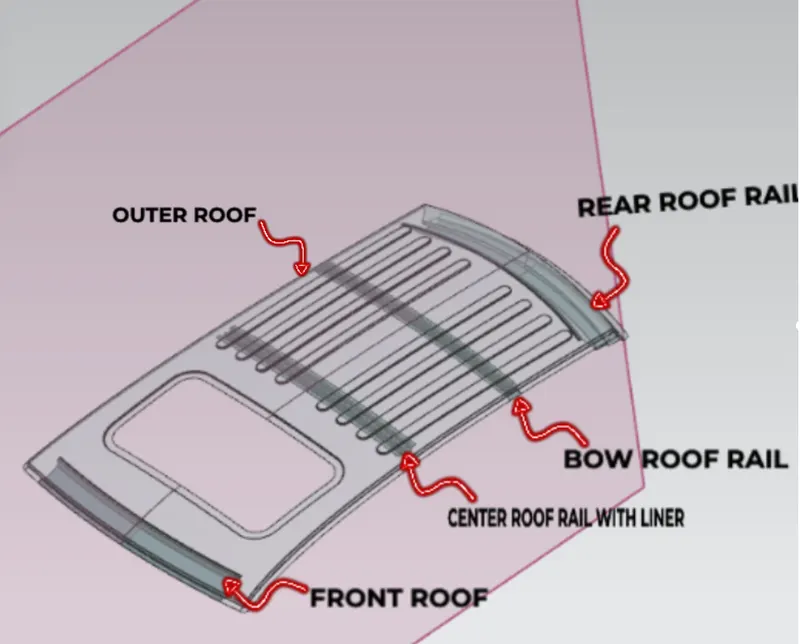
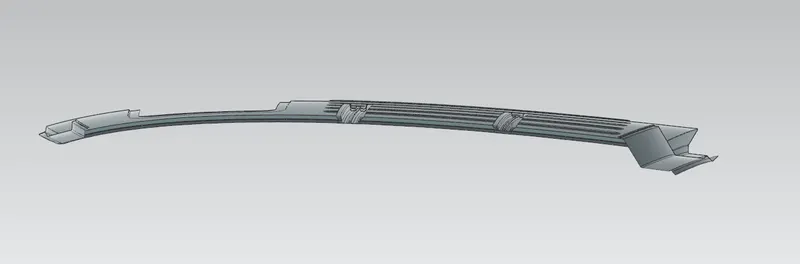
Outer panel/ Shell
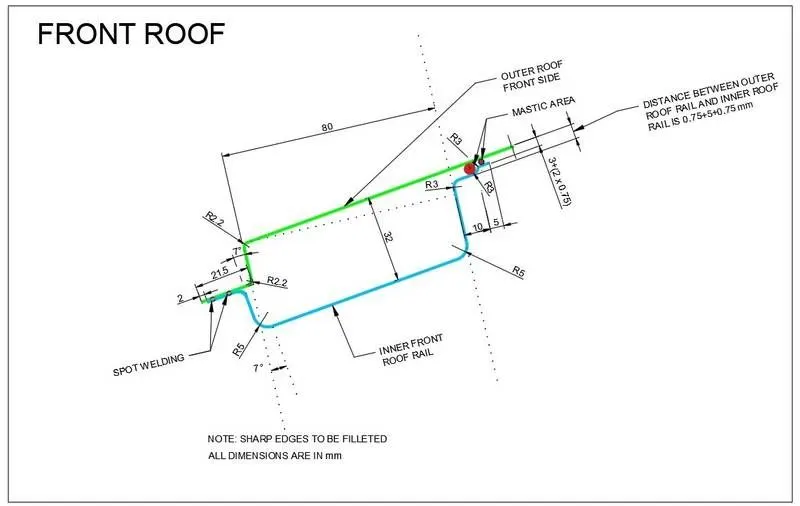
Front roof rail
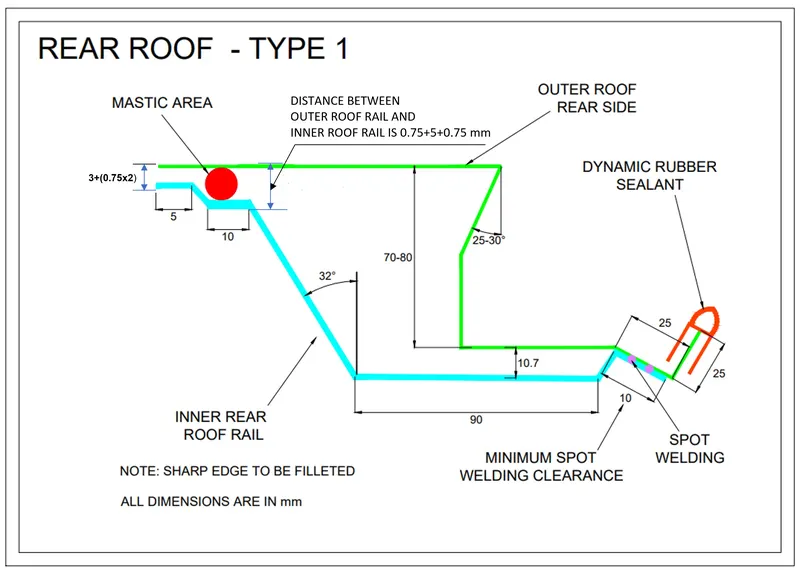
Rear roof rail
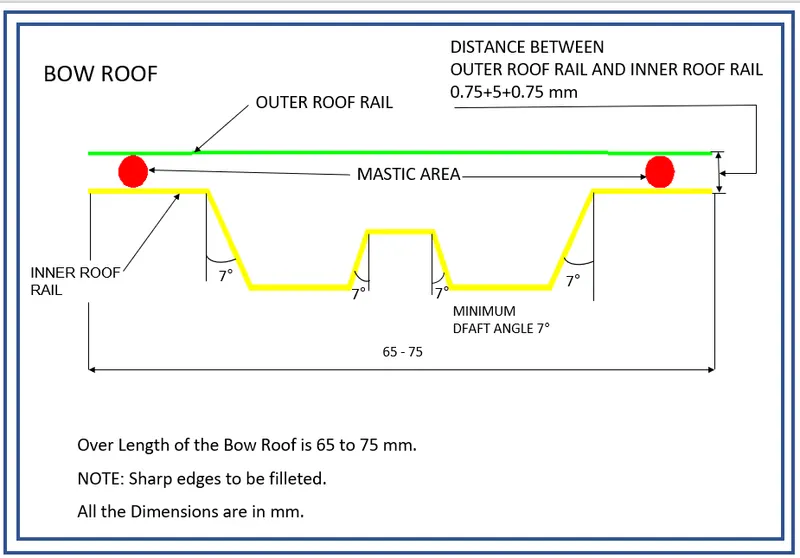
Bow roofs rail
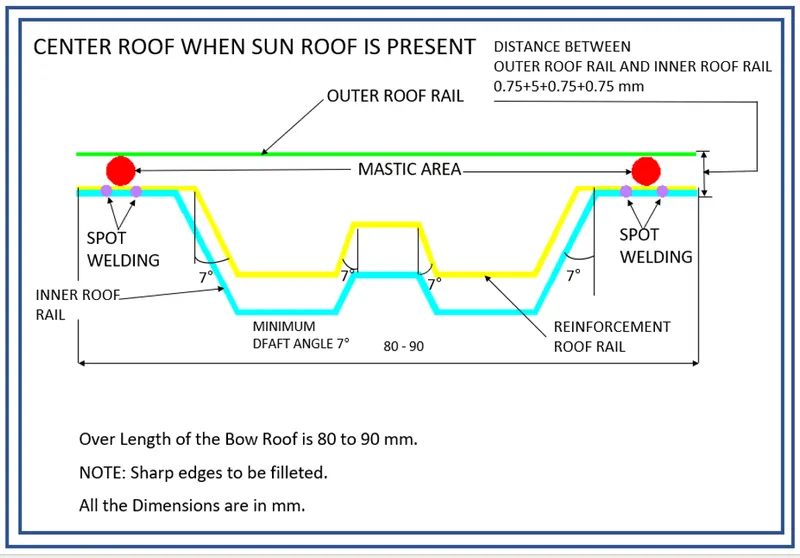
Central roof reinforcement rail
Considerations
Design Considerations
Thickness – .75 to 1.5 mm and
The master section
Functional requirements
Headroom clearance: 80 mm minimum
Front visibility criteria
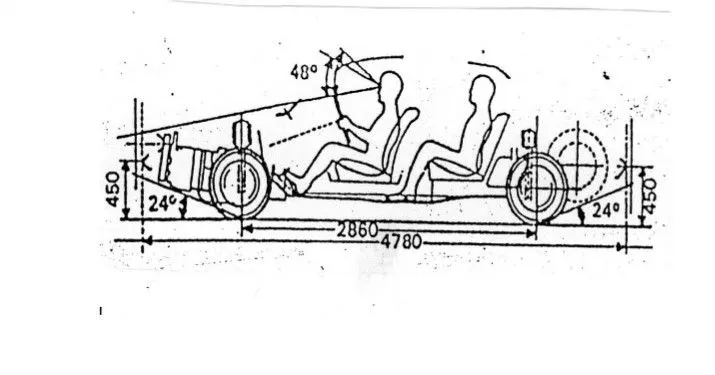
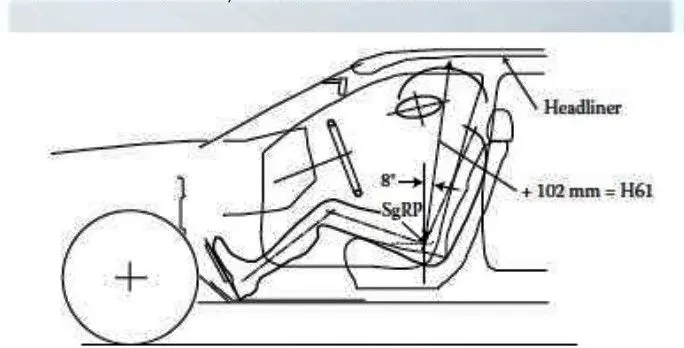
Outer panel/ Shell
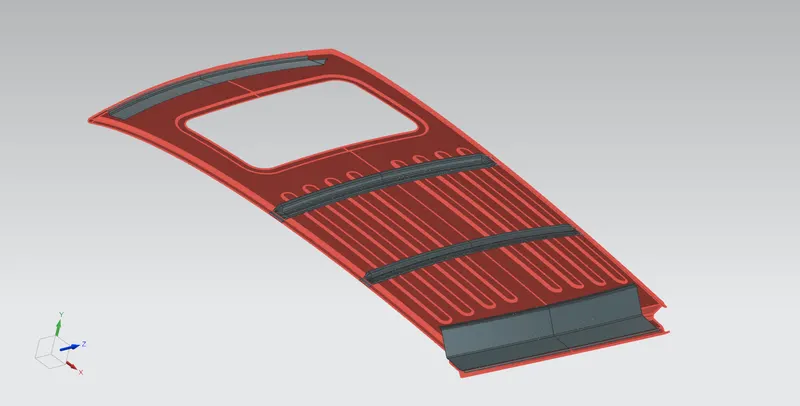
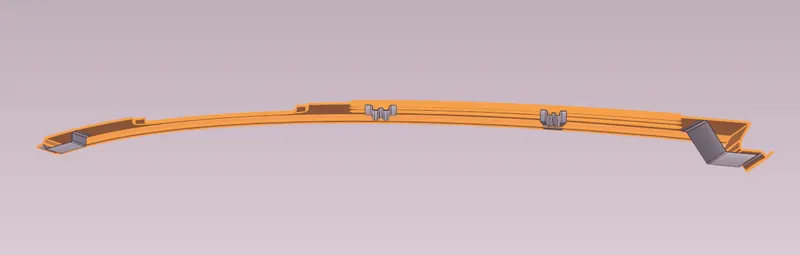
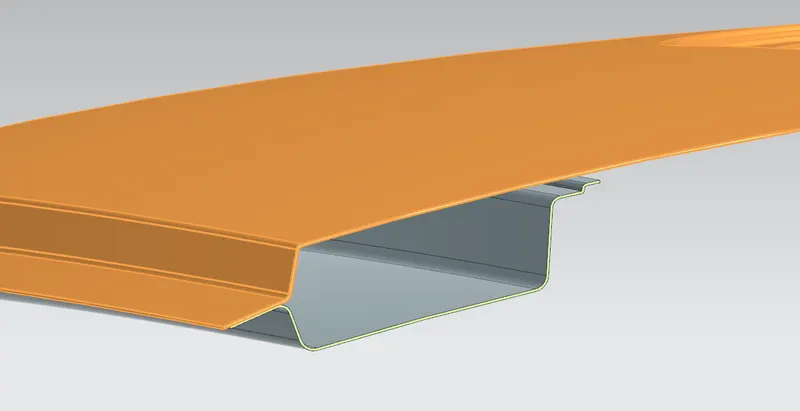
It is the outermost layer of the car it gives a better cover over the car aesthetic of care
Front roof rail
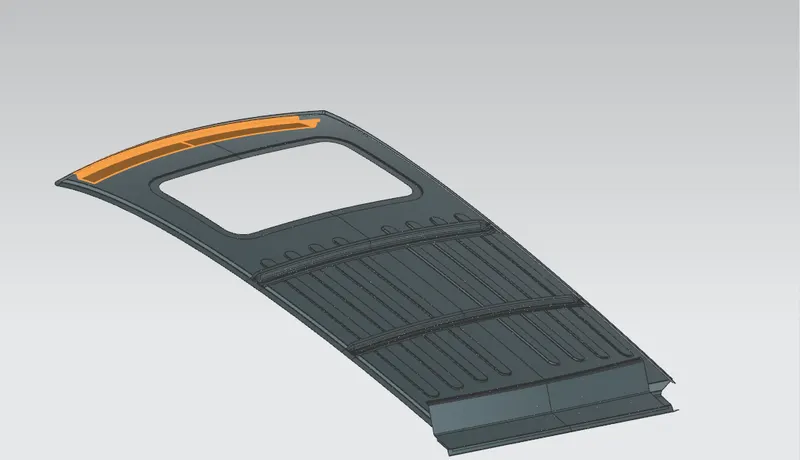
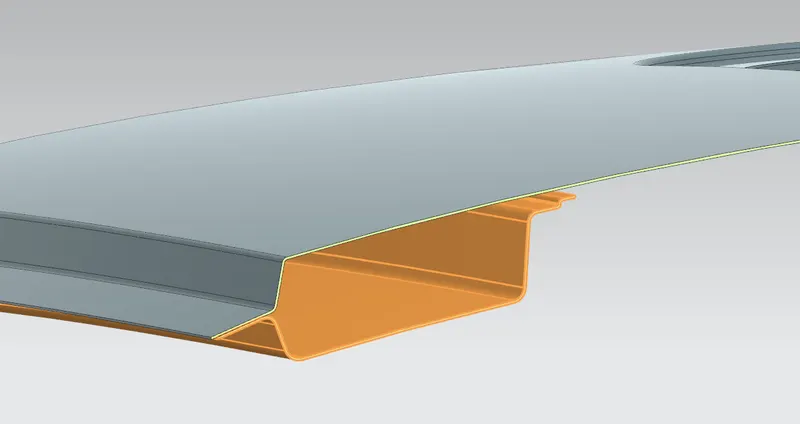
Draft analysis
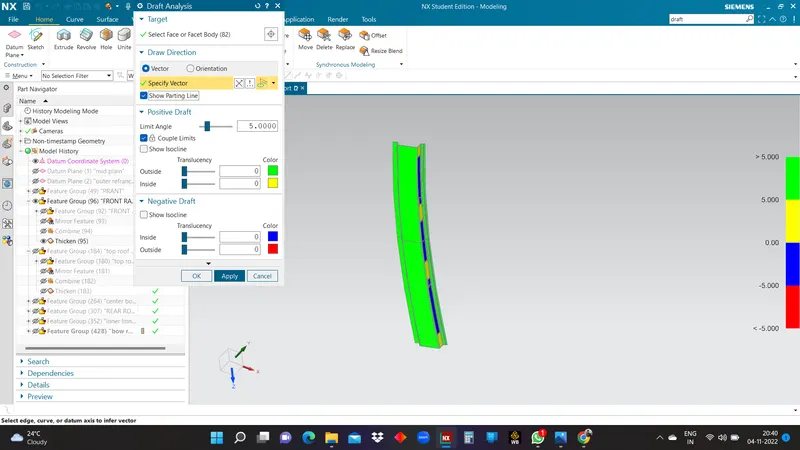
Section Modulus Analysis
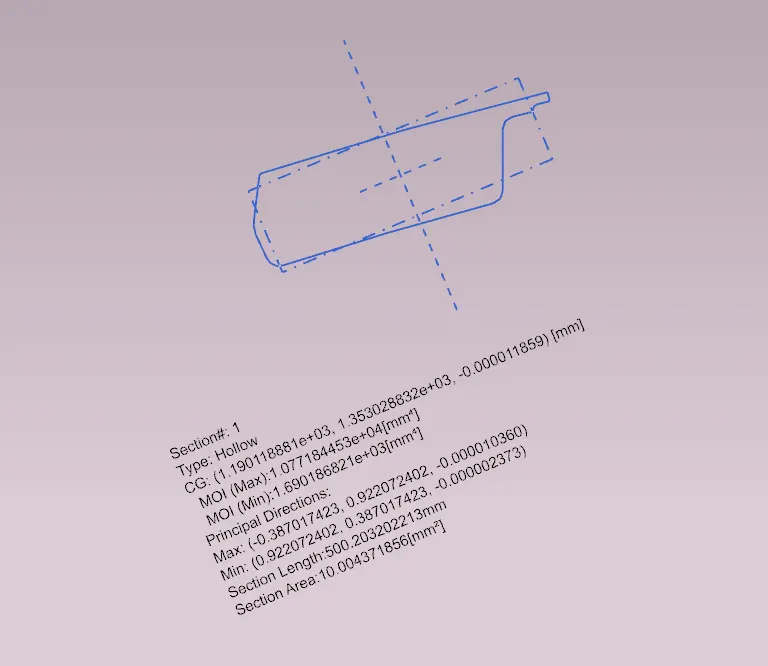
Section Modulus S = I/Y
I=1.07*10^4
Y=47.9
S = (1.07*10^4)/17.2 = 223.3 [mm ^3]
Rear roof rail
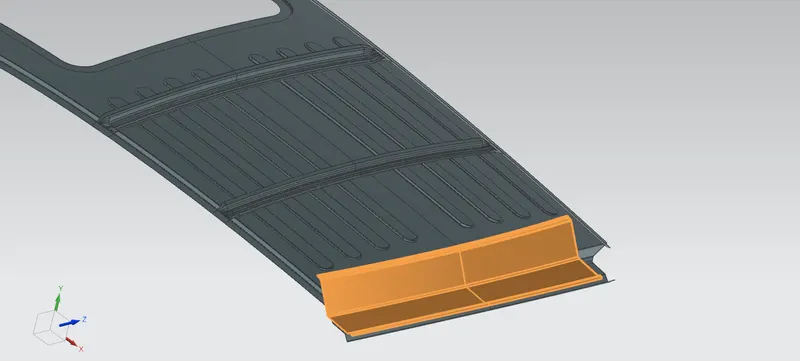
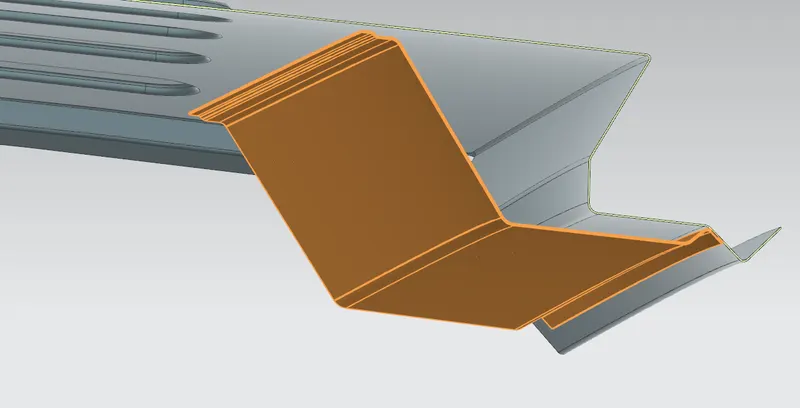
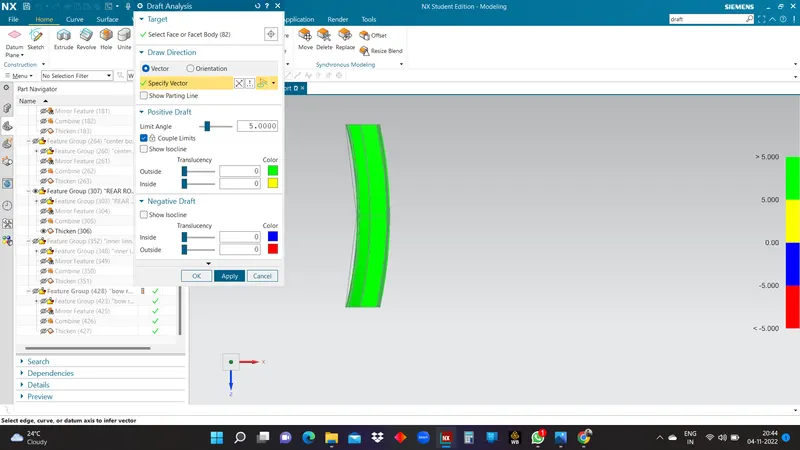
Draft analysis
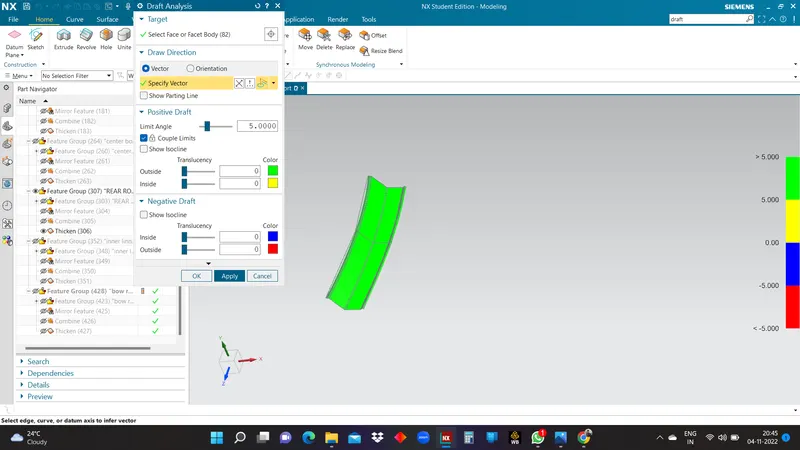
Section Modulus Analysis
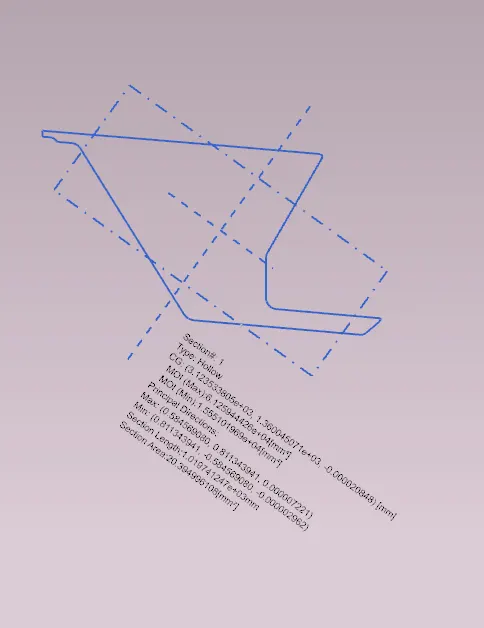
Section Modulus S = I/Y
I=6.12*10^4
Y=45
S = (6.12*10^4)/45 = 1360 [mm ^3]
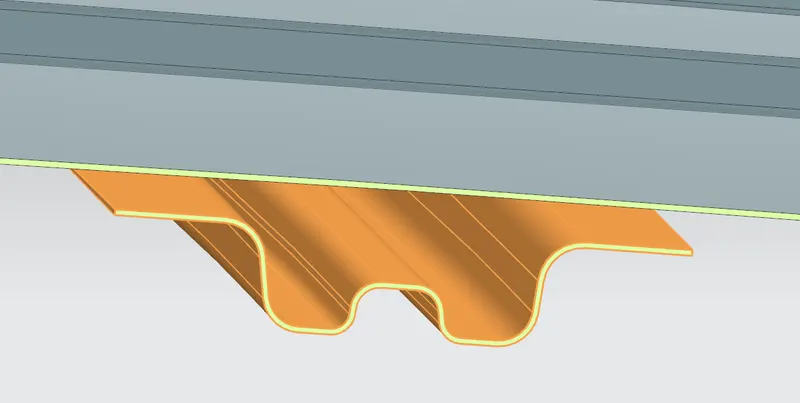
Bow roofs rail
Draft analysis
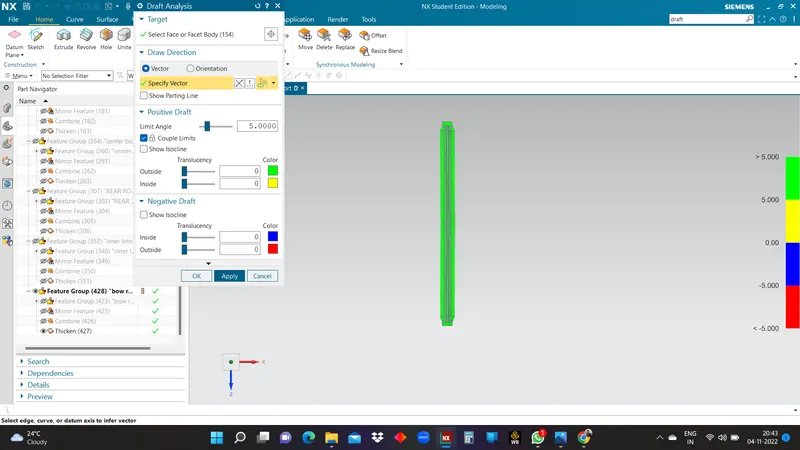
Section Modulus Analysis
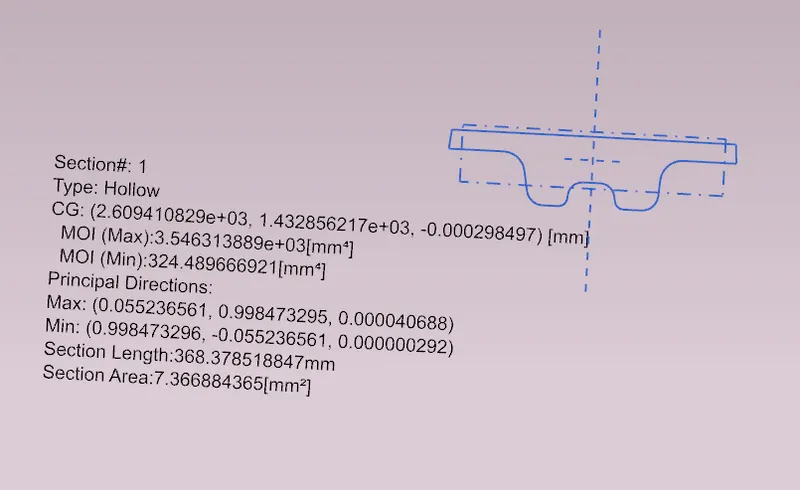
section Modulus S = I/Y
I=3.54*10^4
Y=37
S = (3.54*10^4)/37 = 956.75 [mm ^3]
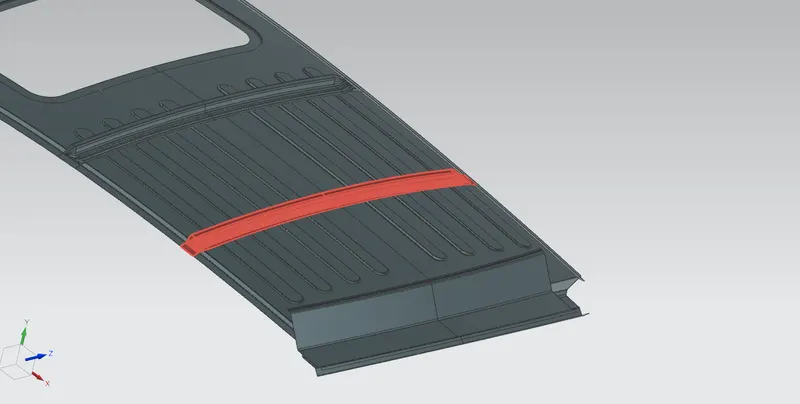
Central roof reinforcement rail
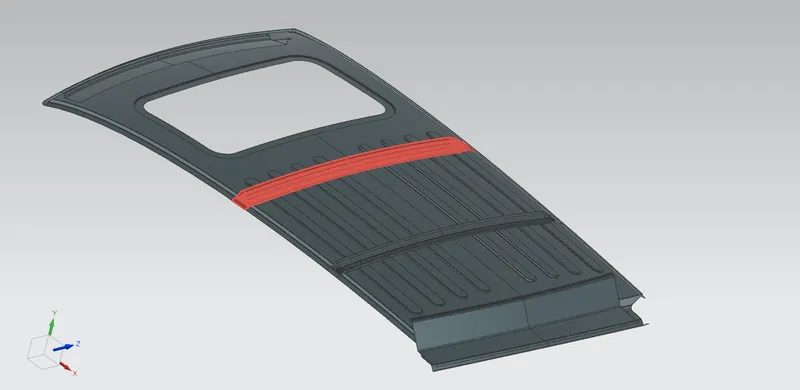
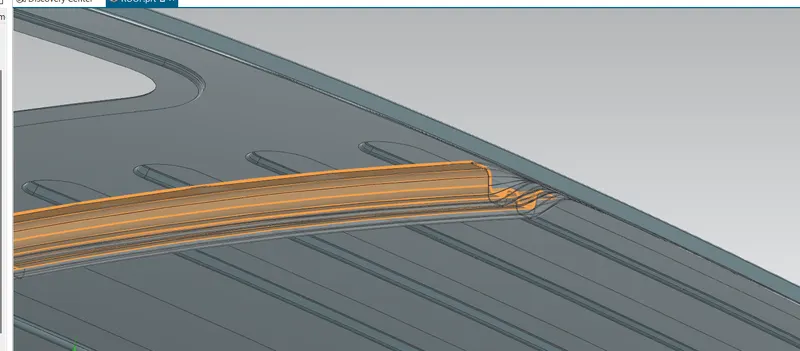
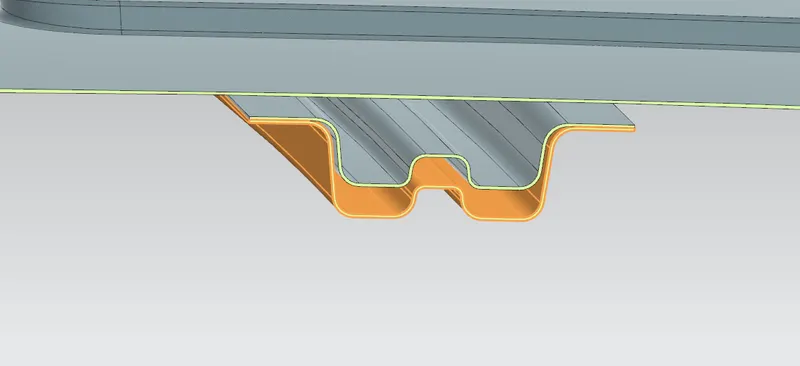
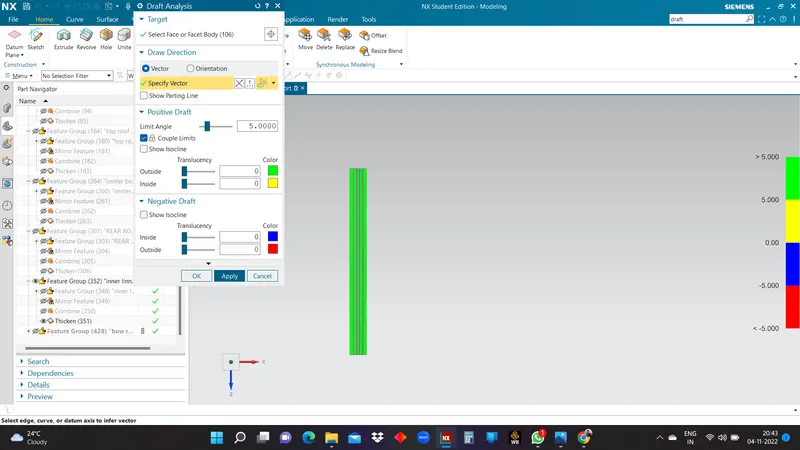
Draft analysis
Inner liner
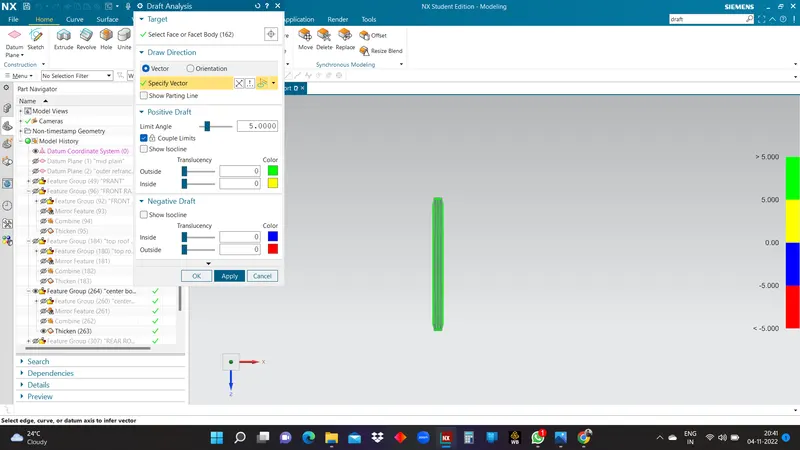
Central roof reinforcement rail
Section Modulus Analysis
section Modulus S = I/Y
I=1.17*10^4
Y=45
S = (1.17*10^4)/45= 260 [mm ^3]
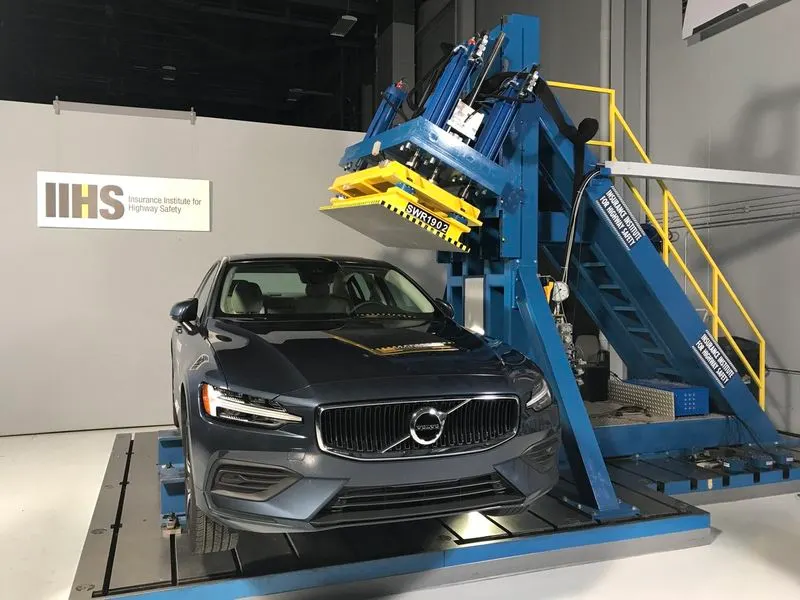
Safety test of car Roof
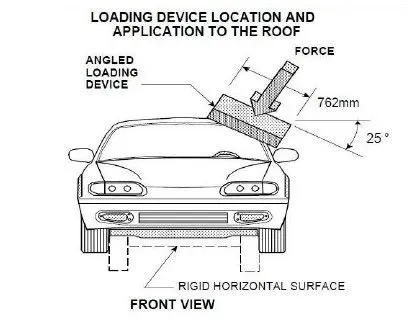
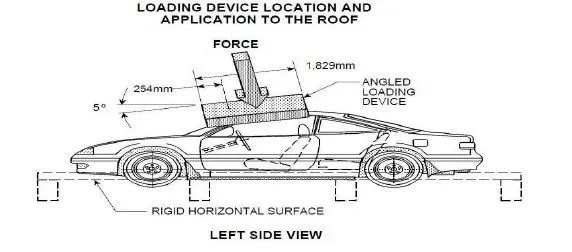
Heat distortion criteria:
In this criterion, we check the heat distortion capacity of the roof at higher temperatures with the fixed load on it. So when the surrounding temperature is high and the roof is loaded with some weight on it then if the roof is deformed it fails, so to calculate whether the roof deforms or not, according to the position of the bow we do these calculations
W = [1.73 x 10^(-3) x L] + [1.85 x 10^(-8) x (R^2)/t] + [ 1.10x10^(-3) x l] - 2.68
Where,
L = Roof Length in X-Direction[mm](Roof dimension in 0-Y)
R = Roof curvature
R = 2(Rx*Ry)/(Rx+Ry)
Rx = X curvature
Ry = Y curvature
t = Roof plate thickness [mm]
l = Bow Roof Span [mm]
|
S.NO |
BOWS |
Rx |
Ry |
R |
I |
L |
t |
(R^2)/t |
W |
OK/NG |
|
1 |
FRR & CTR |
0 |
0 |
0 |
608.93 |
2027.08 |
0.7 |
0 |
1.4966714 |
ok |
|
2 |
CTR& BR |
5534.8 |
6558.4 |
6003.27991 |
0 |
2027.08 |
0.7 |
51484813.9 |
1.779317457 |
ok |
|
3 |
BR & RRR |
5234.2 |
9425 |
6730.56306 |
257.5 |
2027.08 |
0.7 |
64714970.1 |
2.307325348 |
ok |
Conclusion:
So from this project, we learned the types of roofs and reinforcement used to increase the strength of the roof and design the roof according to the heat distortion criteria and snow load conditions and how to join the front roof rail, central roof rail, rear roof rail and Bows to the roof. Learned to position the bows so that we can pass the judgemental conditions of the snow load condition and hear distortion criteria