Roof Design
ROOF DESIGN
Introduction-
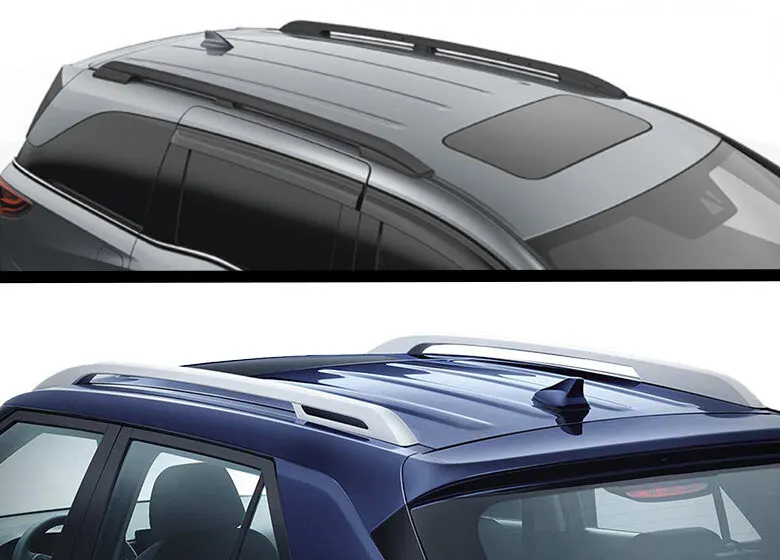
Car roof is the important composition parts of integral automobile,and the fastness of car roof is directly connected to the quality of car performance and protecting the vehicle occupants from sun, wind,rain and other external elements. Because the earliest automobiles were designed in an era of horse-drawn carriages, early automobile roofs similar materials and designs.
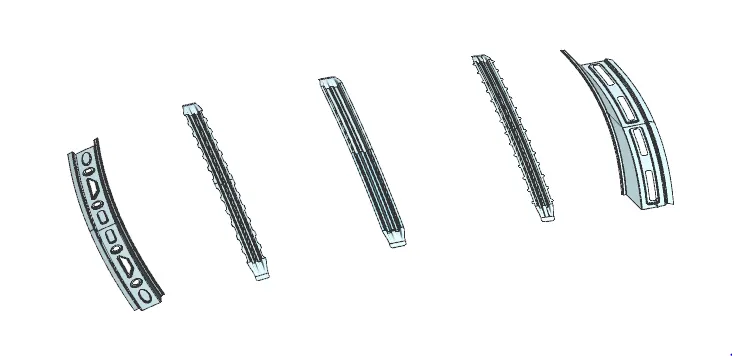
The roof has an outer panel which is the styling part. Strengthening parts are prsent below an outer panel of a roof, which are front roof rail, Bow roof, center roof rail and rear roof rail. The front roof rail provides provision for the windshield glasses. Visibility criteria and headroom clearance have to be followed while designing the front roof rail. Provision for windshield mounting and inside rearview mirror is provided on the front roof rail. Rear roof rail has hinge mounting for the back door. It is attached at the portion where the back door meets with the roof. Bow roofs are provided in between the front roof rail and center roof rail as well as the Rear roof rail and center roof rail. They are provided to enhance the localized strength of the roof and are attached directly to the bottom of the roof with either spot welding or with the help of Mastics.
Inner roof rails
1. Front roof rail -
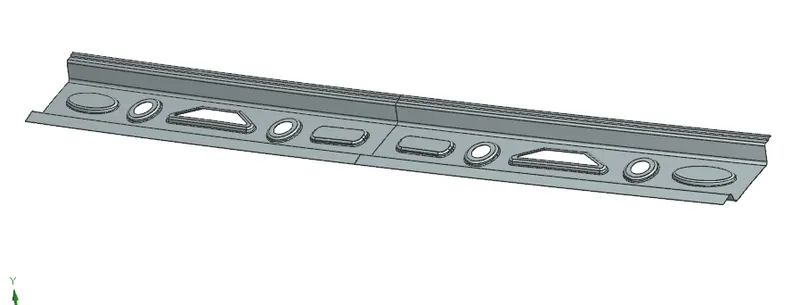
Front roof rail is the strengthning part which is joined with the windshield glass, body side,outer and inner panel. The front roof rail is designed based upon the master section provided. It is usually made with positive draft angel more than 7 degree to emboses, flages and having thickness 0.75mm.
2.Bow roof rails 1 and 2 -
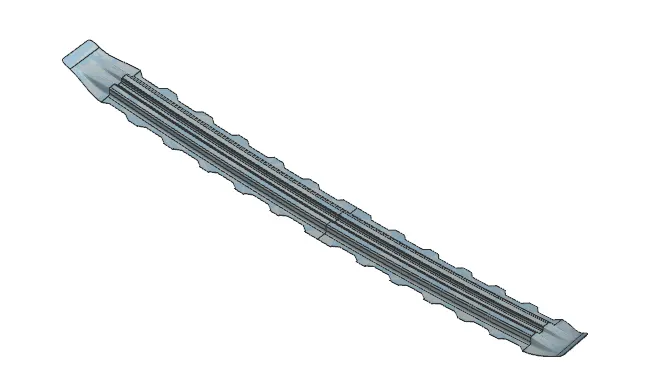
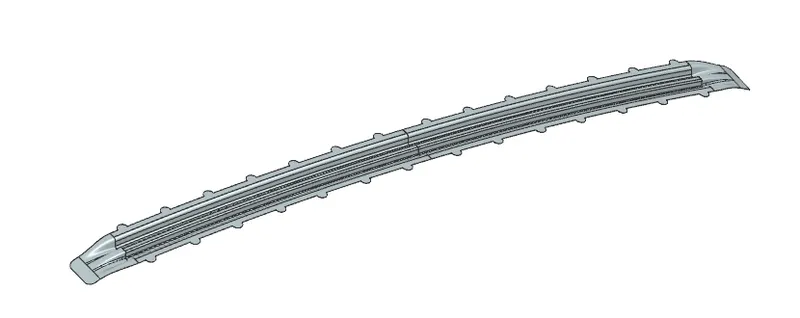
The bow roofs are given to improve torsional stiffness and load handling capacity of the outer roof. The number of bow roof depends on strength of roof , length and sunroof is present or not. The positioning of bow roofs is done based on curvature study. The heat distortion criteria and snow load criteria are checked to analyse the position of the bows in various conditions.
3. Center roof rail -
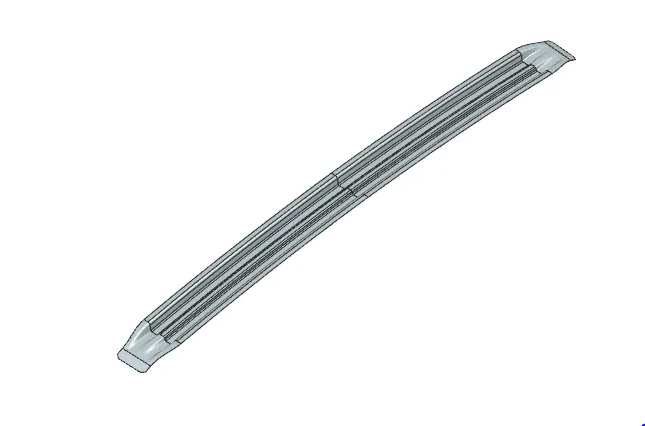
The central roof rail helps in providing effective support to the flat area of the roof as it is more susceptible to failure under the action of load, generally central roof rail is placed at the center of the roof which is connected to the B-pillar support structure. This central roof rail helps in adding strength to the roof during the roll-over test. The thickness of the central roof rail is 0.75mm.
4. Rear Roof rail-
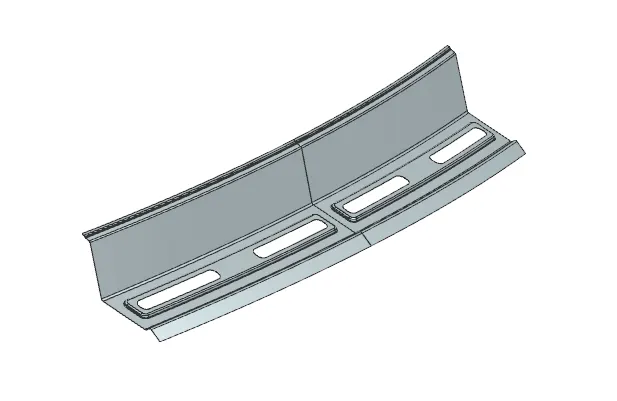
It is end support part of roof which is attched to the back door and side flange of outer roof. we have to take into consideration the rear headroom clearance and the rear visibility criteria while designing the rear roof rail. Spot welds are applied at the backdoor end of the rail and the other end is joined with the roof using mastic sealants.
Types of Roofs
1. Convertible roof-
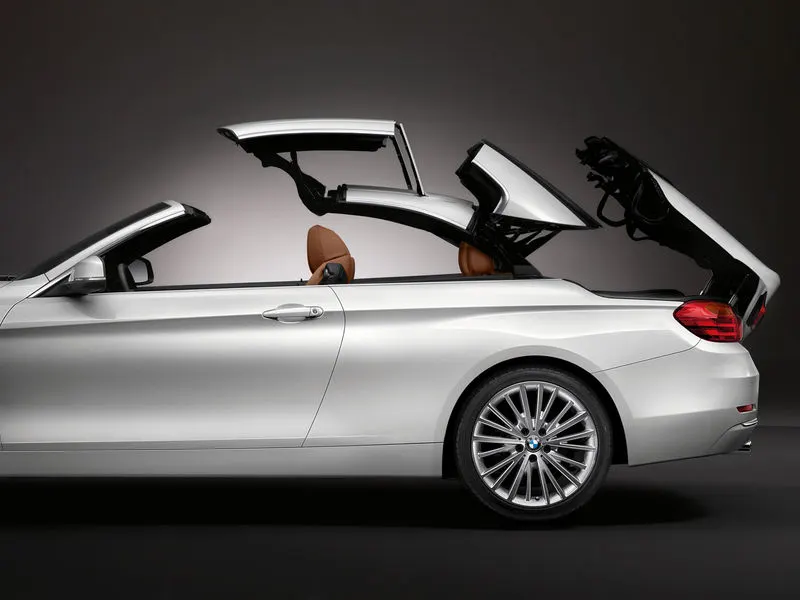
A convertible is a passenger car that can be driven with or without a roof in place. The methods of retracting and storing the roof vary among eras and manufacturers. A convertible car's design allow an open air driving experience, with the ability to provide a roof when required. A potential drawback of convertibles is there reduced structural rigidity. The majority of convertible roofs are of a folding construction framework with the actual top made from cloth or other fabric.
2.Hardtops-
A hardtop is a rigid form of automobile roof,which for modern cars is typically constructed from metal. A hardtop roof can be either fixed, detachable for separate storing or retractable within the vehicle itself.
The pillarless hardtop is a body style of cars without a B-pillar, which are often styled to give the appearance of convertible design.
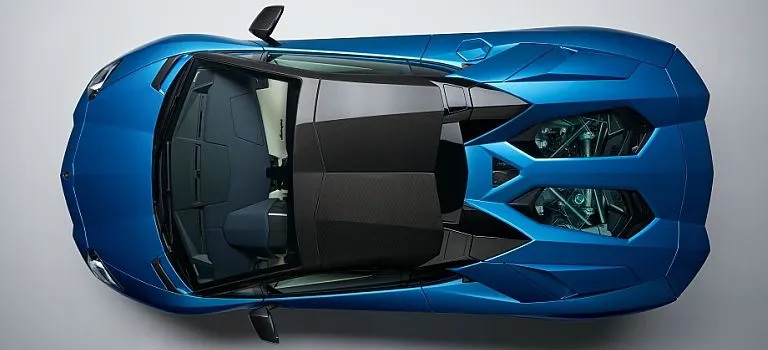
3. Sunroofs-
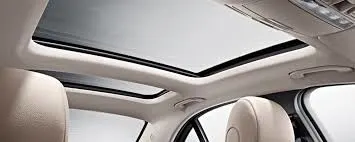
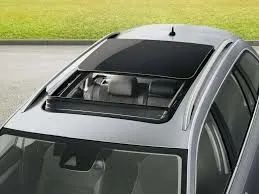
A sunroof is a movable panel that opens to uncover a window in an automobile roof, allowing light and fresh air to enter the passenger compartment. Sunroofs can be manually operated or motor driven, and are available in many shapes, sizes and styles. While the term "sunroof" is now used generically to describe any glass panel in the roof, the term "moonroof" was historically used to describe stationary glass panes rigidly mounted in the roof panel over the passenger compartment. A moonroof has a glass panel that is transparentand usually tinted.
4. Targa top-
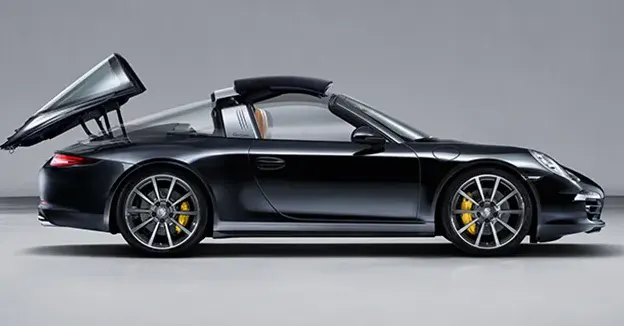
Targa top or targa for short, is a semi-convertible ca body style with a removable roof section and a full width roll bar behind the seats.
The rear window is normally fixed, but on some targa models, it is a removable plastic foldable window, making it a convertible-type vehicle. Any piece of normally fixed metal or trim which rises up from one side, over the roof and down the other side is sometimes called a targa band, targa bar, or a wrapover band.
5. Vinyl roofs -
This covering was originally designed to give the appearance of a convertible to models with a fixed roof and eventually evolved into a styling statement in its own right. Vinyl roofs were most popular in the American market, and they are considered one of the period hallmarks of the 1970s domestic cars. Vinyl roofs were also popular on European- (especially UK-) and Japanese-built cars during the 1970s, and tended to be applied to sporting or luxury trim versions of standard saloon (sedan) models.
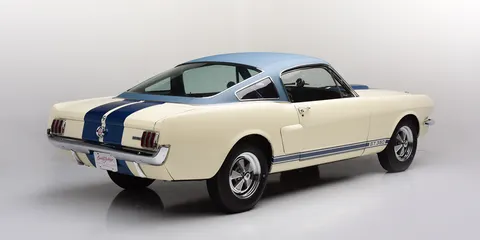
For the roof design some factor should be considered.
- Visibility criteria
- Head clearance for comfort
- Safety Parameters
- Draft analysis
- Heat distortion and Snow Load criteria
Bow Roof Prediction Calculation
- Heat Distortion Curvature Study:
The heat distortion study plays an important role in sheet metal usage. Heat distortion temperature is a temperature limit above which material cannot be used for the structural applications. This study is used to predict the heat distortion temperature at where the material starts to soften when exposed to a fixed load at elevated temperature. In order to avoid bending or damages on the roof, based on the heat distortion temperature, this study will predict the bow roof position temperature, this study will predict the bow roof position which help to strengthen the roof.
Bow–roof prediction Formula
W = [1.73 x 10^(-3) x L] + [1.85 x 10^(-8) x (R^2)/t] + [ 1.10x10^(-3) x l] - 2.68
Judgement Condition: OK< 2.7> 3.1
Where,
L = Roof Length in X-Direction[mm] (Roof dimension in 0-Y)
R = Roof curvature
R = 2(Rx*Ry)/(Rx+Ry)
Rx = X curvature
Ry = Y curvature
t = Roof plate thickness [mm]
l = Bow Roof Span [mm]
Lets find out the values of Rx and Ry.
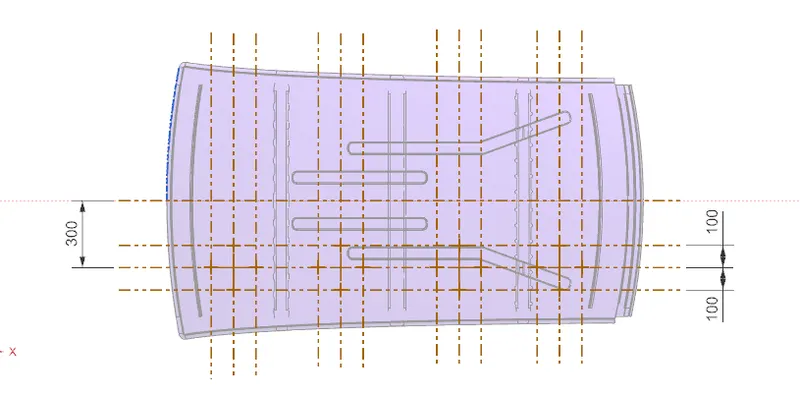
Values of Rx as below
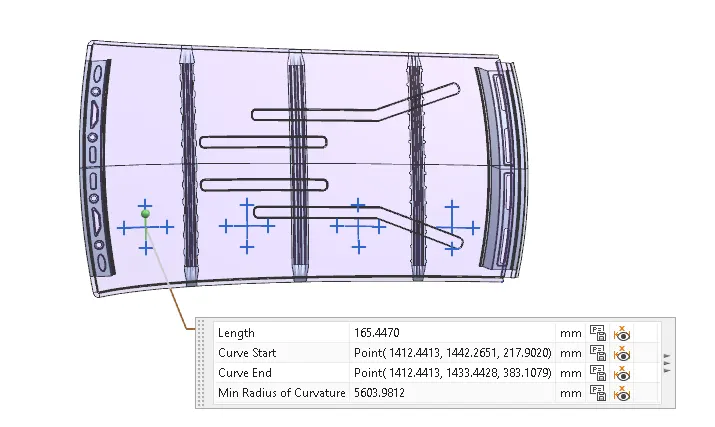
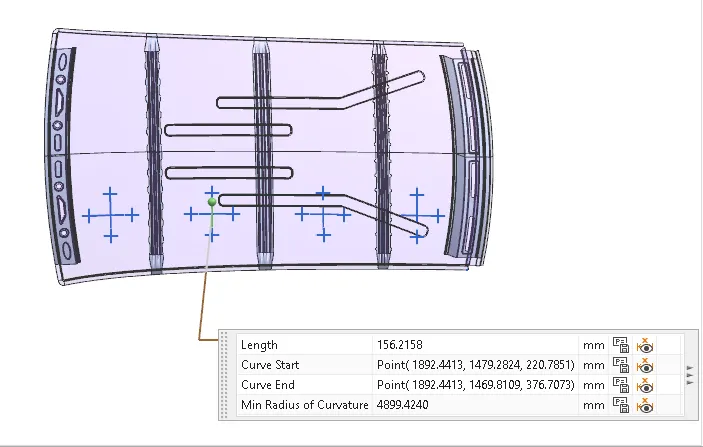
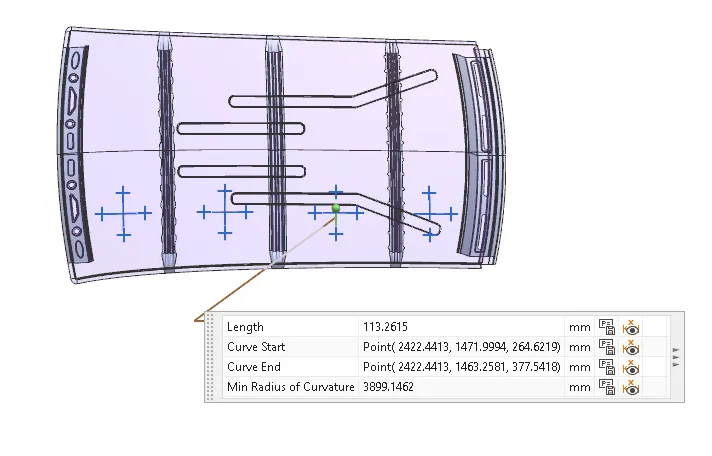
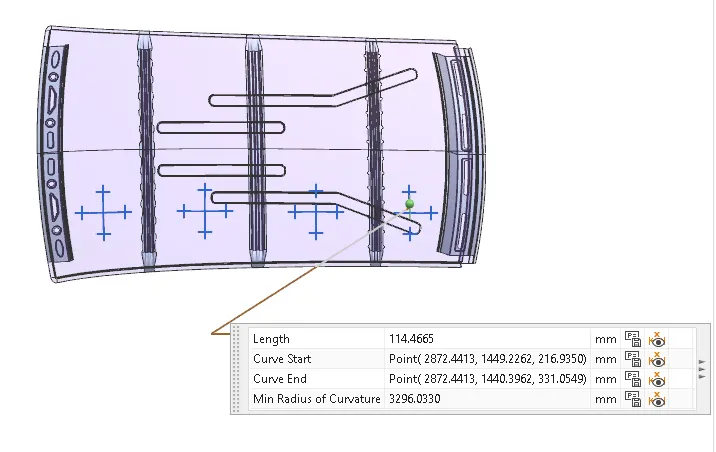
Values of Ry as below
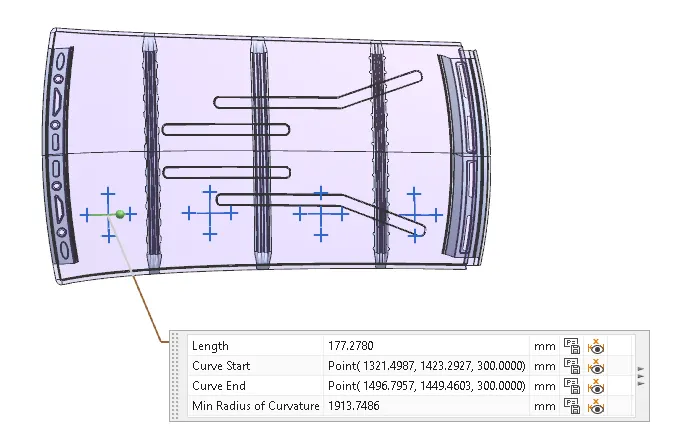
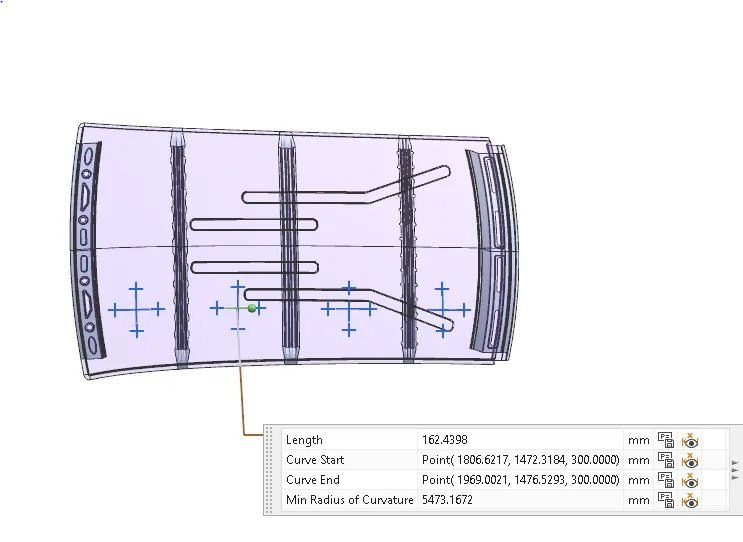
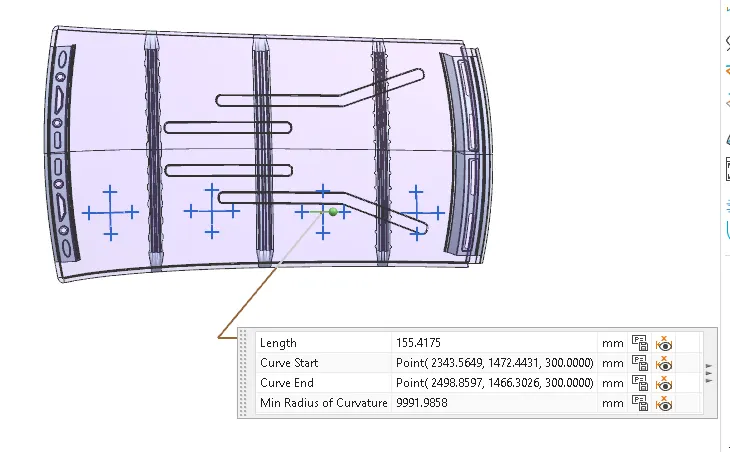
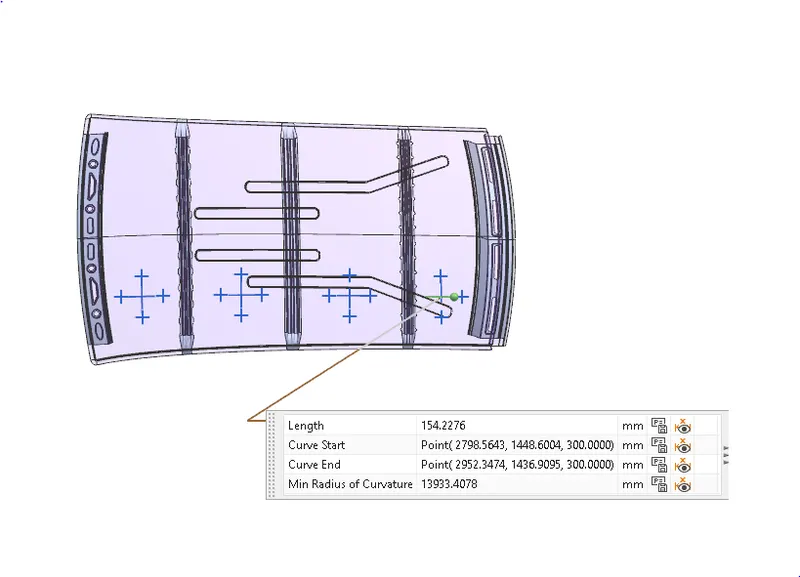
Table for bow roof prediction in heat distoration criteria is shown in below

Judgment Condition OK<2.7
As per my calculation my design passes the heat distoration criteria.
2.Snow Load Calculation:
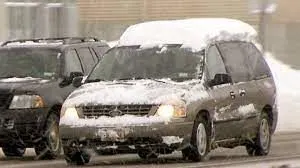
In the winter season, in some countries there will be a huge load of snow on the roof top of the car. Snow load criteria study is done to check the ability of the roof to withstand snowfall and bounce back to its original shape without a permanent deformation once the load is remove
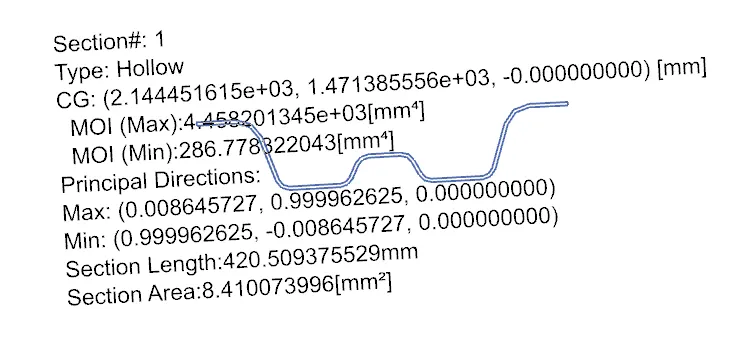
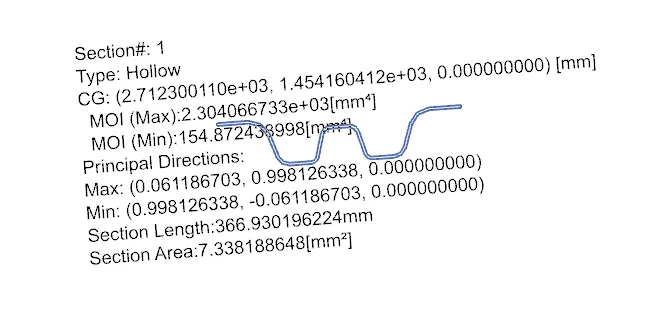
Section Moment of Inertia Analysis
1. Bow Roof 1-
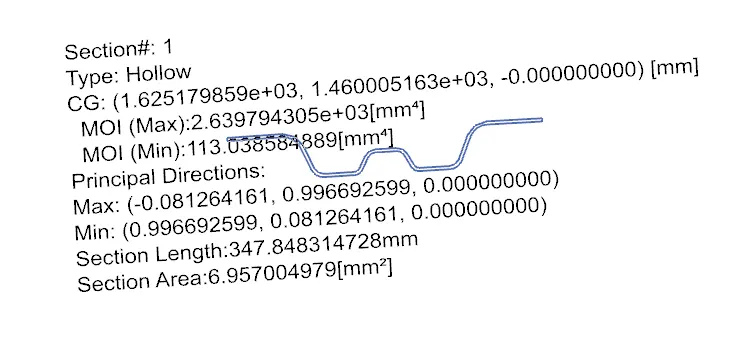
2. Center Roof Rail-
3. Bow Roof Two-
Snow load Prediction formula
Qr = [Iy x t2] / [α x s x [(Rx + Ry)/2]2 x 10-8]
Note: The Qr value given over here is correct. There was a type error in the formula given in the video.
Where
α = My x Lx2 x 10-12 , My = Y(Ly-Y)
Judgement condition = Qr ≥ 3.1
250 ≤ s ≤ 380
t = Roof plate thickness [mm]
Ly = Distance between the front and rear roof Rails on the Vehicle along with 0Y[mm]
Length of Roof panel with the center point between Roof rail Front /Rear as the front and rear reference point.
Lx = Distance between the Left and Right end of the roof on the Roof BOW [mm] Width of the roof panel exposed on the surface.
Y = Distance from Front Roof Rail to Roof BOW [mm]
s = Distance for which Roof BOW bears divided load [mm]
s = L1/2 + L2/2
Iy = Geometrical moment of inertia of Roof BOW (Y cross-section) [mm4]
Rx = Lateral direction curvature radius of roof panel Y cross-section on Roof BOW [mm] Roof panel curvature Radius of the Length Lx in Front view
Ry = Longitudinal Direction curvature radius of the Roof panel X cross-section on Roof BOW [mm] Roof panel X curvature radius of length s in Side view
Table for the snow load condition is shown below

It is observed from the values that obtained values of Qr > 3.1
Draft Analysis
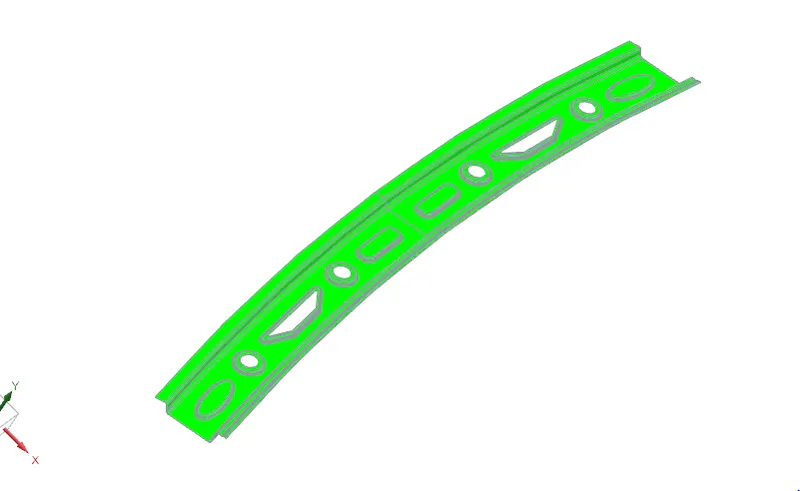
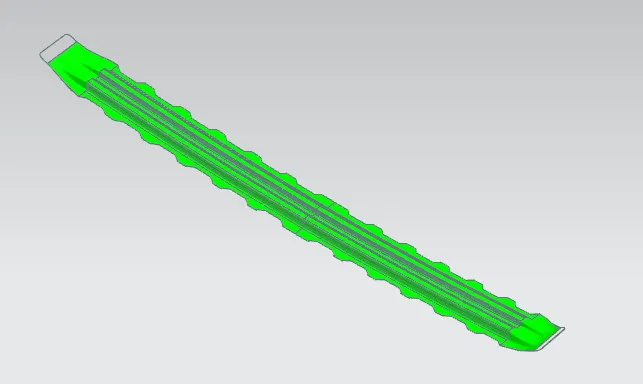
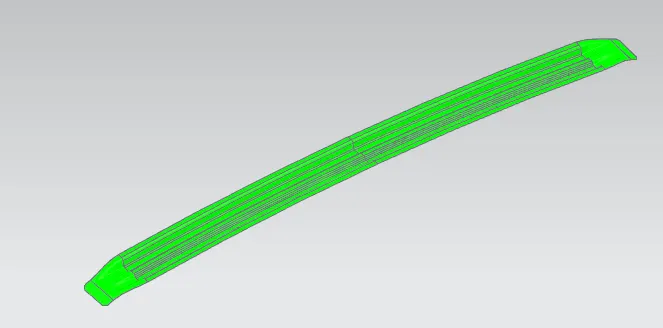
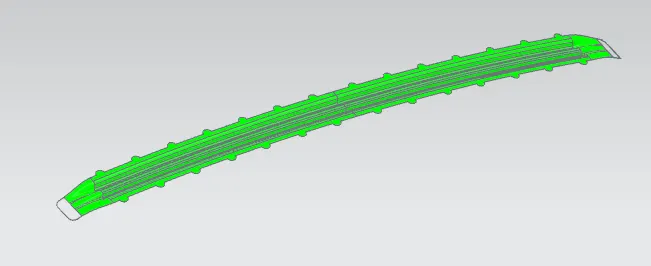
The Draft Analysis allows the user to easily analyze a part for proper draft angel. A draft angle describes the amount of taper for molded or cast parts perpendicular to the parting line. Minimum draft angle of 7 degree is considered for analysis. Green color infers on the parts that all face along the tooling direction has positive draft angle greater than 7 degree and passed the analysis.
A. Front Roof Rail-
B. Bow Roof One-
C. Center Roof Rail-
D. Bow Roof Two-
E. Rear Roof Rail-
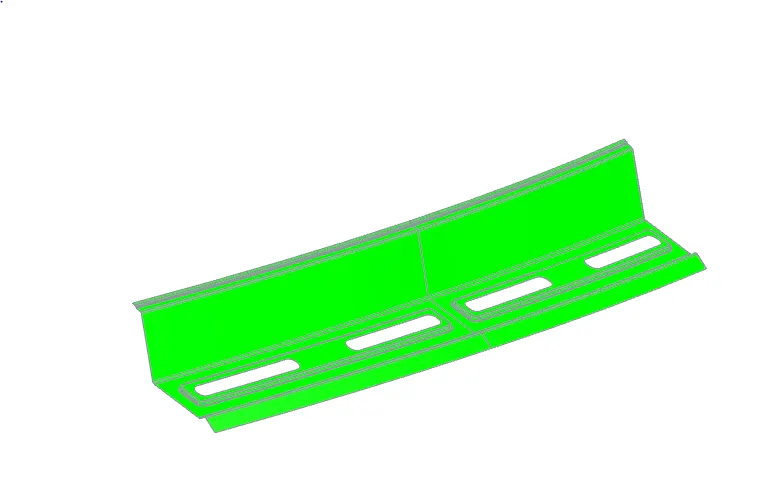
All the rails pass the draft analysis with Positive Draft angle.
Conclusion:
The Design of Roof, Front roof rail, Rear Roof Rail, Bow Roofs, and reinforcement roof center by following the Master section with the design parameter for the given class A surface is done. From the Bow roof prediction calculation my design is passed the all design criteria with respective judgement condition.