Roof challenge
Roof:
An automobile roof or car top is the portion of an automobile that sits above the passenger compartment, protecting the vehicle occupants from sun, wind, rain, and other external elements.
Types:
- convertible roofs
- Convertible roofs
- Roof modules
- Hardtops
- Sunroofs
- T-tops
- Targa tops
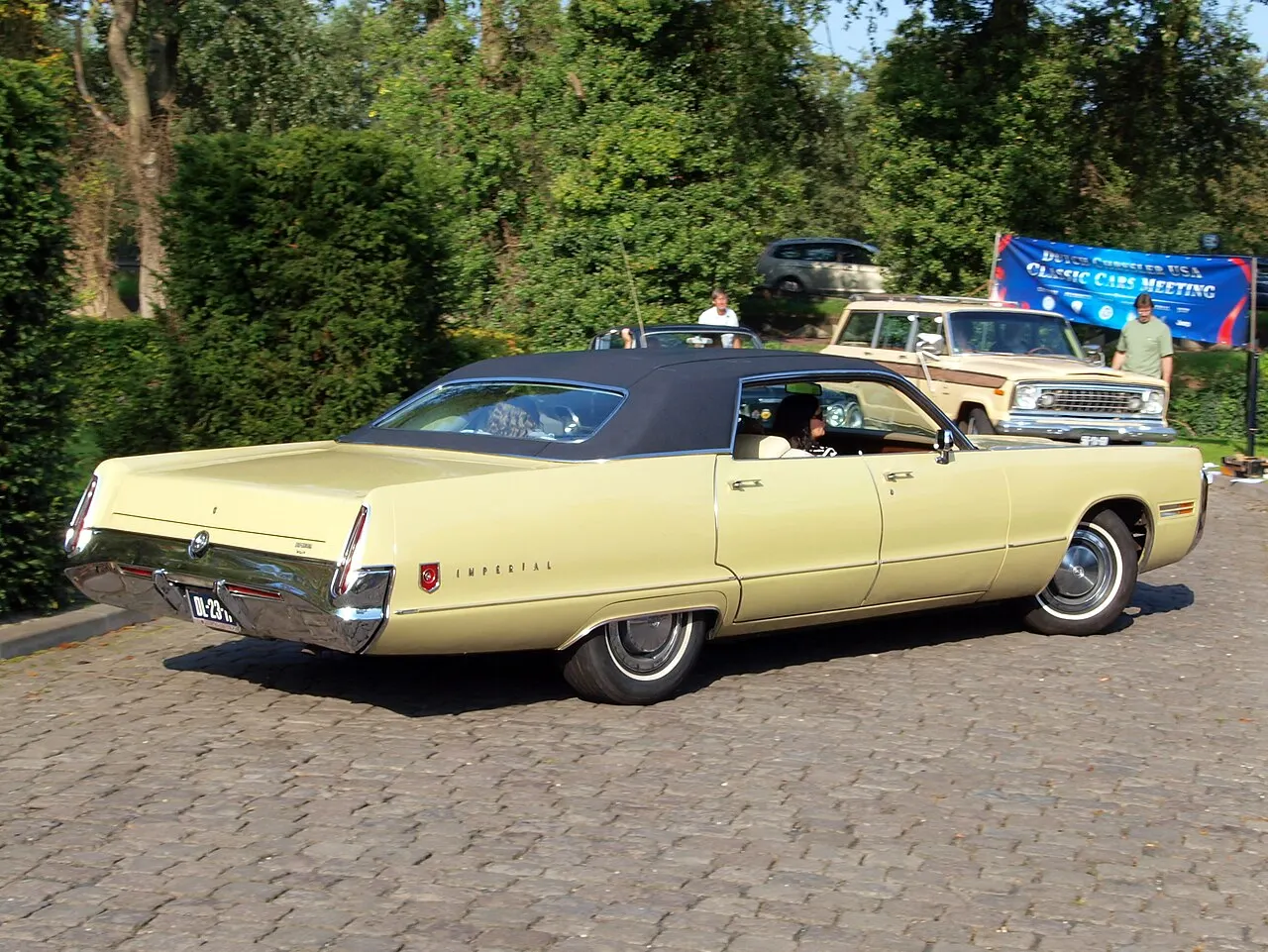
- Vinyl roofs
Convertible roof:
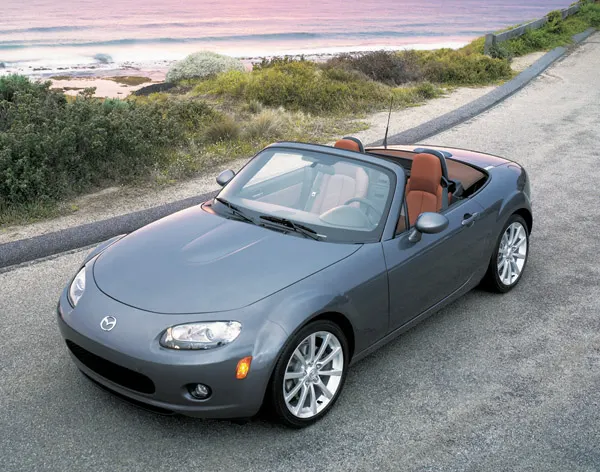
A convertible or cabriolet is a passenger car that can be driven with or without a roof in place.
Hardtop:
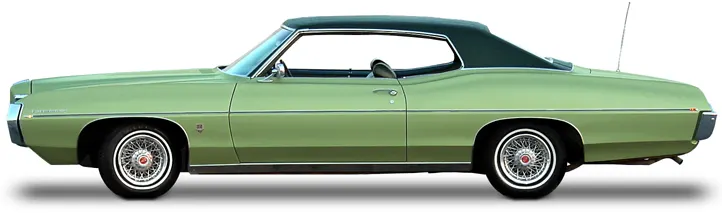
A hardtop is a rigid form of automobile roof, which for modern cars is typically constructed from metal. A hardtop roof can be either fixed (i.e. not removable), detachable for separate storing or retractable within the vehicle itself.
Sunroofs:
A sunroof is a movable panel that opens to uncover a window in an automobile roof, allowing light and fresh air to enter the passenger compartment. Sunroofs can be manually operated or motor driven, and are available in many shapes, sizes and styles.
T-Top:
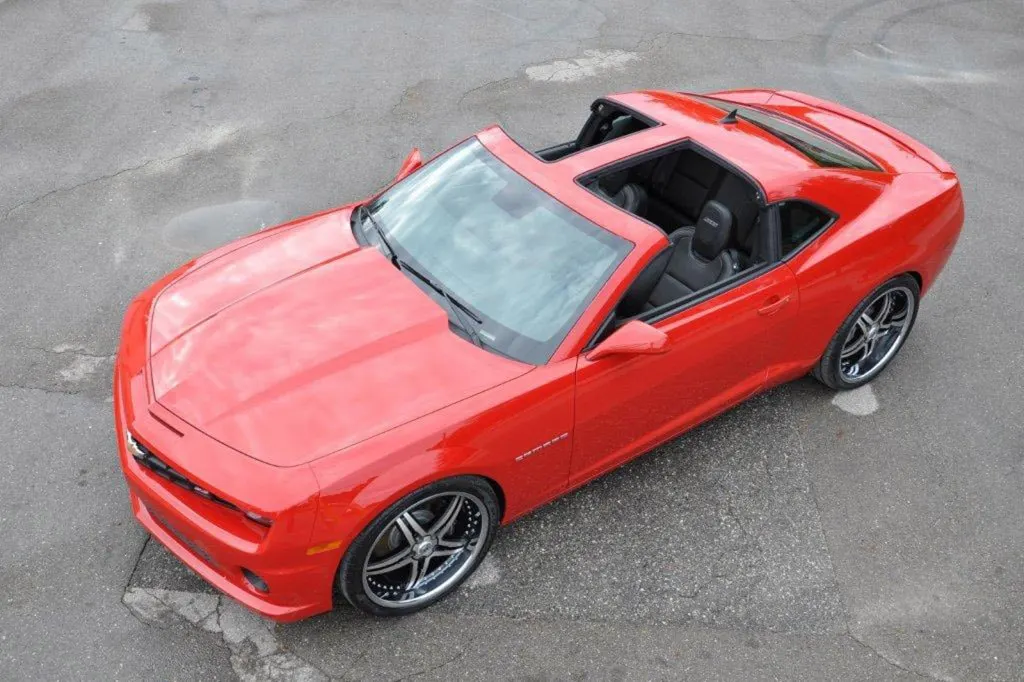
A T-top (UK: T-bar) is an automobile roof with a removable panel on each side of a rigid bar running from the center of one structural bar between pillars to the center of the next structural bar. The panels of a traditional T-top are usually made of auto grade safety glass.
Targa tops:
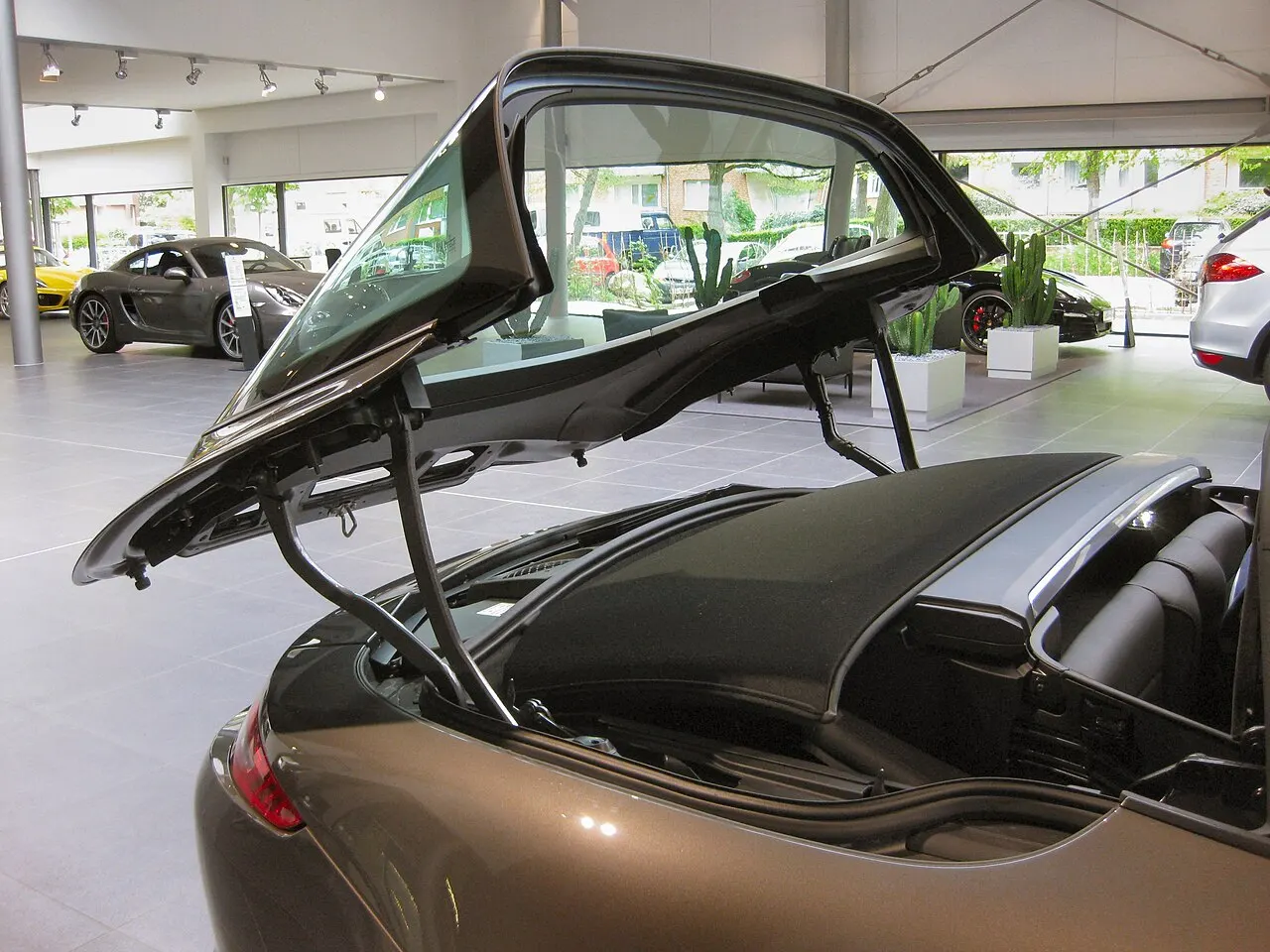
Targa top, or Targa for short, is a semi-convertible car body style with a removable roof section and a full-width roll bar behind the seats
Vinyl roofs:
Vinyl roof refers to a vinyl covering for an automobile's top.
Design Consideration while roof designing:
- Headroom clearance
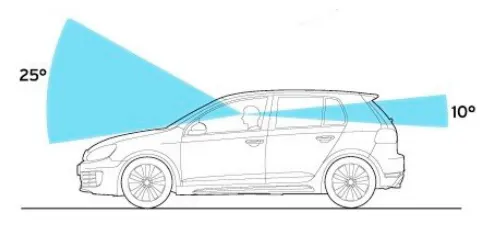
- Front visibility criteria
- Bow roof prediction using Heat distortion criteria
- Snow load criteria
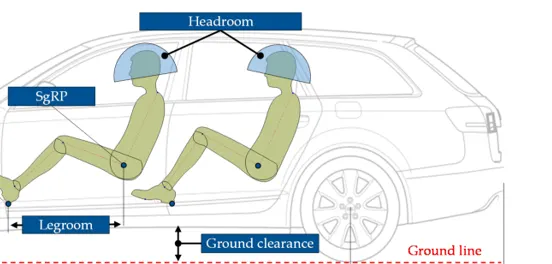
Headroom clearance:
The person inside the car should have enough headroom clearance for comfortable riding.
Front visibility criteria:
Roof crush test:
The roof compression system is used to test the roof structure according to the FMVSS 216a and IIHS (Roof Strength Test Protocol) test regulations but is also used for numerous, customer-specific special tests.
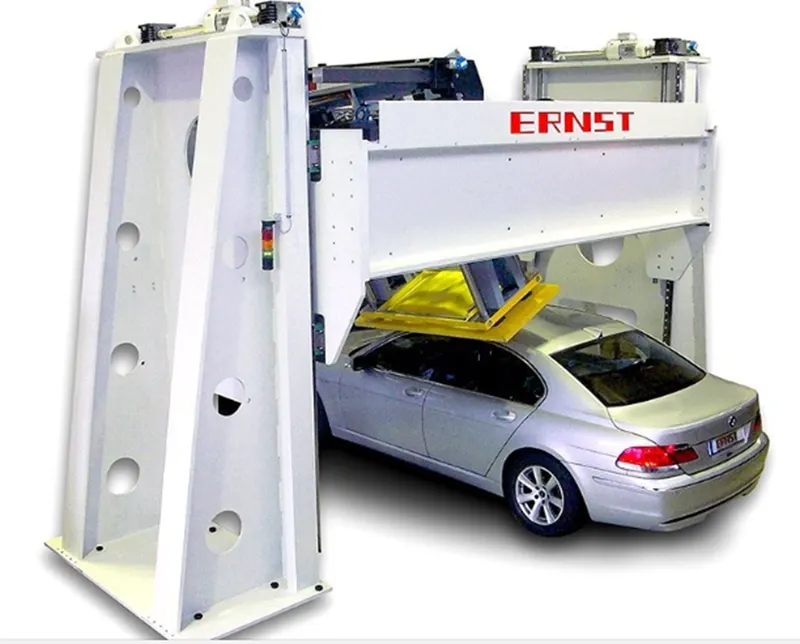
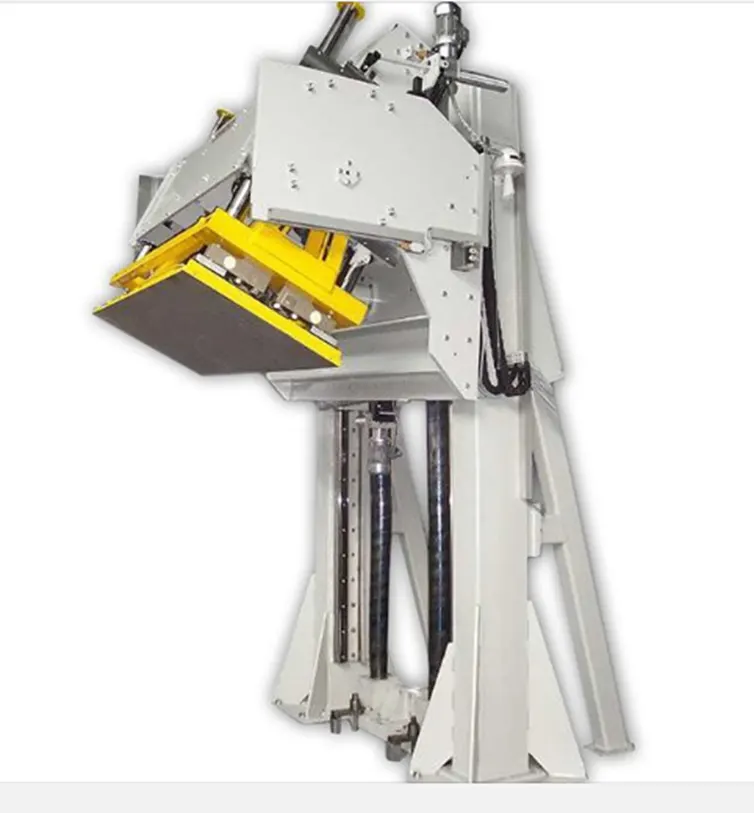
Once the vehicle is positioned correctly, the rocker panel supports are clamped to the two perpendicular I-beams, and the beams are marked to allow confirmation that the vehicle position is maintained during the test. For body-on-frame vehicles, the frame is supported to prevent the weight of the chassis from stressing the body at the body mounts.
The roof is crushed to a minimum displacement of 127 mm at a nominal rate of 5 mm/second. Some tests are conducted to a greater displacement to collect additional strength data for research purposes. Force data are recorded from five load cells (Interface Inc., model 1220) attached to the loading platen. Displacement data are recorded from four linear variable displacement transducers (LVDTs) (MTS Temposonics model GH) integrated into the hydraulic actuators.
Snow load criteria:
In ice, region snow was settled on the roof of the car. Due to the snow load, the roof tends to deform at some distance. Once the snow is removed the roof has the tendency to get back to its original position. To check whether the roof meets the required value using snow load prediction.
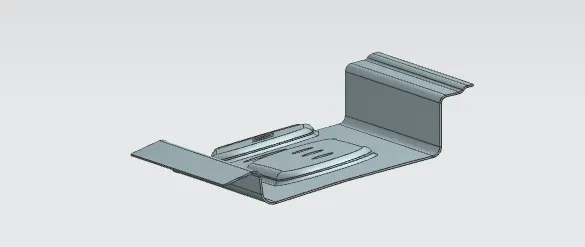
Front roof:
While designing the front roof inner panel, we have to consider the headroom space and visibility criteria. If the front end of the front roof is too lower means it reduces the visibility level of the driver.

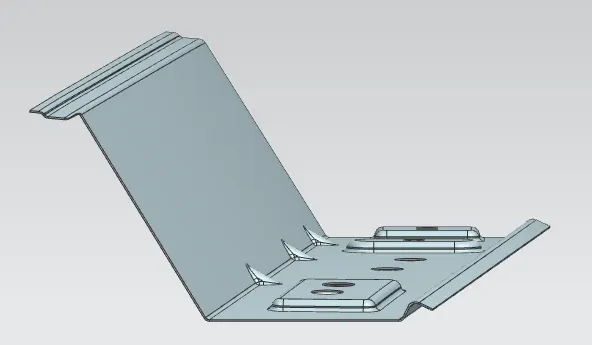
Rear roof rail:
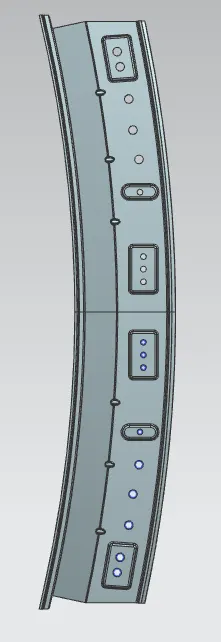
While designing the rear roof rail, we have to consider the headroom space and visibility criteria.
Center roof rail:

Bow roof 1:
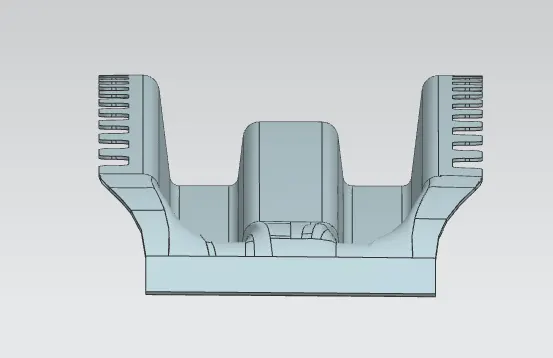
A Roof Bow is a sheet metal part, usually spot welded to the BIW inner frame, forming the inner structure of the vehicle body. Its primary function is to support the roof panel loads, such as Oil Canning and local stiffness. Bow roof 1 is placed between the Front roof and center roof.

Bow Roof 2:
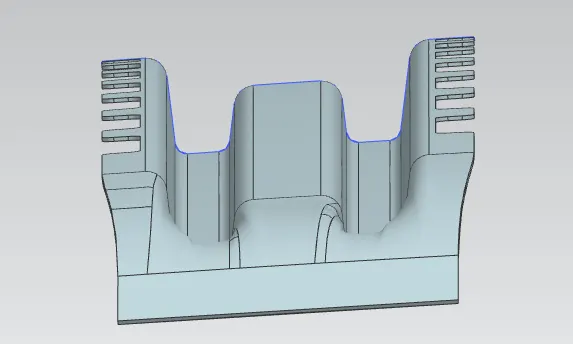
Bow roof 2 is placed between the Center roof and rear roof and it acts as a supporting member for the roof.

Roof outer skin:

To examine the bow roof position prediction using the Heat distortion method:

L- is the roof length in the x direction
R- Radius of curvature
Rx- X curvature
Ry- Y curvature
t- thickness
I- Bow roof span
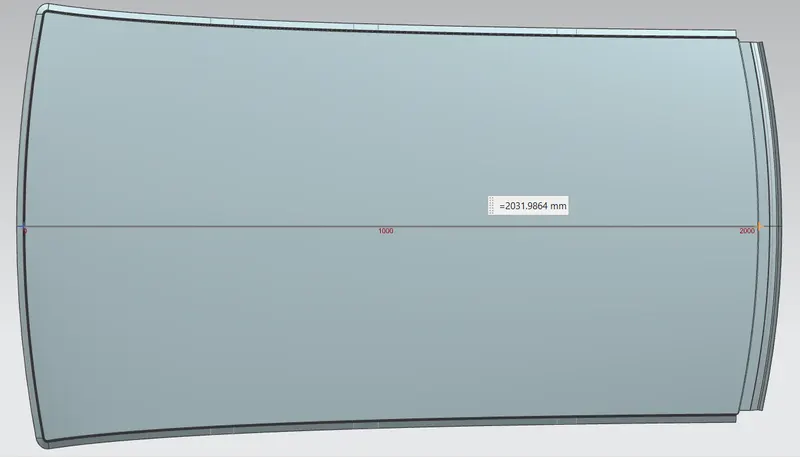
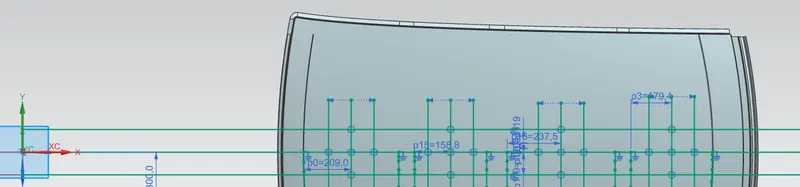
To find the Rx, Ry value, a midline taken between the end of the front roof and the front of bow roof 1. In that line a horizontal line at a distance of 300mm from 0Y-0Y. Create an intersection point using those two bisecting lines. For Rx, Offset the horizontal line at 100mm on both sides.

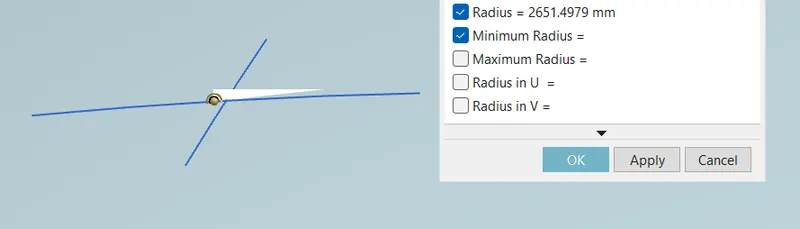
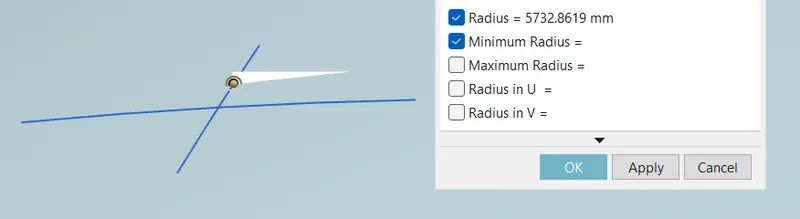
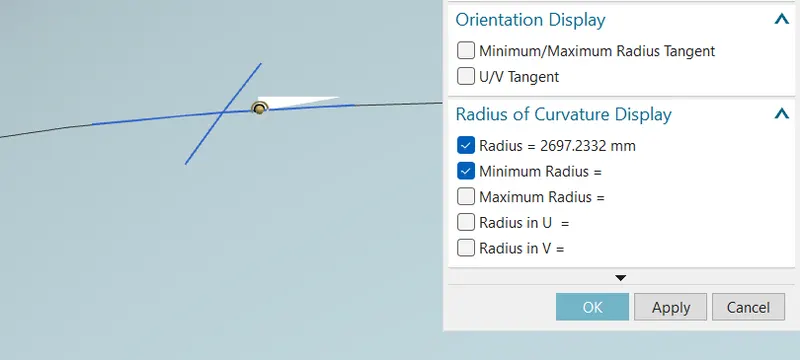
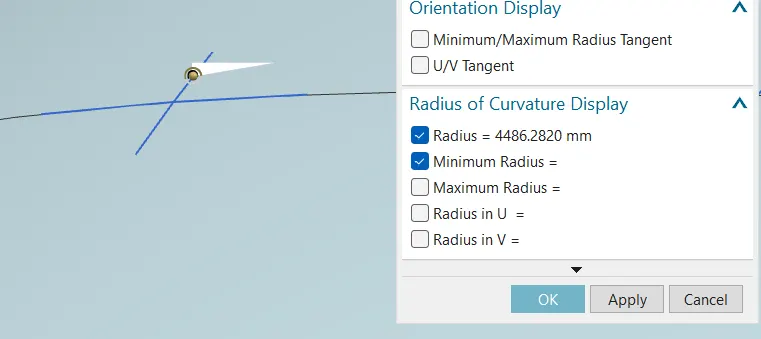
For Ry, offset the vertical line 100m on both side. Project the sketch on the roof and using arc/curve option measure the Rx and Ry radius values.
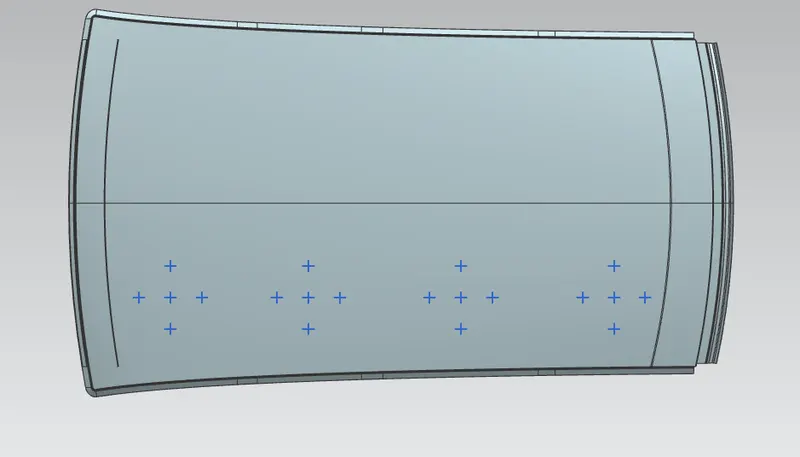
Ry radius:
Rx radius:

For Heat distortion criteria W value sholu be lesser than 2.7. Here all the segment meets the criteria.
Snow load criteria:
To check the snow load criteria, use

To find Rx, Ry value a midline taken between the end of the front roof and the front of bow roof 1. In that line a horizontal line at a distance of 0mm from 0Y-0Y. Create an intersection point using those two bisecting lines. For Rx, Offset the horizontal line at 100mm on both sides.
For Ry, offset the vertical line 100m on both side. Project the sketch on the roof and using arc/curve option measure the Rx and Ry radius values.
Ry value
Rx value
Lx value:
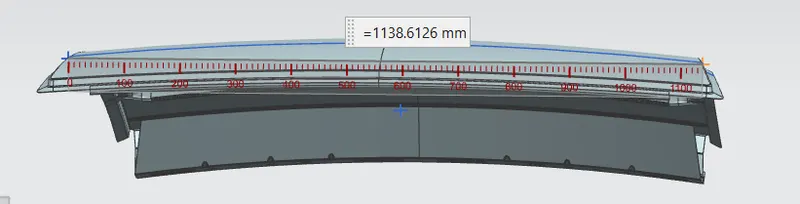
Ly value:
L1, L2, L3, L4:
L1 is the distance between the center of the front roof and the center of bow roof 1.
L2 is the distance between the center of bow roof 1 and the center of the center roof.
L3 is the distance between the center of the center roof and the center of bow roof 2.
L4 is the distance between the center of bow roof 2 and the center of rear roof 2.
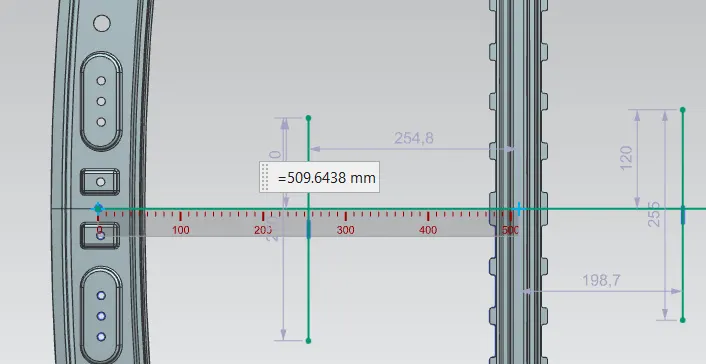
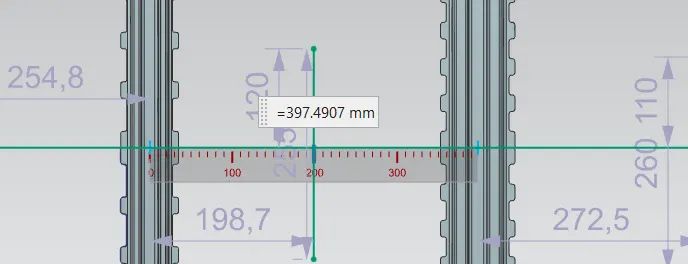
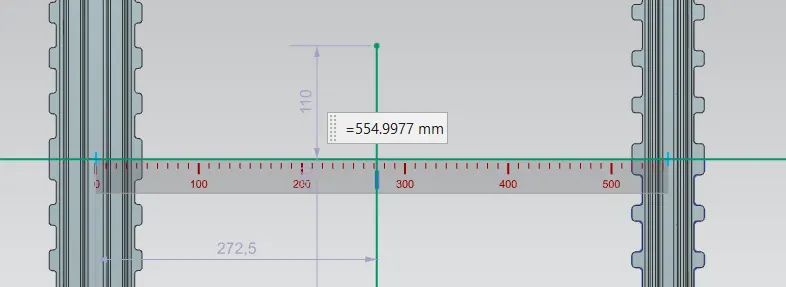
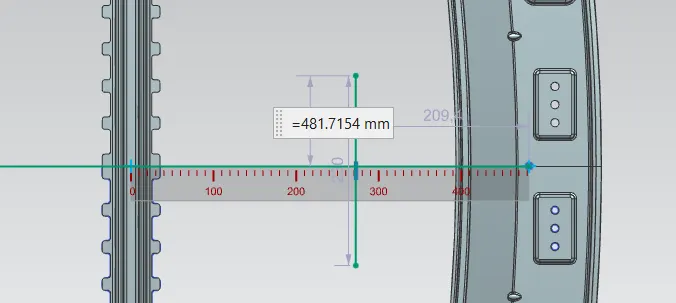
S value:
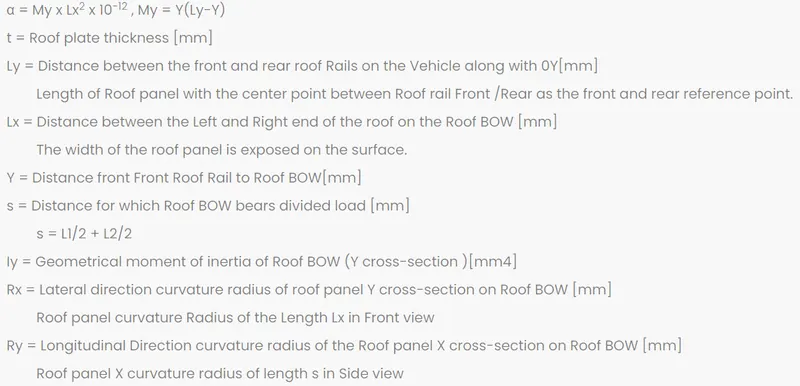
S is the distance for which roof bows divided load.
S=L1/2+L2/2
My value:
My is calculated by y(Ly-y)
whereas y is the distance from the front roof rail center to the bow roof center.
α=My*Lx^2*10^-12
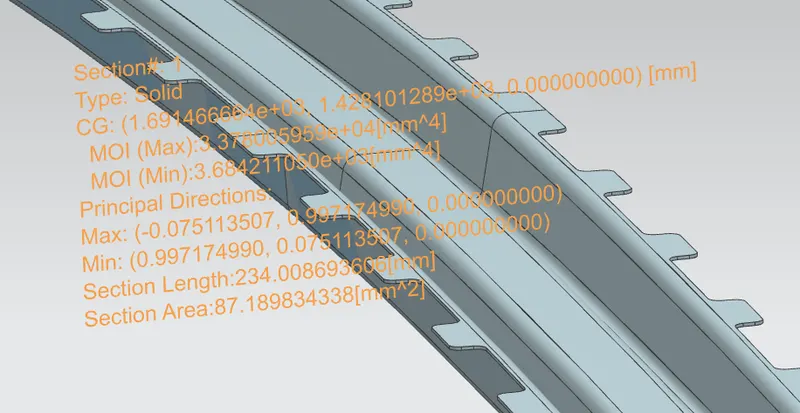
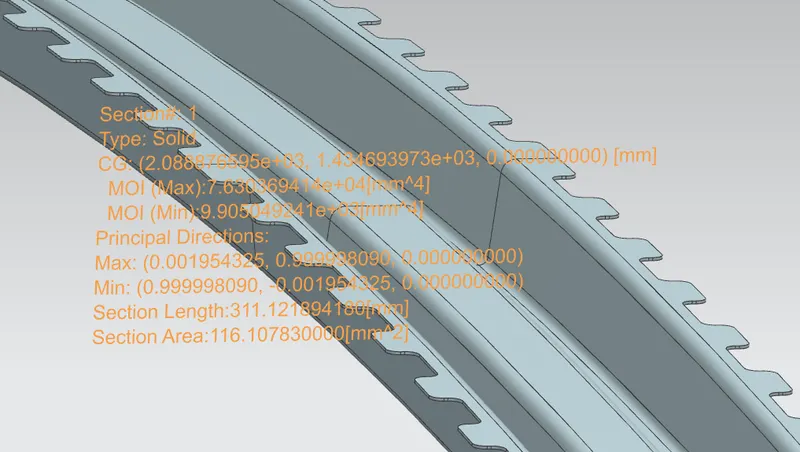
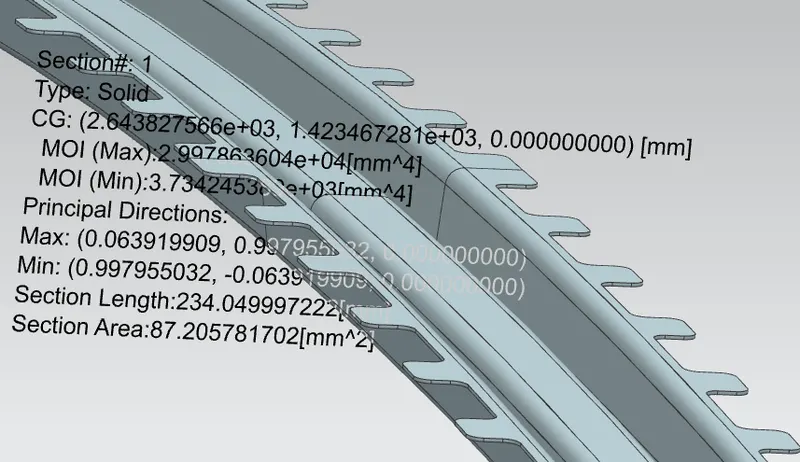
Iy is the moment of inertia of bow roof1, center bow roof, and bow roof 2.
Moment of inertia of bow roof 1:
Moment of inertia of center roof:
Moment of inertia of Bow roof 2:
After calculating all those parameters, substitute the values in Snow load prediction formula and find out the value.
Condition Qr≥3.1 means condition pass.

Draft analysis:
Front roof:
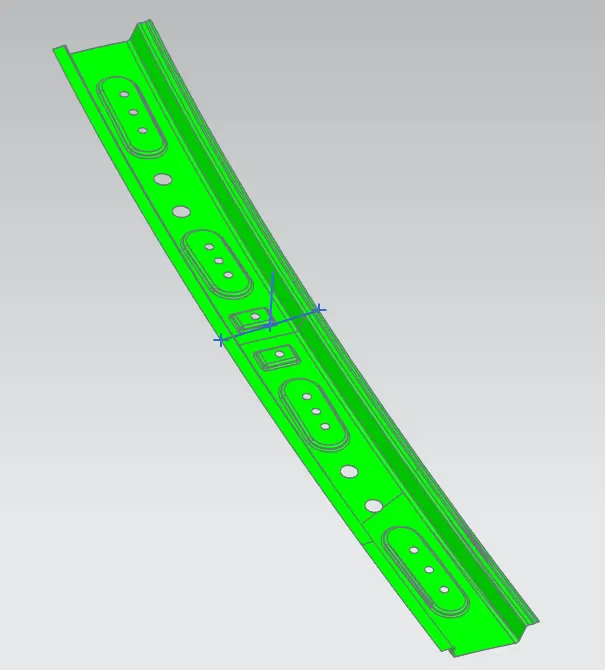
Bow roof 1:
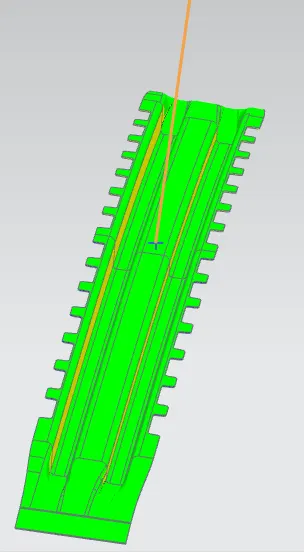
Center roof:
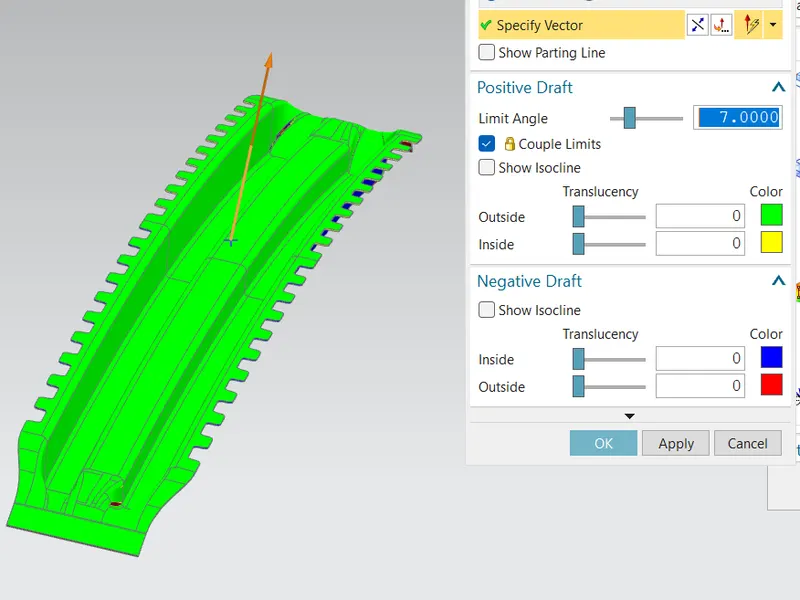
Bow roof 2:
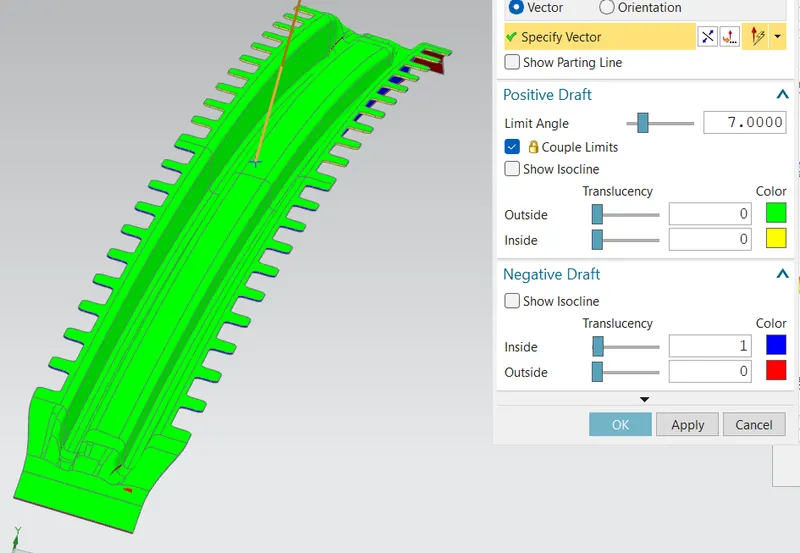
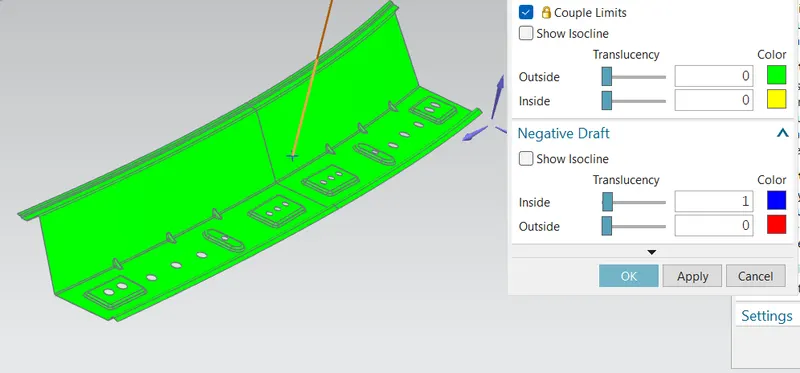
Roof outer skin:
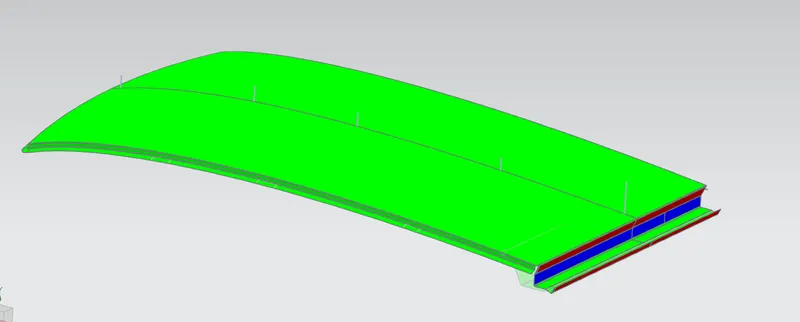
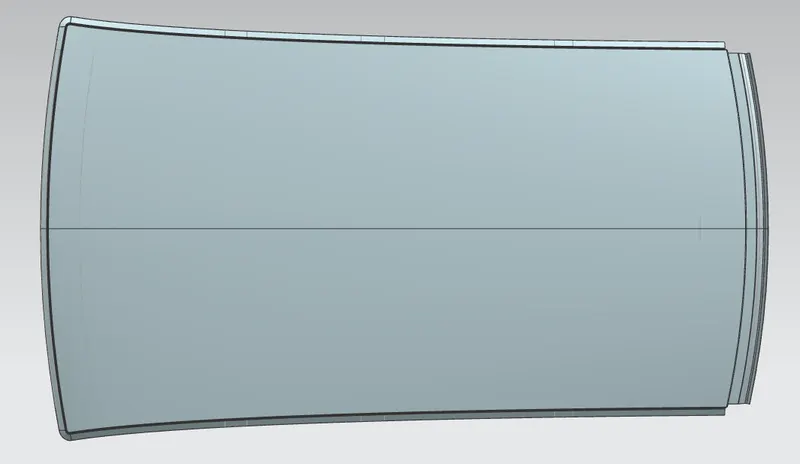
At the rear end, it shows in red and blue color. At rear-end back door is going to fit and it requires some clearance for door opening and closing. So that an inclined angle of 25-30 angled flange is created. That will be cleared in the secondary tooling operation.
NOGO Condition:
In nogo conditions, alternate methods to increase the strength of the roof. Alternate methods are changing the bow roof distances, another method is creating embossing on the roof. Creating embossing on the roof increases the strength.