Roof challenge
Objective –
To design the automotive roof based on the given styling surface and to analyze the prepared model to check the manufacturability and the feasibility of the design.
Introduction –
The roof of the car is the automobile component which encloses the passenger compartment form the top. It protects the passengers and the interior of the car from external environments thus providing a safe and isolated cabin. The roof plays an important role in the safety, especially in case of roll-over accidents. To achieve better safety results the roof is designed with reinforcement structures such as rails.
Components of Roof –
- Outer Panel
- Front Roof Rail
- Rear roof rail
- Bow roof rail
- Central roof rail
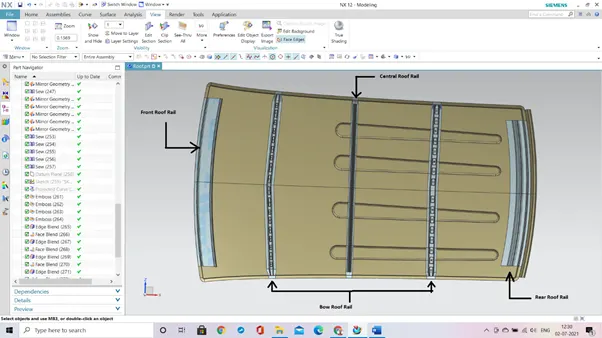
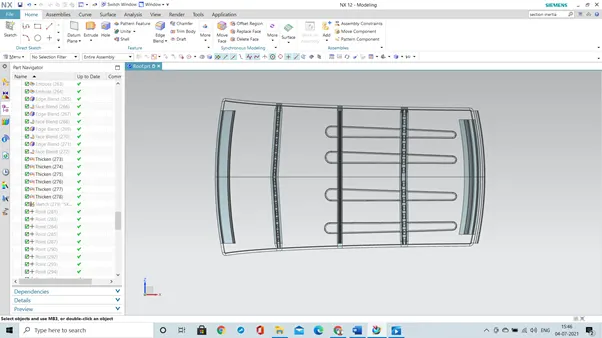
- Outer Panel –
The outer panel is the A-class surface of the roof which encloses the top of the passenger compartment. It is designed to match the input styling surface, thus getting better aerodynamic performance as intended. It also has intended significant role in the aesthetics of the vehicle. The outer panel is mounted to the roof rails with the help of mastics and the ditch areas are mounted with spot welds. The commonly used materials for outer panel are steel and aluminum alloys.
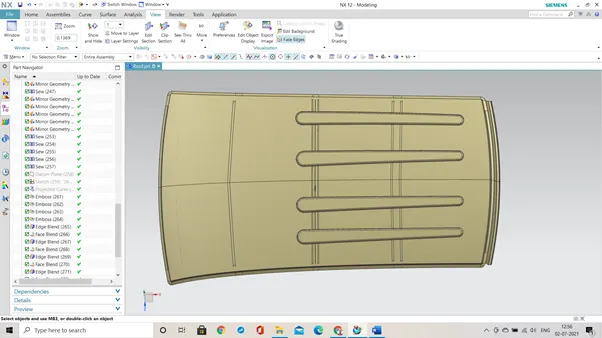
- Front Roof Rail –
The front rail supports the roof outer shell at the front end. It is mounted with brace roof rail reinforcement on the both ends. The rails are provided with embosses to improve the strength and the rail is connected to the outer panel using mastic sealants.
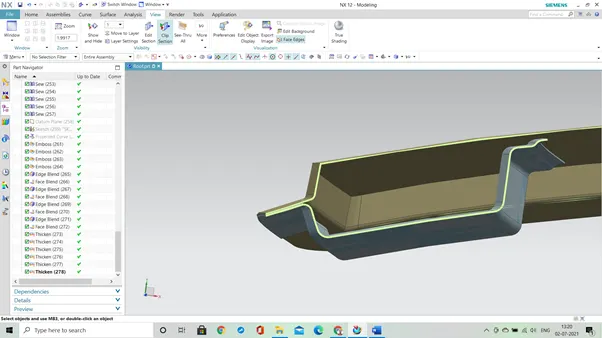
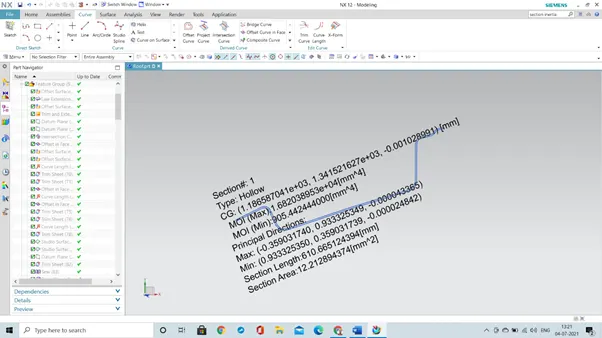
- Rear Roof Rail –
It the support that is joined to back door and the body side outer and the inner panel. It is also usually made form body side outer scrap and therefore the thickness of the rail is 0.75 mm. Similar to the front rail design, we have to take into consideration the rear headroom clearance and the rear visibility criteria while designing the rear roof rail. Inputs from the backdoor design is also taken to accommodate the required clearance. Spot welds are applied at the back door end of the rail and the other end is joined with the roof using mastic sealants.
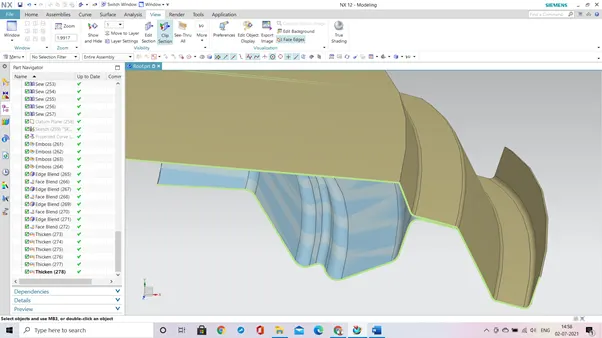
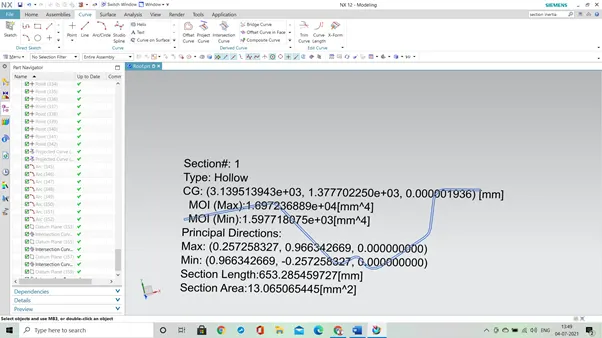
- Center Roof Rail –
Similar to other rail design we have to take into consideration the headroom clearance and the visibility criteria while designing the Center Rail and Bow Rail. But unlike the front and rear rails, spot welds are not applied for joining these rails to the roof. Instead, mastic sealants are introduced at both ends since center roof rail and bow rail are positioned under styling surface of the roof. For increasing the strength of the rails, embossing is done. To reduce weight of the material used, a different styling has been followed with the thickness of 0.75 mm.
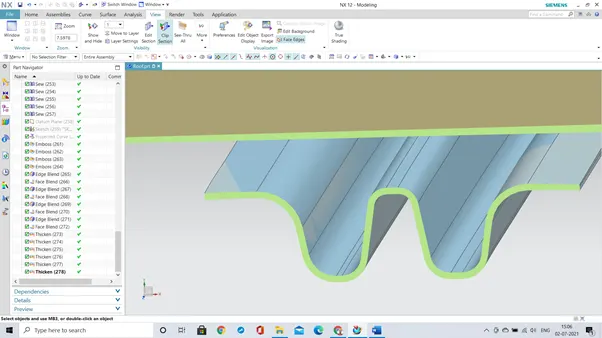
- Bow Roof Rail
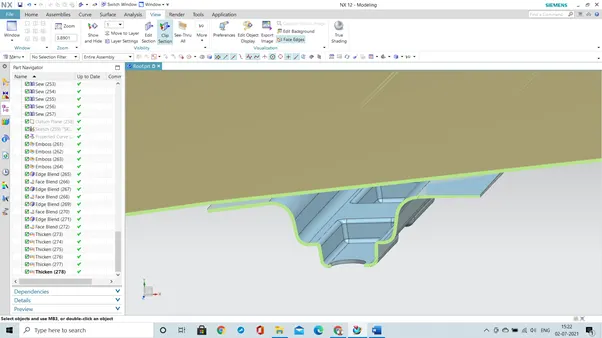
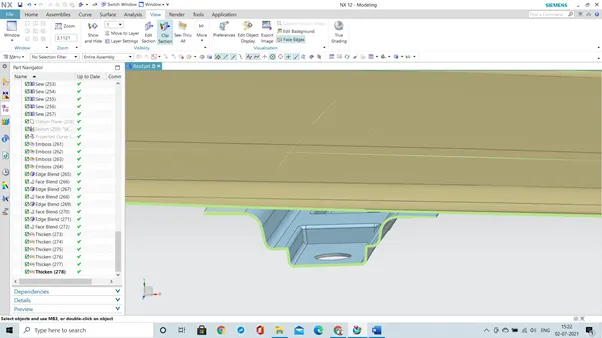
Bow roof rail are needed to give additional strength to the roof.
Heat Distortion calculation:
The roof of the vehicle is the most exposed to changes in temperature, this changes cause deformation in the roof. In order to prevent failure of the roof due to excessive thermal stress, the roof rail must be placed in the correct locations. Improper designing of the roof may cause warping, cracking and failure of mounts.
This calculation is done to find if the roof under thermal stress deforms within set limits.
The formula for heat distortion is:
W = [1.73 x 10⁻³ x L ]+ [1.85 x 10⁻⁸ x (R2 /2)+ 1.10`x 10-3 x l] – 2.86
The condition that needs to be satisfied is:
W < 2.7 mm
L = Roof length in X direction
R = Roof curvature
Rx = Roof curvature along X axis
Ry = Roof curvature along Y axis
l = Roof span
W = Heat distortion
|
FR to B1 |
B1 to CR |
CR to B2 |
B2 to RR |
Result |
|
|
L (mm) |
2112.5248 |
2112.5248 |
2112.5248 |
2112.5248 |
|
|
t (mm) |
0.75 |
0.75 |
0.75 |
0.75 |
|
|
Rx (mm) |
2564.5520 |
5686.2375 |
9833.6432 |
14815.3809 |
OK |
|
Ry (mm) |
5737.9486 |
5098.5906 |
4127.2823 |
3245.9081 |
OK |
|
R (mm) |
3544.7796 |
5376.4041 |
5814.2594 |
5325.1309 |
OK |
|
l (mm) |
375.5739 |
512.7240 |
484.3098 |
545.7660 |
OK |
|
W (mm) |
1.69 |
2.25 |
2.34 |
2.27 |
OK |
From the value of ‘W’ we can see that all the values are within distortion limits, therefore the roof design is cleared for next stage.
Snow Load Calculation:
The roof of vehicle is normally not designed to hold up weight, but for regions with snowfall, it must be properly reinforced to hold up the weight of accumulated snow on the roof, if done improperly it may cause the roof to bend and intrude into the passenger compartment which is dangerous. This calculation is done in order to check if the location and strength of the roof rails are enough to avoid plastic deformation of the roof.
The formula for snow load analysis is:
Qr = [Iy x t2] / [α x s x [(Rx + Ry)/2]2 x 10-8]
where,
α = My x Lx2 x 10-12,
My = Y(Ly-Y)
Judgement condition = Qr ≥ 3.1
250 ≤ s ≤ 380
t = Roof plate thickness [mm]
Ly = Distance between the front and rear roof Rails on the Vehicle along with 0Y[mm]
Length of Roof panel with the centre point between Roof rail Front /Rear as the front and rear reference point.
Lx = Distance between the Left and Right end of the roof on the Roof BOW [mm]
Width of the roof panel exposed on the surface.
Y = Distance from Front Roof Rail to Roof BOW [mm]
s = Distance for which Roof BOW bears divided load [mm]
s = L1/2 + L2/2
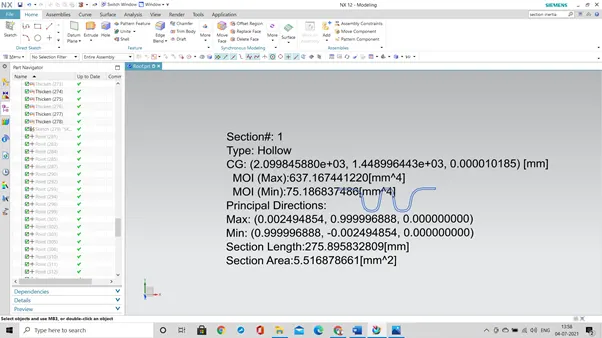
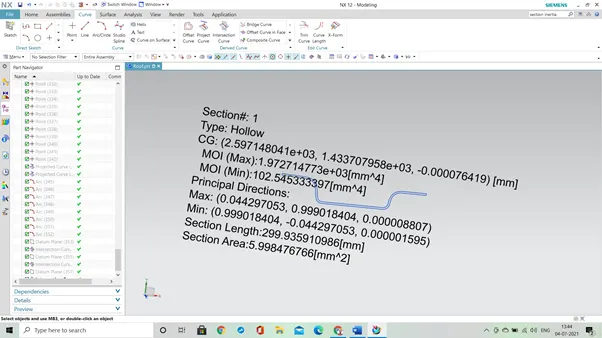
Iy = Geometrical moment of inertia of Roof BOW (Y cross-section) [mm4]
Rx = Lateral direction curvature radius of roof panel Y cross-section on Roof BOW [mm]
Roof panel curvature Radius of the Length Lx in Front view
Ry = Longitudinal Direction curvature radius of the Roof panel X cross-section on Roof BOW [mm]
Roof panel X curvature radius of length s in Side view
|
Bow 1 |
Central Bow |
Bow 2 |
|
|
Iy (mm4) |
1597.8940 |
637.1674 |
1972.7147 |
|
t (mm) |
0.75 |
0.75 |
0.75 |
|
Y (mm) |
1139.4 |
1098.9 |
1066.8 |
|
Ly (mm) |
2112.5248 |
2112.5248 |
2112.5248 |
|
My (mm2) |
1108778.39712 |
1069366.84272 |
1115579.21664 |
|
Lx (mm) |
375.5739 |
512.7240 |
484.5018 |
|
α (mm4) |
0.1563 |
0.2807 |
0.2618 |
|
L1 (mm) |
375.5739 |
512.7240 |
484.5018 |
|
L2 (mm) |
512.7240 |
484.5018 |
545.7660 |
|
s (mm) |
444.14895 |
498.4629 |
515.1339 |
|
Rx (mm) |
3240.2025 |
3939.0213 |
3354.6755 |
|
Ry (mm) |
14313.0686 |
3753.6808 |
4030.3504 |
|
Qr |
16.80841 |
17.31 |
60.34 |
From the value of “Qr”, we are able to see that all the values are above 3.1 thus satisfying snow load condition.