Radar Mast & Final Assembly of Yacht
Answer:-
Title:- Radar Mast & Final Assembly of Yacht
Objective:- Design of Radar Mast
Major Feature:- Extruded boss/base, Revolved boss/base, Sweep, Combine, Projective curve, Shell, Dome, Fillet and Cut sweep i.e.
Radar Mast :-
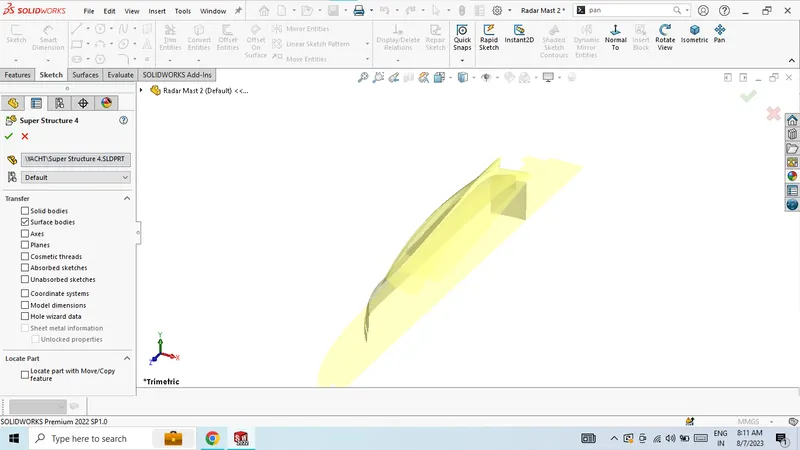
First one, we have create a new file and go to insert then part
insert the Superstracture part file and select the surface body and ok
Save it 'Radar Mast'
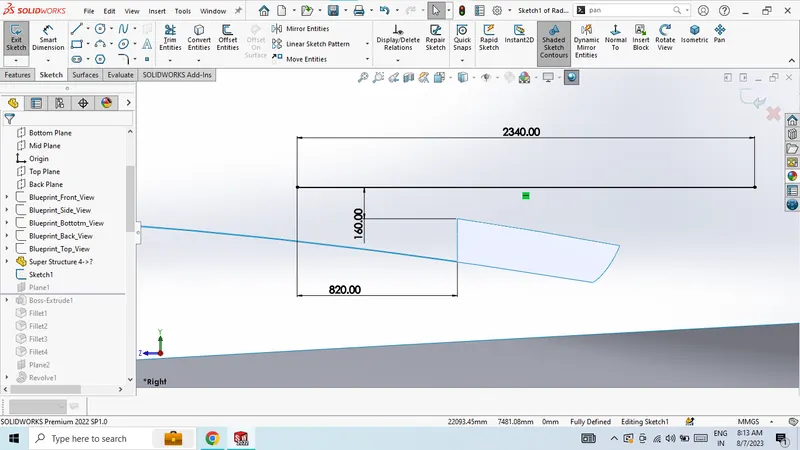
Create a new sketch on the mid plane as shown in the picture
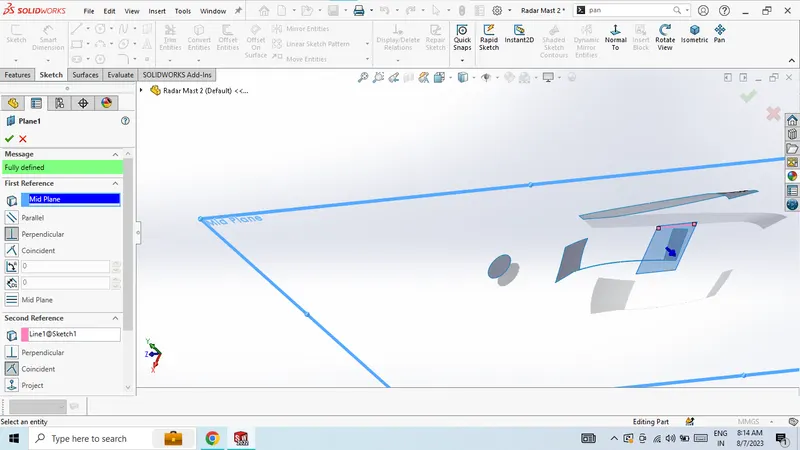
Then create a new plane1 with reference to line and mid plane
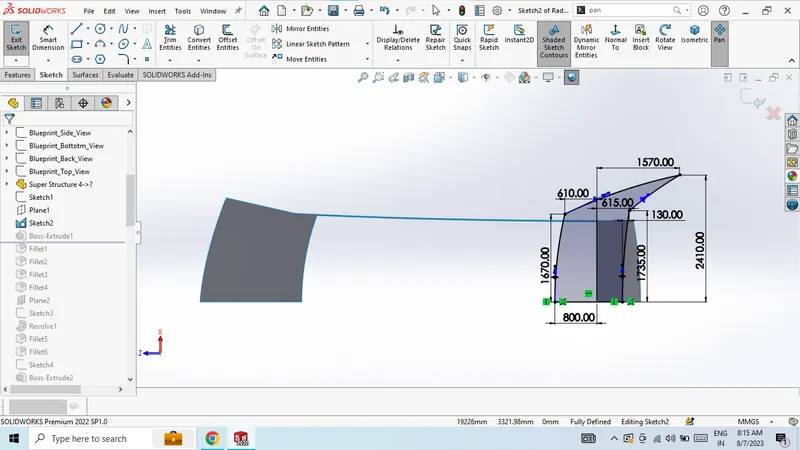
then create a new sketch on the plane1
Then Extruded boss/base it
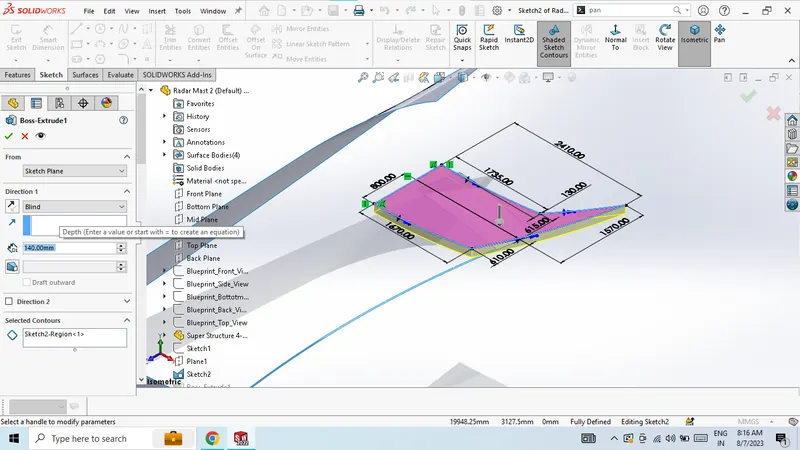
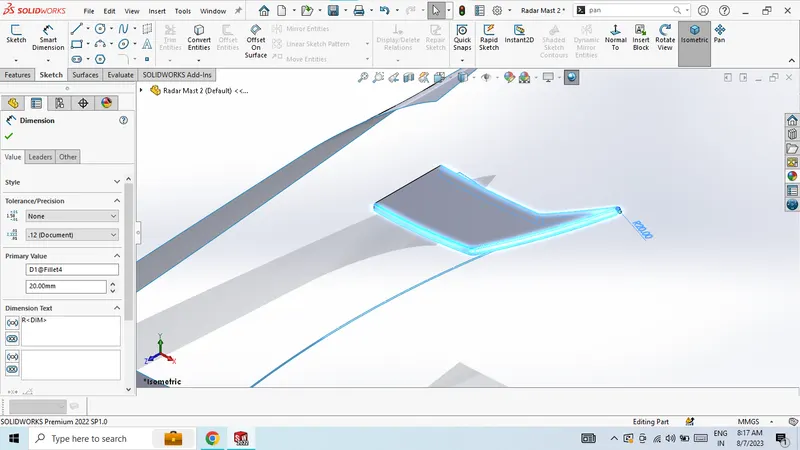
apply the fillets
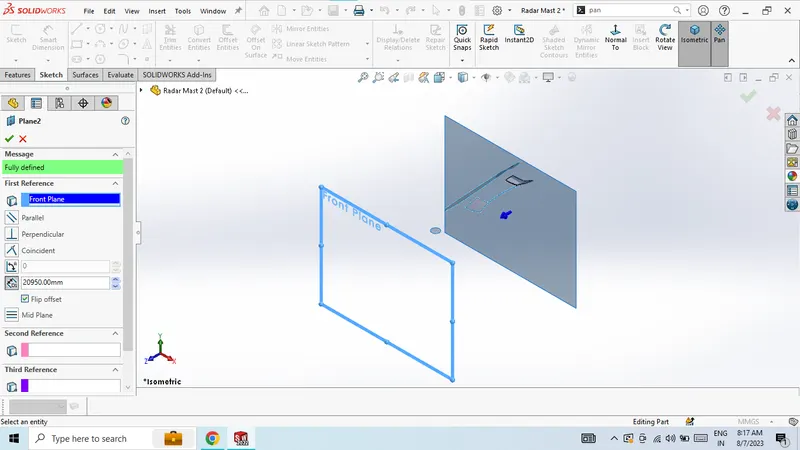
Create a new plane2
then create a new sketch on plane2
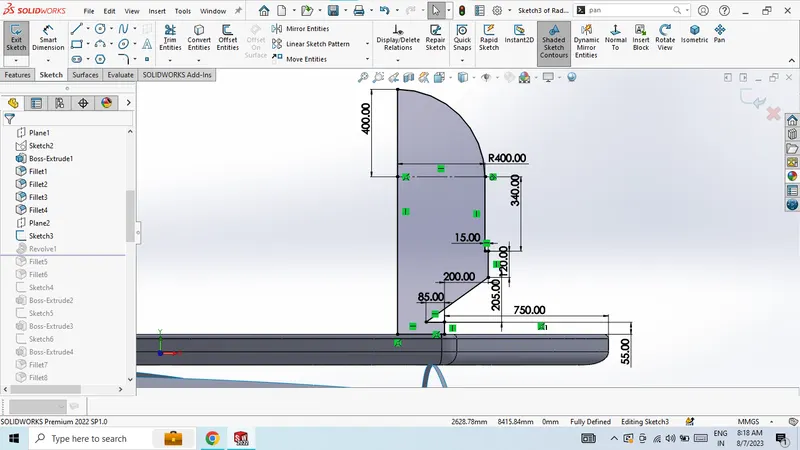
Then revolved boss/base it
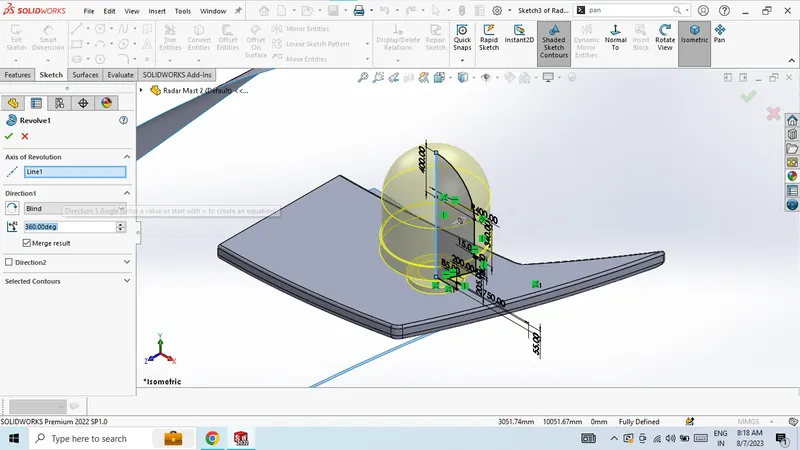
apply the fillets
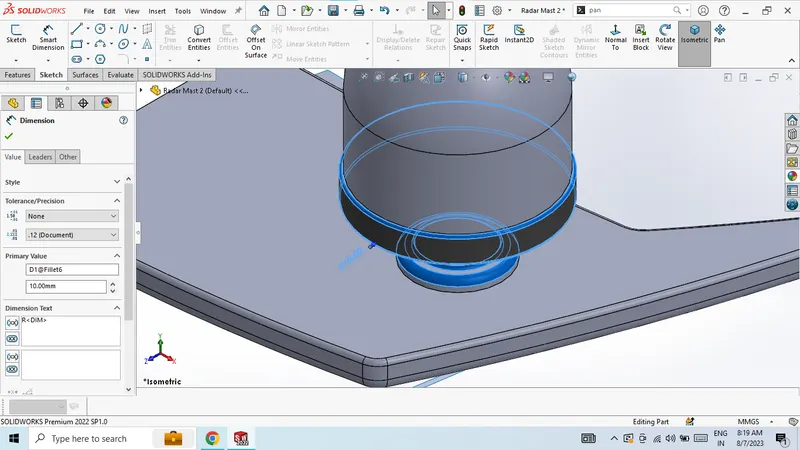
Create a new sketch on the blue surface as shown in the picture
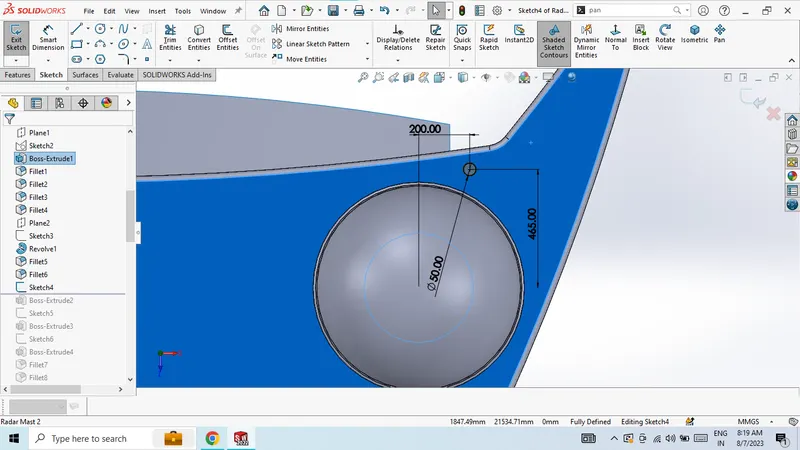
then extruded boss/base it
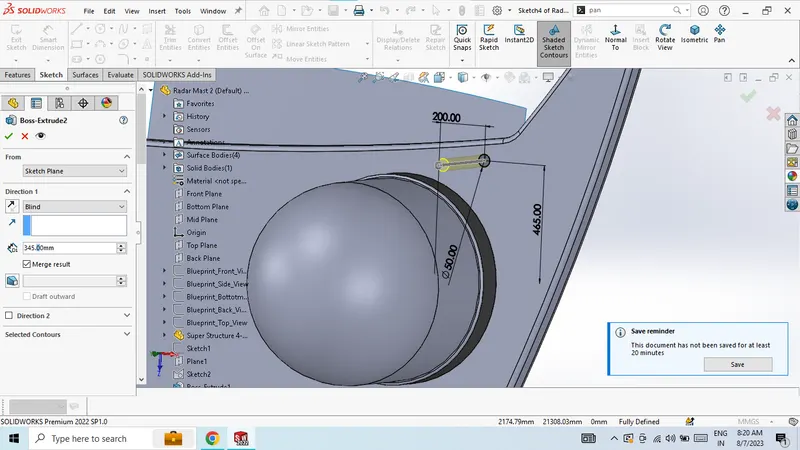
Create a new sketch on the blue surface as shown in the picture
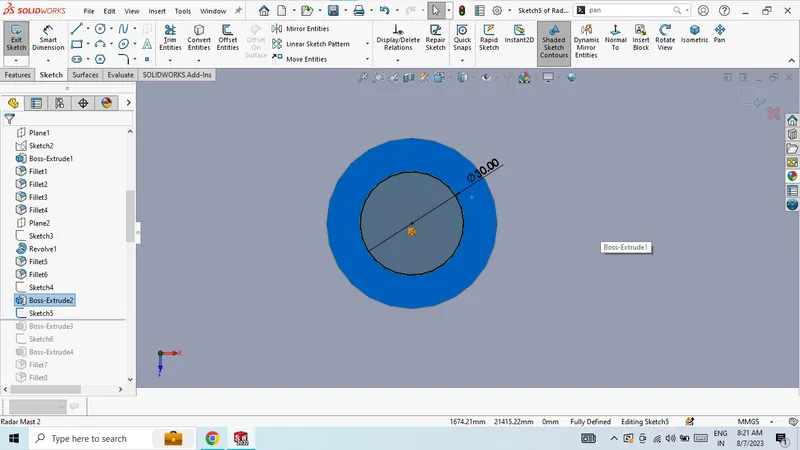
Then Extruded boss/base it
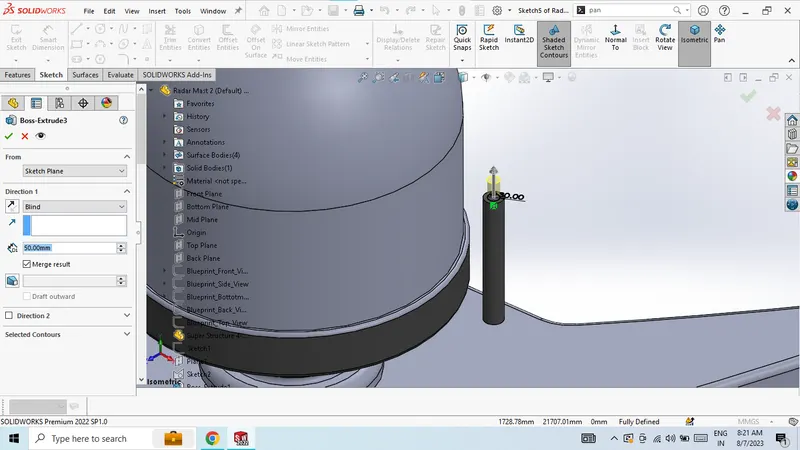
Create a new sketch on the blue surface as shown in the picture
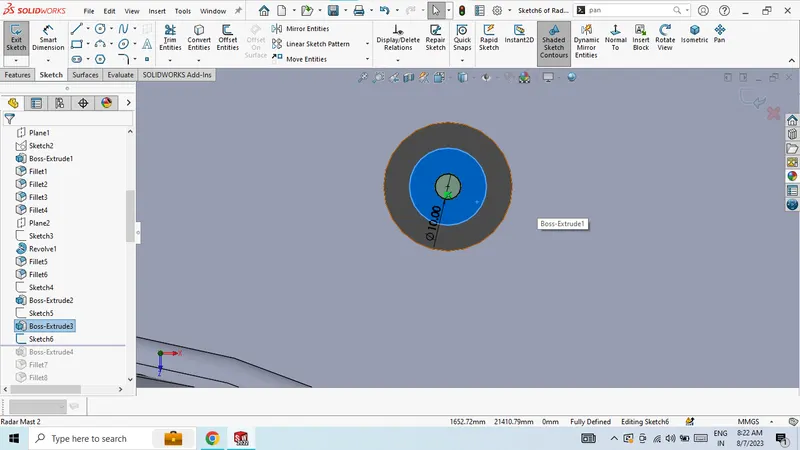
then extruded boss/base it
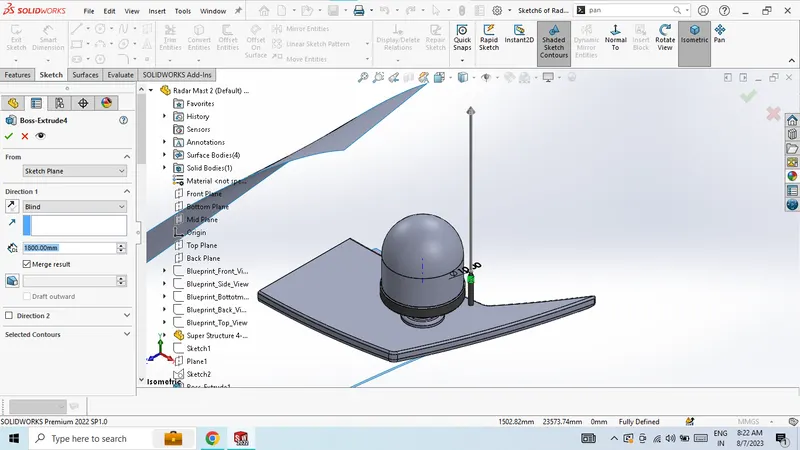
apply the fillets
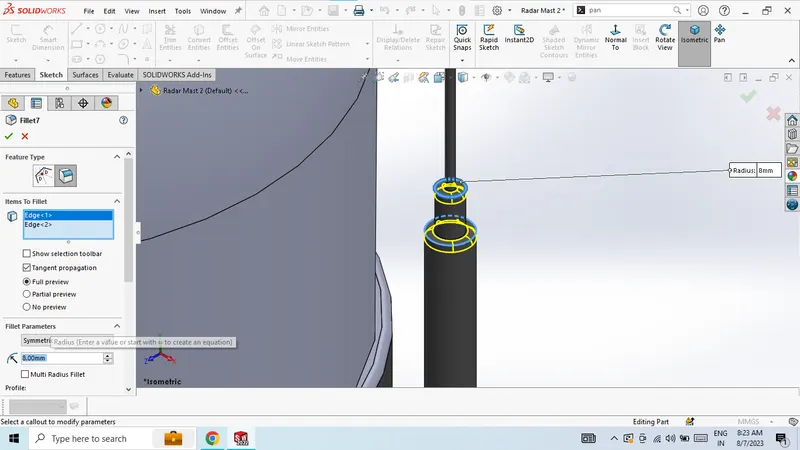
apply the fillets on the top of antina
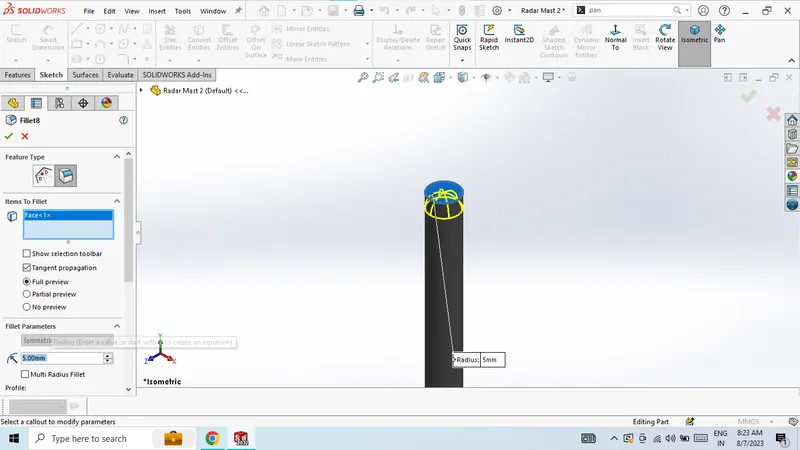
Create a new plane3
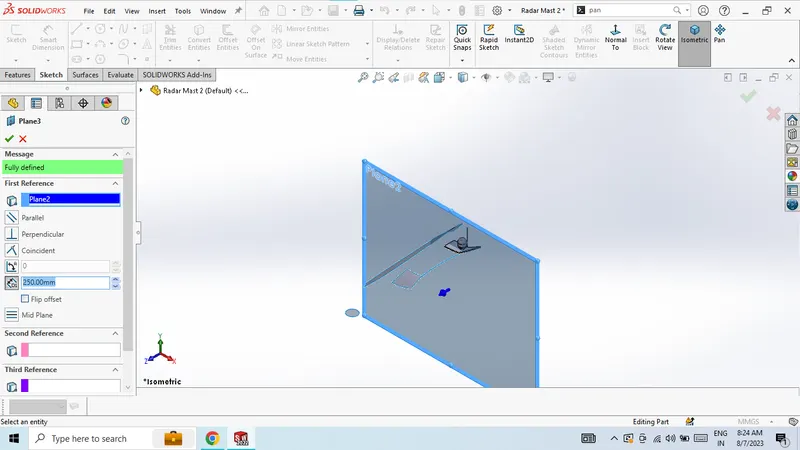
Create a new sketch on the plane3 as shown in the picture
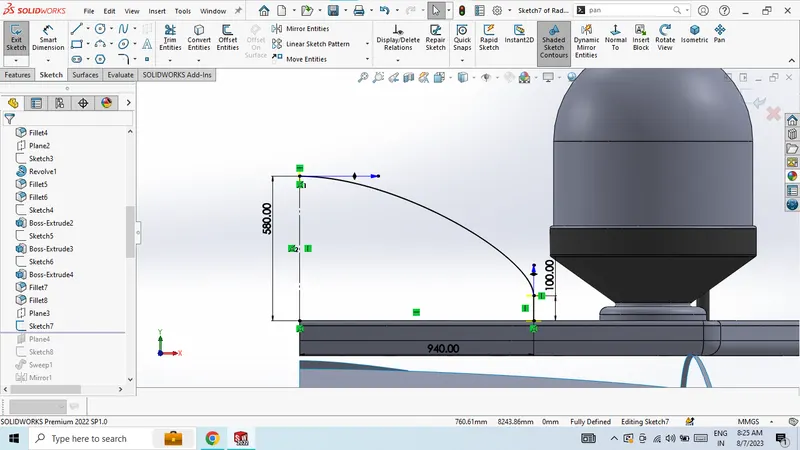
Create a new plane4
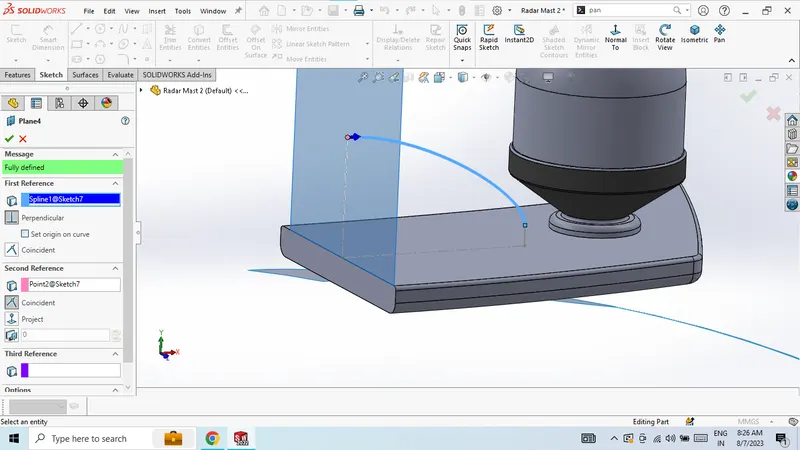
Create a new sketch on the plane4
then go to sweep command and ok
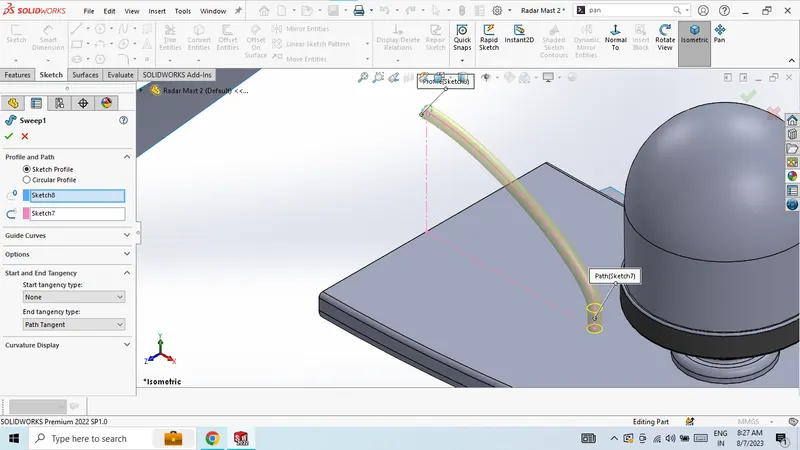
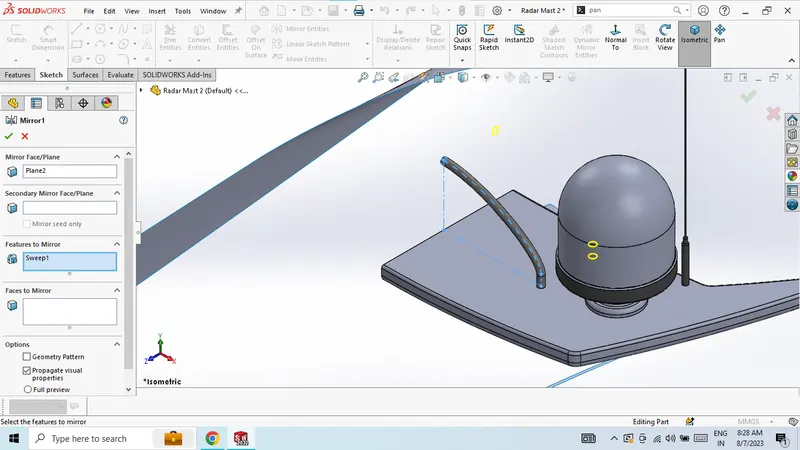
and mirror it with respect to plane2
Create a new sketch on the plane2
as shown in the picture
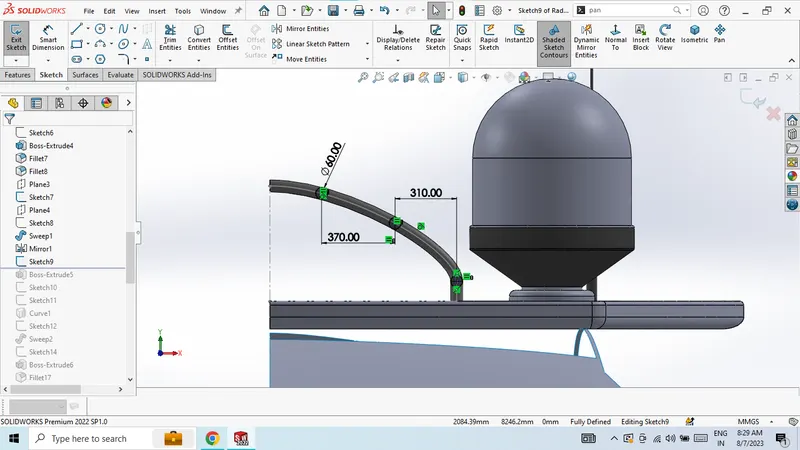
Then Extruded boss/base it
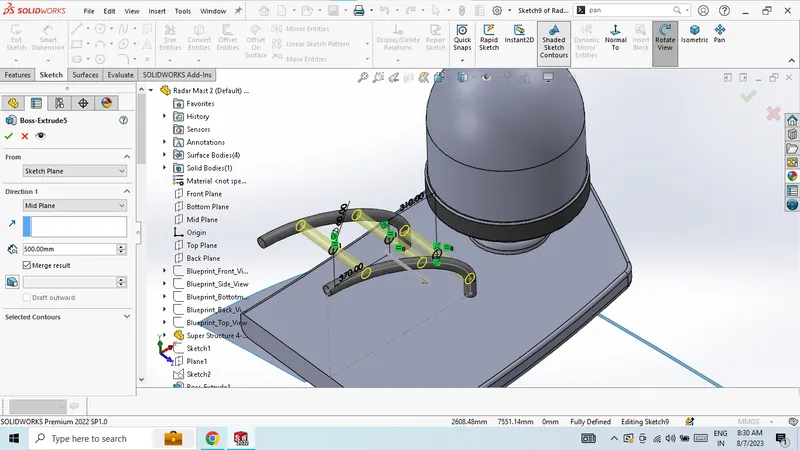
Create a new sketch on the mid plane as shown in the picture
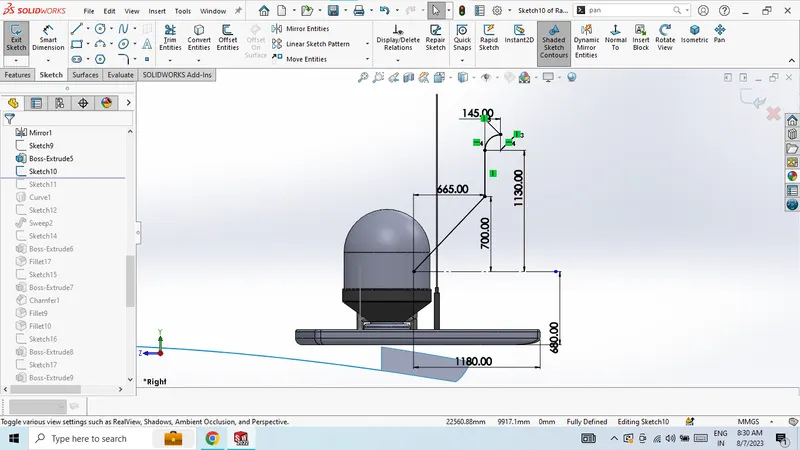
Create a new sketch on the plane2
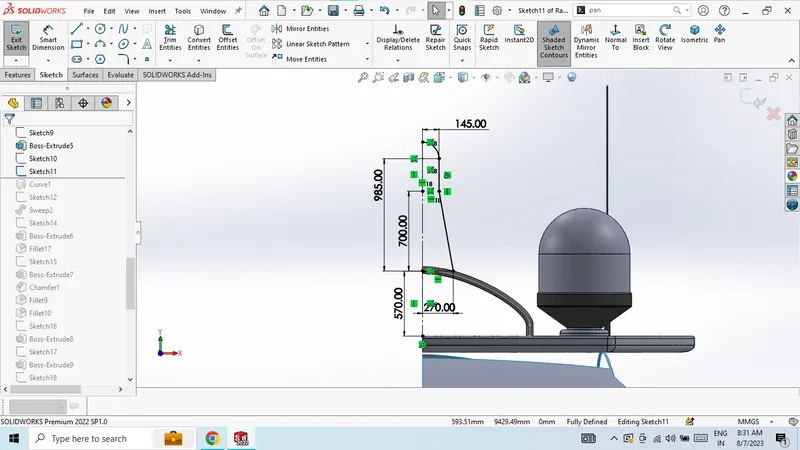
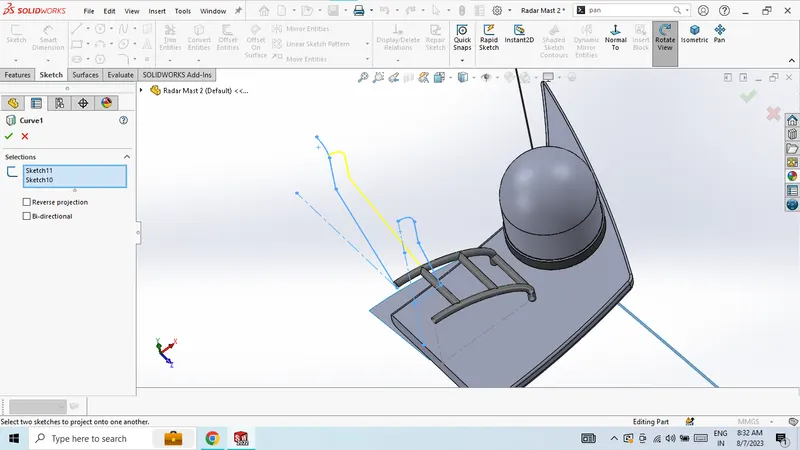
then go to project curve and ok
Create a new sketch on the mid plane as shown in the picture
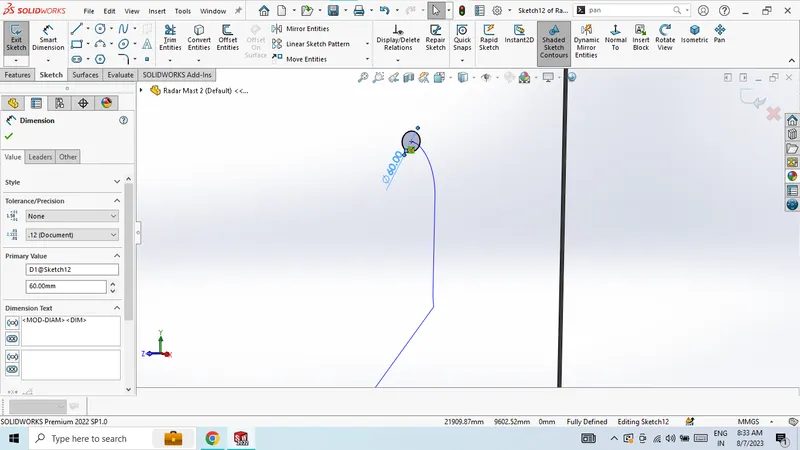
then go to sweep command
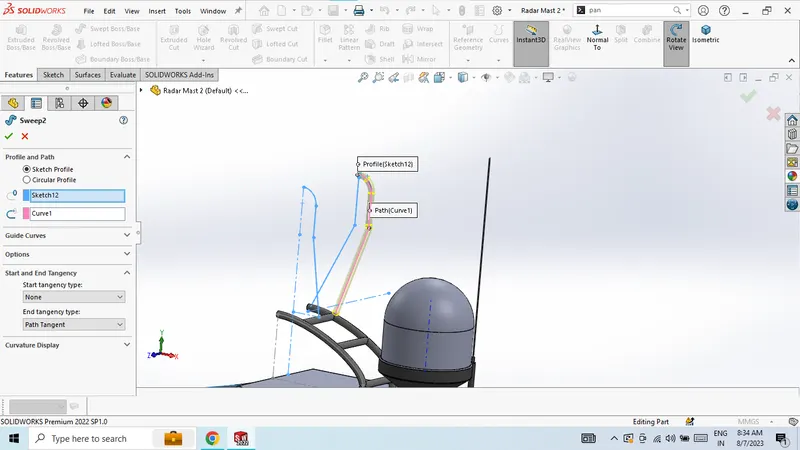
create a new sketch on the blue surface
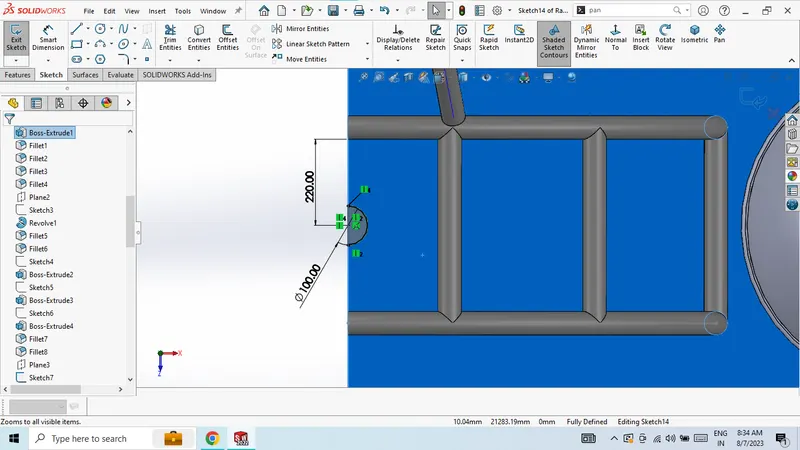
then extruded boss/base it
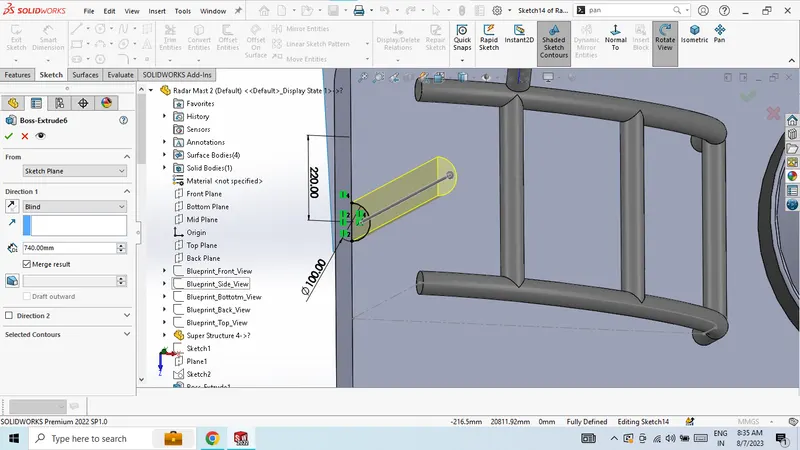
apply the fillets
Create a new sketch on the blue surface as shown in the picture
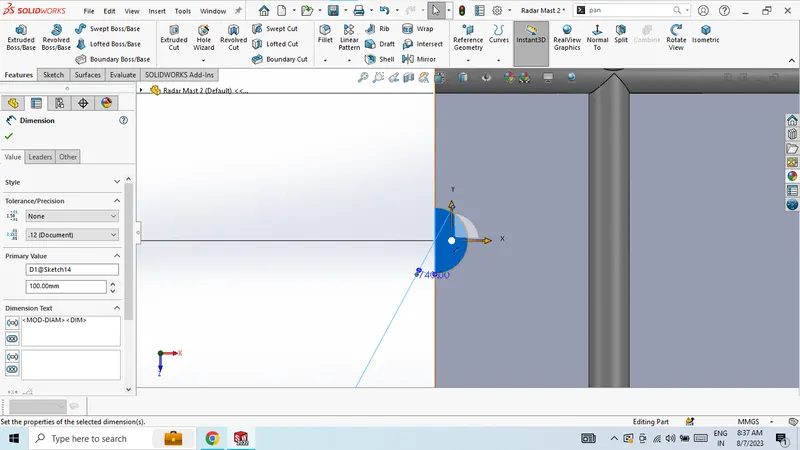
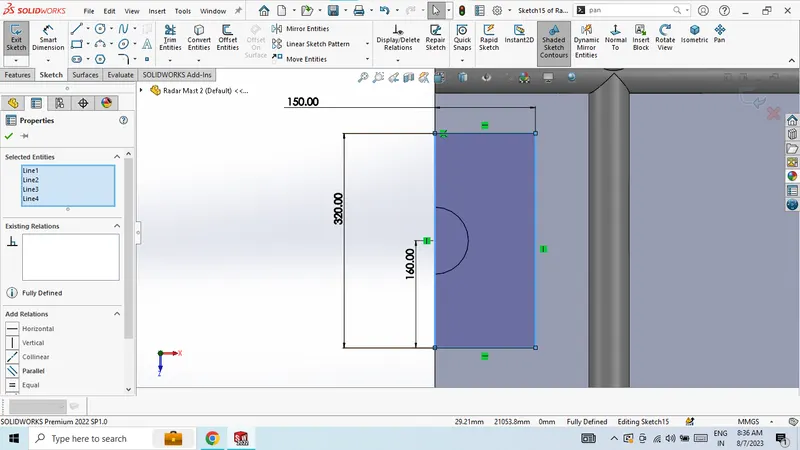
then Extruded boss/base it
apply the chamfer
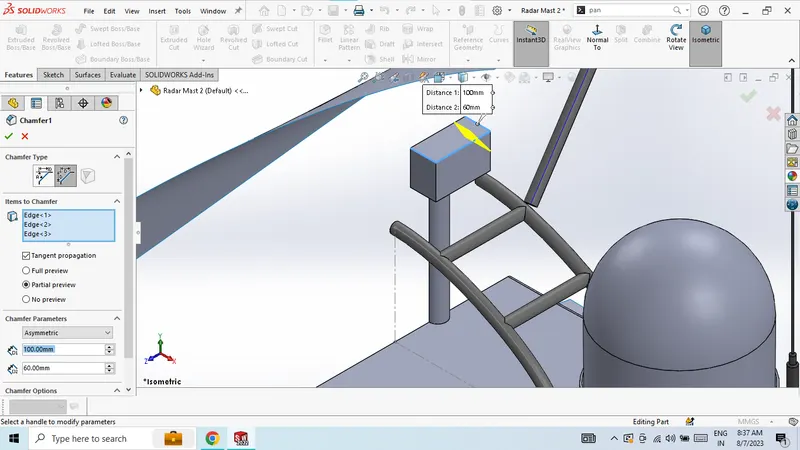
apply the fillets
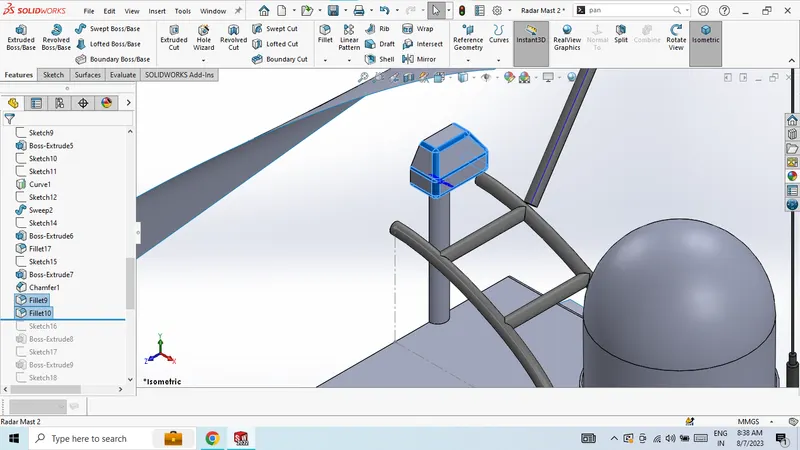
Create a new sketch on the mid plane as shwon in the picture
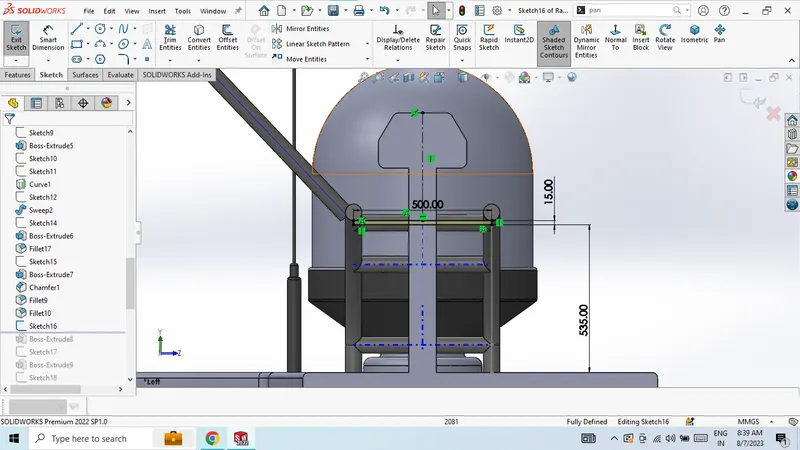
then extruded boss/base it
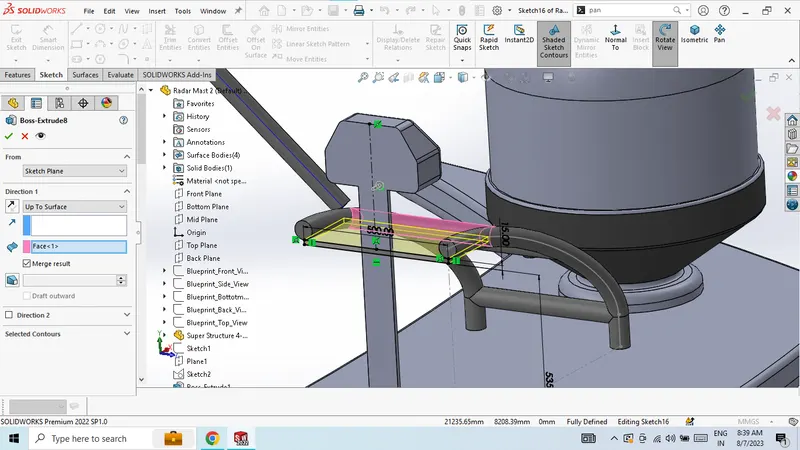
Create a new sketch on the blue surface
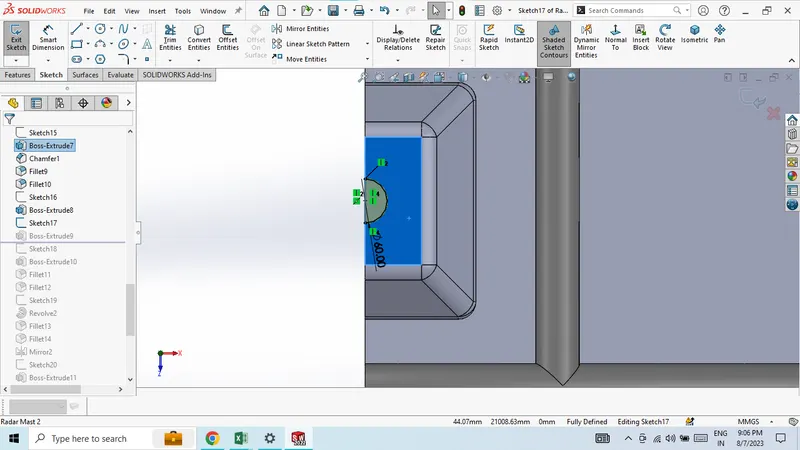
then extruded boss/base it
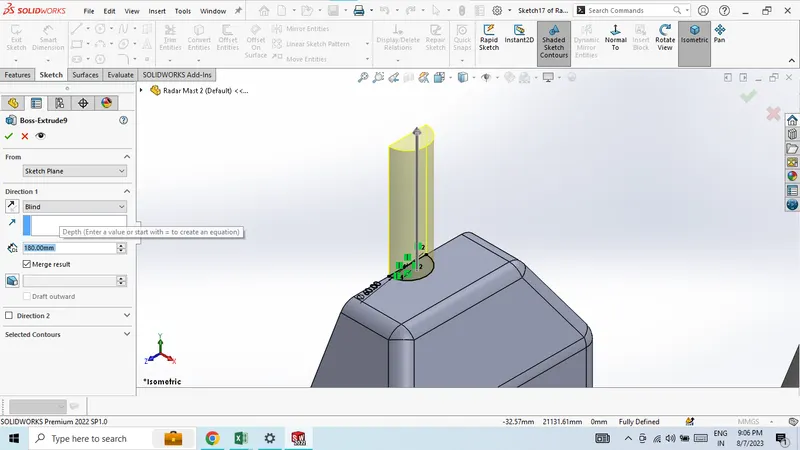
Create a new sketch on the mid plane
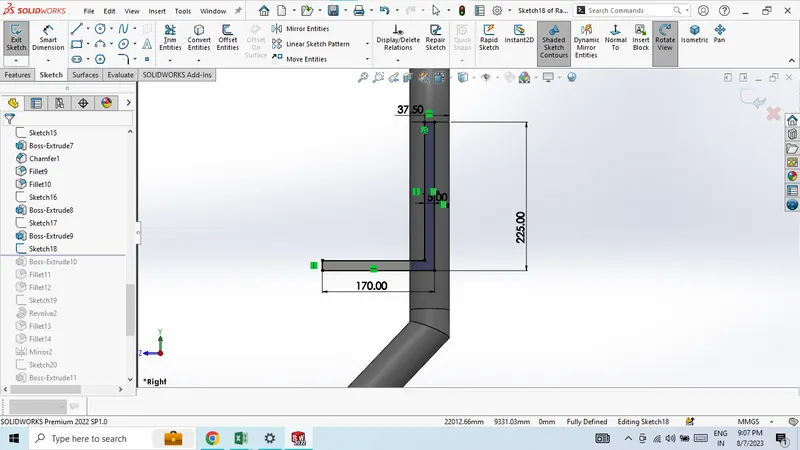
then extruded boss base it
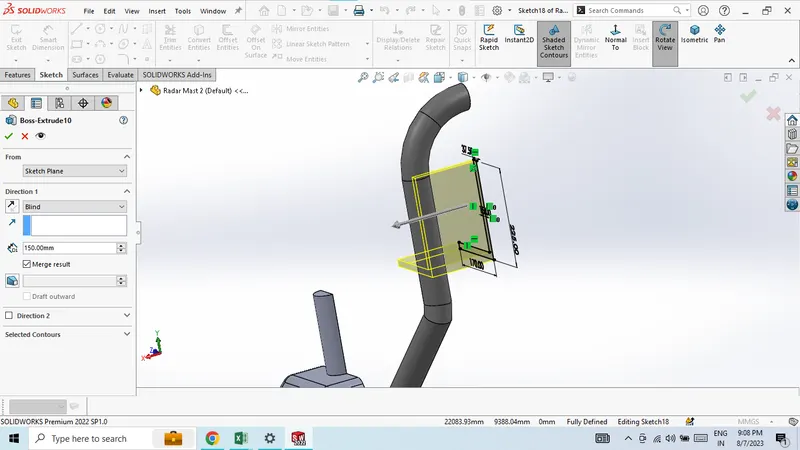
apply fillets
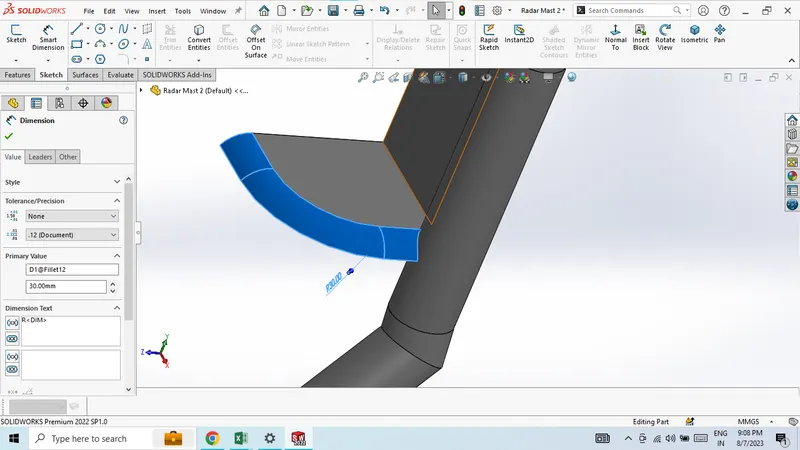
Create a new sketch on the mid plane
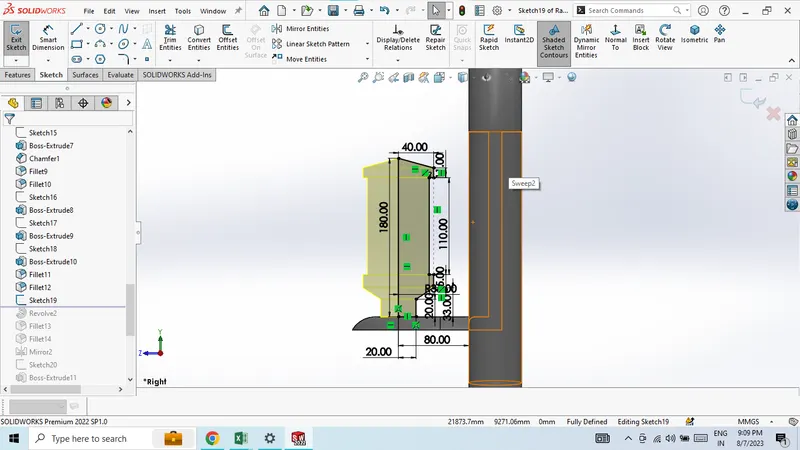
then revolved boss/base it
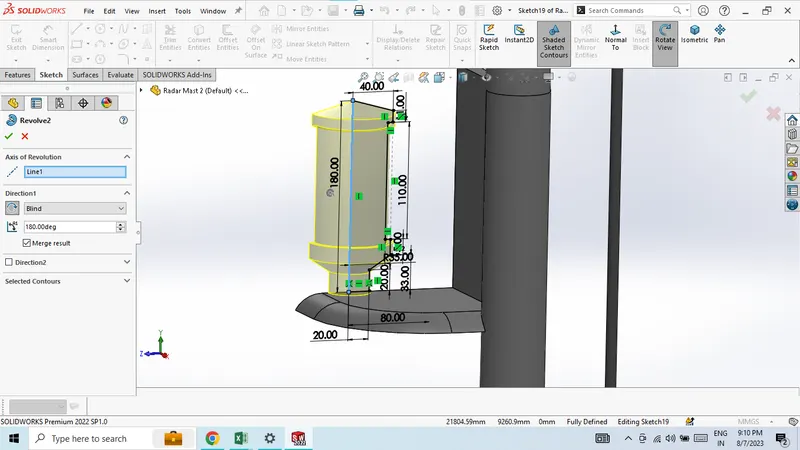
apply fillets
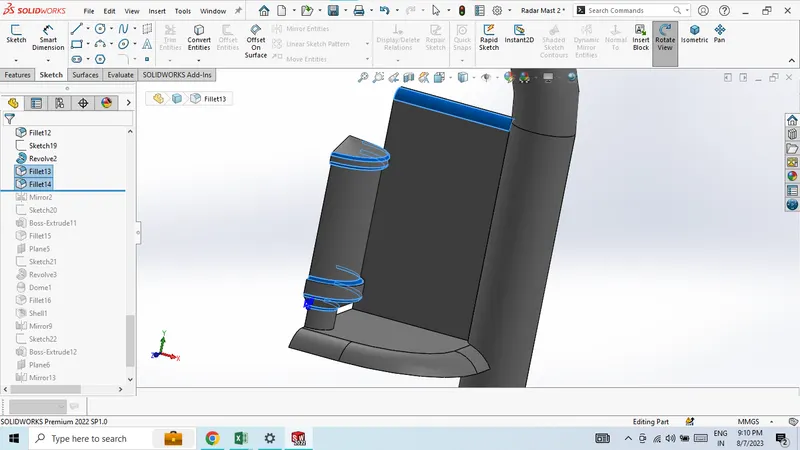
then apply mirror about the blue surface
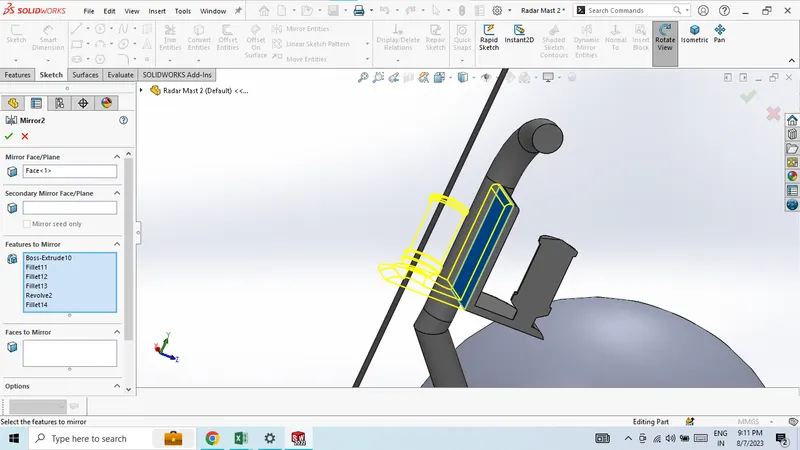
Create a new sketch on the blue surface
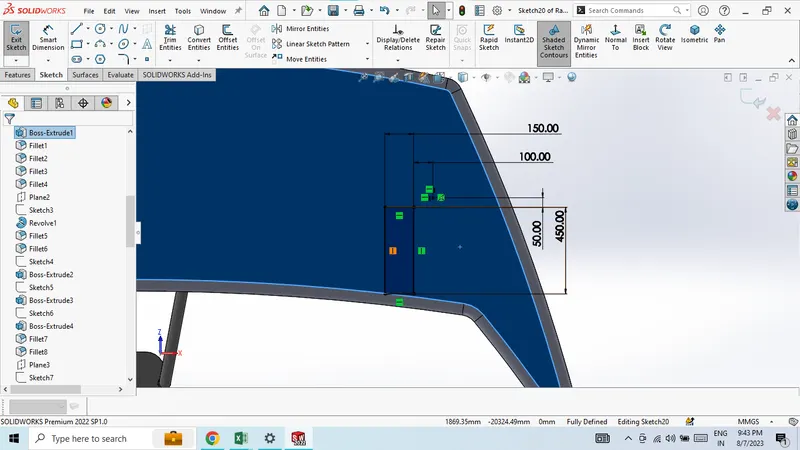
then extruded boss base
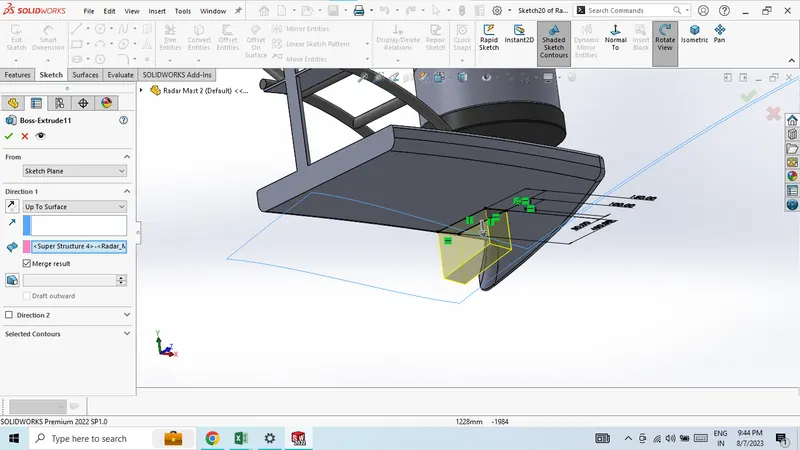
apply fillets
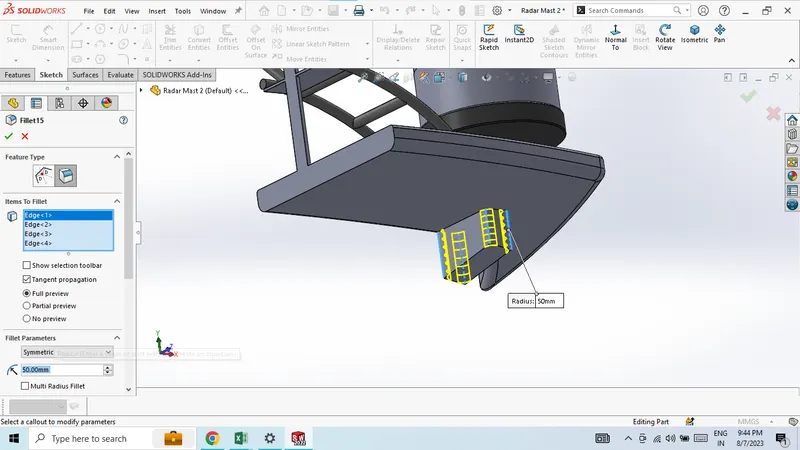
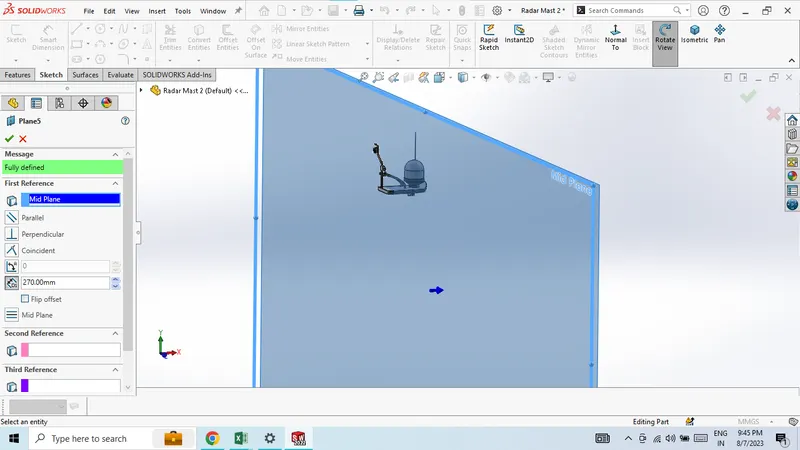
Create a new plane5 as shown in the picture
create a new sketch on the plane5 as shown in the picture
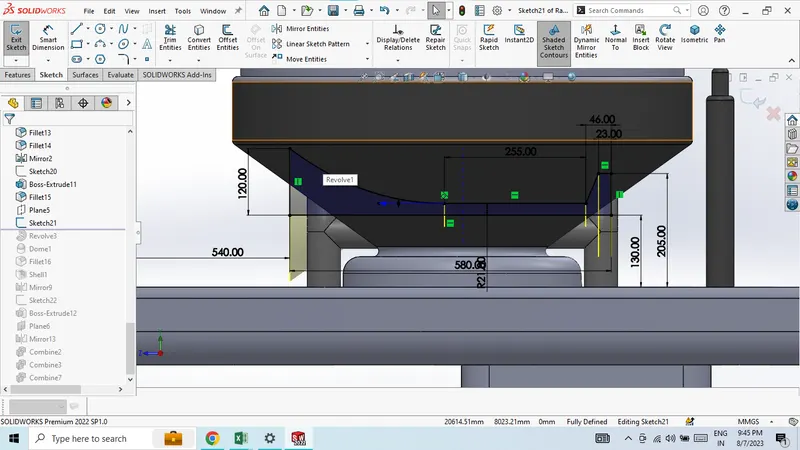
then revolved boss/base it
apply dome
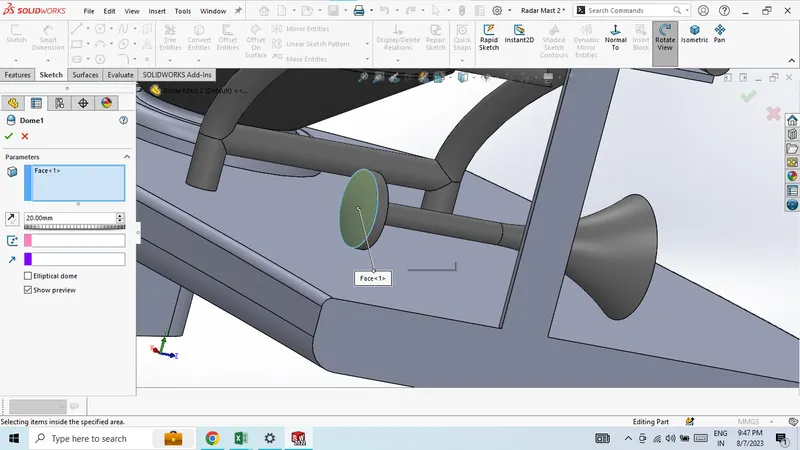
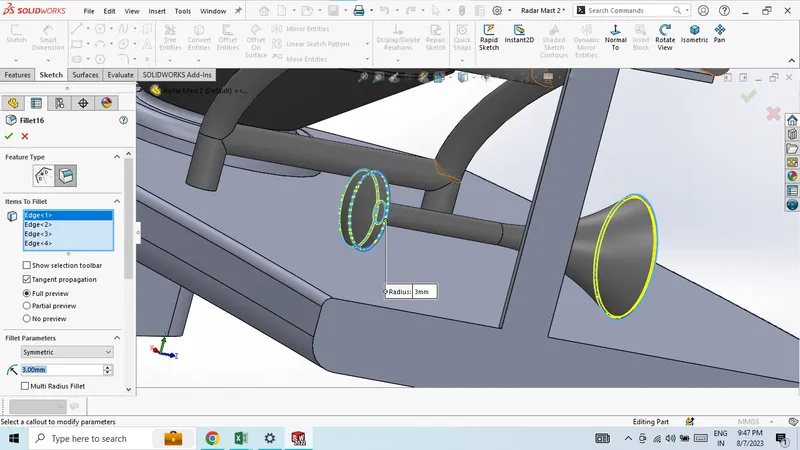
apply the fillets
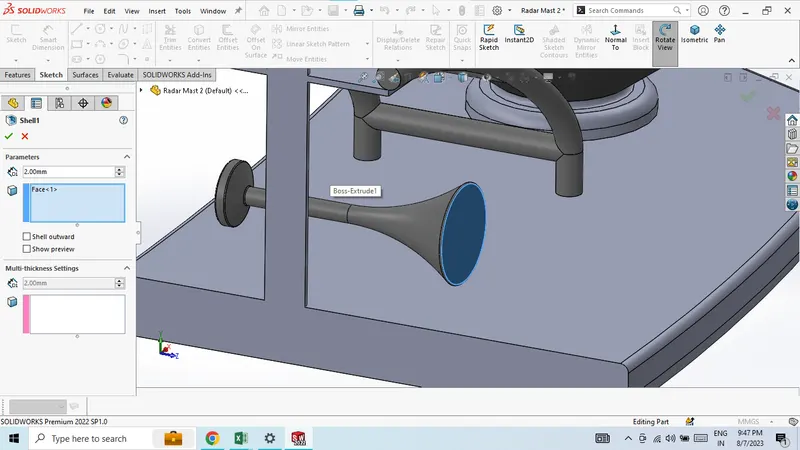
then use shell command
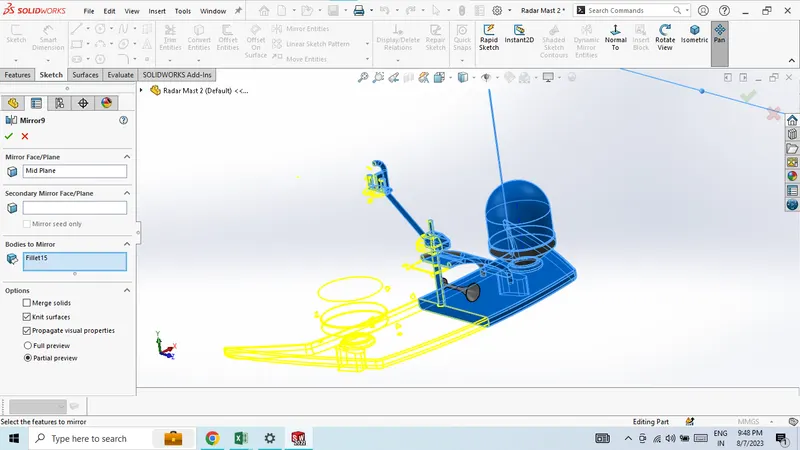
then go to mirror command
Create a new sketch on the blue surface as shown in the picture
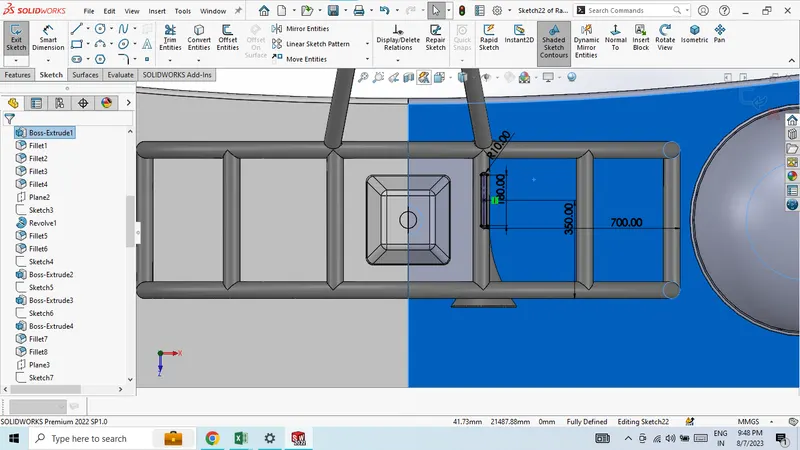
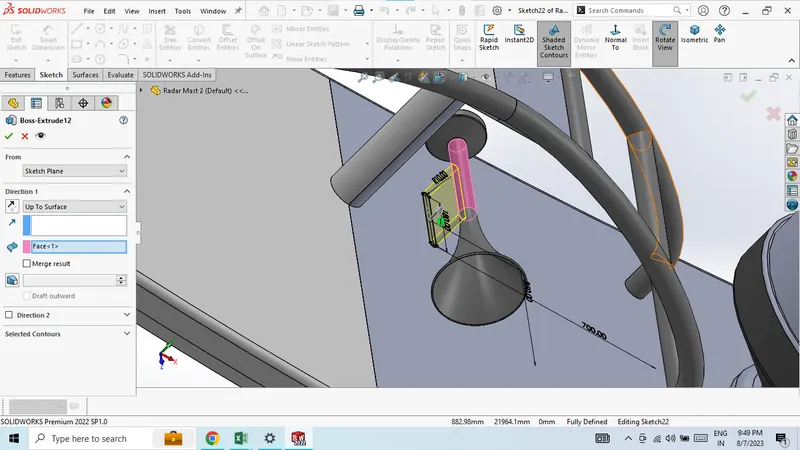
then extruded boss/base it
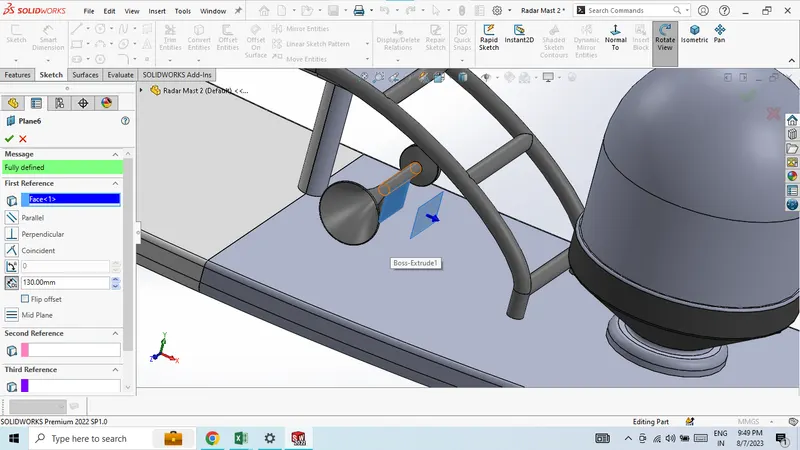
Create a new plane6 as shown in the picture
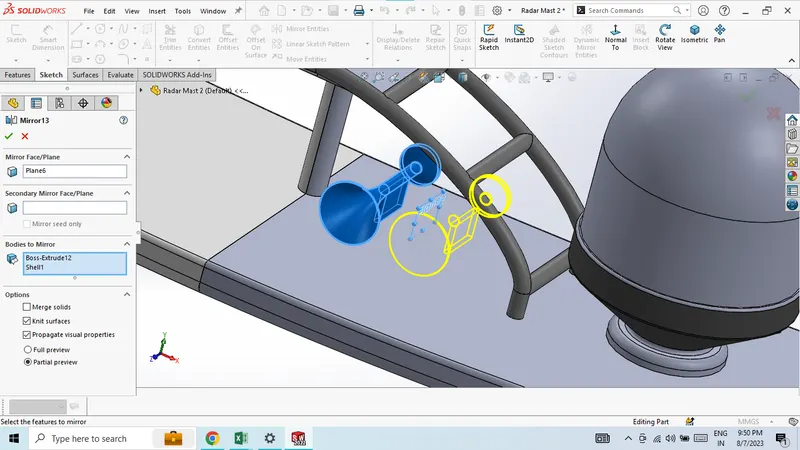
then mirror it
then go to combine command it
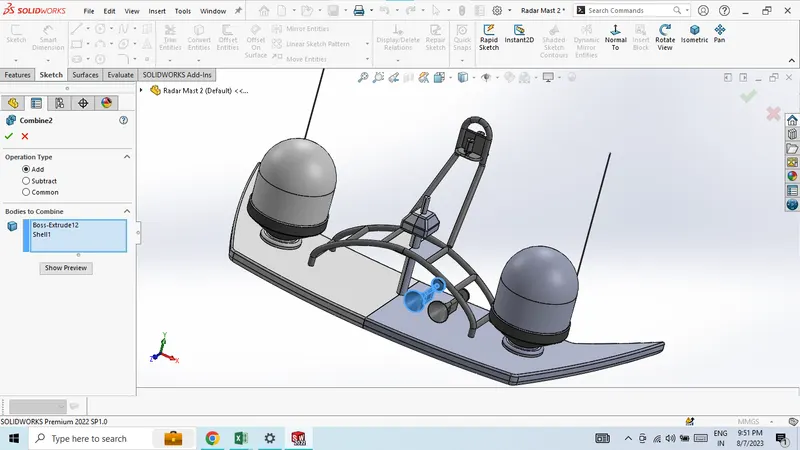
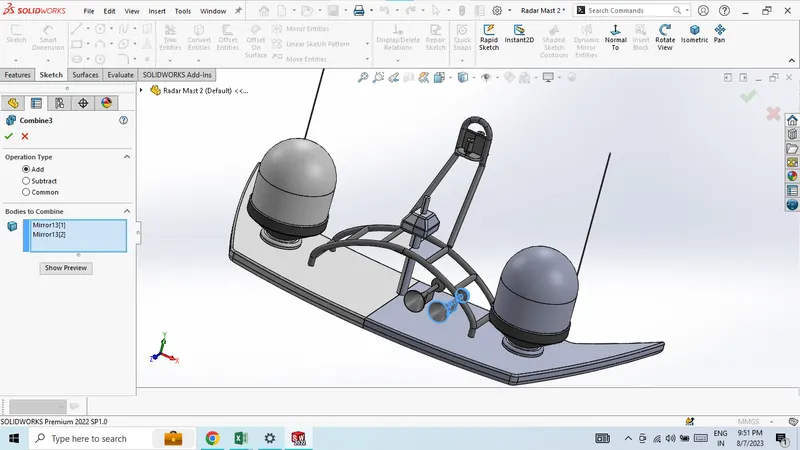
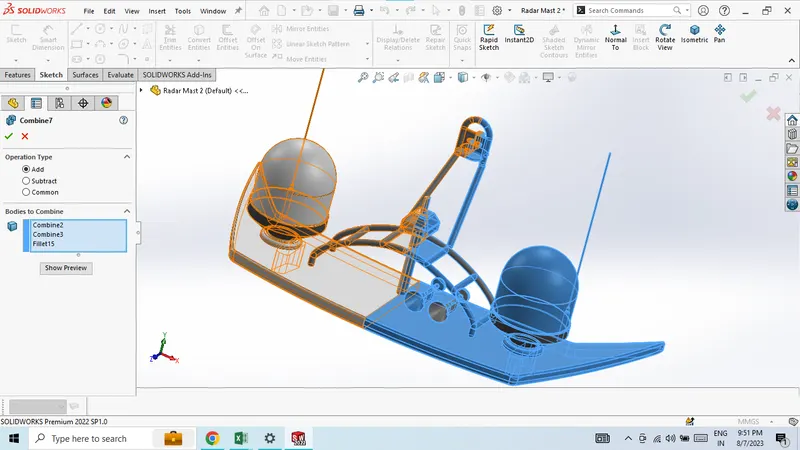
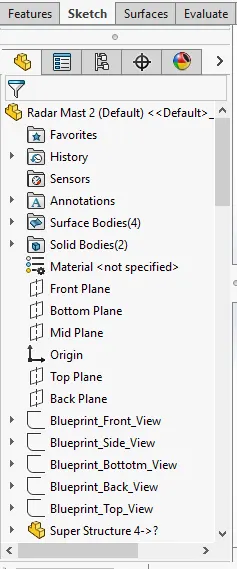
Feature Tree :-
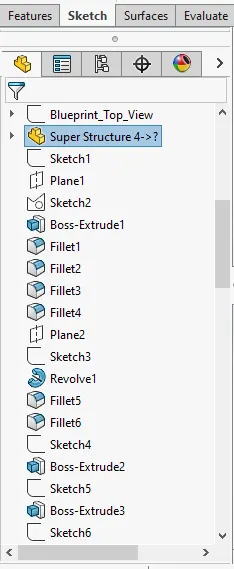
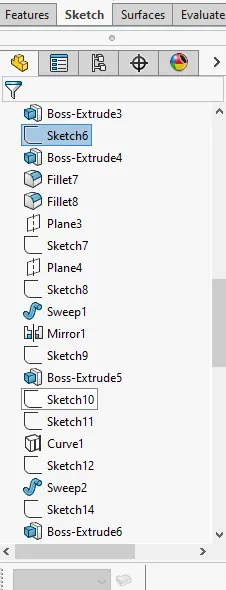
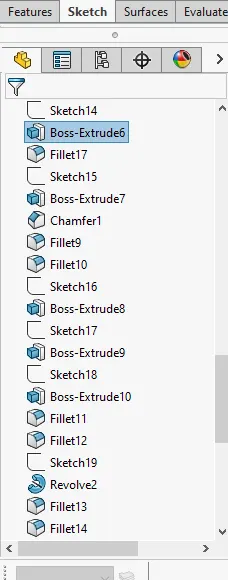
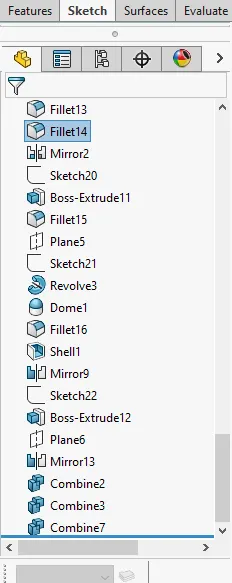
Conclusion :- We have made a 3D design of the Radar Mast
Title:- Final Assembly of Yacht
Objective:- Assembly of YACHT
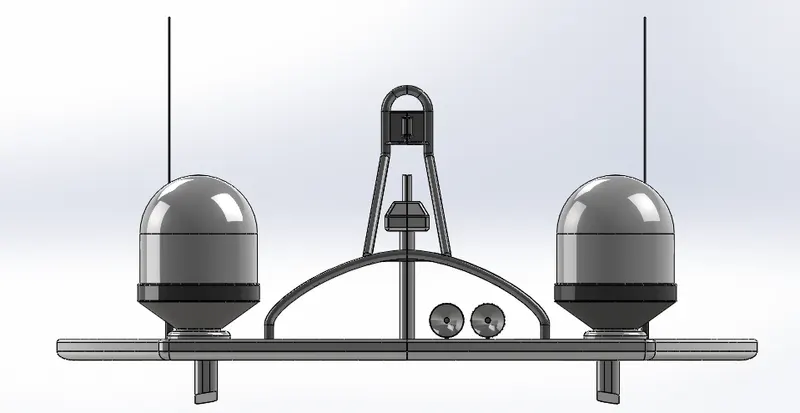
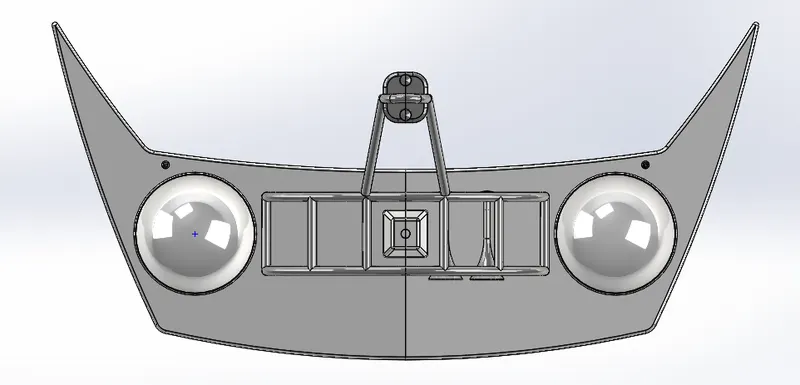
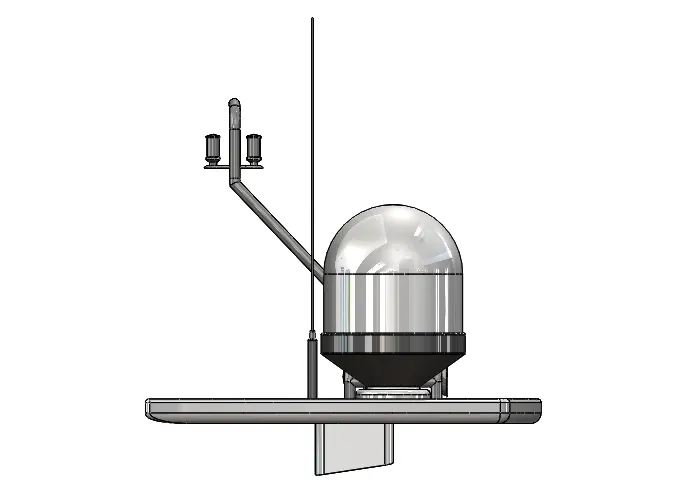
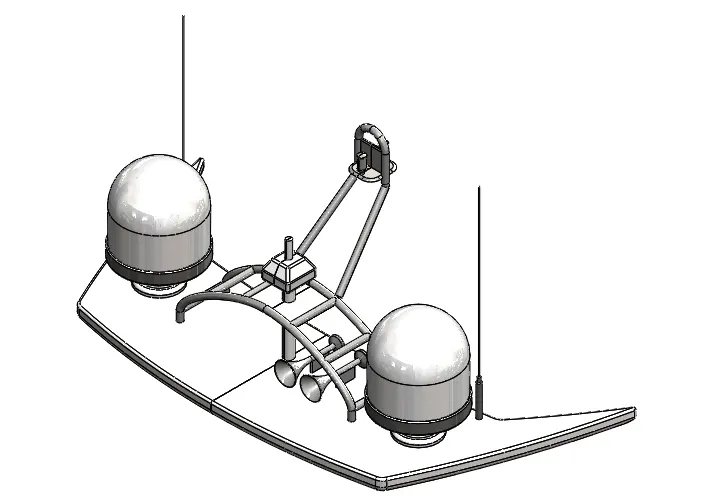
1. Radar Mast:-
Front View:-
Top View:-
Left View:-
Isometric View:-
2. Yacht Assembly:-
A yacht is a sailing or power vessel used for pleasure, cruising, or racing. There is no standard definition, though the term generally applies to vessels with a cabin intended for overnight use. To be termed a yacht, as opposed to a boat, such a pleasure vessel is likely to be at least 33 feet (10 m) in length and may have been judged to have good aesthetic qualities.
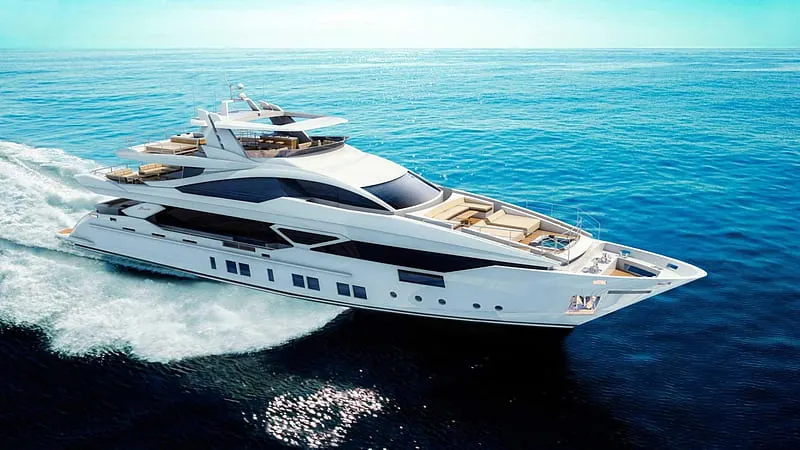
The Commercial Yacht Code classifies yachts 79 ft (24 m) and over as large. Such yachts typically require a hired crew and have higher construction standards. Further classifications for large yachts are: commercial carrying no more than 12 passengers, private solely for the pleasure of the owner and guests, or by flag, the country under which it is registered. A superyacht generally refers to any yacht (sail or power) longer than 131 ft (40 m).
Racing yachts are designed to emphasize performance over comfort. Charter yachts are run as a business for profit. As of 2020 there were more than 15,000 yachts of sufficient size to require a professional crew.
DESIGN METHODOLOGY :-
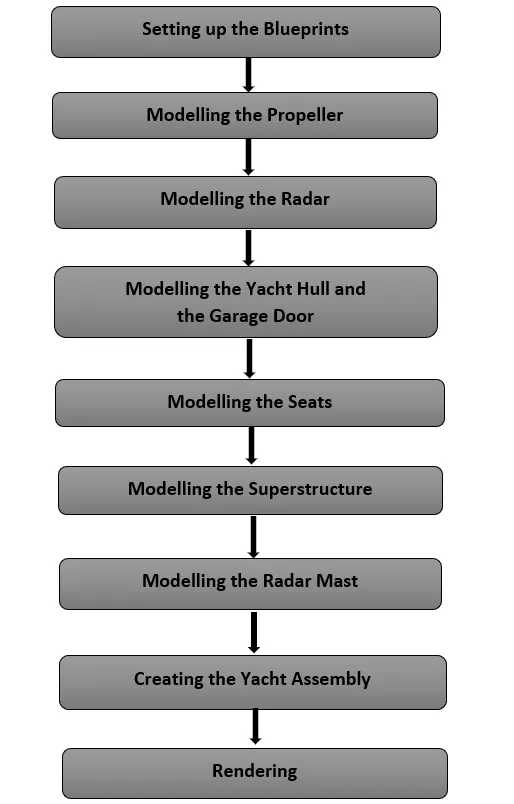
Types of YACHT-
- Day sailing yachts
- Weekender yachts
- Cruising yacht
- Luxury sailing yachts
- Racing yachts
Parts of the YACHT-
- Propeller
- Hull
- Radar
- Radar mast
- Garage door
- Middle Seat
- Front seat
- Rear seat
- Superstructure
- Decals for floor
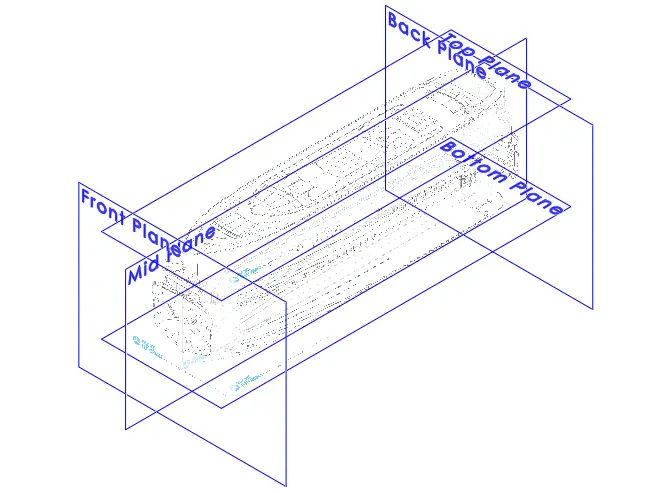
Blueprints :
- All the blueprints were imported into a SolidWorks part file using the path : Tools - Sketch Tools - Sketch Picture.
- Appropriate positioning as well as scaling of the blueprints is very important and has to be done perfectly as shown.
- This Blueprint setup is then used to model all the parts.
HULL –
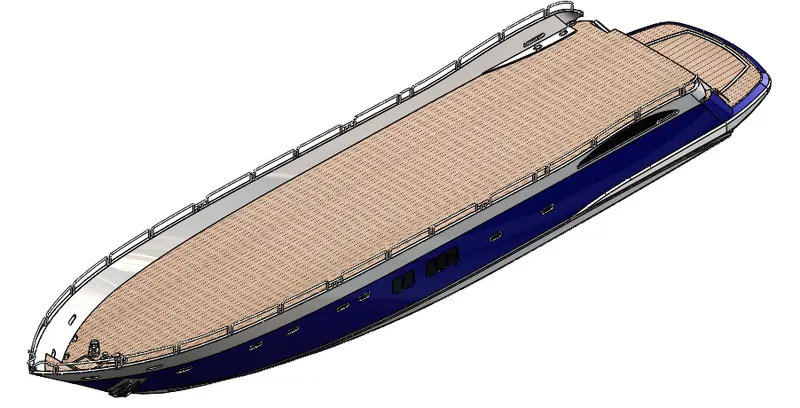
A hull is the watertight body of a ship or boat. The Hull may open at the top (such as a dinghy), or it may be fully or partially covered with a deck. A top deck may be a deckhouse and other superstructures, such as a funnel, derrick, or mast. The line where the hull meets the water surface is called the water line.
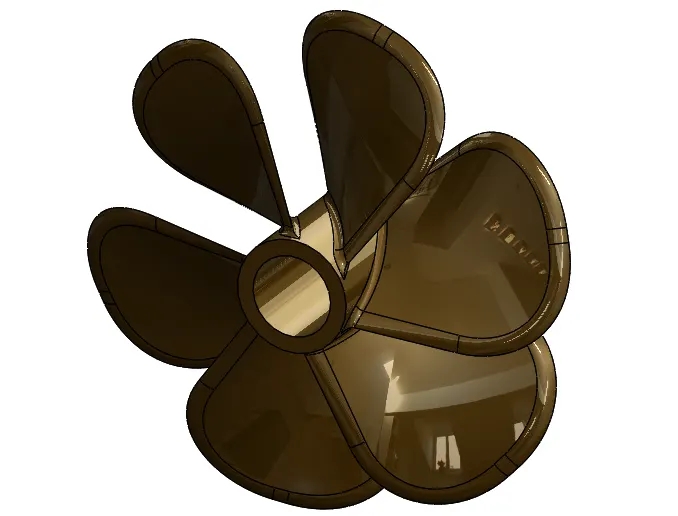
PROPELLER-
A propeller is a type of fan that transmits power by converting rotational motion into thrust. A pressure difference is produced between the forward and rear surfaces of the air foil–shaped blades, and fluid (such as air or water) is accelerated by the pressure. In a ship, the propeller works by thrusting a column of water away from the main body of the ship, thereby producing, a reactive force that moves the boat forward. Propeller blades work in water much as fan blades work in the air.
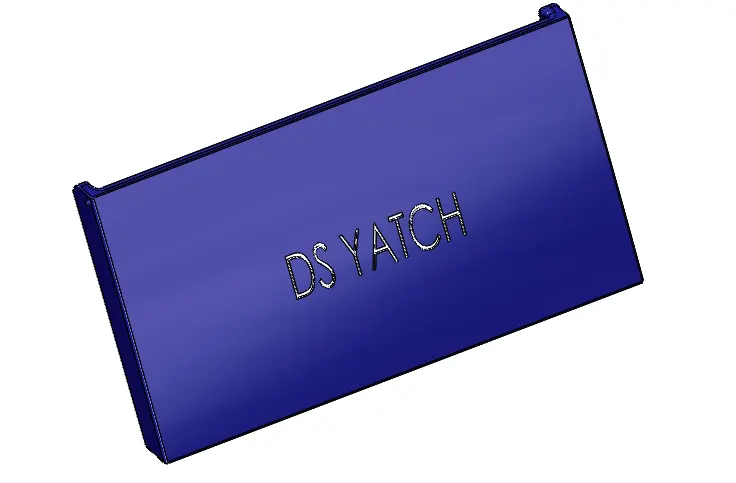
GARAGE DOOR-
Now, the Garage door is simply modelled using the garage portion which was carved out of the Hull.
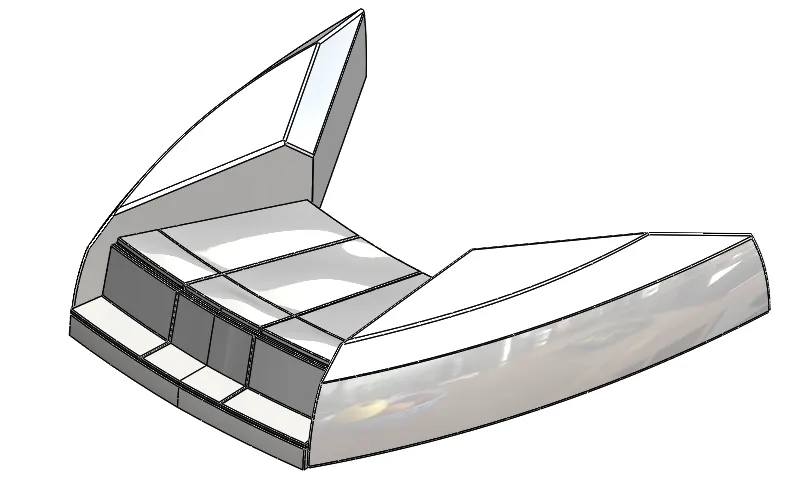
SEAT-
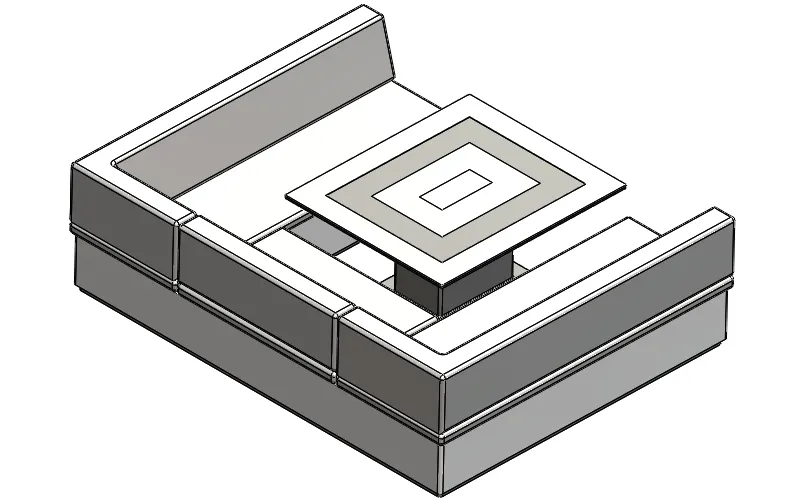
Good seating arrangement inside and outside.
- FRONT SEAT-
- MIDDLE SEAT-
- REAR SEAT-
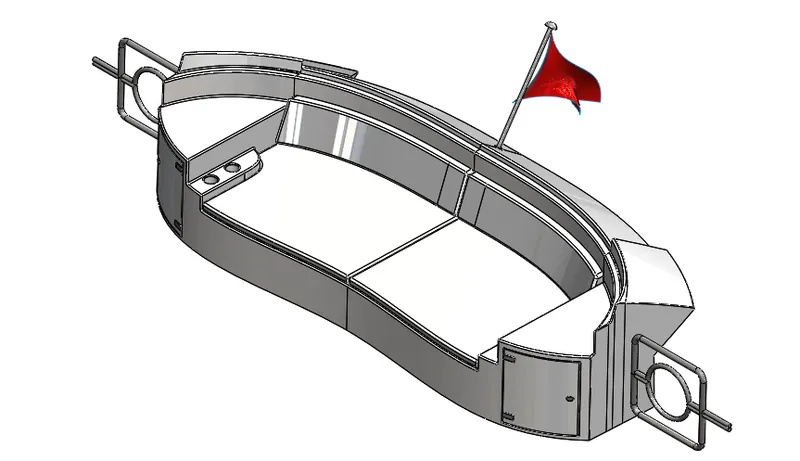
RADAR-
Marine radars are the best collision avoidance system ever developed for recreational boaters. Radar systems let you “see” through the darkness, fog and stormy weather conditions once used only on large vessels, Radar units are now compact, Draw little electricity, and are sized to fit boats as small as 5.5m in length.
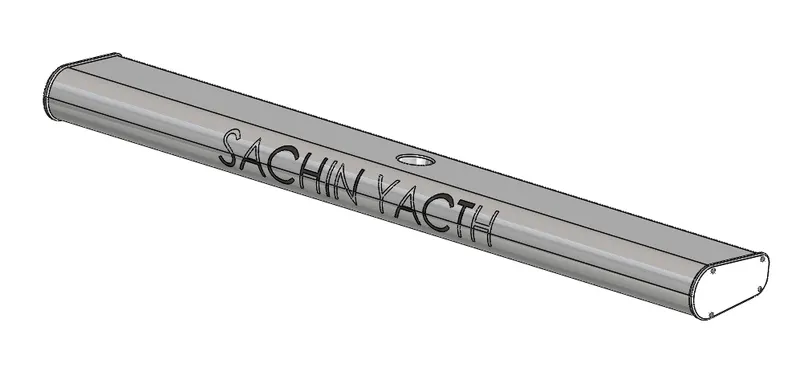
RADAR MAST-
Its purpose includes carrying sail, spars, and derricks, and giving necessary height to a navigation light, look out position, signal yard, control position, radio aerial, or signal lamp. large ships have several masts with the size and configuration depending on the style of the ship nearly all sailing masts are guyed.
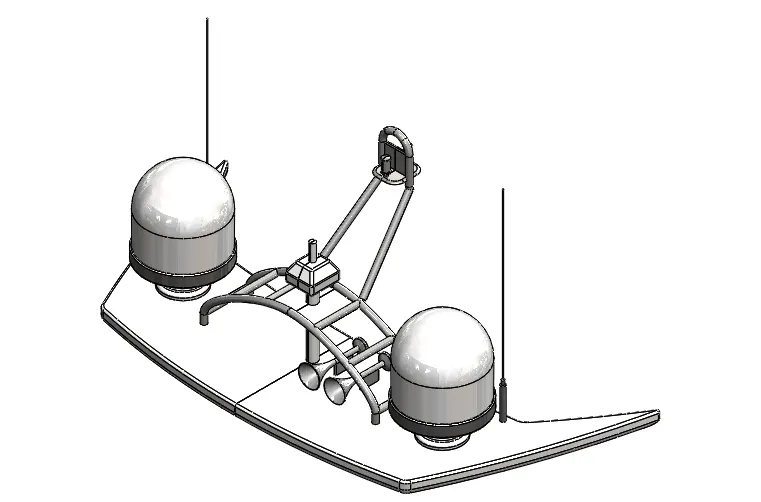
SUPERSTRUCTURE-
In yacht & ship, this is the name given to the part of the ship that emerges from the deck. However, any mast, sails armaments, or arsenals are not included in this category.
The size of the superstructure has a great influence on the mobility of the vessels. They add value and hinder speed and mobility in the least. The superstructure is mostly designed in fashion as well.
This is because it is the most easily visible part of the ship, in fact, it is the identification of the yacht & ship and so the designers try to provide it with an identity that is unique.
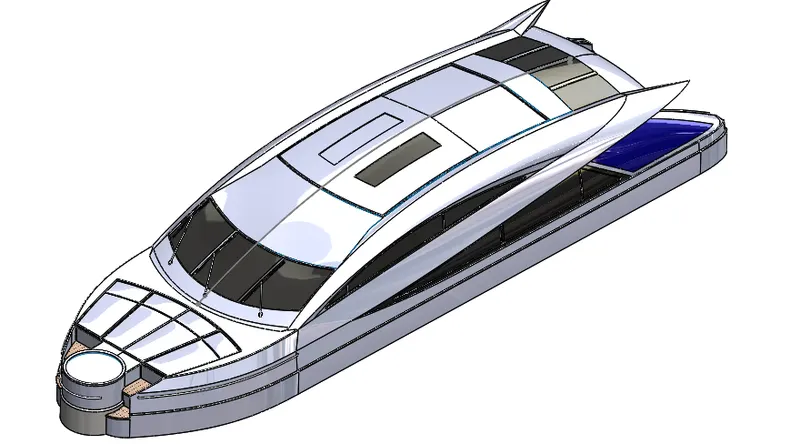
Final Assembly of Yacht:-
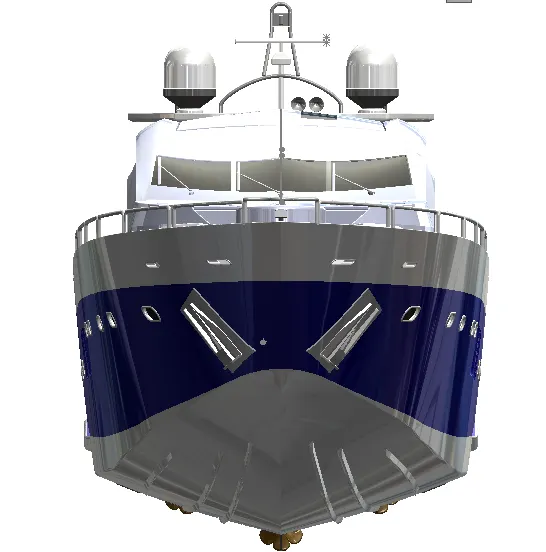
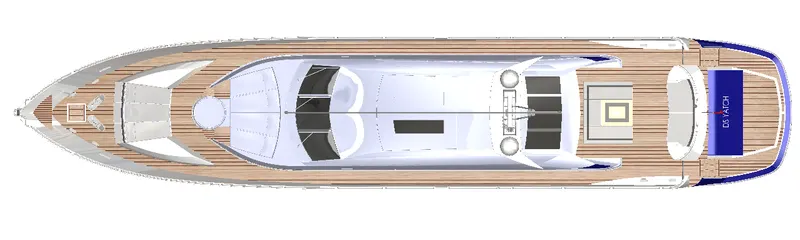
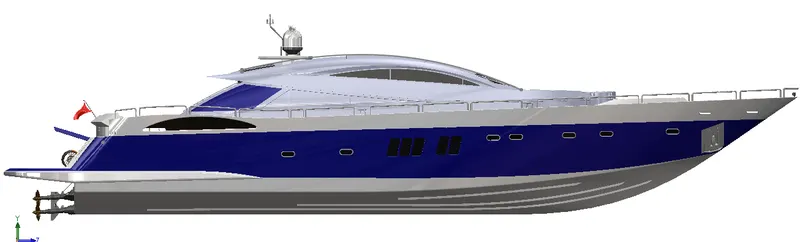
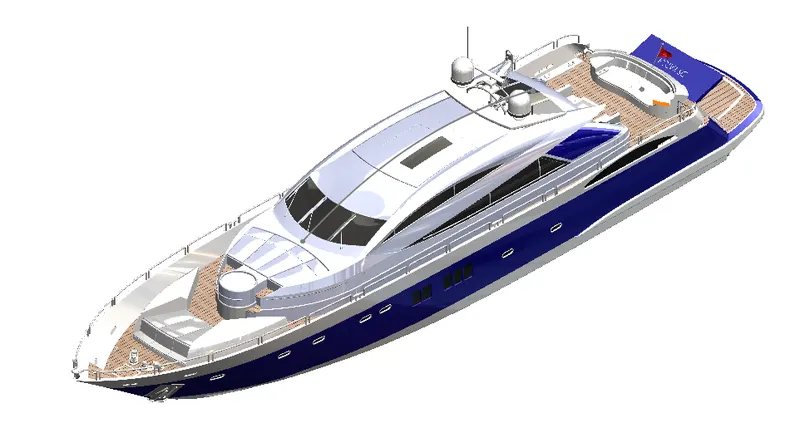
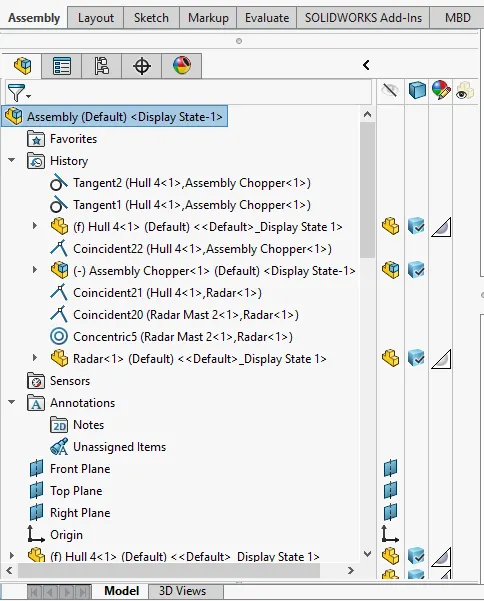
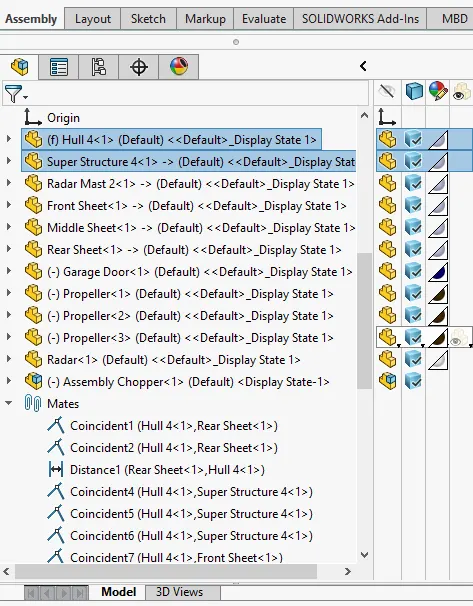
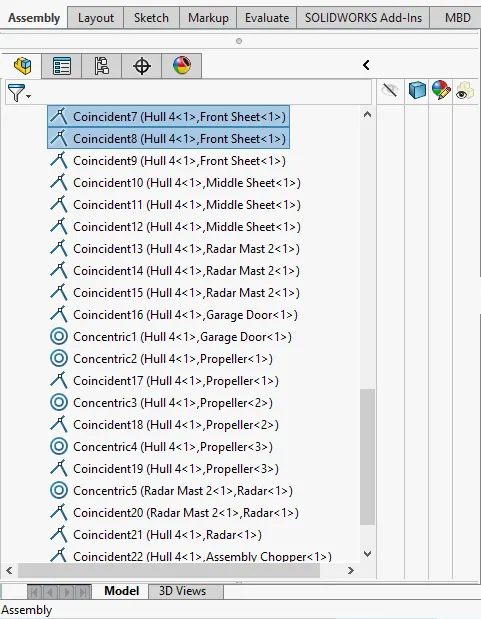
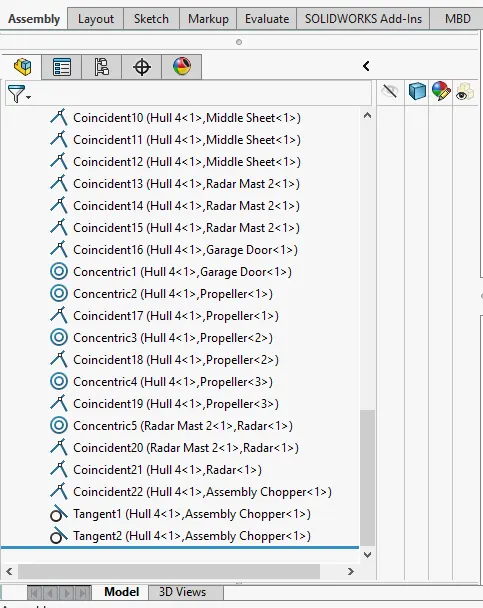
- All these individual parts are then assembled together using the SolidWorks Assembly file.
- First off, the Hull is fixed at the proper location.
Rest all the parts are then located with respect to this fixed Hull. - Standard Mates such as Coincident, Tangent, Concentric, Parallel, etc are used to provide appropriate constraints.
Front View:
Top View:
Left View:
Isometric View:
The Feature Tree of the Assembly file:-
Rendering :
- Available Decals are added to enhance the outlook of few of the parts.
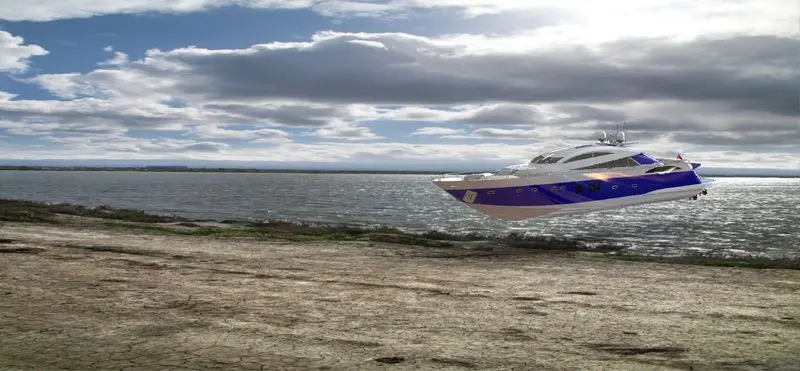
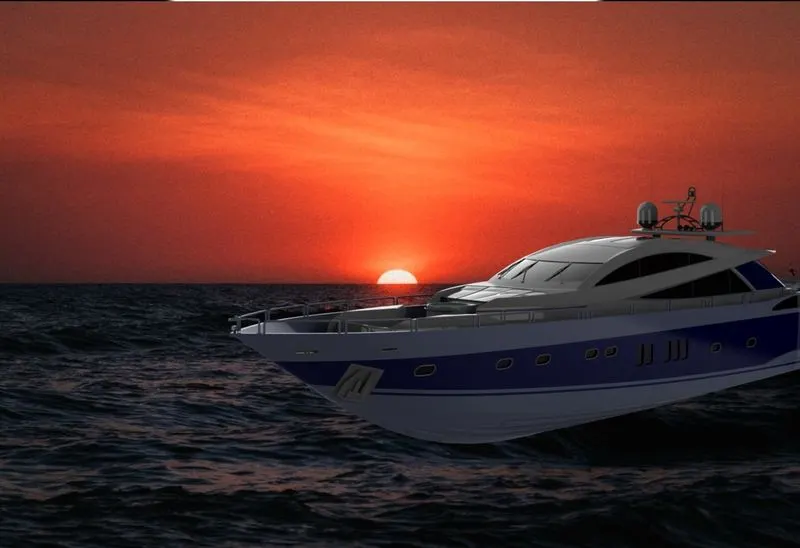
- The Yacht Assembly is rendered using the Add-In SolidWorks Visualize tool provided by SolidWorks.
- Proper Scene is created for the rendering.
Appropriate Environment is set up for this purpose. Also, a suitable Backplate is chosen out of the library.
Camera is set up by providing appropriate location. - The Perspective view is enabled to ensure real-time look.
- Now, after providing suitable appearances the model is rendered.

CONCLUSION :-
Thus, We have completed YACHT assembly.