Radar Mast & Final Assembly of Yacht
1. Radar Mast
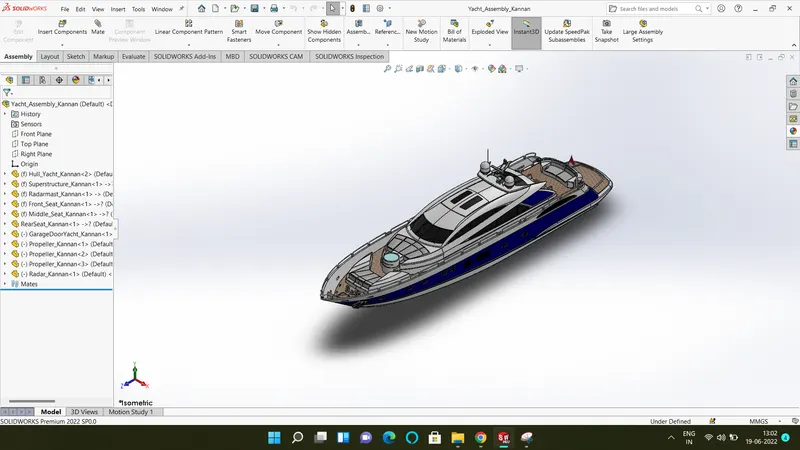
2. Yacht assembly
Project Report:
A yacht is a sailing or power vessel used for pleasure, cruising, or racing.
Objective:
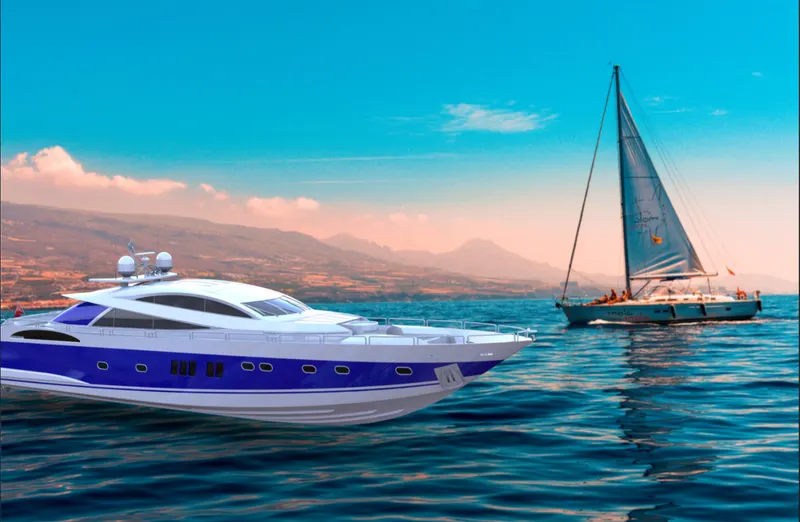
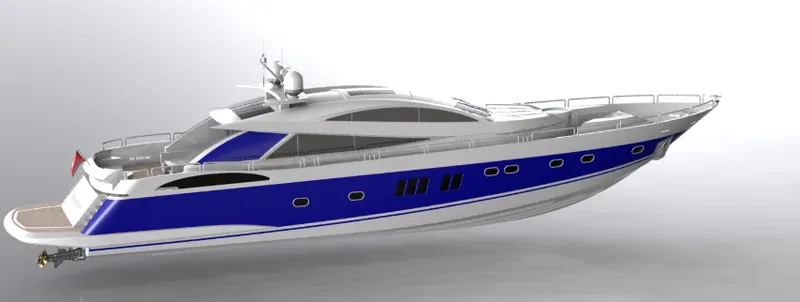
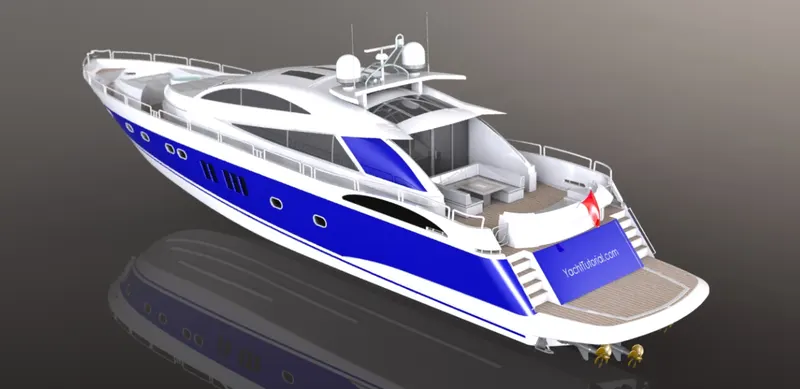
The main objective of the project is to design and model of Yacht as per manual dimensions and represent it with a realistic look using rendering tools.
Introduction:
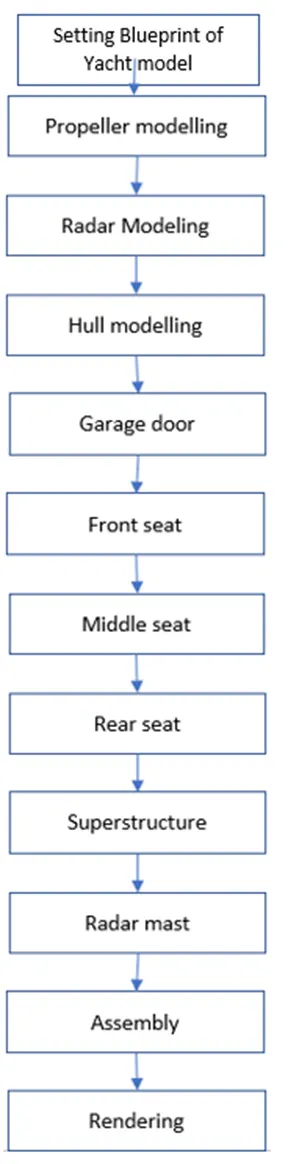
A yacht is an assembly of multiple superstructure bodies such as hull, upper superstructure body, garage, Propeller, Radar, Radar mast, Front seat, Middle seat, and Rear seat.
All the components were designed individually and then assembled to form a Yacht.
The yacht is modeled using surface modeling design for the outer portion and part modeling for other areas..
Design Methodology:
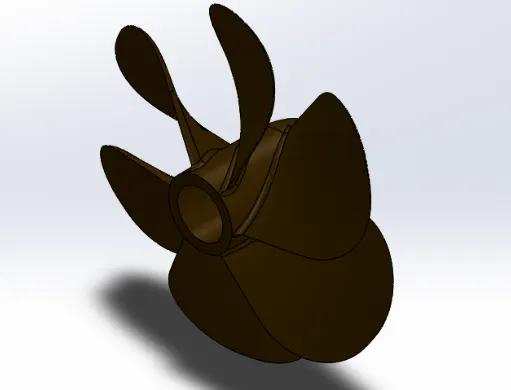
Propeller:
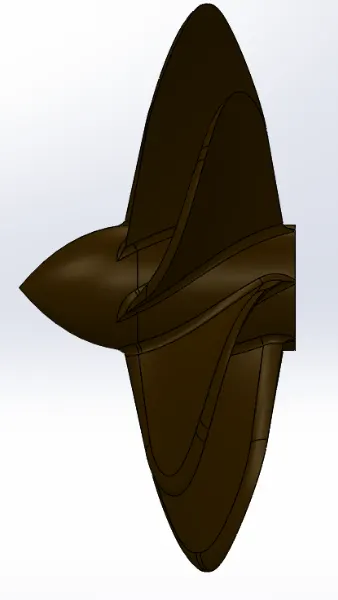
Propeller is used to move the yacht in the sea water. Energy from the engine is transmitted to the propeller. Propeller rotates and moves the yacht forward.
Features used:
- Revolve
- Loft
- Cut extrude
- Fillet
- Circular pattern
To model Propeller,
The Center solid portion is modeled using revolve command. The blade is developed by using the loft command. Two different sketches were drawn in different planes and created solid blades using the loft command. For shaft connection, a part of the material is removed from the center part using the cut extrude command. Fillet is used to remove the sharp corners. A circular pattern is used to replica the blade along the center path of the circle.
After finishing the model, select the body and give the color appearance.
Radar:
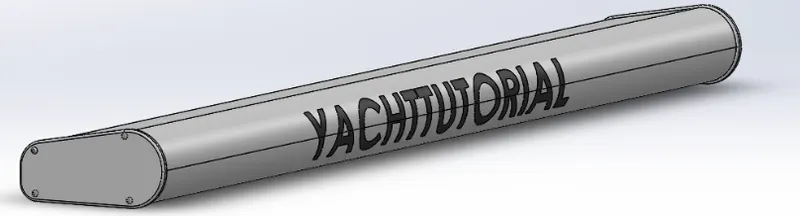
Radar is used to detect the obstacles which is far away from the ship. Radar (radio detection and ranging) is a detection system that uses radio waves to determine the distance (ranging), angle, and radial velocity of objects relative to the site.
Feature used:
- Extruded boss
- Mirror
- Extruded cut
- Split line
To model Radar,
Radar is modeled using cut extrude command. A half portion of the radar is modeled and mirrored with the middle plane. A split line is used for the naming purpose.

Hull:
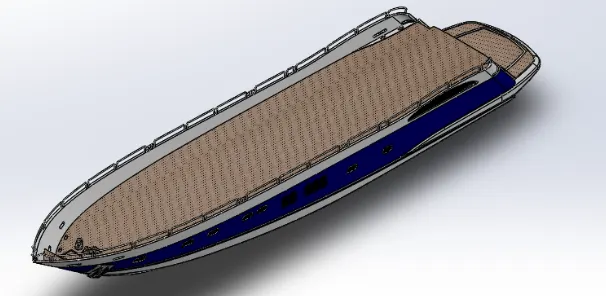
Hull is the main body of the yacht.
Feature used:
- Projecting curve
- Lofted surface
- Surface fill
- Surface knit
- Shell
- Chamfer
- Extruded boss
- Swept bose
- Linear pattern
- Mirror
Initially, the body outline sketch is drawn and projected to get the 3d curve. A lofted surface is used to create a surface of different profile sketches. Surface fill is used to create a surface which covers the surface body. The surface knit option is used to merge different surfaces into a single surface. Using the merge solid option to convert the hollow closed surface into a solid body.
Shell command is used to create equal thickness across the solid body. Swept bose command is used to create the outer edge of the yacht window. For the garage door part, some portion at the rear end is split into two solid bodies using the cut extrude option and saved as a separate file.
Hull is symmetrically equal. So only one side of the yacht is developed and this is mirrored using mid-plane option.

Garage door:
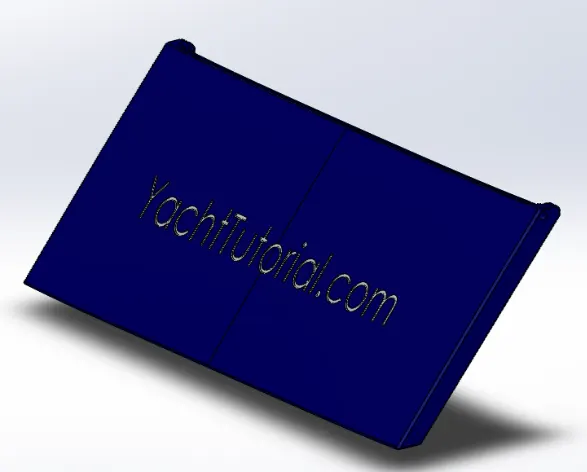
Garage door is created by splitting the rear portion of hull body.
Feature used:
- Extruded cut
- Shell
- Fillet
- Mirror
To model garage door,
The garage door is created from the split portion of the hull body. Cut extrude command is used to remove the excess material and fillet is used to remove the sharp corners of the door. The mirror option is used to replica the other portion using the midplane as reference.
Front seat:
Feature used:
- Surface sweep
- Surface trim
- Revolve
- Surface knit
- Extruded cut
- Chamfer
- Fillet
- Dome
To model the front seat,
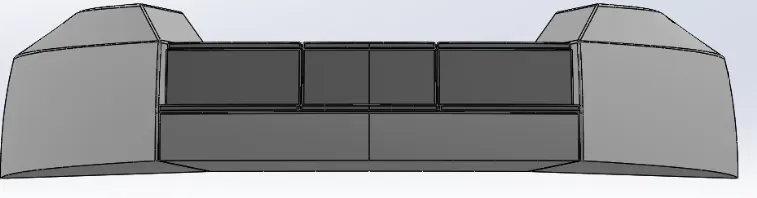
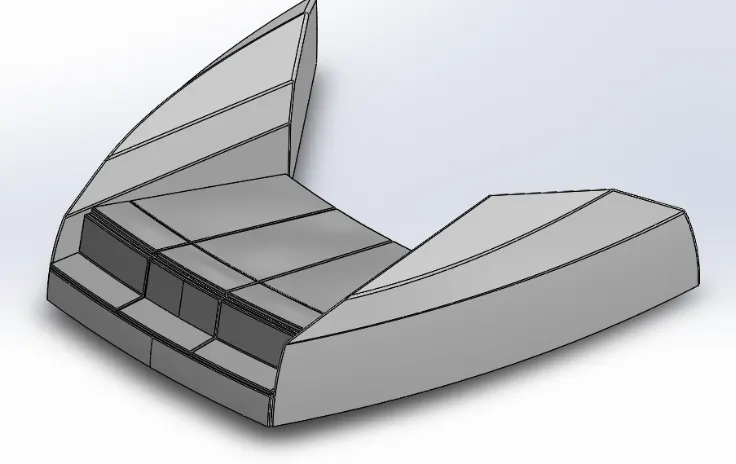
Initially, the outer portion of the seat is developed but surface modeling. After that, the surface model is created into a closed surface and converted into a solid body. Revolve command is used to create the curved face of the seat. The cushion of the seat is created as a separate body by splitting the single body into two using extruded cut option. The dome option is used to create a rounded vault forming over the seat. Chamfer and Fillet option is used to remove the sharp corners.
Middle seat:
Feature used:
- Extruded Boss
- Extruded cut
- Chamfer
- Fillet
To model the middle seat,
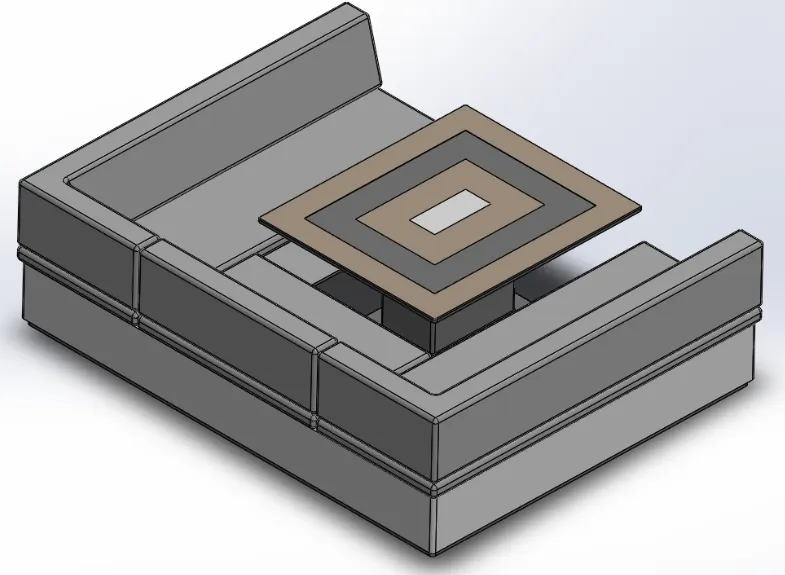
The bottom sketch of the middle seat is drawn and extruded. To separate the cushion and sofa, the cushion sketch is drawn on another plane which is offset from the surface of the sofa. The middle table portion is drawn as per the blueprint and then extruded. Chamfer and fillet option is used to make the corners smoother.
Rear seat:
Feature used:
- Surface sweep
- Surface trim
- Surface offset
- Ruled surface
- Surface knit
- Extruded cut
- Chamfer
- Fillet
To model the rear seat,
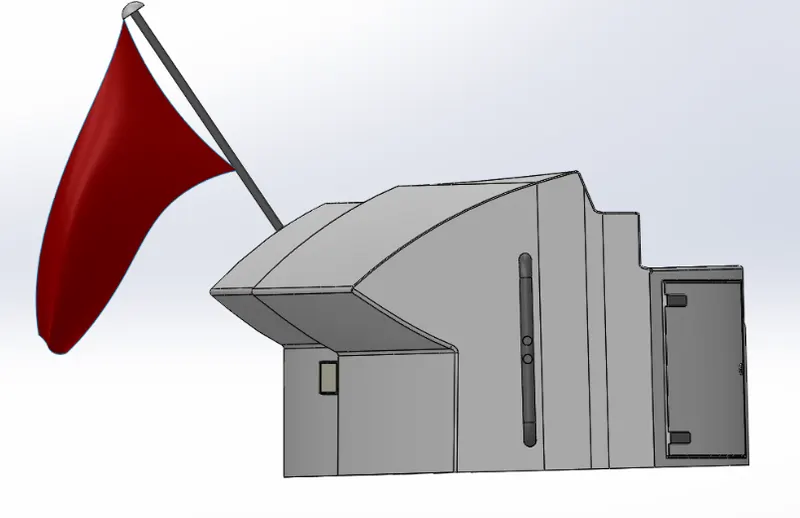
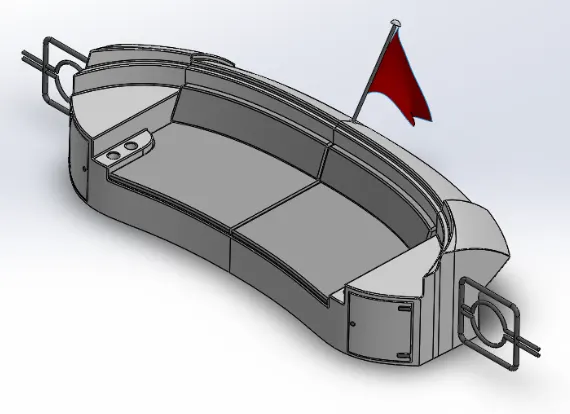
The rear seat sketch is drawn on two different planes and extruded using surface swept. The surface trim option is used to trim the unwanted extended surface which interferes with another surface. The surface fill command is used to close the open surface. The surface knit option is used to merge all different surfaces into a single surface and converted them into a solid body. The surface offset option is used to offset at some distance with reference to the previously created surface. Different planes were created to show the show and the cushions are different bodies. The cushion sketch is drawn on a newly created plane.
The ruled surface option is used to extend the curved surfaces up to a certain dimension for trimming purposes.
The flag is created at the rear end using a 3d sketch.
Superstructure:
Superstructure is the upside portion of the yacht.
Feature used:
- Projecting curve
- Lofted surface
- Surface fill
- Surface knit
- Shell
- Chamfer
- Extruded boss
- Swept bose
- Mirror
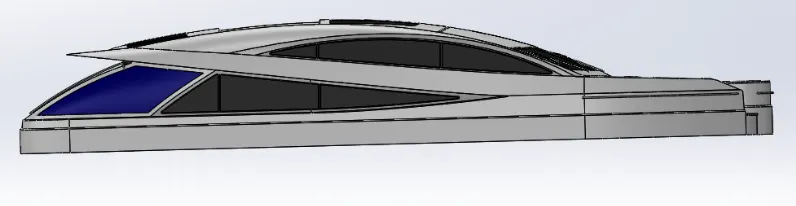
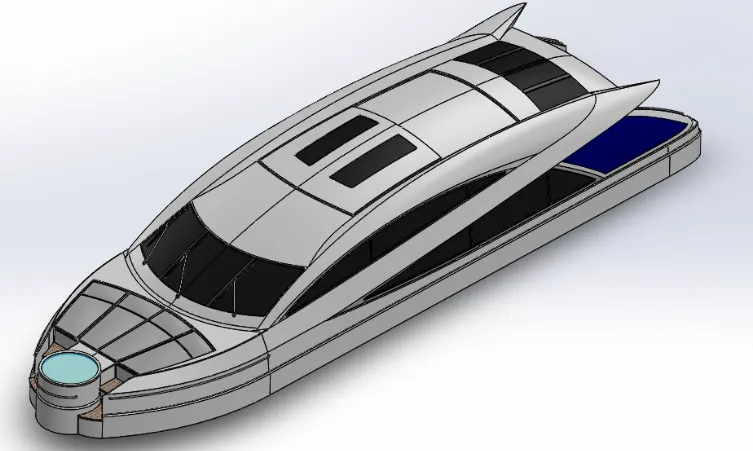
Initially, the body outline sketch is drawn and projected to get the 3d curve. A lofted surface is used to create a surface of different profile sketches. Surface fill is used to create a surface that covers the surface body. The surface knit option is used to merge different surfaces into a single surface. Using the merge solid option to convert the hollow closed surface into a solid body.
Window sketch of the superstructure drawn on mid-plane and cut down from the body using offset from surface option.
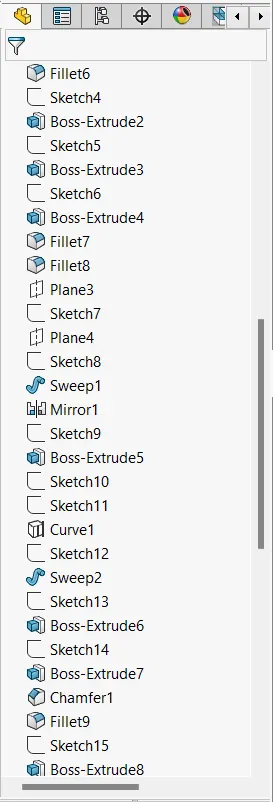
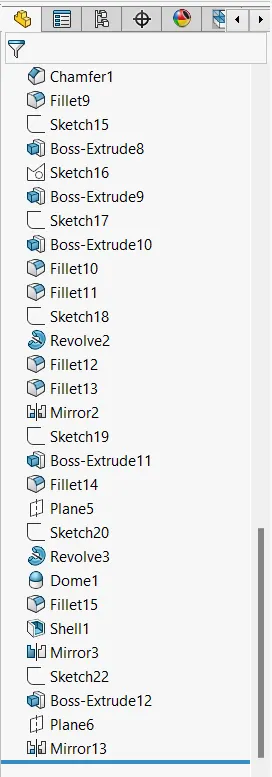
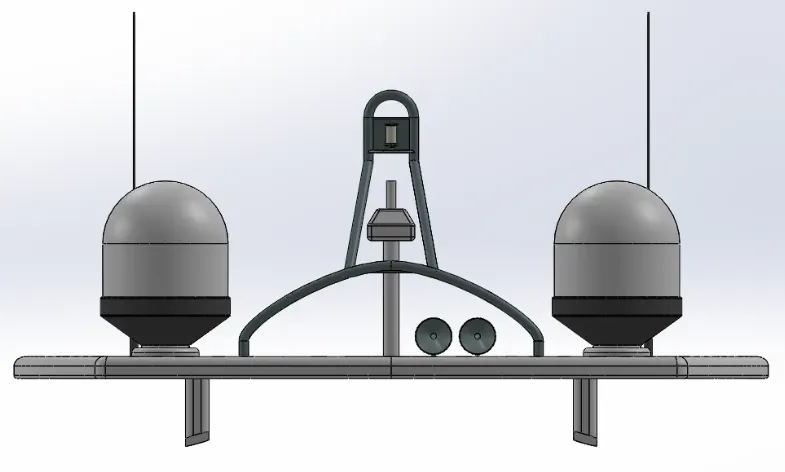
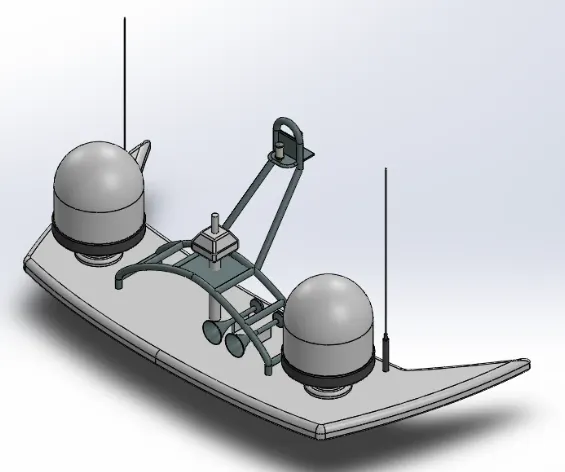
Radar mast:
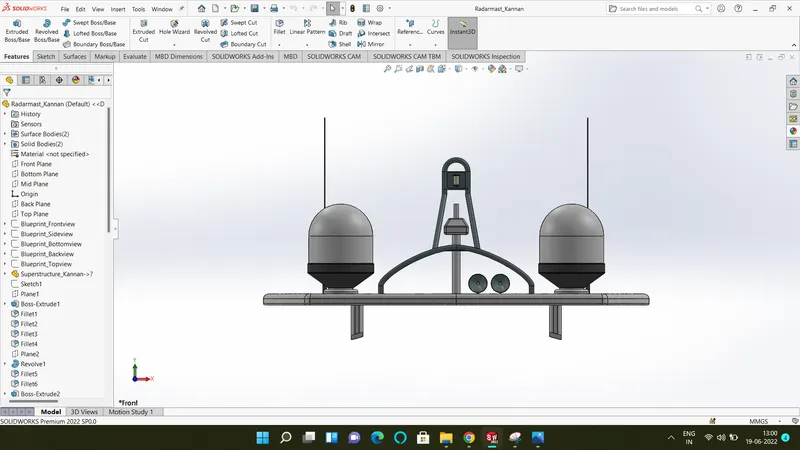
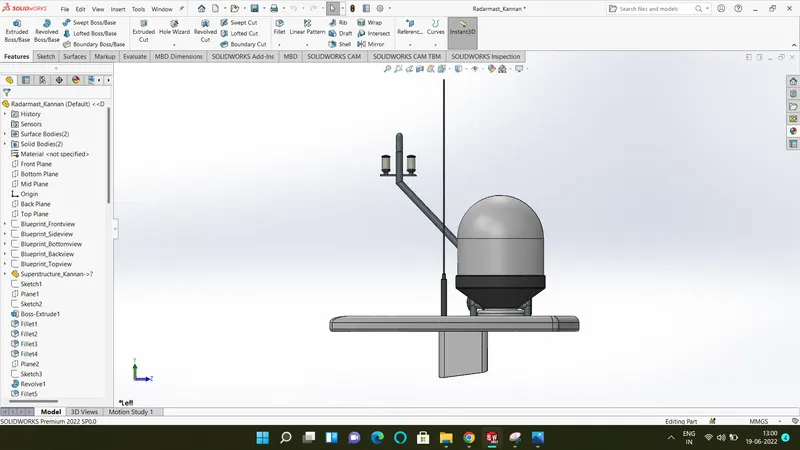
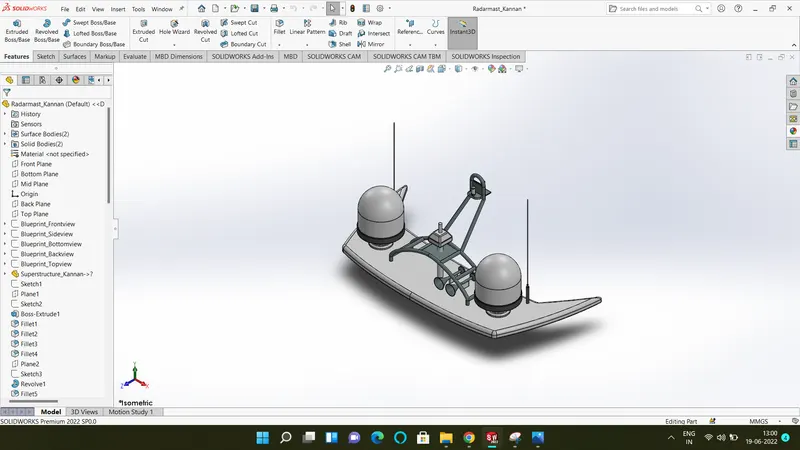
They are electronic navigation instruments that use a rotating antenna to sweep a narrow beam of microwaves around the water surface surrounding the ship to the horizon, detecting targets by microwaves reflected from them, generating a picture of the ship's surroundings on a display screen.
Feature used:
- Boss extrude
- Revolve
- Sweep
- Dome
- Fillet
- Chamfer
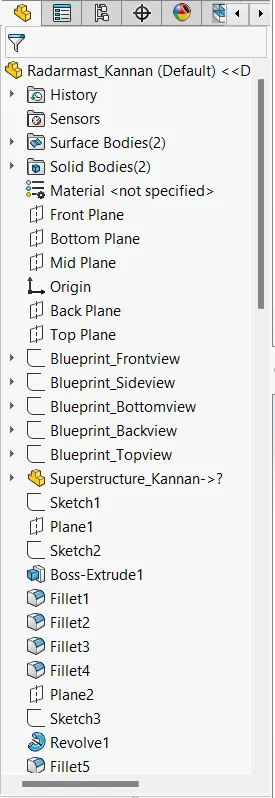
With the reference to superstructure radar mast surface, the initial sketch is drawn and extruded using the extruded boss command. The cylindrical part was created by using the revolve command. Curved rails were created by using the sweep command. Fillet and chamfers are used to make the sharp edge smoother.
Assembly:
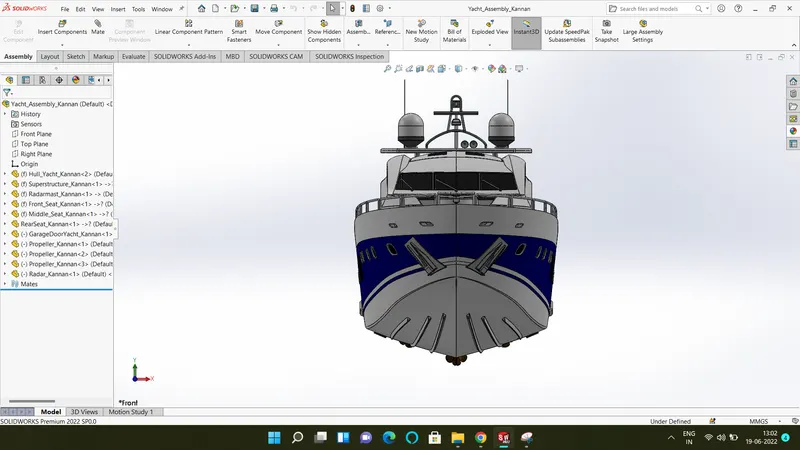
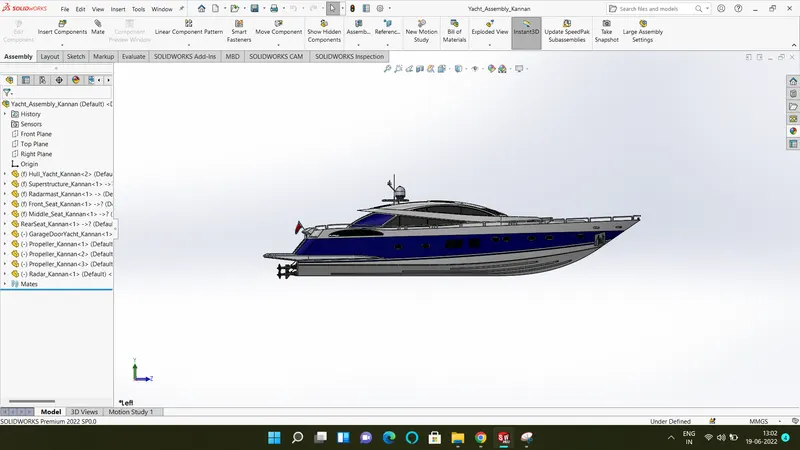
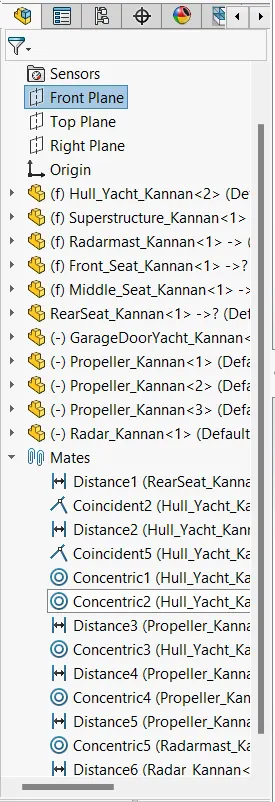
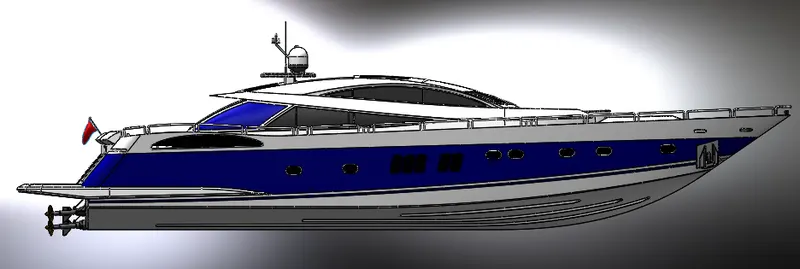
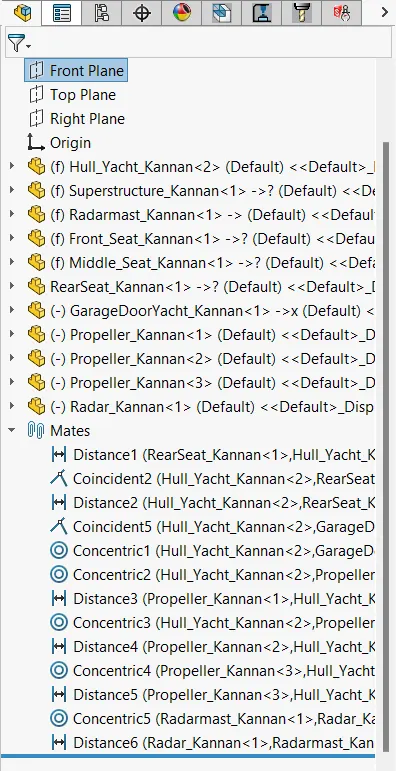
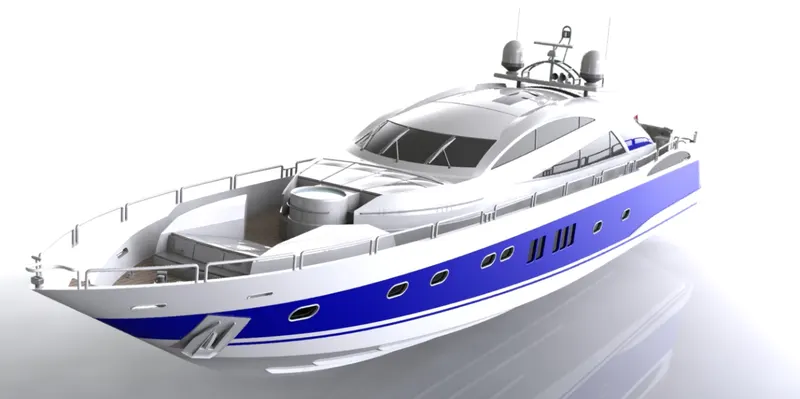
Open the Assembly window and browse the hull part click ok. It is automatically fixed. Then open the superstructure part and click ok. It automatically fixes with its correct position above the hull because the models were made according to the axis and blueprint. Then open the front seat and middle seat click ok. For the rear seat, open the rear seat model in the assembly window. Keep the mid plane of the hull and right plane of the rear seat in coincident relation with 0mm distance. Then offset the rear end of the rear seat with the hull rear end at a distance of 5 mm. Open the radar file and concentric and coincident relation.
Open the propeller blade and connects with the shaft using concentric and coincident relation.
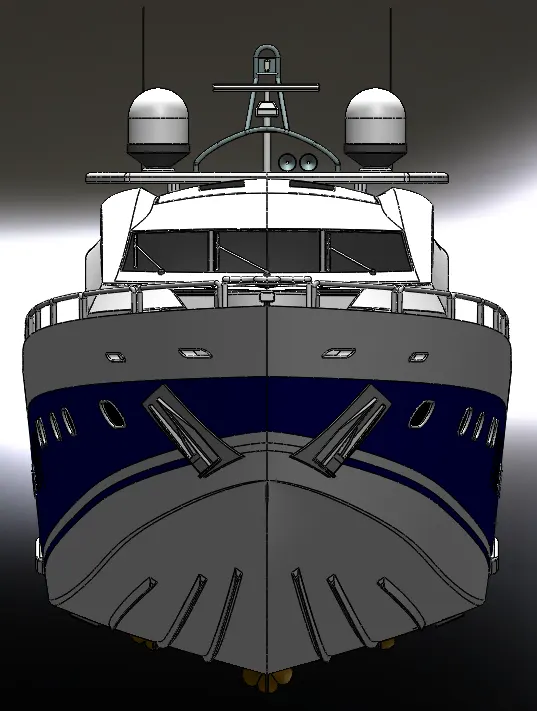
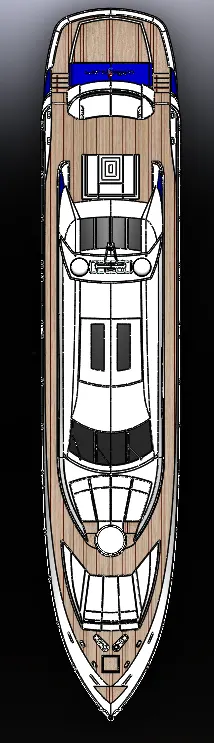
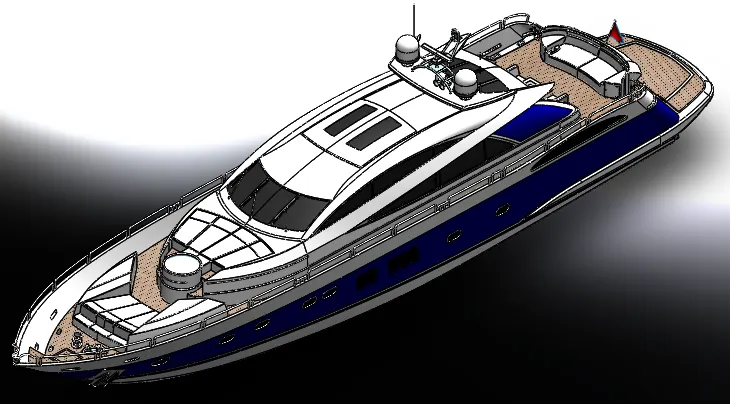
camera1 view
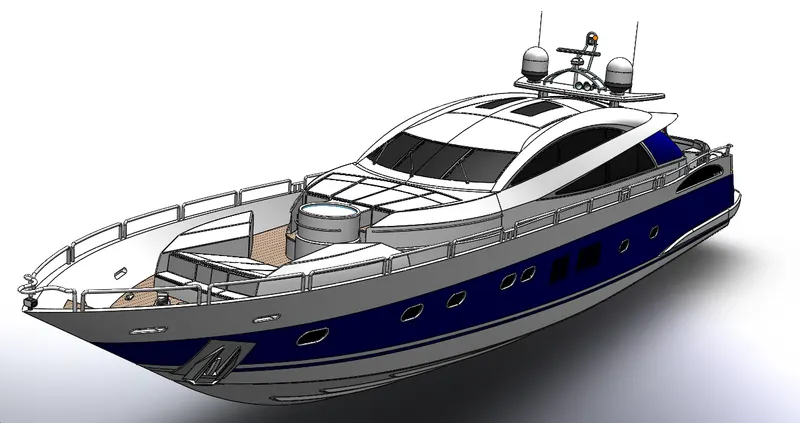
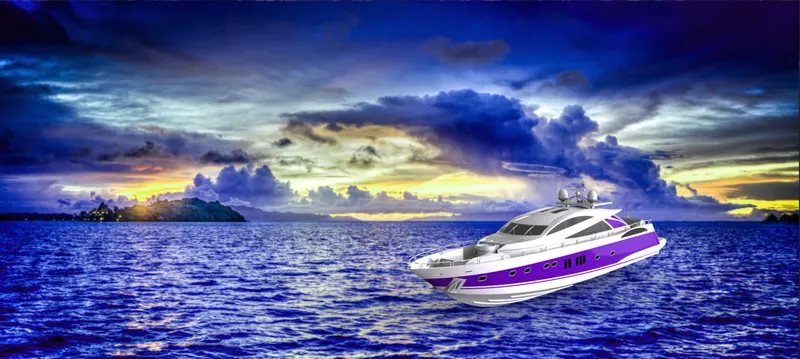
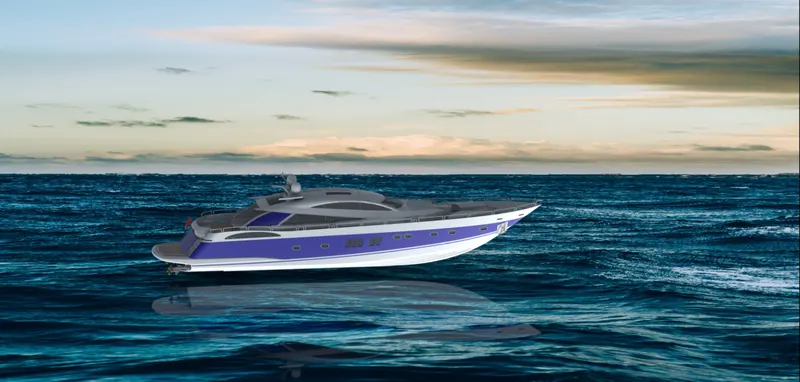
Rendering image:
Click Tools-->Add-Ins-->Photoview 360 checkbox to be selected.
Render Tools tab displays on the solid works window.
To set effects to the image, click on the Edit scenes option in the Render tool tab. Apply the scenes from the list available.
To create a camera view:
Click on View--> Light and camera--> Add camera option to create a new camera view.
After creating the camera view, use the Preview window option to preview the rendered image.
Conclusion:
The Yacht is modeled successfully.