Projefct 1_Comparative study of different storey buildings for Seismic forces
AIM : To create various buildings and compare their
- Factors influencing the dynamic characteristics of a building
- Factors influencing the Natural Period of a building
- Factors influencing the Mode shape of oscillations
INTRODUCTION :
In this project 10 different story building (A, B, C, D, E, F, G, H, J, K) are created which has
- 4 bays in X direction, 3 bays in Y direction at distance of 4m center to center
- All beams in the building have same size of 300x400mm
- All slabs in the building have same thickness 150mm
-
Material Properties assigned as :
- Grade of Concrete : M30
- Grade of Steel Reinforcement Bars : Fe 415
-
Loading
- Dead Load on beams from infill wall : 10 kN/m
- Live load on floor : 3 KN/m2 for building A,B,C,D,E,F,G,H
3.3KN/m2 for building J
3.6KN/m2 for building K
-
Buildings are pinned at the base
-
Building is located on Soil type-II and in Zone-III.
-
For analysis of the structure IS 1893 : 2016 code is followed
Below table represents column sizes of different buildings
| Building | Description | No.of storeys | No. of bays in X direction | No. of bays in Y direction | Column Dimension (mm) |
| A | 2 storey building | 2 | 4 | 3 | 400x400 |
| B | Benchmark 5 storey building | 5 | 4 | 3 | 400x400 |
| C | Benchmark building with rectangular columns oriented along X direction | 5 | 4 | 3 | 550x300 |
| D | Benchmark building with rectangular columns oriented along Y direction | 5 | 4 | 3 | 300x550 |
| E | 10 Storey building with varying column size along building height | 10 | 4 | 3 |
Upper storey 400 x 400 Bottom storey 600 x 600 |
| F | 10 storey building | 10 | 4 | 3 | 600 x 600 |
| G | 25 storey building with varying column size along building height | 25 | 4 | 3 |
Upper 5 storey 400 x 400 Middle 10 storey 600 x 600 Bottom 10 storey 800 x 800 |
| H | 25 storey building | 25 | 4 | 3 | 800 x 800 |
| J | 25 storey building with imposed mass 10% larger than building H | 25 | 4 | 3 | 800 x 800 |
| K | 25 storey building with imposed mass 10% larger than building H | 25 | 4 | 3 | 800 x 800 |
PROCEDURE :
- Open Etabs
- Enter units and select steel design (IS 800) and concrete design(IS456)
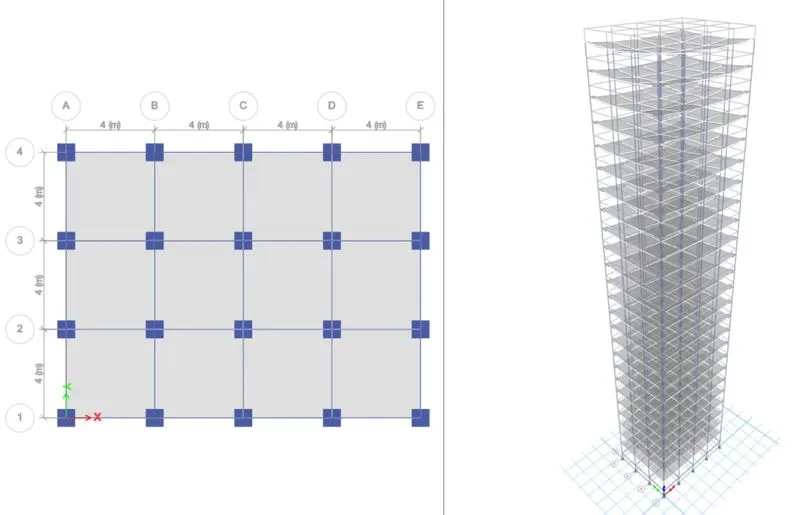
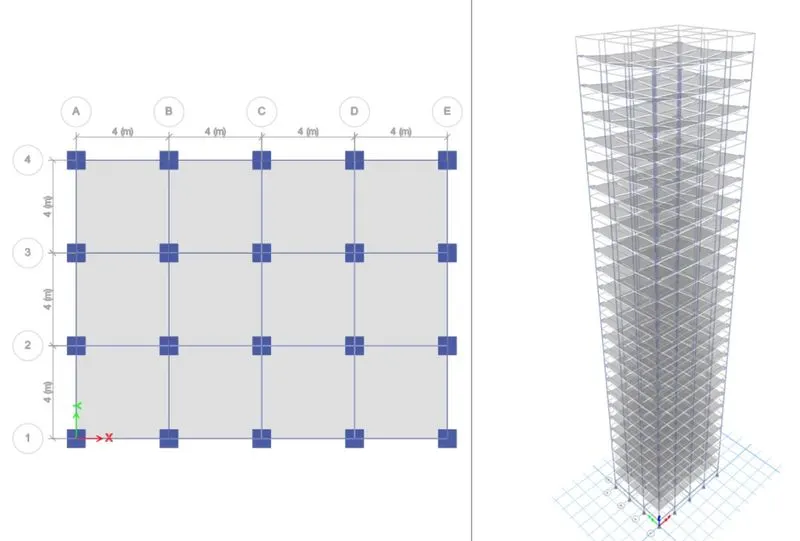
- Create grids of 4 bays in X direction and 3 bays in Y direction at 4m distance each
- Create story's according to the type of building in which each story height is 3m and plinth level is at 1.5m
- Define material properties ie concrete M30 and rebar of HYSD415
- Define Beam, Column, Slab sections based on the given data above
- Now draw beams, columns and slabs
- Assign pinned connection at the bottom
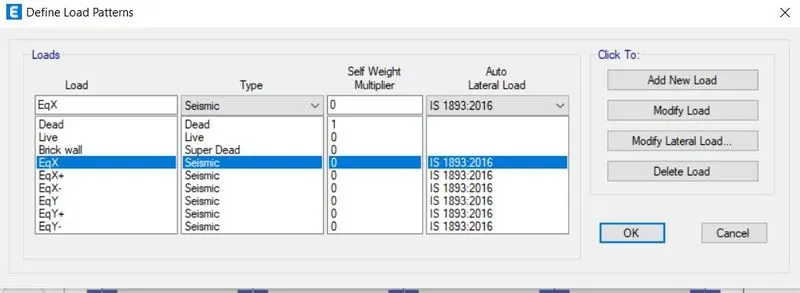
- Define load patterns and modify seismic load by defining zone, soil type, timeperiod
-
- Now apply shell loads and frame loads
- Assign mass source (For Live load 3KN/m2, 25% is taken and more than 3KN/m2 then 50% is taken)
- Define load combination
- Assign Diaphragms
- Define load cases
- Run analysis
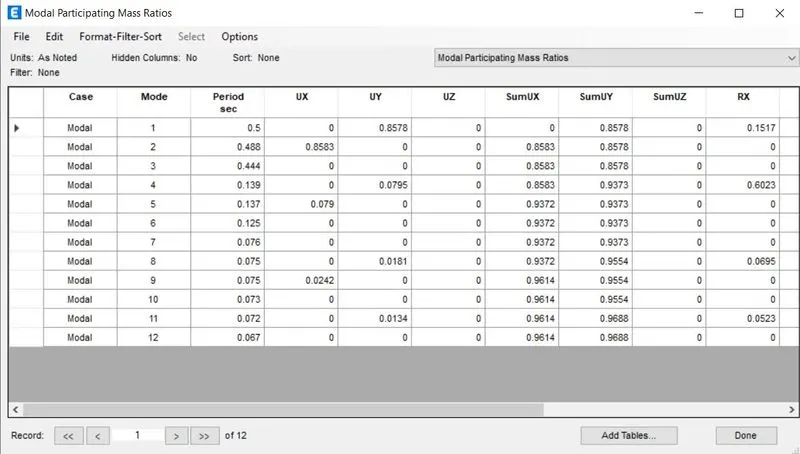
- Analyse deformed shape and modal participating mass ratio
RESULTS :
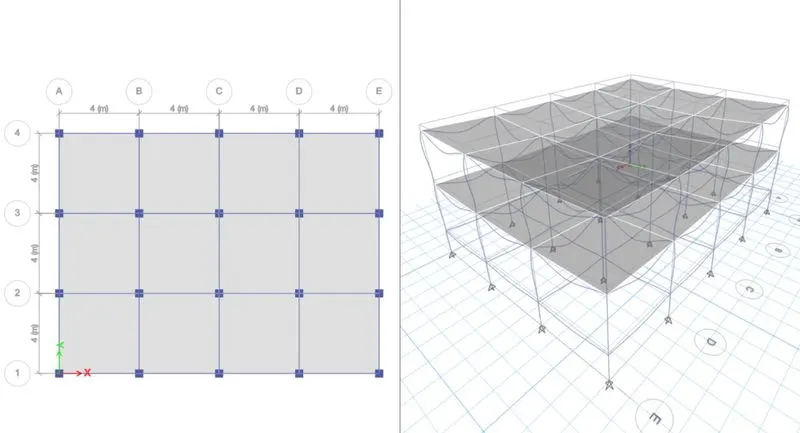
BUILDING A
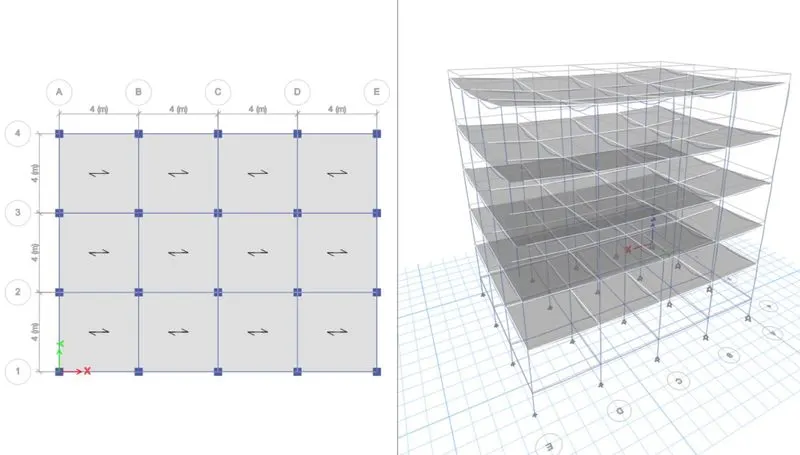
BUILDING B
BUILDING C
BUILDING D
BUILDING E
BUILDING F
BUILDING G
BUILDING H
BUILDING J
BUILDING K
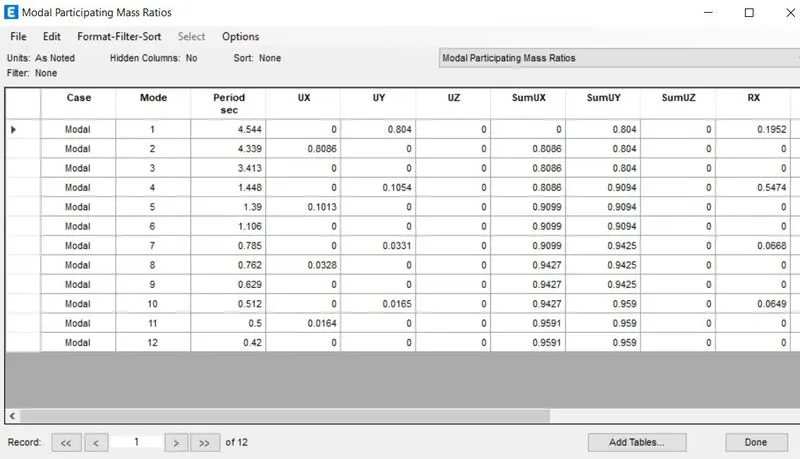
1. Factors influencing the dynamic characteristics of a building
Dynamic characteristics of building are modes of oscillation and damping. A mode of oscillation of a building is defined by associated
natural period and deformed shape in which it oscillates. The intensity and duration of oscillation and amount of inertia force induced in a
building depend on features of buildings, called their dynamic characteristics, in addition to the characteristics of the earthquake shaking
itself. Regular buildings held at their base from translation in the three directions, have two fundamental translational natural periods Tx1,
Ty1 along X, Y directions. One fundamental rotational natural period T`theta` along its rotational axis
2. Factors influencing natural period of vibration
- Effect of stiffness on T : Fundamental Natural periods of building E and F, G and H
T = `2pisqrt(m/k)`
Above equation of natural period says that buildings with heavy mass, smaller stiffness have larger natural period
E and F is 10 storey building
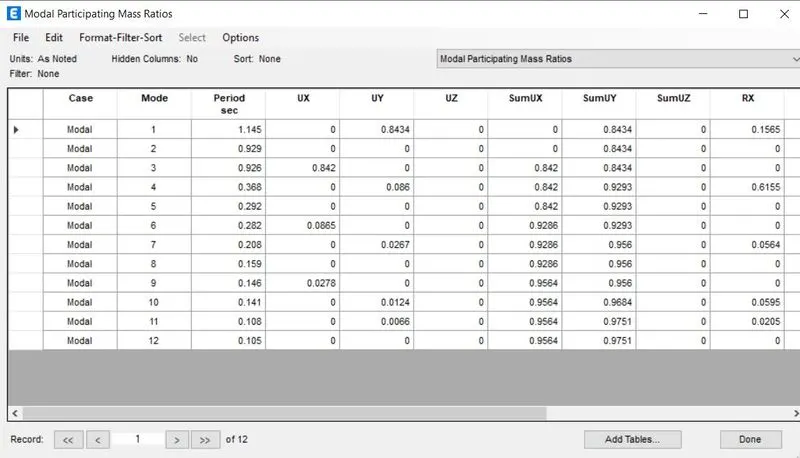
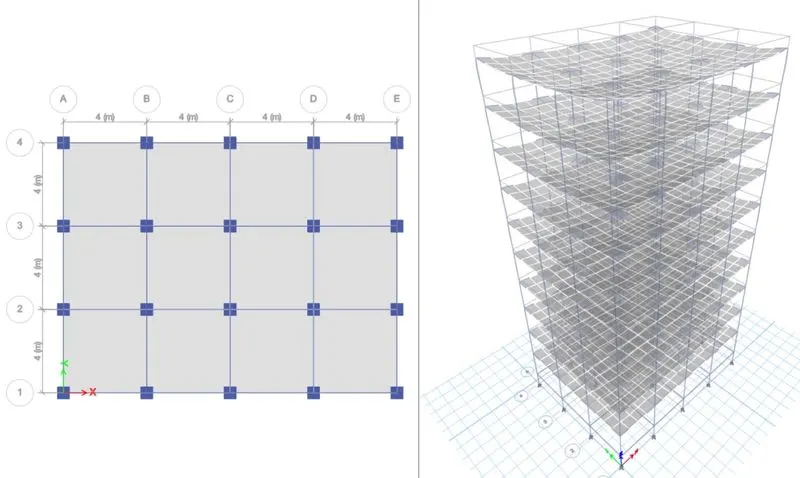
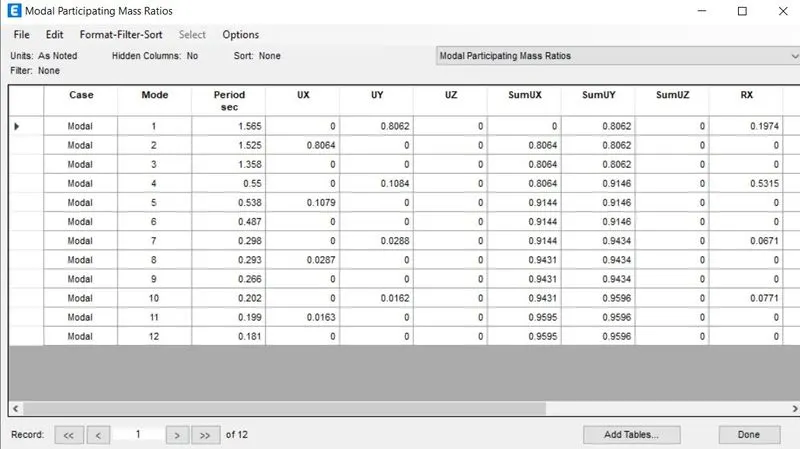
Building E = Natural period of vibration Tx = 1.525 , Ty = 1.565
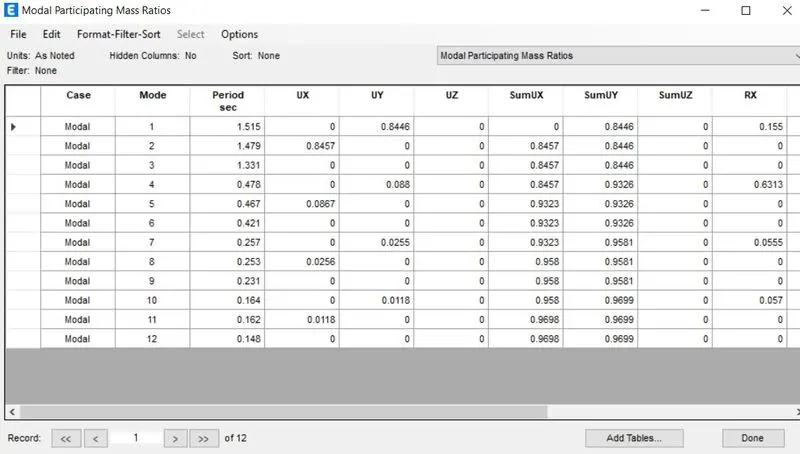
Building F = Natural period of vibration Tx = 1.479 , Ty = 1.515
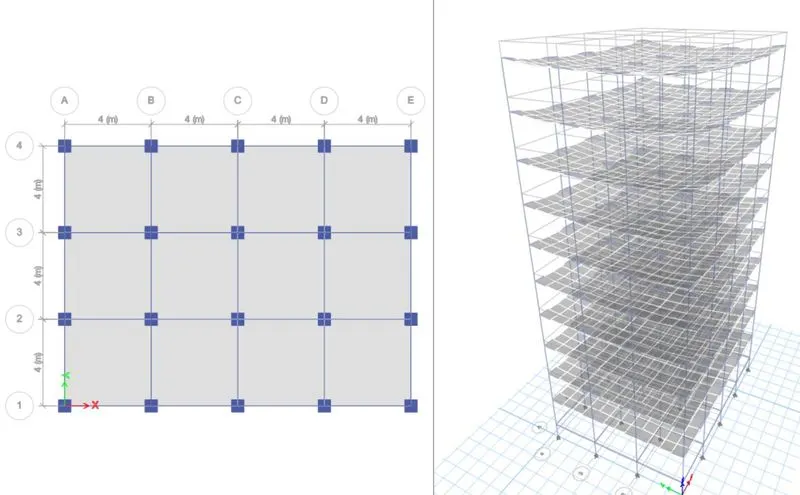
Increase in column size increases stiffness and mass of the building, reduces natural period, Thus F is stiffer than E
G and H is 25 storey building
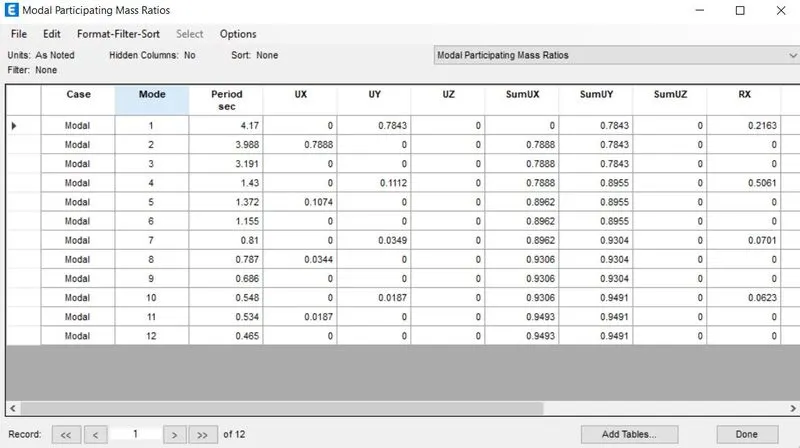
Building G = Natural period of vibration Tx = 3.988 , Ty = 4.17
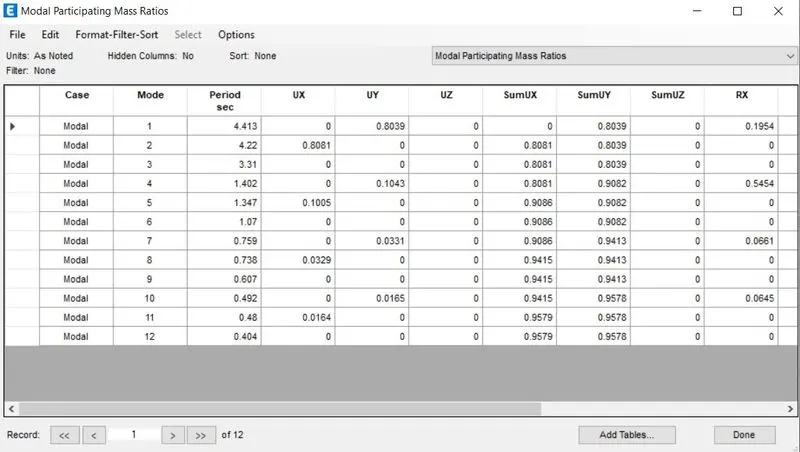
Building H = Natural period of vibration Tx = 4.22, Ty = 4.413
As lower storey column size changes, the natural period differ significantly. Between G and H, H is stiffer. While increasing stiffness, the mass is also increased. When stiffness and mass changed, timeperiod may also increase or decrease. - Effect of mass on T : Fundamental Natural periods of building H, J, K
Building H = Natural period of vibration Tx = 4.22, Ty = 4.413
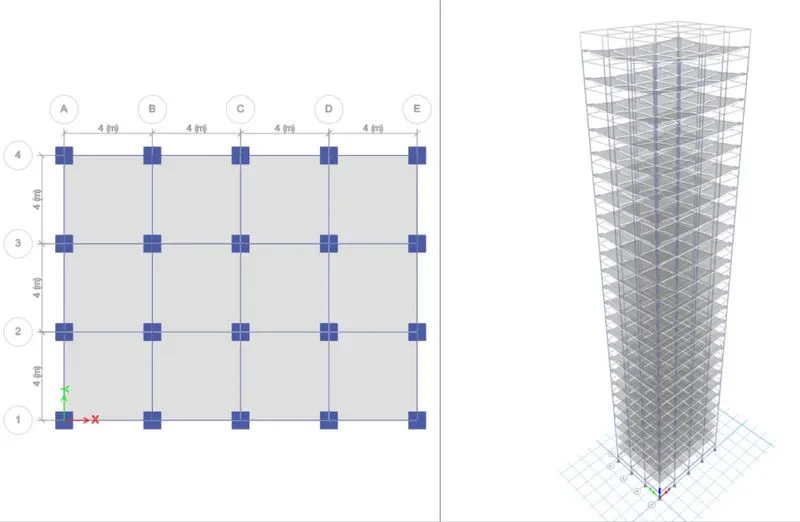
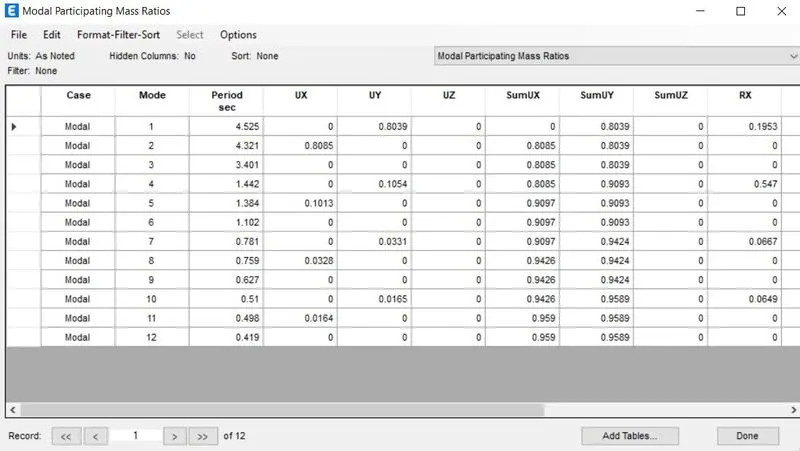
Building J = Natural period of vibration Tx = 4.321, Ty = 4.525
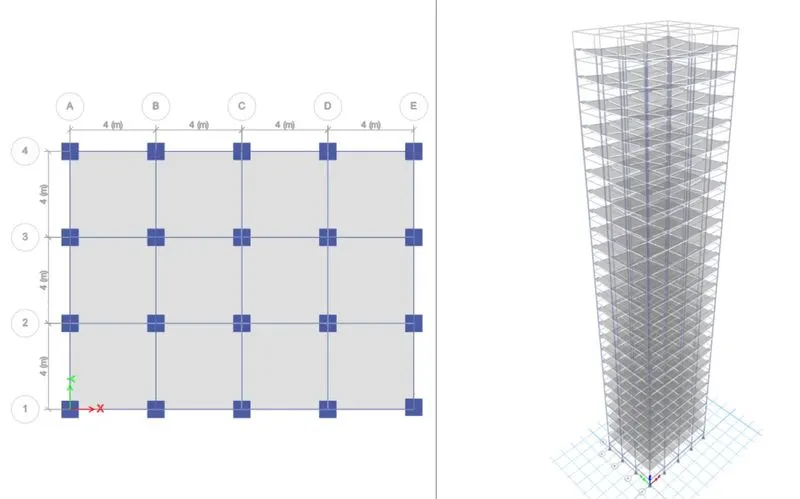
Building K = Natural period of vibration Tx = 4.339, Ty = 4.544
Increase in the mass increases natural period, Imposed load in J, K increased with 10%, 20%, therefore its time period also increased - Effect of building height on T : Fundamental Natural periods of building A, B, F, H
As height increases fundamental natural period of vibration also increases
Building A = Height of the building = 7.5, Natural period of vibration Tx = 0.488, Ty =0.5
Building B = Height of the building = 16.5 Natural period of vibration Tx = 1.01 , Ty = 1.036
Building F = Height of the building = 31.5 Natural period of vibration Tx = 1.479 , Ty = 1.515
Building H = Height of the building = 76.5 Natural period of vibration Tx = 4.22, Ty = 4.413
It is observed that as height of building increases, fundamental natural period of vibration also increases because mass increases, flexibility increases that means building takes longer time to complete one oscillation. - Effect of column orientation of T : Fundamental Natural periods of building B,C,D
In building B size of column = 400 x 400, Natural period of vibration Tx = 1.01 , Ty = 1.036
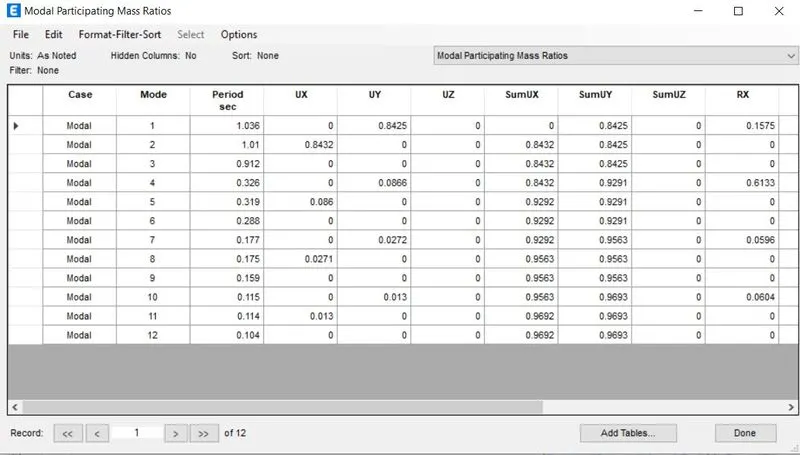
In building C size of column = 550 X 300, Natural period of vibration Tx = 1.12 , Ty = 0.953
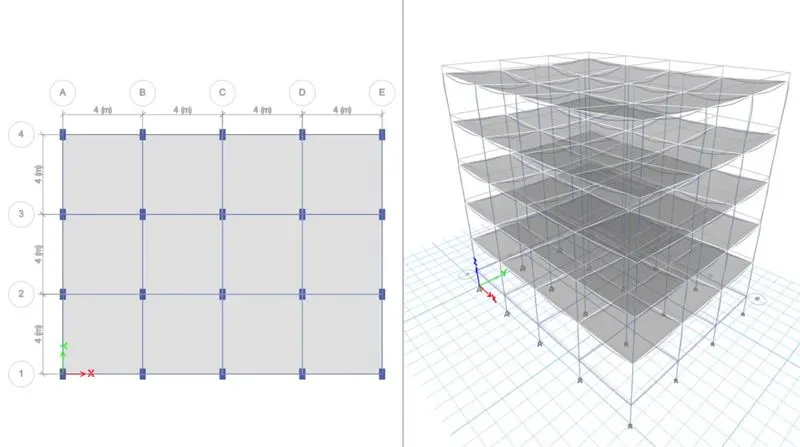
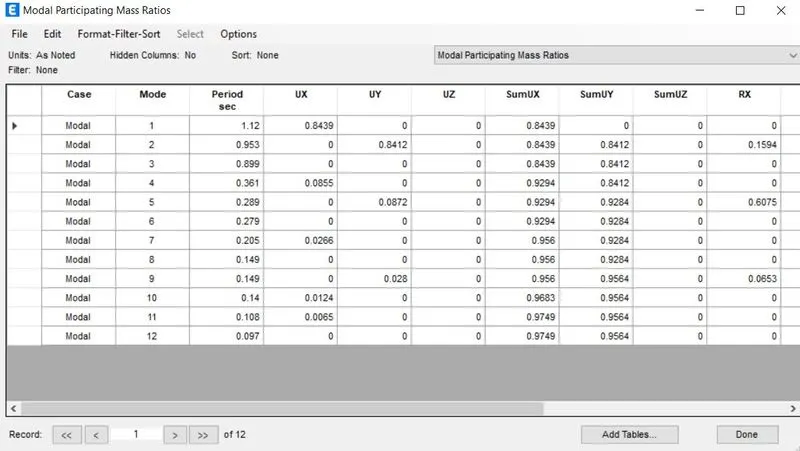
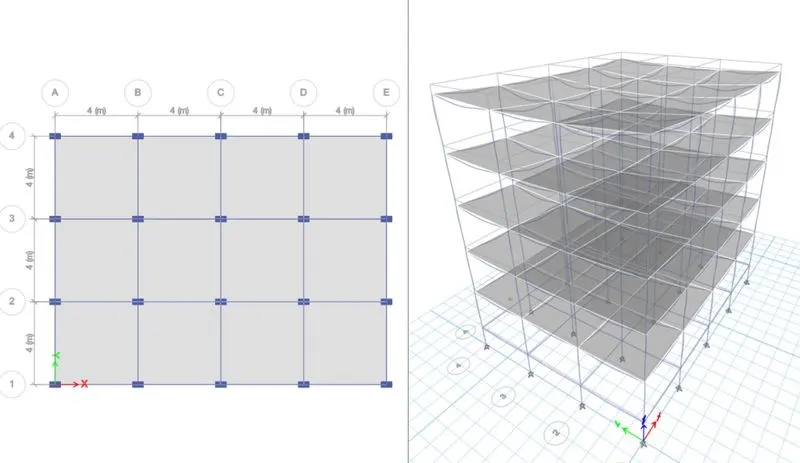
In building D size of column = 300 X 550, Natural period of vibration Tx = 0.929 , Ty = 1.145
It is observed that longer side of the column has higher time period compared to smaller side of the column.
3 . Factors influencing the Mode shape of oscillations
After "Run analysis", Click on elevation select any elevation and click on show deformed shapes under different modes. These modes are analysed under different factors i.e
1. Effect of flexural stiffness of structural elements on mode shapes
2. Effect of axial stiffness of vertical members on mode shapes
3. Effect of degree of fixity at column bases on mode shapes
Click on start animation present at bottom and different modes are analysed accordingly.
- Effect of flexural stiffness of structural elements on mode shapes
Comparison of mode shapes of building B when beams are too small and too large
1. Mode shape when beam size is less (beam size 300x200mm, column 400mm)
Mode 1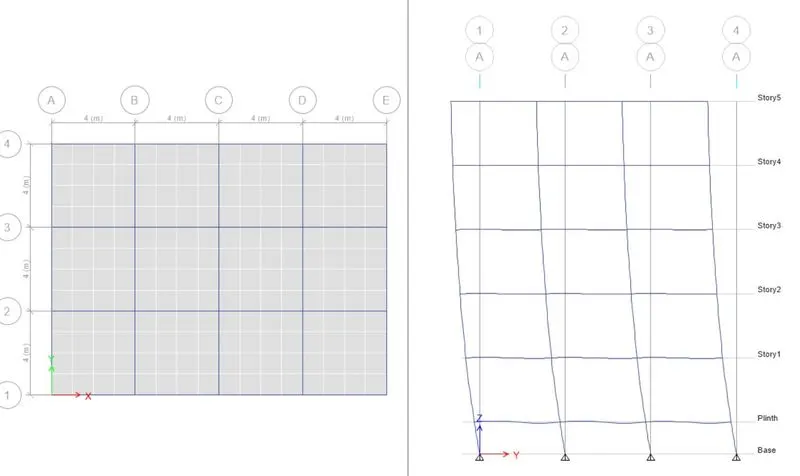
Mode 2 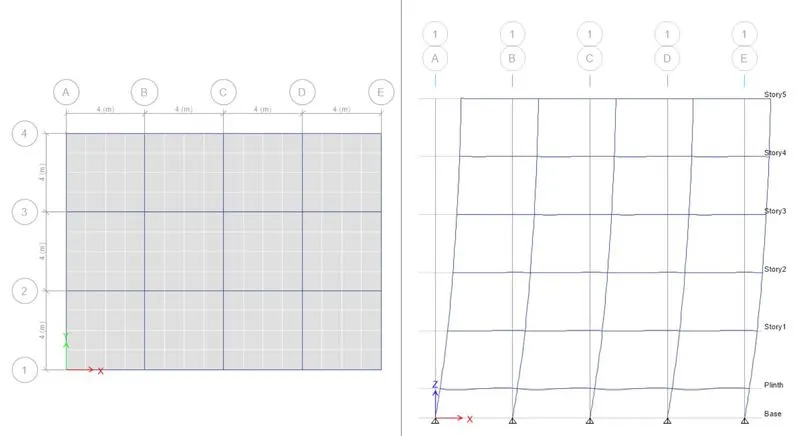
2. Mode shape when beam size is more (beam size 600x800mm, column 400mm)
Mode 1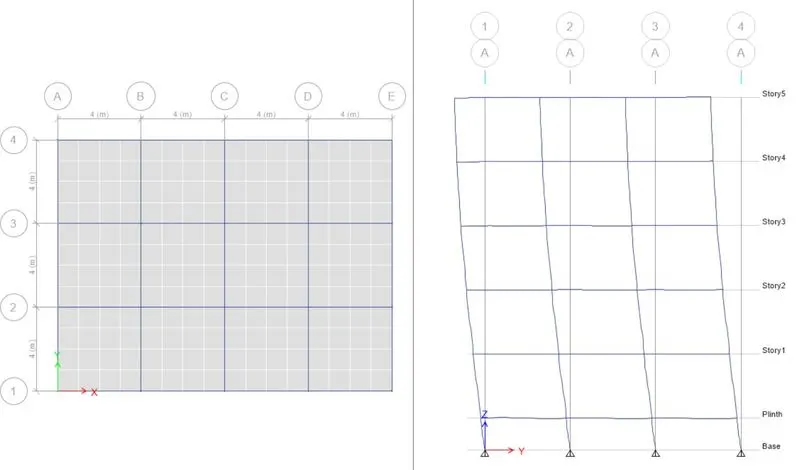
Mode 2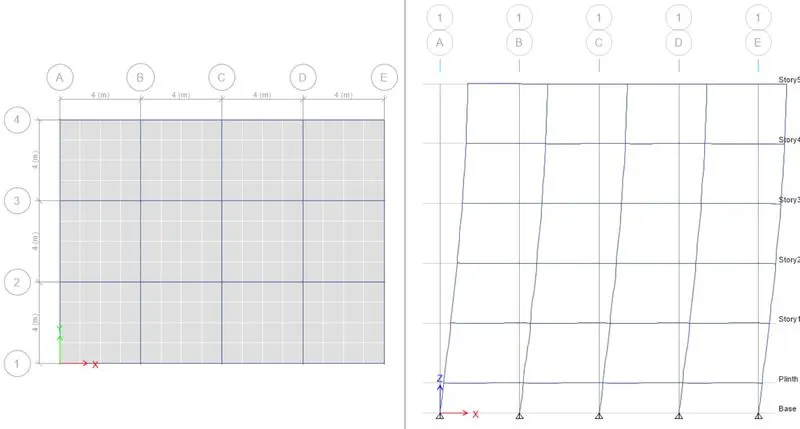
The overall lateral translational mode shapes depend on flexural stiffness of beams relative to that of adjoining columns. When flexural stiffness of beams is small compared to that of the column deformation is in single curvature bending leading to overall flexure type deformation behaviour building. When flexural stiffness of beams is larger compared to that of adjoining columns, column deformation is in double curvature within each storey leading to overall shear type deformation behaviour of building.
Above cases show only minimal differences in mode shape- Effect of axial stiffness of vertical members on mode shapes
Comparison of building H when its column size is small and large
1. Mode shape when column size is small ( column size 300x300mm, beam size 300x400mm)
Mode 1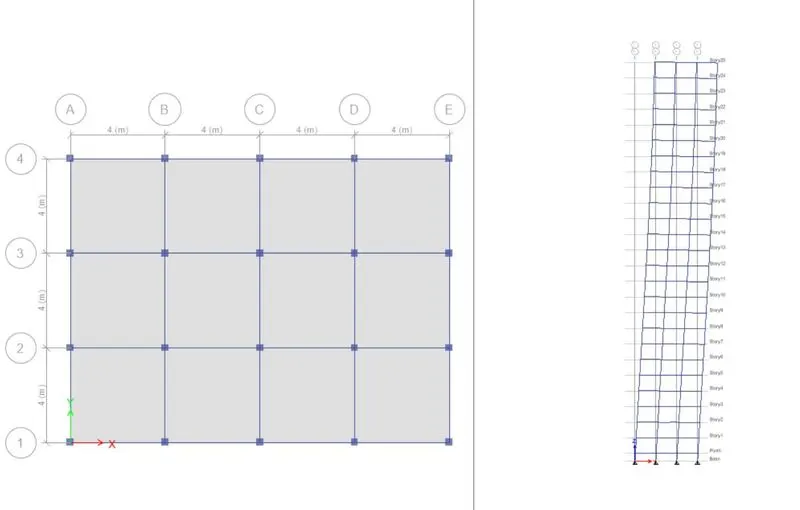
Mode 2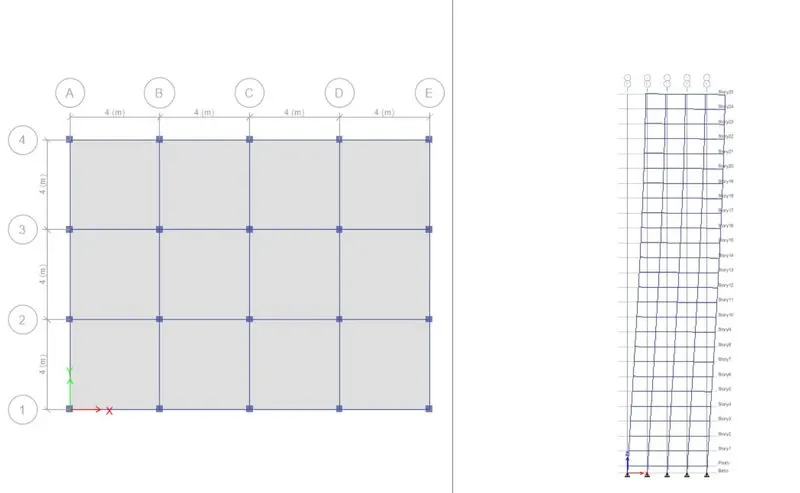
2. Mode shape when column size is large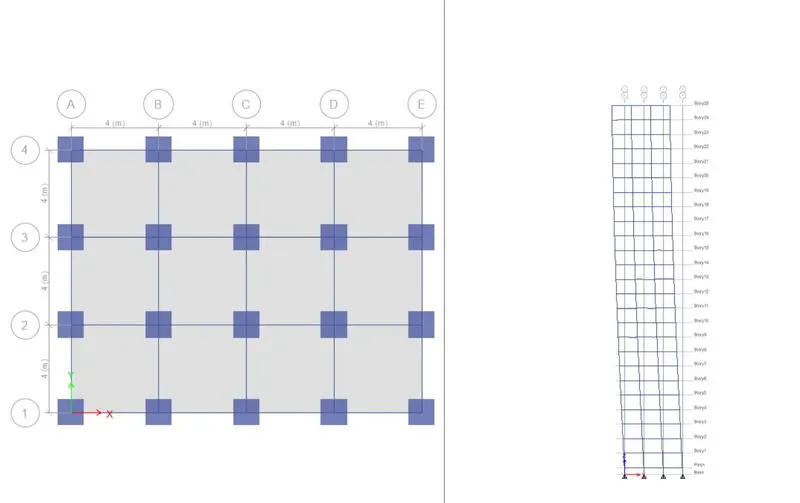
Mode 2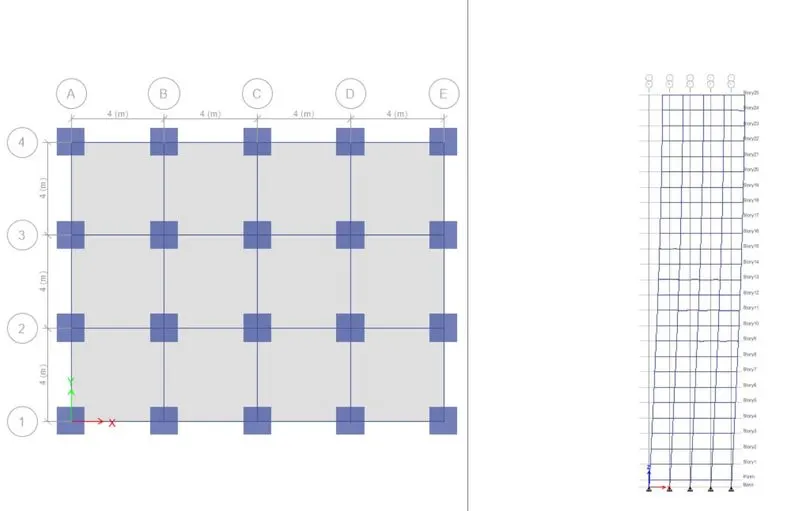
Mode shapes depend on axial stiffness of vertical members in a building. Columns with smaller size sways more than columns with larger size. - Effect of degree of fixity at column bases on mode shapes
Comparison of building B in pinned connection and fixed connection
Pinned condition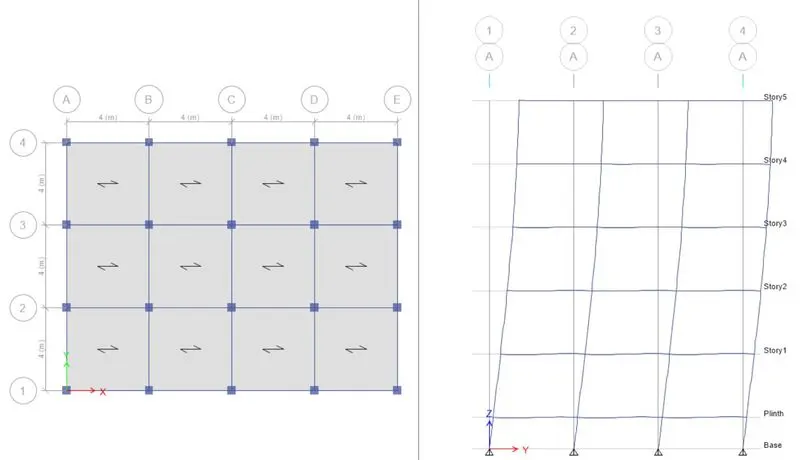
Fixed connection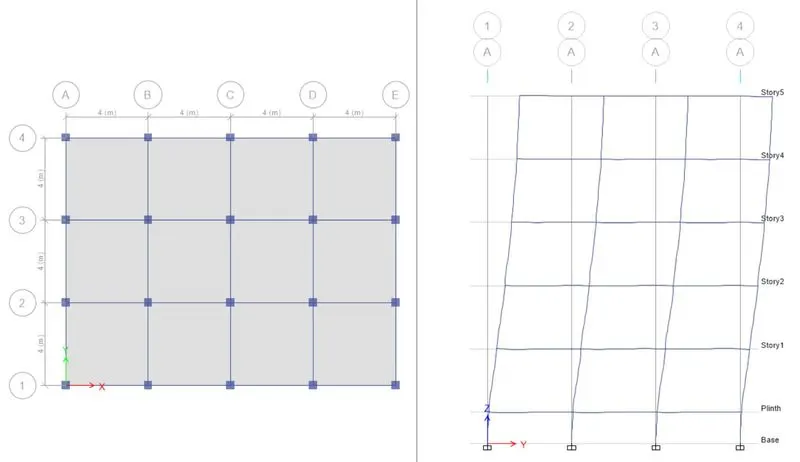
In pinned condition lateral sway will be more at bottom storey than upper storey and in fixed condition lateral sway is restricted at bottom storey. This condition is observed in above cases.