Projefct 1_Comparative study of different storey buildings for Seismic forces
Aim: to model and analyse all the buildings from A to K withe the given structural data and compare the analysis between the models based on the different factors.
Procedure:
Building A:
- No of storeys given are 2.
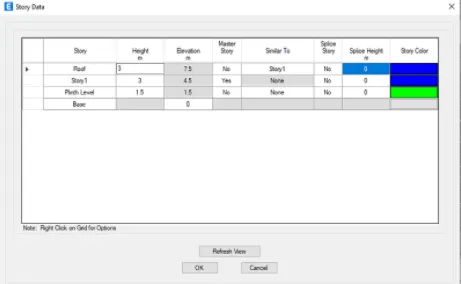
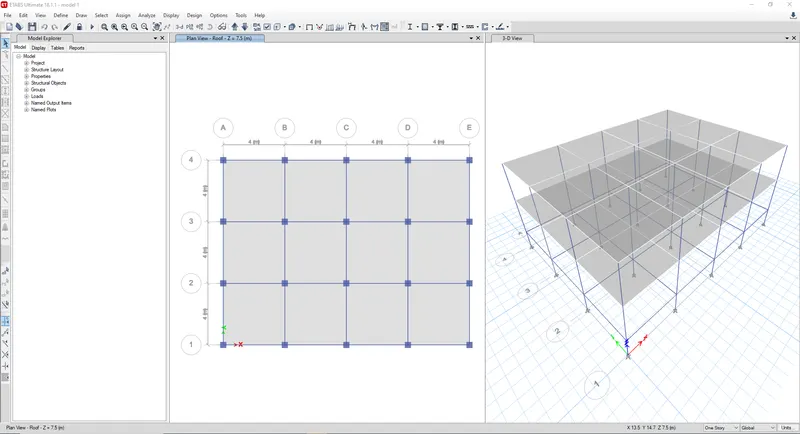
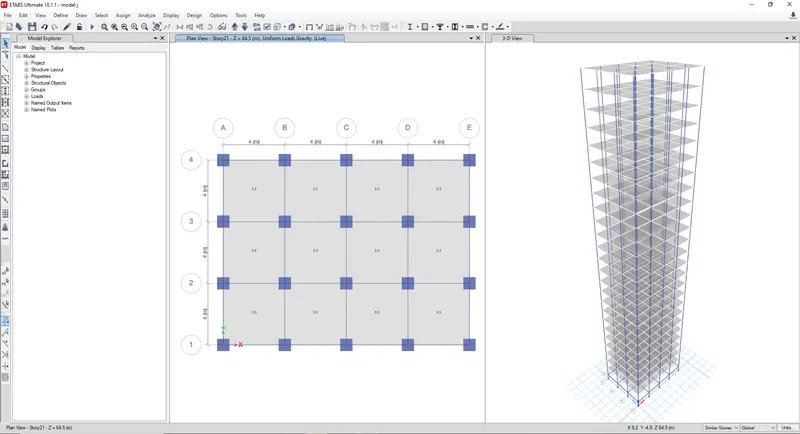
- Number of bays along the X and Y direction are 4 and 3.
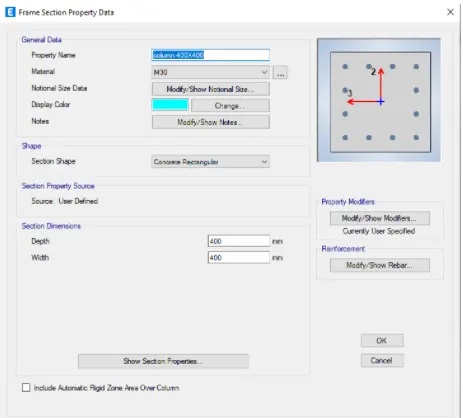
- Column size is 400X400mm and beam size is 300X400mm.
modelled building:
Result:
Building B:
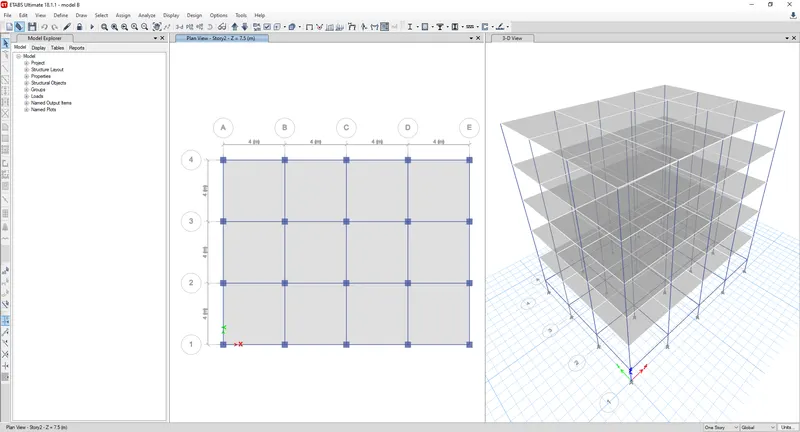
- Number of storeys are 5.
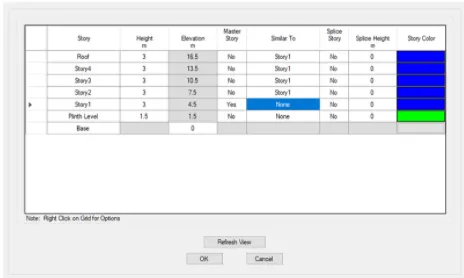
- Column size is 400X400mm and beam size is 300X400mm.
Modelled buidiling:
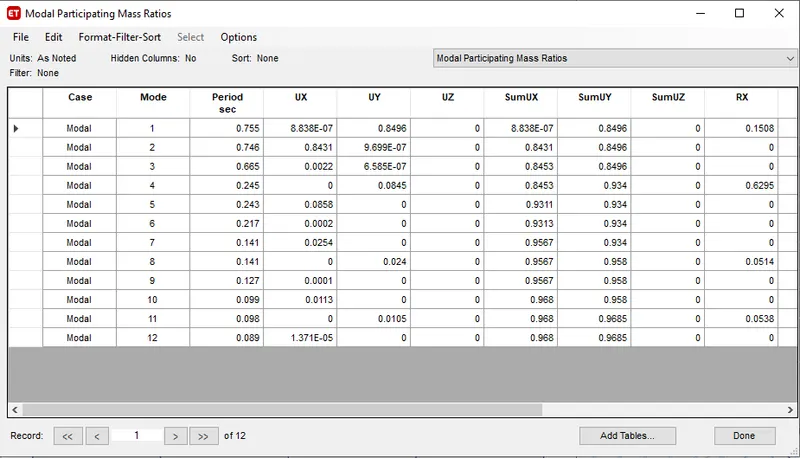
Result:
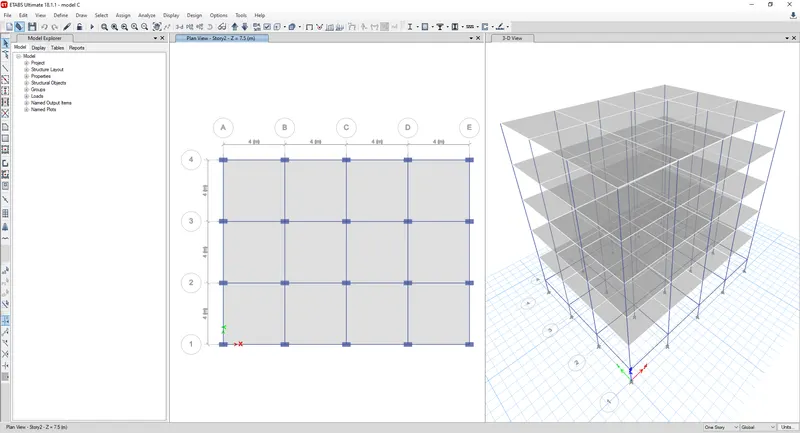
Building C: Building with rectangular columns oriented along X-direction.
Result:
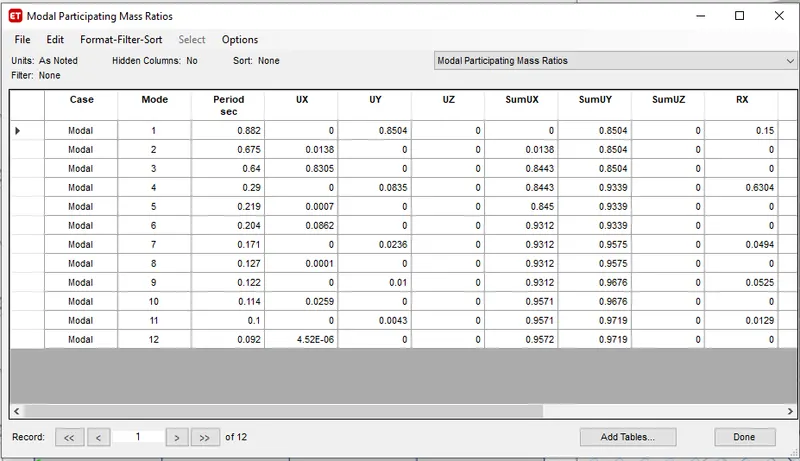
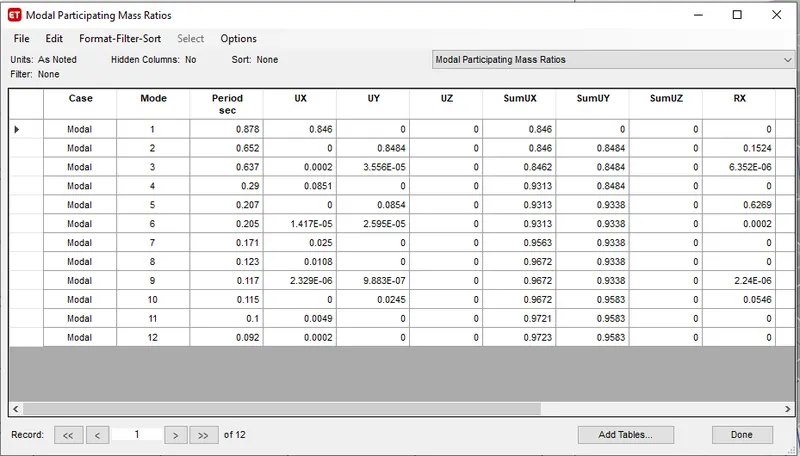
Building D: Building with rectangular columns oriented along Y-direction.
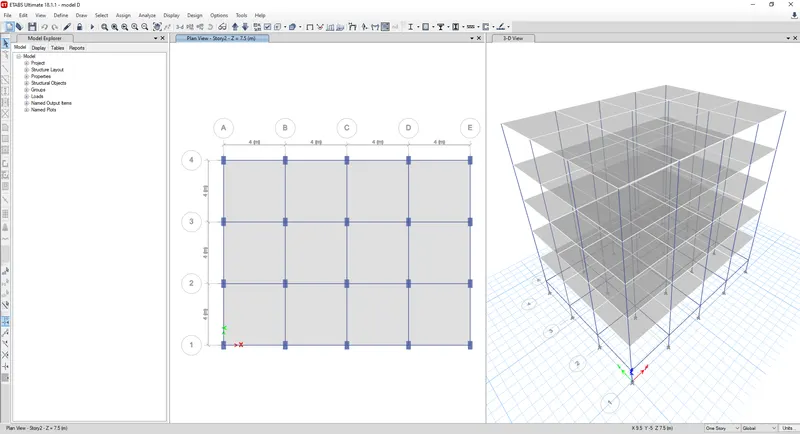
Result:
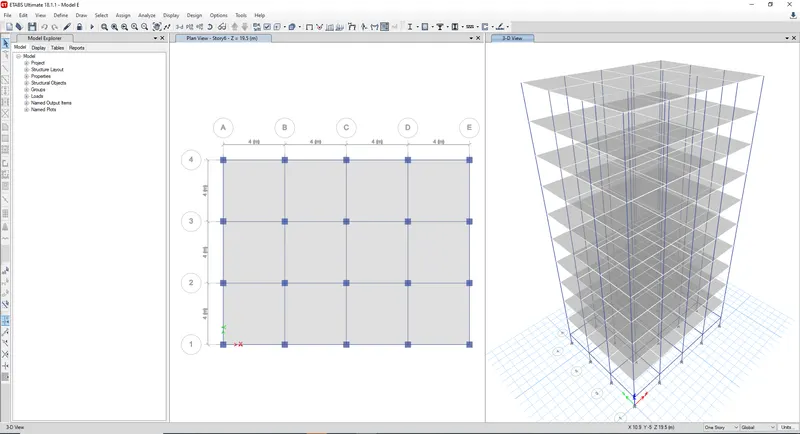
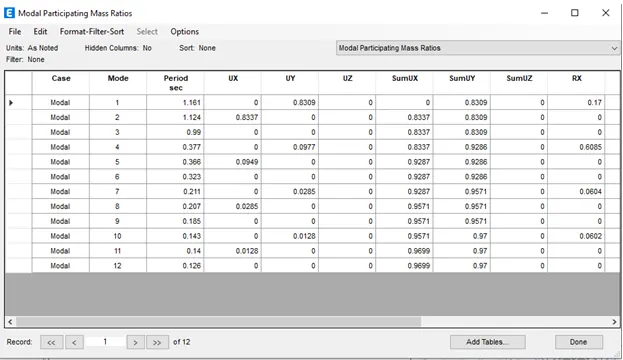
Building E: Building with 10 storeys and sizes of column according to storey hights are
1. Upper 5 storeys 400X400mm.
2. Bottom 5 storeys 600X600mm.
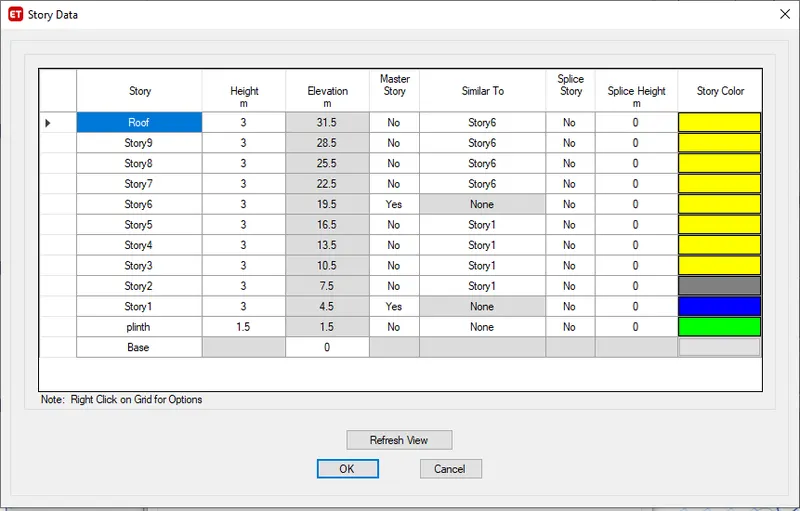
Result:
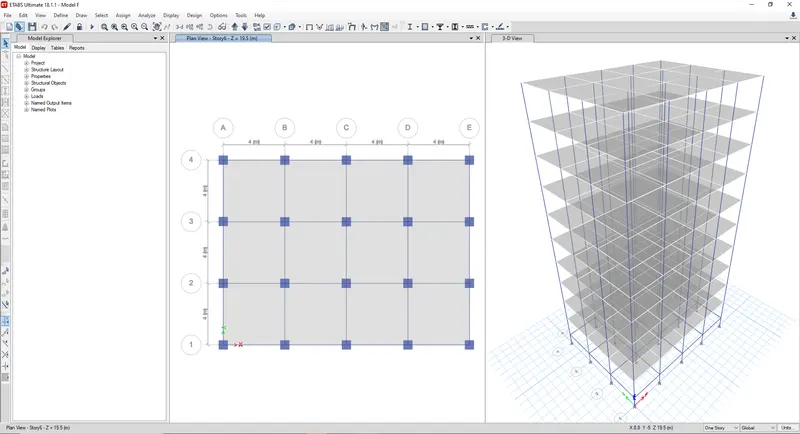
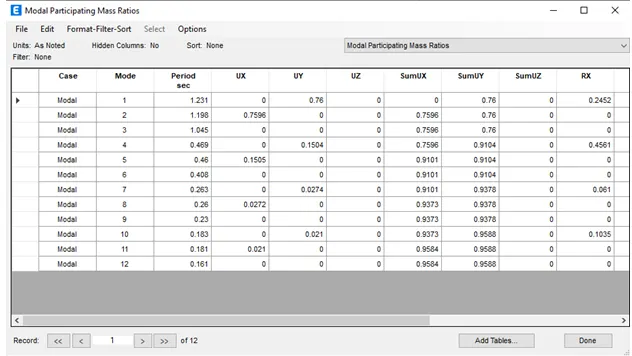
Building F: 10 storey building with column size 600X600mm.
Result:
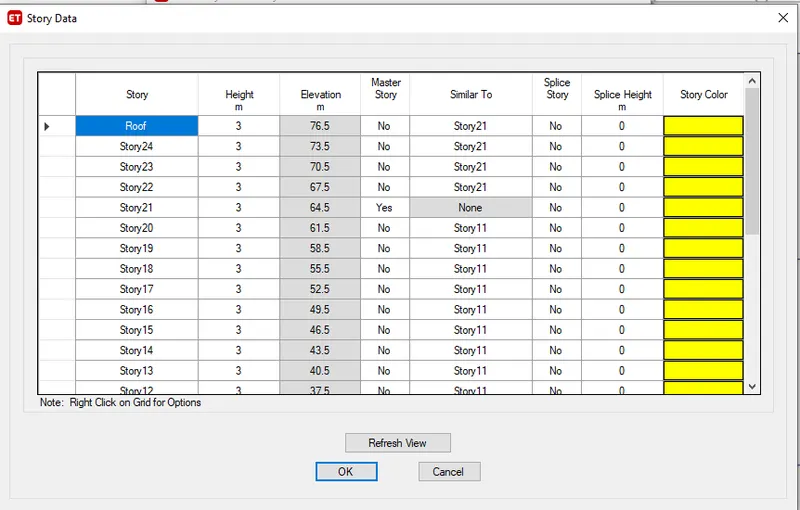
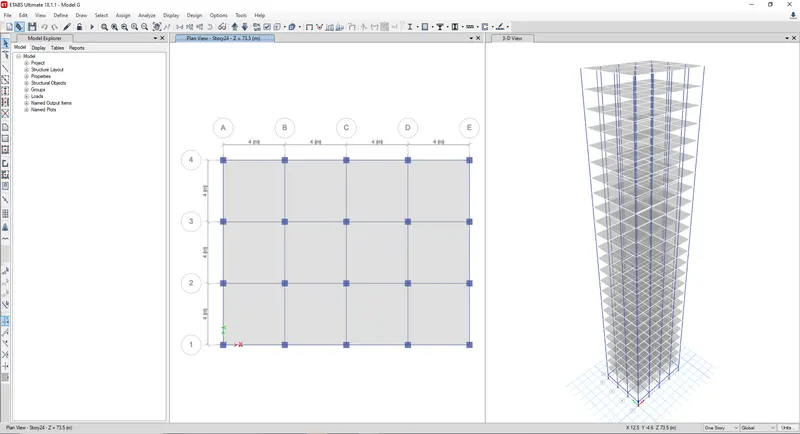
Building G: building with 25 storeys and column sizes according to storey heights are:
1. Upper 5 storeys 400X400mm.
2. Middle 10 storeys 600X600mm.
3. Bottom 10 storeys 800X800mm.
Result:
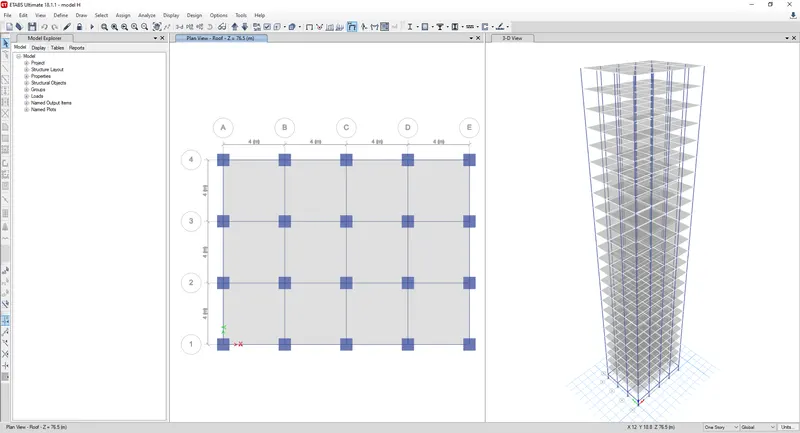
Building H: building with 25 storeys and column size of 800X800mm and beam size 300X400mm.
Result:
Building J:
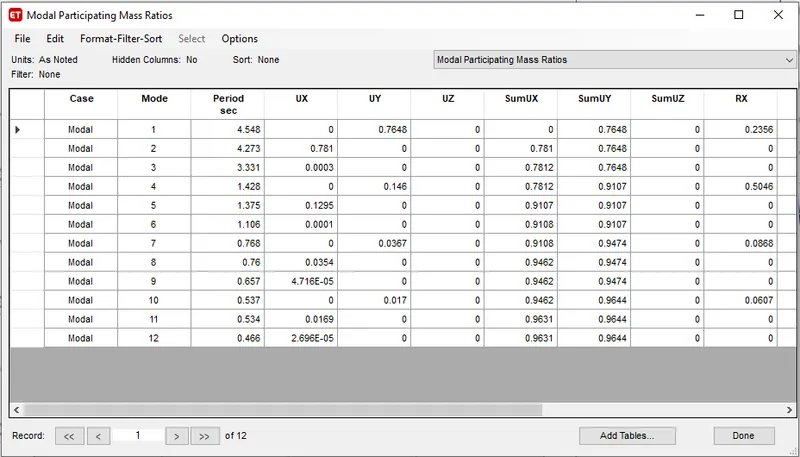
In this model the imposed load has been increased by 10% so the live load ins increased from 3 KN/m to 3.3 KN/m.
Result:
Building K:
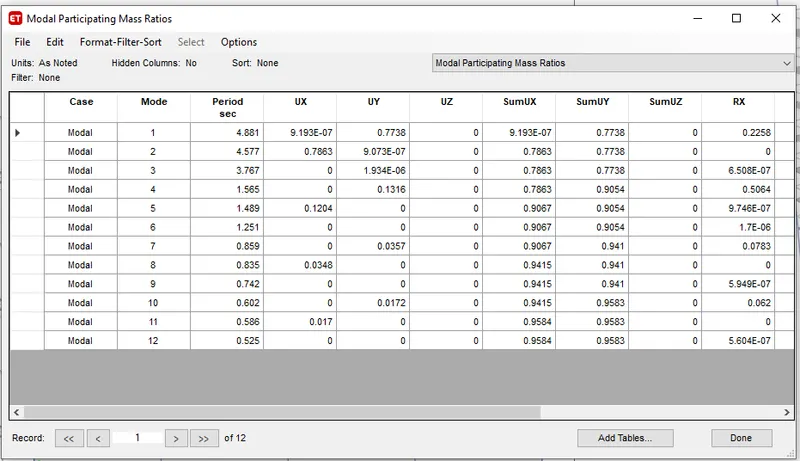
In this model the imposed load has been increased by 20% so the live load ins increased from 3 KN/m to 3.6 KN/m.
Result:
a) Comparing Fundamental natural period for buildings E and F as well as G and H:
For building E:
Tx1= 1.161 seconds
Ty1= 1.124 seconds
For building F:
Tx1= 1.231 seconds
Ty1= 1.198 seconds
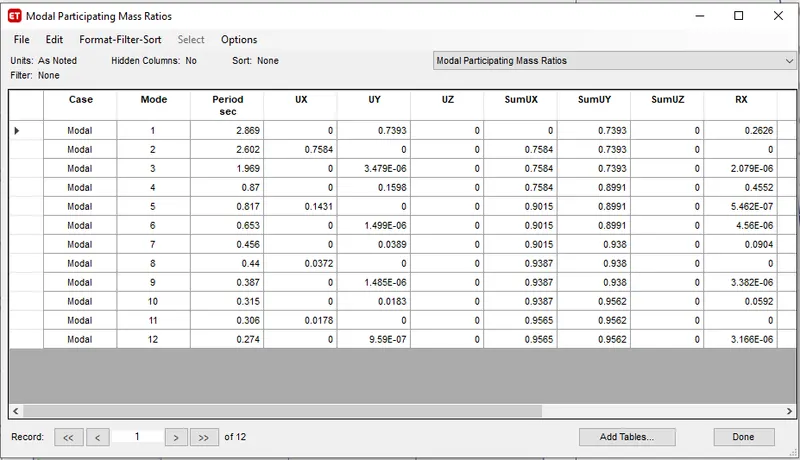
For builidng G:
Tx1= 2.869 seconds
Ty1= 2.602 seconds
For building H:
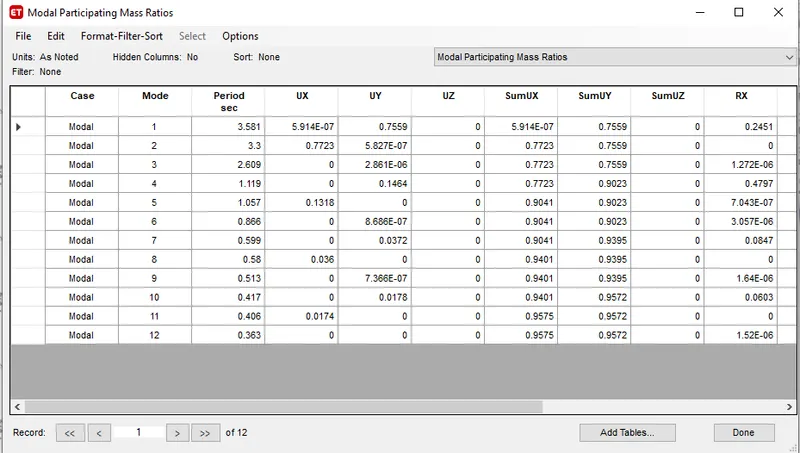
Tx1= 3.581 seconds
Ty1= 3.3 seconds
When comparing building E,F and G,H the time period is marginally increasing for building F and H.This is because the column sizes have been maitained uniform.So this arrangement will have negligible impact on the stiffness but mass of structure will get slightly increased.
As we know time period is directly proportional to mass of the system.so while increasing the mass of the storey,it relatively increases the time period of the structure.
b) Comparing fundamental natural period of building H,J,K and the justifications regarding its flexibilty:
For building H:
Tx1= 3.581 seconds
Ty1= 3.3 seconds
For building J:
Tx1= 4.548 seconds
Ty1= 4.273 seconds
For building K:
Tx1= 4.881 seconds
Ty1= 4.577 seconds
The difference between buildings H,J,K is the increment in their imposed mss.Building J has 10 more imposed mass and building K has 20% more imposed mass.So as we know that mass is directly proportional to the time period so that is why period of buidlings J and K is higher.
The imposed mass is not a part of stiffness component of the structure.The imposed mass are from the wall loads.So increasing the mass in the buildind does not mean the stiffness increment.Simply it meanns more the time period of a building,the more it is flexible.So that is why building J and K are more flexible.
c) Comparing Fundamental natural period for buildings A,B and F,H and justification regarding its height impact:
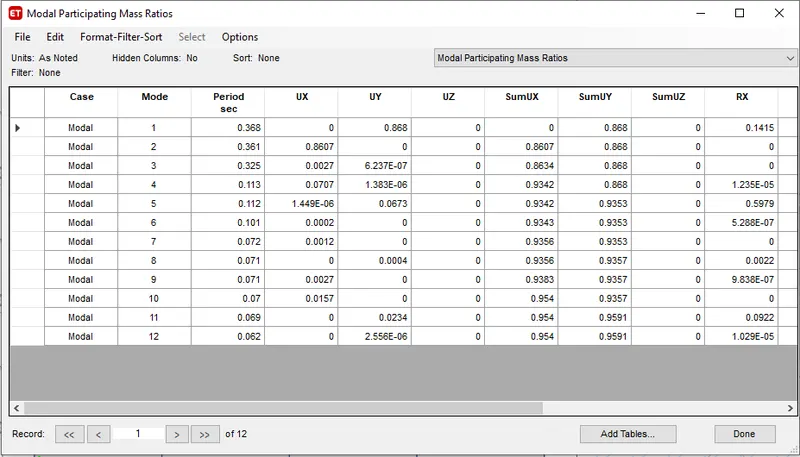
For building A:
Tx1= 0.368 seconds
Ty1= 0.361 seconds
For building B:
Tx1= 0.755 seconds
Ty1= 0.746 seconds
For building F:
Tx1= 1.231 seconds
Ty1= 1.198 seconds
For building H:
Tx1= 3.581 seconds
Ty1= 3.3 seconds
If we compare the building A(2 storey) and B(5 storey),the time period of B is higher and if we compare the building F(10 storey) and H(25 storey),the time period of H is higher.As we know stiffness of a building is inverselly proportional to the height.So that means stiffness of the building decreases with increase in height.If the stiffness of building decrease it eventually decreases the time period.
d) Comparing the fundamental natural period for buildings B,C,D and the justifications regarding column orientation:
For building B: it has square column sizes so it will have similar stiffness and similar time period in both X and Y direction
Tx1= 0.755 seconds
Ty1= 0.746 seconds
For building C: X direction stiffness is higher so its time period will be lesser in X direction than the Y direction
Tx1= 1.684 seconds
Ty1= 1.448 seconds
For building D: Y direction stiffness is higher.So its time period will be lesser in Y direction than the x-direction.
Tx1= 1.642 seconds
Ty1= 1.492 seconds
e) Comparing the two different configurations of building B with changes in beam flexural stiffness:
Case 1: when the size of beam is 300X400mm (original condition).
Case 2: when the size of beam is very small 100X100mm modified condition.
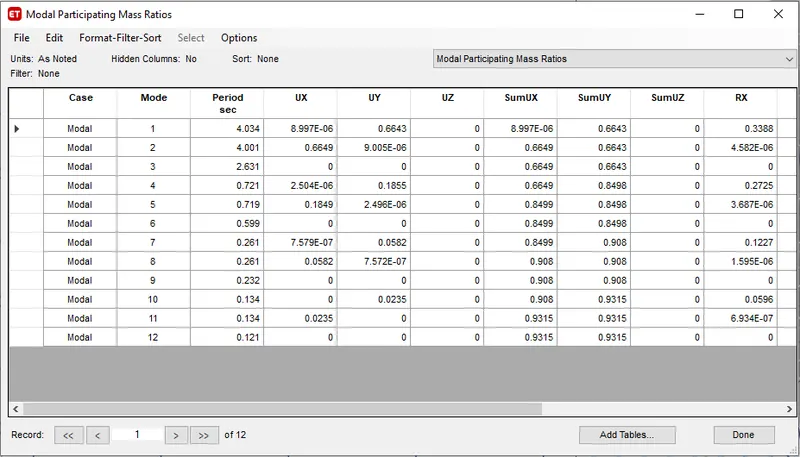
Since we neglected the stiffness of beams,the building became more flexible and thus led to much higer time period.
Effect of relative flexural stiffness of structural elements: the fundamental translational mode shape changes from flexural type to shear type with increase in beam flexural stiffness relative to that of column.
f) Comparing the two different configurations of building H with changes in axial property of column:
Case 1: when the size of the column is 800X800mm(original condition).
Case 2: when the size of coulmn is small 300X300mm (modified condition).
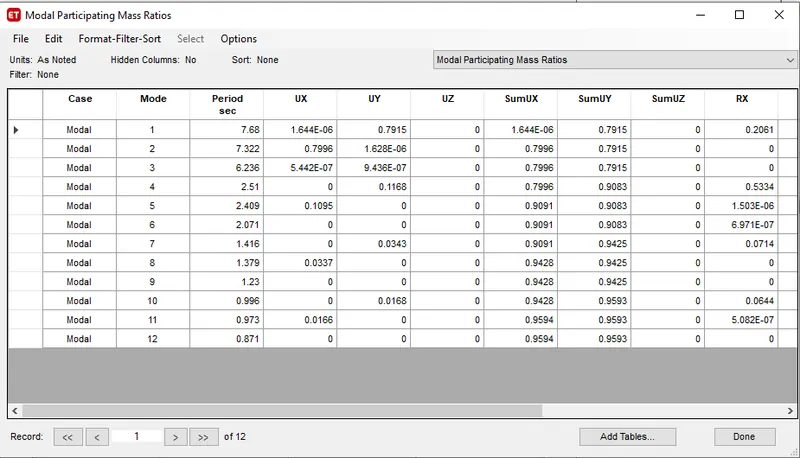
Since we neglected the stiffness of columns,the buidling became more flexible and thus led to higher time period.
Effect of axial stiffness of vertical members: fundamental translational mode shape changes from flexure type to shear type with increase in axial stiffness of vertical members.
g) Comparing the two different configurations of building B with changes in base support condition:
Original condition with pinned support:
Tx1= 0.755 seconds
Ty1= 0.746 seconds
Modified condition with fixed support:
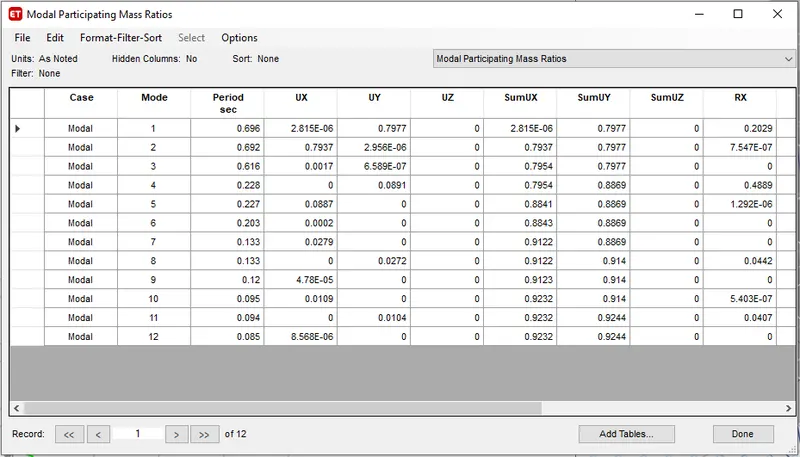
Tx1= 0.696 seconds
Ty1= 0.692 seconds
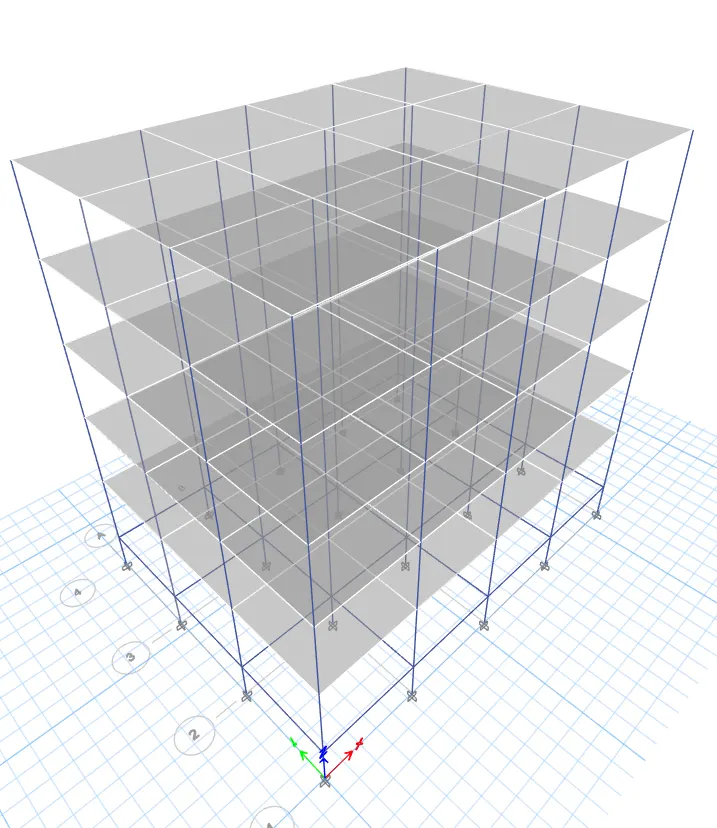
Fixed support assigned:
Conclusion: All the building models with different configurations are analysed and compared the impacts in their time period with changes in sectional parameters.