Project - Speed Control of a Direct Current (DC) motor
Aim :
Speed Control of a Direct Current (DC) motor
Objective :
- In this project, a Simulink model for the DC motor will be first developed per the schematic.
- Use the Proportional, Integral, and Derivative (PID) control design knowledge gained in training to design, develop and test a controller to maintain a desired speed for the motor.
A mathematical model for DC motor:
`(ω(s))/(Vs(s))=(Kt)/(J*La*s^2+(J*Ra+B*La)*s+(B*Ra+kt*km))`
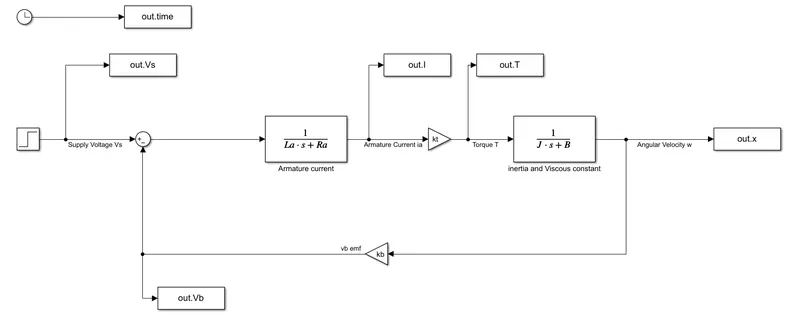
DC-Motor Parameters :
clc
clear
close all

J = 0.02 ; % moment of inertia kg-m^2
B = 0.2;   % motor viscous constant N-m-s
kb = 0.1; % Back emf constant v/rad/s
kt = 0.1; % motor torque constant N-m/amp
Ra = 2 ; % resistance of armature circuit ohm
La = 0.5 ; % inductance of armature circuit
Plot the response
close

figure(1)
subplot(3,2,1);plot(out.time,out.Vs);grid on;title('Supply Voltage');
subplot(3,2,2);plot(out.time,out.w);grid on;title('Angular velocity');
subplot(3,2,3);plot(out.time,out.Vb);grid on;title('Back emf');
subplot(3,2,4);plot(out.time,out.I);grid on;title('Armature Current');
subplot(3,2,5);plot(out.time,out.T);grid on;title('Torque ');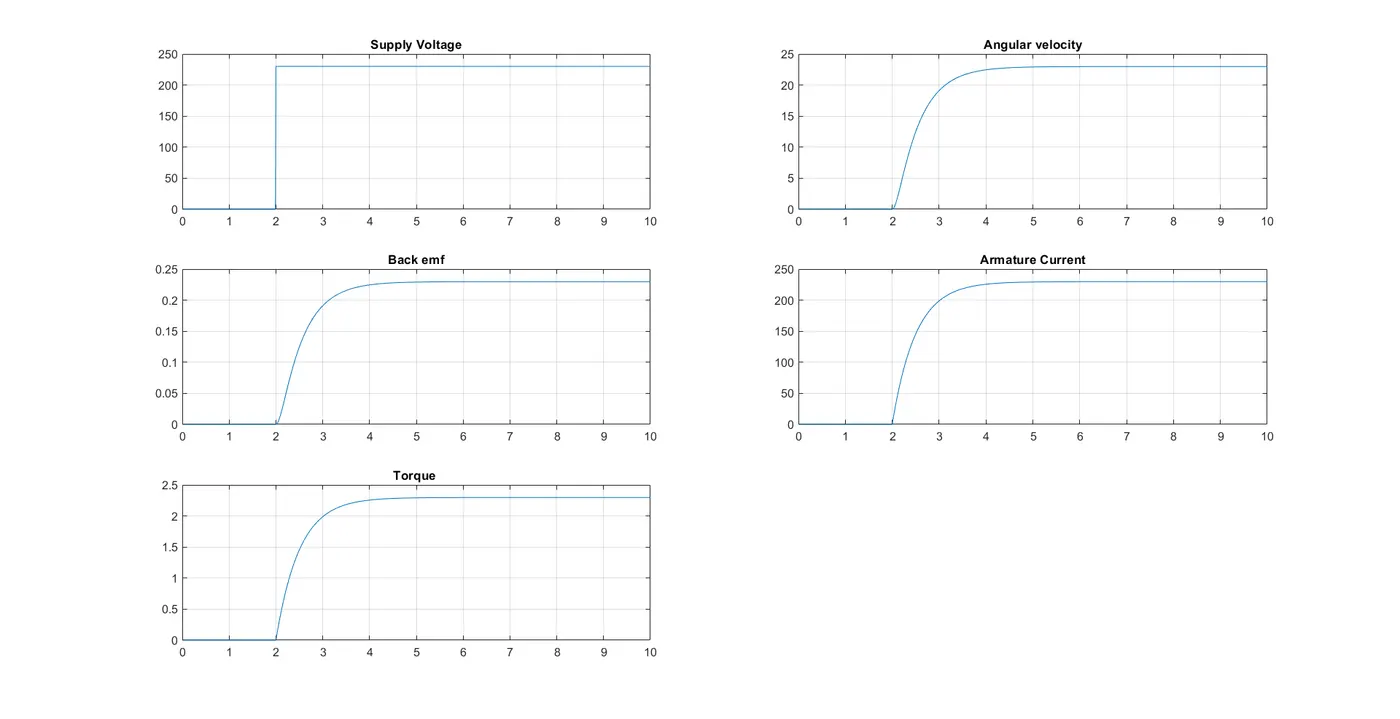
the DC motor is getting stable but it has a high Settling time and the rise time is also high.
PID controller is needed to design with a gain value of kp,kd, ki.
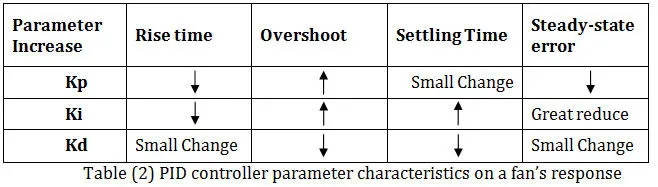
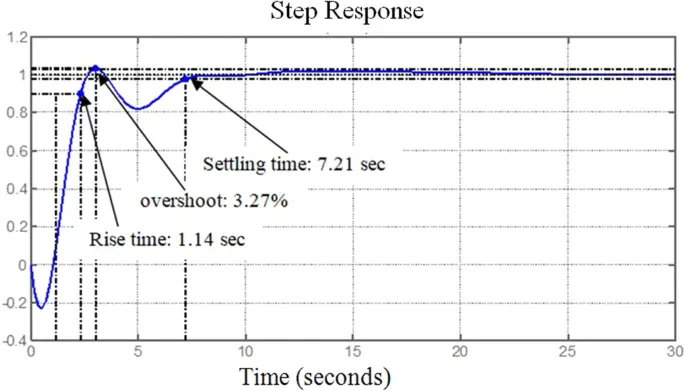
So, What are Rise time, Overshoot, Settling time, and steady-state error
PID controller model
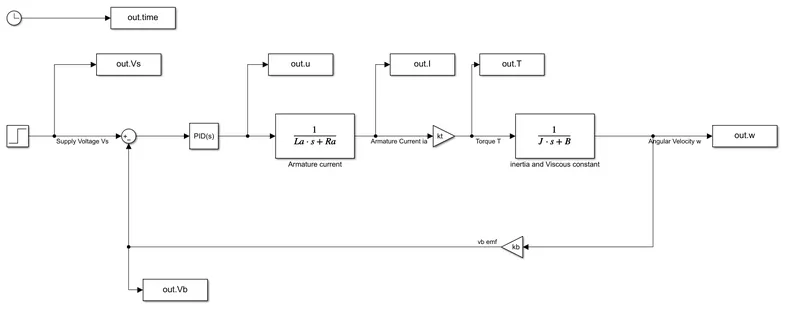
at the below PID value
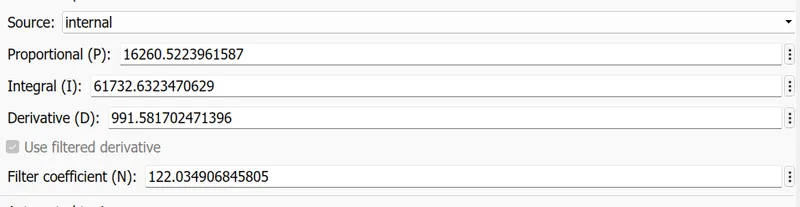
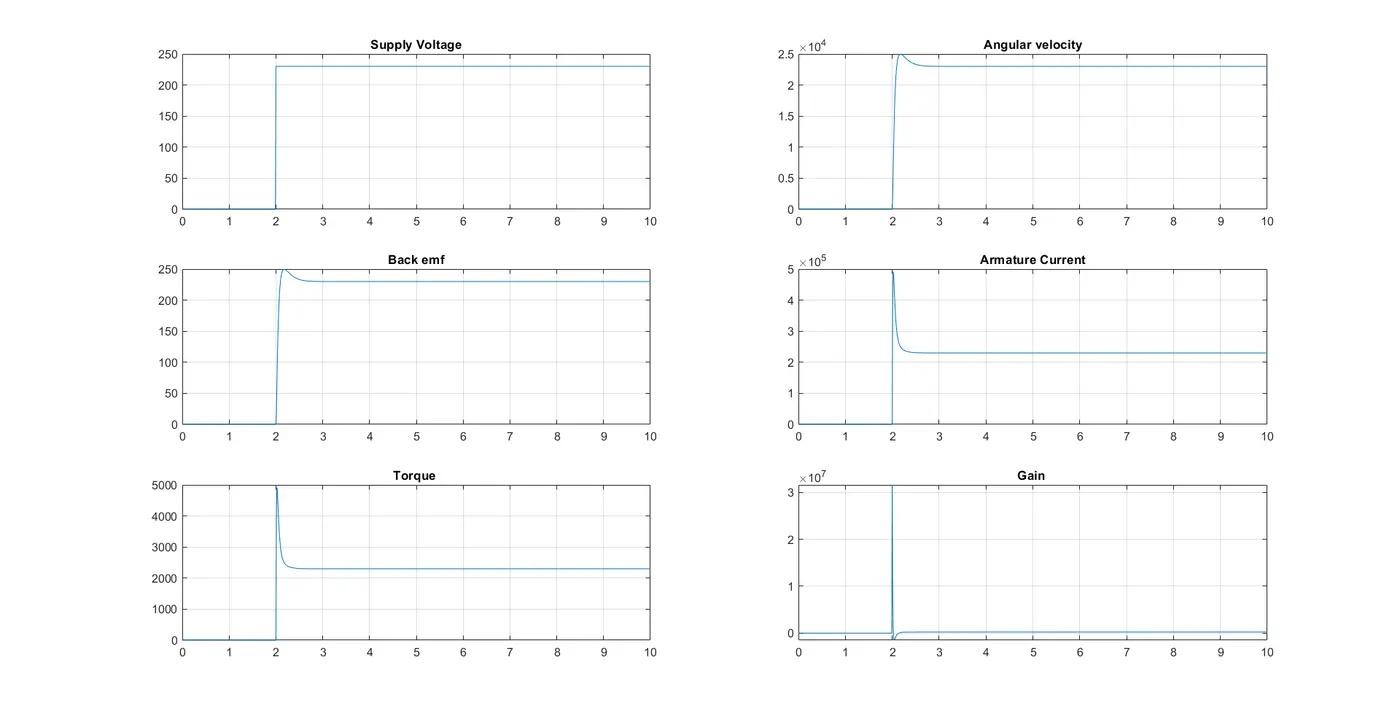
It has less rise time and settling time but a high overshoot.
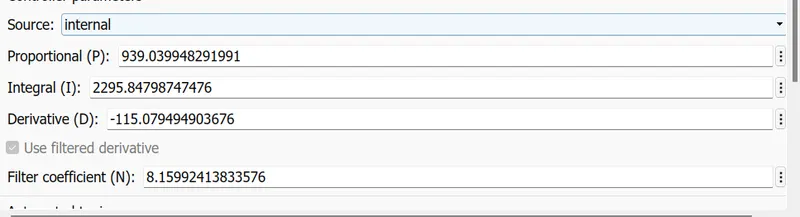
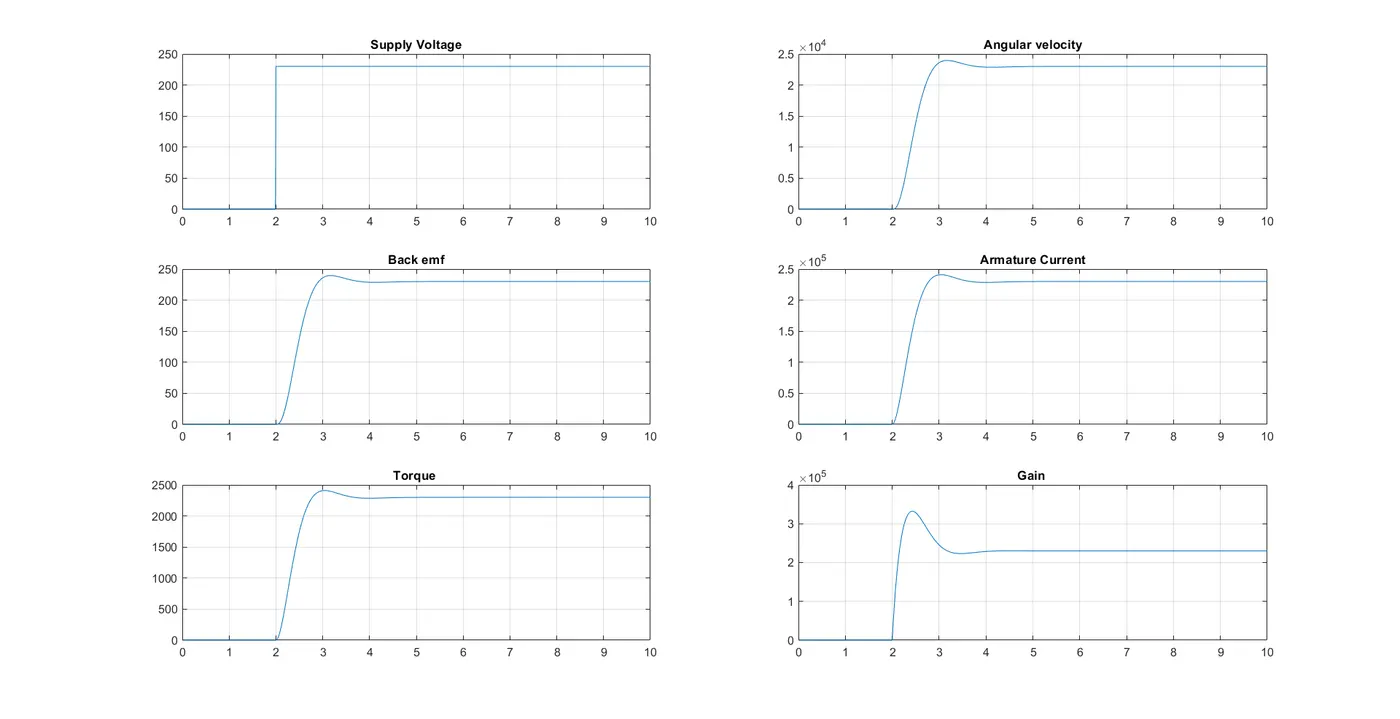
Value of overshoot, rise time, settling time, and steady-state error.
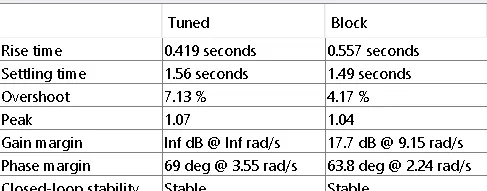
Rise time gets 0.557 sec, settling time 1.49 , Overshoot 4.17%