Project - Speed Control of a Direct Current (DC) motor
Answer
1-mathematical modelling of DC motor-
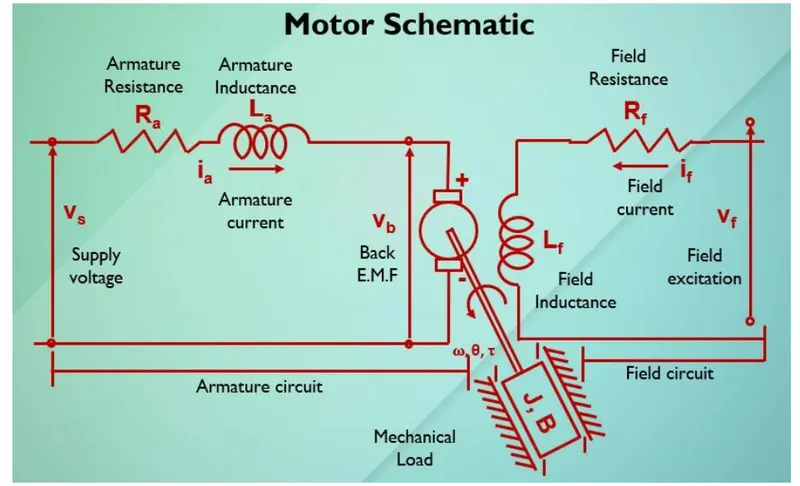
from kirchhoff's voltage law
Vs=Vb+ia*Ra+La*ia_dot (i)
Vb=Km*theta_dot (ii)
torque equation
J*w_dot+B*w=T=Kt*ia (iii)
w=theta_dot (iv)
transfer function of above three equation
[J*s+B]w(s)=Kt*Ia(s) (v)
Vs=Km*w(s)+(La*s+Ra)Ia(s) (vi)
w(s)=s*theta(s)
putting value of Ia(s) from eqn v to vi and rearranging we get
w(s)/Vs=Kt/[J*La*s^2+(J*Ra+B*La)s+Kt*Km+B*Ra]
where J=mass moment of inertia(kg/m^2)
B=viscous friction constant of motor fluid(Nm-s)
La=inductance of armature winding(henry)
Ra=resostance of armaturewinding(ohm)
Ia=armature current(ampere)
Kt=torque constant(Nm/ampere)
Km=back emf constant(volt/rad/sec)
Vs=supply voltage(volt)
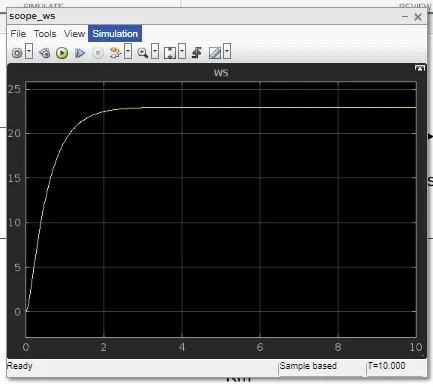
ws=speed(rad/s)
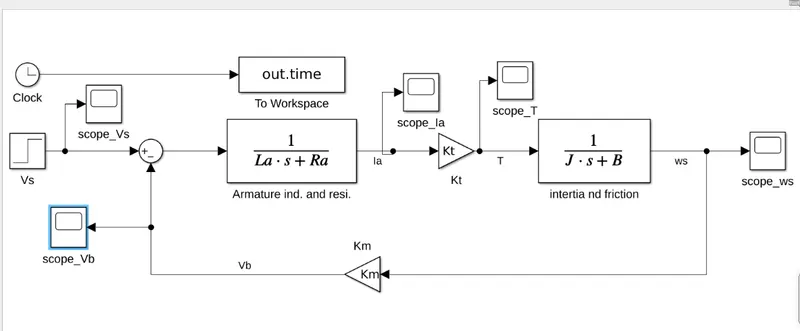
1 speed output
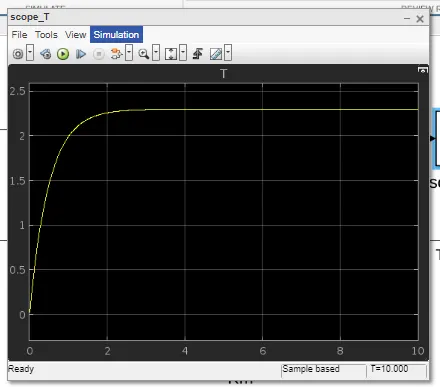
torque
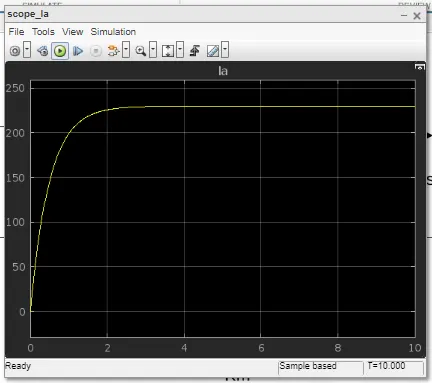
armature current
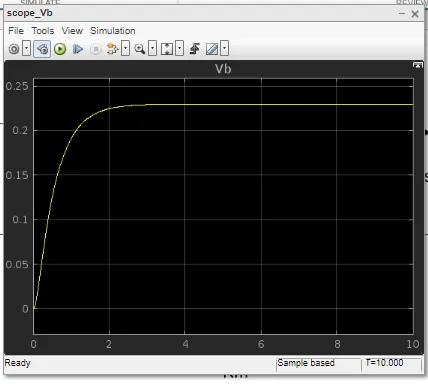
back emf
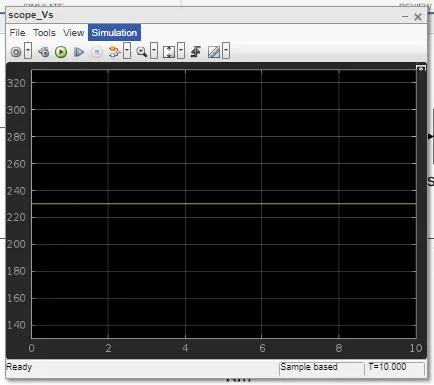
supply voltage
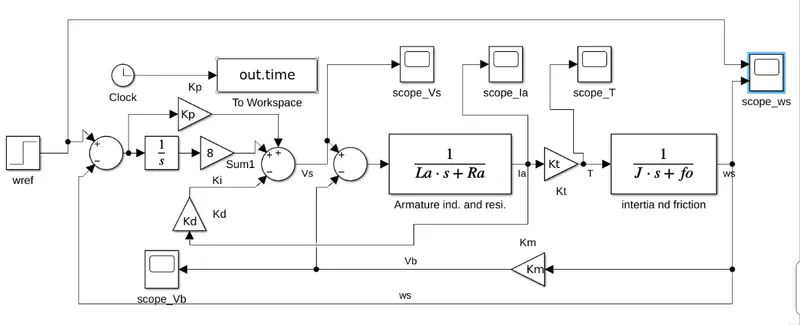
Design of dc motor PID control-
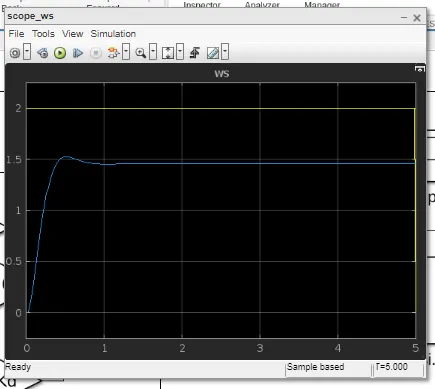
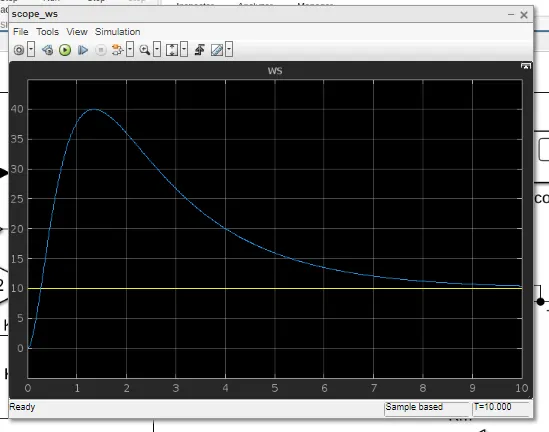
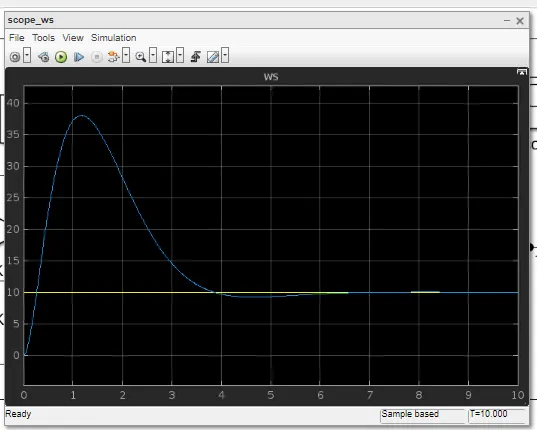
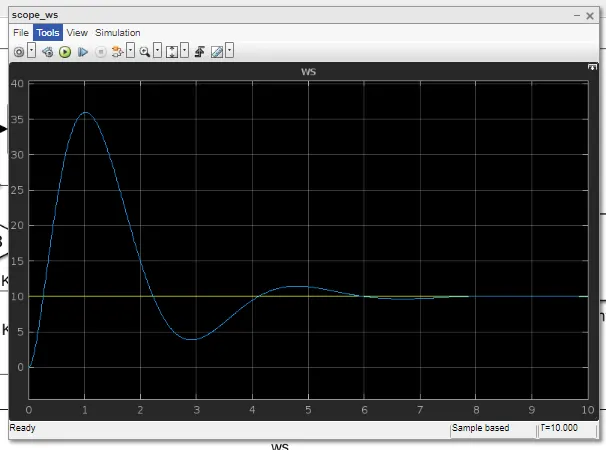
kp=23.88, kd=-2.85, ki=0,2,4,8,15
1-when w_ref=2 ki=0
2-when w_ref-10 ki=2
3-when w_rwf=10 ki=4
4=when w_ref=10,ki=8
5-when w_ref=10 ki=15
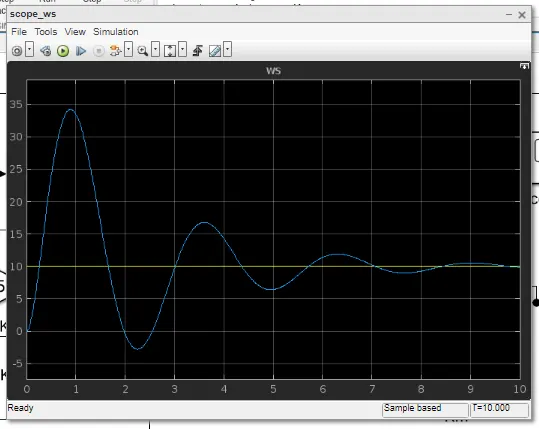
conclusion-best result can be seen at ki-4
Stability anaylysis-
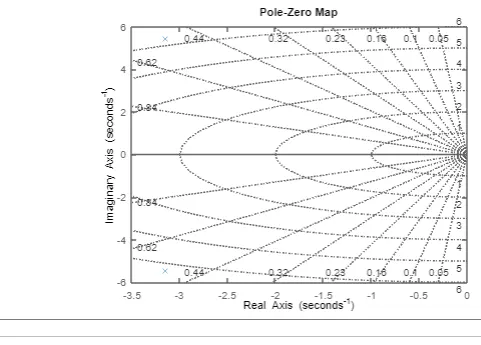
roots can be seen in negative side of axis hence system is stable