Project - Position control of mass spring damper system
Note : All the files are attached below
Project – MATLAB Simulink Basics
Position Control Of Mass Spring Damper System
AIM :
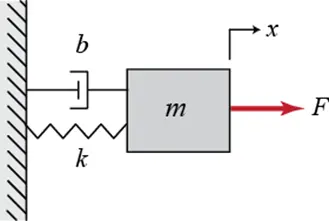
To design the project of position control of mass spring damper system using matlab Simulink model of transfer function of a mass spring damper system and use it in the model. Add a PID controller to adjust the force on mass so that its position follows a reference signal.
OBJECTIVE:
transfer function of a mass spring damper system and use it in the model. Add a PID controller to adjust the force on mass so that its position follows a reference signal. the matlab model of the PID control and transfer function pulse waveform generator.
This example shows a controlled mass-spring-damper. A controller adjusts the force on the mass to have its position track a command signal. The initial velocity for the mass is 10 meters per second. The controller adjusts the force applied by the Force Source to track the step changes to the input signal.
SIMULATION DESIGN :
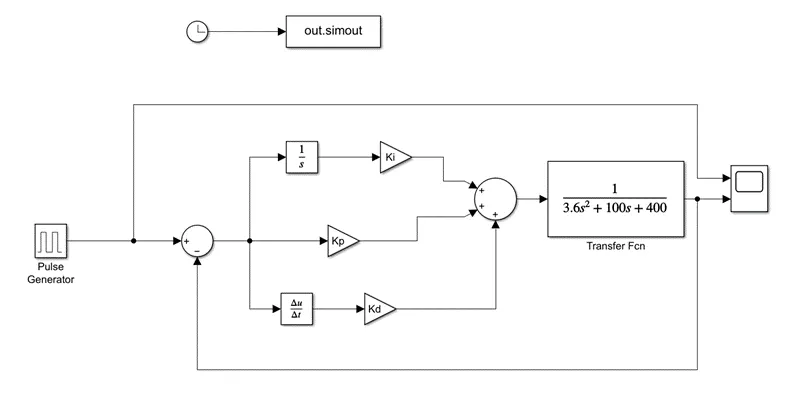
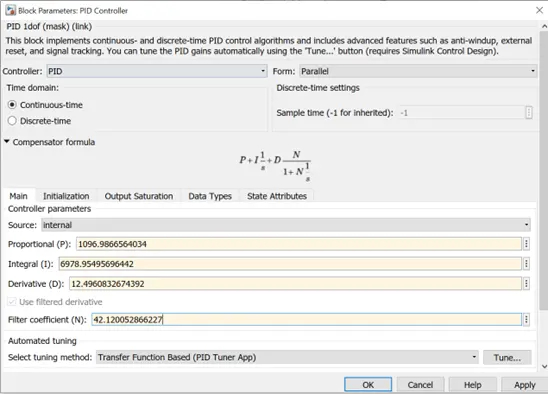
PID CONTROLLER :
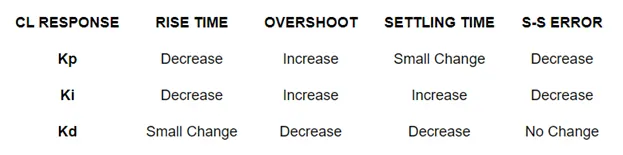
In this project, PID controller has been designed by using Simulink in order to control a mass spring damper system which can move any direction. A transfer function for dc motor was added on the diagram. Response curve of the PID controller were fixed by tuning. The computer interface, different control algorithms can be performed on the system easily; control parameters can be set up online, filter algorithms in various structures can be tried and the reaction of these changeable values to the system can be observed. The effects of controller Proportional Integral Derivative (PID) for developing.
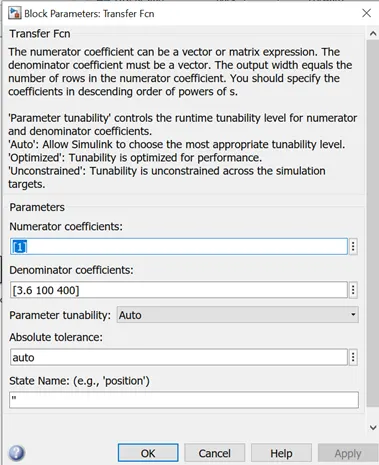
TRANSFER FUNCTION :
The numerator coefficient can be a vector or matrix expression. The denominator coefficient must be a vector. The output width equals the number of rows in the numerator coefficient. You should specify the coefficients in descending order of powers of s.
'Parameter tunability' controls the runtime tunability level for numerator and denominator coefficients. 'Auto': Allow Simulink to choose the most appropriate tunability level. 'Optimized': Tunability is optimized for performance. 'Unconstrained': Tunability is unconstrained across the simulation targets.
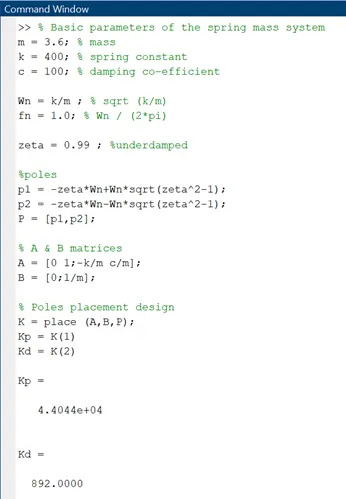
MATLAB Program for position control of spring mass damper system :
% Basic parameters of the spring mass system
m = 3.6; % mass
k = 400; % spring constant
c = 100; % damping co-efficient
Wn = k/m ; % sqrt (k/m)
fn = 1.0; % Wn / (2*pi)
zeta = 0.99 ; %underdamped
%poles
p1 = -zeta*Wn+Wn*sqrt(zeta^2-1);
p2 = -zeta*Wn-Wn*sqrt(zeta^2-1);
P = [p1,p2];
% A & B matrices
A = [0 1;-k/m c/m];
B = [0;1/m];
% Poles placement design
K = place (A,B,P);
Kp = K(1)
Kd = K(2)
Command window commands :
Workspace :
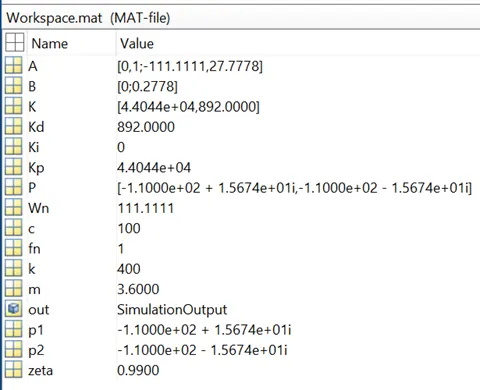
Except the value of Integral Gain (Ki) all the values remains same.
Just Change the value of Ki in Command window just by typing command :
>> Ki = 0
>> Ki = 5000
>> Ki = 10500
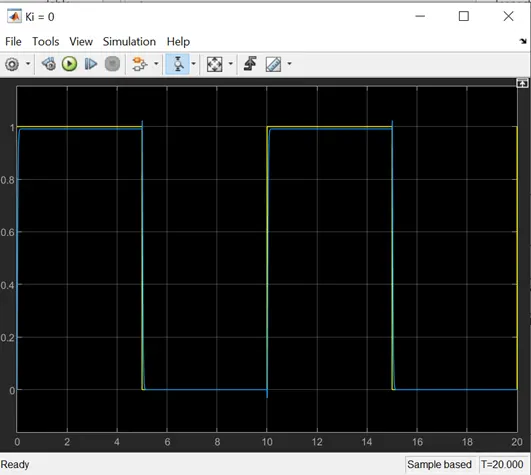
When Integral Gain
(Ki) = 0
we can observe that there is a steady state error between the reference and simulated signal.
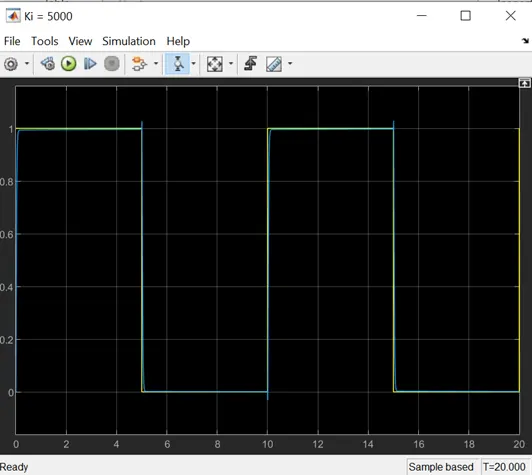
When Integral Gain
(Ki) = 5000
we can verify that the steady state error is low when compared to Ki = 0
When Integral Gain
Ki = 10500
as the Integral Gain (Ki) increases the steady state error decreases.
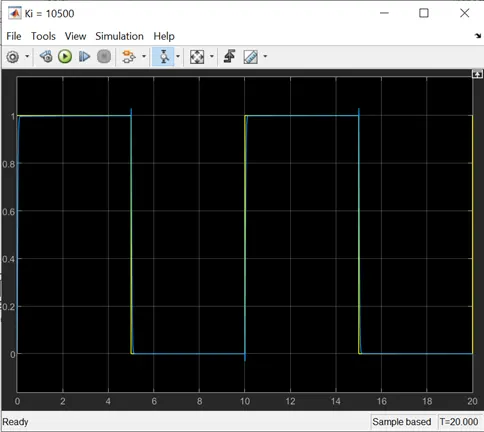
at Ki = 10500 we can verify that the steady state error is almost equals to 0.
Conclusion : Thus, we have successfully designed the project of position control of mass spring damper system using matlab Simulink model of transfer function of a mass spring damper system and use it in the model. Add a PID controller to adjust the force on mass so that its position follows a reference signal and as per our simulation we knew that at integral gain (Ki) 10500 steady state error is decreased.