Project - Analysis of a practical automotive wiring circuit
Objectives:
- Identify each of the major elements in the above automotive wiring diagram.
- Explain the purpose and working of any three elements briefly.
- If the total load is 10A from battery, what should be the fuse rating?
- If 500W is the load, what is the voltage and capacity of battery you recommend?
- Identify any two elements which are connected parallel to each other. Why they are connected in parallel?
- Identify any two elements which are connected in series. Why they are connected in series?
1.Identify each of the major elements in the above automotive wiring diagram:
>From the above given circuit image we have identified the major elements which plays an important role in the circuit
1. Battery
2.Generator
3.Ammeter
4.Fuse
5.Breaker
6.Current and voltage regulator
7.Ignition switches
8. Fuse
9.Grounding
10.Lightining Lamps
11.Switches
12.Horn
13.Ignition coil
14. Tail Stops
15. Junction Block
2.Explaining the purpose and working of the three elements briefly:
1.Battery:
> Historically the term "battery" specifically referred to a device composed of multiple cells. however, the usage has evolved to include devices composed of a single cell.
>A battery is a source of electric power consisting of one or more electrochemical with external connections for powering electrical devices. When a battery is supplying power, its positive terminal is the cathode and its negative terminal is the anode. The terminal marked negative is the source of electrons that will flow through an external electric circuit to the positive terminal.
purpose:
Batteries are small essential components to operate many devices. It is one of the key components in our day-to-day life. Some batteries are rechargeable batteries and are used in each and every sector. Below are some of the applications of batteries.
- Automotive
- House
- Health Instruments
- Medical
- Logistics and construction
- Firefighting and Emergency
- Military
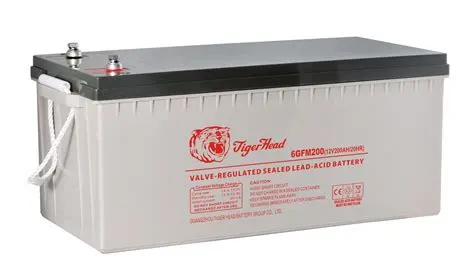
Electric Vehicle Battery is commonly used in vehicles. This battery is used to power the electric motors of electric vehicles. The batteries of electric vehicles are usually rechargeable. Generally, lithium-ion batteries are used in electric vehicles.
Working:
> A battery is a device that stores chemical energy and converts it to electrical energy.The chemical reactions in a battery involve the flow of electrons from one material (electrode) to another, through an external circuit. The flow of electrons provides an electric current that can be used to do work.
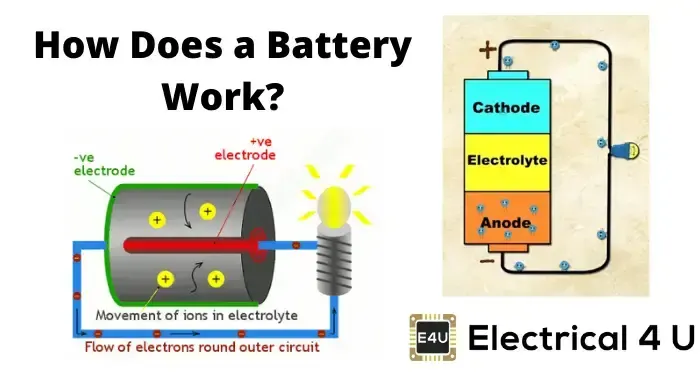
>To balance the flow of electrons, charged ions also flow through an electrolyte solution that is in contact with both electrodes.Different electrodes and electrolytes produce different chemical reactions that affect how the battery works, how much energy it can store and its voltage.
>When a battery is connected to an external electric load, a redox reaction converts high-energy reactants to lower-energy products, and the free-energy difference is delivered to the external circuit as electrical energy.
2:Ignition Coil:
Purpose:
The purpose of an ignition coil is to take the low voltage current from the battery and then turn it into high voltage current. The battery doesn’t produce enough voltage for the spark plugs to create a spark. That's why there's an ignition coil in each cylinder.
A car battery can only produce 12 volts. A spark plug needs between 12K and 45K volts to fire properly. The ignition coil bridges that gap and enables the spark plug to ignite the fuel mixture.
Working:
>An ignition coil consists of an iron core surrounded by two coils (windings) made from copper wire. The primary winding has relatively few turns of heavy wire, while the secondary winding consists of thousands of turns of smaller wire and is insulated from the high voltage by enamel on the wires and layers of oiled paper insulation.
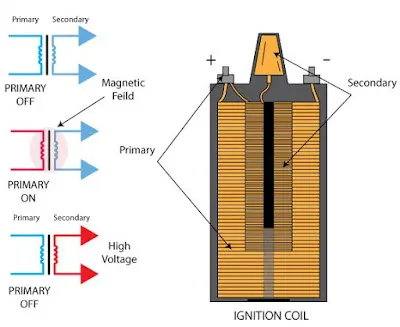
>When the electrical circuit connected from the power source (e.g. the car's battery) to the primary winding is closed (by a contact breaker or transistor, current flows through the primary winding, which produces a magnetic field around the core. This current flow lasts for a period of time to build up energy in the coil. Once the coil is charged, the circuit is opened, and the resulting oscillation in the magnetic field induces a high voltage in the secondary winding.
>This high-voltage electricity travels through several components (such as a distributor and spark plug wires), before reaching the spark plug, where it is used to ignite the air/fuel mixture.
>The timing of the circuit opening must be coordinated with the rotation of the engine, so that the burst of high-voltage electricity is produced at the optimal time to ignite the air/fuel mixture.
3. Circuit Breaker:
Purpose:
>Generally all the electrical systems requires a circuit Breaker. Typically, you can find them all together installed in a break box. The function of circuit breakers depends on the type, although they have one primary purpose—to cut power .
>So an circuit breaker is an electrical safety device designed which is used to protect an electrical circuit from damage caused by overcurrent and its basic function is to interrupt current flow to protect equipment and to prevent the risk of fire.
>Unlike a fuse, which operates once and then must be replaced, a circuit breaker can be reset (either manually or automatically) to resume normal operation.
Working:
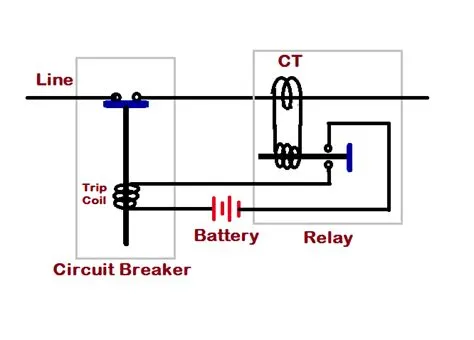
>The circuit breaker must first detect a fault condition. In small mains and low voltage circuit breakers, this is usually done within the device itself. Typically, the heating or magnetic effects of electric current are employed. Circuit breakers for large currents or high voltages are usually arranged with protective relays pilot devices to sense a fault condition and to operate the opening mechanism.
>These typically require a separate power source, such as a battery, although some high-voltage circuit breakers are self-contained with current transformers, protective relays, and an internal control power source.
3.If the total load is 10A from battery, what should be the fuse rating:
Solution:
Given data ,
Total load,I = 10 A
Battery Voltage(V) = 12V
we known that,
P = V*I =10*12=120 kw
Fuse Rating= (P*1.5)/V (the fuse rating is equal to 1.5 times the full load current.)
Fuse Rating = (120*1.5)/12=15 A
The fuse rating should be 15A
> for high starting current application, we shall increase the fuse rating to 1.5 times of the full load current.
>The fuse rating mainly depends on its frequency necessary to icluded other factors,including ambient temperature,available energy during fault,inrush current.
>If the load is 10A the recommended fuse is 15A .10A is usually not a safe minimum,the potential impulses or even small fluctuations as a fuse is designed to not exceed the restriction on the current,to prevent damage of circuit.
4.If 500W is the load, what is the voltage and capacity of battery you recommend:
Solution:
Given data ,
Currennt ,I = 10A
Power, P = 500W
Avg voltage, Vavg = 12v
we know that
P =V*I
Voltage,V = P/I = 500/10 = 50V
>>>Voltage,V= 50 v
We known that,
Capacity = current*Time
Time = 24 hrs = 1 days
>>Capacity = 10*24 =240 Ah (for one day)
(or)
>> We known that
P =V*I
I=P/V =500/12 =41.6 A
>>Capacity = current*Time = 41.6 * 24 =1000 Ah
5.Identify any two elements which are connected parallel to each other. Why they are connected in parallel:
Ans:
>In general parallel connections measures the voltage across the device. so here in this cricuit the generator and the current and voltage regulator are connected in the parallel connection so the voltage across these elements are do not distrubed with each other.
> Every light is connected in a parallel combination. The individual currents add up to the total current
6.Identify any two elements which are connected in series. Why they are connected in series:
Ans:
>In general series connections measures the current across the device. Two element are in series connection which are Battery and starter.Beacuse of the same current flows throw these devices equally without disturbing with each other.