Project
Aim:-
To Carry out a system-level simulation for determine and analyse about ATV (All Terrain vehicle) powered by Bajaj through MATLAB Simulink.
Objectives:-
- Simulation of Bajaj ATV model with CVT.
- Simulation of Bajaj ATV model with CVT and Dashboard.
- Simulation of Bajaj ATV model with a lookup table.
Theory:-
All Terrain Vehicle (ATV):-
An all-terrain vehicle, also known as a light utility vehicle, a quad bike, or simply a quad, as defined by the American National Standards Institute; is a vehicle that travels on low-pressure tires, with a seat that is straddled by the operator, along with handlebars for steering control.
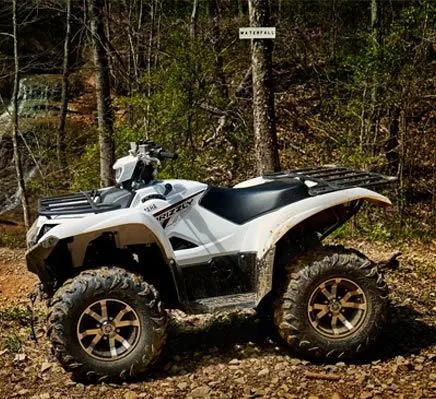
An all-terrain vehicle (ATV) is defined as a motorized off-highway vehicle designed to travel on four low-pressure or non-pneumatic tires, having a seat designed to be straddled by the operator and handlebars for steering control. ATVs are subdivided into two types as designated by the manufacturer. Type I ATVs are intended by the manufacturer for use by a single operator and no passenger. Type II ATVs are intended by the manufacturer for use by an operator and a passenger, and are equipped with a designated seating position behind the operator. Similarly, riders must also consider the various ATV sizes. ATVs are not “one size fits all.” The ATV industry recommends all riders operate an ATV intended for their age. Youth model ATVs are designed for smaller hands and feet, and travel at slower speeds appropriate for their age. ATVs are motorized vehicles that are meant to be used off-road or on dirt roads, not on paved roads or highways. They usually have four large balloon-style tires, with a seat in the middle that a rider straddles while steering by the handlebars.
Continuously Variable Transmission (CVT):-
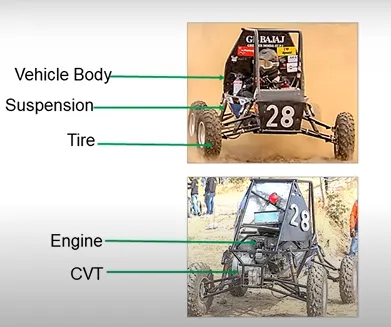
A continuously variable transmission is an automatic transmission that can change seamlessly through a continuous range of gear ratios. This contrasts with other transmissions that provide a limited number of gear ratios in fixed steps.
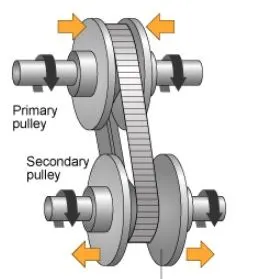
Technically, a CVT is an automatic transmission because the driver isn't required to shift between the forward gears or operate a clutch pedal manually. But there are fundamental differences in both form and function between the two. Unlike a traditional automatic (or manual transmission, for that matter), a CVT does not have a fixed number of preset gears. Instead, it uses an unlimited number of gear ratios to accommodate the driving style and conditions at any given moment. Because it allows seamless changes without any hard shift points, a CVT transmission is often referred to as "single-speed" or "shiftless." A CVT achieves this infinite gear ratio flexibility by using two opposing cone-shaped pulleys with a chain or belt that runs between them. This setup is very similar to the way a chain operates across the gears of a bicycle. One cone is connected to the engine output shaft, while the other cone directs power to the driveshaft and drive wheels. Gear ratios change as the pulleys move closer and further apart, causing the chain or belt to move up and down the two cones' sides. This movement increases or decreases the diameter of the chain or belt, which alters the gear ratio based on the power needed. These real-time changes happen continually as the car is moving.
The most common type of CVT uses two pullyes connected by a belt or chain, however several other designs have also been used at times. It is easy to optimize engine speed in various drive conditions. Lower gears can provide better acceleration whereas higher ones can increase efficiency thereby fuel economy.
Other main components:-
Signal builder;
It is a signal builder block which is used to build signal as per the requirement. Here it is used as a transmission for the vehicle.
Generic Engine;
It is a general internal combustion engine that includes spark ignition and diesel. This is used to run the model and to transmit the power.
Engine sensor;
This block helps in sensing the engine RPM, velocity and angular displacement acting on the engine.
Vehicle body;
It is a block for body mass, aerodynamic drag, road incline and weight distribution between the axles due to the acceleration and road profile.
Case 1 :- Simulation of Bajaj ATV model with CVT;
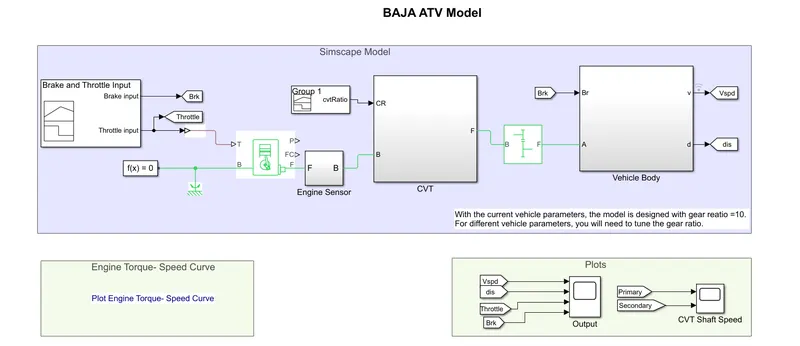
Inputs to the model and the blocks,
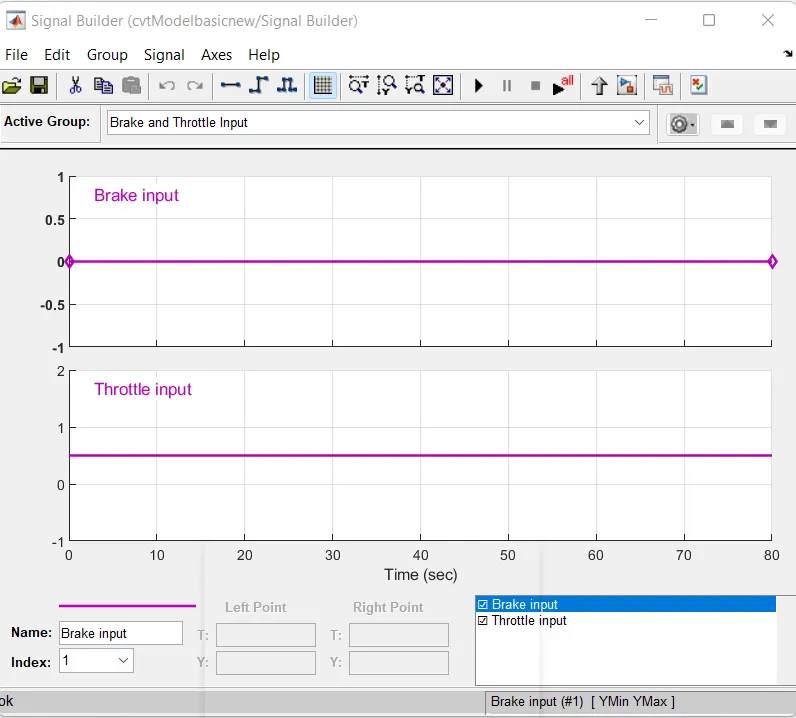
There are two points provided using the signal builder block, one is brake input which is zero and other one is throttle input which is 0.5 remains constant for 80 seconds. These are given into the generic engine block.
CVT;
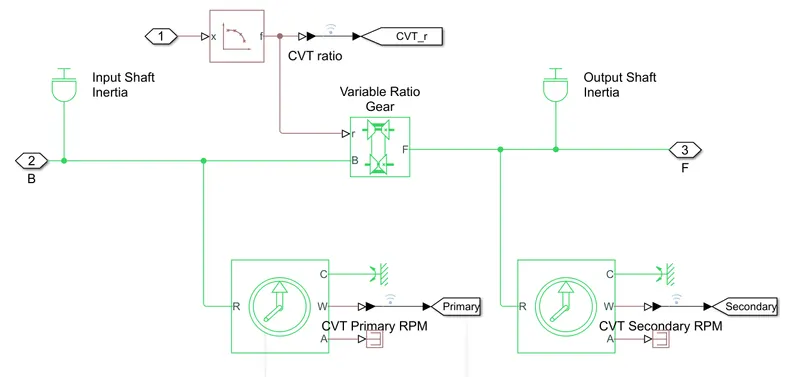
The inside of CVT subsystem is look like,
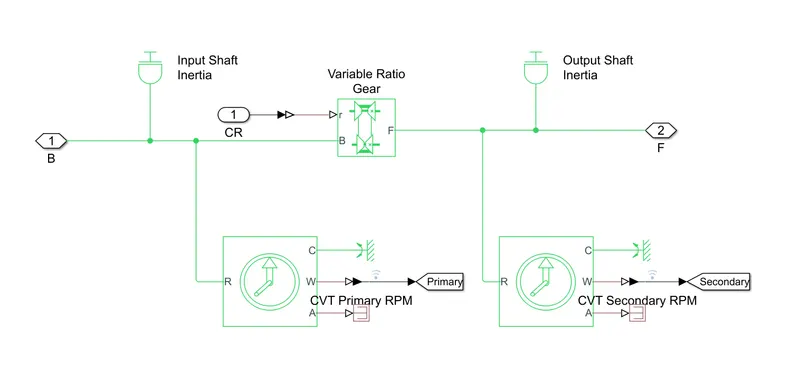
- The input and output shaft inertia represent primary pulley (driver) and secondary pulley (driven) respectively.
- The variable ratio gear block represents the multiple gears of the CVT, with the gear ratio input given to the Port R.
- Two rotational motion sensors are for tracking the angular velocities of the two pulleys.
Vehicle body subsystem;
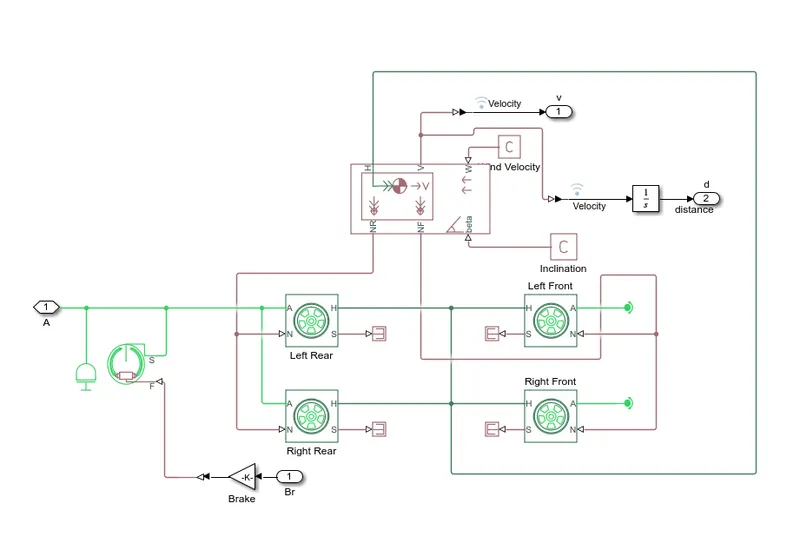
- The vehicle body accounts for body mass, aerodynamic drag, road incline and weight distribution between the axles due to the acceleration and road profile.
- The double shoe brake is to apply brakes to the rear wheels. With this component, two brake blocks are applied atopposite ends of the drum. This prevents an unbalanced force fromacting on the shaft and bearing connecting the drum to the wheel, which would be the case with a single shoe brake.
- All of the above is applied to the four wheels.
Engine sensor;
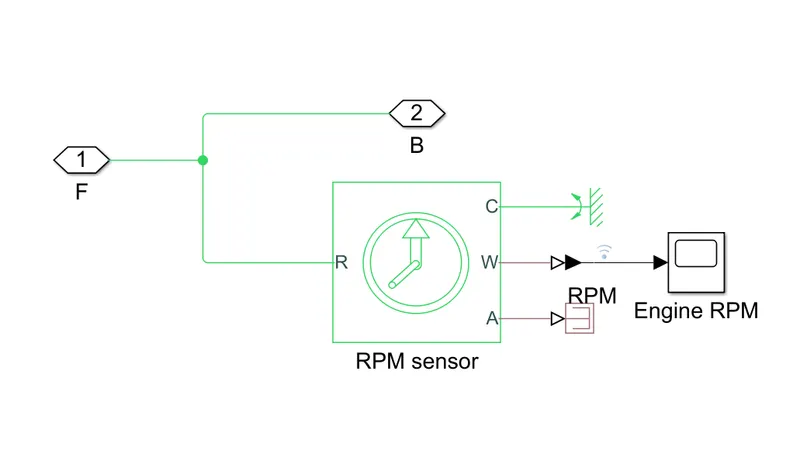
Here the Engine RPM can be measured using the scope. The gear ratio is initially taken 10 for this experiment.
Engine Torque vs Speed curve;
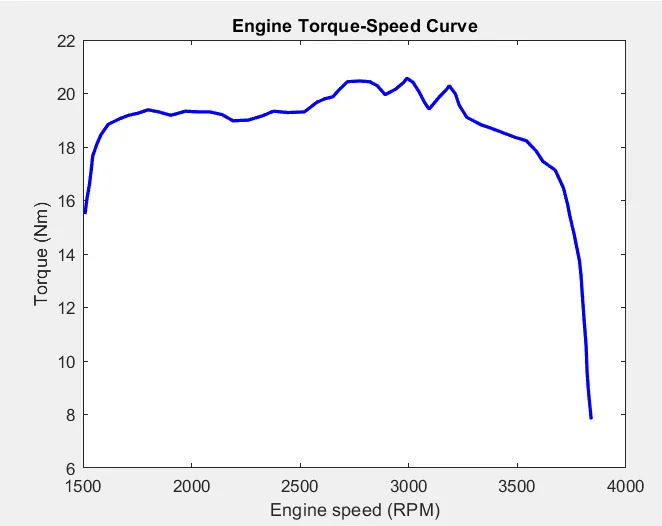
The datas from this plot is taken using the 'Grabit' and given to the generic Engine block as follows,
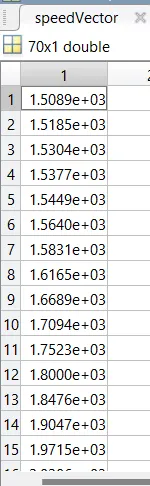
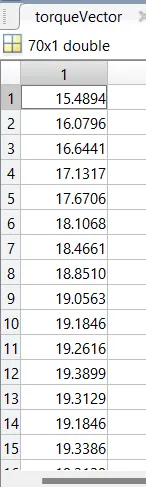
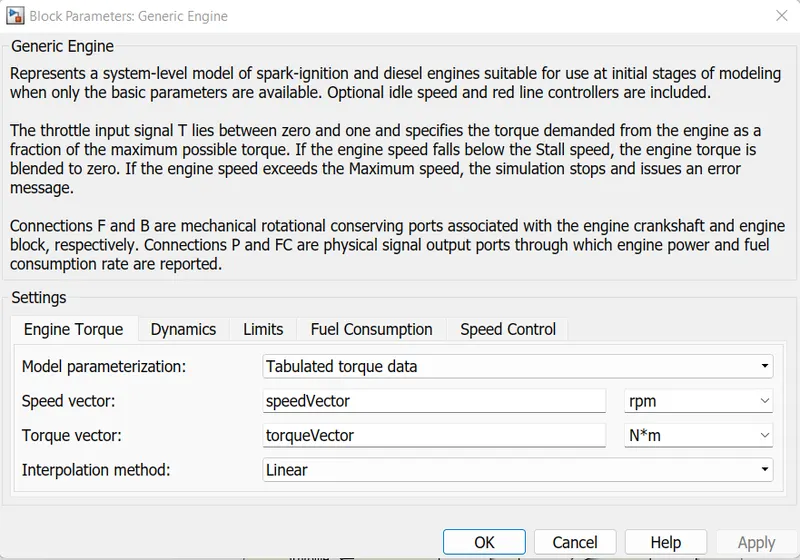
The speedvector and Torquevector datas are shown above which is implemented in the generic engine as below,
Results:-
Velocity and Distance,
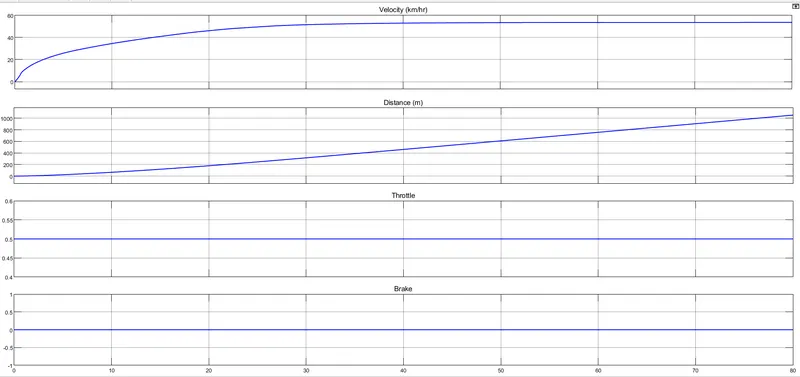
From above plot we can see that the throttle is constant 0.5 and the brake is zero. For the contant throttle action we can see that the velocity increased and become constant about 30 seconds of throttle action.
CVT Shaft speed plot;
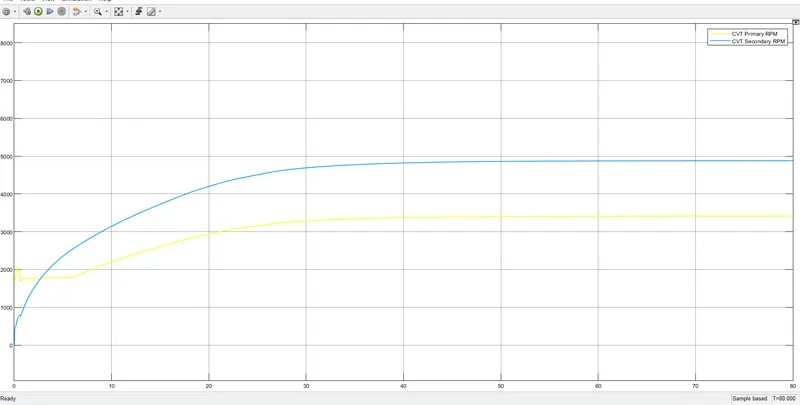
Here the speed of secondary pulley is more than speed of primary pulley. Primary pulley goes outward and secondary pulley goes inwards.
Rp<Rs
Engine speed;
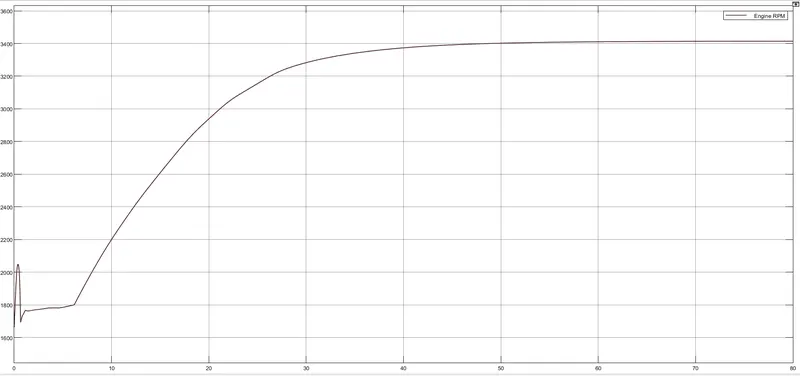
The brake input is zero and the throttle input is constant 0.5. The engine speed value increases and reaches to maximum value respect to the given throttle input.
Case 2 :- Simulation of Bajaj ATV model with CVT and Dashboard;
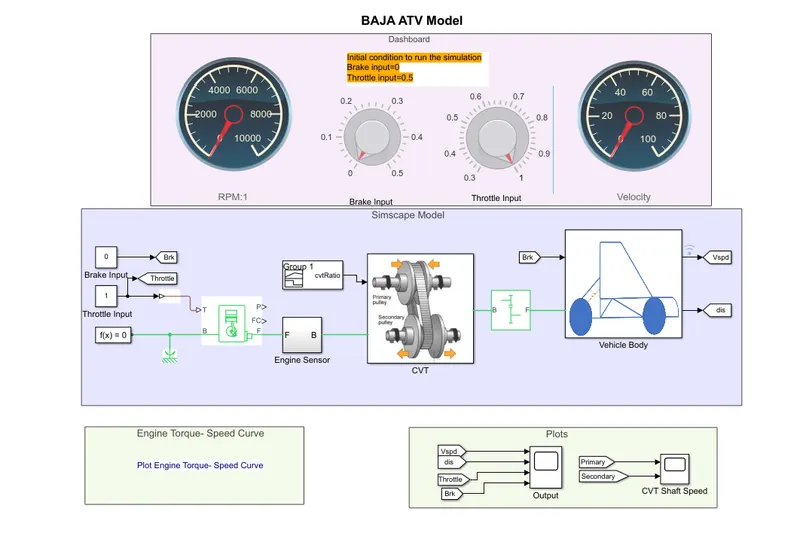
In here the RPM(Speed) gauge, Brake input gauge, Throttle input gauge and velocity gauge is connected in the dashboard. Brake input is zero and throttle input is 1 for initial case and run the simulation for infinite time.
Dashboard is connected to the bajaj ATV vehicle model in simulink model. With the help of the dashboard, the speed and braking can be varied by our requirement which is display in the dashboard meter. RPM gauge refers the speed of the primary and secondary pulley and velocity gauge refers the speed of the vehicle.
Results:-
Vehicle Speed plot;
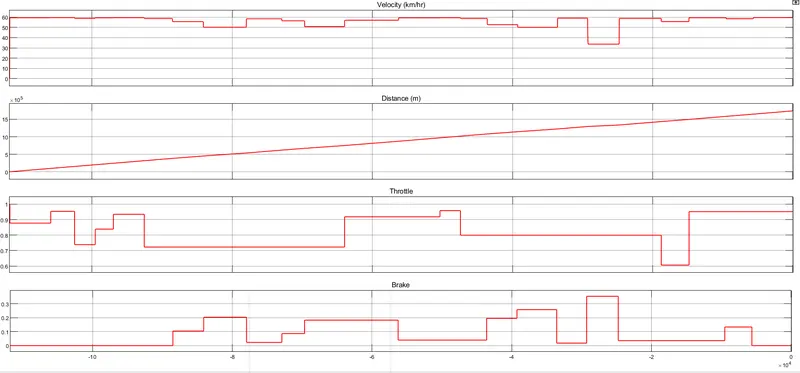
From above we can conclude that by increasing the throttle value the velocity of vehicle increases and by increasing the brake input the velocity of the vehicle decreases.
CVT shaft speed plot;
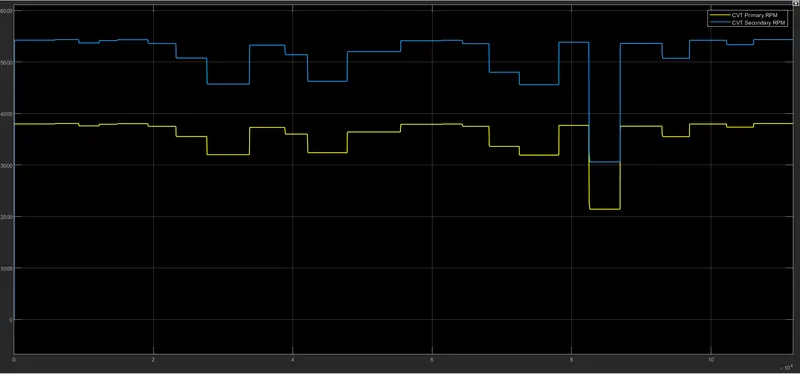
From above plot we can conclude that by increasing the throttle input the primary and secondary pullies rpm value increases and it will decreases by applying the brake input.
Engine speed;
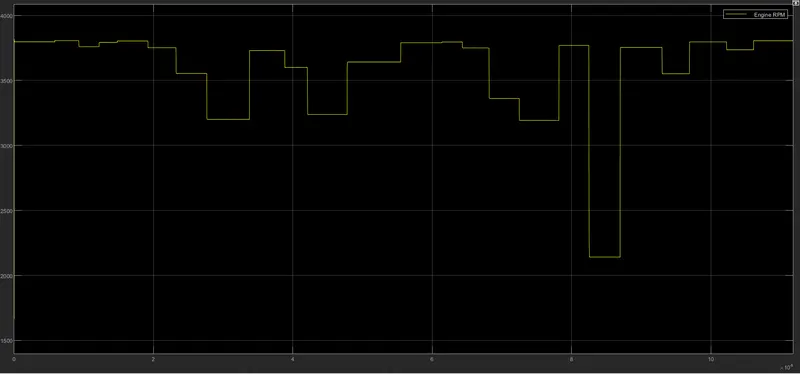
The engine speed increases by increasing the throttle input and decreases by increasing the brake input value.
Case 3 :- Simulation of Bajaj ATV model with CVT (Using LOOK UP Table);
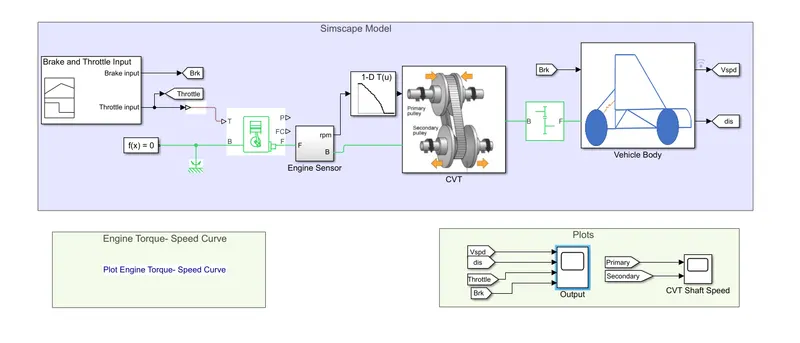
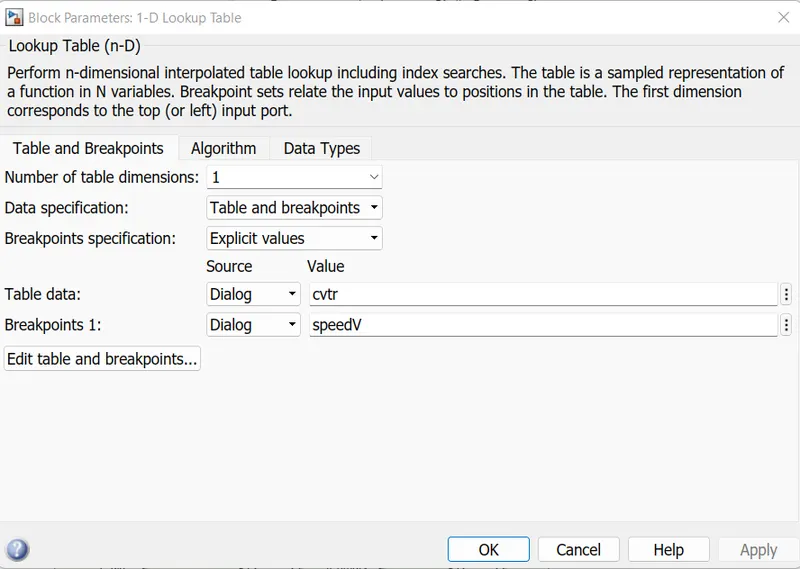
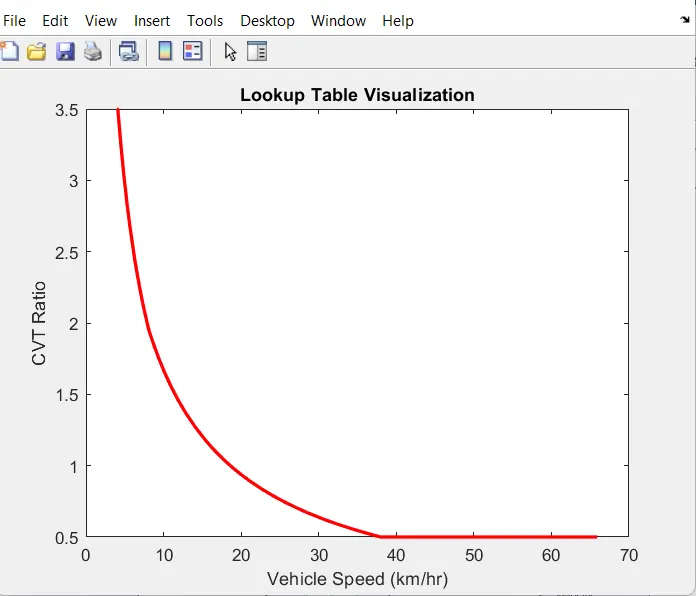
In the above model Look up table data has been assigned as input to the CVT instead of giving CVT ratio. For giving input of Look up table by creating a program in the MATLAB script and data has been assigned as input to CVT.
Look up Table;
Look up table datas are given below,
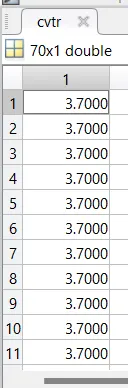
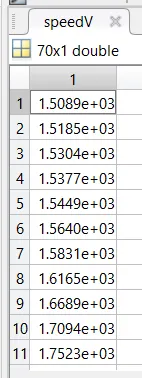
The above look up datas are given to CVT as input,
Result :-
Vehicle speed plot;
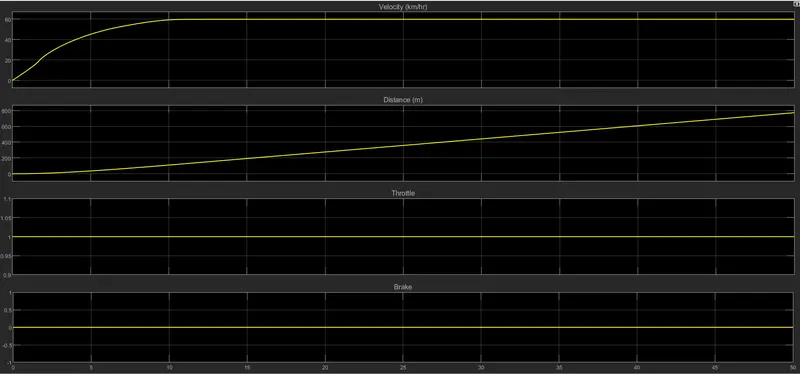
The brake is zero and the throttle input is 1 as given initially, since no dashboard no change in input and the distance and velocity is plotted in above plot.
CVT shaft speed;
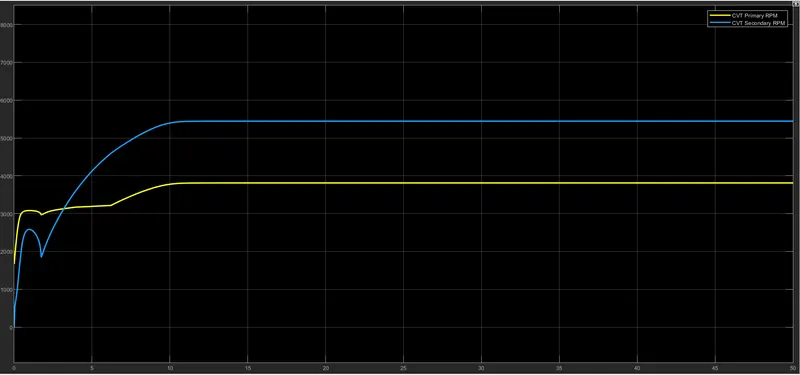
The speed of secondary pulley is greater than the speed of primary pulley. So in CVT the primary pulley goes outward and the seconary pulley goes inward, the primary pulley radius decreases and the secondary pulley radius increases.
Rp < Rs
Engine speed;
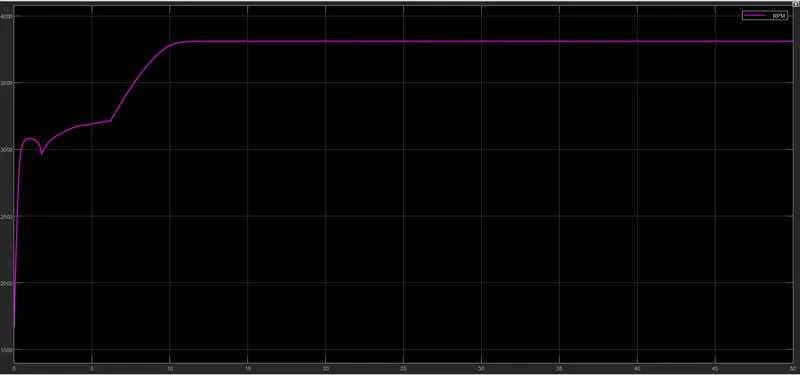
The engine speed will increases and reaches to the maximum value of speed. There is a slight decrease can be seen in the plot, that is because increase in torque by increase in gear ratio.
Case 4 :- Simulation of Bajaj ATV model with CVT and Dashboard (Using LOOK UP Table);
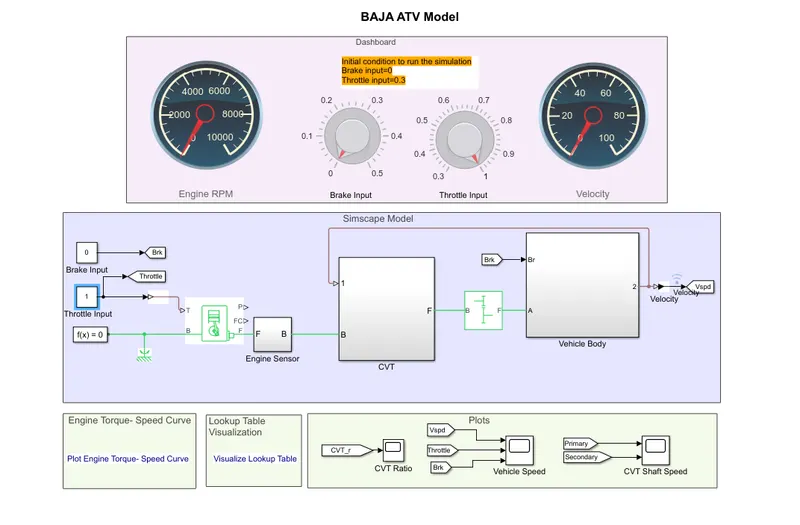
The RPM (speed) gauge, Brake input gauge, Throttle input gauge and velocity gauge is connected in the dashboard. Initially brake input is given as zero and the throttle input as 1 the run the simulation and changed the inputs as the manual requirement for infinite time.
The Lookup table data has been assigned as input to the CVT instead of CVT ratio. Look up table datas are following,
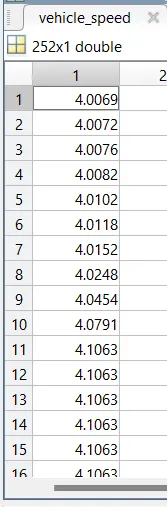
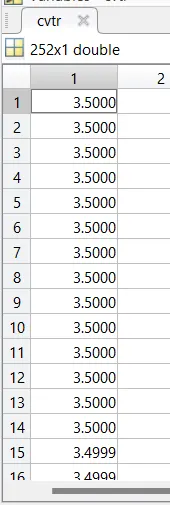
These look up table datas are assigned to CVT input as follows,
Look up table plot;
Results:-
Velocity;
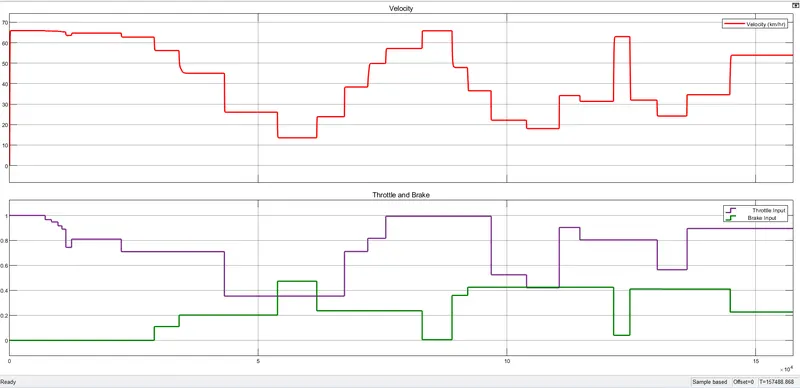
From velocity plot it is clear that for increasing the throttle input velocity increases and for increasing the brake input the velocity decreases.
CVT shaft speed;
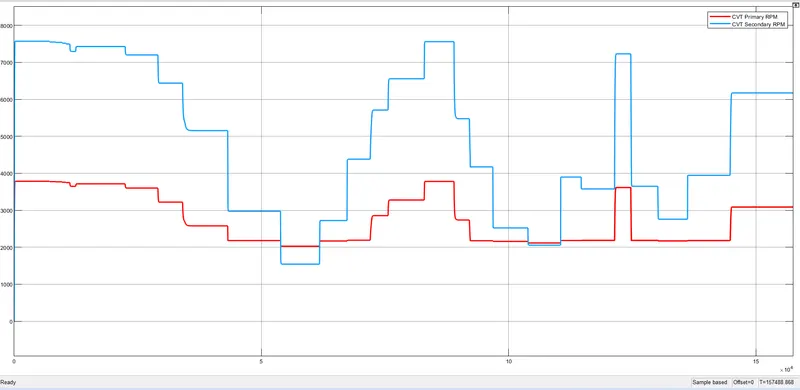
As same as in all the above cases, the secondary pulley and primary pulley rpm values increases by applying throttle and decreases by applying the brake input.
Rp < Rs
Engine RPM;
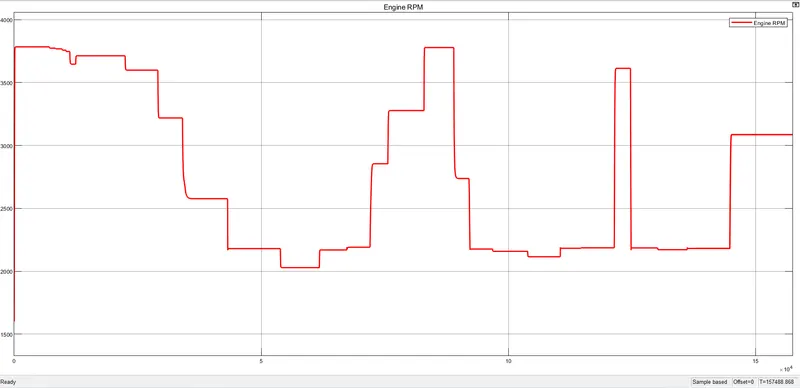
The Engine RPM increases by applying the throttle input and decreases when the brake is applied.
Conclusions :-
- System level simulation of an Bajaj AVT without using Look up table is done and results are plotted.
- System level simulation of an Bajaj AVT using the Look up table is done and the results are plotted.
- All the results are satisfactory.