Project
Question:
Carry out a system-level simulation of an all-terrain vehicle.
Download the model from the given link:
https://www.mathworks.com/matlabcentral/fileexchange/70576-baja-all-terrain-vehicle-atv-model
Prepare a technical report explaining the model properties & comments on the results.
AIM:prepare a technical report explaining the model properties & comments on the results
Objective: This submission contains a set of models created with Simulink, Simscape, and Simscape Driveline.
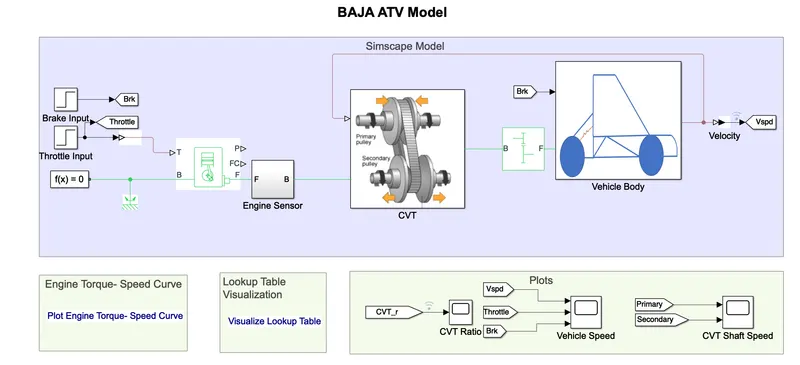
More specifically, the file contained includes BAJA ATV model with Continuously Variable Transmission(CVT).
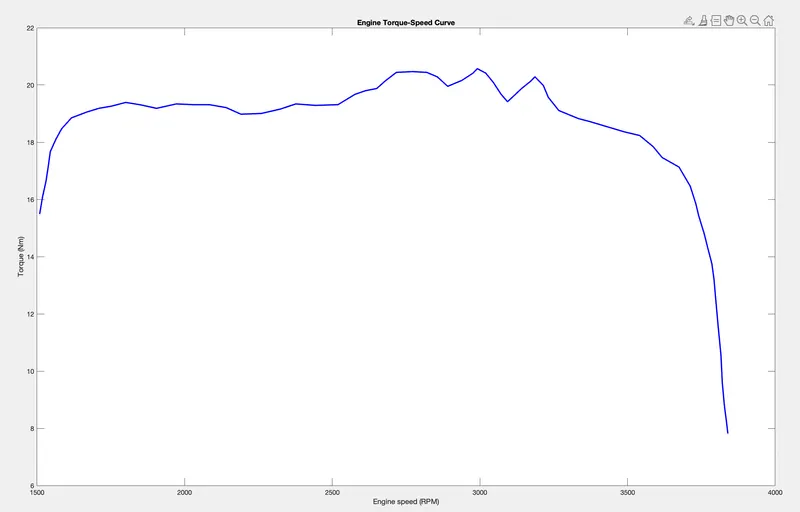
These models show how to build an ATV with CVT which is mostly used in BAJA competitions. Simscape and Simscape Driveline have been used to complete the system. The engine data used in the model is provided as an image which shows the Engine Speed (RPM) Vs Torque curve.
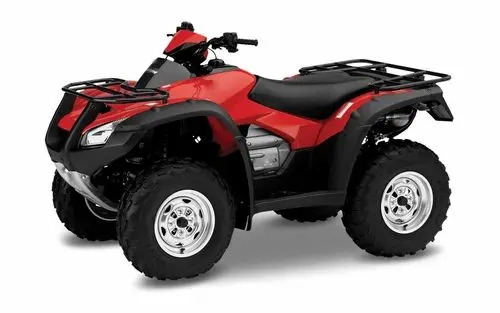
All-terrain vehicle:
The first three-wheeled ATV was the Sperry-Rand Tri cart. It was designed in 1967 as a graduate project of John Plessinger at the Cranbrook Academy of Arts near Detroit. The Tri cart was straddle-ridden with a sit-in rather than sit-on style (similar to the contemporaneous Big wheel toy). In 1968 Plessinger sold the Tri cart patents and design rights to Sperry-Rand New Holland who manufactured them commercially. Numerous small American manufacturers of 3-wheelers followed. These small manufacturers were unable to compete when larger motorcycle companies like Honda entered the market in 1969.
Honda introduced their first sit-on straddle-ridden three-wheeled All Terrain Vehicle in 1969, known as a US90, as a 1970 Model. Variations would be popularized in the James Bond movie, Diamonds Are Forever and TV shows such as Doctor who, Magnum,P.I. and Hart to Hart. In 1973, Honda would trademark the term "All Terrain Cycle" (ATC), applying the moniker to all Honda produced Three-wheeled ATVs, and creating the universal name which now associated with all vehicles of this type. Being directly influenced by earlier 6-wheeled AATV's of the sixties, it utilized balloon tires for both a low environmental impact and to compensate for a lack of Mechanical suspension
Case#1
BAJA FOR AVT WITH CVT TRANSMISSION:
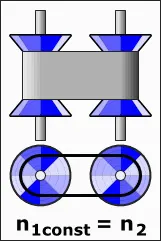
The most common type of CVT uses a which runs between two variable-diameter pulleys. The pulleys consist of two cone-shaped halves that move together and apart. The V-belt runs between these two halves, so the effective diameter of the pulley is dependent on the distance between the two halves of the pulley. The V-shaped cross-section of the belt causes it to ride higher on one pulley and lower on the other; therefore, the gear ratio is adjusted by moving the two of one pulley closer together and the two sheaves of the other pulley farther apart.
As the distance between the pulleys and the length of the belt does not change, both pulleys must be adjusted (one bigger, the other smaller) simultaneously in order to maintain the proper amount of tension on the belt. Simple CVTs combining a centrifugal drive pulley with a spring-loaded driven pulley often use belt tension to affect the conforming adjustments in the driven pulley.The V-belt needs to be very stiff in the pulley's axial direction in order to make only short radial movements while sliding in and out of the pulleys.
The radial thickness of the belt is a compromise between the maximum gear ratio and torque. Steel-reinforced V-belts are sufficient for low-mass, low-torque applications like utility vehicles and snowmobiles, but higher-mass and -torque applications such as automobiles require a chain. Each element of the chain must have conical sides that fit the pulley when the belt is running on the outermost radius. As the chain moves into the pulleys the contact area gets smaller. As the contact area is proportional to the number of elements, chain belts require many very small elements.
A belt-driven design offers approximately 88% efficiency,which, while lower than that of a manual transmission, can be offset by enabling the engine to run at its most efficient RPM regardless of the vehicle's speed. When power is more important than economy, the ratio of the CVT can be changed to allow the engine to turn at the RPM at which it produces the greatest power.
In a chain-based CVT, numerous chain elements are arranged along multiple steel bands layered over one another, each of which is thin enough to easily When part of the belt is wrapped around a pulley, the sides of the elements form a conical surfaceIn the stack of bands, each band corresponds to a slightly different drive ratio, and thus the bands slide over each other and need sufficie. An additional film of lubricant is applied to the pulleys. The film needs to be thick enough to prevent direct contact between the pulley and the chain, but thin enough to not waste power as each chain element enters it.
Some CVTs transfer power to the output pulley via in the belt (a "pulling" force), while others use of the chain elements (where the input pulley "pushes" the belt, which in turn pushes the output pulley)
Positively Infinitely Variable (PIV) chain drives are distinct in that the chain positively interlocks with the conical pulleys. This is achieved by having a stack of many small rectangular plates in each chain link that can slide independently from side-to-side. The plates may be quite thin, around a millimeter thick. The conical pulleys have radial grooves. A groove on one side of the pulley is met with a ridge on the other side and so the sliding plates are pushed back and forth to conform to the pattern, effectively forming teeth of the correct pitch when squeezed between the pulleys. Due to the interlocking surfaces, this type of drive can transmit significant torque and so has been widely used in industrial applications. However, the maximum speed is significantly lower than other pulley-based CVTs. The sliding plates will slowly wear over years of usage. Therefore, the plates are made longer than is needed, allowing for more wear before the chain must be refurbished or replaced. Constant lubrication is required and so the housing is usually partially filled with oil
Simscape Model:The input is given as signal to the engine starts thanks to the ignition system. This is the unit that supplies the energy to get the motor going. The ignition system begins with a key, which you insert and turn, and ends with a spark that ignites combustion in the cylinders. This combustion is what starts the engine
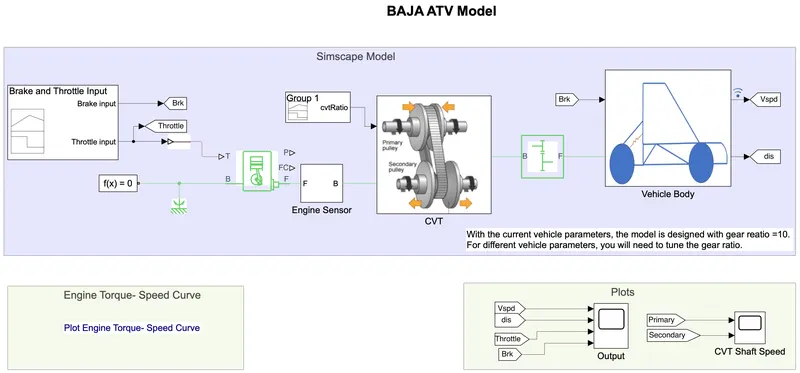
CVT Block One of the advantages of a CVT is its ability to continuously change its gear ratio. This means that no matter what the engine speed it, it is always performing at its peak efficiency.
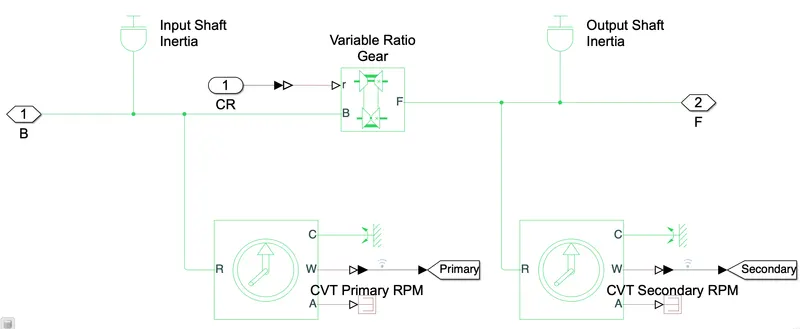
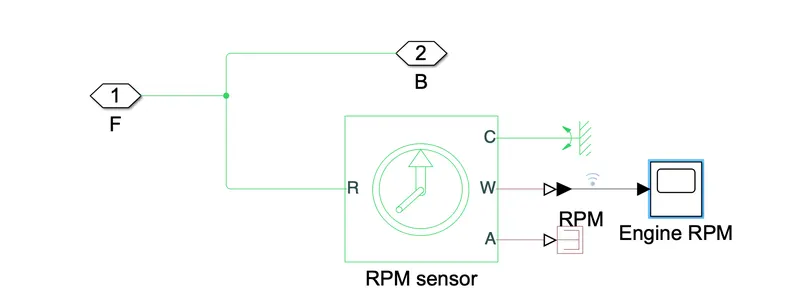
RPM SENSOR:principle, RPM sensors convert mechanical motion into electric pulses with or without direct contact when positioned near a turning rotor, gear, shaft or other regularly moving device. The resultant output signals are then fed to a digital counter, totaliser, tachometer, or other monitoring and control device
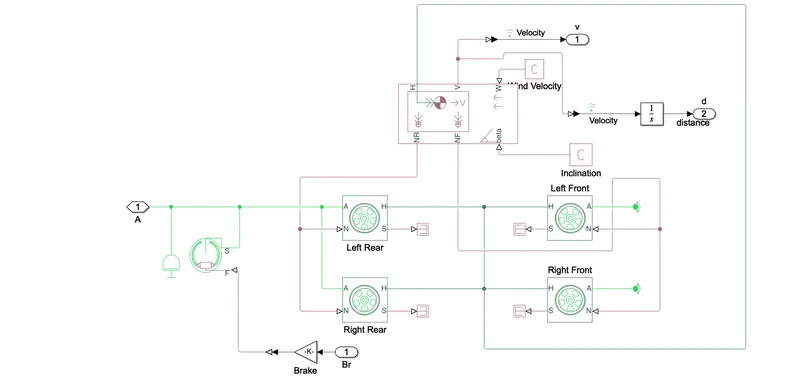
Vehicle body:The vehicle body could be the main supporting structure or its particular element. The Vehicle Body of a modern car consists of an engine section, saloon, trunk. The vehicle body is the main supporting structure of a vehicle, to which all other components are attached.
Torque-speed curves:The torque speed curve of a load is a plot showing its torque requirement on the yaxis versus the speed on x-axis. It’s the torque requirement of the load from zero speed to full speed. Its application/load specific and varies with different load types. Loads like centrifugal pumps and fans follow quadratic speed torque curve, where torque varies square times the speed.
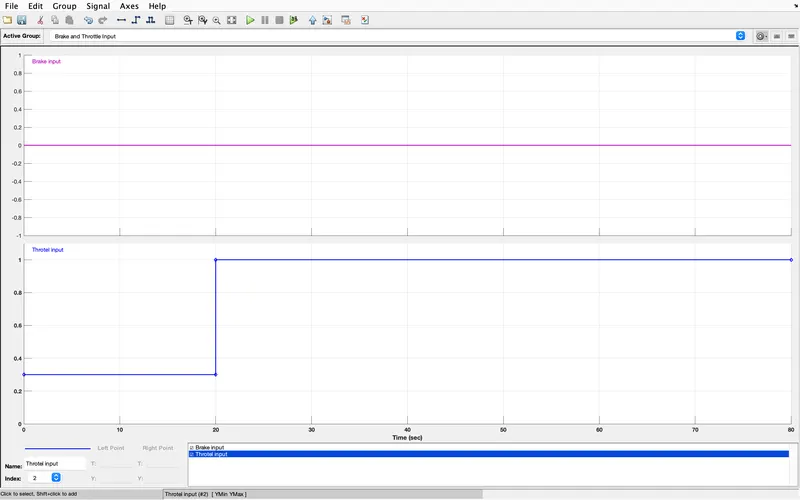
Input: BRAKE AND Throttle n essence, brake-throttle override technology lets drivers control a vehicle's speed and stop it in case of unintended acceleration. With Hyundai's system, any brake pedal input by the driver has top priority in all driving situations and overrides any throttle inputs. The 'why' is fairly straightforward
CVT GEAR RATIO:CVT's are unique in this aspect because they don't have gears instead it has pulleys. With its pulley system in place, CVT's are able to achieve an infinite number of gear ratios. This infinite number of ratio allows it to have a gear shift at even 1 mm of belt movement of the pulley system
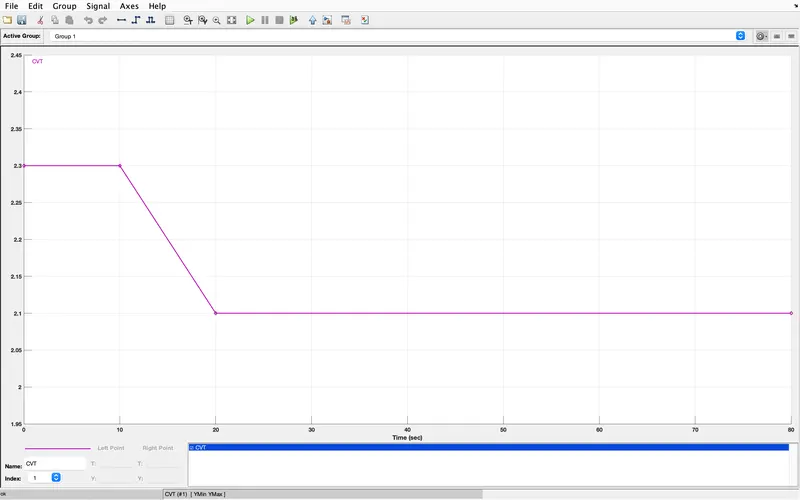
OUTPUT:
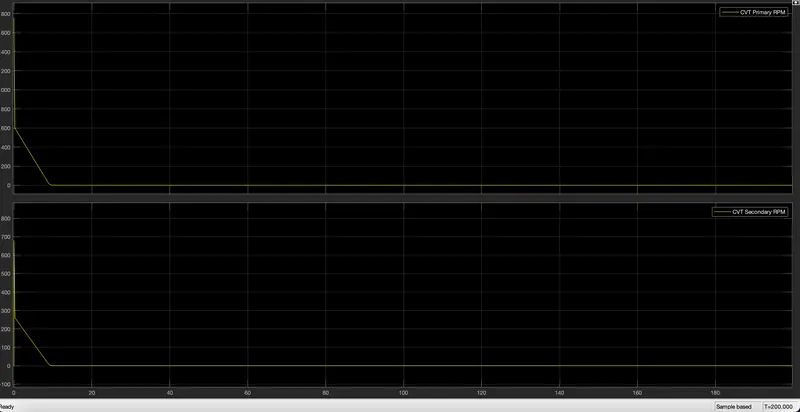
OUTPUT:
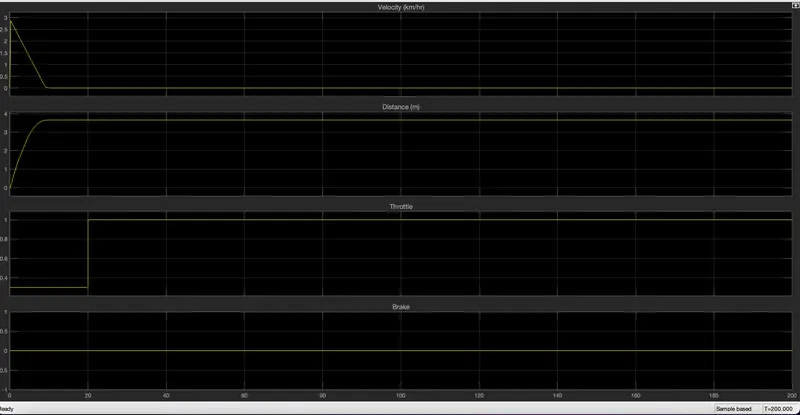
BAJA FOR AVT WITH CVT TRANSMISSION USING DASHBOARD:
Using the image above as reference we can see how CVT works. Take the example of a low gear setting. In this example, let’s say the blue shaft will move three times for every one pink shaft rotation. This in terms of gear ratio can be explained as a gear ratio of 3:1. Now if it were high gear this would simply reverse the order and blue will move slower.
The width of the pulley changes according to the speed of driving and they are inversely related to each other. When one pulley grows bigger the other one gets shorter.
With the working covered we can move onto what makes the CVT drink less fuel than its counterparts.
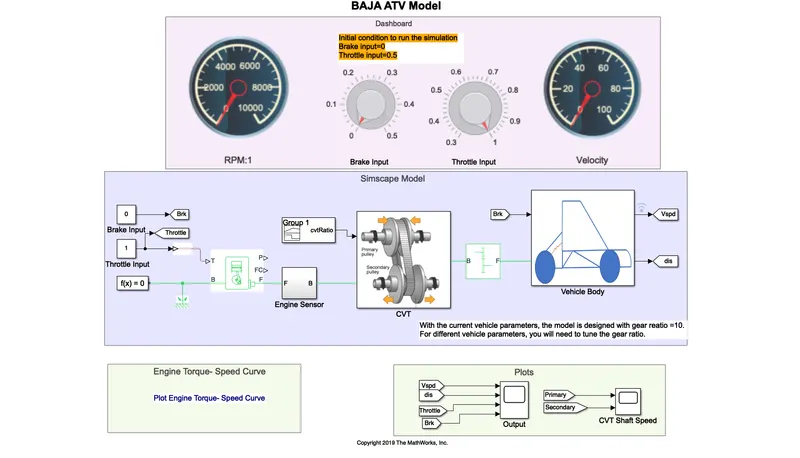
OUTPUT:
TORQUE_SPEED CURVE:
The torque speed curve of a load is a plot showing its torque requirement on the yaxis versus the speed on x-axis. It’s the torque requirement of the load from zero speed to full speed. Its application/load specific and varies with different load types. Loads like centrifugal pumps and fans follow quadratic speed torque curve, where torque varies square times the speed.
MAPPED LOOKUP TABLES:
BAJA FOR AVT WITH CVT TRANSMISSION& LOOKUP TABLE:
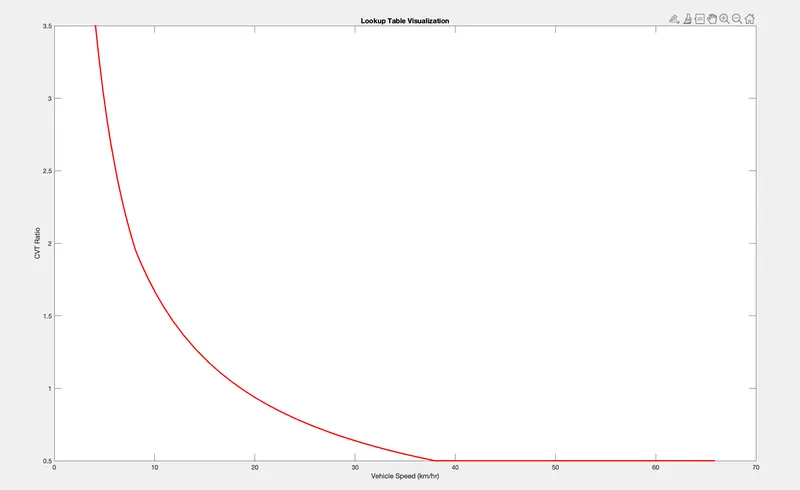
A lookup table is an array of data that maps input values to output values, thereby approximating a mathematical function. Given a set of input values, a lookup operation retrieves the corresponding output values from the table. If the lookup table does not explicitly define the input values, Simulink® can estimate an output value using interpolation, extrapolation, or rounding, where:
-
An interpolation is a process for estimating values that lie between known data points.
-
An extrapolation is a process for estimating values that lie beyond the range of known data points.
-
A rounding is a process for approximating a value by altering its digits according to a known rule.
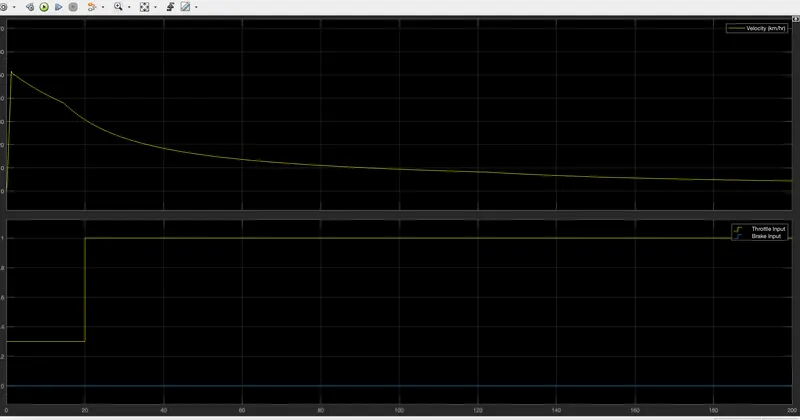
A lookup table block uses an array of data to map input values to output values, approximating a mathematical function. Given input values, Simulink performs a “lookup” operation to retrieve the corresponding output values from the table. If the lookup table does not define the input values, the block estimates the output values based on nearby table values.
BAJA FOR AVT WITH CVT TRANSMISSON,DASHBOARD,LOOKUP TABLE:
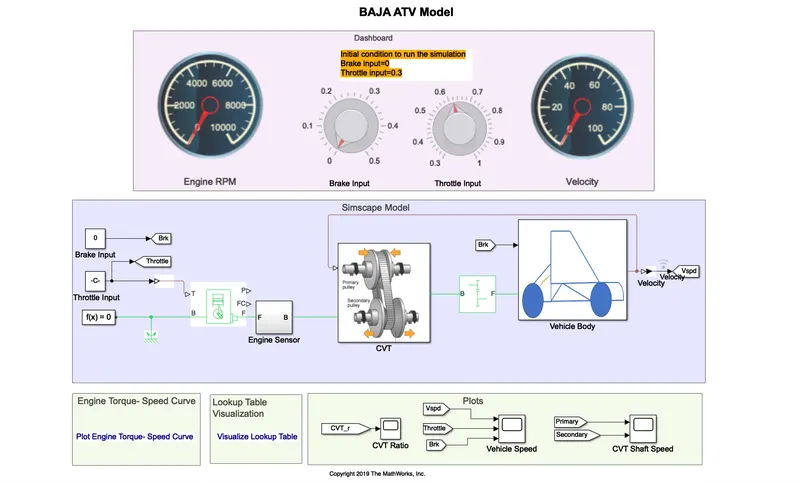
A lookup table is an array of data that maps input values to output values, thereby approximating a mathematical function. Given a set of input values, a lookup operation retrieves the corresponding output values from the table. If the lookup table does not explicitly define the input values, Simulink® can estimate an output value using interpolation, extrapolation, or rounding, where:
-
An interpolation is a process for estimating values that lie between known data points.
-
An extrapolation is a process for estimating values that lie beyond the range of known data points.
-
A rounding is a process for approximating a value by altering its digits according to a known rule.
A lookup table block uses an array of data to map input values to output values, approximating a mathematical function. Given input values, Simulink performs a “lookup” operation to retrieve the corresponding output values from the table. If the lookup table does not define the input values, the block estimates the output values based on nearby table values.
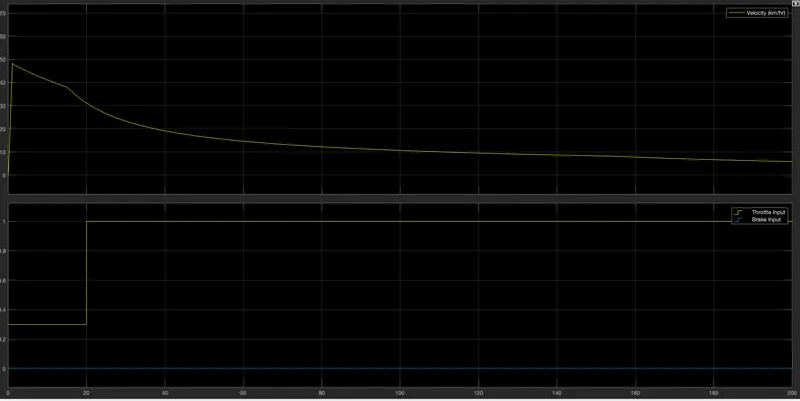
RESULT:Hence the above system-level simulation of an all-terrain vehicle simulation and required plots has been explained with 4 different models of baja AVT with CVT As MENTIONED in above Models and plots as required