Project
Carry out a system-level simulation of an all-terrain vehicle.
ALL TERRAIN VEHICLE:
An all-terrain vehicle (ATV) is defined as a motorized off-highway vehicle designed to travel on four low-pressure or non-pneumatic tires, having a seat designed to be straddled by the operator and handlebars for steering control. ATVs are subdivided into two types as designated by the manufacturer. Type I ATVs are intended by the manufacturer for use by a single operator and no passenger. Type II ATVs are intended by the manufacturer for use by an operator and a passenger, and are equipped with a designated seating position behind the operator.
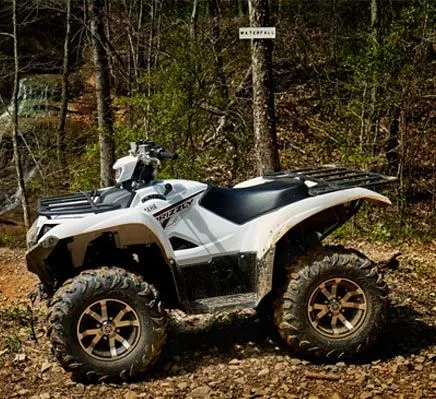
BAJAATV(SAE)
BAJA SAE INDIA is a student level competition that has its roots outside India. BAJA primarily focusses on out-of-classroom-education system, in which engineering students from all over India participate as a team. The goal of each team is to design and build a prototype of a rugged single seat, off-road four-wheel vehicle that has to go through multiple tests and then compete in the endurance race. The event was started originally in the USA by the SAE International and it was known as the MINI BAJA. India saw the launch of the event in January 2007.Since last five years, Mahindra has been the title sponsor for the event.
CVT:
the term CVT stands for continuously variable transmission.
In order to see how a CVT works, you need to understand a manual and a traditional automatic. A manual has a set number of gears, and the driver determines what gear ratio they need. An automatic also has a set number of gears, but it uses a hydraulic system that responds to pressure created by the conditions to determine the gear needed without any input from the driver.
A CVT is similar to an automatic in that it doesn't use any input from the driver, but that is where the similarities end. A CVT doesn't have any gears. Instead, it has two pulleys. One pulley connects to the engine, and the other connects to the wheels. A flexible belt connects the two pulleys
The width of the pulleys changes depending on how much power the vehicle needs. When one pulley gets larger, the other one gets smaller. Since neither the pulleys or the belt are fixed, they can provide an infinite number of gear ratios, unlike the automatic, which has a set number of gears.
Not all CVTs are created the same. The most common type is the pulley-based, but some other types include the Toroidal CVT, which uses rotating discs along with power rollers to produce the same result as the pulleys. The hydrostatic CVT uses pumps to control fluid flow, which then produces a rotational motion.
Blocks used in the model:
1.Generic Engine:
The Generic Engine block represents a general internal combustion engine. This block is a suitable generic engine for spark-ignition and diesel. Speed-power and speed-torque parameterizations are provided. A throttle physical signal input specifies the normalized engine torque. Optional dynamic parameters include crankshaft inertia and response time lag. A physical signal port outputs the engine fuel consumption rate based on the fuel consumption model that you choose. Optional speed and redline controllers prevent engine stall and enable cruise control.

2.Engine Sensor:
Engine sensors are the electro-mechanical devices which monitor various engine parameters. An engine uses different types of sensors that include are Thermo-couples, Resistance Temperature Detectors (RTDs), and Hall Effect sensors.
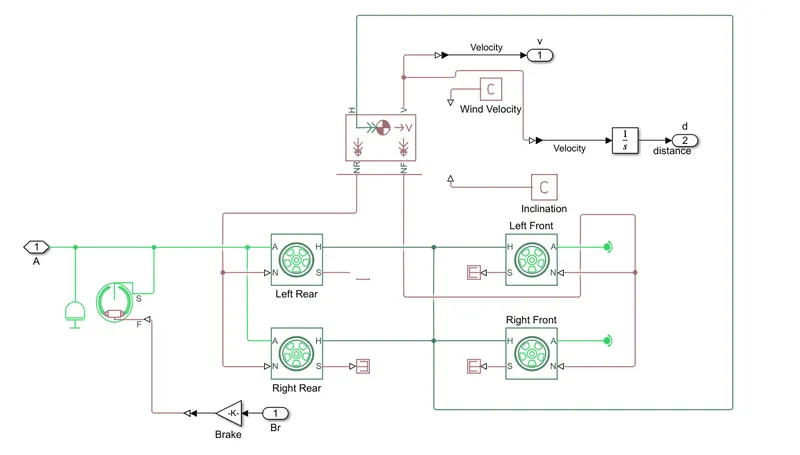
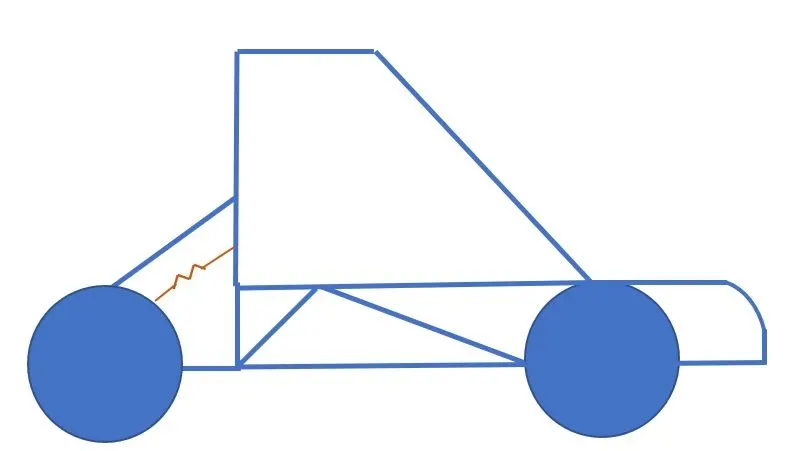
3.Vehicle body:
Vehicle body consistes of two front wheel and two rear wheel which is connected with inertia output shaft and double shoe brake.
4.simulink to ps converter:
To convert the simulink moedel to simscape model. time interval
5.Ps to simulink converter:
To convert simsacape to ps Simulink converter.
6.lookup table:
To insert the cvt values from workspace.
7.scope:
To display a graphical representation of the input values.
8.Display:
used to view the values in numbers.
9.Variable gear ratio:
To vary the speed according to the gear ratio.
10.PS constnt:
To generate constant physical inputs.
11.Step:
To increase or decrease the input value of desired
12.Rotational motion sensor:
To sense the motion from the engine and send output as rpm
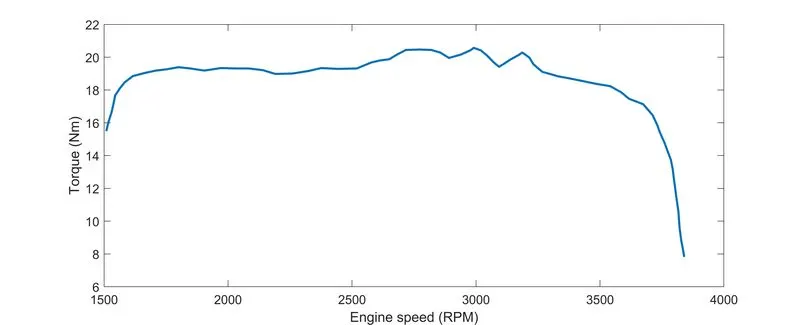
Speed VS Torque curve:
Case studies:
Case 1:
A)BAJA ATV WITH CVT:
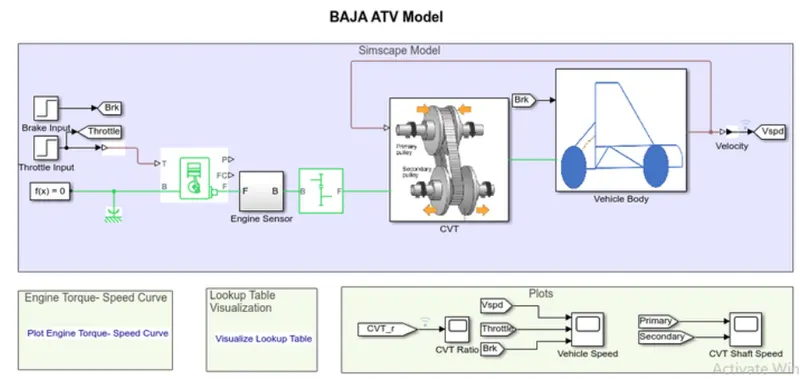
The below fig shows the BAJA ATV with CVT without dashboard.
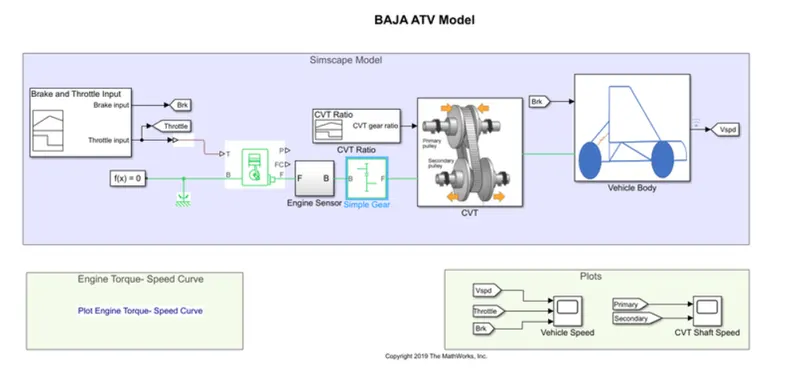
The vehicle body of an simscape model is given.
The vehicle has four wheels namely left rear,left front,right rear and right front.
Then the distance and brake input are measured by using sensors.
The four wheels are connected through an shaft so that they can move forward and reverse.
THe below fig shows the Enhine Speed Torque curve.
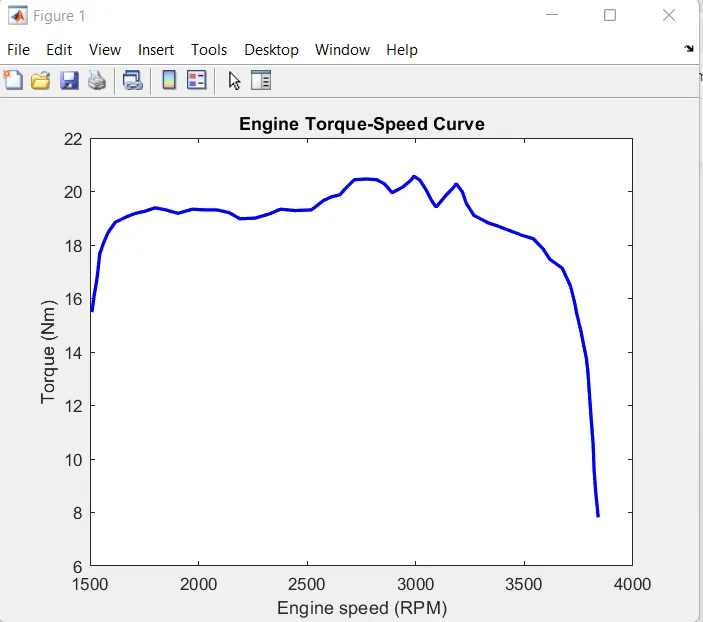
In the above graph the maximum velocity reaches the 3840rpm.
Initially the brake speed of the vehicle be zero and the throttle be 3.
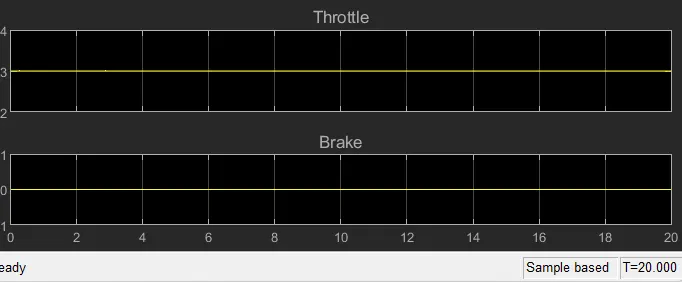
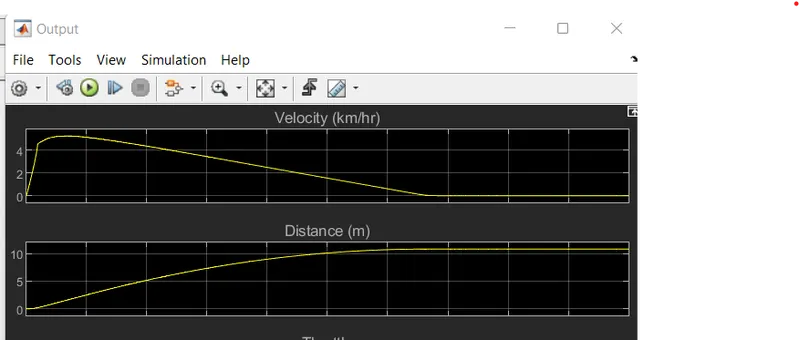
When simulation runs the velocity be 0 to 4.2 and the distance of the vehicle is calculated.
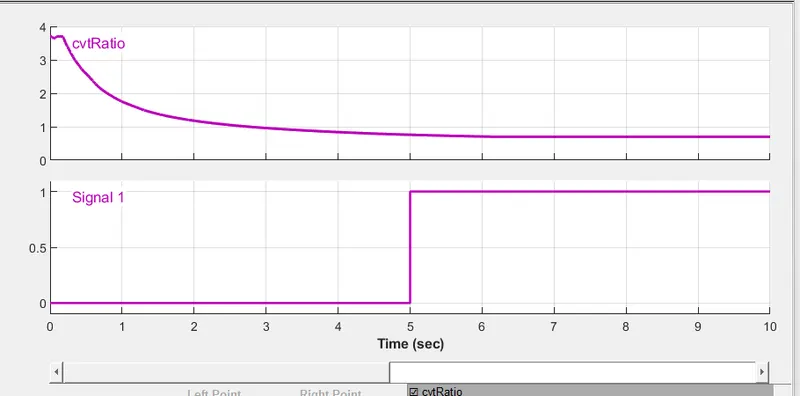
The below fig shows the CVT ratio and input signal to the vehicle.
case 2:
Atv with cvt using dashboard: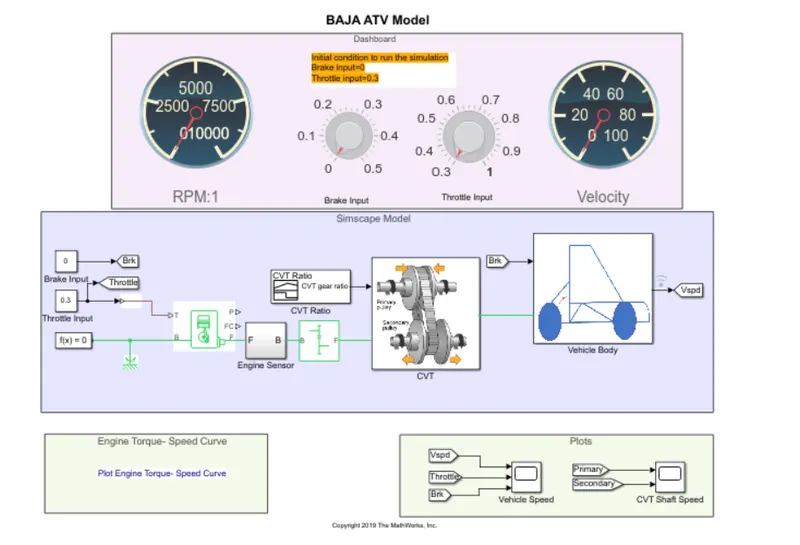
the above image shos the baja atv model with the dashboard.
Here the RPM guage,break input gauge,throttle input gauge,velocity gauge are connected in the dadshboard.
brake input is 0 and throttle input is 0.3.
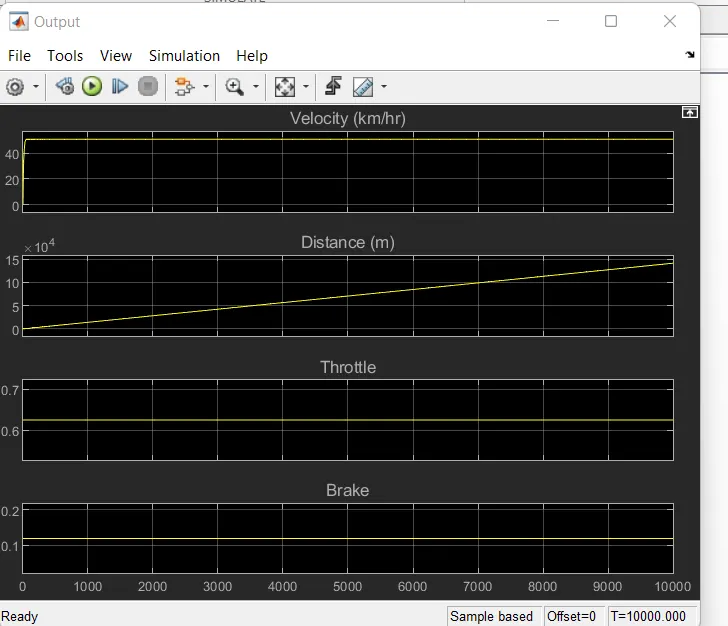
When teh simulation runs for 20sec the velocity values varies from 0 to 50 and the distance of the vehicle reaches to o to 15m.
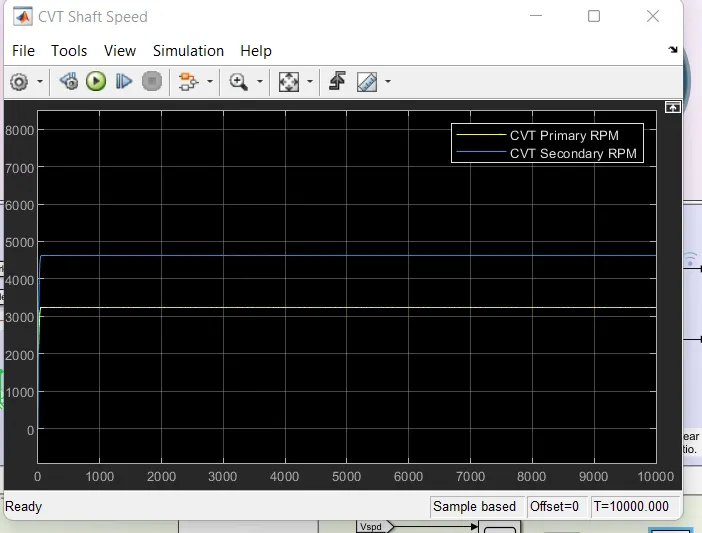
The below fig shows the CVT with primary and secondary RPM.
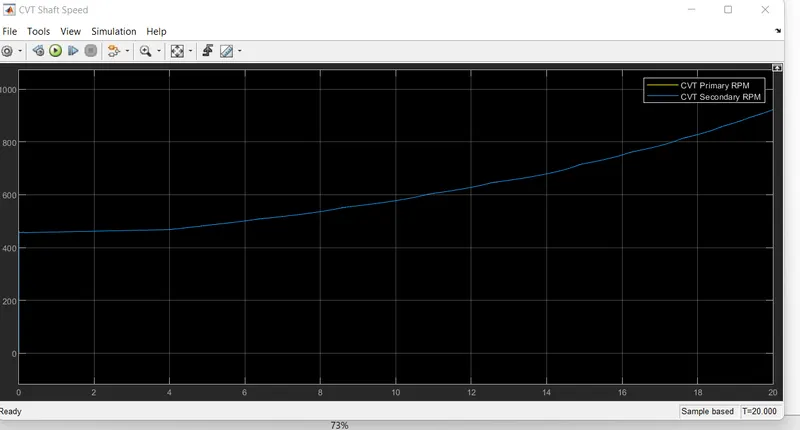
The primary RPM ranges from 0 to 3200 and the secondary RPM varies from 0 to 4800.
study 2:
CASE 1:
ATV with CVT using lookup Table:
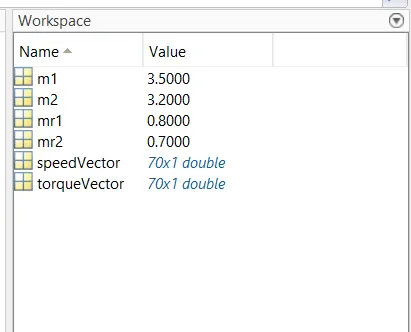
The below fig shows the BAJA ATV MOdel using Lookup tables.In the above cases we uesd CVT ratio to give the input values but here we uses an lookup table method to provide inputs.The lookup tables are assigned in the matlab worksapace and the called in the simscape model.
Assigning the look up table.
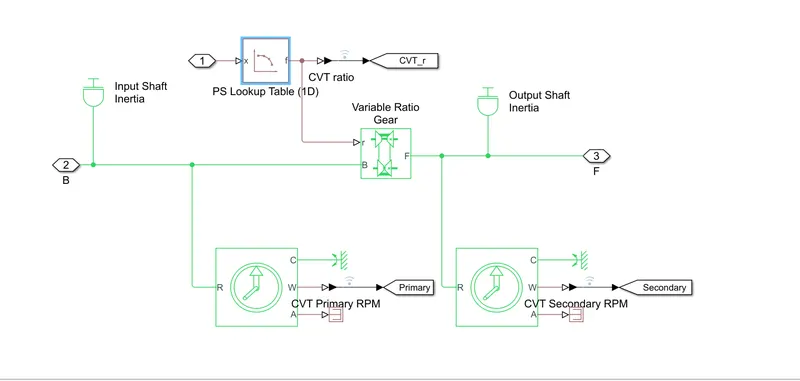
The enhine model after assigning the look up table.Here the input shaft is connected to the ps look up table and variable gear ratio.Then the CVT primary Rpm is conected to the input shaft.similarly the output shaft is connected to the variable gear ratio and cvt secondary RPM is connected to the output shaft.
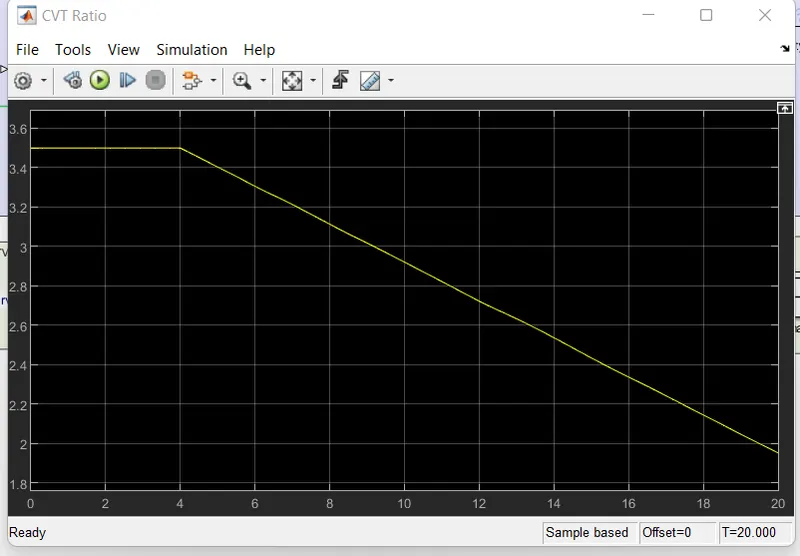
Initially the brake input be zero and throttle input be 0.3.When the simulation runs the CVT ratio ranges from 3.5 to 2.
The below fig sho the variation of values in the CVT ratio.
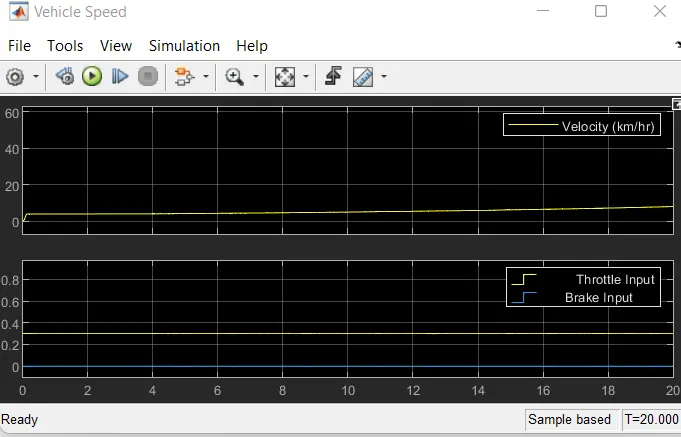
THe below graph shows the variation in velocity brake input and throttle input.
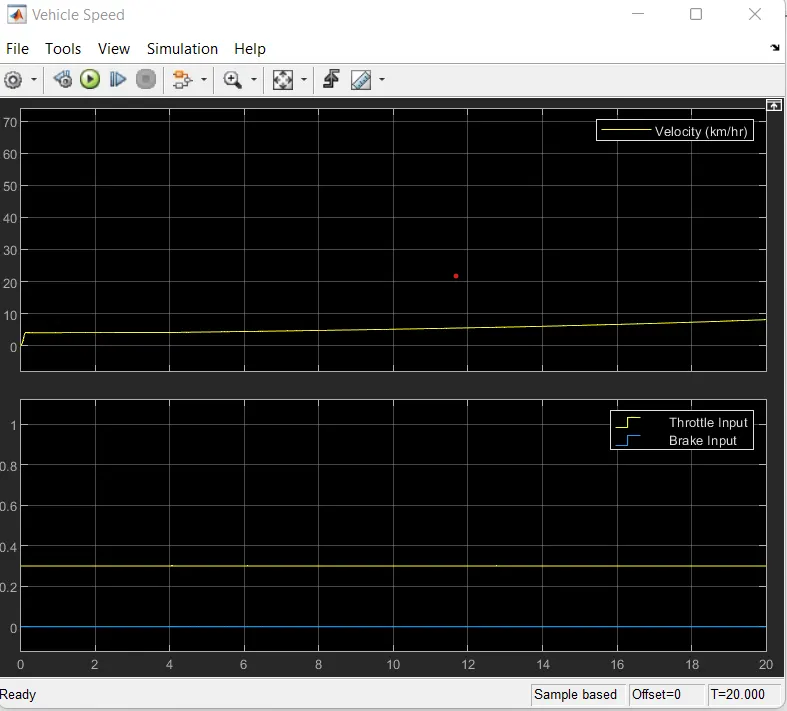
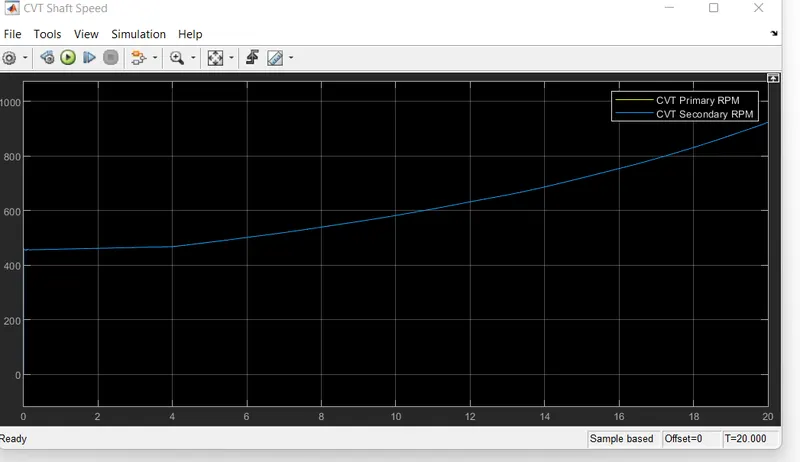
then the RPM of primary and secondary cvt are varies according to the brake input and throttle input.
case 2:
ATV with CVT with dashboard(using lookuptable):
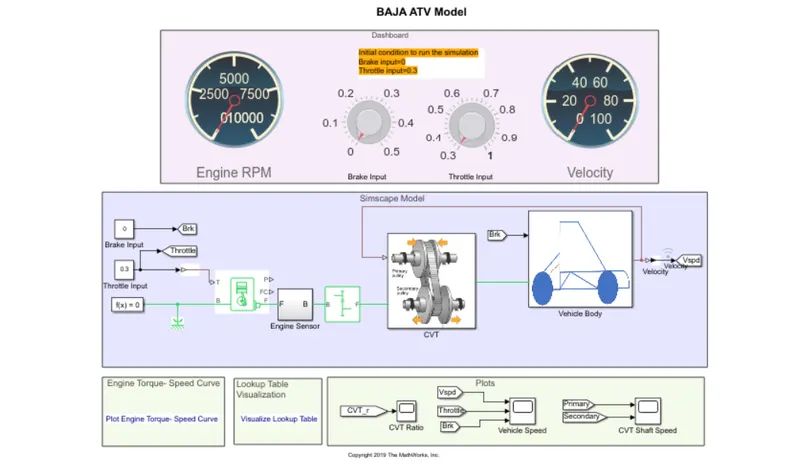
the above figure shows the baja atv with cvt using lookup table.
Here the input valus are assigned to the gear by using an lookup table which is assigned in the matlab program workspace.
here the lookup table is used to give input instead of using cvt ratio.
Here the input shaft and ps lookup table are connected to the variable gear ratio.Then the variable gear ratio is connected to the output shaft.The primary cvt rpm and secondary cvt rpm are connected to input shaft and output shaft of the model.
The above figure shows the speed torque curve of the engine.
The below fig gives the variation in CVT ratio.
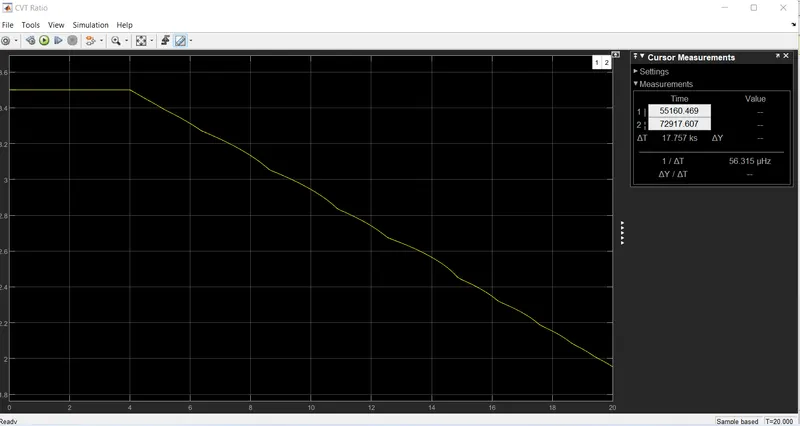
The vehicle speed is measured by using scope.
Initially the throttle input be 0.3 and brake input be 0.
when the simulation runs the velocity of the vehicle moves from 0 to 0.3.Then the throttle input and brake input be constant.
The belo fig shows the CVT shaft speed.
CONCLUSION:
1.THe system level simulation of BAJA all train vehicle CVt without using lookup table is done and the results are plotted.
2.THe system level simulation of BAJA all train vehicle CVT using lookup table is done and the results are plotted.