Project
WHAT IS BAJA all terrain vehicale (ATV) ?
Baja SAE is an Collegiate Design Series competition run by the Society of Automotive Engineers International (SAE International).
Teams of students from universities all over the world design and build small off road car . The cars all have engine of the same
specifications. As of 2018 the engine has been an unmodified Briggs & Stratton Model 19 Vanguard engine single cylinder with a
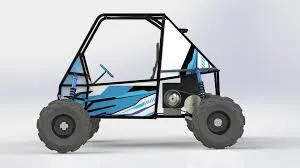
displacement of 305cc and power output of approximately 10 bhp (7.5 kW).The goal in Baja SAE racing is to design, build and race off-road vehicles that can withstand the harshest elements of rough terrain. The vehicles used in Baja SAE racing are often similar in appearance to dune buggies. Before 2007, the events were called "Mini Baja."
TRANSMISSION SYSTEM USED IN BAJA (ATV) ?
ontinuously variable transmission
A continuously variable transmission (CVT) is an automatic transmission that can change seamlessly through a continuous range of gear ratio. This contrasts with other transmissions that provide a limited number of gear ratios in fixed steps. The flexibility of a CVT with suitable control may allow the engine to operate at a constant RPM while the vehicle moves at varying speeds.
CASE 1
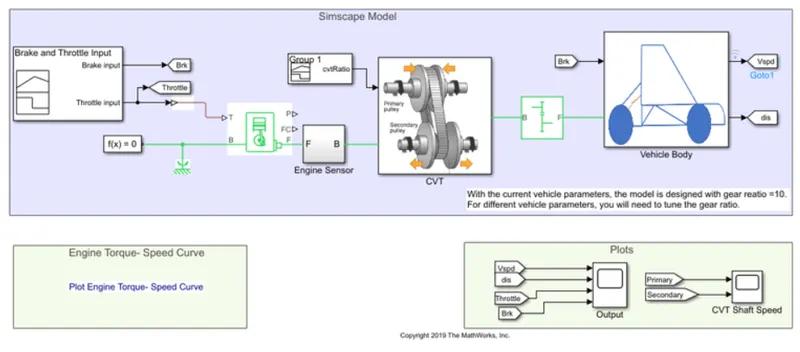
simulation of baja ATV model without dashboard.
so in this case we have engine block ,cvt block which is a subsystem , engine body which is also a sub system.
input are gives as break and throttle through signal builder block, ( we can feed any deta to this according to the viewer).
in this we are providing cvratio with the help of the signal builder the break ,torque, cvratio are predefined and cannot be changed while we are running the simulation.
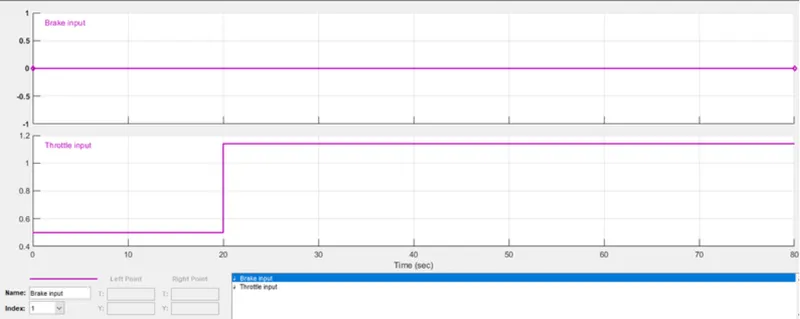
input
in the input we are providing break and throttle with a signal block
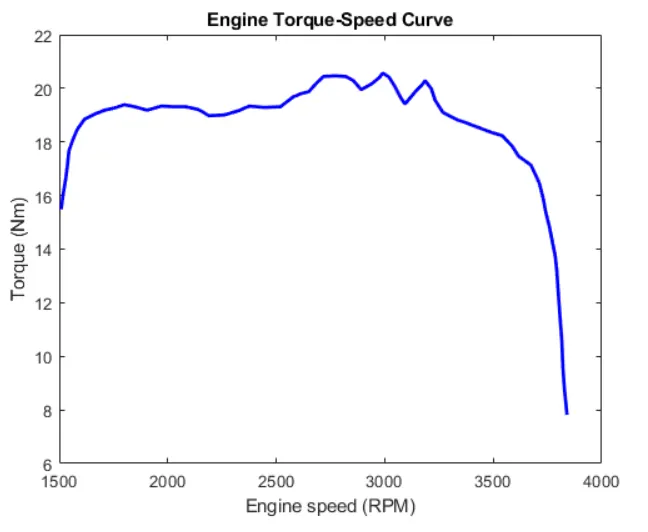
this below data given in an speed and torque in generic engine block ( this is a real time behaviour data of baja hev)
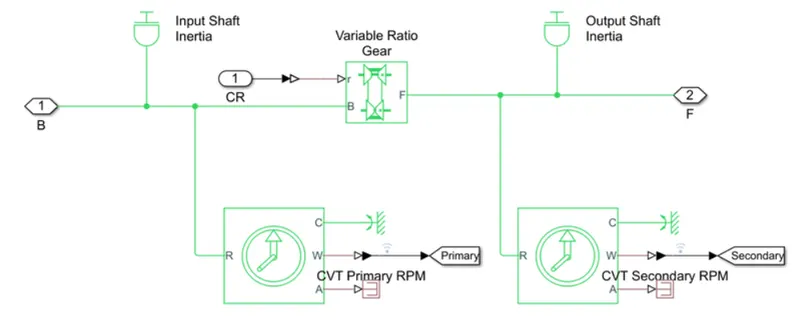
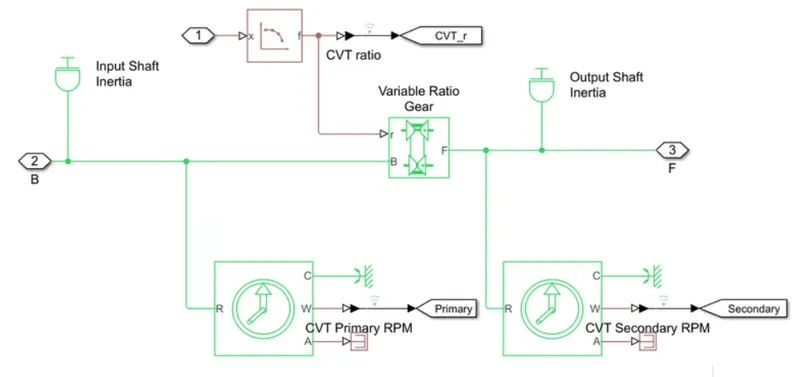
this is an inside view or the construction of the subsystem of CVT (CONTINIOUS VARIABLE TRANSMISSION SYSTEM)
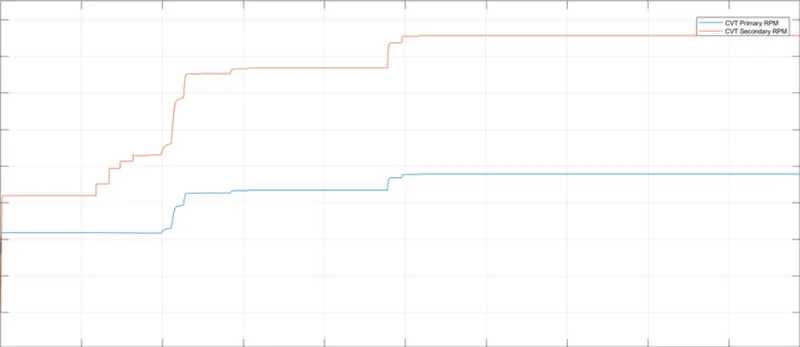
the primary and the secondary rpm block are the sensors which measeure the rpm of the shaft.
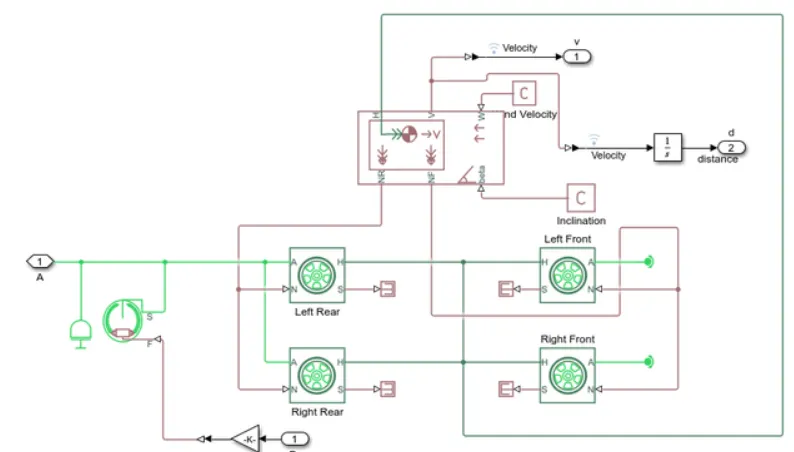
so this the inside view of the body how the sub system of body is beeb created.
in this we can provide detail specification of each tire specification, number of tire ,body weight of the vehical.
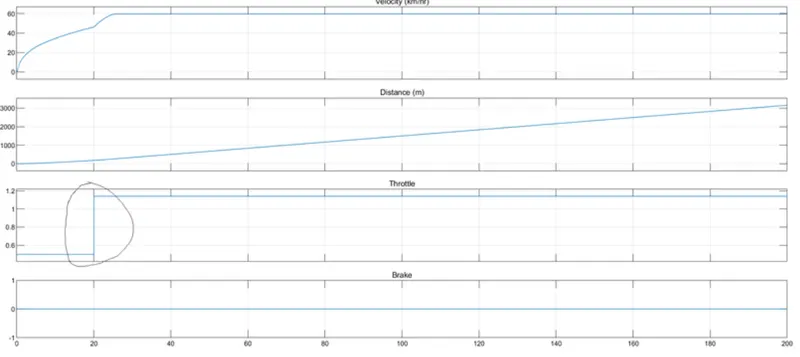
output result:
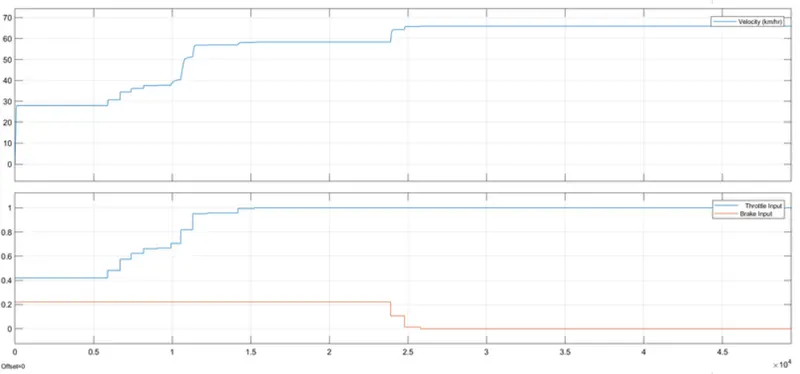
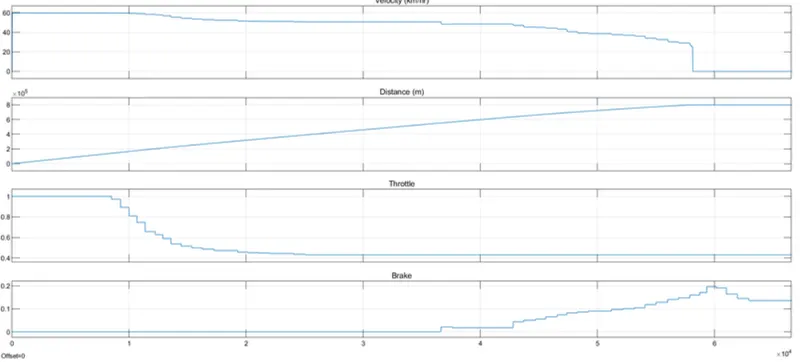
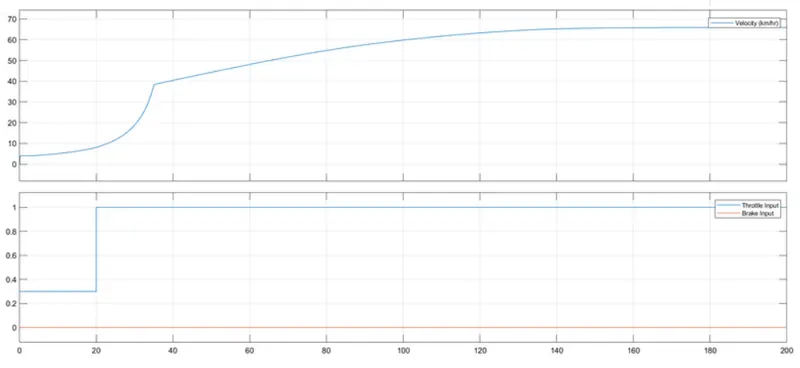
can see that when the throttle increase velocity of the vehical also increase and distance is also increase due to velocity.
in this whole process the no break is applied.
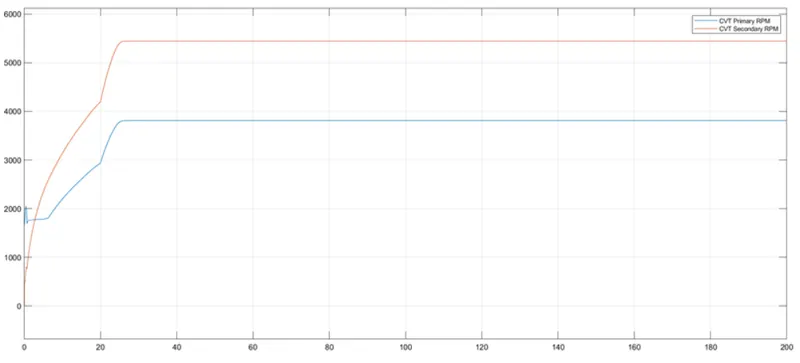
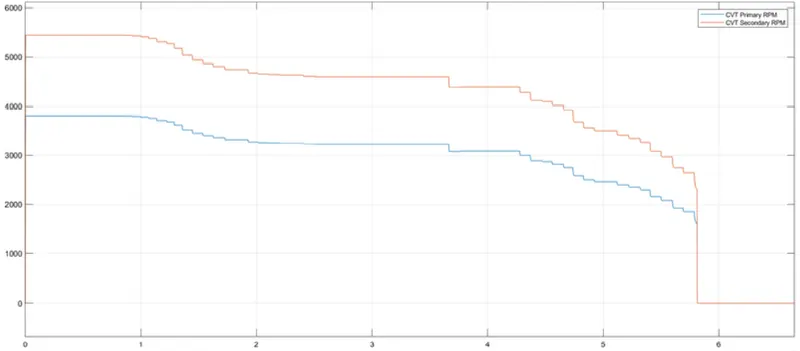
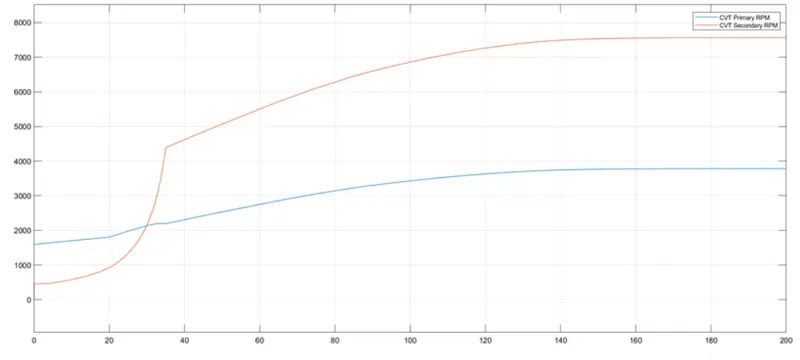
in this below graph we can see that primary rpm (shaft) is less than secondary rpm (shaft) because radious of the primary shaft is less.
from this above case 1 we have provided input as 0 break and throttle input as 0.5 where we see the change in velocity for first few second then constant as throttle was constant.
CASE 2
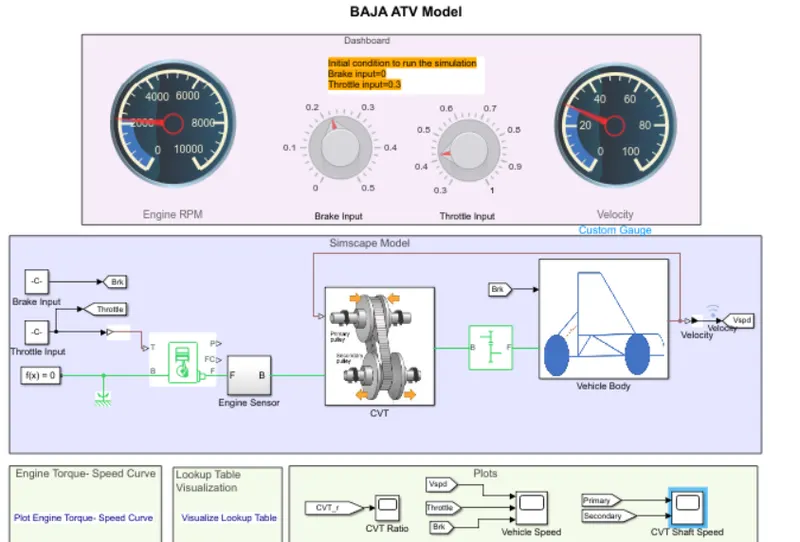
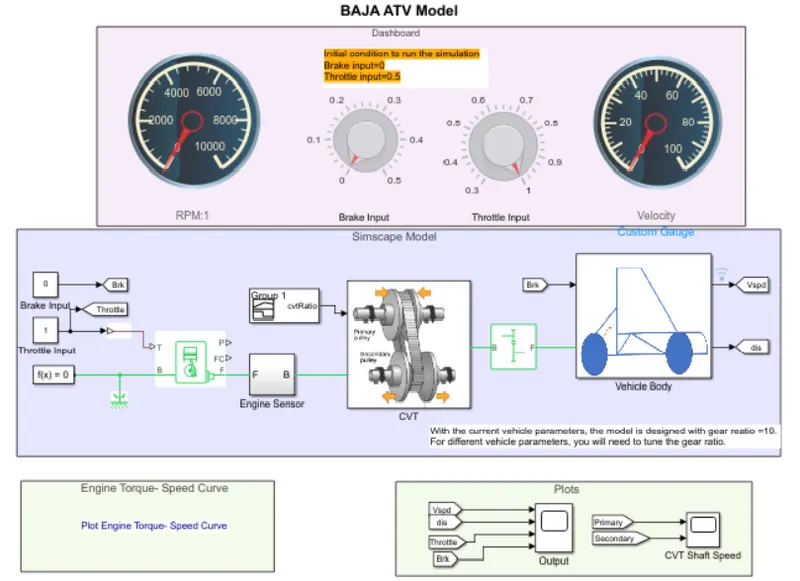
simulation of baja ATV model with dashboard
in this we are providing the scale where we can change the torque and brake while running the simulation this will be giving us the real time idea what changes can be happen in output while giving the input change.
CASE-3
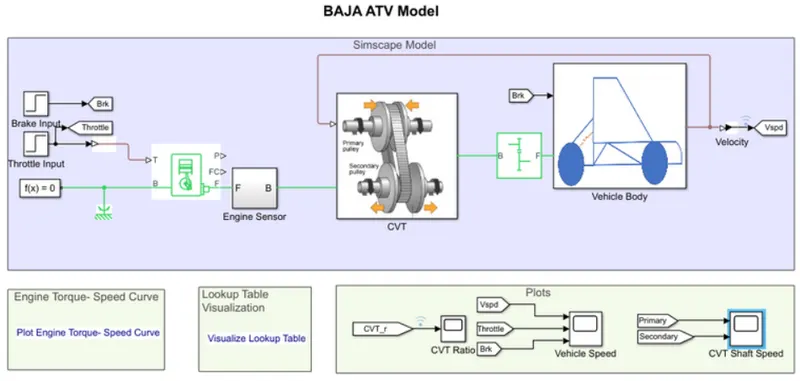
simulation of baja ATV model with lookup table without dashboard.
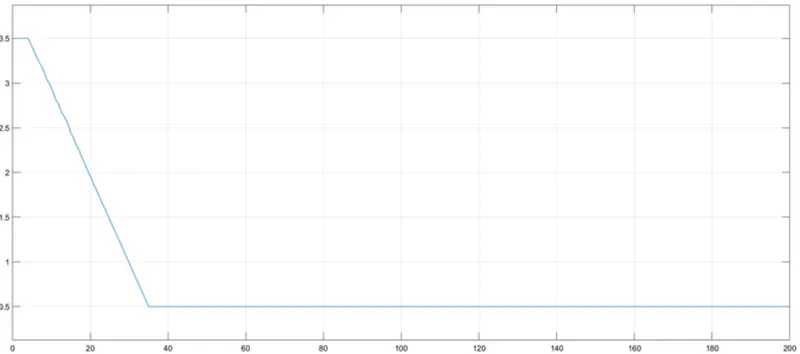
in this case we are providing torque input and brake input with the help of step block. The gear ratio is given in form of vector or we can say in the form of 1D-lookup table.the velocity at the output is given to the input of he CVT subsystem to generate the gear ratio for the CVT.
CASE-4
simulation of baja ATV model with lookup table with dashboard.
this model is same as previous model the difference is we are providing dashboard where we can increase or decrease the throttle and break whilr running the model