Project
Answer:
PROJECT
AIM:
The Aim is to prepare a detailed technical report explaining the model of BAJA ALL-Terrain Vehicle (ATV).
OBJECTIVES:
It involves few case studies where they are given as,
- Baja all-terrain with CVT.
- Baja all-terrain with CVT and Dashboard.
- Baja all-terrain with CVT using lookup table .
- Baja all-terrain with CVT using Lookup table and Dashboard.
according to the above cases the following explanation and comments on results are been provided
EXPLANATION:
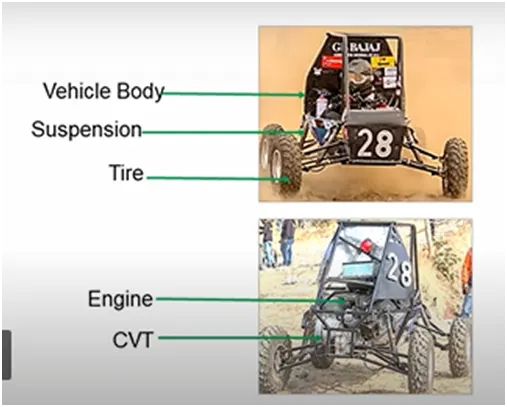
In this system few important blocks provided are CVT, Suspensions,Engine,Vehicle body blocks and tyres etc.The working is carried out below
- Baja all-terrain with CVT.
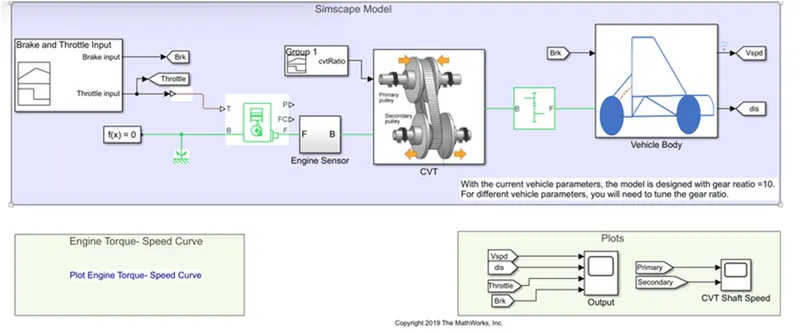
- The baja all-terrain with CVT consists of Signal Builder,CVT,Engine,Motor sensors, Vehicle transmissions,solver configration,tyres and Vehicle body blocks.
- The engine is provided with 2100rpm and the vehicle body is provided with drum brakes and tyers.
CVT:
- where CVT is the continious variable transmission which gives the stepless transmission ratio.
- It also provides us more Fuel efficient and smooth working properties.
- The Torque intruption in working conditions are been avoided.
- It has more ablity to control the Speed of the engine.
- They don't have Gear like traditional transmission systems here pulleys and variable diameters are used by connecting with belts.
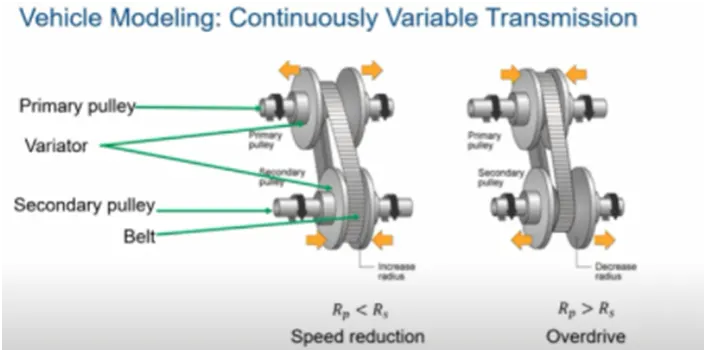
- It consists of two pulley they are primary pully and secondary pully which is connected with a belt to drive it and a variator and a hydrolic cylinder is used for the easy movement of the pully .It follows two conditions when
Rp<Rs Speed Reduction
Rp>Rs Over drive
- In the first condition radious of the primary pully is more than the radious of the secondary pully this condition is carried out when the variator moves upwards this is considered as speed reduction.
- In the other condition when the variator moves downwards the radiuous of the primary pully gets reduced where as the radious of thr secondary pully increases this is considered as Over drive.
CVT Block:
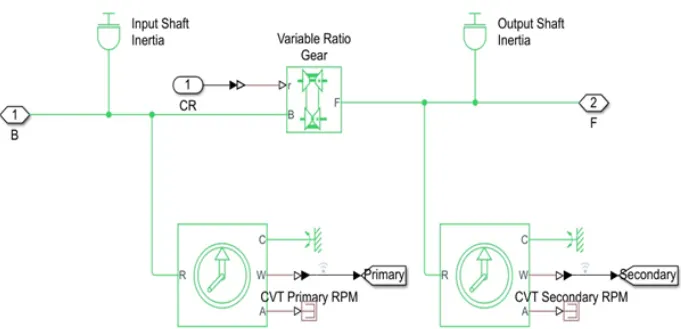
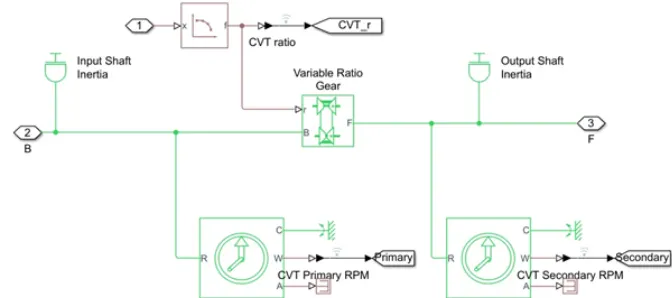
- The subsystem of the CVT is been shown where it contains engine, variable ratio gear,input and output shaft inertia.
- B and F are mechanical roatational ports where the fuel intake is been reported.here it is provided with a mechanical belt structure.
Break input and Throttle input :
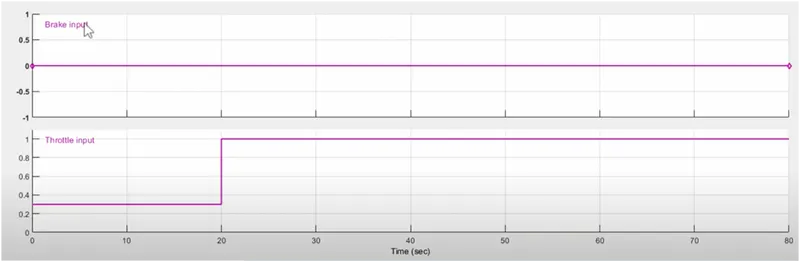
- It is the input signal provided from the signal builder to give a break and throttle inputs with respected with time (sec).
- The break input value is 0 throughout the simulation and the throttle input is given 0.3 for about20 sec and then it reaches 1 stays same throughout the simulation.
CVT Gear Graph:
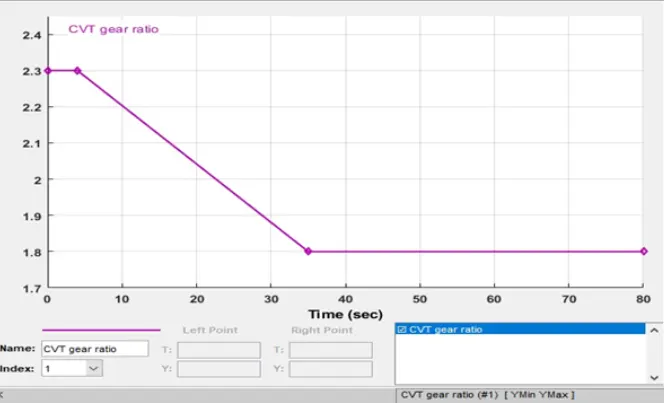
- The gear ratio is been shown where initialy the value is 2.3 for 5sec then there is a linear reduction then reaches 1.8 and the overall simulation is maintained constant throught the operation.
Engine Torque-Speed Curve:
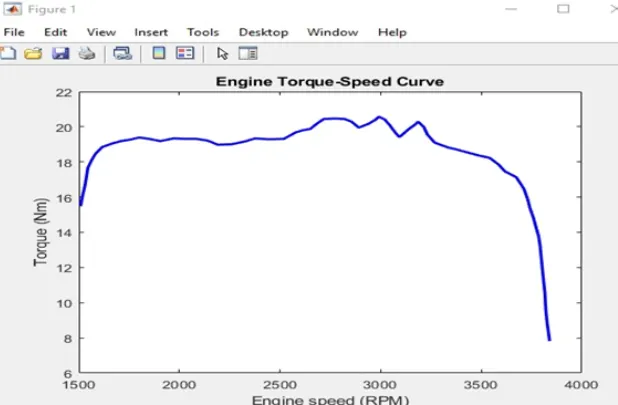
The engine torque-speed curve is been ploted for torque and engine speed in rpm.It shows the behaviour of a vehicle and the data inputs which are given to generic engine to obtain speed torque characteristics.
Vehicle Body:
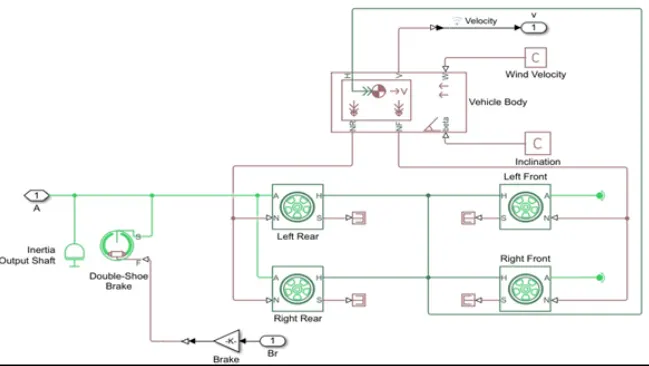
The Vehicle body block consists of tyres and breaking system.In the breaking system a Double-shoe break is been provided.It a simscape model designed with four tire blocks.
- Baja all-terrain with CVT and Dashboard
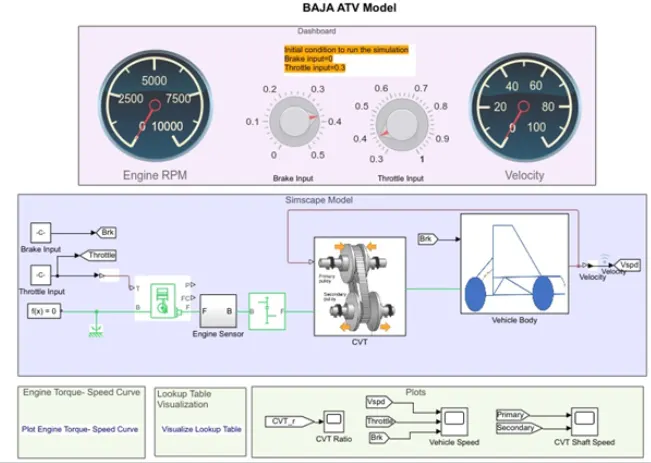
- In this Baja all-terrain with CVT and Dashboard model a dashboard is been connected.
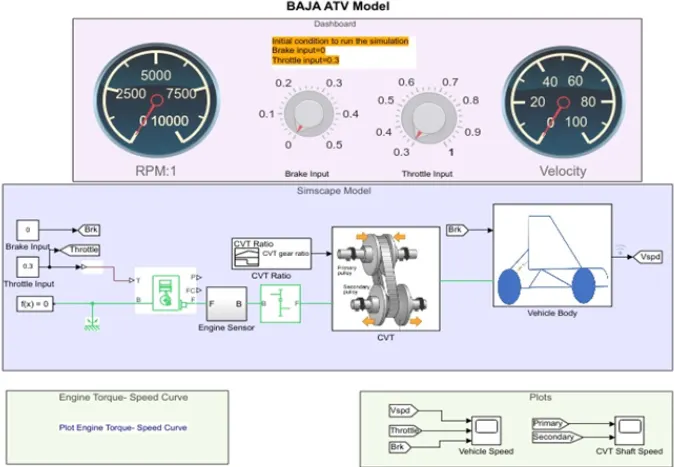
- here the signal builder is been removed and replaced with dashboard where the knobs are been used to control the break and throttle inputs .
Vehicle Speed graph:
- In this graph we can observe that velocity of the vehicle increases from 0 to 50 kmph.
- The breaking input is said to be 0 and the throttle value is 0.5.
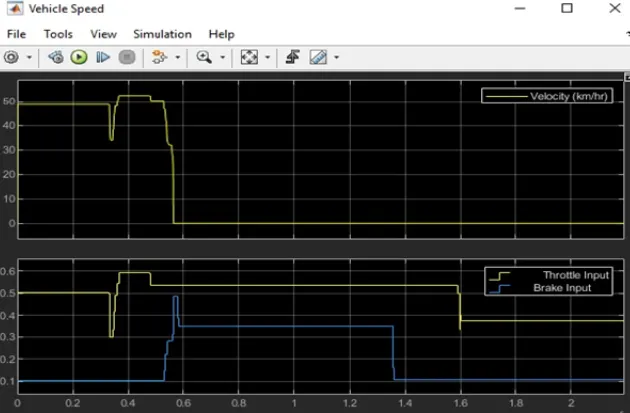
- When there is a increase in breaking let be 0.1to 0.5 the velocity tends to reduce to 0 with steady or constant throttle value.
- A basic Diagram of open loop and close loop system is been given below
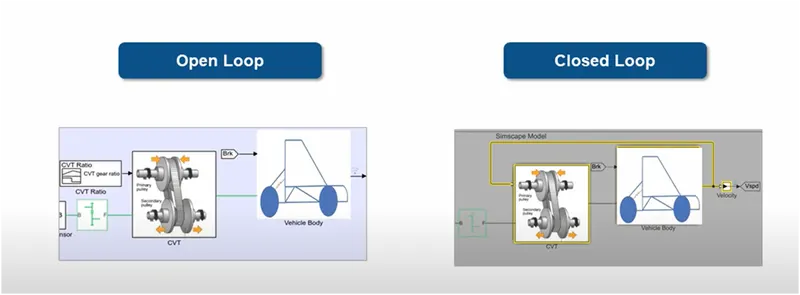
In the open loop the CVT gear ratio is been connected to the shaft of CVT but in the closed loop system this CVT gear ratio is been removed and signsl from the output of vehicle body is been looped up to the shaft of CVT.
- Baja all-terrain with CVT using lookup table:
- This model is simular to the first model but in addition a lookup table is provided.
- It is a array of data or values from map input or output is provided in the lookup table which is been linked with the simulation model.
- It workes as closed loop where the input is given from lookup table
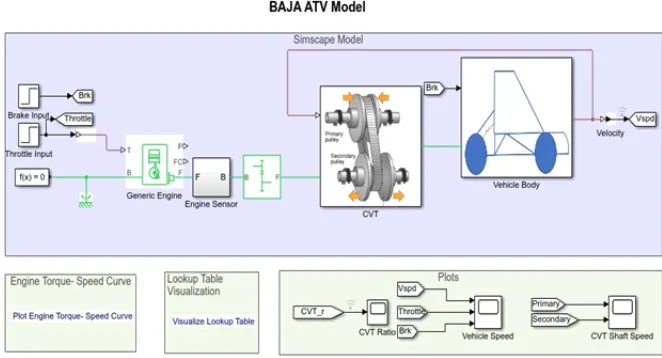
This is the lookup table where the comments such as the gear ratio are given,
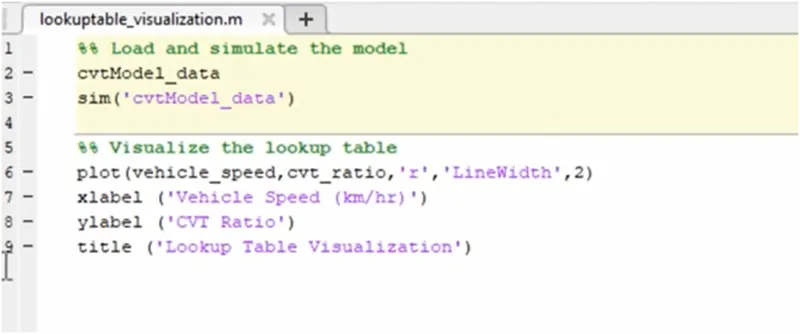
CVT Block:
The gear ratio input is been provided using a lookup table to the CVT.This method is more effective and the engine speed can be obtained easy.
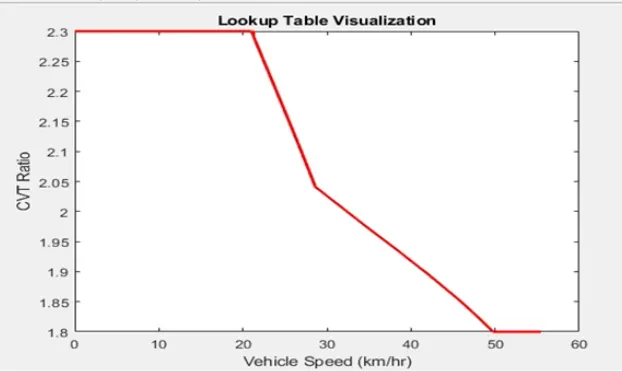
Lookup Graph:
In this lookup graph the gear ratio changes from 2.3 and drops to 1.8 with respect to speed of the vehicle.In this when the gread ratio is high the torque is more and velocity is less.
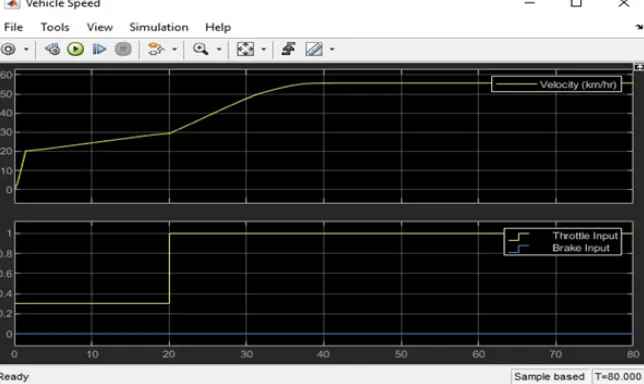
Vehicle Speed Graph:
In the given graph the throttle ratio increases which leads to increase in the velocity.When the throttle ratio increases from 0.3 to 1 the engine power also increases.Here the gear ratio is directly propotional to the torque.
- Baja all-terrain with CVT using Lookup table and Dashboard.
- This method is simular to the above method but here Dashboard is been connected.
- The simulation gets the input gear ratio from the lookup tanle and gives the desire output according to it.
- Where dashboard with lookup table which provide braking input and throttle inputs.
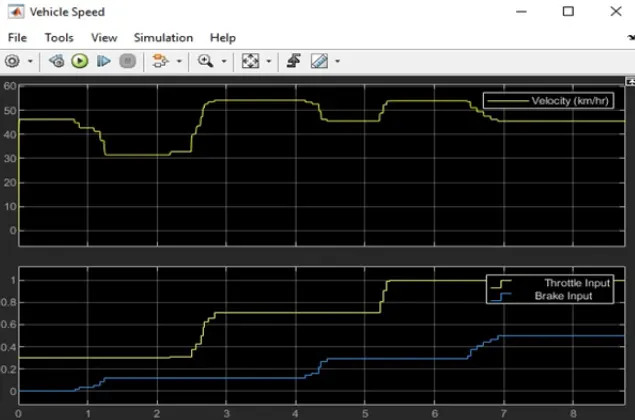
Vehicle Speed Graph:
In this graph when the braking value increases the speed of the vehicle decreases and there is a change in velocity when the throttle ratio changes or increases.
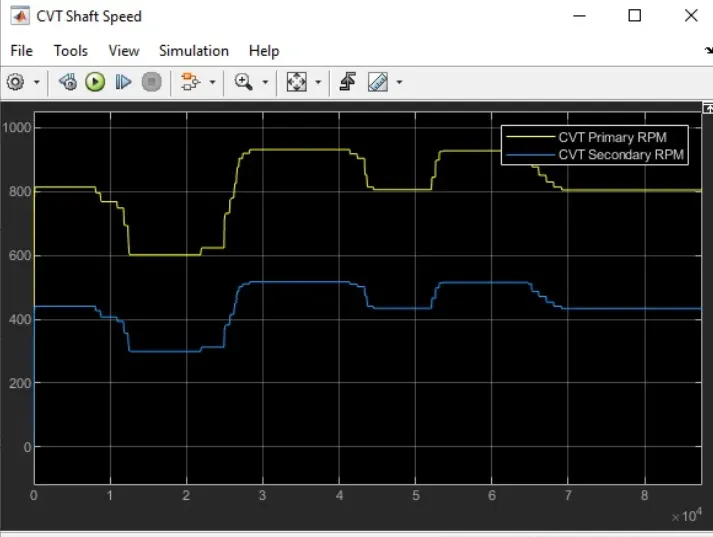
CVT Shaft speed Graph:
In this graph the primary and secondary rpm variation are been shown with respect to the input provided.
CONCLUTION:
The technical report on the Baja all-terrain vehicle and there various cases are been explained and by change in brake input and throttle input the change in output is also seen.