Project
Aim: Carry out a system-level simulation of an all-terrain vehicle.
Theory: All-Terrain Vehicle
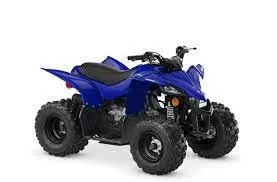
An all-terrain vehicle (ATV), also known as a light utility vehicle (LUV), a quad bike, or simply a quad, as defined by the American National Standards Institute (ANSI); is a vehicle that travels on low-pressure tires, with a seat that is straddled by the operator, along with handlebars for steering control. As the name implies, it is designed to handle a wider variety of terrain than most other vehicles. Although it is a street-legal vehicle in some countries, it is not street-legal within most states, territories, and provinces of Australia, the United States, or Canada.
By the current ANSI definition, ATVs are intended for use by a single operator, although some companies have developed ATVs intended for use by the operator and one passenger. These ATVs are referred to as tandem ATVs
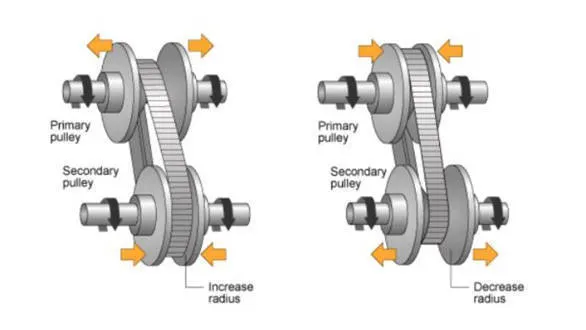
The main component of the vehicle is CVT (Continuous Variable Transmission)
A continuously variable transmission (CVT) is an automatic transmission that can change seamlessly through a continuous range of gear ratios. This contrasts with other transmissions that provide a limited number of gear ratios in fixed steps. The flexibility of a CVT with suitable control may allow the engine to operate at a constant RPM while the vehicle moves at varying speeds.
CVTs are used in automobiles, tractors, motor scooters, snowmobiles, bicycles, and earthmoving equipment.
The most common type of CVT uses two pulleys connected by a belt or chain; however, several other designs have also been used at times.
Case study 1: Simscape model for All-Terrain Vehicle
The blocks are connected with the input signals for brake and throttle.
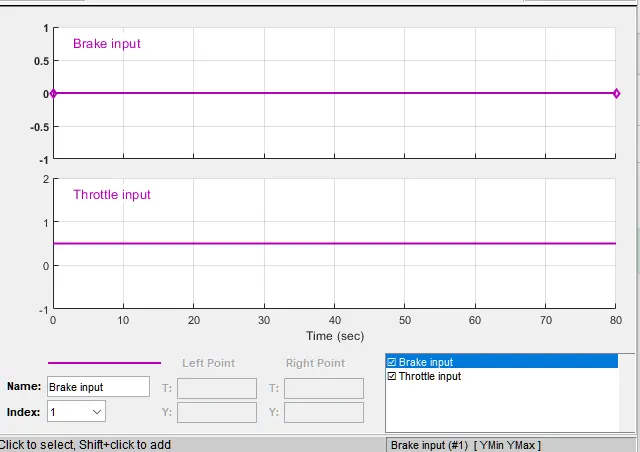
the signal input is connected to the engine block
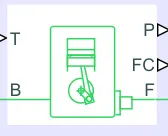
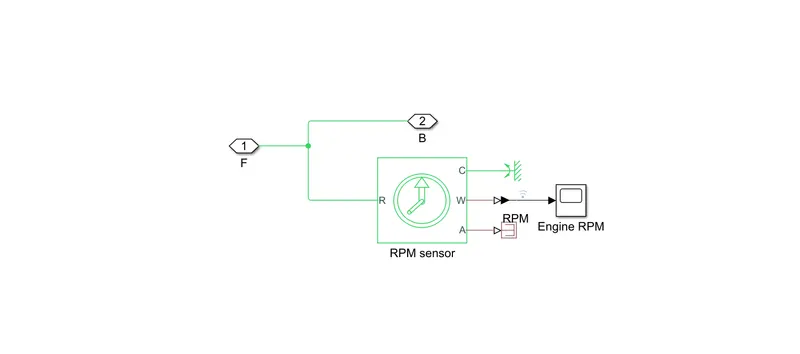
the engine block is connected to the engine sensor which senses the throttling and the braking according to which it provides signals to the CVT block.
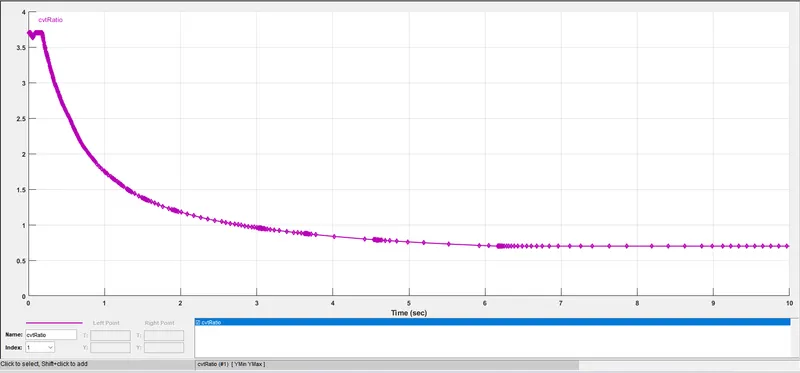
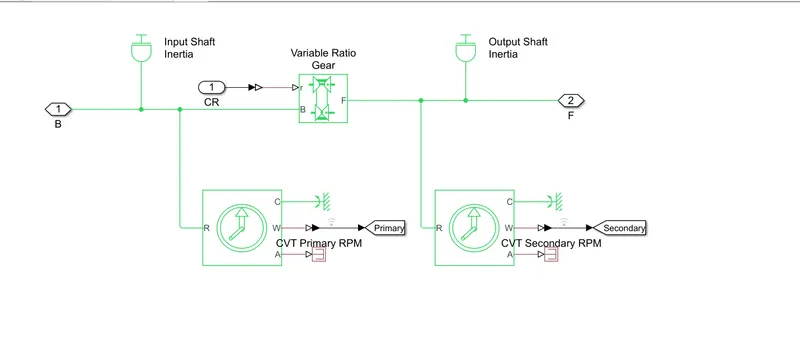
The CVT block takes the signal from another signal builder which basically is a CVT ratio i.e. Ratio range is defined as the numerical ratio of the maximum to the minimum output speeds possible for a given fixed input speed.
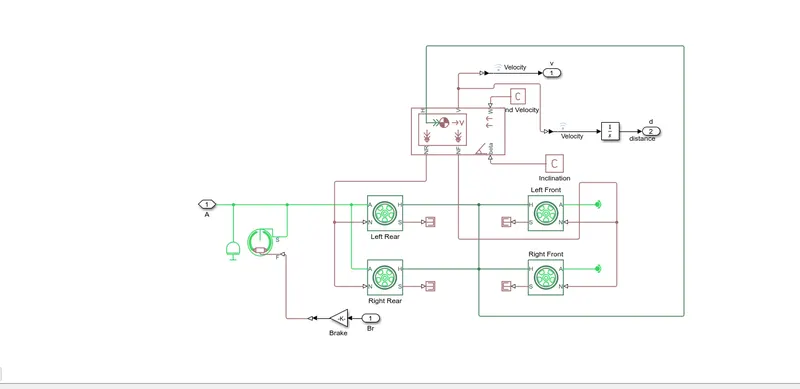
Finally, the CVT is connected to the ATV block with the simple gear block.
The ATV model
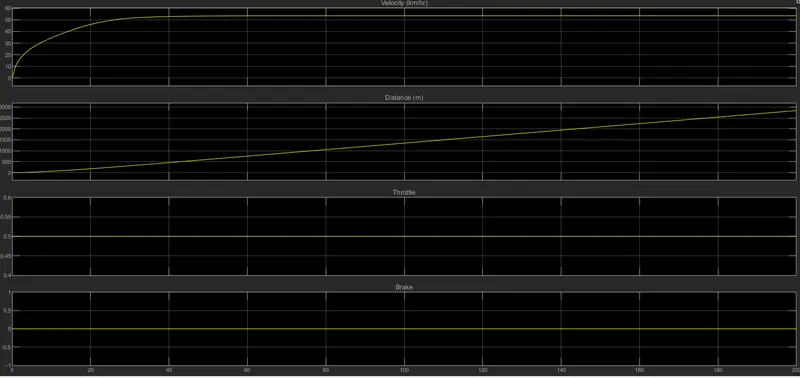
Results:
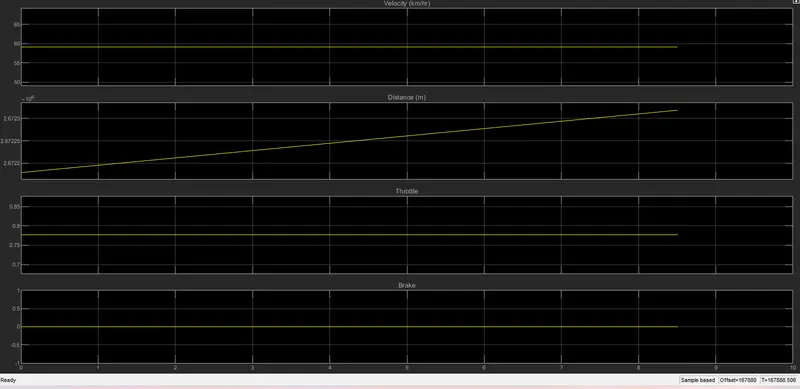
the scope shows the velocity, Distance, Throttle, Brake. w.r.t time
the velocity is increasing for an instant and then it is constant as the vehicle is moving on a straight path
the throttle is constant throughout the time of motion of the vehicle, without applying brakes.
CVT Shaft speed:
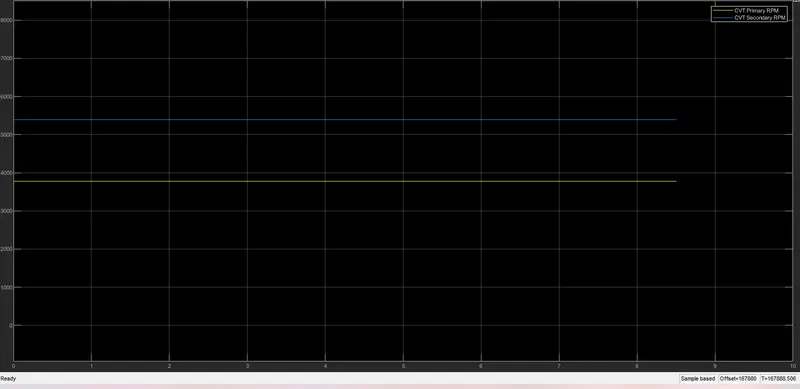
the scope shows the shaft speed of the primary and secondary shaft speed
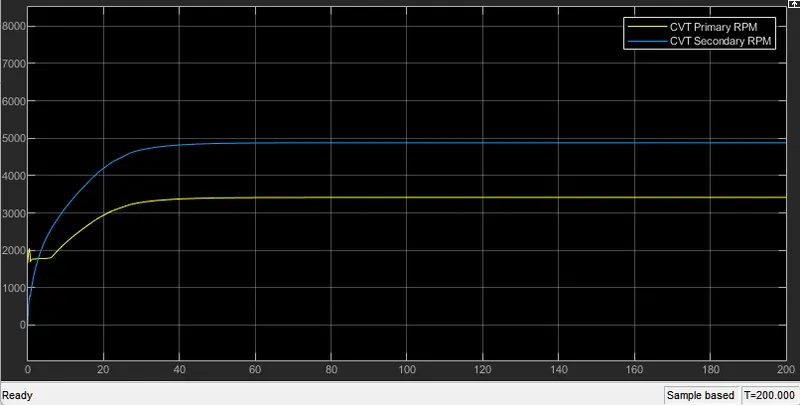
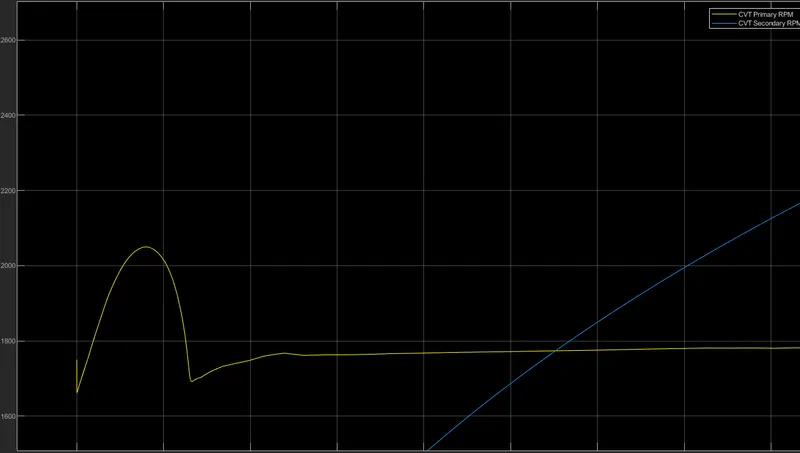
The initial speed of the secondary shaft
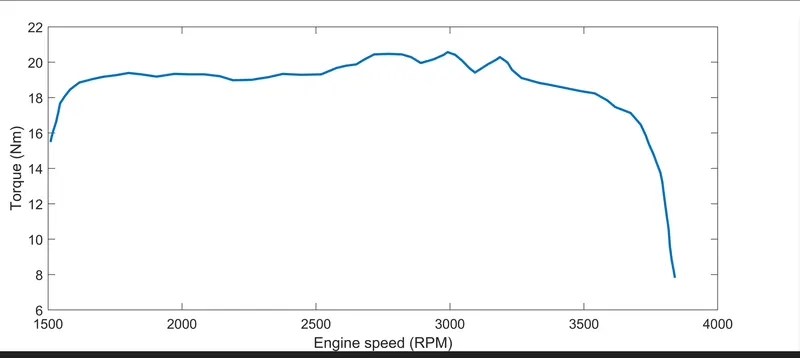
graph of torque and speed.
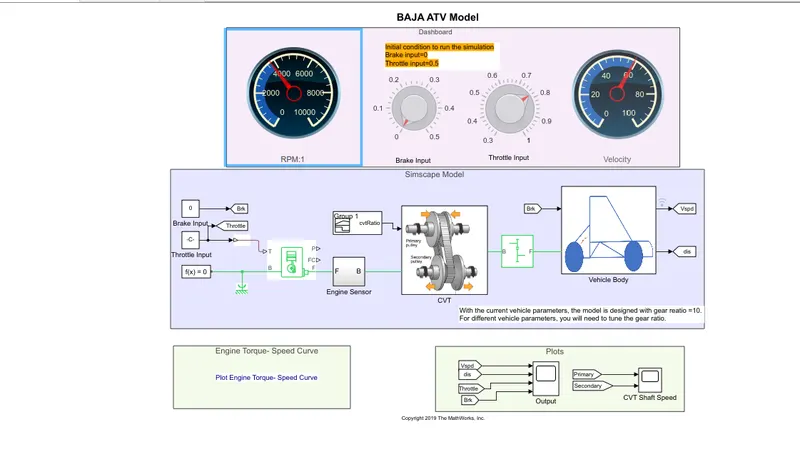
Case study 2: Simscape model for All-Terrain Vehicle with dashboard
The dashboard is connected to the simple model of ATV.
the throttle and the brake input are controlled by the knobs and the speed in rpm and the velocity is shown on the circular gauge.
CVT subsystem:
Result:
the scope shows the velocity, Distance, Throttle, Brake. w.r.t time
The initial speed of the secondary shaft.
Case study 3: Simscape model for All-Terrain Vehicle with dashboard and lookup table
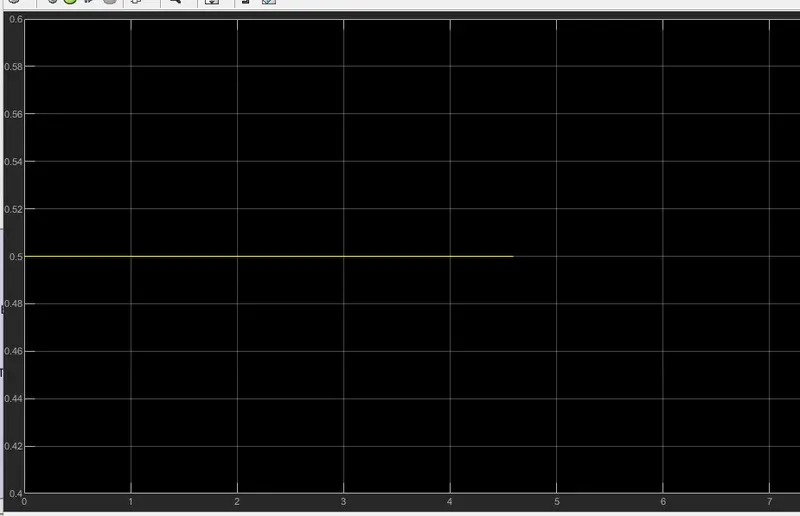
Look-up table: A lookup table is an array of data that maps input values to output values, thereby approximating a mathematical function. Given a set of input values, a lookup operation retrieves the corresponding output values from the table.
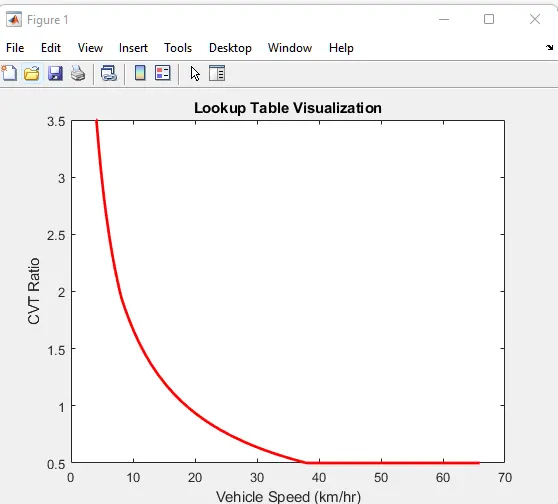
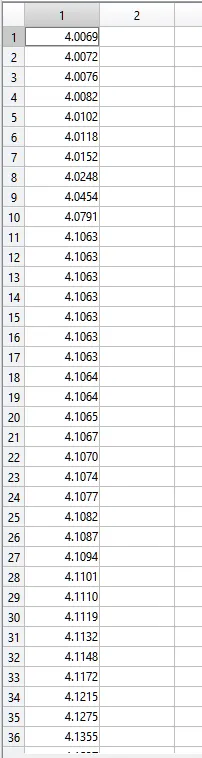
CVT ratio arrays
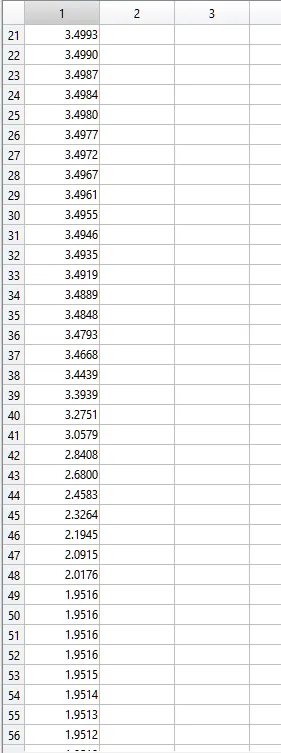
vehicle speed:
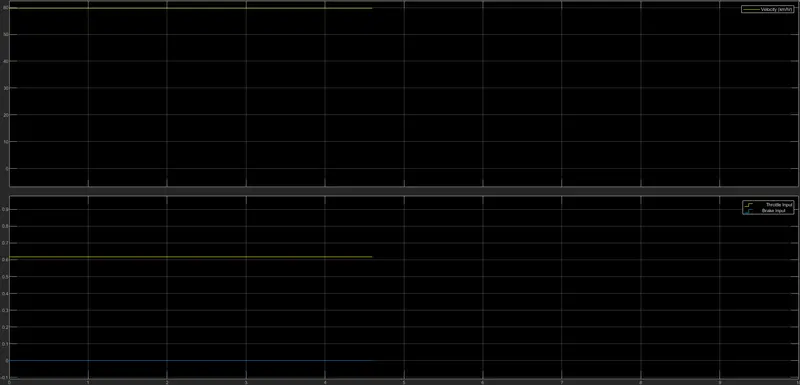
Result:
Vehicle speed
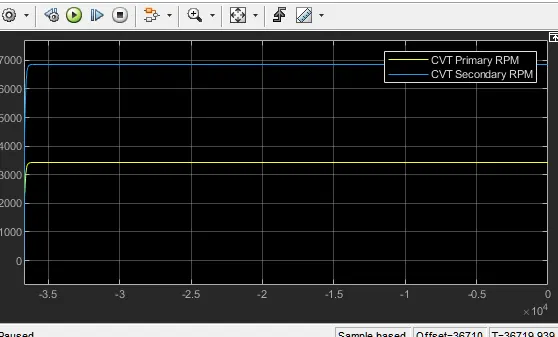
Speed of the Primary and secondary shaft od the CVT
Conclusion:
- The 3 Case study is taken out using different input blocks
- In 1st case study, the Signal builder is used to provide the input throttle and the brake.
- In 2nd case study, the Knobs are used separately for the throttle and for the brake.
- In the 3rd case study, with the dashboard, the lookup table is used to give vehicle speed for different CVT ratios.
- The result is the same in all three case studies as the input parameters are the same but the method is different.
- Hence the study of ATV with CVT is carried out