Project
AIM: To prepare the technical report explaining the model properties and comments on the results of given a system-level simulation of BAJA All-Terrian Vehicle (ATV).
ALL TERRIAN VEHICLE:
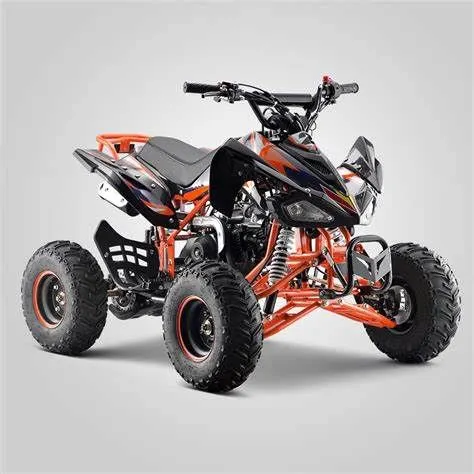
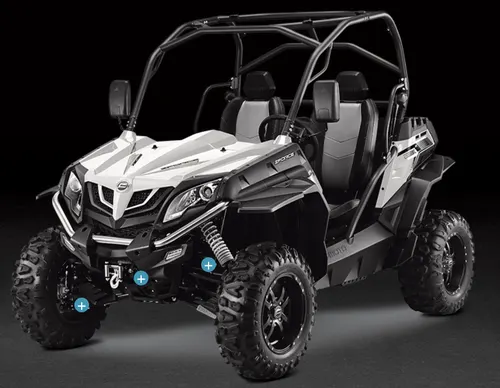
An all-terrian vehicle (ATV) is also known as light utility vehicle, a quad bike. The vehicle travels on low-pressure tires, with a seat that is straddled by the operated, along with handle bars for steering control. As the name implies, it is designed to handle a wider varitey of terrian than most other vehicles. Although it is a street legal vehicle in some countries, it is not street legal within most states. ATVs are intended for use by a single operator, although some companies have developed ATVs intended for use by the operator and one passenger. These ATVs are referred to as tandem ATVs.
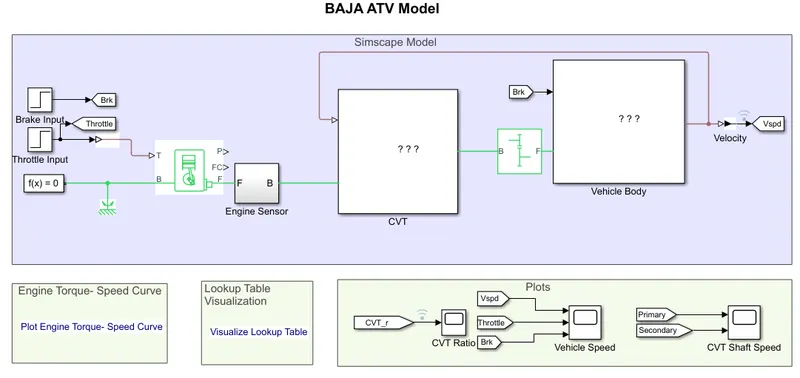
SIMULINK MODEL FOR BAJA ATV WITH CVT:
Continuously variable transmission drive CVT:
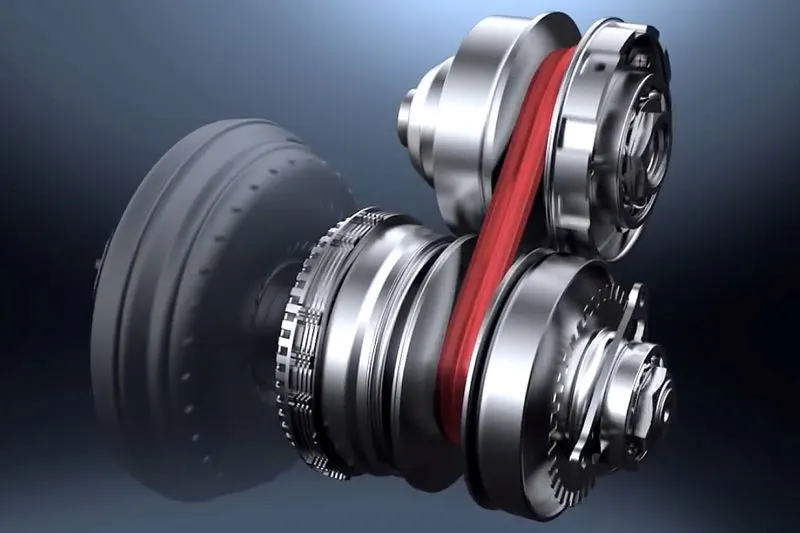
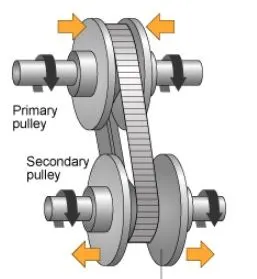
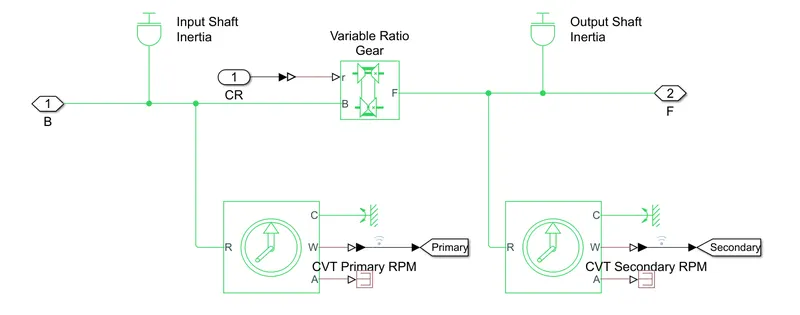
While a traditional transmission uses a wide variety of intricate parts to shift between a range of preset gears, most CVT systems work through a pulley system. In short, this system consists of cones at each pulley connected via a chain belt. The cones can move to increase or decrease the belt diameter to change gear ratios, allow for quick shifting into the needed ratio for increased power, and boost fuel economy.One pulley in the CVT is connected to the engine and the other directs power to the wheels. The width of these pulleys changes based on the needed power; as one gets larger, the other gets smaller. There is a second, less common, type of CVT that uses a series of discs and rollers, but it operates on similar principles.Though there are no gears in a CVT, some simulate a more traditional changing of gears. In these transmissions, the belt-and-pulley system is designed to move to preset points by using a traditional shift lever or paddle shifters on the steering wheel. Fuel economy is significantly improved, modern hybrids utilize CVTs for fuel economy.
CVT Block:
ENGINE:
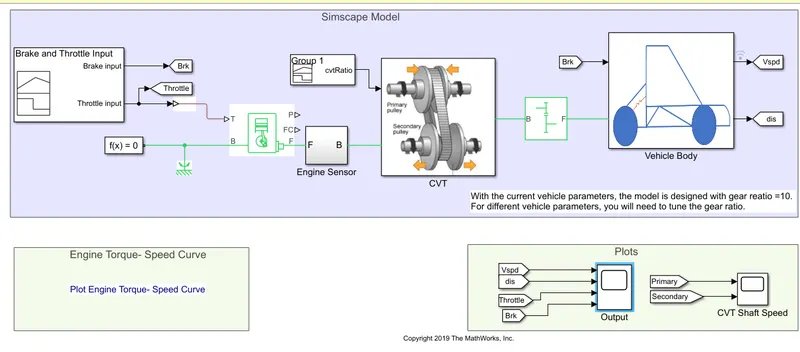
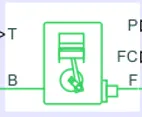
The Generic Engine block represents a general internal combustion engine. This block is a suitable generic engine for spark-ignition and diesel. Speed-power and speed-torque parameterizations are provided. A throttle physical signal input specifies the normalized engine torque.
Connections P and FC are physical signal output ports through which engine power and fuel consumption rate are reported. Connections B and F are mechanical rotational conserving ports associated with the engine crankshaft and engine block resectively. The throttle input signal T lies between zero and one and specifies the torque demanded from the engine as a fraction of the maximum possible torque.
SIMPLE GEAR:
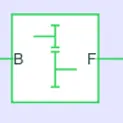
This example shows a simple gear coupling two inertias (shafts). The gear ratio between the follower (F) and base (B) is 2:1. Thus the angular velocity of the follower shaft is half the angular velocity of the base shaft. The follower shaft torque is twice the base shaft torque.
VARIABLE TRANSMISSION GEAR RATIO:
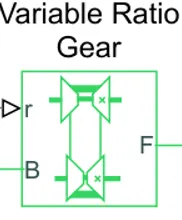
Represents a variable gear ratio gearbox such as implimented by mechanical belt CVT, electric or hydraulic transmissions. The Variable Ratio Transmission block represents a gearbox that dynamically transfers motion and torque between the two connected driveshaft axes, the base and the follower.
connections B (base) and F (follower) are mechanical rotational conserving ports. Specify the relation between base and follower rotation directions with the output shaft rotates parameter.
INPUT SIGNAL:
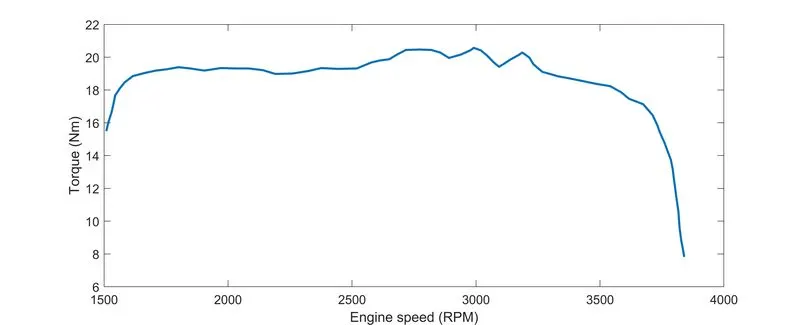
Torque vs engine speed input:
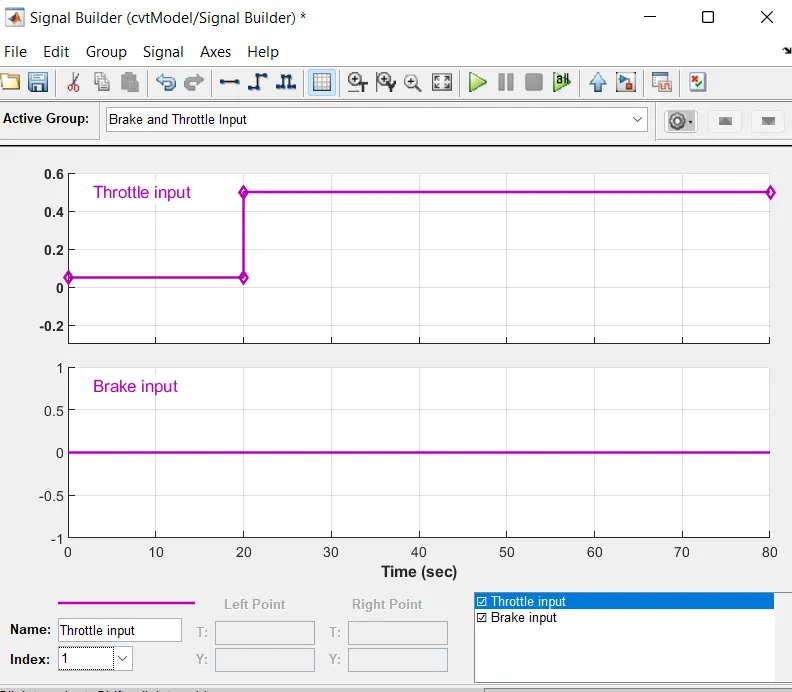
A Signal builder is used to create a signals for brake and throttle:
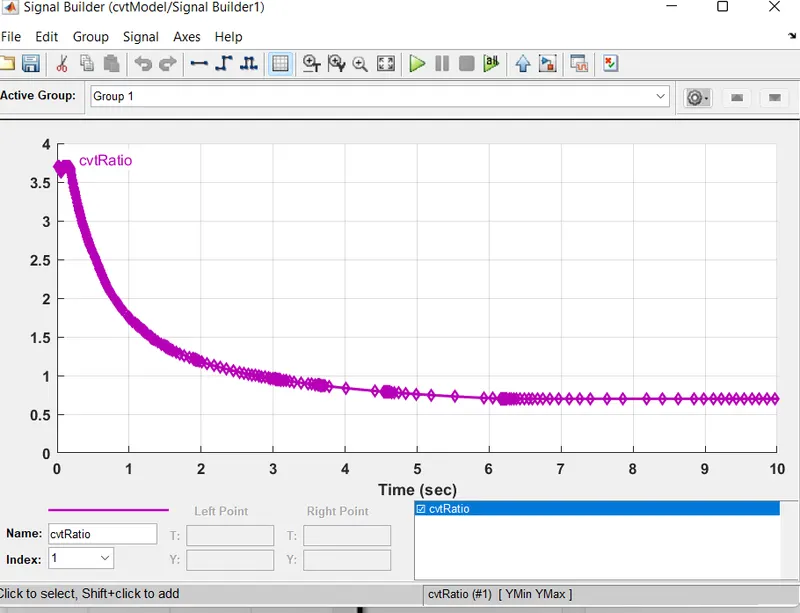
CVT Gear Ratio Input:
VEHICLE BODY:
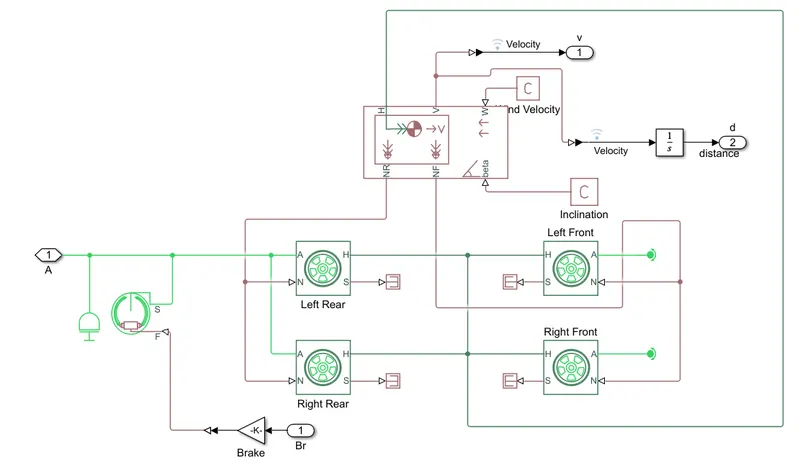
OUTPUT:
CVT SHAFT RPM:
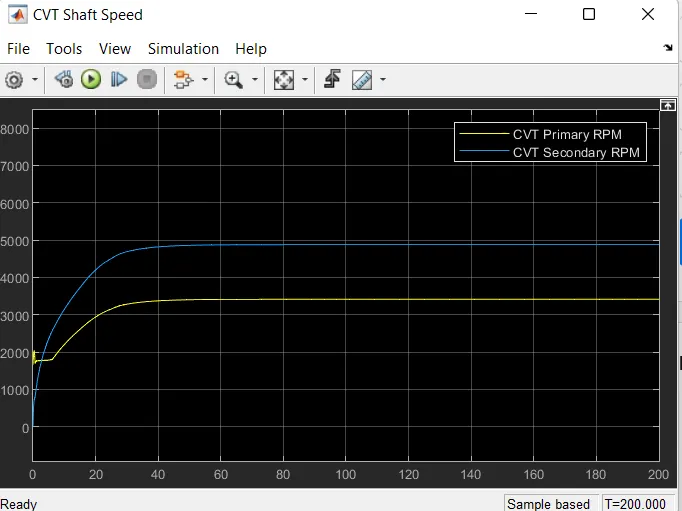
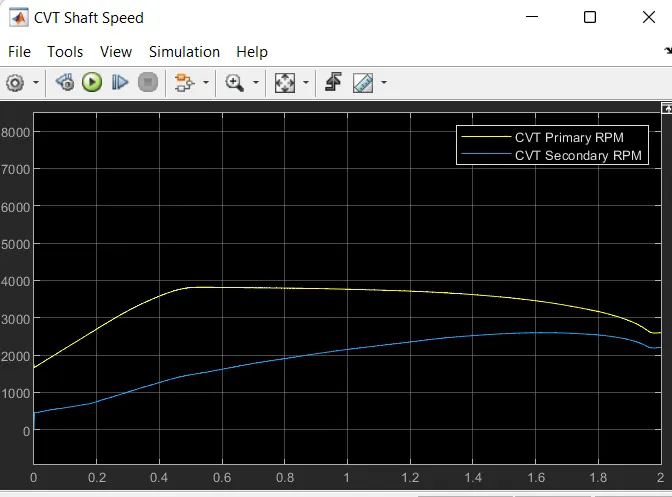
These graph shows the variation in angular velocity of input and output shafts of the variable gear transmission system.
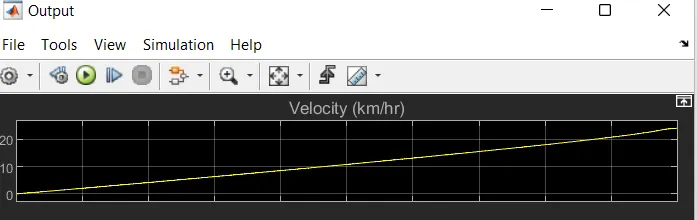
VEHICLE SPEED:
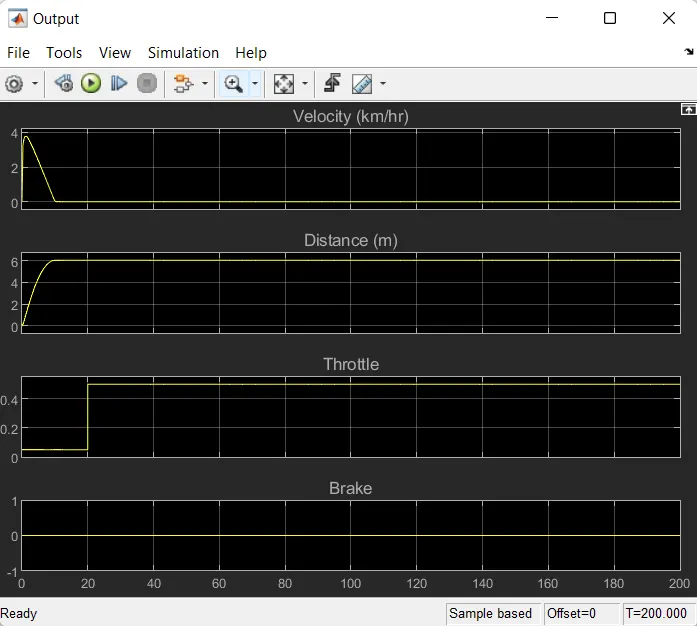
SIMULINK MODEL FOR BAJA ATV WITH CVT USING DASHBOARD:
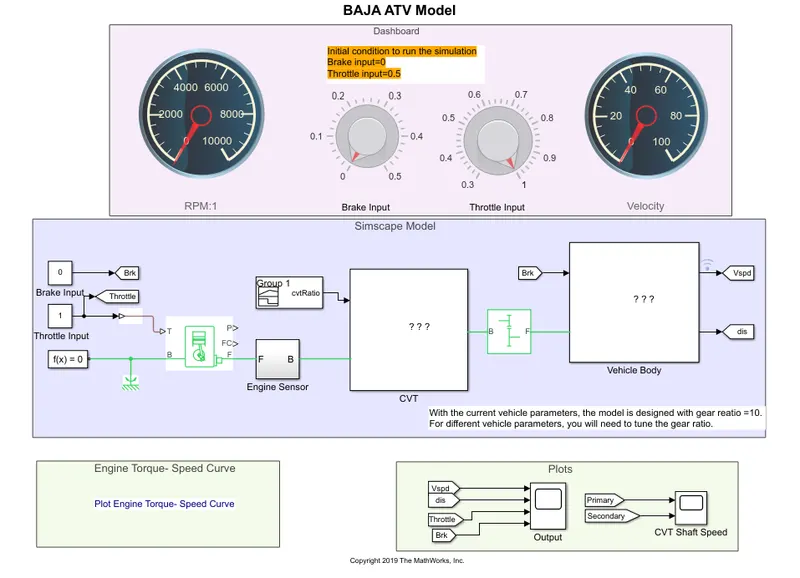
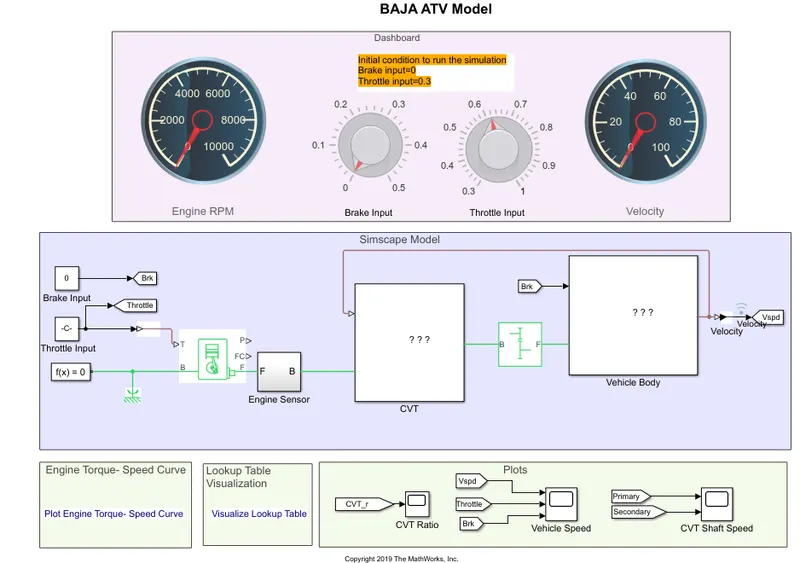
In this model we have dashboard which contains knobs to control inputs. In this case the inputs brake and throttle are not provided using signal builder. A knob is provided to control both parameters in real-time for the user.
OUTPUT:
CVT SHAFT RPM:
VEHICLE SPEED:
SIMULINK MODEL FOR BAJA ATV WITH CVT USING LOOKUP TABLE:
CVT BLOCK:
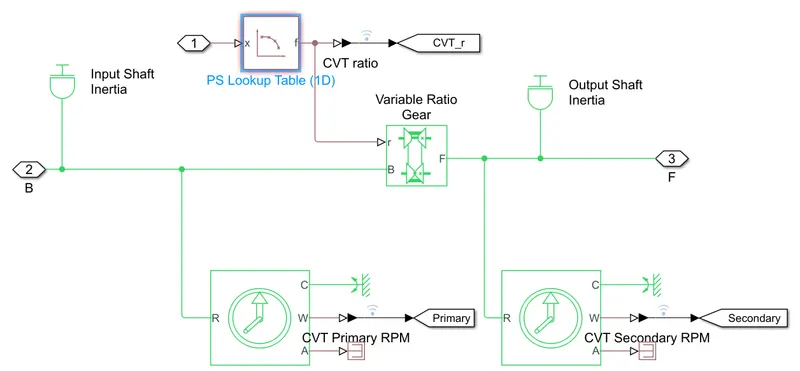
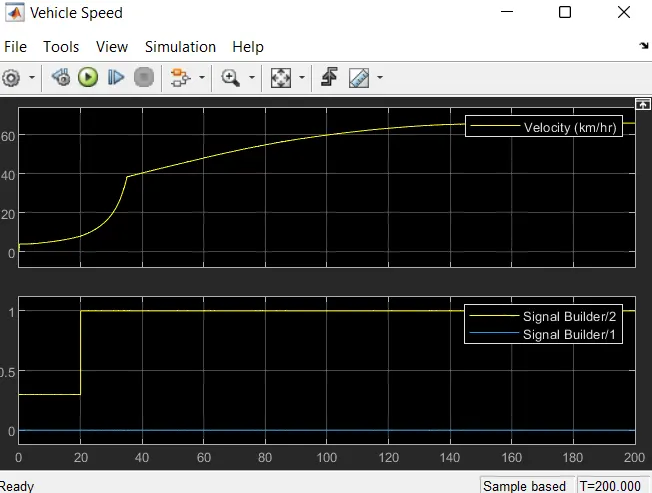
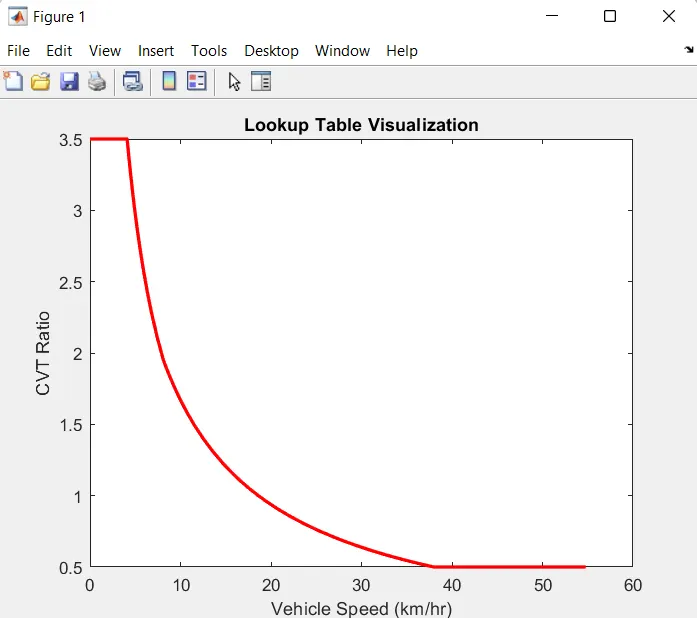
The only difference between this model and first model, the gear ratio input to CVT is provided using a lookup table. The vehicle velocity and shaft rpm outputs are same as before.
OUTPUT:
Vehicle speed:
CVT Shaft RPM:
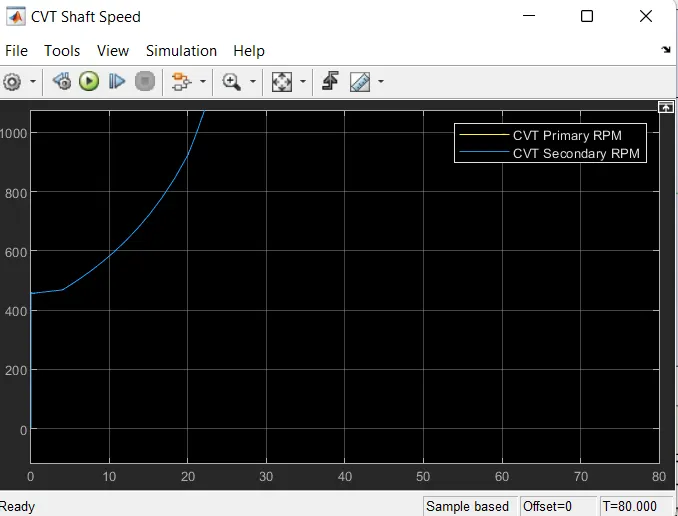
This is the output of simulink model for ATV with CVT using lookup table.
SIMULINK MODEL FOR BAJA ATV WITH CVT USING LOOKUP TABLE AND DASHBOARD:
LOOKUP TABLE VISUALISATION:
CONCLUSION:
Thus we have obtained the four different models of BAJA ATV WITH CVT and recorded the outputs: vehicle velocity, CVT shaft rpm with respect to variations in input throttle and brake.