Project
AIM:
To Carry out a system-level simulation of an all-terrain vehicle and to Prepare a technical report explaining the model properties & comments on the results.
PROCEDURE:
OBJECTIVES TO KNOW:
1) BAJA ATV MODEL USING CVT.
2) BAJA ATV MODEL USING CVT AND DASHBOARD.
3) BAJA ATV MODEL USING CVT AND LOOKUP TABLE.
4) BAJA ATV MODEL USING A CVT, LOOK-UP TABLE, AND A DASHBOARD.
ALL-TERRAIN VEHICLE:
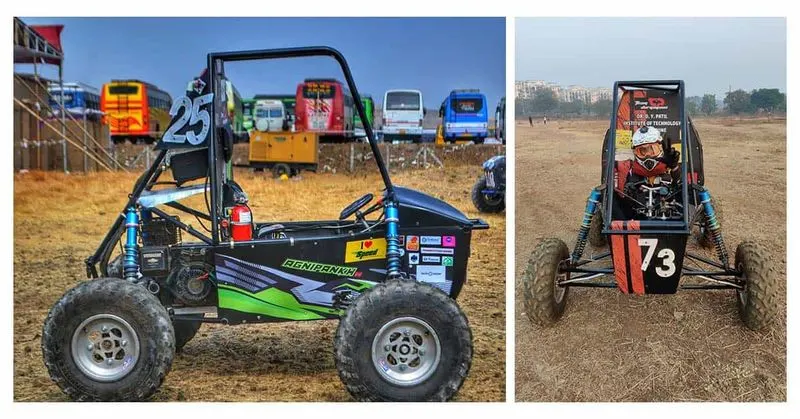
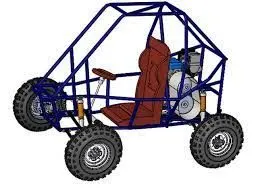
An all-terrain vehicle (ATV), also known as a light utility vehicle (LUV) a quad bike, or simply a quad, is a vehicle that travels on low-pressure tires, with a seat that is straddled by the operator, along with handlebars for steering control. As the name implies, it is designed to handle a wider variety of terrain than most other vehicles. Although it is a street-legal vehicle in some countries,
The rider sits on and operates these vehicles like a motorcycle, but the extra wheels give more stability at slower speeds. Although most are equipped with three or four wheels, six-wheel models exist and existed historically for specialized applications. Multiple-user analogs with side-by-side seating are called utility terrain vehicles (UTV) or side by sides to distinguish the classes of vehicles. Both classes tend to have similar powertrain parts.
MODELS:
OBJCTIVE (1)
STUDY THE BAJA AVT MODEL USING CVT.
CONTINUOUSLY VARIABLE TRANSMISSION:
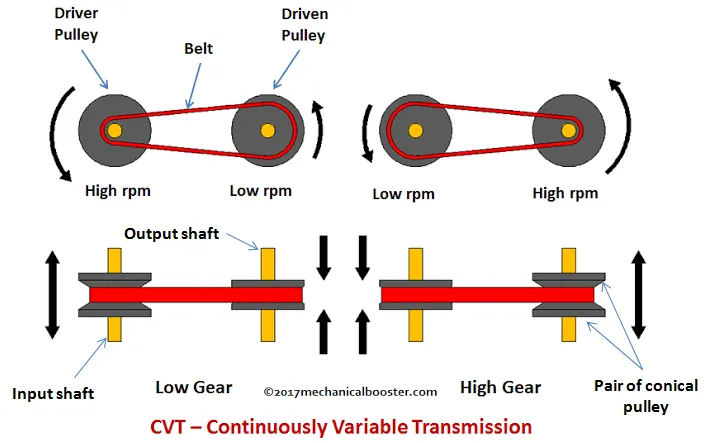
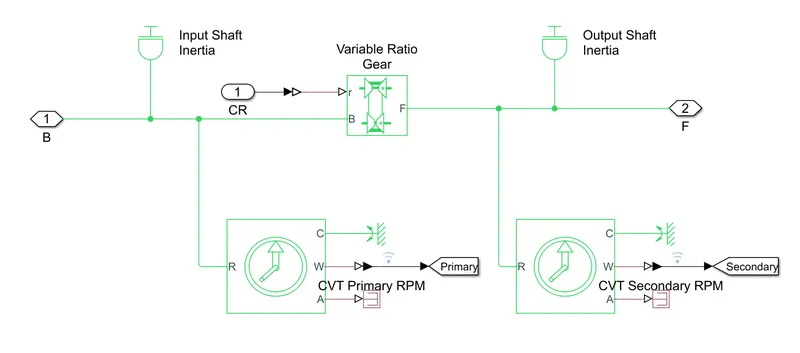
The CVT is an automatic transmission that uses two pulleys with a steel belt running between them. To continuously vary its gear ratios, the CVT simultaneously adjusts the diameter of the "drive pulley" that transmits torque from the engine and the "driven pulley" that transfers torque to the wheels.
SIMSCAPE MODEL:
COMPONENTS USED:
1)SIGNAL BUILDER
2)SOLVER CONFIGURATION
3)GENERIC ENGINE
4)GO TO
5)SIMPLE GEAR
6)MR REF
7)SIMULINK TO PS CONVERTER
8)FROM
EXPLANATION OF THE MODEL:
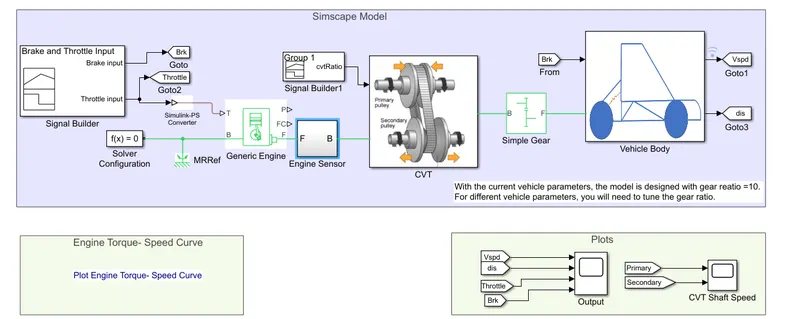
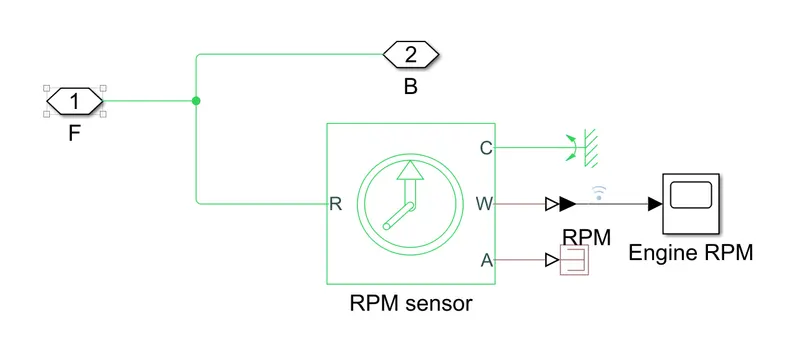
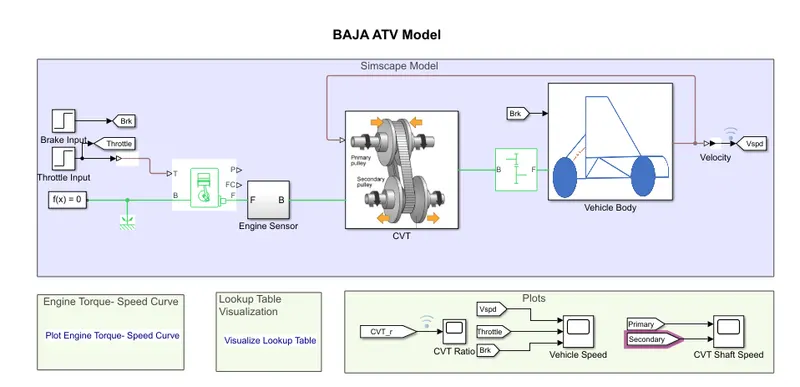
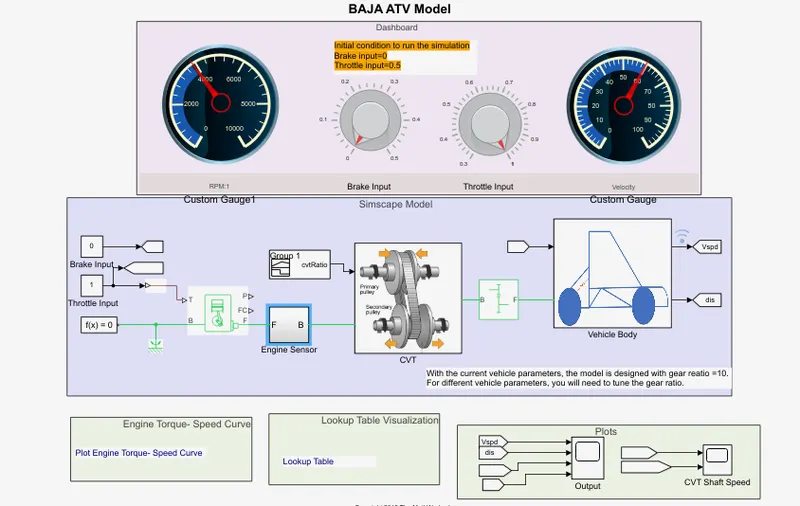
That the Brake and Throttle input which was connected to the Generic Engine, then the Engine sensor senses the input which was Given from the Generic Engine, the Engine gives the power to the Transmission system. The produced Power was sent to the Gear system located after the Transmission, and finally, the power can flow through the propeller or some other mechanical systems.
INSIDE THE MODEL OF CVT, ENGINE SENSOR, AND VEHICLE BODY:
CVT:
ENGINE SENSOR:
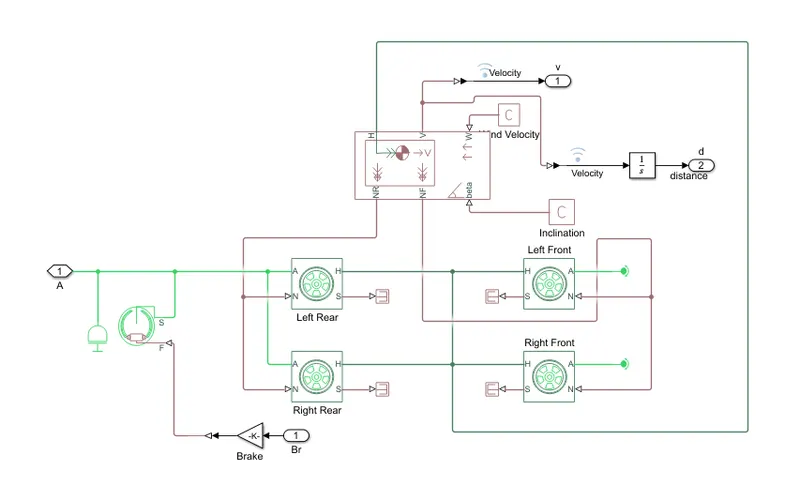
VEHICLE BODY:
OUTPUT OF THE MODEL:
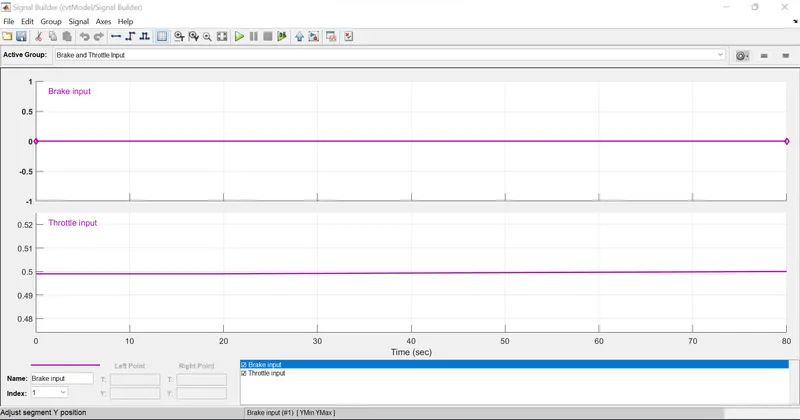
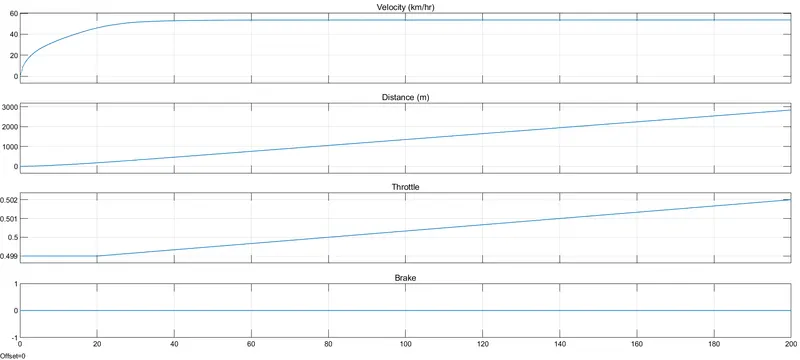
OUTPUT OF THE VELOCITY, DISTANCE, THROTTLE, AND BRAKE:
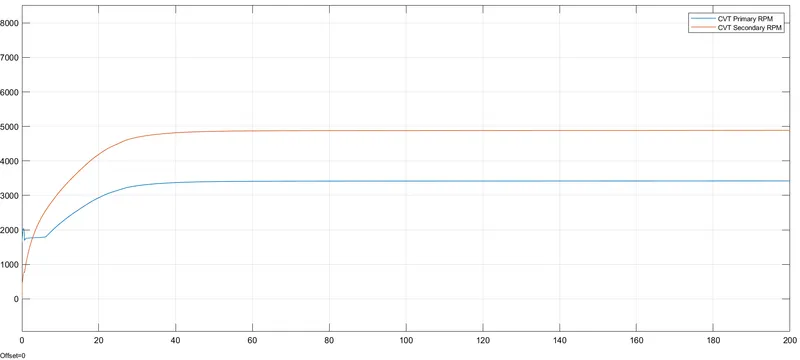
CVT SHAFT SPEED:
OBJECTIVE (2)
BAJA ATV MODEL USING CVT AND DASHBOARD.
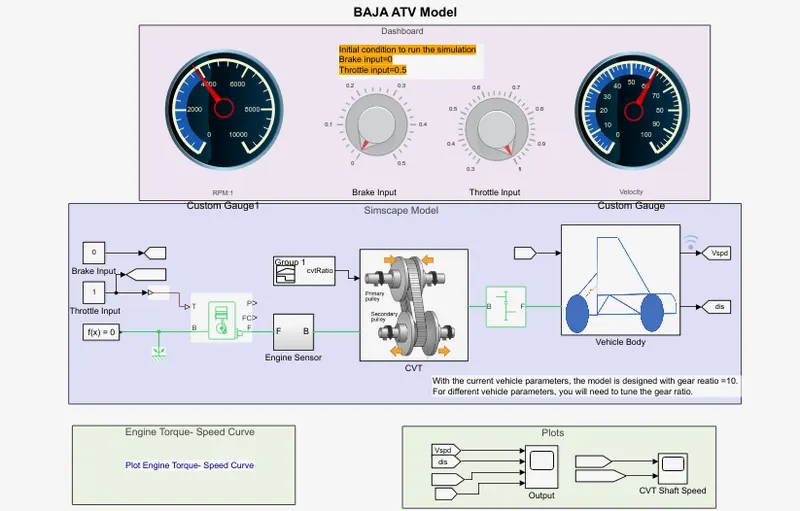
The model which is similar to the above model and adding some dashboard contents for knowing about the RPM, BRAKE, THROTTLE AND VELOCITY INPUT
SIMULINK MODEL:
OUTPUT:
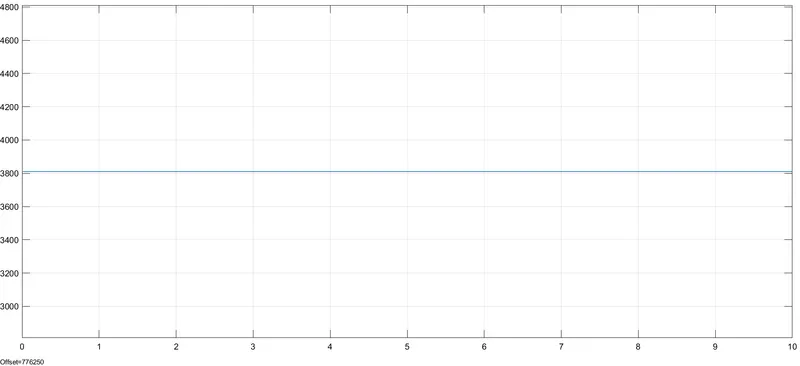
ENGINE RPM:
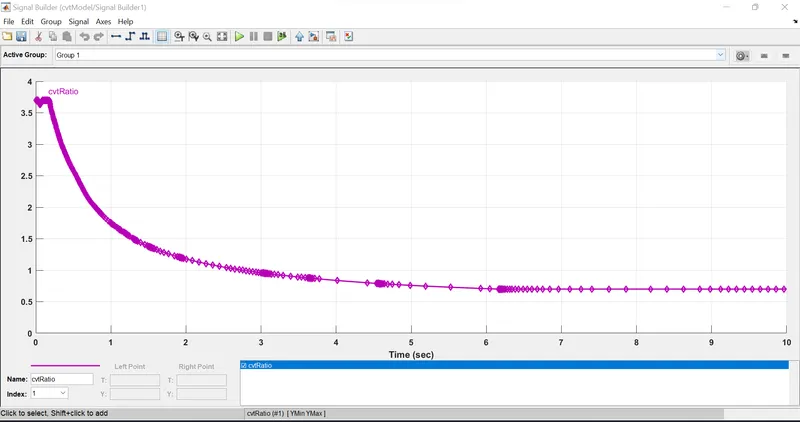
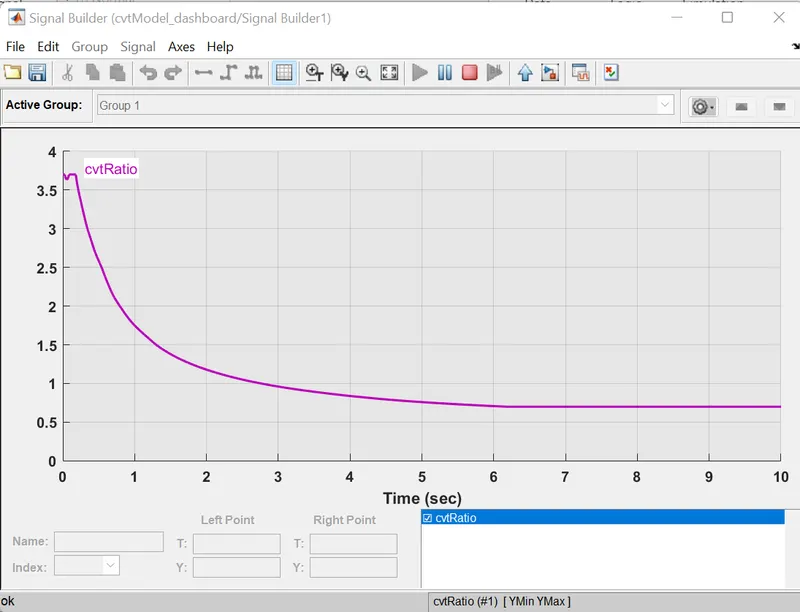
SIGNAL BUILDER:
PLOTS:
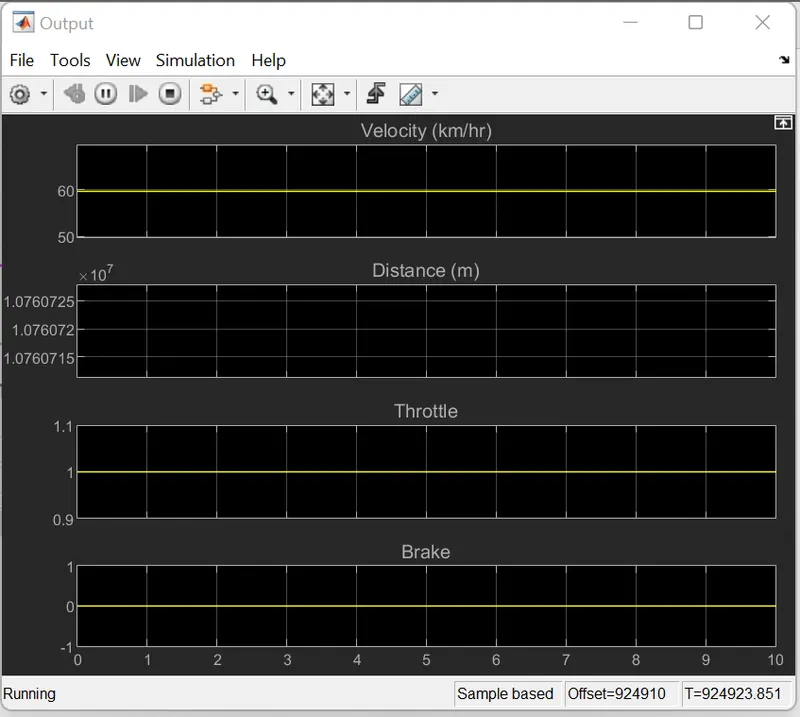
VELOCITY, DISTANCE, THROTTLE, AND BRAKE:
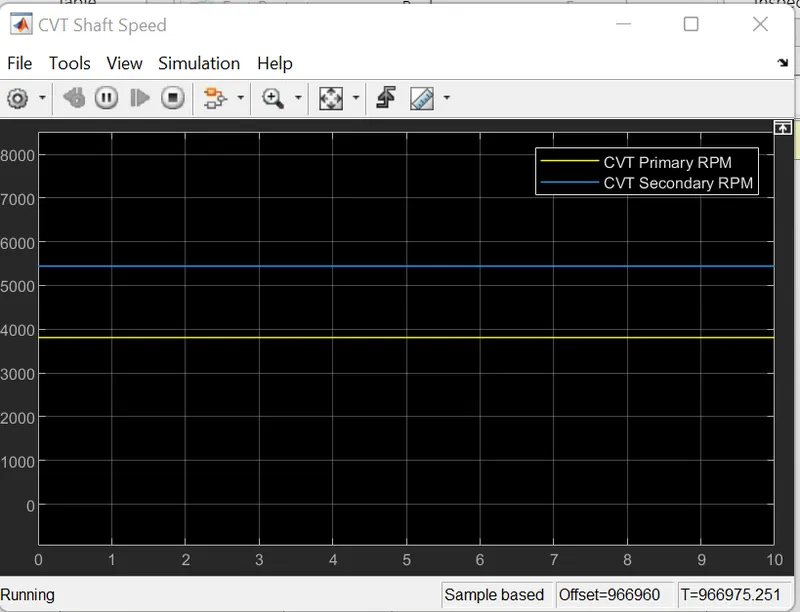
SHAFT SPEED:
OBJECTIVE (3):
BAJA ATV MODEL USING CVT AND LOOKUP TABLE.
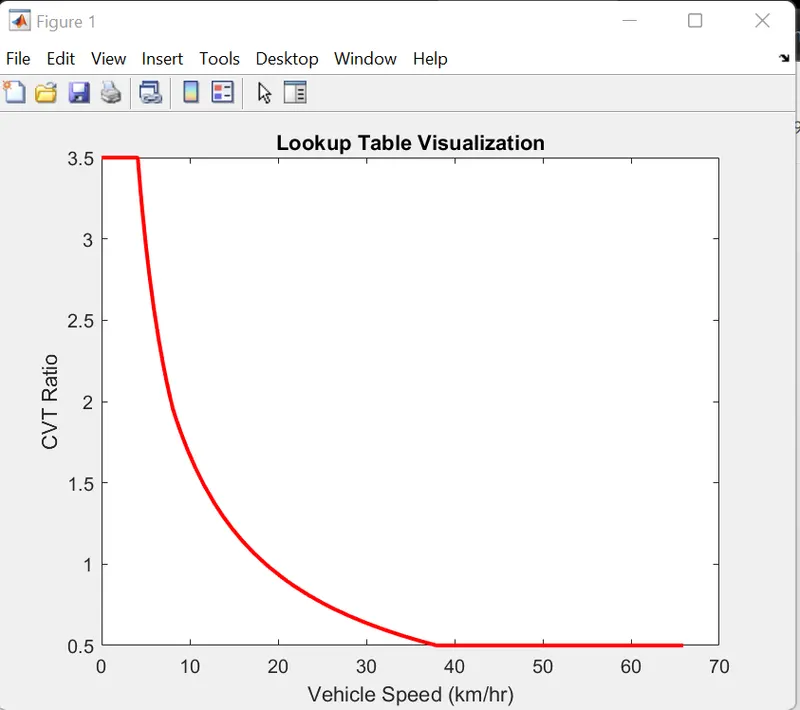
LOOKUP TABLE:
Specify breakpoint data sets and table data for lookup table blocks. Change the elements of lookup tables. You can import table and breakpoint data from variables in the MATLAB workspace by referencing them in the Table and Breakpoints tab of the dialog box. Import data into a lookup table with the xls read function.
A lookup table is an array of data that maps input values to output values, thereby approximating a mathematical function. Given a set of input values, a lookup operation retrieves the corresponding output values from the table. If the lookup table does not explicitly define the input values, Simulink® can estimate an output value using interpolation, extrapolation, or rounding, where:
-
Interpolation is a process for estimating values that lie between known data points.
-
Extrapolation is a process for estimating values that lie beyond the range of known data points.
-
Rounding is a process for approximating a value by altering its digits according to a known rule.
A lookup table block uses an array of data to map input values to output values, approximating a mathematical function. Given input values, Simulink performs a “lookup” operation to retrieve the corresponding output values from the table. If the lookup table does not define the input values, the block estimates the output values based on nearby table values.
SIMULINK MODEL:
OUTPUTS:
LOOKUP TABLE VISUALIZATION:
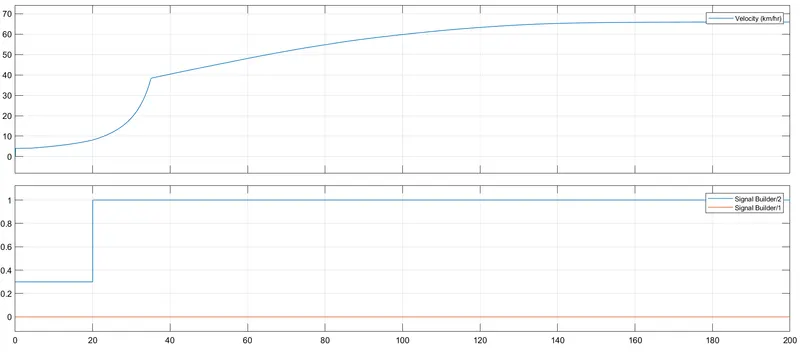
VELOCITY AND SIGNAL BUILDER OUTPUTS:
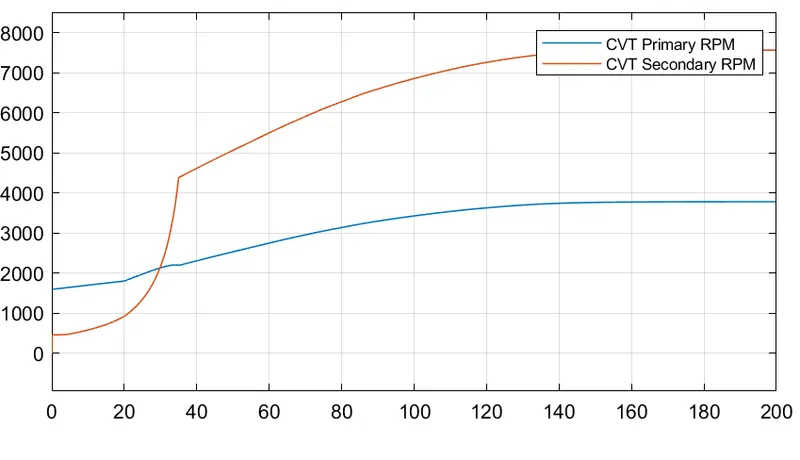
PRIMARY AND SECONDARY RPM:
OBJECTIVE (4):
BAJA ATV MODEL USING A CVT, LOOK-UP TABLE, AND A DASHBOARD.
COMBINING ALL THE INPUTS;
SIMULINK MODEL:
OUTPUTS:
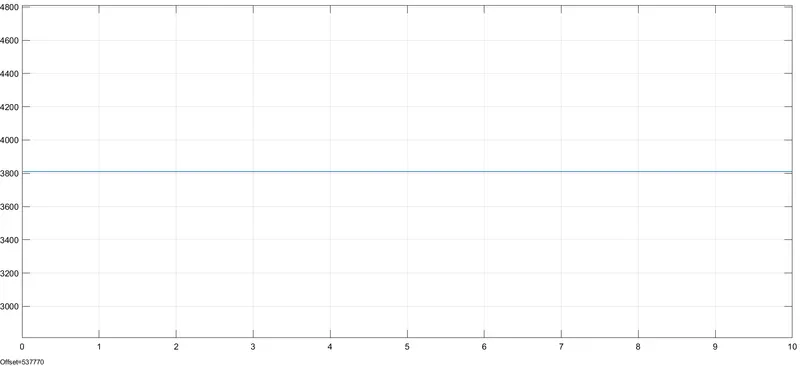
ENGINE RPM:
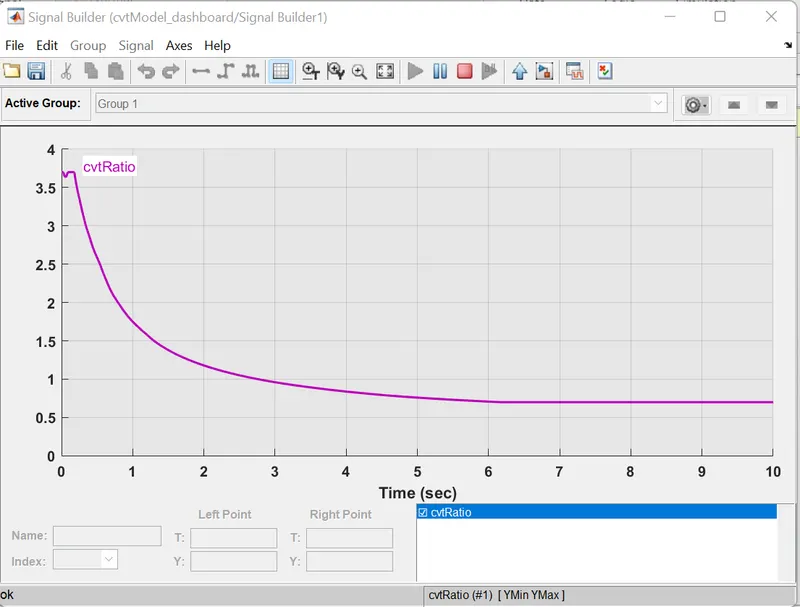
SIGNAL BUILDER:
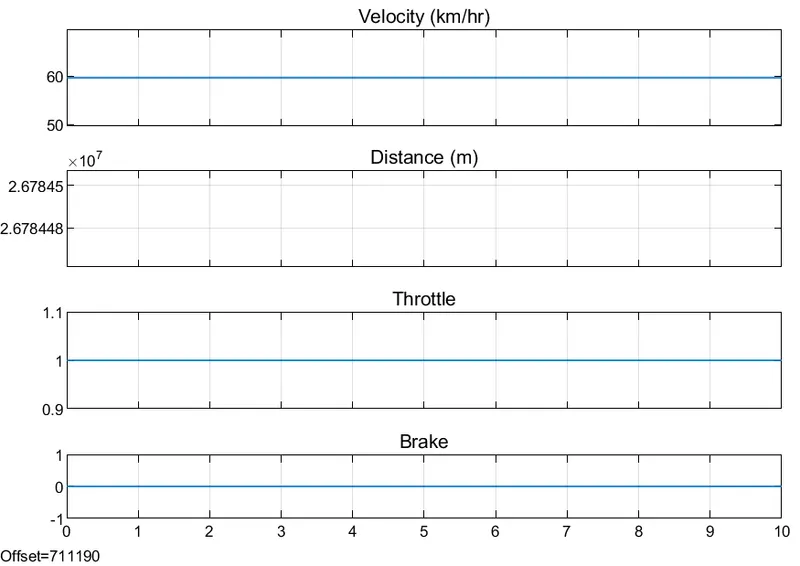
VELOCITY, DISTANCE, THROTTLE, AND BRAKE:
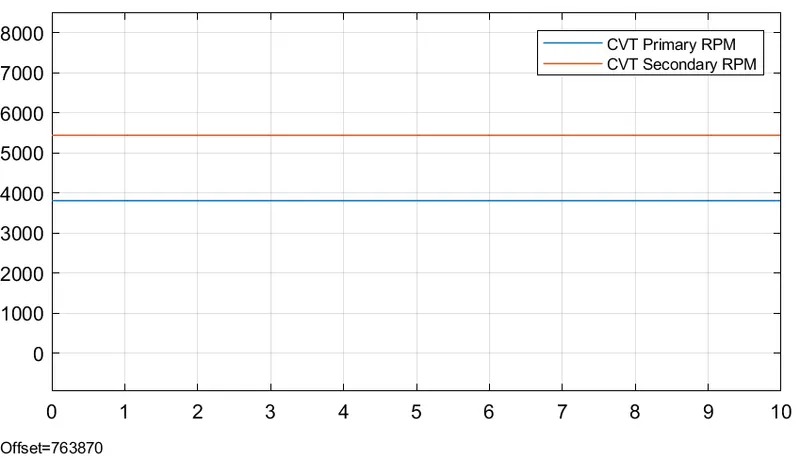
PRIMARY AND SECONDARY:
RESULTS:
HERE WE CAN CARRY OUT A SYSTEM-LEVEL SIMULATION OF ALL-TERRAIN VEHICLES.