Project
Aim:
To write a technical report for simulation of BAJA ALL-Terrain Vehicle(ATV) under different conditions
Objectives:
To carry out a system-level simulation of an all-terrain vehicle and prepare a report by describing the model properties and commenting on the results.
Introduction
All-terrain vehicle(ATV):
All-terrain vehicle refers to single-seated quadricycle bike travels on low-pressure tires along with a handlebar to control the steering. This is designed for offroad travel and activities with deep-threaded tires that assist in driving over muddy, rocky, wetlands.ATVs offer excellent offroad capabilities over long distances and narrow access points. They can be customized for high performance and it finds their applications across various industries such as sports, entertainment, military, etc.
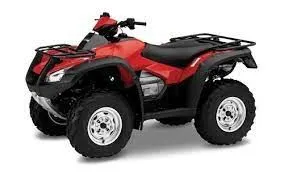
Fig1: ATV vehicle
Continuous Variable Transmission(CVT):
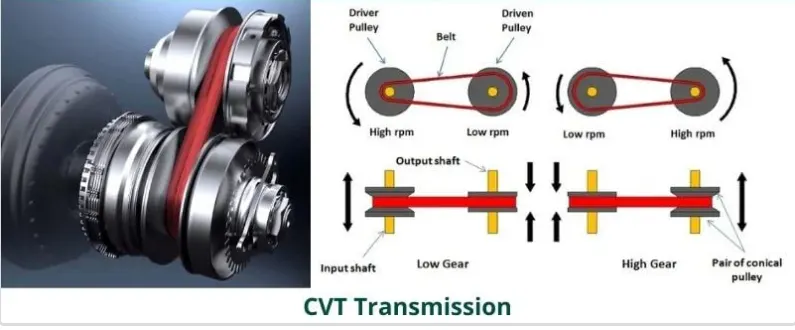
Fig2: CVT for power transmission
A CVT, or continuously variable transmission, shifts seamlessly through an infinite range of effective gear ratios between high and low gear as you drive, while other types of mechanical transmissions offer a fixed number of gear ratios. Tough changes occur between each. CVT transmission system is also known as automatic single-speed, shiftless and Stepless transmission. It provides more useable power, a smoother driving experience, and better fuel economy than a gearbox system.
Model
Case-1. BAJA ATV Model without dashboard and lookup table
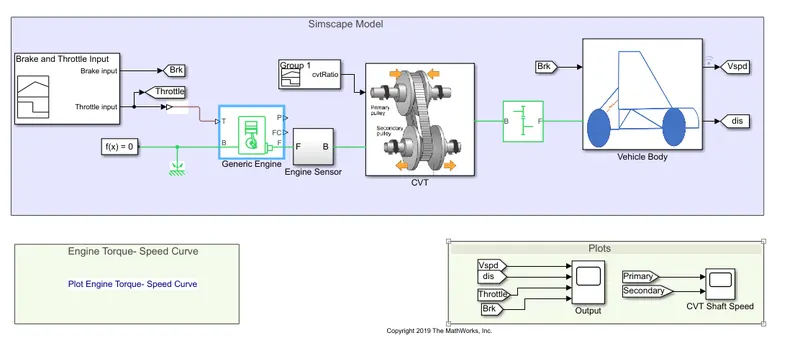
The model consists of
1. Signal builder
It allows creating multiple signals with step, constant, pulse, square, sine wave shape as input signals.
2. Generic Engine
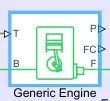
Represents the system-level model of spark ignition and diesel engines suitable for use at the initial stages of modeling when only the basic parameters are available. Optional idle speed and red line controllers are included.
The throttle input signal T lies between zero and one and specifies the torque demanded from the engine as a fraction of the maximum possible torque.
Connections F and B are mechanical rotational conserving ports associated with the engine crankshaft and engine block respectively. Connections P and FC are physical signal output ports through which engine power and fuel consumption are reported.
It asks a few values such as speed and torque and that data we can get by data point extraction and that is fed into the generic engine.
3. CVT Block
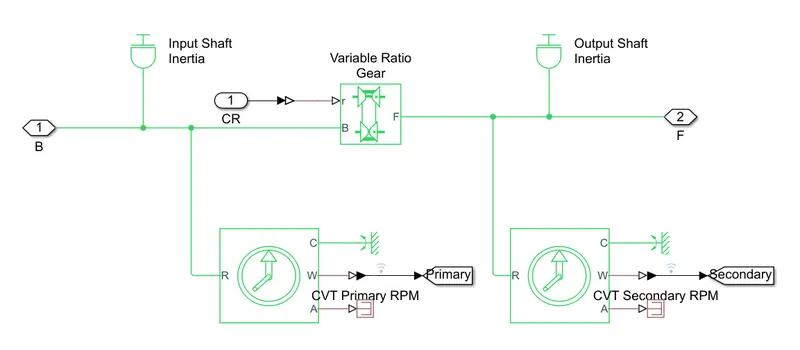
Variable gear ratio implemented by belt CVT, electric, hydraulic transmissions. The physical signal input r defines the ratio of input to output angular velocities of shafts.
Connections B(base) and F(follower) are mechanical rotational conserving ports. Specify the relation between base and follower rotation directions with output shaft rotates parameter.
Input shaft inertia and output shaft inertia represents the two CVT conical pulleys and variable gear ratio represents belt connected and variable gear ratio that is overdrive and speed reduction based on the effective diameter of pulleys.
Input signals:
Brake and throttle signals are created using the signal builder block.
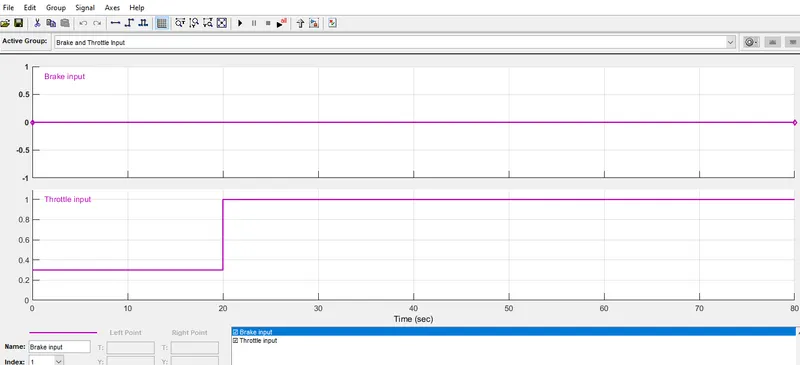
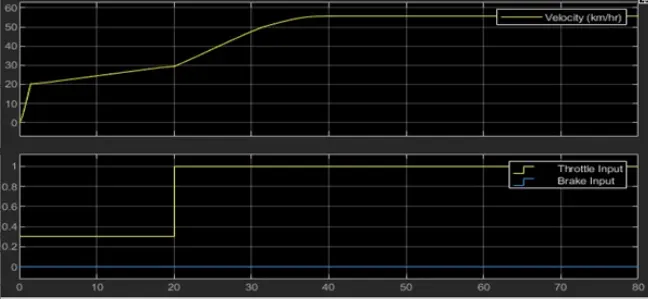
Throttle input is given from 0.3 to 1 after 20 sec and no brake input.
CVT Gear ratio input
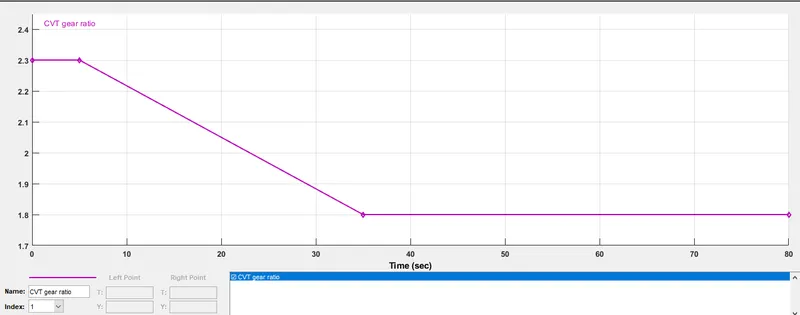
CVT gear ratio is the ratio of input speed to output speed which determines overdrive or speed reduction. CVT gear ratio varied from 3.8 to 0.7 which means it increases the vehicle speed.
Torque vs Engine speed input
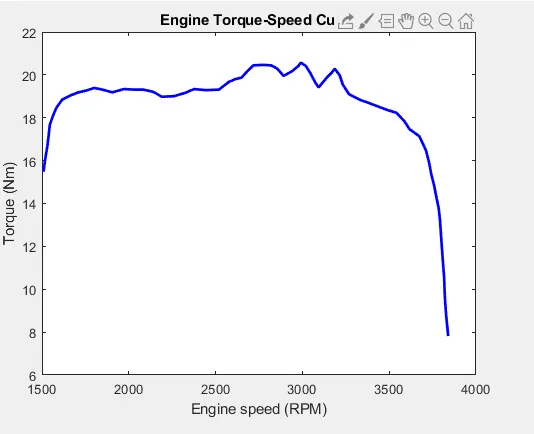
This graph is the recorded behavior of the BAJA ATV engine. From this graph using GRABIT software, the data points are extracted and fed into a generic engine block through a script file. The maximum RPM of the engine is about 3900 rpm and torque is decreasing as engine speed is increases.
Simple gear
it is used for speed reduction to connect the engine and CVT
Vehicle body
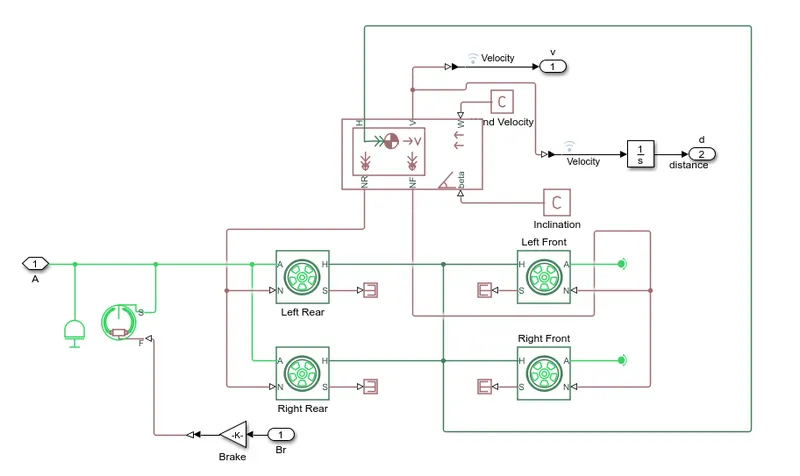
In-vehicle body system vehicle body block is used with parameters of Car mass number of wheels, frontal area, etc which is connected to 4 wheels and tires and which is also connected to the shoe brake system.
Output for Case-1
Vehicle speed
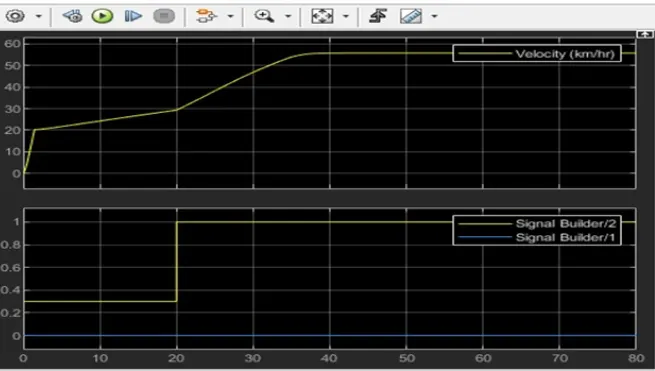
From the result shown above, we can see that when we increase the throttle input vehicle velocity also increases after a certain time and reaches the max velocity, and remains constant after that. It attained max velocity of 55 km/h for full throttle.
CVT Shaft
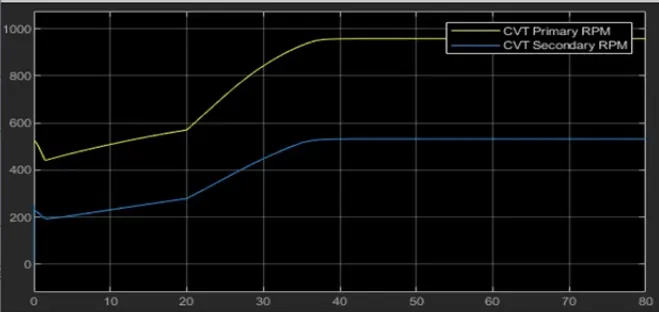
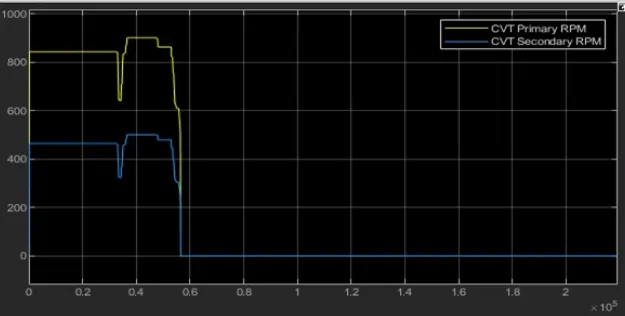
The graph shows that primary and secondary shafts speeds are varied. This depends on the gear ratio.
2. Simulink model of BAJA ATV with CVT using the dashboard
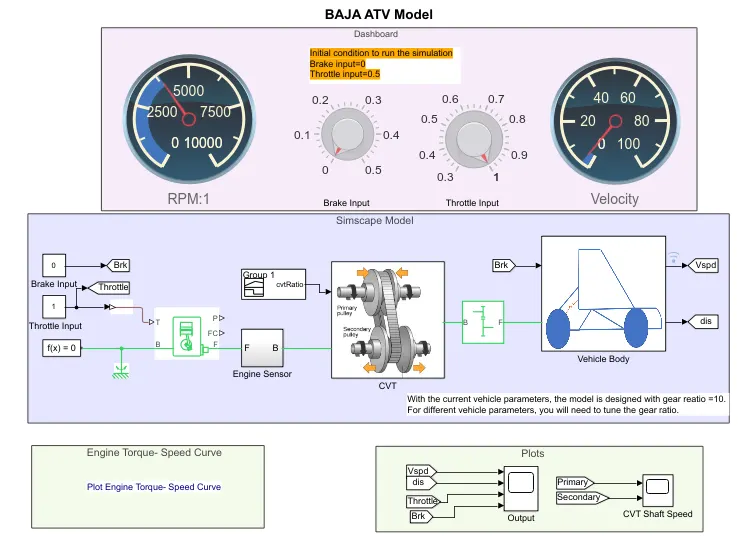
In this model, we have a dashboard that contains knobs to control the inputs. In this case, the inputs-throttle and brake are not provided using the signal builder. A knob is provided to control both the parameters in real-time for the user. Also, the speed and velocity gauges are used to see the result in real-time.
Vehicle speed
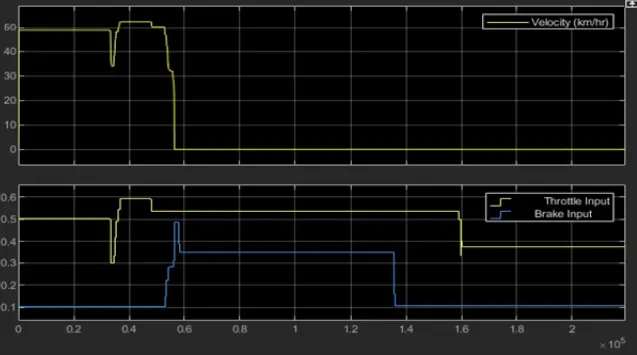
From the graph, It can be seen that the velocity of the vehicle increases drastically from 0 to 50Kmph when the throttle value is 0.5 and 0 brake input. Once the braking value increases from 0.1 to 0.5. The velocity of the vehicle decreases to a constant throttle value.
CVT Shaft
3. Simulink model of BAJA ATV with CVT using the look up table without dashboard
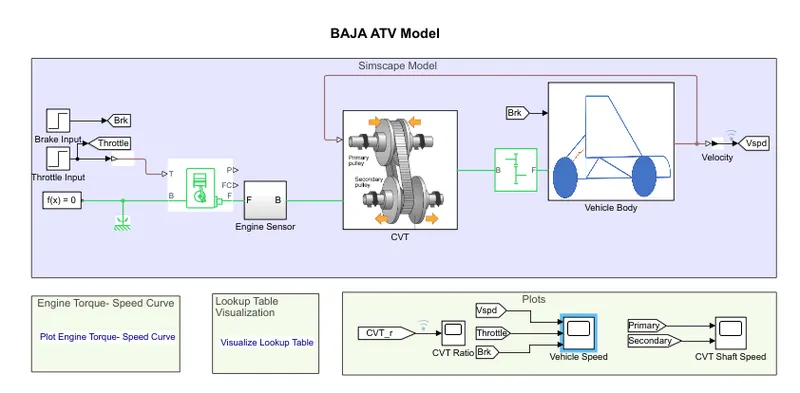
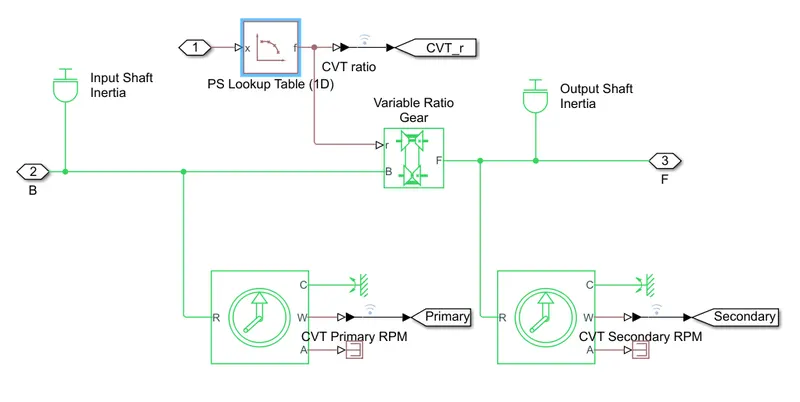
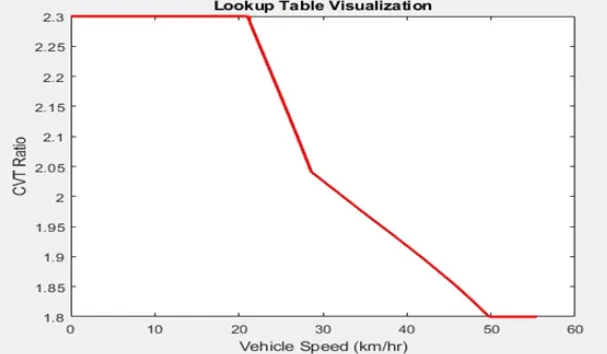
In this model, the Signal builder is not used instead of that, step blocks are used to give input. It has a feedback system based on the velocity of the vehicle the gear ratio automatically shifts that is controlled by lookup table data.
CVT with a lookup table
CVT Ratio
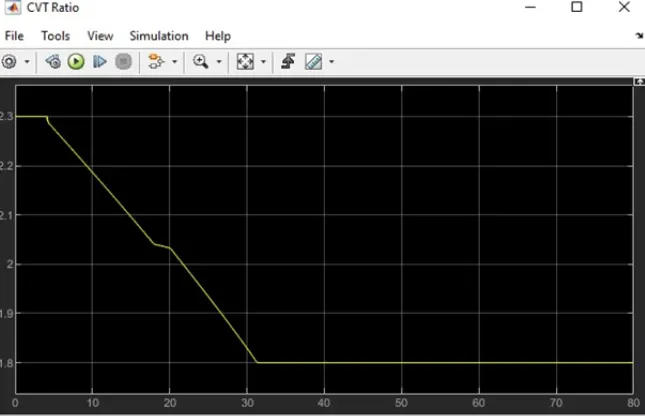
CVT ratio is decreasing in the graph initially ratio was kept high to increase the vehicle acceleration and as it decreases the vehicle speed increases.
Lookup table
Vehicle speed
CVT SHAFT
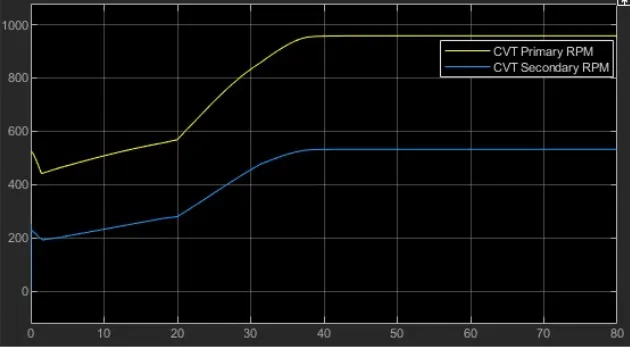
The results are the same as Simulink model of BAJA ATV with CVT without dashboard and lookup table,since input parameters are the same.
4. Simulink model of BAJA ATV with CVT using the dashboard and look up table
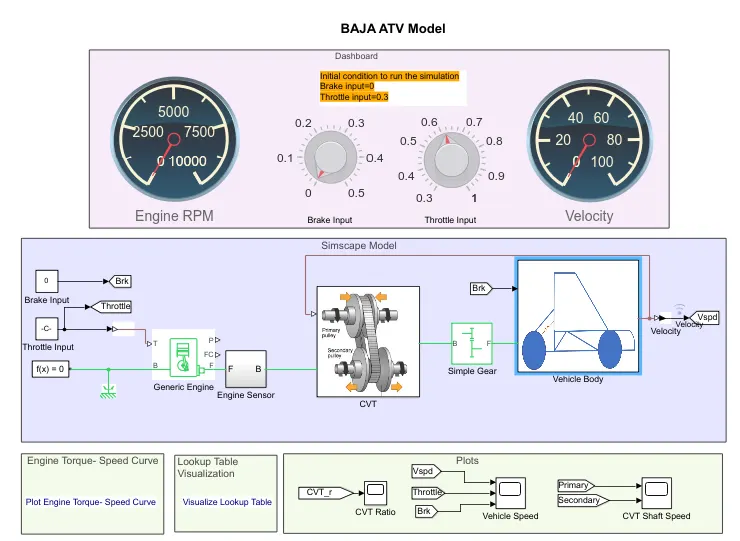
In this model, a lookup table is provided with the dashboard and it is used to control the input using knobs for throttle and brake with knobs and gauges to see results in real-time.
Vehicle speed
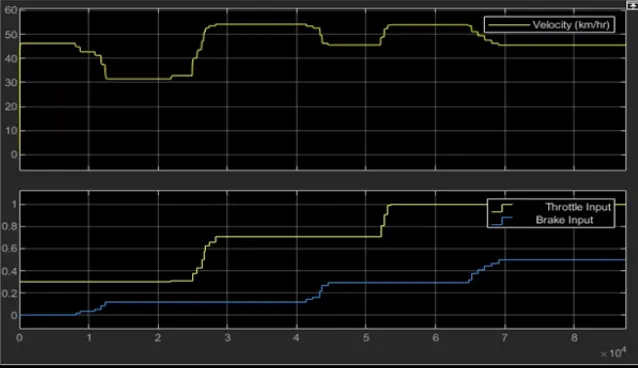
This graph also shows as we increase the throttle value the vehicle speed increases and when we apply brake vehicle speed decreases.
CVT Shaft Speed
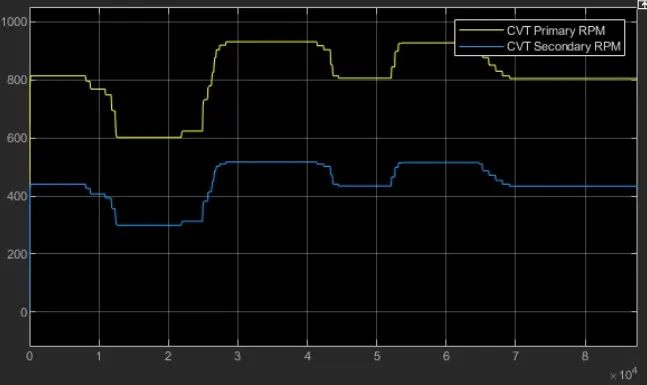
Primary shaft speed is higher than the secondary shaft
Conclusion
The four models of BAJA ATV have been successfully analyzed and recorded output with respect to variation in input throttle and brake.