Project
Aim: To study BAJA all terrain vehicle(ATV) model with Continuously Variable Transmission(CVT)
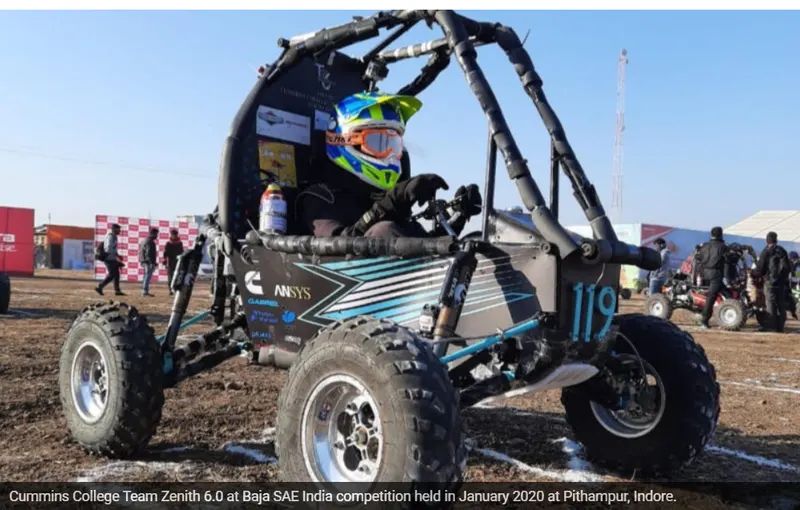
Principal for CVT:
If two pulleys are connected by a belt, then the change in driving pulley or driven pulley diameter will lead to the change in torque and speed of the transmission of power.
Construction:
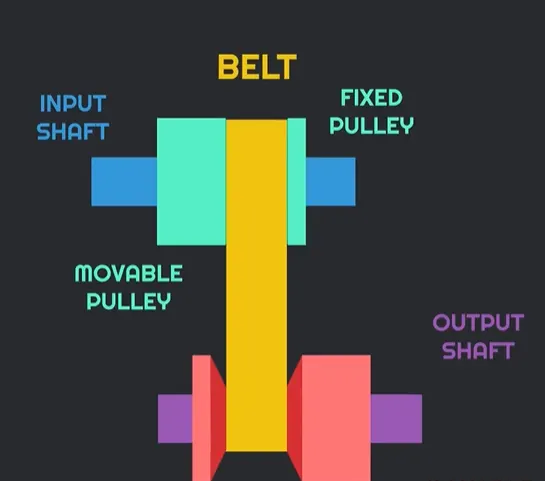
On the input shaft we have two pulleys. one is a fixed pulley and the other one is a movable pulley. The same arrangement was there on the output shaft.
A movable pulley has a hydraulic system, with the help of this we can move the pulley inward and outward direction. In between these two pulley(input and output) belts are there which help to transmit the power from one pulley to another.
We make pulleys move in a particular direction simultaneously, in this process the diameter of one pulli will be greater than the other. means if driver pulley diameter is increasing then driven pulley e diameter will decrease.
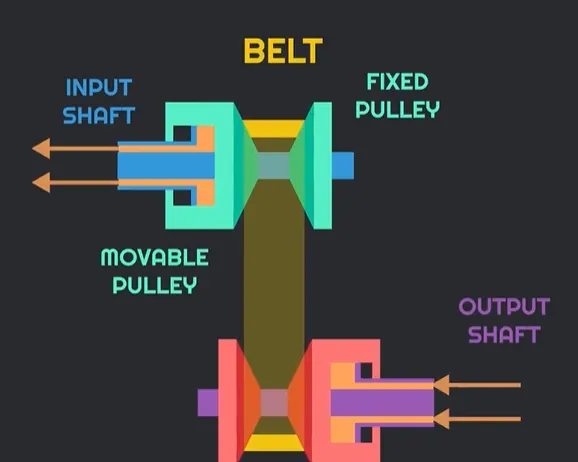
This helps us to achieve a better gear ratio. Using this principle we can achieve the different torque at different situations. Here continuously the gear ratio is changing so that's why the name is called Continuous variable transmission.
For reverse gear;
There is a cyclic gearbox on the driver pulley. Where ring gear is mounted on pulley and
Sun gear is rigidly mounted on the input shaft. in between the ring gear and sun gear we have to planet gear. Planet gear helps us to connect the sun gear and ring gear together.
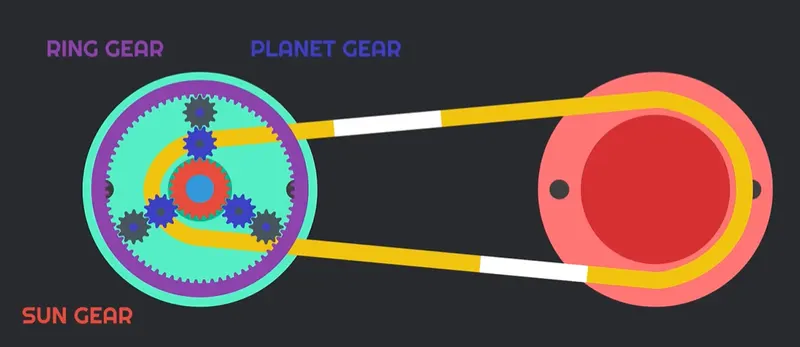
For reverse gear, will release clutch epicyclic gear and will travel into reverse direction which will lead to you having the driver pulley in reverse direction.
BAJA ATV consists of following components:
- Vehicle Body
- Suspension
- Tire
- Engine
- CVT
BAJA ATV Model
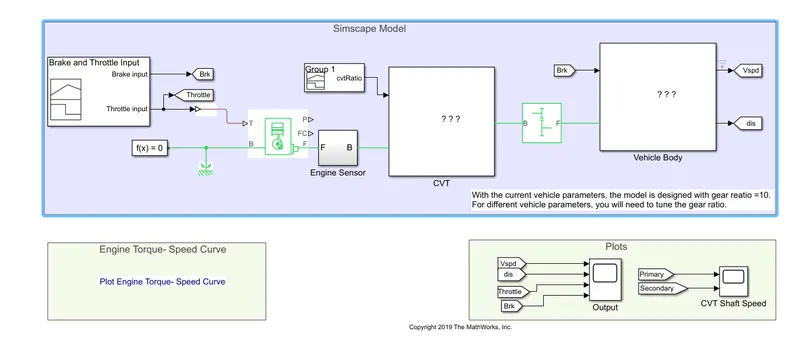
The first input of this model consist of signal builder block. The output of Signal builder block is providing Brake and Throttle inputs to the engine.
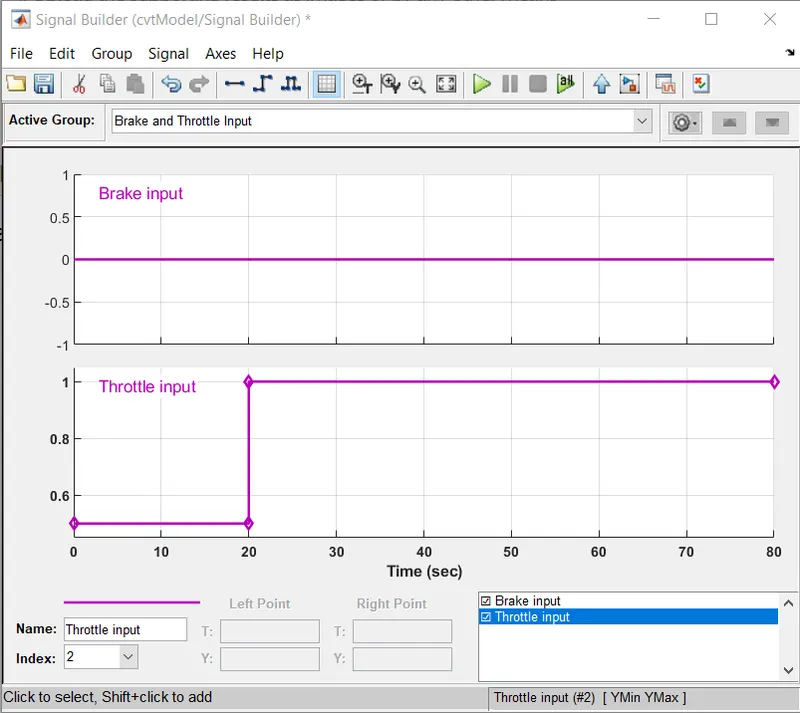
It is a graph or signal builder block parameters(Bresk snd Throsttlr). The Break input is zero and Troattle input is 1 from 20 sec to 80 sec befor that it was laying on 0.4. Break input and Throtal inputs are fed to the Generic Engine. Where Generic Engine ask us th Speed vector and Torque vector. These two value get from the following grapgh;
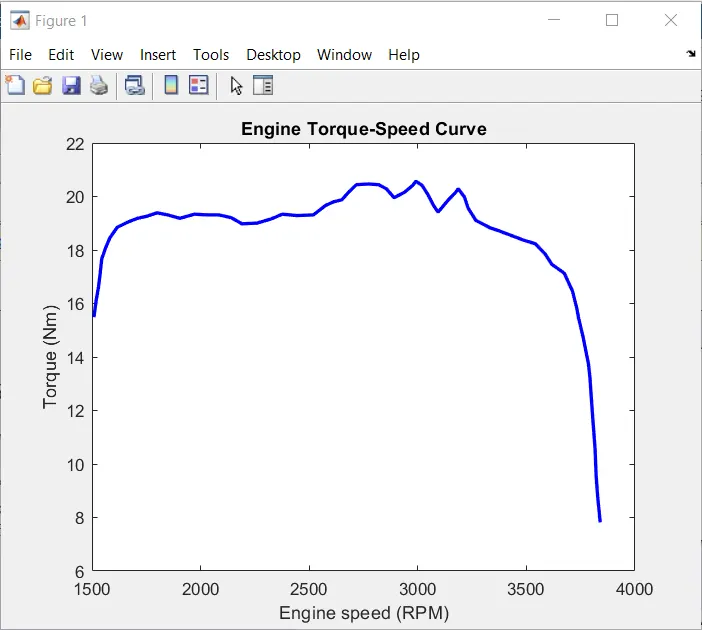
From the above grapgh can extract the data point using GRABIT block. This data directly can be feed into the generic Engine in terms of Speed vector and torque vector.
Vehicle Modeling: Continuously Variable Transmission
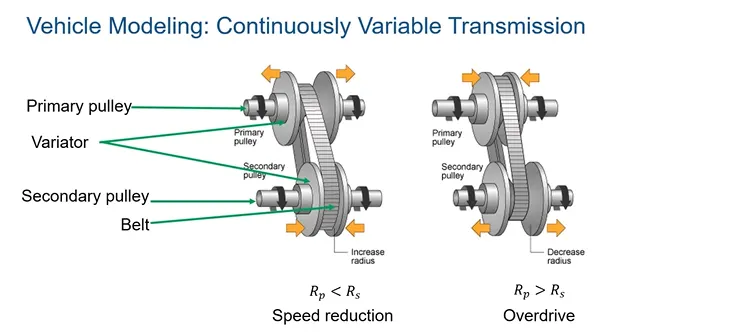
CVT consists of primary pullley, variator secondary pulley and belt.
Primary Pulley: moves in outward direction
Secondary pulley: moves inward direction
There will be reduction in speed if the radius of primary pulley is less than the radius of secondary pulley.
Simscape representation of a CVT:
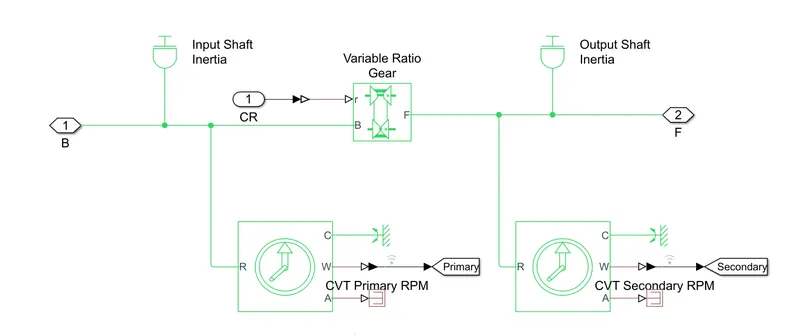
Here input shaft inertia and output shaft inertia indicates Primary Pulley and Secondary Pulley respectively.
Downside we can see two sensors which give us only RPM of Primary and Secondary Pulley.
Gear Ratio:
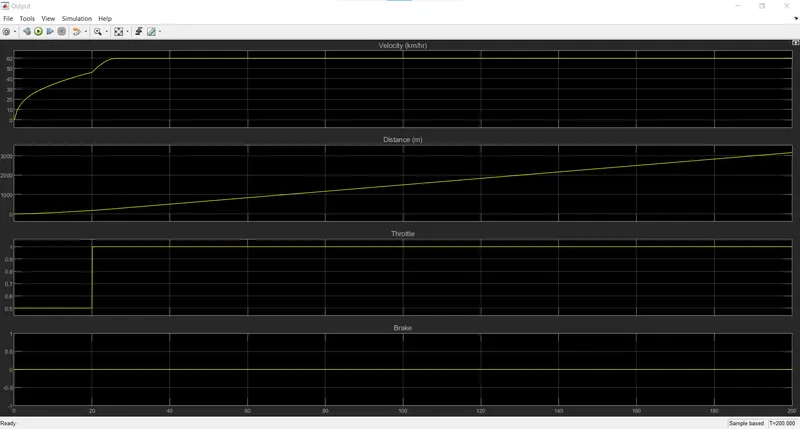
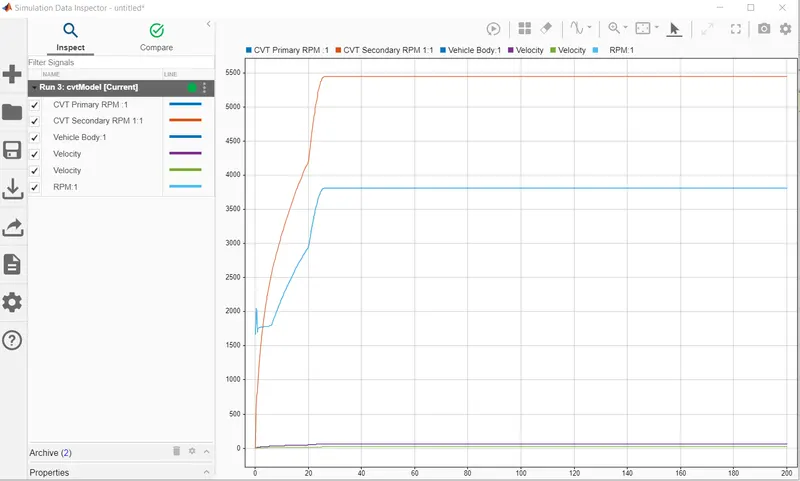
Here, at time 0 to 20 sec the gear ratio is constant so, there is a linear variation in primary and secondary RPM curves.
At t=20 to t=30 sec the trottle value is constant but due to increase in gera ratio speed increases. After t= 35 sec Both CVT ratio becomes constatnt so the speed will not change further.
Vehicle body:
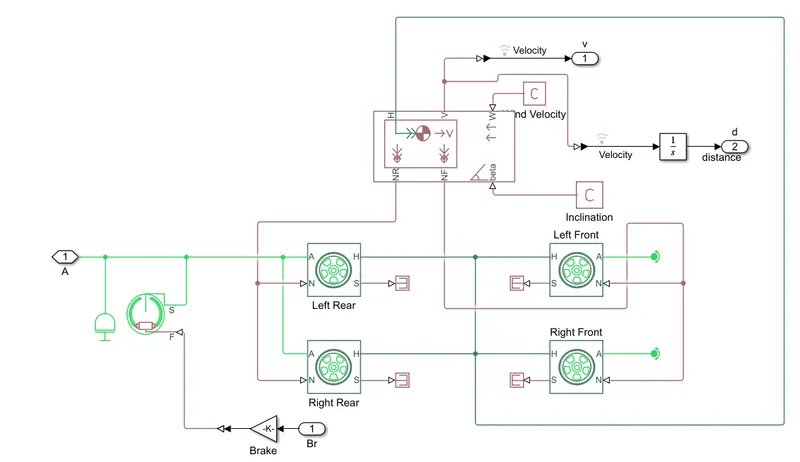
Here in this model all Block parameters are having default values. User can change the parameters accorging to their model dynamics.
BAJA ATV model with dashboard:
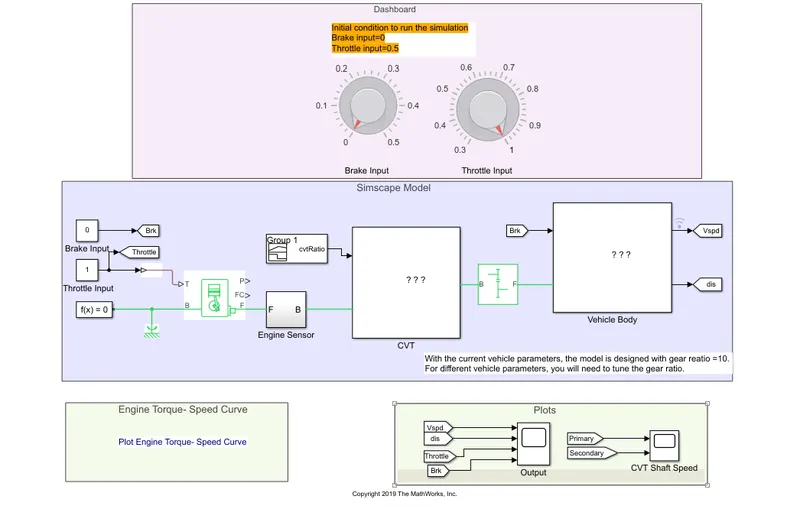
It is the same model as previous the only change in this is we are providing Break and Throttle input with the knob and there we were using the Signal Builder block to give input to the generic engine.
Results:
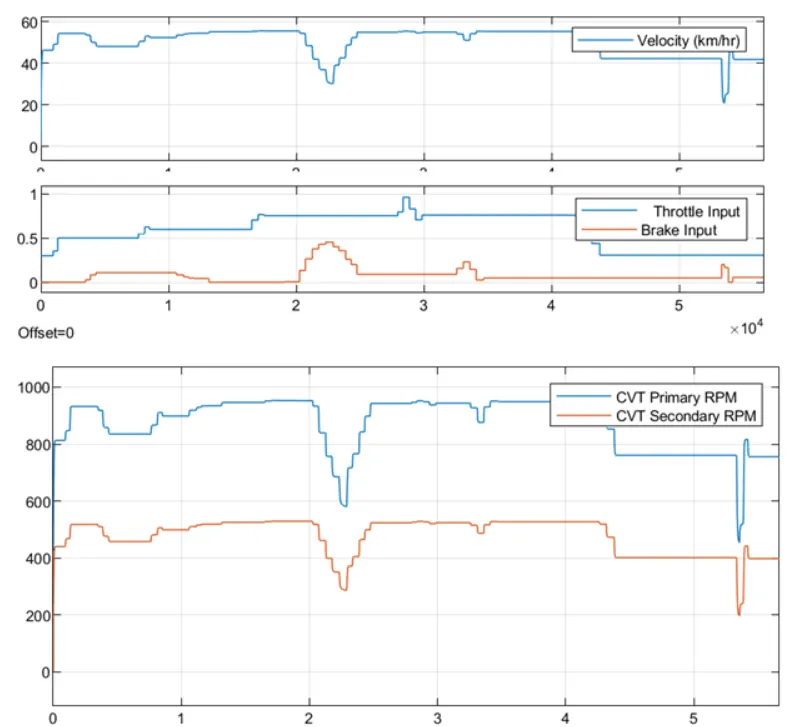
Conclusion:
Speed increases due to increase in Throattle input this helps to acheive fall in CVT ratio and due to increase in break input Speed falls and CVT ratio increases.