Project 3 - Consumer Electronics
The product I have chosen for the final project of Product design and Development is a "Camera drone"
Task 1
Addressable Market Size-
- USS 4.32 billion by the CAGR report (2021-2028) it will increase by 28.4%
Key competitors
- DJI Innovations
- Cannon Inc
- Aeryons labs Inc
- Precision Technology Ltd
- Controp
- Garmin Ltd
- GoPro
- Aerialtronics DV B.V
- Aerobros
- AiDrones
- DST control
Strengths of the Key competitors
- Large region coverage
- Able to manage quick deliveries
- Introduction to new technology in their products
- Promising development rate in their product
Limitations of the Key Competitors
- Governments of different nations is limiting the market expansion to preserve the private space of public and to address various challenges related to the national security
- They are only permitted to fly up to 500 ft by FAA in the USA.It retrains the growth of the camera drone market
History of the product
- The unmanned aerial vehicles known as drones are first seen in 1849
- These UAVs are used in World War I and II in 1916 and post-war period for war(1930-1937)
- The first camera drone was introduced by DJI a Famous camera drone company named as Phantom 1 in 2013
- First camera-equipped drone to enter the commercial market which is followed by the Phantom 2
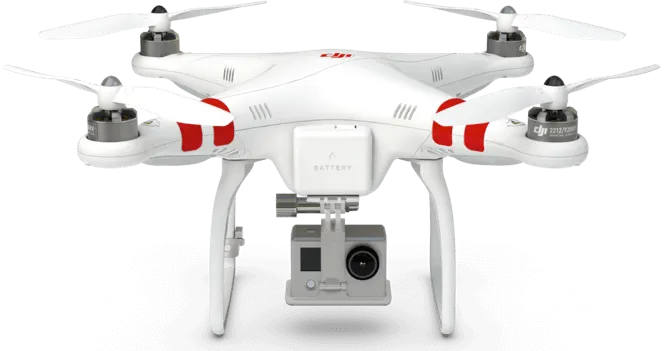
Fig: The Phantom 1 "First drone with a Camera"
State-of-the-art products
- DJI Mini 3 Pro
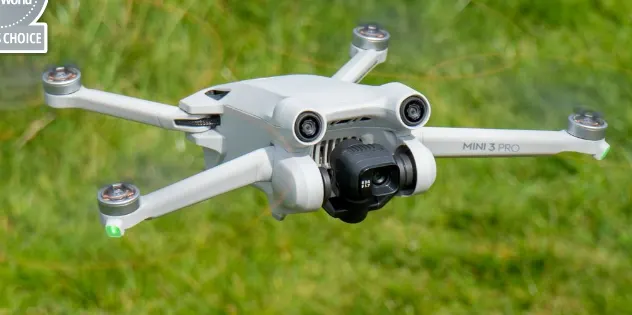
- Collision sensor
- For orbiting good quality AI
- 4K 60fps
- Camera switches to the portrait mode
- DJI Air 2S
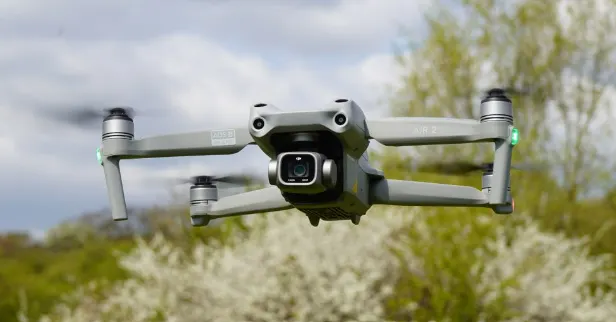
- 4 K HDR video
- Portable
- 1-inch sensor
- DJI Mavic 2
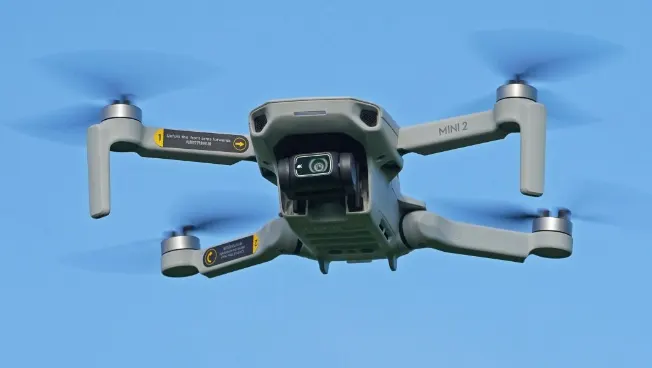
- 1-inch sensor
- Great software features
- Reliable airframe
- Autel EVO Nano+
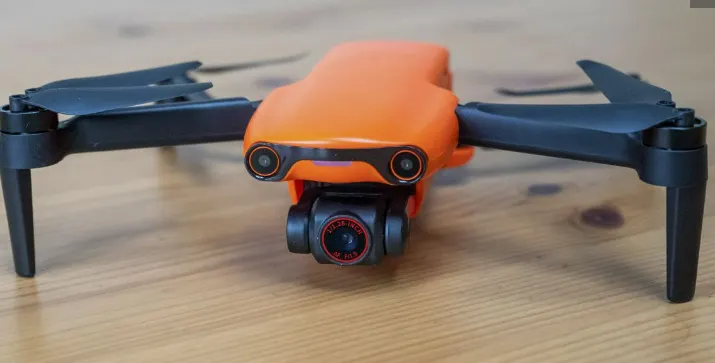
- Obstacle avoidance in 3 ways
- ½ inch image sensor
- Under the 249 g registration limit
Industry trends
- Sensor-equipped drone camera
- High-quality video
- Collision sensor
- Portable
- Great software features
- Reliable airframe
- Used in agriculture, filming, photography, environmental mapping
- Growing demand for aerial photography and 3D scanning of the Building information modeling
Potential improvements
- Privacy and security policy are a concerning factor that needs to be improved while designing the camera drone to have a restrictive feature
- It can be hijacked or manipulated hence the security features need to be improved
- Power backup needs to be improved too
Task 2
Customer needs study
|
Customer Statement |
Need Statement |
|
The lighter the better |
Weight lighter |
|
It should be durable enough to sustain some shock from failing from a small height |
Durability |
|
Remote control video screen |
Remote video control design |
|
Good battery life, possibly solar panels? |
Battery life |
|
Cost effective |
Cost effective for everyone |
|
The camera should has speaker,carrier,dropper, holder |
Functionalities |
Mission statement
The mission statement of the camera drone product is given below:-
|
Mission Statement |
|
|
Product Description |
● Unmanned aircraft (Unmanned aerial vehicle) ● It can be operated remotely with a combination of GPS and onboard sensors ● It can be used for ○ Rescue ○ Search ○ Traffic Monitoring ○ Surveillance ○ Weather monitoring ○ Firefighting ● Components ○ Circuit to control the speed and direction of the motor ○ GPS module ○ Antenna ○ Camera ○ Fight controller ○ Battery ○ Receiver ○ Collision avoidance sensors ○ Ultrasonic sensors ○ Accelerometer |
|
Benefits Statement |
● Sensor-equipped drone camera ● High-quality video ● Collision sensor ● Portable ● Great software features ● Reliable airframe ● Used in agriculture,filming, photography, and environmental mapping |
|
Business Objectives |
To obtain stellar products and services within a tight timeframe Obtain these services at a reasonable cost which represents the best possible value to their customers and shareholders |
|
Core Market |
North America ● U S ● Canada Europe ● U.K ● Germany ● France ● Russia ● Rest of Europe Asia-Pacific ● Japan ● China ● India ● Australia ● Rest of Asia The Middle East ● UAE ● Saudi Arabia ● Israel ● Turkey Resf of Middle East ● Latin America ● Africa |
|
Stakeholders |
● Manufacturing and supply chain partners ● Retailers and stores ● Existing and new customers |
Product platform plan for current and future products -
- Identify the opportunities
- Evaluate and prioritize the projects
- Planning for the resource and time
- Finalize the Pre-project planning
- Reflection on results and process
- Generate new ideas to keep up with the market trends
Product roadmap
|
|
Q1 1916 |
Q2 1973 |
Q3 2013 |
Q4 2022 |
|
Frame |
Balloon carrier Radio system War Aircraft |
War Aircraft Surface-to-air missile carrier Real time surveillence |
Drones were introduced with the camera Commercial field arrival Real-time surveillance |
Drone with camera GPS module Real-time 4K videography Photography |
|
Motors |
Brushed motors |
Brushless/Brushed motors |
||
|
Battery |
Lithium Polymer batteries |
Li-ion batteries/LiPo batteries |
||
|
Propellers |
Carbon fibers/metal fibers |
Plastic/Carbon fibers |
||
|
Transmitter/Reciever |
Radio transmitter/reciever |
Radio Transmitter/reciever/GPS |
||
|
Sensors |
None |
Collision avoid sensors/AI induced to detect object |
||
Resource Allocations
- Public Resources
- Government publications(eg. U.S Census Bureau)
- Online blogs and reports(e.g. Pew Research Center)
- Data analysis services(e.g. Google Analytics)
- Consulting company(e.g. Mckinsey)
- Online Survey
- e.g. Typeform, Survey Monkey
Concept Generation
- Clarify the product development problem
- To conduct an external search
- Interview with Lead Users
- Work with consultants and experts
- Search for patients and literature
- Benchmark study on relevant products
- Laws and regulations
- To conduct an internal search
- Sources of concept Generation
- R&D units
- Brainstorming sessions
- Innovation workshops
- Use technology roadmaps
- To follow the guidelines of the concept generation
- Generate a lot of ideas from various angles
- Suspend judgment and welcome ideas that may not sound feasible at first
- Use sketch and illustration to better convey the concept
- To consolidate the concept and ideas
- Tools used to consolidate the concept and ideas
- Affinity diagram
- Tree diagram
- Matrix diagram
- Tools used to consolidate the concept and ideas
- Sources of concept Generation
Task 3
Systems-based product design and planning
Feasibility study summary
- The basic requirements are followed to assess whether the need can be met with the existing technology or not
- The study is needed due to the complexity of the aeronautical projects
- Purposes
- Adaption of existing drone camera
- Major modification of the existing drone camera
- Completely new design at the highest risk and cost
- How to meet the best requirements
- Configurations/concept comparison studies
- Revision and review of the performance characteristics of basic requirements
- Initial cost estimation of the project
Concept of Operation (ConOps)
Product scope and objective
Scope
- In India, the drone industry became an emerging sector
- It gave scope for skill development and employment generation -said PM Narendra Modi during India's biggest drone festival " Bharat Drone Mahotsav"
- The significant increase across various industries such as India's airspace for drone operation has new hope for employment and entrepreneurship chances for drone enthusiasts.
- Emerging job scopes in the drone industry
- Drone pilots
- Drone flight planners
- Pilot trainers
- Drone data specialists
- Design engineers and assemblers
- Drone technicians
- Skill development scope through drone
- Troubleshooting skills
- Analytical skills
- Firmware programming skills
- Technical skills
Objective
- It allows a vantage to see that is impossible to observe from the ground which can be often in conditions that are inaccessible or dangerous for human beings
- Aerial views of many surfaces can be captured by the drone
- Allow collection of
- Data
- Images
- Videos for different purposes
Define stakeholders and responsibilities
- Individuals and teams to operate the drone as individuals or as a part of the companies which is being utilized
- The developers who develop and oversee the systems and services
- Ensure safety through the coordination of manned and unmanned flights in the controlled airspace and ground level
Define operating scenarios
- The operating scenarios include
- UAV surveillance
- Border patrol
- Construction management
- Power grid inspection
- Traffic monitoring
- Environmental monitoring
- Personal use
Define operating environment
- Terrain mapping
- Store recording onboard
- Live video/images to the ground stations
- Geographic locations access
- Search and rescue operation
- Weather forecast
- Wildlife Monitoring
- Military combat and reconnaissance uses
- Agricultural uses
- Farmers used an infrared sensor-equipped drone to monitor crop health
Generate requirements for the product
Camera drone various resource requirements
|
Customer requirements |
Better flying time The Price should be less Good altitude distance capture Good camera quality with GPS sensor Obstacle avoidance with good controlling speed |
|
Functional requirements |
Surveillance and delivery requirements ● Search and rescue operation ● Disaster response ● Wildlife monitoring ● Communication relay ● Firefighting ● Healthcare and agricultural |
|
Performance requirements |
Battery life span Wing span How much weight it can carry (Payload) Flight range |
|
Design requirements |
360-degree multiple video recording Electronic speed controller Power distribution board Flight controller Propellers Control receiver Antenna FPV Transmitter The battery shall be more than 750 mAH of power Gyroscope, accelerometer, IMU 6DOF control Resolution-UHD/4K (3840 x 2160) for high altitude footages (100-250m),2K (2560 x 1440), Full HD (1920 x 1080) for lower altitude footages (50-100m) Frame rate-FPS 25-30 (15 as a minimum) |
Work Breakdown Structure (WBS)
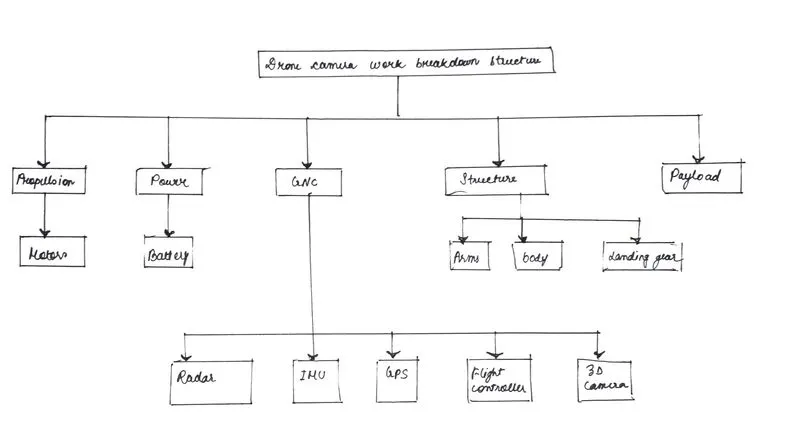
Product verification and validation plan
Verification phase
- Design verification
- Product Validation
- Finalize design and testing and apply for regulatory approvals
Validation phase
- The models are used to generate the new application
- All the business rules and functions in legacy code must be properly captured
Task 3
Integral architecture
- In the drone camera, the number of functions is considerably larger than the number of components
- A single component such as a circuit is used to control the speed and direction of the motor
- The fight controller is to control the direction as well camera rotate
- It implements that some components are involved in delivering multiple functions which implies that the drone camera has an integral architecture
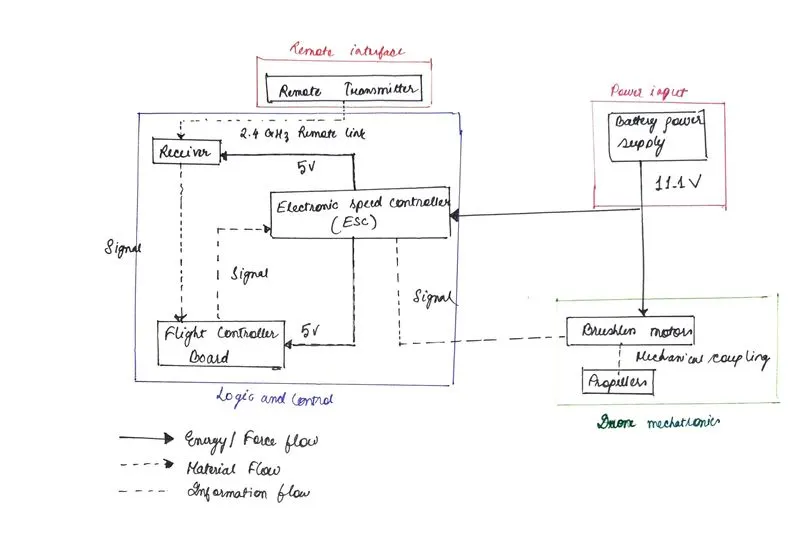
Schematics product architecture-
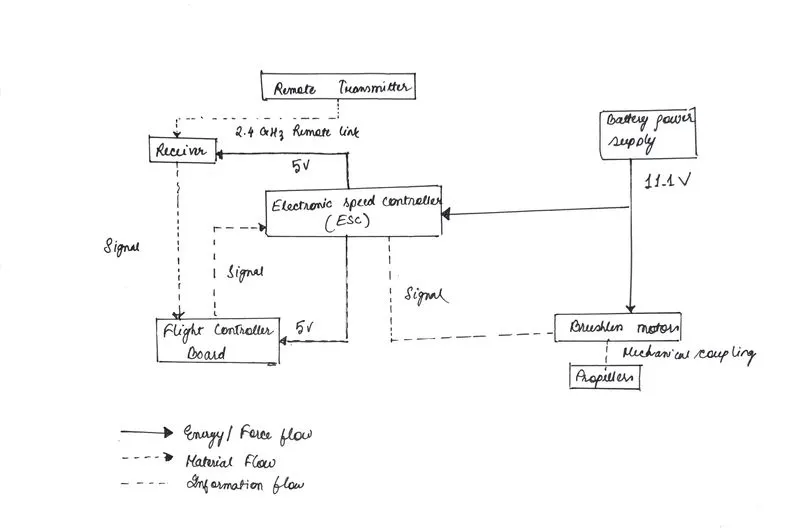
Interface architecture
Industrial design
- How to simplify the design?
- Only to use for aerial photography and videography
- This feature solves the single problem of aerial videography
- To change the camera view around the drone design to a dynamic view which could show off the drone
- How to make the user experience intuitive?
- The functioning procedure and operating procedure of the drone camera is obvious hence it will make the users experience intuitive
- It won't take much time to understand by a user for the first time
- Users can enjoy the aerial view of the environment and different scenarios.
- How to improve the aesthetics?
- To improve the appearance so that customers can feel happy
- Customer will want to show off the products because it is costly and will have new features to see aerial view of the area
- It does promote the pride of ownership.
- How to improve ergonomics?
- To make it comfortable for the users so that they use this product for a long time
- The repetative use should not hurt user's body
Task 4
Concept sketch of the drone camera
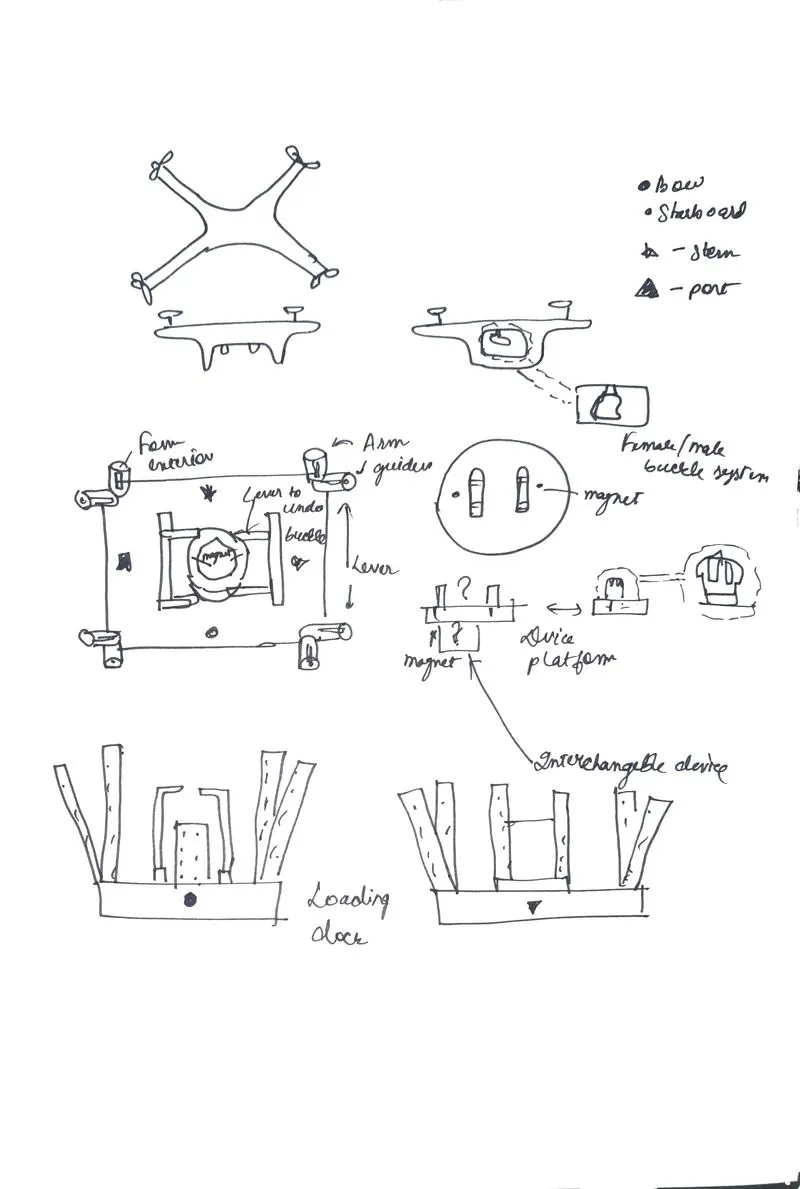
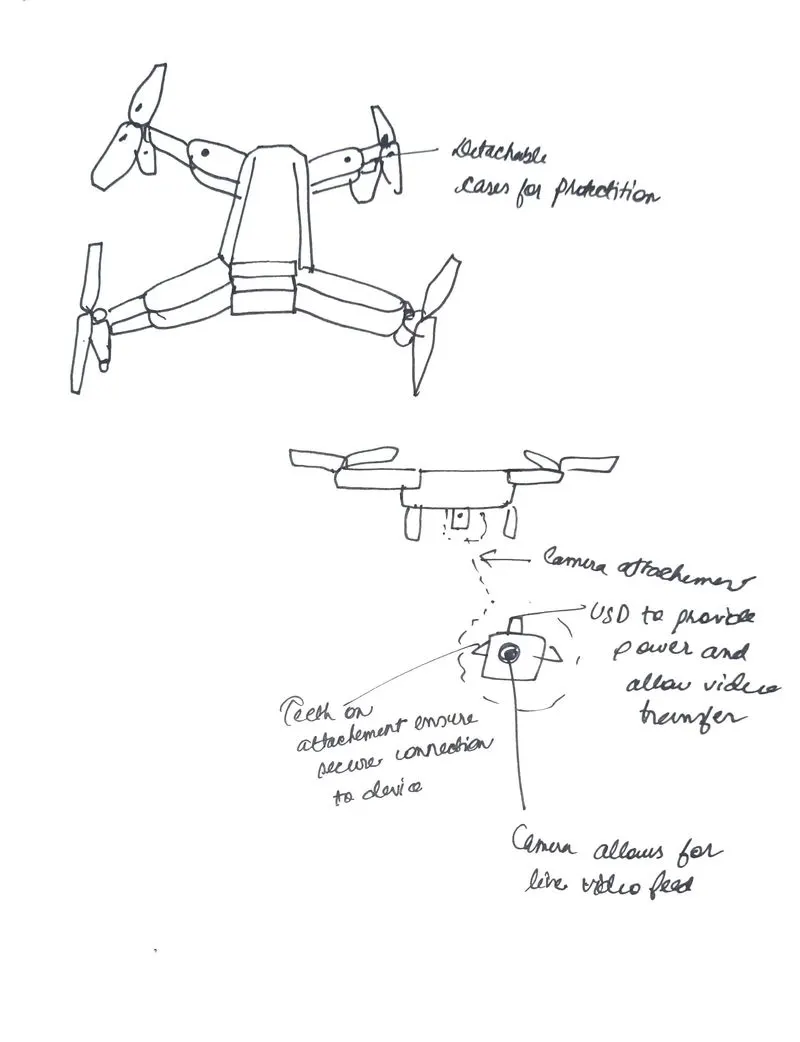
Rendering image of the chosen drone camera design is given below-
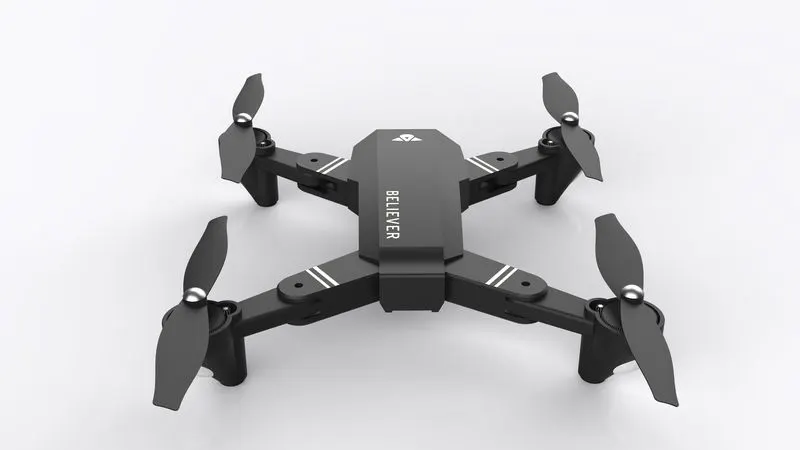
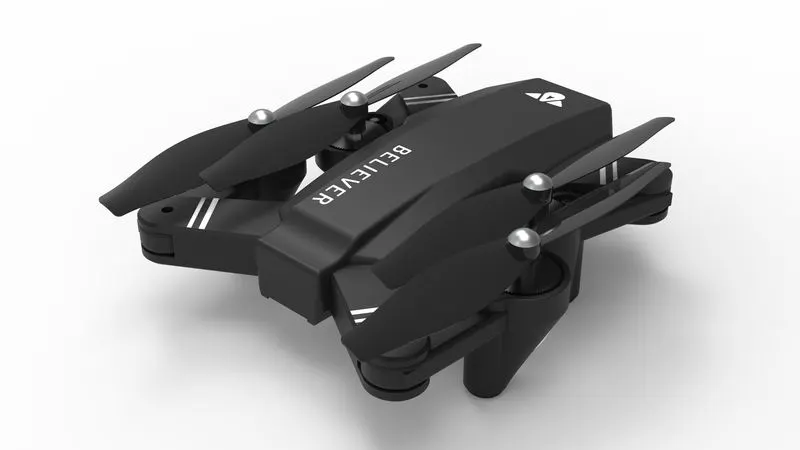
Solidworks file attached
Task 5
Failure mode effect analysis (FMEA) of the product
|
Item/Function |
Potential Failure Mode(s) |
Potential Effect(s) of Failure |
Severity |
Potential Cause(s)/Mechanism(s) OCC of Failure |
Current Design Controls |
Detectability |
RPN |
Updated RPN |
||||||
|
Recommended Action(s) |
Actions Taken |
Severity |
Occurrence |
Detectability |
RPN |
|||||||||
|
Ground control station (GCS) |
Loss of signal/data delay |
Unable to analyze the defects |
8 |
Power failure |
1 |
Backup power for the ground station |
9 |
72 |
- |
- |
- |
- |
- |
- |
|
Manual Controller (Based on the ground) |
Unable to control manually |
Unable to control when there is a path error |
4 |
Poor design |
1 |
- |
9 |
36 |
- |
- |
- |
- |
- |
- |
|
Payload antenna |
Unable to detect the payload data |
Instability of the drone |
6 |
Manufacturing/environmental factor |
2 |
- |
9 |
108 |
- |
- |
- |
- |
- |
- |
|
Controller antenna |
Unable to transport data (telemetry data) |
Unable to receive any data |
7 |
Poor de- sign/manufacturing/environmental factor |
2 |
- |
9 |
126 |
- |
- |
- |
- |
- |
- |
|
Acquisition Sensor |
Unable to detect the distance from objects |
Damage to the blades |
8 |
Poor de- sign/manufacturing/environmental factor |
1 |
Auto-pilot detection |
8 |
64 |
- |
- |
- |
- |
- |
- |
|
X-axis/Yaxis/Z-axis servo |
Unable to move/break |
Blur images |
8 |
Poor de- sign/manufacturing/environmental factor |
2 |
- |
6 |
96 |
- |
- |
- |
- |
- |
- |
|
Camera |
Smudges on the lens |
Blur images |
5 |
Water droplets on lens |
5 |
Auto-pilot detec- tion/human inspection before the mission |
2 |
50 |
- |
- |
- |
- |
- |
- |
|
Overheating |
No video/image |
5 |
High ambient temperature |
4 |
- |
5 |
100 |
- |
- |
|||||
|
IMU |
Unable to provide the real-time recognition of positional attitude |
Unable to process the status of the UAV |
9 |
Poor design/manufacturing/lack of power |
2 |
- |
6 |
108 |
Redundancy system |
2 incorporate |
9 |
1 |
6 |
54 |
|
GPS Antenna |
Unable to receive the accurate time and location data from GPS |
Unable to locate the UAV |
8 |
Loss of connection due to range or weather/lack of power |
5 |
Auto-pilot detec- tion/return home function |
4 |
160 |
Redundancy system |
Install another position sensor |
8 |
2 |
3 |
48 |
|
Item/Function |
Potential Failure Mode(s) |
Potential Effect(s) of Failure |
Severity |
Potential Cause(s)/Mechanism(s) of Failure |
Occurrence |
Current Design Controls |
Detectability |
RPN |
Updated RPN |
|||||
|
Recommended Action(s) |
Actions Taken |
Severity |
Occurrence |
Detectability |
RPN |
|||||||||
|
Propeller (blades) |
Fracture |
Unable to support the payload of the UAV |
7 |
Manufacturing/collision with obstacle |
4 |
- |
4 |
112 |
Redundancy system |
6 propellers (5 will still be able to support the UAV) |
4 |
4 |
4 |
64 |
|
Crack |
Unable to support the payload of the UAV |
8 |
Manufacturing/collision with obstacle |
3 |
5 |
120 |
Redundancy system |
8 |
2 |
4 |
64 |
|||
|
ESC (Electronic speed control) |
Burnout ESCs/overheating ESCs |
Damage the motor and affect the battery lifetime |
8 |
Poor design/manufacturing/lack of power |
3 |
Auto-pilot detec- tion/human inspection before the mission |
4 |
96 |
Run the inspection everytime before the mission |
Run the inspection |
8 |
2 |
2 |
32 |
|
Motor (rotor) |
Bearing failure |
Loss of controlpossible crash |
8 |
fatigue |
3 |
- |
7 |
168 |
Redundancy system |
Using 6 motors |
6 |
6 |
3 |
108 |
|
Mechanical Malfunction |
Loss of controlpossible crash |
8 |
Mechanical failure |
2 |
Operational Instructions |
5 |
80 |
Redundancy system |
Using 6 motors |
8 |
2 |
4 |
64 |
|
|
Battery |
Overheating |
Unable to supply the power for the UAV |
8 |
Hot weather/Manufacturing problem |
3 |
- |
5 |
120 |
Redundancy system |
Battery pack 1 + Battery pack 2 |
8 |
2 |
3 |
48 |
|
Lack of power-Battery low |
Unable to supply the power for the UAV |
8 |
Overloading |
4 |
Operational Instructions |
6 |
192 |
Replace Battery after each mission |
Replace battery after each flight |
8 |
2 |
6 |
96 |
|
|
Arm |
Fracture/crack |
Damage the whole UAV |
8 |
Manufacturing/environmental factor |
3 |
- |
6 |
144 |
Physical safety check |
- |
8 |
2 |
6 |
96 |
|
Landing gear |
Fracture/crack |
Unable to land/may break the component(s) when landed |
5 |
Manufacturing/environmental factor |
3 |
- |
3 |
45 |
- |
- |
- |
- |
- |
- |
|
Main chassis (the protection frame) |
Fracture/crack |
Expose the chips outside might damage the chips |
3 |
Manufacturing/environmental factor |
3 |
- |
5 |
45 |
- |
- |
- |
- |
- |
- |
Fault tree analysis
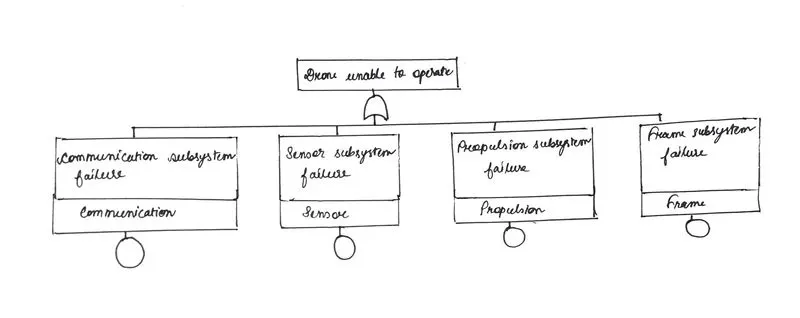
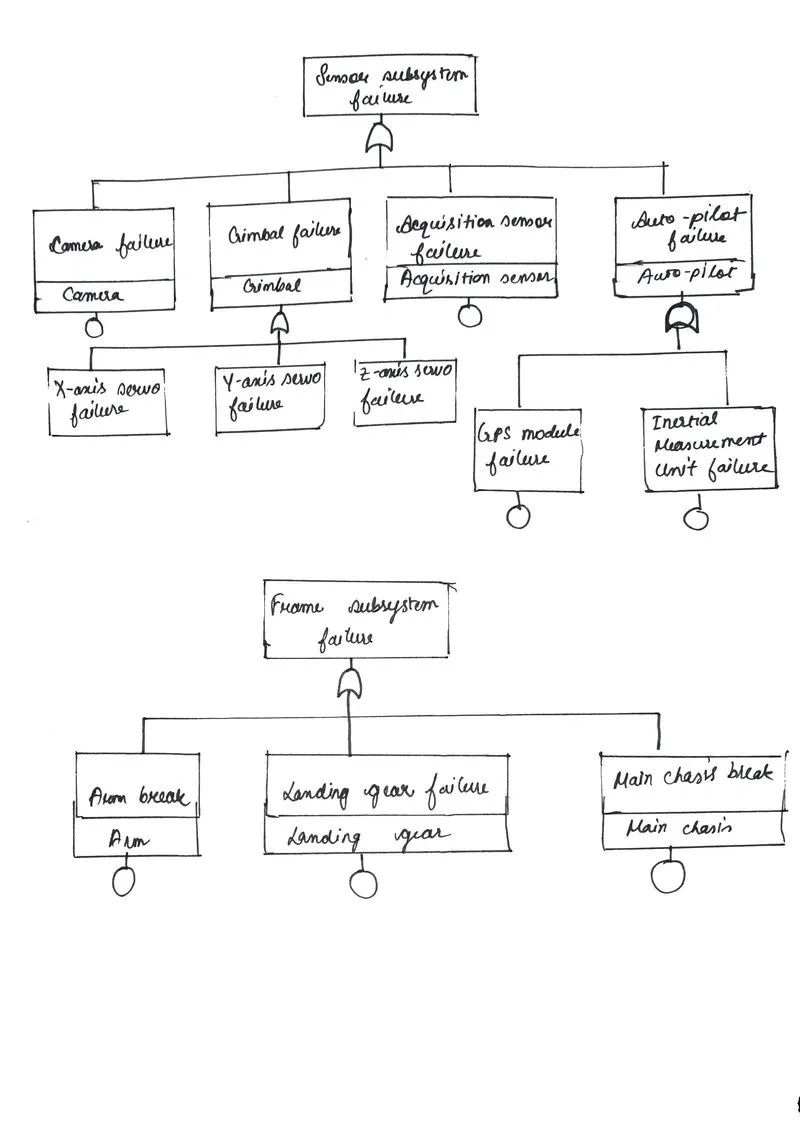
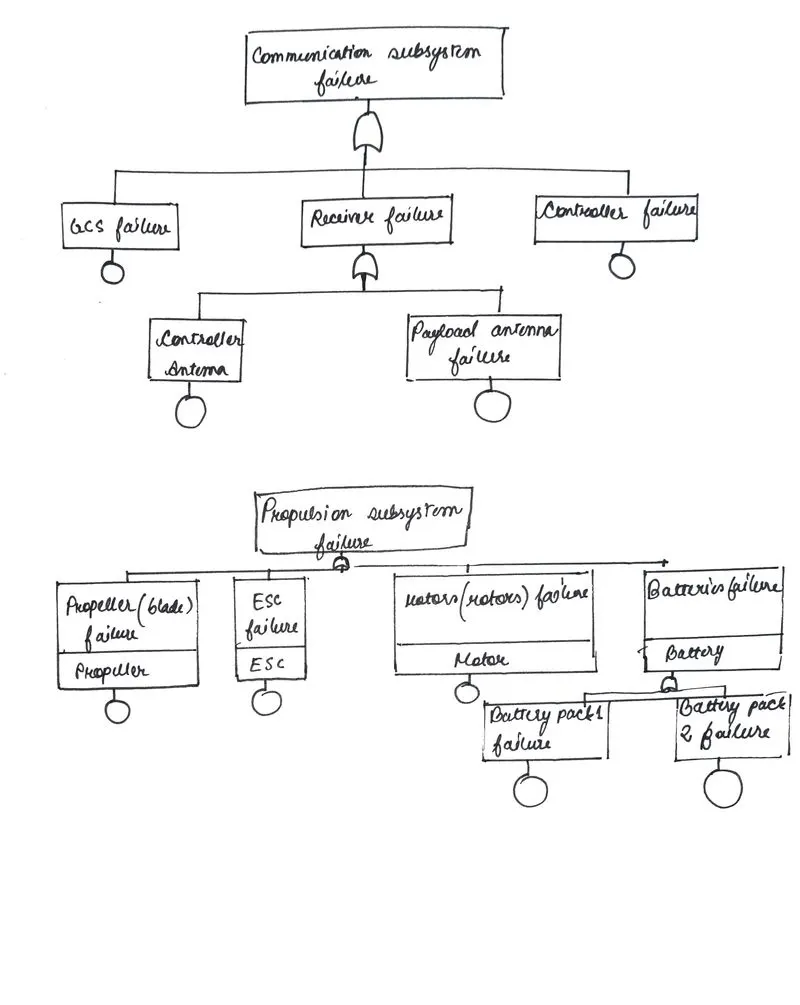
Task 6
The ten areas of design improvements which will benefit the design for manufacture and assembly (DFMA) perspective are given below-
- Front and back cover for support
- Single eversion button is given in the drone body
- Control stick to control the direction and movement of the propellers made with injection modelling
- Dual battery terminal is given for power suffociency
- A connector for holding the USB of the phone
- Handler for the phone holder is given
- USB connector for charging and data transfer
- Plastic fiber propellers to give more durability to the drone
- Trim button to trim the videography in the phone itself is given
- An antenna attachement for location as well as radio transmitter reciever
DFMA
|
No. |
Part Name |
Material |
Process |
|
1. |
Front Cover |
ABS |
Injection Molding |
|
2. |
Back Cover |
ABS |
Injection Molding |
|
3. |
Printed Circuit Board (PCB) and Components |
Fiberglass Epoxy Resin With Copper Foil |
Patterning/ Etching |
|
4. |
Single Eversion Switch with PCB |
Fiberglass Epoxy Resin With Copper Foil |
Patterning/ Etching |
|
5. |
Single Eversion Button |
ABS |
Injection Molding |
|
6. |
Control Stick |
ABS |
Injection Molding |
|
7. |
Trim Button |
ABS |
Injection Molding |
|
8. |
ON/OFF Button |
ABS |
Injection Molding |
|
9. |
Headless Mode Button |
ABS |
Injection Molding |
|
10. |
Connector for Phone Holder |
ABS |
Injection Molding |
|
11. |
Handler for Phone Holder |
ABS |
Injection Molding |
|
12. |
Screw Length: 20 mm |
Aluminium Alloy |
Machining |
|
13. |
Nut Width across Flats: 6.8 mm |
Aluminium Alloy |
Machining |
|
14. |
Antenna Attachment |
ABS |
Injection Molding |
|
15. |
Antenna |
ABS |
Injection Molding |
|
16. |
Battery Lid |
ABS |
Injection Molding |
|
17. |
Dual Battery Terminal |
Spring Nickel Plated |
Cold Pressing and CNC Spring Coiling |
|
18. |
Positive Battery Terminal |
Spring Nickel Plated |
Cold Pressing |
|
19. |
Negative Battery Terminal |
Spring Nickel Plated |
Cold Pressing and CNC Spring Coiling |
|
20. |
Connector |
ABS |
Injection Molding |
|
21. |
Countersunk Screw Height: 8.3 mm |
Aluminium Alloy |
Machining |
|
22. |
Screw- Taptite Height: 7.0 mm |
Aluminium Alloy |
Machining |
|
23. |
Countersunk Screw Height: 5.2 mm |
Aluminium Alloy |
Machining |
Design for environmental sustainability guidelines for the drone camera
|
Life Cycle Stage |
Design for environment and sustainability guidelines |
|
|
Materials |
● Sustainability of resources ● Healthy inputs and outputs |
● Specify renewable/recyclable/recycled material ● Specify renewable forms of energy ● Specify non-hazardous materials ● For safe handling of toxic material, including labels and instructions |
|
Production |
● Minimal use of resources in production |
● Employ as few manufacturing steps as possible ● Specify materials that do not require surface treatment or coating ● Minimize the number of components and raw material consumption |
|
Distribution |
● Minimal use of resources in the distribution |
● Use folding, nesting,and disassembly to minimize packaging ● Use recyclable/reusable/lightweight material in packaging |
|
Use |
● Efficiency of resources during use ● Appropriate durability |
● Implement default power off for systems that are not in use ● Implement feedback or controls for how many Resources are used ● Design to ensure long product life, facilitate repair and upgrades |
|
Recovery |
● Disassembly, separation, and purification |
● To ensure joints and fasteners/incompatible materials are easily accessible ● Specify the joints and fasteners that can be separated by hand or common tools |
Ways to reduce the environmental impact caused by the drone camera in each life cycle stage-
|
Materials |
● Reduce the use of raw and non-toxic material ● Choose renewable raw materials instead of rare materials ● Improve the energy efficiency of the harvesting process ● Intensify the use of recovered and recycled materials |
|
Production |
● Mention the process materials that can be completely recovered and recycled ● Eliminate toxic materials in the process ● Select the processes with high energy efficiency ● Reduce production scrap and wastes |
|
Distribution |
● Use the most energy-efficient shipping method ● Reduce emissions during transportation ● Eliminate toxic and dangerous packaging materials or remove packaging |
|
Use |
● Extend the product life span ● Enable clean and efficient service operations |
|
Recovery |
● Facilitate product disassembly to separate materials ● Enable the recovery and remanufacturing of components ● Facilitate material recycling |
Task 7
DSM table
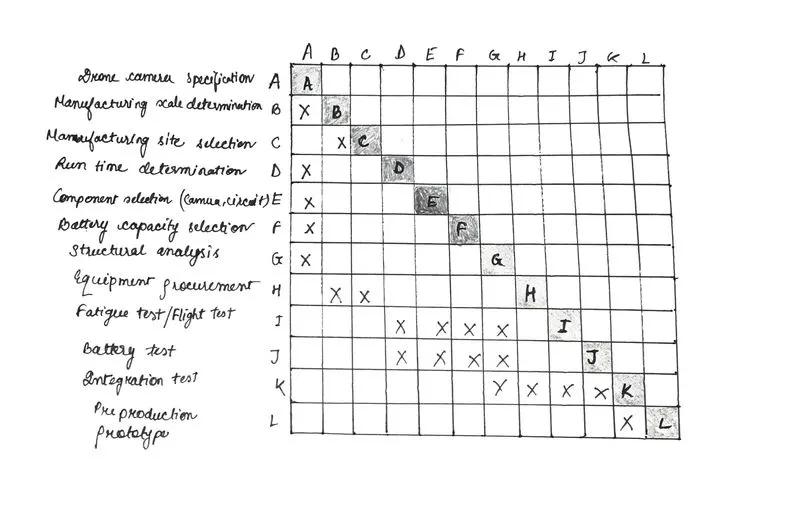
Pert Chart
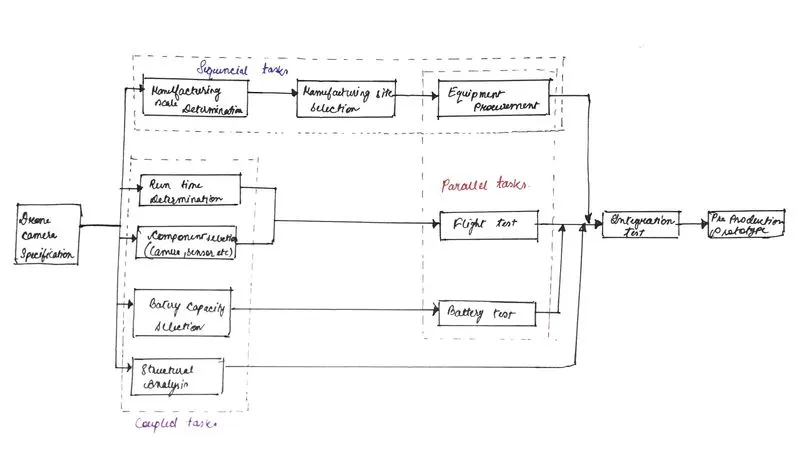
Strategies to accelerate the project timeline
To accelerate Critical Path
- Prioritize and complete tasks in critical path quickly
- Start the task earlier and uninterrupted
- Reduce or eliminate several tasks in the cortical path
- Arrange tasks from serial to parallel when possible
- Get rid of unnecessary tasks to save time
- Eliminate waiting delays of resources to critical path
- Add more resources or assign designated resources
- Outsource some tasks
Accelerate the coupled Tasks
- Iterate coupled designs more efficiently and quickly
- Foster communication between team members.
- Decouple tasks to avoid iterations
- Define interfaces between modules so that subsystem design can happen in parallel
Task 8
The five existing patent research on drone camera
- Drone for searching and making a target(EP3476734A1)
- Drone with a front view camera with the segmentation of the sky image for auto exposure control(US10171746B2)
- Rotary wing drone provided with a video camera delivering stabilized sequences of images(US9555887B2)
- Maneuvering method of a rotary wing drone to take a picture with an onboard camera while minimizing the movement that causes disturbances(JP6234679B2)Japan patent
- Amphibious vtol super drone camera in a mobile case(US20160286128A1)
The ideas that I have selected have a similar application to provide aerial photography or videography in the unmanned aerial vehicle known as a drone. They have variations of camera video quality but indeed provide a good view to analyze the rescue, Search, TrafficMonitoring, Surveillance, Weather monitoring, Firefighting
The 5 ideas in the product that have been designed which are unique and different from existing ideas would be -
- The camera of the drone would be coupled with the drone body where it will have inbuilt sensors attached to the camera
- The sensors in the camera will be able to detect the objects and will send data to the user by analyzing the object
- Two control buttons will be attached to the drone body and those buttons will be of manual and automatic
- Command input is given on both boom handle to make it more accessible for the users
- An interface of the display is attached where a GPS module is integrated to give the present location of the drone even it got crashed
This idea does satisfy the criteria of novelty
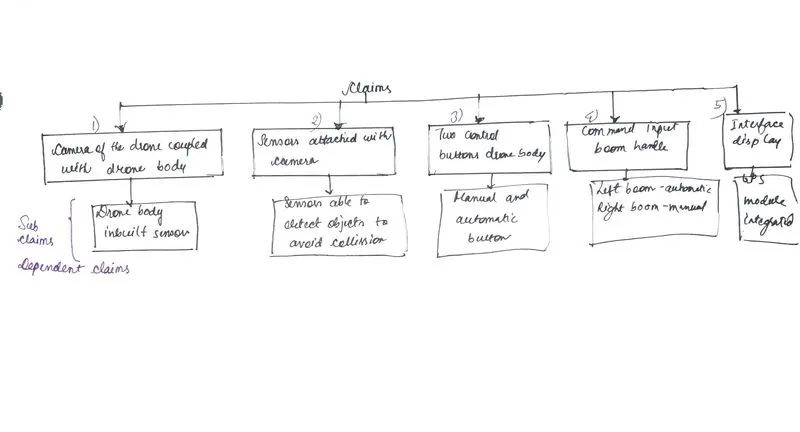
Claims for the designed Drone Camera
Claim 1: The camera of the drone would be coupled with the drone body
- This drone body will have inbuilt sensors attached to the camera
Claim 2: Sensors attached to the camera
- The sensors inbuilt with the camera will be able to detect the objects and will send data to the user by analyzing the object
Claim3: Two control buttons in the drone body
- These two control buttons will be attached to the drone body and those buttons will be of manual and automatic
Claim 4: A command input in both the boom handle
- A boom input is given on both boom handle to make it more accessible for the users
- Left boom handle for automatic mode and right boom handle for manual mode
Claim 5: An interface of the display is attached
- GPS module is integrated with the display to give present location of the drone even it got crashed
Claim Tree diagram
Task 9
The designed product does satisfy the industry trends
- Decentralization
- The development of the drone camera resources are distributed instead of centralized
- People are increasingly self-organized around areas of common interest
- Decentralized development team
- To get the best developers and experts from different laff kd the world
- Ensure the development continues despite working conditions
- Get faster development using digital working models
- Manage development budgets
- Decentralized maker communities
- Online maker resource
- Local workshops
- Decentralized design software/hardware
- Electronics design
- 3D modeling software
- Free source code
- Personalized product design
- Customized drone camera
- Augmented reality is used by the manufacturer to design the product
- Intelligence based approach
- Design IoT product
- Sensors and software allow to communicate and exchange of data with other devices and systems
- Product as a service
- It can also be used for monthly or yearly subscriptions or rental cost
- A company called "rentoclick" uses different branded drones where they gave the drones on rent for a subscription basis
- Design IoT product
The product development trend that I could think of would be AI-powered drones
- This drone camera used AI to capture photos and videos
- Tracks motion using AI to get the perfect shot of the user whether he/she is dancing or performing a stunt
- It has auto-fly modes and can rote up to 360° to capture everything around the user
Source-
https://aip.scitation.org/doi/abs/10.1063/1.5118167
https://www.digitalcameraworld.com/buying-guides/the-10-best-camera-drones
https://www.researchgate.net/publication/305273853_Drones_and_Possibilities_of_Their_Using
https://core.ac.uk/download/pdf/61806036.pdf
https://www.scielo.br/j/jatm/a/vnWkfk66h5VvsRhn6CxjLKx/?format=pdf&lang=en
https://ipsjcva.springeropen.com/articles/10.1186/s41074-019-0059-x
https://www.sciencedirect.com/science/article/pii/S2666307421000267
https://www.researchgate.net/figure/A-fault-tree-diagram-of-a-drone-prototype-system_fig3_348954274