Project 3 - Consumer Electronics
Task 1:
1)
Market analysis for Headphones:
The global headphones market size was valued at USD 25.1 billion in 2019 and is expected to grow at a compound annual growth rate (CAGR) of 20.3% from 2020 to 2027. Rising consumer preference for an enhanced audio experience, the growing music industry, coupled with mobile technology and internet penetration, are some of the primary factors driving the market.

Technological advancements such as the emergence of notch-less smartphones are anticipated to fuel the growth of wireless earphones over the forecast period. Additionally, rising consumer inclination towards stylish and attractive designs is expected to boost the sales of earphones and headphones over the forecast period.
2)
Key competitors in the industry :
The market is highly fragmented and is characterized by high competition with the presence of major global players. These companies particularly focus on enhancing product quality by adopting advanced and innovative techniques to enhance their market presence and expand their geographical reach. For instance, in September 2018, Skullcandy, Inc. announced the launch of a new wireless headphone known as Riff Wireless. Riff Wireless headphone is lightweight, includes a bendable band, and is equipped with Bluetooth and Rapid Charge technology.
Similarly, various key players are increasingly focusing on enhancing their network and customer base in order to cope with the growing competition from new vendors. For instance, in September 2018, Beats by Dre announced its merchandising and marketing partnership with the National Basketball Association (NBA). Through this partnership, Beats by Dre aims to be the official and the only wireless speaker, headphone, and audio partner for NBA. Some of the prominent players in the earphones and headphones market are Apple Inc, Bose Corporation, Harman International Industries, Incorporated, Sony Corporation, Sennheiser Electronics GmbH & Co. KG, GN Store Nord A/S and Skullcandy.com
3)
History of the product:
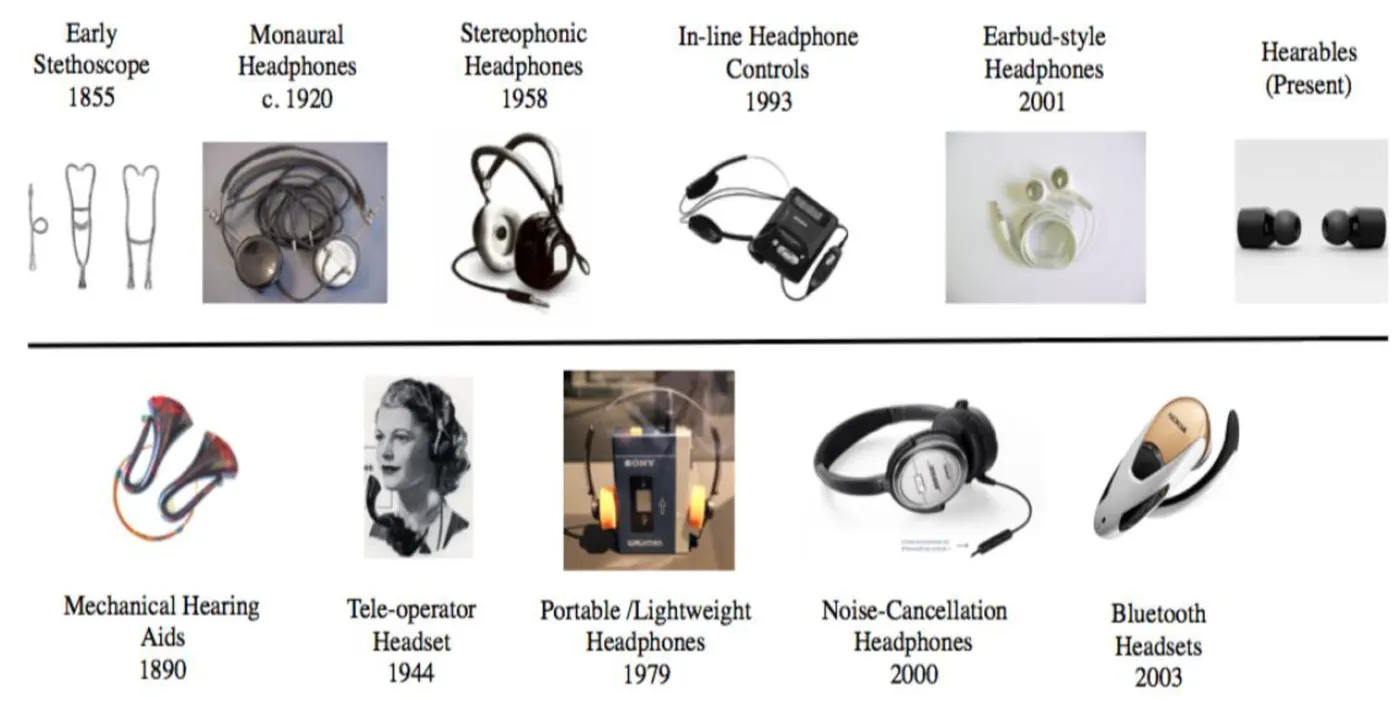
Beginning - 1890
Headphones started with phone operators - It was a single earpiece that rested on the user’s shoulder and weighed over 10 pounds.
Shortly thereafter came the Electrophone. Invented in Britain in the 1890s, this subscription service (£5 a year) allowed customers to dial in to a switchboard and be connected to a live performance from theatres across London. Cutting-edge stuff in a pre-radio world!
The Navy - 1910
Engineer Nathaniel Baldwin invented the first pair of audio headphones resembling modern day pairs at his kitchen table in 1910. The Navy ordered 100 pairs, not knowing that Baldwin was making them by hand.
Stereo - 1958
In 1958, John Koss rewrote the rule book when he created the first stereo headphones, the Koss SP-3. Early models were nothing more than mini speakers covered in cardboard and sofa foam, but their impact was immense. Rather than make do with radio communication equipment and aviation hardware, Jazz lover Koss came up with something purely for music – and he helped fuel a revolution in the way people listened to it.
Walkman - 1979
Sony made headphones portable for the first time with their cassette player, the Walkman, which sold over 400 million units. While now a thing of the past, the habit it spawned - listening to music wherever and whenever you want - is bigger than ever.
iPod / MP3 Players - 2001
While MP3 players had been around for a minute, the invention of the iPod took portable digital music to the mainstream with its colorful commercials and clever marketing. Hundreds of millions of ubiquitous white Apple-wired earbuds were suddenly everywhere.
Fashion - 2008
Beats, UrbanEars, Skullcandy, and more turned headphones from utility to fashion statement with bright colors, big headphones, and expensive price tags. Pretty much every celebrity had a headphone affiliation at one point, with some of them making a pretty penny on acquisitions in the space.
Social Good - 2013
LSTN launches and is the first headphone company that uses the proceeds for social good. Since its launch, we’ve helped over 30,000 people hear for the first time through our partnerships with non-profit partner Starkey Hearing Foundation.
4)
State-of-the-art products and competitor intelligence study:
Introduction of true wireless earbuds has brought about a paradigm shift in the way people listen to their music. These earbuds provide a user with a tangle-free experience while listening to music as there is no wire connecting the left and right earpieces. The earbuds are compact and can be carried around in a charging case, making them extremely portable. The styling and portability of these products have made them popular among the young crowd, athletes, and fitness enthusiasts, which is expected to drive the market.
Technology developments are primarily driven by surging consumer demand for style and high fidelity. Introduction of advanced features like active noise cancellation (ANC) and near field communication (NFC) is expected to offer a user with enhanced listening experience and fluidity in connectivity with their music devices. For instance, presence of active noise cancellation (ANC) technology in earphones and headphones eliminates the background noise, thus improving sound quality. Near field communication (NFC) establishes the connection between the wireless headphones and music device by just tapping them to each other. Such advanced features are anticipated to fuel the market growth.
Usage of earphones and headphones for fitness activities under various environmental conditions, like rain and dust, has propelled the manufacturers to add durability to their products. Several companies have manufactured their products with a certain (ingress protection) IPX rating, which is a safety rating to offer protection against dust and water. For example, IPX1 rated device is resistant to water droplets and can be dripped with water for 10 minutes. The level of protection ranges from the number 0 to 9 and increases with the highest level being IPX9, which offers protection against the spray of water from a high-pressure nozzle. Similarly, in the case of dust, the rating ranges from IP0X to IP6X, with IP6X being the highest. In some cases, the product may be resistant against both dust and water. For instance, products with an IP57 rating are dust tight and water resistant to high pressure sprays. Presence of such useful features and some significant development in product technology is expected to keep the product in demand over the forecast period.
The large-sized ear cups allow the manufacturers to equip the headphones with dynamic and electrostatic sound drivers, resulting in enhanced and clear sound quality. Companies like Bose Corporation, Sony Corporation, Sennheiser GmbH & Co. KG, and Skullcandy.com are engaged in improving the design and styling of their headphones by offering foldable headphones, leather ear cup cushions, and better build quality, which is expected to keep the headphones trending among the users.
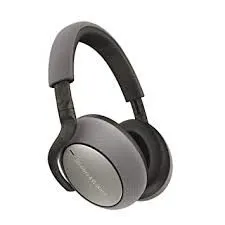
Bowers & Wilkins PX7 :
They’re the first headphones with Qualcomm aptX Adaptive audio technology that delivers robust connectivity and high-res wireless audio no matter where you are — and offer powerful drivers with adaptive noise canceling that put you in the center of your music.
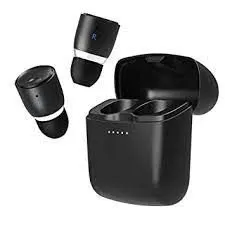
Cambridge Audio Melomania 1: Listen to your music, longer
Featuring an incredible 9-hour battery life between charges, the latest generation of Qualcomm TrueWireless Stereo technology, and aptX HD audio for high-res music streaming, Melomania 1 delivers stunning audio quality you’ve come to expect from Cambridge Audio.
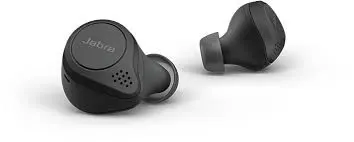
The Jabra Elite 75t: Compact comfort with superior call and music quality
Built on the ultra-low power Qualcomm QCC5126 Bluetooth SoC with Qualcomm cVc noise cancellation technology to filter out unwanted noise, the Jabra Elite 75t are perfect for making and taking calls — even in noisy and windy environments. Built for all-day wear, the Jabra Elite 75t can last up to 7.5 hours on a single charge.
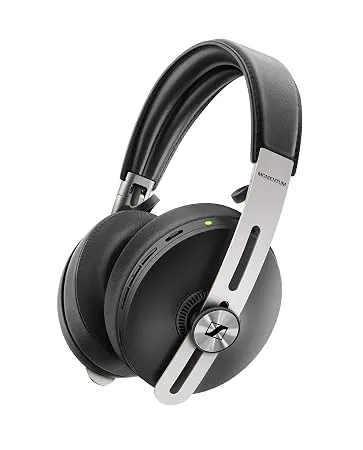
Sennheiser MOMENTUM Wireless: Studio quality audio
The new MOMENTUM Wireless is the latest addition to Sennheiser's premium headphone range — offering superior sound, cutting-edge technology, and a modern design aesthetic to every moment. It’s designed to redefine your premium headphone experience by reproducing the balanced depth and precision of studio-quality audio, utilizing aptX audio technology so you can hear even the smallest details in your music.
Skullcandy Crusher ANC: Personalized noise canceling:
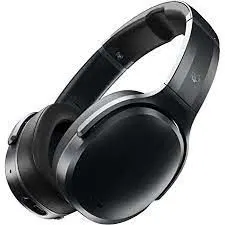
The Skullcandy Crusher ANC headphones offer a truly immersive experience combining Adjustable Sensory Bass, Active Noise Cancellation, and Personal Sound to deliver a deeper audio experience that’s tuned for your unique listening pleasure. Based on the Qualcomm QCC5124, the Crusher ANC also supports aptX audio so you can get the very most from your music no matter where you are.
5)
Industry trends and potential improvements :
Earphones & Headphones Market size exceeded USD 85 billion in 2021 and is anticipated to grow at a CAGR of over 11% from 2022 to 2028. Global industry shipments are expected to reach 1 billion units by 2028.
The industry will witness growth owing to the introduction of new product ranges. Players such as Apple Inc., Bose Corporation, and Audio Technica Corporation are investing heavily in R&D to expand their product portfolios and are focusing on launching new products to target a large set of consumers, thereby fueling their market sales.
Players in the domain are constantly emphasizing on improving their previous device offerings to secure a differentiated market positioning and maintain a strong engagement with the customers. This factor has encouraged companies to add new features to their product lines for attracting more consumers.
The lightweight design and portability of earphones make them a preferred choice for fitness and sports enthusiasts. Additionally, earphones provide good passive isolation from external sound, which translates into an immersive music listening experience for the user and is expected to drive the segment.
The bulky size and cost have reduced the popularity of the on-ear and over-ear headphones in recent years. However, technological advancements in these headphones with features, like active noise cancellation (ANC) and rich bass signature, make them a preferred choice among the audiophile community. The large-sized ear cups allow the manufacturers to equip the headphones with dynamic and electrostatic sound drivers, resulting in enhanced and clear sound quality. Companies like Bose Corporation, Sony Corporation, Sennheiser GmbH & Co. KG, and Skullcandy.com are engaged in improving the design and styling of their headphones by offering foldable headphones, leather ear cup cushions, and better build quality, which is expected to keep the headphones trending among the users.
TASK 2:
Product Planning and Concept Generation:
Customer needs study:
Customers are increasingly emphasizing purchasing advanced products to improve their listening experience. The integration of Bluetooth, IR, and NFC technology has offered a seamless connectivity experience with smartphones, computers & tablets. Furthermore, the introduction of echo reduction and noise cancellation has developed the comfort and convenience of the users. The inclusion of such technologies has improved the connectivity range and flexibility of the devices, thus supporting product acceptance for personal use.
The introduction of true wireless earbuds has brought about a paradigm shift in the way people listen to their music. These earbuds provide a user with a tangle-free experience while listening to music as there is no wire connecting the left and right earpieces. The earbuds are compact and can be carried around in a charging case, making them extremely portable. The styling and portability of these products have made them popular among the young crowd, athletes, and fitness enthusiasts, which is expected to drive the market.
Consumer attitudes toward wireless headphones, earbuds, and wearables are changing — and rapidly. In fact, over the next twelve months, truly wireless headphones are expected to be the most sought-after device in the headphone category. Consumers are embracing the convenience and freedom offered by totally wireless earbuds, and we’re seeing behaviors continually evolve in the ways they’re using these devices throughout the day.
While music listening is by far the most common use case for wireless headphones, others including watching video content, making calls, and blocking out background noise are growing in popularity. At Qualcomm Technologies we invent breakthrough technologies in audio that are helping our customers bring a whole new generation of wireless headsets and earbuds to market that include a combination of rich features such as all-day battery life, seamless voice UI (user interface), robust connectivity, low-latency for gaming, and high-quality audio for voice calls and music listening.
The sound quality and price are the most critical criteria for respondents while purchasing a wireless headphone or earbud. Over 50 percent of the respondents consider sound quality, price, comfort in the ear, as well as battery life as the most important factors influencing their choice.
The value proposition of the product:
Music has the power to heal, cleanse, and uplift your entire being. Karls headphone is an absolutely simple, beautiful, and magical to use. we have a passion for doing things that are better. We apply the highest level of scientific inquiry and invention to the discovery of new concepts and the development of new products. We create experiences for our customers that are enlightening, unique, and delightful. We seek to develop an environment that challenges us to pursue excellence and reach our fullest human potential.
We demonstrate the highest standard of business ethics in our dealings with our customers, suppliers, and each other. We gain the support and trust of others and build our reputation through individual integrity and respect.
Karls employees are expected to be open and honest in all business matters and to act consistently with the values we share as a company.
Mission statement:
we aim to provide a superior end-to-end music experience – with headphones, devices, and services – so fans feel the emotion and hear the music the way artists intended it to sound from the studio.
Product platform plan for current and future products:
Several players are launching new products on e-commerce websites and online platforms and investing in providing a smooth online experience to their customers to expand their market reach. They are running marketing campaigns with limited-time price offers to attract several consumers. For instance, in April 2021, Nokia Corporation introduced true wireless and Bluetooth neckband earphones on Flipkart in India. The headset is installed with a Qualcomm QCC3034 Bluetooth Audio chipset and is integrated with noise suppression technology. Through this launch, the company targeted millennial professionals and college students in the region.
Product development roadmap:
Idea Generation- This is the initial stage where various ideas are generated. The idea generated here is to develop a product to comfort the customers.
Screening of the idea– Once the ideas are generated, the next step involves screening the proposed ideas. The one which consumes less electricity, should the company provide more connectivity options (a consumer can control the product using their mobile phones), hot and cool facility in a single product eliminating the need for a separate heater. These are some of the factors based upon which the company screens the ideas generated.
Developing a concept– Once the less profitable ideas are rejected, the most feasible ideas are focused on.
This step involves research. In this step, various types of research are conducted, like consumers’ demand, SWOT and PEST Analysis of the company, reception of products offered by the company in the past, etc. The market today is customer oriented; therefore every decision is taken to keep the customer in the center. market trends are studied properly.
TASK 3 :
1)
Systems-based product design and planning:
Among numerous sources of electrical interference, stimulus artifact produced by the audio transducer (typically headphones or earphones) affects the features of an auditory Brainstem Response (ABR). At high stimulus intensities, artifacts may create a serious problem because they extend into the time frame of the ABR. The stimulus artifact depends upon the type of transducer and the electrode arrangements used. At present, expensive and complex methods are being employed to eliminate this problem.
in general, the artifact present in commercially available audio transducers is of a similar level to that with the standard headphones. The quality of the ABRs produced using these audio transducers at a high-intensity level was found to be normal. However, with some responses, small aberrations were noticed.
criteria to be evaluated :
The size of the headphone brand
The sound quality of the headphone
The headphone ability for isolating noise
The comfort of wearing the headphone
The aesthetics of the headphone
The price people are willing to pay for headphones
A Concept of Operations (CONOPS) is a user-oriented document that "describes systems characteristics for a proposed system from a user's perspective. A CONOPS also describes the user organization, mission, and objectives from an integrated systems point of view and is used to communicate overall quantitative and qualitative system characteristics to stakeholders.
Identify the required mission(s) in functional terms. Define the risks to accomplishing the functional outcomes.
Describe capabilities required by the customer or its’ stakeholders/partners to accomplish the mission.
Describe the capabilities independently of whether or not the customer currently possesses them.
Do not specify capabilities in terms of assets, equipment, or other means that might satisfy the need; i.e., state the capability (need), not the solution (equipment). The next part of this section also builds upon and references the MNS section cited below. More detail than in the Mission Needs Statement may be provided.
And each Capability in the ConOps needs units of measure meaningful to the decision-makers
Measures of Effectiveness - Operational measures of success that are closely related to the achievements of the mission or operational objectives evaluated in the operational environment, under a specific set of conditions.
Measures of Performance ‒ characterize physical or functional attributes relating to the system operation, measured or estimated under specific conditions.
Key Performance Parameters ‒ capabilities and characteristics so significant that failure to meet them can be cause for reevaluation, reassessing, or termination of the program
Without the ConOps, we're laying the groundwork for project trouble and these root causes ...
Requirements for the product:
Noise-isolating headphones physically block external sounds. This is either with over-ear, closed-back headphones encasing the entire ear, or, more effectively, in-ear headphones sealing the ear canal.
Noise-canceling headphones have embedded microphones and electronic chips. They record ambient noise, then create an inverse sound wave and feed it back into the headphones to effectively cancel out the sound.
Total harmonic distortion (THD) shows the level of distortion there may be when using headphones at a high volume. headphones produce sound via a vibrating diaphragm in the driver. At high volumes, the diaphragm may not be able to vibrate fast enough, resulting in distortion. THD is expressed as a percentage, and lower is better. Most headphones have a THD of less than 1%, and high-end sets considerably less.
Frequency response indicates the range of audio frequencies the headphones can reproduce. It's measured in Hertz, with the lowest number representing the amount of bass, and the highest treble. Most headphones have a stated frequency response of around 20-20,000Hz, which matches that of human hearing.
Impedance is a measure of electrical resistance and is displayed in Ohms. In the simplest terms, higher impedance means more resistance, which means more power is needed to drive the headphones.
Sensitivity shows how efficiently an electrical signal is converted into an acoustic signal. SPL is how sensitivity is measured and is often displayed as decibels of SPL per milliwatt (although there is no absolute standard for this). Most headphones are within the range of 85-120dB of SPL per milliwatt.
The driver is the most important component in a pair of headphones. It turns an electrical signal into sound pressure—in other words, it creates sound.
Work Breakdown Structure (WBS):
Product verification and validation plan:
Design validation determines if you are building the right product. Does the device work as intended for the end users?
Design verification determines if you’re building the product right. Are design outputs matching design inputs?
2)
Product architecture study:
The basic architecture of an ANC headphone:
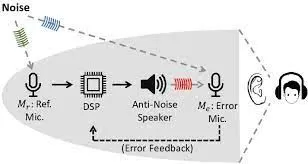
AI integration is a popular way that inventors have approach innovating traditional product designs to make them more fit and suitable to the needs of current society. Oakland industrial design company was glad to see headphones that incorporate AI, such as the AudiBall! The Audiball is a Bluetooth-connected headphone that can transform in and a spherical smart speaker. The Audiball can not only act as headphones, and a Bluetooth speaker, but also has built-in Amazon Alexa and Google Assistant capabilities. The overall design of the AudiBall was inspired by origami which explains its intricate and unique design built that makes it able to transform from headphones into a spherical ball. All controls placed on the Audiball are intuitively and conveniently placed so that you can access and adjust them with ease. Finally, the device is waterproof, dust-proof, and durable, perfect for headphone users looking for high-quality headphone design.
An interface is a device for connecting audio sources like mics and guitars to your computer and your computer to speakers and headphones. However, a headphone amp only amplifies audio to make the signals loud enough for headphones. In general, if you are a music producer, an audio interface is essential.
An audio interface is an all-in-one box for music recording and production. An audio interface combines various components including DAC and ADC chips, headphone amplifiers, microphone preamps, MIDI I/O, and more. As with other kinds of all-in-one products, audio interfaces typically compromise on the quality of individual components to meet a certain price point.
A headphone amplifier takes an audio signal and makes it loud enough for your headphones – that’s literally all it does. A headphone amplifier typically takes a line level signal from a DAC or audio interface via XLR, 1/4", or RCA connectors amplifies it, and sends it to a 1/4" or 3.5mm headphone output.
3)
Determine target audience
Determine the target audience's preferred sonic and mechanical attributes
acquire competitors' products that fall into the same category and analyze the things you will emulate, eliminate and innovate upon.
Some headphones have mechanisms built in them to reduce the volume if it goes to a very high level. The body of headphones is plastic or rubber, which are insulators, in order to prevent any electric shock on the individual while using it. Each end of the headphones is fitted with a cushion to prevent pain from the plastic or metal casing.
Headphones are built in a way that it fits your head perfectly. Headphones are adjustable so regardless the size of your head, you can still use it. Headphones have two ends for each ear, each with a cushion to protect your ears from the plastic casing. The wireless ones usually have lights that light up when connected, while the wired ones have cords that are connected to a device. Systems: The headphones have an audio plug that is connected to the headphone jack of the device. The end of the audio plug is a conductor and when its connected to a device, it conducts electrical energy from the device. When the electrical energy enters through the audio plug, it travels through a series of different wires which are enclosed by rubber in order to prevent electric shock. When the electric energy passes through, it approaches a series of coils. As the electrical energy passes through the coils, it becomes an electromagnet, exerting a force on the diaphragm causing it to vibrate, generating sound.
An intuitive touch-control functionality will enable users to easily make changes to the functionality and even access their choice of a voice assistant with ease. The lightweight, foldable design of the headphones makes them comfortable for long-term wear, while the battery will deliver up to 20 hours of use per charge.
The Philips H9505 headphones deliver passive noise cancellation to help enhance the user experience and allow wearers to focus more on their choice of music or content.
Aesthetics: Headphones are pleasing to the human senses in many ways. Headphones are made in a variety of colors in order to attract people of different choices. Some headphones are specially decorated with glitter and sparkles in order to allure females, which in turn encourages them to purchase earphones. Some headphones these days are designed with many beautiful African or cultural designs. When people from those cultures see the headphones, they would want to buy a pair, because they have a connection with them. Headphones such as the Beatrice Novi Hemphones appeal to the sense of touch because of their unique body made of natural hemp fibers.
Improving the ergonomics:
BETTER MOVEMENT
Using a wireless headset as part of your daily work routine will help improve your posture by freeing you to move and sit more naturally. It eliminates the need to hold the telephone in an uncomfortable position and provides the freedom to roam which results in 35% less muscle tension than handset users.
REDUCES STRAIN
Neck and upper back muscle tension are one of the most common ailments of office workers. Results from a commissioned study conducted at Santa Clara Valley Medical Center in San Jose, CA, provide strong evidence that office workers can reduce neck, shoulder and upper back muscle tension as much as 41% by using a headset. That is a significant improvement for just wearing a headset!
INCREASE PRODUCTIVITY
An additional study by H.B. Maynard & Co., Inc. concluded that adding hands-free headsets to office telephones improved productivity and efficiency by up to 43 percent. By making your workstation more comfortable and freeing up your hands for other tasks, you’ll find that you can get more work done each day.
A wireless headset will also enable you to remain productive from home or out of the office.
SOUND QUALITY
With the proper microphone placement (1-2 finger widths from the corner of your mouth) wireless headsets have reinvented sound and speech perception. A lot of headsets now have noise-cancelling options that detect and analyze the pattern of incoming sound which generates an “anti-noise” mirror signal to cancel it out for clear conversations. As a result, headsets give users a better sound experience that is personalized to their individual needs and reciprocated on the other end.
REDUCES WORKPLACE INJURIES
It’s impressive to see the difference a headset can make for the end users. A Swedish field study analyzed a hundred people and showed that for 26% of respondents, neck and back pains “totally disappeared” and for 52% of respondents, inconvenience “diminished significantly” after they started using a headset. It is clear that headsets reduce the chances of work-related physical disorders which also results in reduced workers’ compensation costs!
TASK 4 :
TASK 5:
| Component/Process | Failure Mode | Failure Effect | SEV | Potential Cause | OCC | Existing Detection Method | DET | RPN |
| BATTERY |
Swelling of the battery faulty battery |
potential burst, Your device might start releasing dangerous gasses or in a worst-case scenario, explode. | 8 |
charging too high or too low Excessive heating, the rapture of the battery’s housing, bending, overcharging. |
8 | complete disconnection between the drivers and the audio source | 5 | 240 |
| THE SPEAKERS | You hear rattling noises and/or distorted sound | poor audio quality | 4 | A problematic AUX port or headphone jack | 6 | The fastest way to test for this is to plug your headphones into several AUX ports on different devices. You don't hear any sound on your Bluetooth headphones. There's a delay when you use your Bluetooth headphones. |
7 | 168 |
| THE CABLE | short-circuiting. | overheating and electrical sparks, damaging both your headphones and audio source. | 8 | Short circuits happen when excessive charge flows to an unintended wire and often occur when the wire insulation is worn out or exposed. | 6 | can't hear any audio or bad audio quality | 7 | 336 |
|
THE HEADPHONE JACK |
can't hear any audio/ bad audio quality |
headphone may not work the way it is supposed to bad audio quality |
2 | When the headphone jack is blocked, either due to dirt, cloth, or dust particles | 6 | can not hear any audio or bad audio quality | 7 | 84 |
Component/Process
Recommended Actions
Responsibility
Target Date
Action Taken
SEV
OCC
DET
New RPN
THE HEADPHONE JACK
Check the Bluetooth settings owner immediate
Turn the Bluetooth switch Off or unpair Bluetooth audio devices that are already connected to your phone. Plug your headphones into the audio jack and play something to see if they work.
fixing a loose headphone jack only involves a quick, simple fix that doesn't risk damaging your device.
1 4 7 28
THE CABLE
repair and fix headphone wires and cables
owner immediate
To repair and fix headphone wires and cables, you will need an army knife, a lighter, and heat-shrinking tubing. To complete the repair, you'll have to strip the cable, remove the wire coating, rejoin the wires, and use the heat-shrinking tube or electric tape
7 4 7 196
THE SPEAKERS
Try plugging in your headphones to different audio sources owner immediate
Try using a different pair of headphones with the audio device.
Restart your audio player device.
Check if the settings are correct.
Make sure that the headphone jack is clean and free from any debris
3 4 7 84
BATTERY
avoid overheating/ overcharging
if you see the swelling, stop using the headphones.
owner immediate
use a good quality battery charger
avoid overheating/ overcharging
7 4 5 140
Fault tree analysis (FTA) is a graphical tool to explore the causes of system-level failures. It uses boolean logic to combine a series of lower-level events and it is basically a top-down approach to identify the component level failures (basic event) that cause the system level failure (top event) to occur.
TASK 6:
design for Manufacturing and Assembly (DFMA) is an engineering methodology that focuses on reducing time-to-market and total production costs by prioritizing both the ease of manufacture for the product’s parts and the simplified assembly of those parts into the final product – all during the early design phases of the product lifecycle.
Before becoming the singular philosophy it's known as today, DFMA used to be considered as two distinct methodologies: Design for Manufacturing (DFM) and Design for Assembly (DFA). DFM is concerned with selecting cost-effective raw materials and attempting to minimize the complexity of manufacturing operations during the product design phase (which would be the least disruptive and expensive time to address those issues) in order to reduce the overall manufacturing time and costs of product components. Similarly, DFA is concerned with reducing the product's assembly time, costs, and complexities by minimizing the number of individual parts, assembly steps, and potential for variability in build quality.
Key factors that are important to consider for DFM:
PLANNING
Consult with manufacturing experts on your design. Lowering manufacturing costs is never easier than at the design stage.
MATERIALS
Use manufacturing-compliant materials if possible, which determines manufacturing processes and means, materials management, and quality control.
PROCESSES
Know the manufacturing process to reduce costs. For example, 3D printing may enable one monolithic part design instead of manufacturing multiple components.
STANDARDS
Use standard parts or components. This will reduce the cost of new designs while improving inventory management and time-to-market.
areas of design improvements:
Self-learning audio technology
The NuraPhone headphones combine an over-ear headset with in-ear headphones for a truly personalized listening experience. The headphones use an audio test to measure your listening response to a series of sounds at different frequencies, then calibrate the audio settings to match the specific frequencies that you’re most sensitive to. While it might sound like a gimmick, the review site PocketLint claims it really works: “By the time our personalized profile was complete the sound seemed perfect to our ears,” they write. This year, the company is launching a new in-ear only version of the headphones, called NuraLoop.
Hybrid noise cancelling technology
While noise-canceling technology has been helping make airplane rides smoother for almost 20 years, new innovations in headsets have seen the development of “hybrid” active noise cancellation (ANC) headphones, which sport microphones on both the interior and exterior of the ear cup. This type of ANC is better able to suppress noise and correct errors than standard ANC headsets. They may also offer different modes, such as NuraPhone’s “social mode,” which allows ambient external noises to pass through while you’re listening to the headphones. This can be helpful in an environment where it’s important to remain aware of your surroundings, such as riding a bus or train
Bone conduction technology
Bone conduction audio technology has its roots in hearing aid technology, and has also been used in military applications. In this type of device, there are no earbuds at all—instead, the headphones line up with the user’s cheekbone and send the audio directly to the cochlea, completely bypassing the eardrums. The sound from bone conduction headphones is not as crisp as the audio from a headset that transmits sound to the eardrums, but such devices can be a good option for runners who want to be able to hear outside noises easily, as well as for listeners who have hearing disabilities.
Focused audio technology
Finally, one of the most exciting pieces of audio technology doesn’t involve headphones at all—but it still delivers a high-fidelity sonic experience to each listener, privately. The Israeli startup Noveto’s “focused audio” technology uses 3D tracking to find the position of the listener’s ears and deliver sound directly to them, ensuring that no one else in the room will hear the sound. It’s similar to directional audio, but is also “steerable”—that is, it moves based on your movement in real time. The audio fidelity isn’t quite up to the levels of a home theatre system, but is expected to significantly improve as development continues. There are many promising applications for the technology—for instance, in a car: "The kids in the back seat can see a Walt Disney [movie] for the 15,000th time, and in the front you can hear something else or just enjoy peace and quiet,” cofounder Tomer Shani told Business Insider.
Noise-isolating headphones physically block external sounds. This is either with over-ear, closed-back headphones encasing the entire ear, or, more effectively, in-ear headphones sealing the ear canal.
Noise-canceling headphones have embedded microphones and electronic chips. They record ambient noise, then create an inverse sound wave and feed it back into the headphones to effectively cancel out the sound.
Total harmonic distortion (THD) shows the level of distortion there may be when using headphones at a high volume. headphones produce sound via a vibrating diaphragm in the driver. At high volumes, the diaphragm may not be able to vibrate fast enough, resulting in distortion. THD is expressed as a percentage, and lower is better. Most headphones have a THD of less than 1%, and high-end sets considerably less.
Frequency response indicates the range of audio frequencies the headphones can reproduce. It's measured in Hertz, with the lowest number representing the amount of bass, and the highest treble. Most headphones have a stated frequency response of around 20-20,000Hz, which matches that of human hearing.
Impedance is a measure of electrical resistance and is displayed in Ohms. In the simplest terms, higher impedance means more resistance, which means more power is needed to drive the headphones.
Sensitivity shows how efficiently an electrical signal is converted into an acoustic signal. SPL is how sensitivity is measured and is often displayed as decibels of SPL per milliwatt (although there is no absolute standard for this). Most headphones are within the range of 85-120dB of SPL per milliwatt.
The driver is the most important component in a pair of headphones. It turns an electrical signal into sound pressure—in other words, it creates sound.
2)
Select low-impact materials that will promote longevity in the product. Avoid coupling materials that cannot be recycled. Preference materials that can be recycled in the country the product is intended for. Use design techniques such as honeycombing to reduce the amount of material used.
product packaging, brand identity, and website design, These areas are responsible for some of the highest outputs of waste and an increased carbon footprint.
Design for the Environment (DfE) is a design approach to reduce the overall human health and environmental impact of a product, process or service, where impacts are considered across its life cycle. Different software tools have been developed to assist designers in finding optimized products or processes/services.
The size, shape, color, printing style, and paper stock choices made by a designer will ultimately determine the size of the ecological footprint. By making informed decisions, designers can reduce their environmental impact, resulting in less greenhouse gas emissions and more efficient use of natural resources
TASK 7:
DSM Curve:
1.
- Check the wire(2H)
- Put into the assembly line(1H)
- Wire goes through back of the shell(2H)
- knott right and left shells(2H)
- Welding horn(1H)
- Quality check of solder joint(2H)
- Assembly of front shell(3H)
- Assembly of back shell(3H)
- Earmuffs(2H)
- Audio frequency sweeper(3H)
- MIC frequency response curve(4H)
- Headphone listening test(2H)
- MIC listening test(2H)
- Electroacoustic test(2H)
- Sensitivity phase test(2H)
- Polarity test(2H)
- Control box key function(3H)
- Check the appearance of the headset(1H)
- Appearance inspection(2H)
- Packaging(2H)

2.

3. Product Acceleation:
- Once a design has been finalized, moulding machines shape the plastic components which can be done parallely adn time canbe saved.
- A winding machine winds the copper wire around a cylinder. The standard count for the copper coil is ten thousand winds, but as a general rule, the more coils, the better the electromagnetism. Usage of effective turbines to wind the the copper wire can acceletate the project.
- The resulting copper coil now becomes a voice coil which is then sealed by a technician with a transparent diaphragm or plastic cover. For the seal, a small amount of glue and UV light is used for best results.
- The voice coil is then installed into a housing that is strategically positioned to produce the best sound.
- A miniature loudspeaker goes through a series of frequency range and distortion tests before it undergoes final assembly. If all the tests are done simultaneously then much of the time can be saved.
- Installation of wires in the strain relief of the adjustable band is completed.
TASK 8:
1.
Support structure for earpiece cushion:
Acoustic output apparatus:
Wireless charging headphone:
Systems and methods for suppressing sound leakage:
Free-standing wireless-charging headsets:
Active Noise-Cancelling Headphones:
Active noise-cancelling headphones are one of the high-end tech headphones that you will find in the market. The mechanism of such headphones is such that it cancels out the noise around the environment by recording the environment’s noise, reversing its phase, and then transmitting it to your ears. Therefore, the sounds are cancelled out before they are transmitted to your ears
Bone Conduction Headphones:
Bone Conduction Headphones use a mechanism where the sound is transmitted through your cheekbones which makes these headphones dodge the outer ear. These headphones are fabulous as they keep you well aware of your surrounding noises, and you are not compromising your sound quality.
Classic Earphones:
The Classic earphones will fit your ear canal and are the most popular listening device you will find globally.
Closed-Back Headphones:
Closed-back headphones are built-in a way where they can cover the ear in three ways Over the ear coverage, On-ear coverage and In-ear coverage. These types of headphones have the best sub-bass feature. Sub-bass sounds are the lowest frequency that humans can hear, around 20Hz. Since human hearing is not that sensitive around sound-bass, such sound notes are not heard as much as they are felt.
Open-Back Headphones vs Closed-Back Headphones:
Closed-back headphones are best at cancelling out external noises. Plus, they are good at proofing the sound leakage, which means people around you won’t be able to hear what is transmitted in your closed-back headphones. Open-back headphones are designed for better air circulation and let you have an airy feeling in the background while listening to audio. They do not cancel out the external noises and let the noise from the external area come into your headphones.
3.
One in five teenagers in America can’t hear rustles or whispers, according to a study published in August in The Journal of the American Medical Association. These teenagers exhibit what’s known as slight hearing loss, which means they often can’t make out consonants like T’s or K’s, or the plinking of raindrops. The word “talk” can sound like “aw.” The number of teenagers with hearing loss — from slight to severe — has jumped 33 percent since 1994.
Given the current ubiquity of personal media players — the iPod appeared almost a decade ago — many researchers attribute this widespread hearing loss to exposure to sound played loudly and regularly through headphones. (Earbuds, in particular, don’t cancel as much noise from outside as do headphones that rest on or around the ear, so earbud users typically listen at higher volume to drown out interference.) Indeed, the August report reinforces the findings of a 2008 European study of people who habitually blast MP3 players, including iPods and smartphones. According to that report, headphone users who listen to music at high volumes for more than an hour a day risk permanent hearing loss after five years.
Maybe the danger of digital culture to young people is not that they have hummingbird attention spans but that they are going deaf.
The history of headphones has always been one of unexpected uses and equally uHnexpected consequences. Headphones were invented more than a century ago. According to some accounts, modern headphones were the brainchild of Nathaniel Baldwin, a tinkerer from Utah who grew frustrated when he couldn’t hear Mormon sermons over the noise of the crowds at the vast Salt Lake Tabernacle. Baldwin’s device, which was designed first as an amplifier, came to incorporate two sound receivers connected by an operator’s headband. Within each earphone was, according to legend, a mile of coiled copper wiring and a mica diaphragm to register the wire’s signals with vibrations. When the Navy put in an order for 100 such Baldy Phones in 1910, Baldwin abandoned his kitchen workbench, hastily opened a factory and built the prosperous Baldwin Radio Company. His innovations were the basis of “sound powered” telephones, or phones that required no electricity, which were used during World War II.
It’s not incidental that Baldwin imagined headphones first as a way to block out crowd noise and hear sermons. Workers and soldiers have long used them to mute the din of machinery or artillery while receiving one-way orders from someone with a microphone. From the beginning, it seems, headphones have been a technology of submission (to commands) and denial (of commotion).
When World War II ended, submission-and-denial was exactly what returning veterans craved when they found themselves surrounded by the clamor and demands of the open-plan family rooms of the postwar suburbs. By then, they knew what device provided it. In the ’50s, John C. Koss invented a set of stereo headphones designed explicitly for personal music consumption. In that decade, according to Keir Keightley, a professor of media studies at the University of Western Ontario, middle-class men began shutting out their families with giant headphones and hi-fi equipment. Further, they recalled the sonar systems they saw at war.
The Walkman appeared in 1979, the invention of Sony, and headphones became part of a walking outfit. Headphones and earbuds are now used with MP3 players, mobile phones, tablet computers and laptops.
Most discussions of the transformation of music by digital technology focus on the production end. But headphones transform sound for the consumer too. Headphones are packed with technology. When an audio current passes through the device’s voice coil, it creates an alternating magnetic field that moves a stiff, light diaphragm. This produces sound. If you think about all the recordings, production tricks, conversions and compressions required to turn human voices and acoustic instruments into MP3 signals, and then add the coil-magnet-diaphragm magic in our headphones, it’s amazing that the intensely engineered frankensounds that hit our eardrums when we listen to iPhones are still called music.
Headphones work best for people who need or want to hear one sound story and no other; who don’t want to have to choose which sounds to listen to and which to ignore; and who don’t want their sounds overheard. Under these circumstances, headphones are extremely useful — and necessary for sound professionals, like intelligence and radio workers — but it’s a strange fact of our times that this rarefied experience of sound has become so common and widespread. In the name of living a sensory life, it’s worth letting sounds exist in their audio habitat more often, even if that means contending with interruptions and background sound.
TASK 9:
1.
The global earphones and headphones market size was valued at USD 25.1 billion in 2019 and is expected to grow at a compound annual growth rate (CAGR) of 20.3% from 2020 to 2027. Rising consumer preference for enhanced audio experience, growing music industry, coupled with mobile technology and internet penetration, are some of the primary factors driving the market.
Headphones can be developed using iot.
Smart Headphones: Bluetooth headphones often come with features that go far beyond listening to music. They are usually equipped with a microphone and can access various "smart" functions via your smartphone. Therefore, they can contain personal data or at least access it.
Headphones can be used as both as product and aslo service provider product. And that will be based on the functioning that happens by the customer.
2.
HEADPHONE technology has improved massively in recent years and it is trend that is set to continue for the foreseeable future.
According to market analysis conducted by Research N Reports, the global earphones and headphones industry was worth more than $10.5 billion in 2018.
Improved audio experiences and a shift towards mobile devices amongst consumers are expected to drive a compound annual growth rate (CAGR) of over 5% between now and 2025.
The emergence of notched smartphones, increased demand for fashionable designs and improvements in noise cancellation are other factors predicted to power the growth.
The Asia-Pacific region is expected to have the highest CAGR during the forecast period, although the revenue rise is likely to impact countries across the world. Read on as we look at the future of headphone technology.
Human Headphones set to change the game
Seattle-based electronics manufacturer, Human Inc., is set to change the game after launching the first true wireless over-ear smart headphones.
Human Headphones feature a 3-in-1 design that delivers over-the-ear quality, ear-bud convenience and a powerful Bluetooth speaker.
The provide excellent sound quality, capacitive touch controls, on-the-move communication, all-day connectivity and more, making them one of the most innovative products to hit the market.
Turtle Beach amplifying its reach
Turtle Beach continues to make some of the best headphones in the industry and their Elite Pro 2 plus SuperAmp bundle has taken things to another level.
The Elite SuperAmp is an innovative audio controller that allows gamers to connect, amplify and control their audio settings via Bluetooth.
Available for Xbox One and PlayStation 4, the device can connect any wired gaming headset to a mobile app-based control centre.
Users can tweak their audio settings to receive powerful and immersive amplified surround sound that moves gaming into a different stratosphere.
When connected to the app, players can instantly control features like Game and Chat Audio Mix, Dynamic Chat Boost, Superhuman Hearing and more.
There are other controls for the SuperAmp’s LED colour and lighting mode, along with streaming-specific audio settings.