Project 2 Thermal modeling of battery pack
For a 10 cell series lithium ion battery model, simulate the thermal effects and compare life cycle performance at various temperatures, charge & discharge rates using MATLAB.
The Lithium –ion batteries are widely used as energy sources in different hybrid and electric vehicle. However, the operation characteristics of the battery in such vehicle are strongly dependent on the operational temperature and therefore with purpose to improve these characteristics a good thermal control system should be utilized.
The temperature of lithium battery cell is important for its performance, efficiency, safety and capacity and is influenced by the environmental temperature and by charging and discharging the process itself. Therefore, a thermal model of the battery is used in order to calculate and estimate the cell temperature.
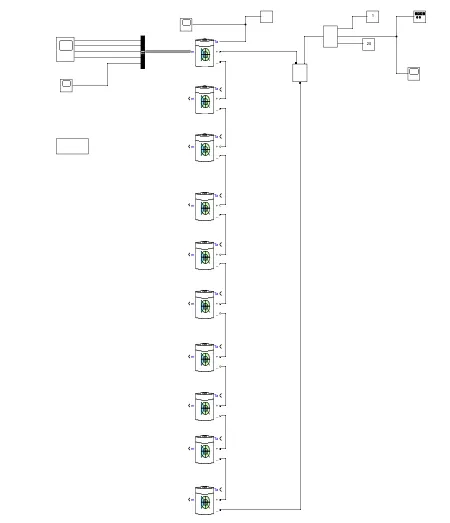
For 10-cell series lithium ion battery, MATLAB Simulink model is used for finding thermal effect and life cycle performance related to the temperature, charge and discharge.
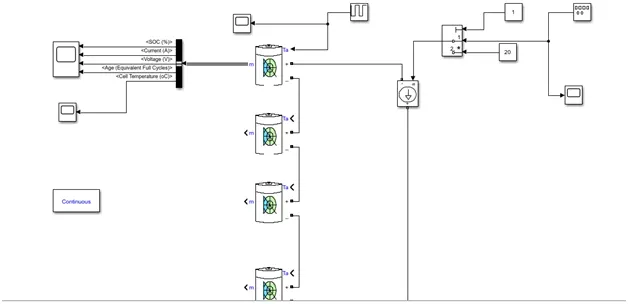
SIMULINK MODEL:
PARAMETERS:
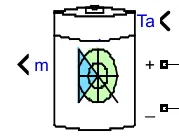
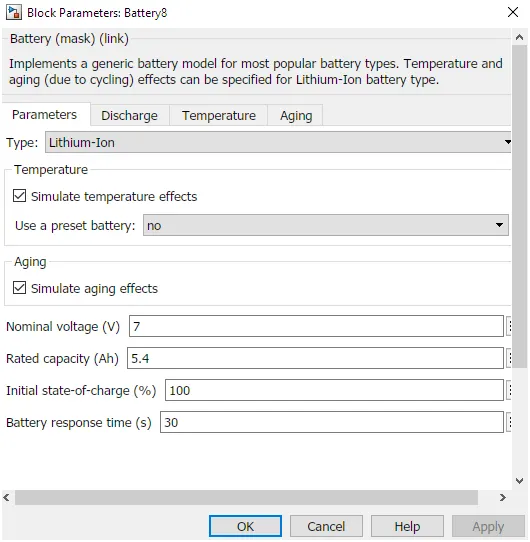
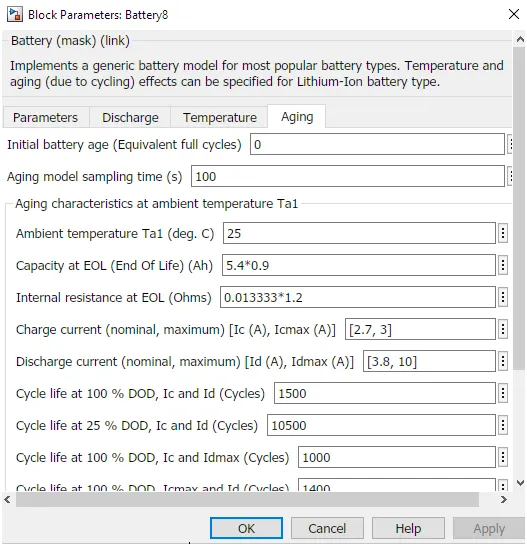
The battery is considered and the required parameters are given below.
SQUARE WAVE GENERATOR:
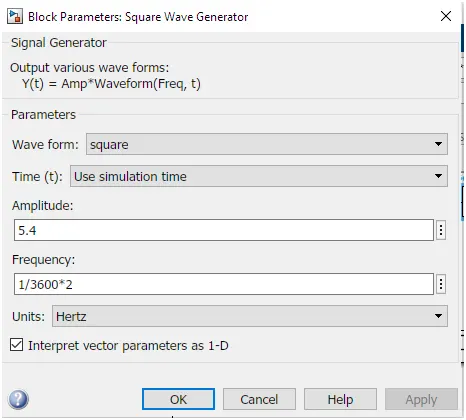
Square wave generator is used to generate the current values. The maximum amplitude is 5.4A and the frequency is 1/3600*2 (for charging and discharging).
CHANGE IN TEMPERATURE:
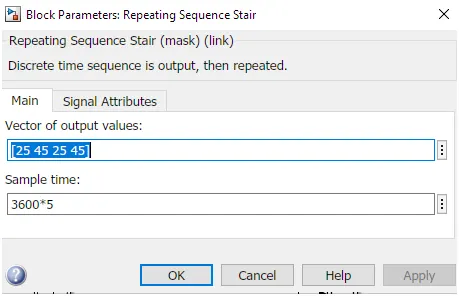
The temperature values changes from 25°C to 45°C. The value is repeated for the entire set of cycles.
BUS SELECTOR:
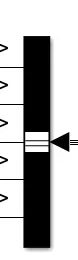
Bus selector is used various parameters such as SOC, Current, Voltage, Aging etc from the battery model output.
SIMULINK RESULTS:
VARIATION IN TEMPERATURE:
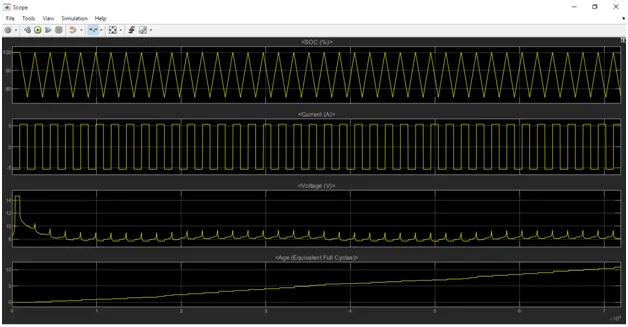
From the figure it is clear that the value of the SOC increases and decreases which indicate the charging and discharging of the battery. The current value also increases and decreases from 5.4A to -5.4A.
The voltage value increases to 14.3V initially and then gradually decreases to 8V and then increases again to 9.5V. Thus, whenever the battery is charged, the voltage increases and decreases.
The age of the battery increases gradually and it becomes 10*10^4 at the end of 20 cycles. Thus the value of age increases.
CHANGE IN CHARGING AND DISCHARGING:
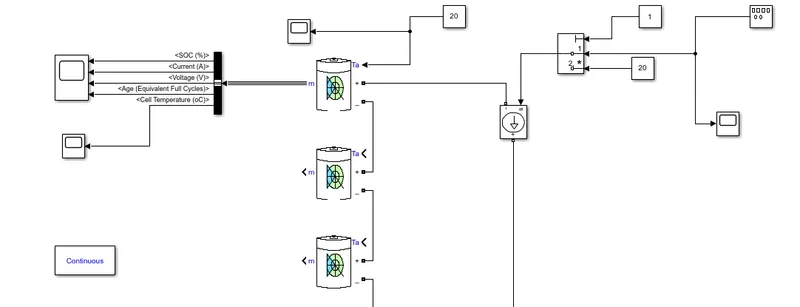
The value of the charging rate is varied at 5C rate and the results are obtained. The value of the temperature is kept constant at 20 degree.
The random source generator is used to generate the charging and discharging cycles.
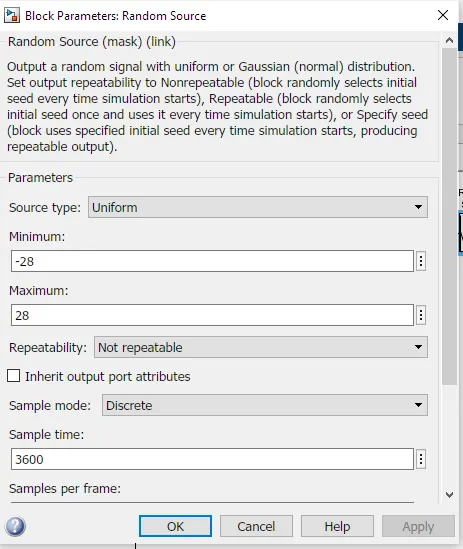
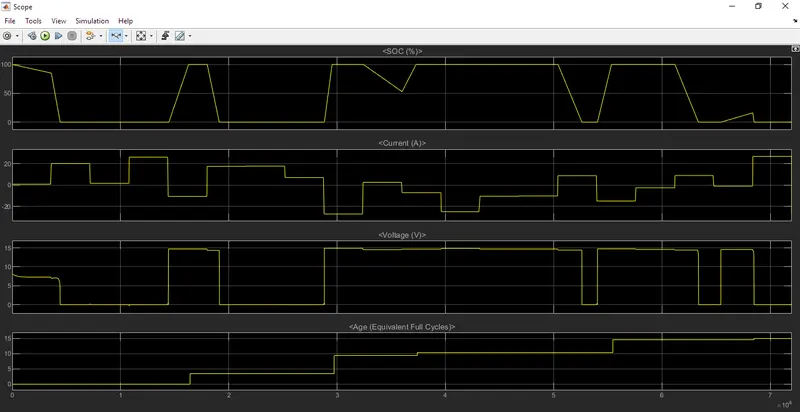
The value of the SOC changes from 100% to 0% and then increases from 0% to 100%. The current value also increases from -27A to +27A. (considering 5C rate). The voltage value increases from 0 to +15V.
The age of the battery increases gradually and reaches about 15 cycles at the end of 20 cycles.
CONCLUSION:
Thus the thermal effects for the 10 cell series battery model are simulated and the life cycle performances at various temperature, charge and discharge rates are simulated using MATLAB.