Project 2 Thermal modeling of battery pack
AIM :
For a 10 cell series lithium ion battery model, simulate the thermal effects and compare life cycle performance at various temperatures, charge & discharge rates using MATLAB.
Lithium ion battery :
- A lithium ion battery is a type of rechargable battery. Lithium ion batteries are widely used as energy sourced in different hybrid and electric vehicle. The operation characteristics of the battery in such vehicle are strongly dependent on the operation temperature and therefore with the purpose to improve these characteristics a good thermal control system should be utilized. The batteries have a high energy density, no memory effect and low self discharge.
- The temperature of the lithium ion battery cell is important for its efficiency, safety and capacity and is influenced by the environmental temperature and by the charging and discharging process itself. Lithium ions move from the negative electrode through an electrolyte to the positive electrode during discharge, and back when charging Li-ion batteries use an intercalculated lithium compound as the material at the positive electrode and typically graphite at the negative electrode.
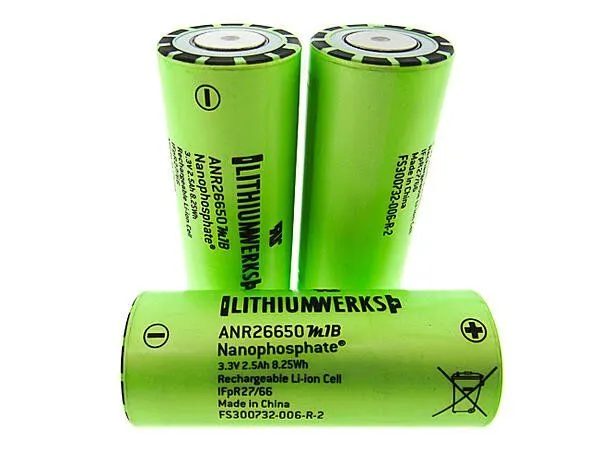
- Electronics use lithium polymer batteries (polymer gel as electrolyte), a lithium cobalt oxide (LiCoO2) cathode material and a graphite anode, which together offer a high energy density. Lithium iron phosphate (LiFePO4), lithium manganese oxide (LiMn2O2 spinel or LiMnO3 based rich layered materials (LMR-NMC)) and lithium nickel manganese cobalt oxide (LiNiMnCoO2 or NMC) may offer longer lives and may have better rate capability.
- Such batteries are widely used for electronic tools, medical equipment and other roles. NMC and its derivatives are widely used in electric vehicles. Research areas for lithium ion batteries include extending lifetime, increasing energy density, improving safety, reducing cost and increasing charging speed. Research has been underway in the area of non flammable electrolytes as a pathway to increased to increased safety based on the flammability and volatility of the organic solvents used in the typical electrolyte.
Limitations :
- Lower energy density and decreased cycle count compared to lithium ion.
- expensive to manufacture.
- No standard sizes. Most cells are produced for high volume consumer markets.
- Higher cost to energy ratio than lithium ion.
Simulink model :
A detail design of MATLAB simulink model for thermal modelling is done.
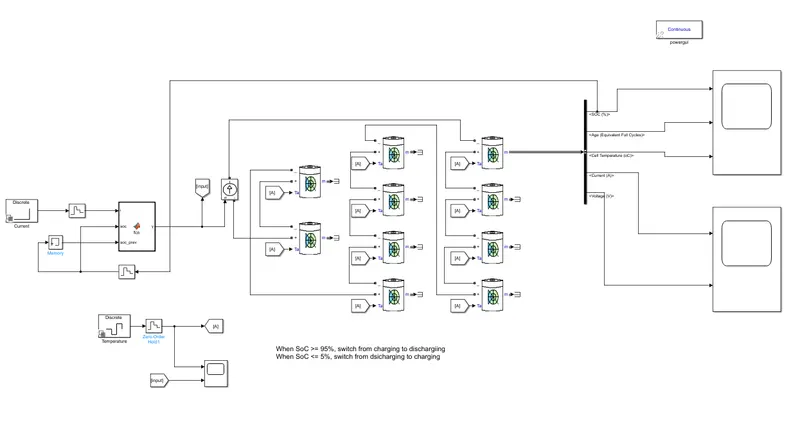
Maltab function for charging and discharging :
%Function to switch between charging and discharging based on SoC
function y = fcn(i,soc, soc_prev)
s = soc-soc_prev;
if(s>0) %charging
    ch=1;
else    %discharging
    ch=0;
end
if(soc>=95)
    y = i;  %discharge the battery
elseif(soc<=5)
    y = -i; %charge the battery
else
    if(ch==1)
        y = -i; %continue charging
    else
        y = i;  %continue discharging
    end
end
Blocks used in this model :
Stair generator :
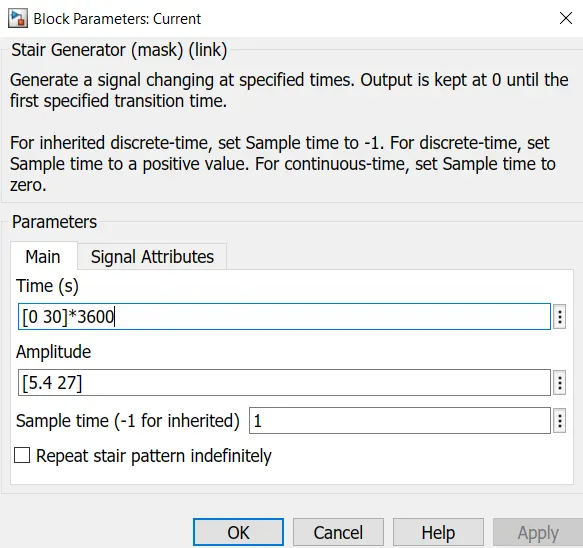
The Stair Generator block generates a signal changing at specified transition times. You can also use the Stair Generator block to generate a signal whose amplitude changes by steps at specified transition times.
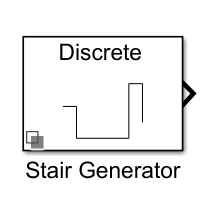
Stair generator as current :
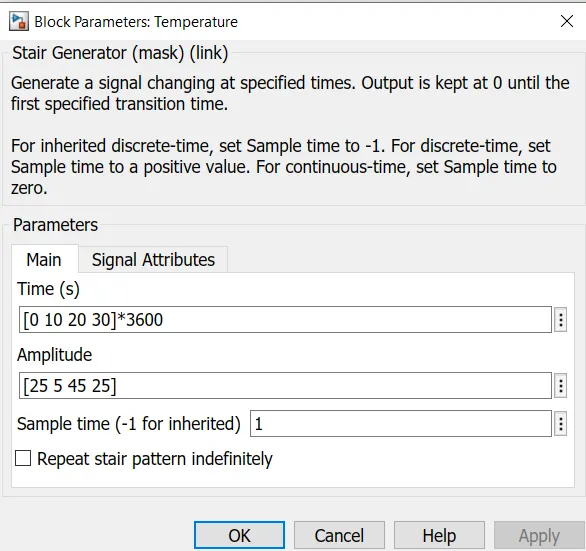
Stair generator as temperature :
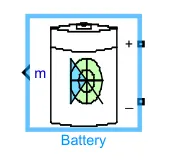
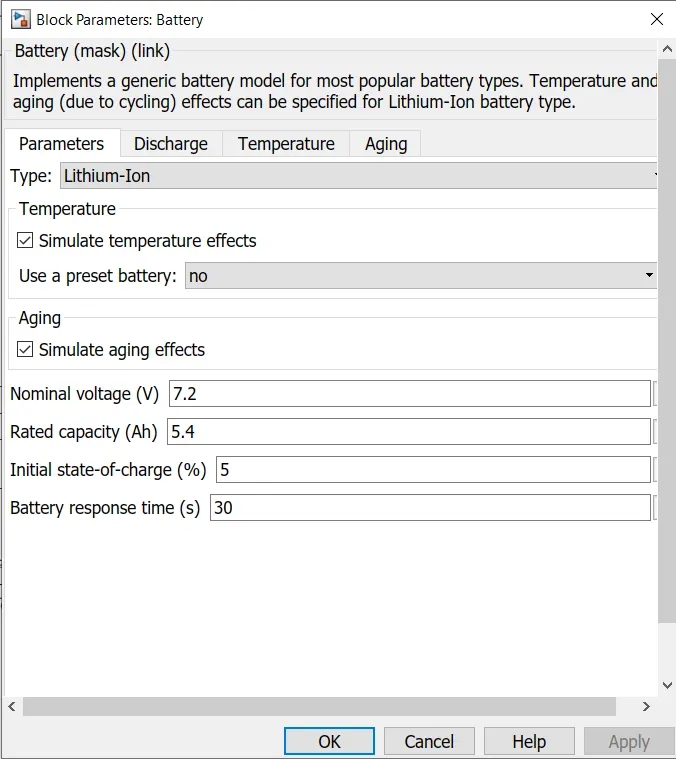
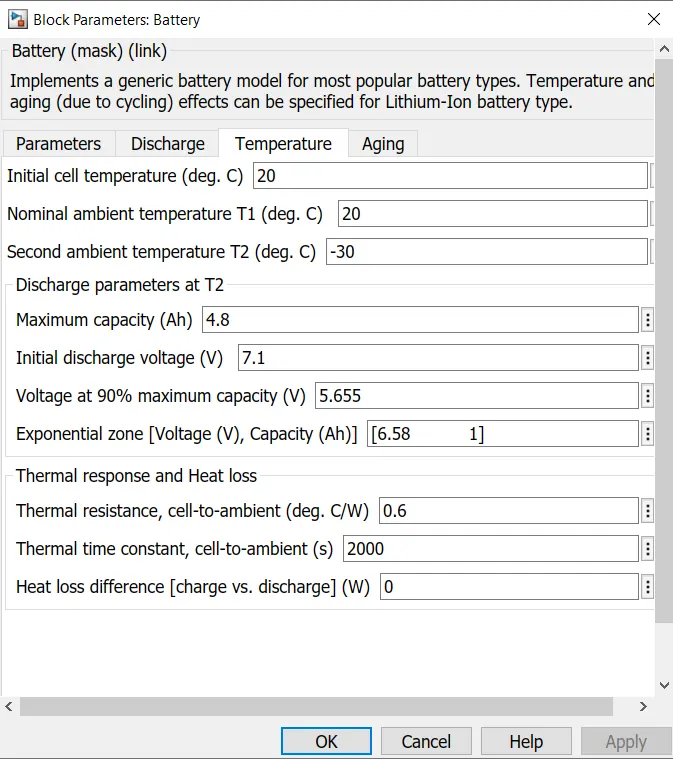
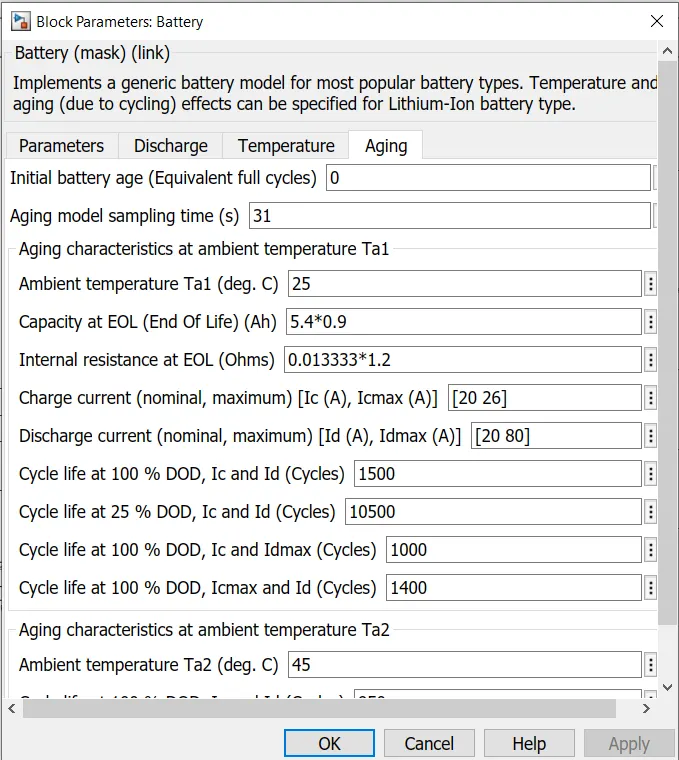
Lithium ion battery : The lithium cell block represents an ideal lithium ion cell used in a battery pack with thermal ports. Connections which are positive and negative are electrical conserving ports through which the cells are inserted into the circuit. The thermal port used for further thermal network connections.
CONTROLLED CURRENT SOURCE :
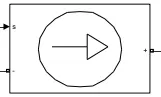
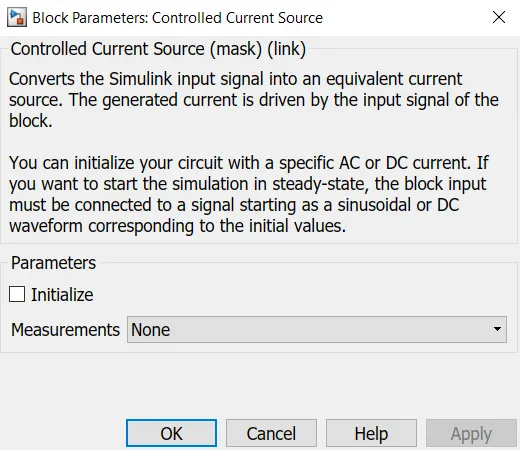
- The controlled current source block converts the simulink input signal into an equivalent current source. The generated current is driven by the input signal of the block. The positive current direction is shown by an arrow in the block.
- To initialize th controlled source block with a specific AC or DC current. To start the simulation in steady state the block input must be connected to a signal starting as a sinusoidal or DC waveform corresponding to the initial values.
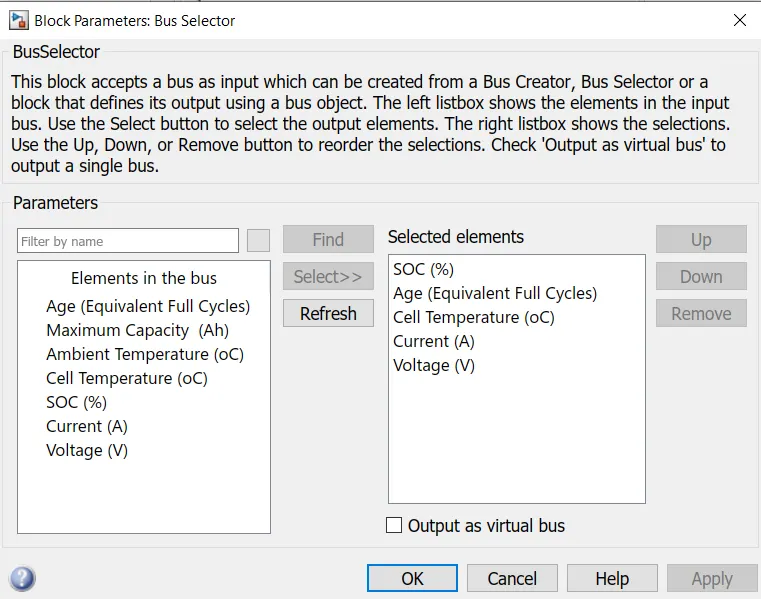
BUS SELECTOR :
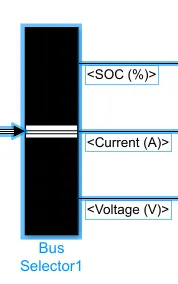
- This block accepts a bus as an input which can be created from a bus creator. Bus selector or a block that defines its output using a bus object. The left listbox shows the signals in the input bus. Using the select button to signal the output signals.
- The right listbox shows the selections. Using the up, down or remove button to reorder the selections. Checking the output as virtual bus to show a single bus signal.
Temperature sensor : The temperature sensor block represents an ideal temperature sensor which a device that determines the temperature differential measured between two points without drawing any heat. Connections A and B are thermal conserving ports that connect to the two points where the temperature is being monitored. Port T is a physical signal port that outputs the temperature differential value.
Temperature source : The temperature source block represents an ideal energy source in a thermal network that can maintain a constant absolute temperature at the port regardless of the heat flow rate.
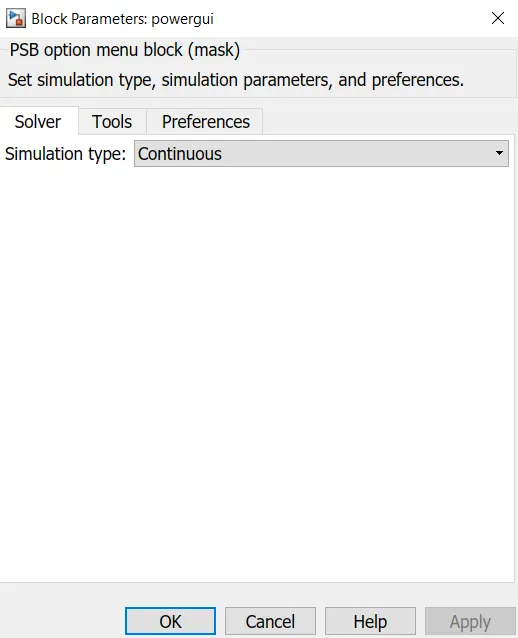
Powergui :
The Powergui block opens a graphical user interface (GUI) that displays steady state values of measured current and voltages as well as all state variables (Indicator currents and capacitor voltages). The powergui block allows to modify the initial states in order to start the simulation from any initial conditions.
other block : Memory, zero order, scope, Matlab function, goto tag and from block are the blocks that are used in this model.
Results :
Various stages in battery :
- For the very first 5 cycle in a battery discharging with 1 C rate current and the temperature is given as 25 degree celcius.
- After 5 cycles discharging the current at 5 C rate and the temperature is constant at 25 degree celcius.
- After the 10 cycles the discharging current at 1 C rate and the with a lower temperature.
- Discharging the current at 1C rate but the temperature is rised a lot.
- Charging the battery till 99% and discharging the battery till 5%. This is happening for 20 cycles.
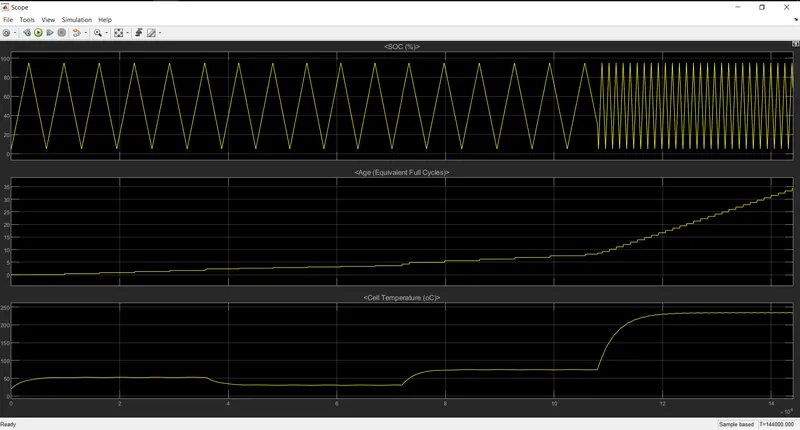
- Life cycle of the battery depends on how a battery gets charged and discharge the battery along with the temperature. The system can be improved by cell balancing.
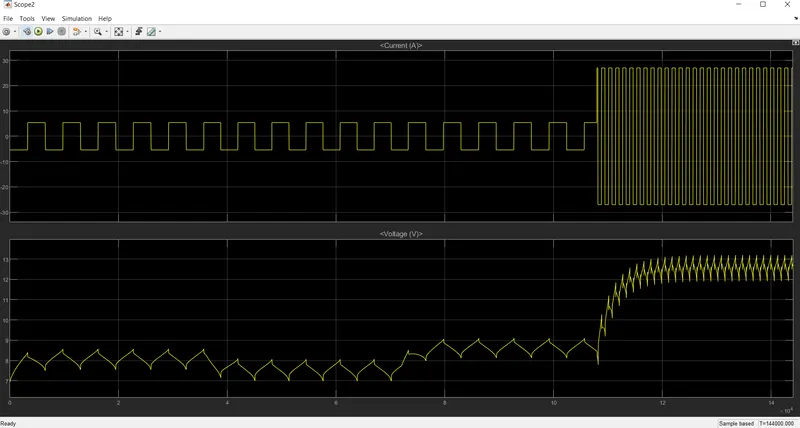
- The thermal effects of battery pack at different ambient temperatures for cycling charging/discharging have been analysed and plotted. All the values set here are default values.
LINK : https://drive.google.com/file/d/11RqbYoydTc5C7B5Gk1CjNxEILsccFcIB/view?usp=sharing