Project 2 Thermal modeling of battery pack
ANS..
Objective:
To model and simulate a 10 cells in series lithium ion battery pack, analyze the thermal effects and compare its life cycle performance at various temperatures, charge & discharge rates using MATLAB.
Theory:
The lithium-ion batteries are widely used as energy sources in different hybrid and electric vehicle. The operation characteristics of the battery in such vehicle are strongly dependent on the operation temperature and therefore, with purpose to improve these characteristics a good thermal control system should be utilized.
The temperature of a lithium battery cell is important for its performance, efficiency, safety, and capacity and is influenced by the environmental temperature and by the charging and discharging process itself. Therefore, a thermal model of the battery is used in order to calculate and estimate the cell temperature.
Lithium-ion battery pack with fault was simulated. A battery pack consisting of multiple series-connected cells in an efficient manner. It also shows how a fault can be introduced into one of the cells to see the impact on battery performance and cell temperatures. For efficiency, identical series-connected cells are not just simply modelled by connecting cell models in series. Instead a single cell is used, and the terminal voltage scaled up by the number of cells. The fault is represented by changing the parameters for the cell 5 fault subsystem, reducing both capacity and open-circuit voltage, and increasing the resistance values.
WE ARE USING THE COLUMB COUNTING METHOD TO EVALUATE THERMAL MODELLING OF A BATTERY PACK. AS WE HAVE DISCUSSED IN PREVIOUS CONCEPTS REGARDING FORMULAS RELATED TO COLUMB COUNTING , SAME WE DID HERE IN THIS MODEL.
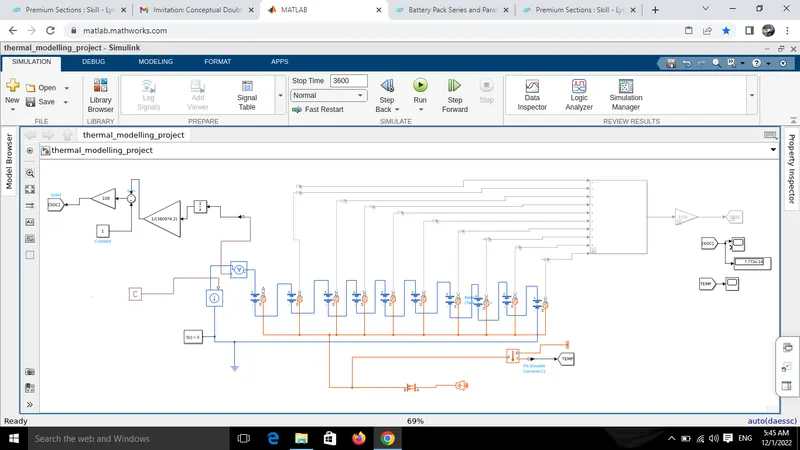
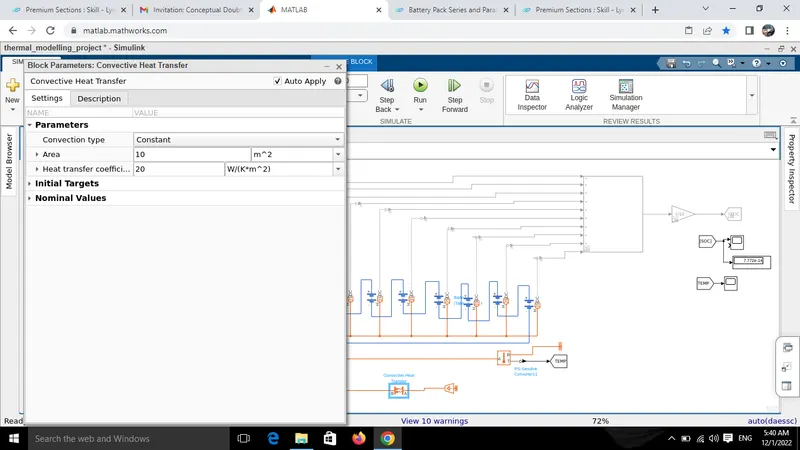
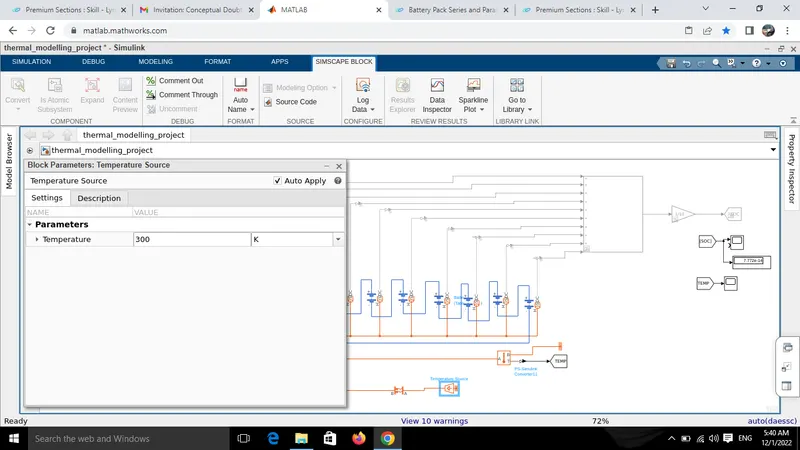
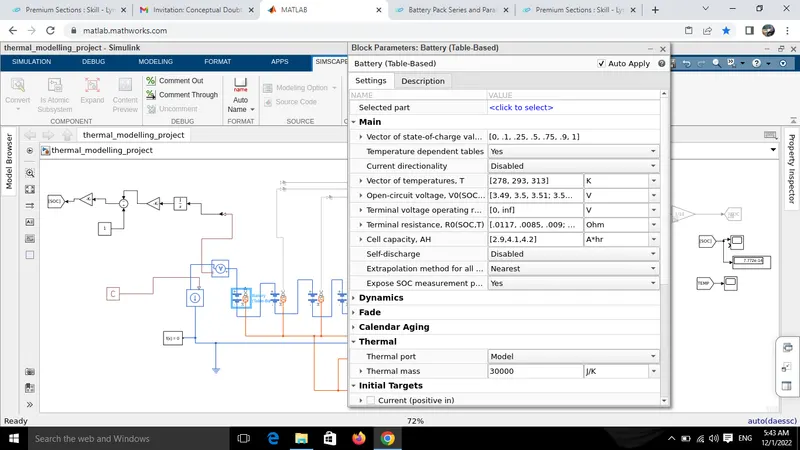
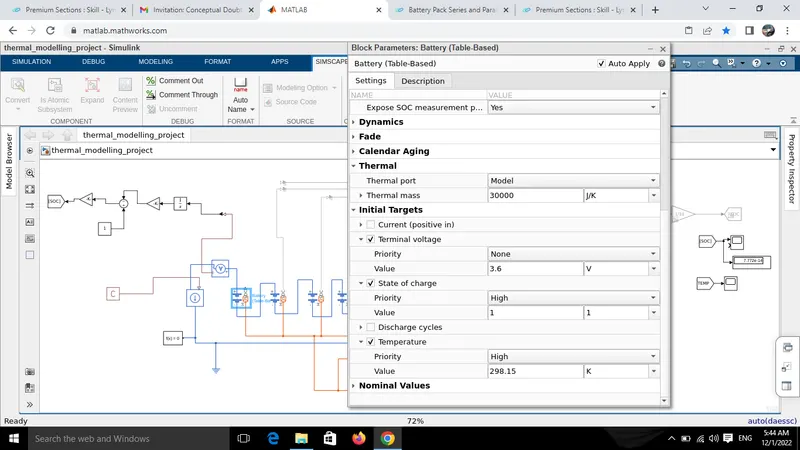
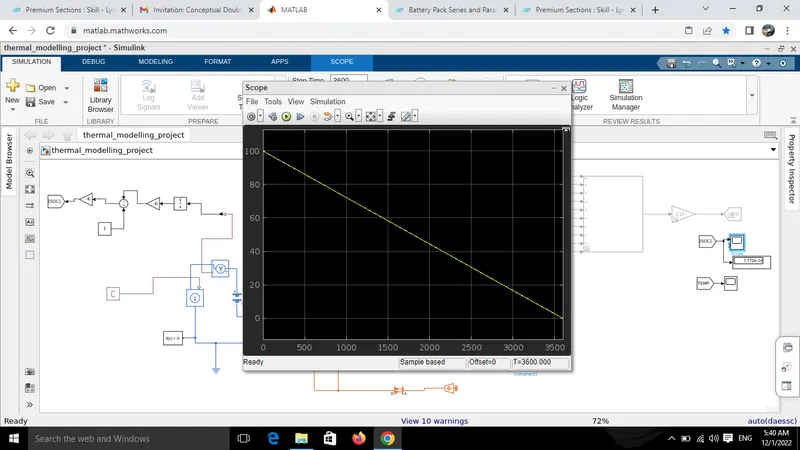
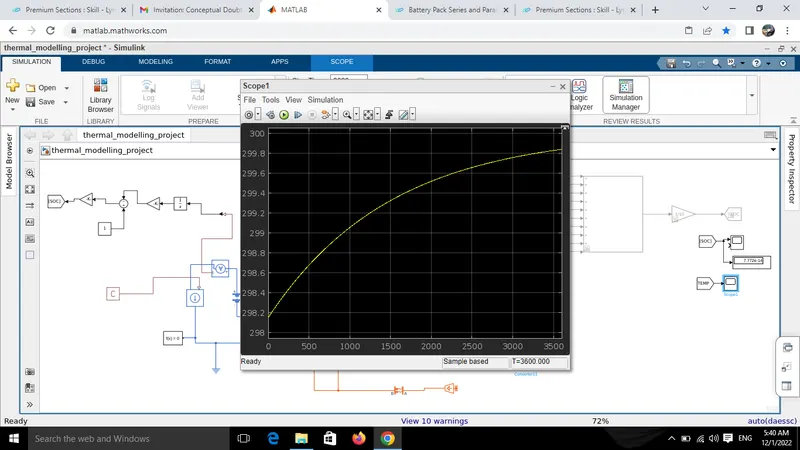
in first case we are using area as 10 m2 and temperature as 300 k ...
now we headed to second condition , where e take area as 100m2 and temp as 350 k..the results are discussed below.
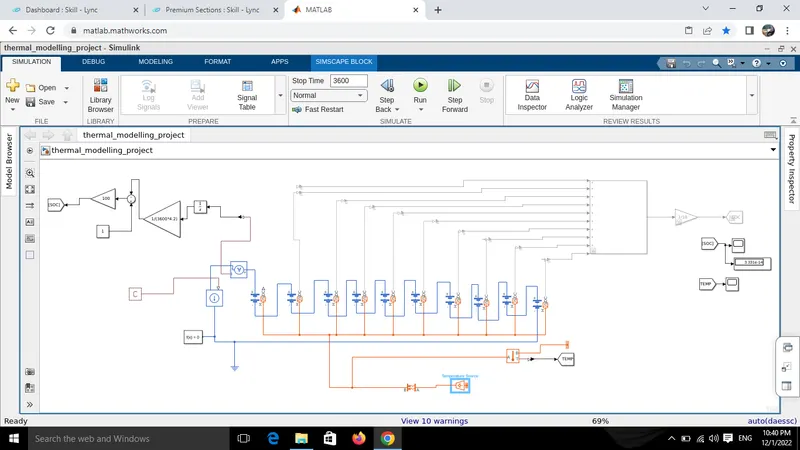
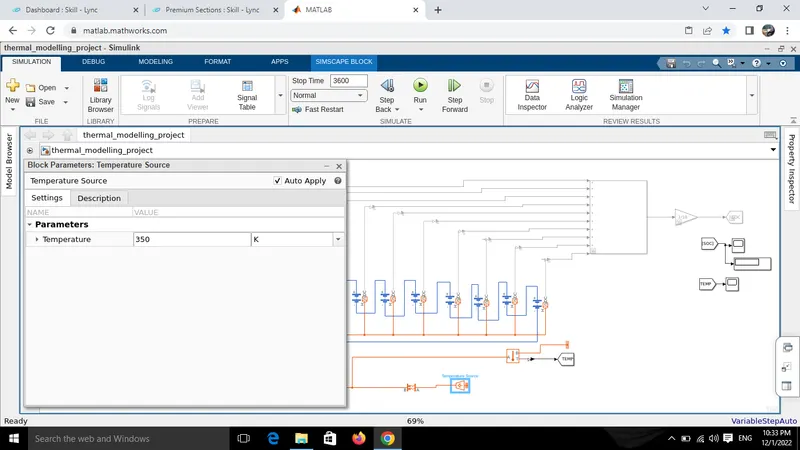
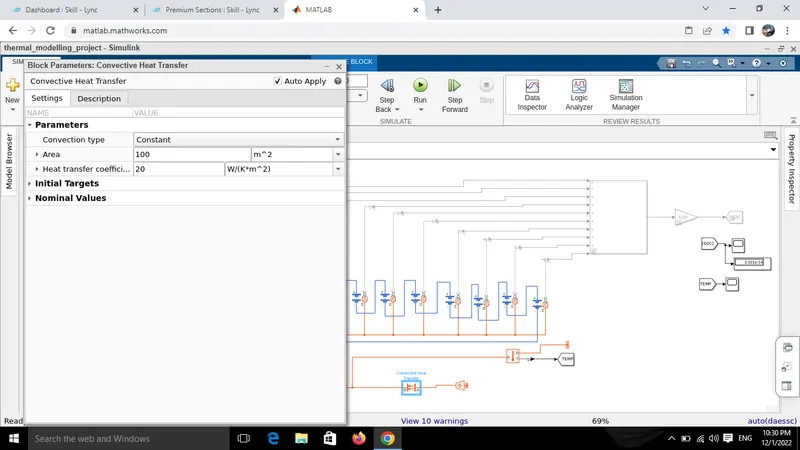
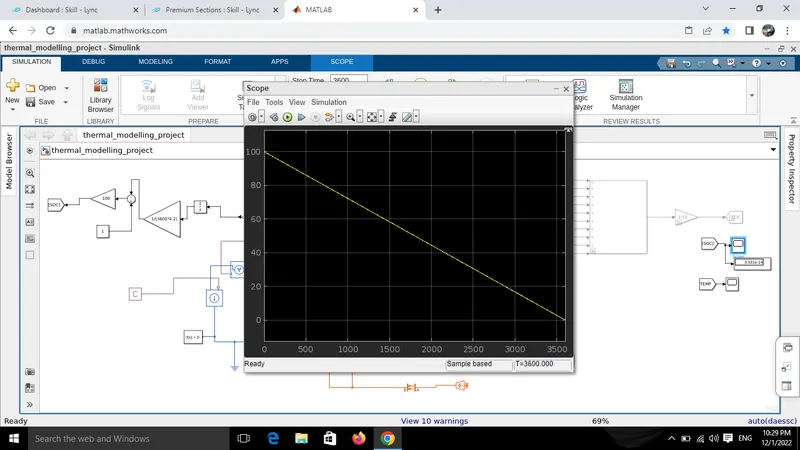
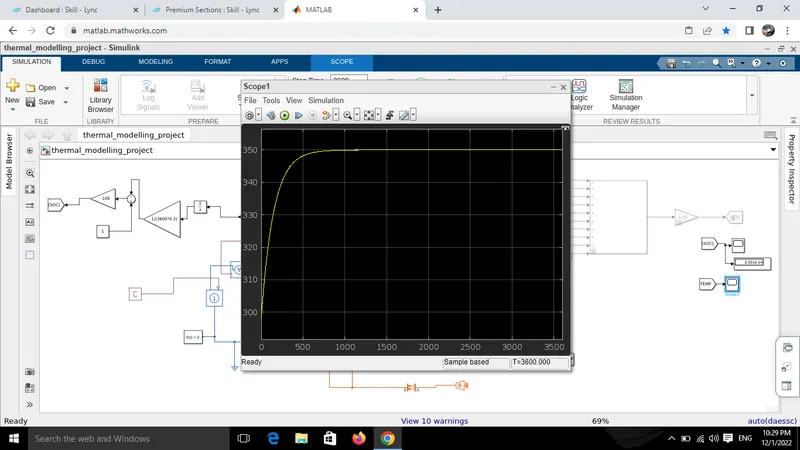
Result: Increasing the temperature will and area will decrease the soc , and vice versa. and in screenshot itself we have shown the changes visible in soc display blocks.
In this model, individual cells were connected in series to make the battery pack. The thermal and life cycle performance of individual cells are different from battery pack.
In future we can consider the battery pack parameters to analyse the performance.
Also there are different associated components that contribute the temperature increase such as charger, connectors, wire resistances etc. In future, all these parameters have to be considered while analysing thermal behaviour.