Thermal Modeling of Battery Pack
Project 2 :- Thermal Modelling of a Battery Pack
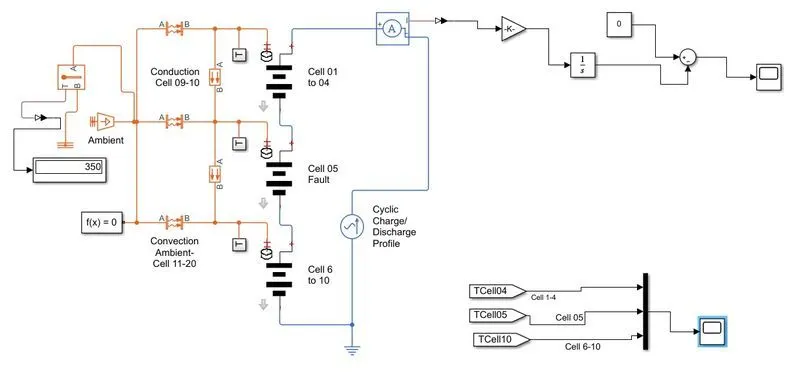
To address the problem statement, a 10 series cell-based battery system is developed with the help of the 'table-based battery' from the simscape library and given its default values.
Important Blocks and their parameters :-
Table-based battery :-
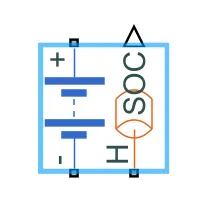
With this block, we simulate the 10 cell connection by connecting the same of a total 10 in numbers in series. This block model a battery based on tabulated characteristics as functions of the state of charge (SOC) and optional temperature (T).
From the block choice options 'Instrumenteed and Show Thermal Port' is chosen, which gives us the SOC status and thermal connections can be made now by connecting conductive and convective heat transfer plates, to account for the heating effect in the battery electrolyte and also for the solid surfaces respectively.
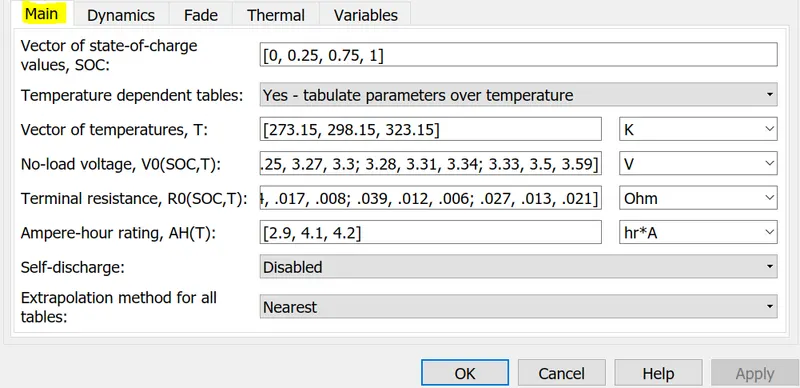
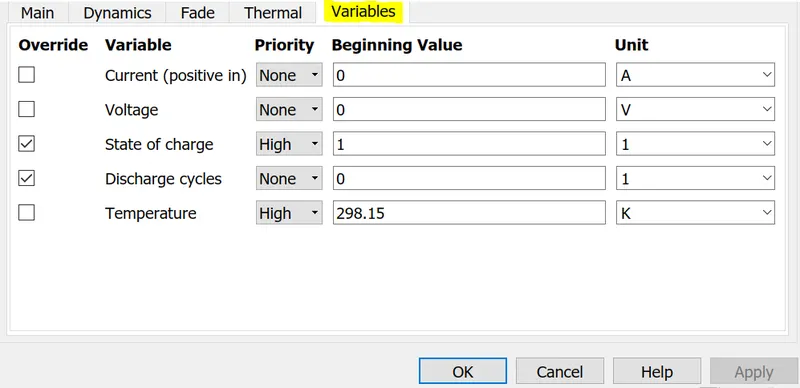
The default parameters are used for this simulation which can be given in below:
Controlled Current Source :-
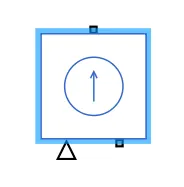
This block is used to get the controlled discharging or charging current of the battery, whether it is for the controlled discharge mode or the UDDS drive cycle mode which are being used here. No parameters can be altered as it is made with a predefined source code.
PS Constant & Signal Builder :-
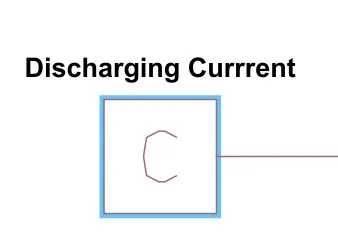
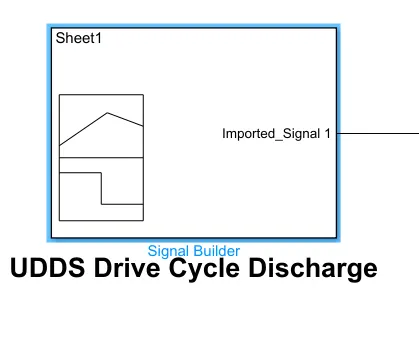
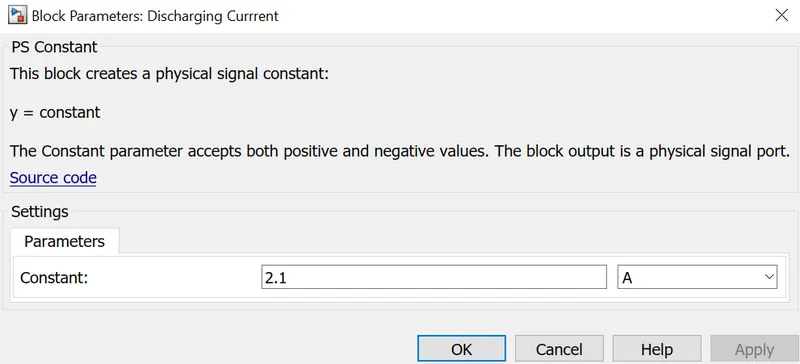
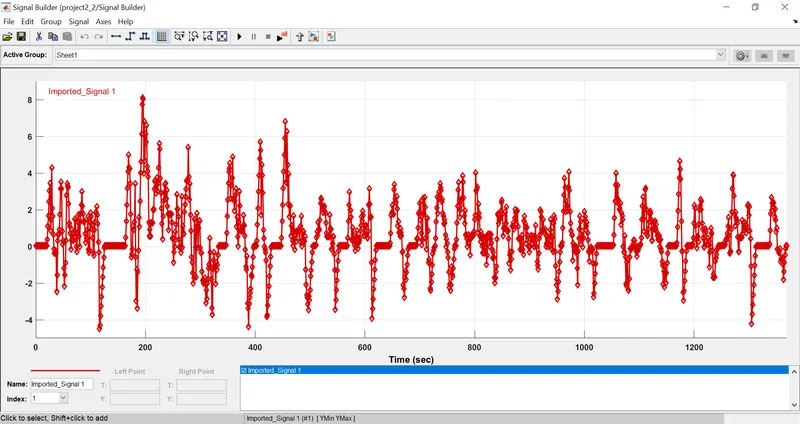
The constant block is used here to simulate the scenario of constant discharge current and with the signal builder, the UDDS drive cycle data is provided with help of an excel sheet. The simulations are performed for both scenarios.
Conductive & Convective Heat Transfer Blocks :-
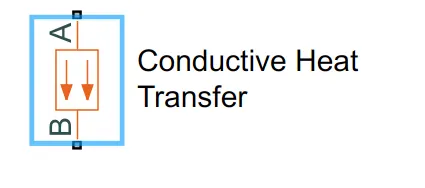
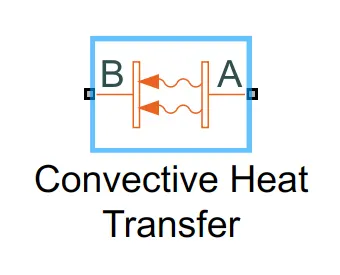
The basic idea about conduction & convection heat can be depicted as below with a simple diagram:
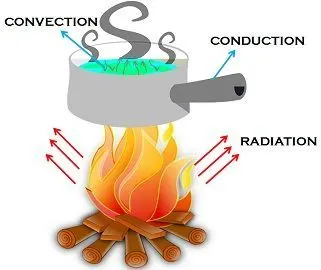
While conduction is the transfer of heat energy by direct contact, convection is the movement of heat by actual motion of matter; radiation is the transfer of energy with the help of electromagnetic waves.
Convection implies the form of heat transfer, by real movement of matter, that occurs only in fluids. Fluid alludes to any substance, whose molecules move freely from one place to another, such as liquid and gases. It happens naturally or even forcefully.
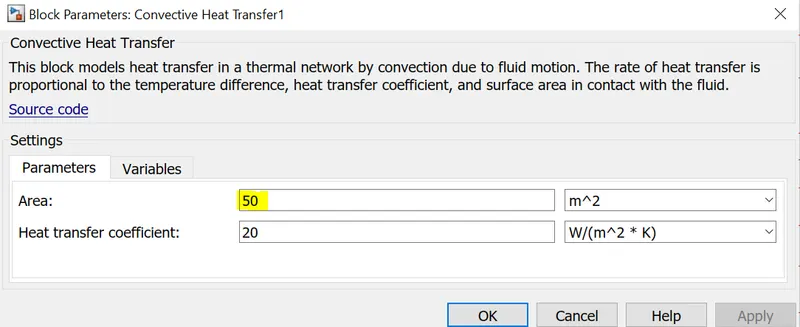
In practical cases, the battery cells that are in the middle position of the battery pack will have a higher temperature for the same heating element that is imposed upon the battery. To have that two things are done here: the area of conduction as well as convection, are given higher for both cell no. 5 & 6 and a separate temperature source is added to the thermal connection of 5 no. cell and then the entire model is being simulated.
For all the cells except 5 & 6:
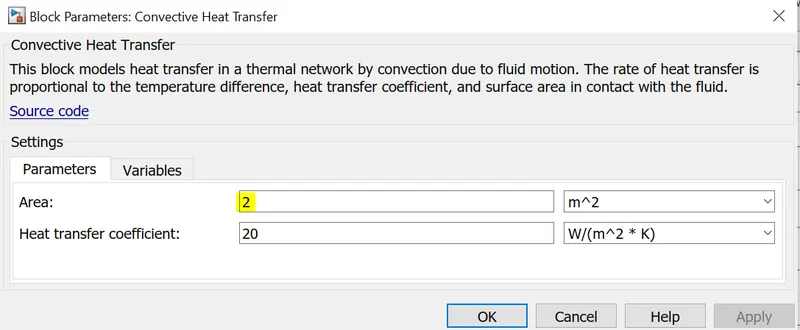
For cell no. 5 & 6:
Temperature Source :-
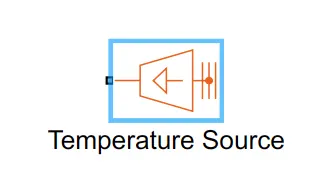
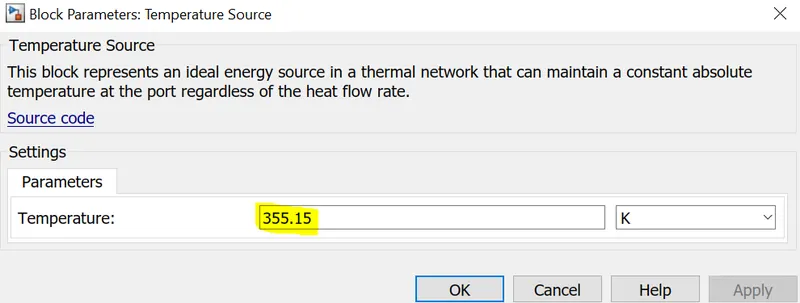
This block represents an ideal energy source in a thermal network that can maintain a constant absolute temperature at the port regardless of the heat flow rate. It is given at the very top end of the series connection and also another given separately to cell no 5 to practically represent the higher temperature incidents in the middle cells. Bu the temperature of both the sources are given the same value.
Temperature Sensor, Resistor, Solver Configuration, Electrical Reference & Thermal Reference :-
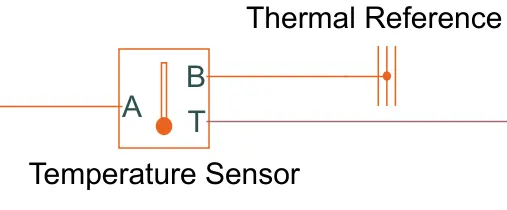
Temperature Sensor is used to measure the temperature difference between two given points A and B where B is given thermal reference or thermal ground to measure it for standard value; that is why it basically gives the temperature of the connected element at A point and not the difference.
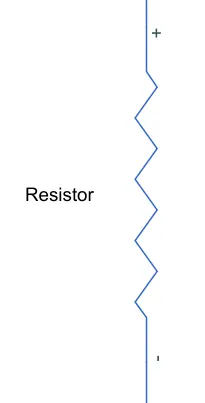
The resistor is connected parallel with all the 10 cell battery series connections and it stands for the internal resistance of the battery pack used here.
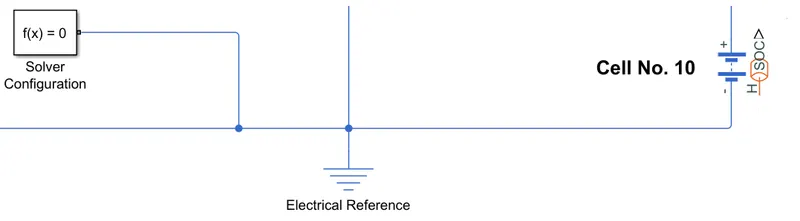
Solver Configuration block is used to deal with the solving process of the differential equations embedded in the blocks used in the MATLAB model. It is generally connected with the end of the battery i.e the battery negative terminal along with the electrical reference or electrical ground.
Other Blocks :-
PS to Simulink and Simulink to PS blocks are used to connect the blocks between Simulink and simscape libraries.

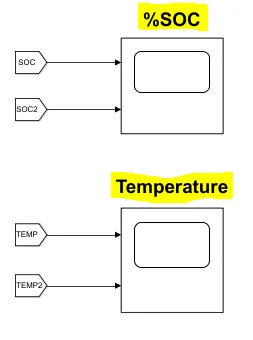
The scope is used to visualize the %SOC and the temperature difference between the middle cells and the other cells of the battery pack. Goto and From blocks are used to get a neat circuit set up so that it is easy to understand for anyone.
Model Details :-
RESULT:
Ambient temperature- 299k
Cells temperature- 299k
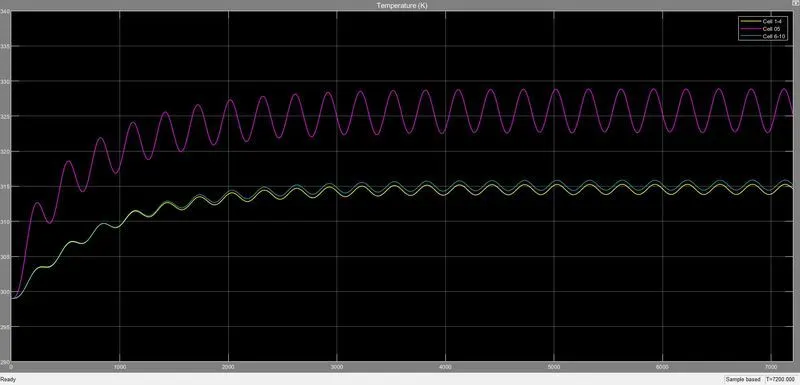
Faulty cell 5 in purple one shows much deviation on the temperature.
Charge and discharge cycle rates: For 3600 secs battery pack has completed 6 cycles.
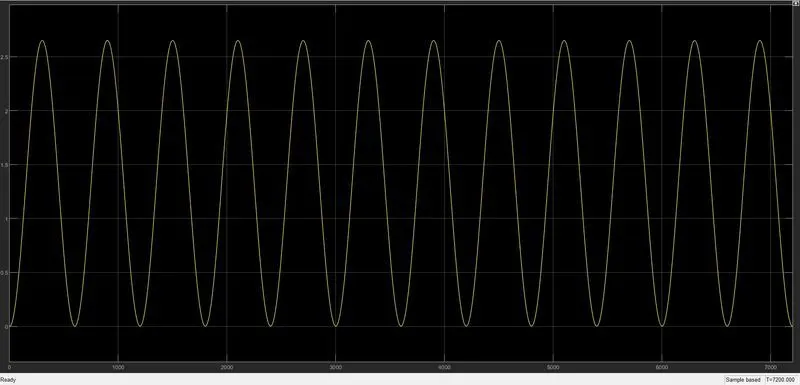
Ambient temperature- 299k
Cells temperature 1to4, 6to10- 299k
Cell temperature 5 - 3 - 200k
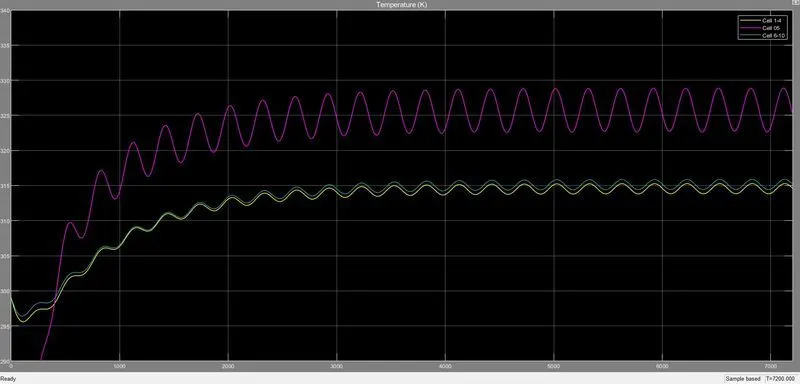
Faulty cell 5 in purple one shows much deviation on the temperature.
Charge and discharge cycle rates: For 3600 secs battery pack has completed 6 cycles.
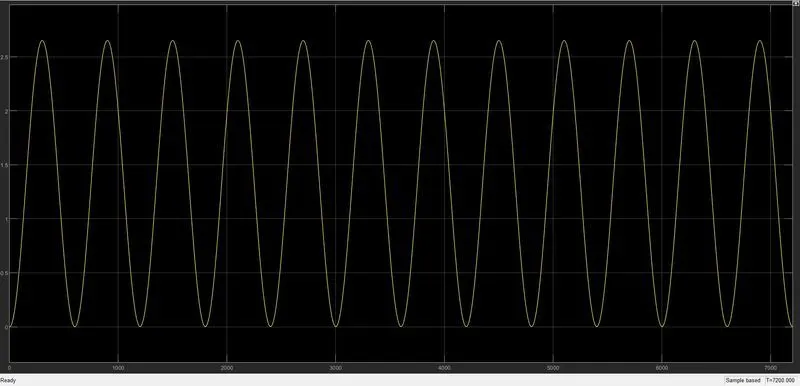
Ambient temperature- 350k
Cells temperature- 299k
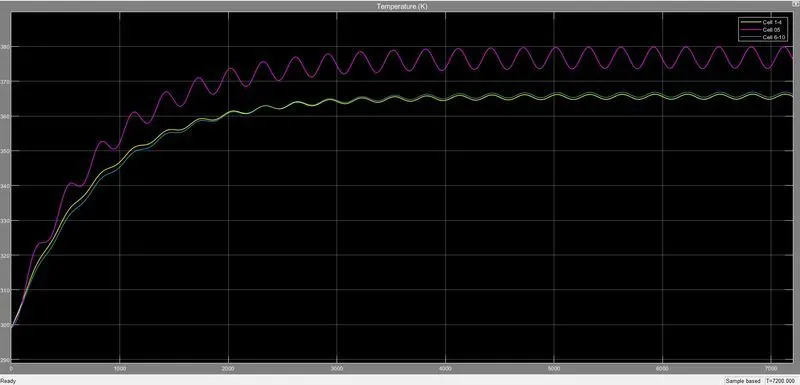
When ambient temperature is increased every cells in battery pack is increased.
SOC remains the same
Conclusions:
From the above, it is clear from the results that middle cells of the battery pack gets a higher amount of heating and will give lower capacity than the other cells ultimately if the temperature difference is that much higher. If the temperature goes beyond a certain maximum limit then the battery could get damaged permanently.