Project 2 Thermal modeling of battery pack
Q: For a 10 cell series lithium ion battery model, simulate the thermal effects and compare life cycle performance at various temperatures, charge & discharge rates using MATLAB.
A: Lithium ion battery model: A lithium-ion battery or Li-ion battery is a type of rechargeable battery composed of cells in which lithium ions move from the negative electrode through an electrolyte to the positive electrode during discharge and back when charging.
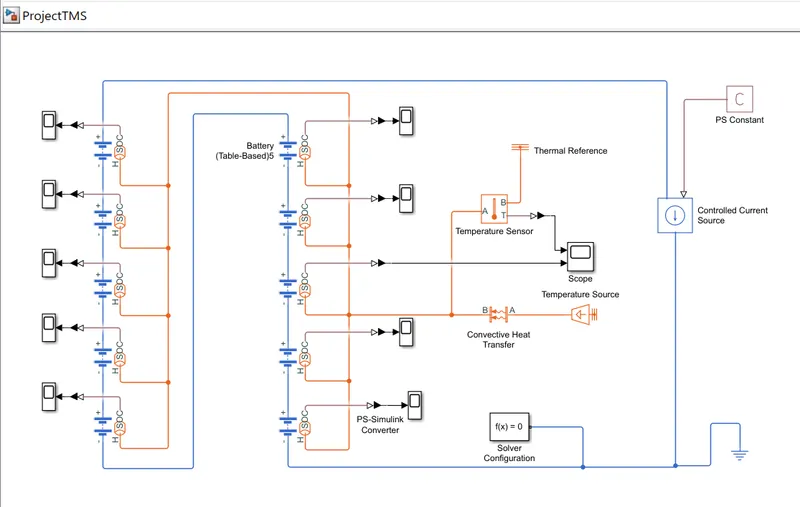
Simulink model:
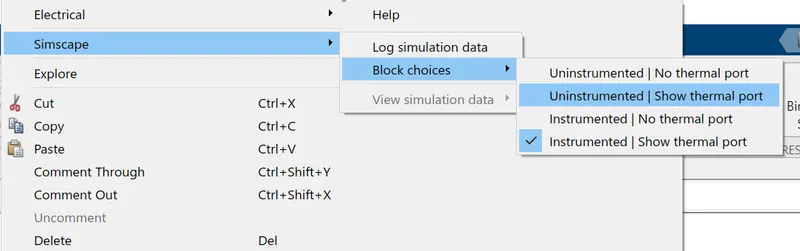
To activate SOC and thermal port on battery block, right click on battery block and go to simscape, block choices and select the ports as shown in figure below.
Blocks used:
- Battery: This block models a battery based on tabulated characteristics as functions of state of charge (SOC) and optional temperature (T).
- Convective Heat Transfer: This block models heat transfer in a thermal network by convection due to fluid motion. The rate of heat transfer is proportional to the temperature difference, heat transfer coefficient, and surface area in contact with the fluid.
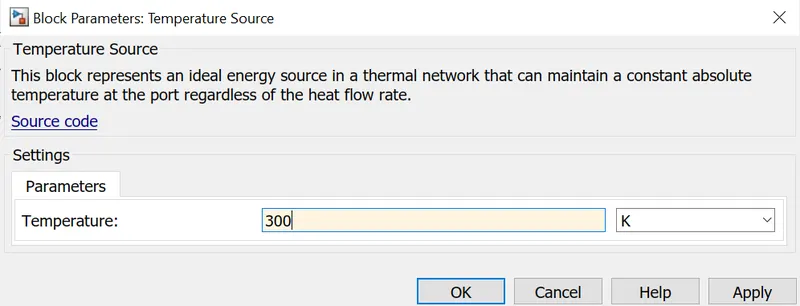
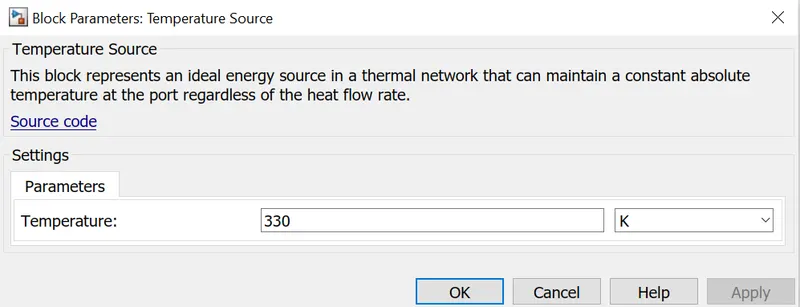
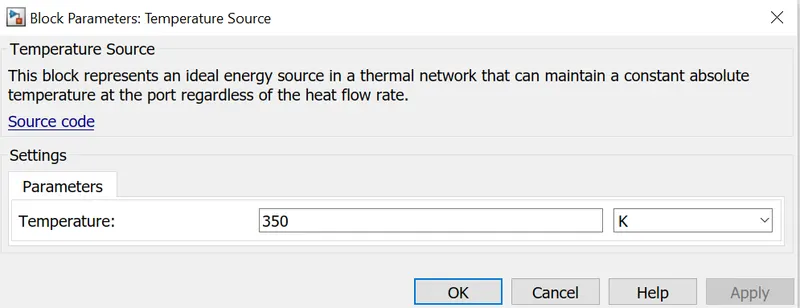
- Temperature Source: This block represents an ideal energy source in a thermal network that can maintain a constant absolute temperature at the port regardless of the heat flow rate.
- Temperature Sensor: This block measures temperature in a thermal network. There is no heat flow through the sensor. The physical signal port T reports the temperature difference across the sensor. The measurement is positive when the temperature at port A is greater than the temperature at port B.
- Thermal reference: This block represents a reference point in a thermal network where the temperature is equal to absolute zero.
- Controlled Current Source: The block represents an ideal current source that is powerful enough to maintain the specified current through it regardless of the voltage across it. The output current is I = Is, where Is is the numerical value presented at the physical signal port.
- PS Constant: The Constant parameter accepts both positive and negative values. The block output is a physical signal port.
Here charge - discharge rate is set to 3. Controlled current source for discharge the battery with some constant discharge current. 10 lithium ion cells are arranged in series configuration. S simulating the model at constant discharge current on different operating temperatures like 300K, 330K, 350K.
Constants:
Area of convective heat transfer= 1m^2
Discharge rate = 3
Results:
For T= 300 K
SOC drops to 0.40
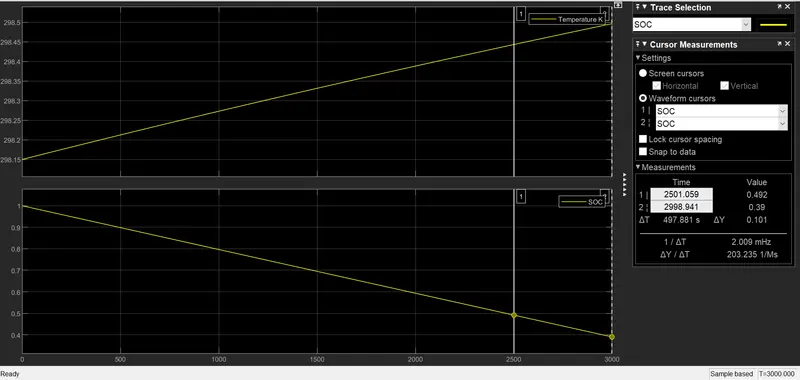
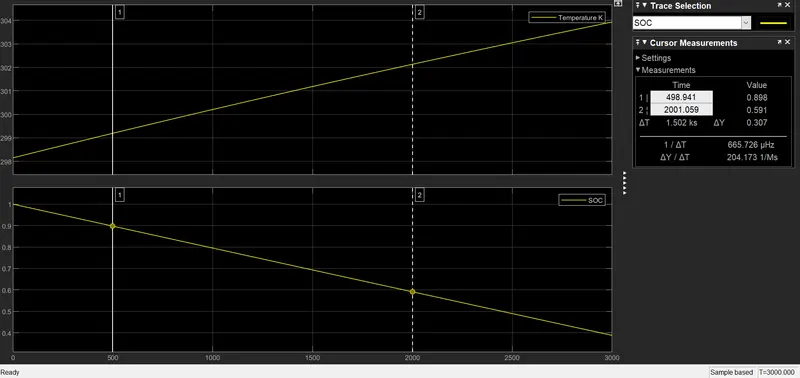
For T= 330 K
SOC drops to 0.39
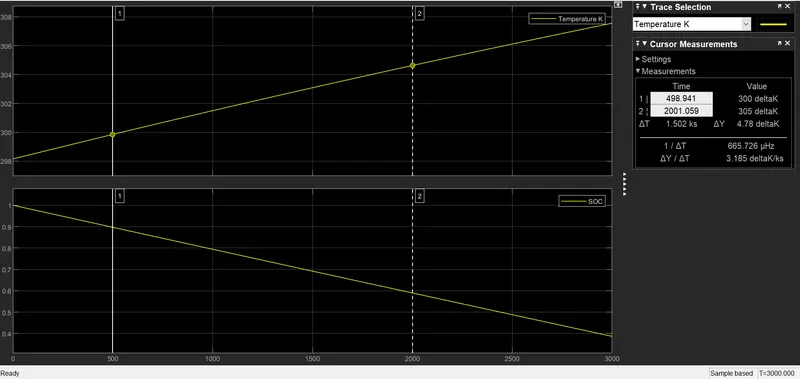
For T= 350 K
SOC drops to 0.38
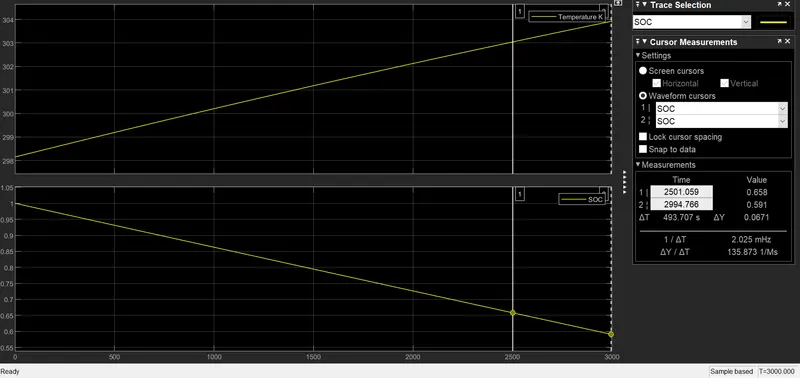
For discharge rate =2
Temperature= 300 K
SOC= 0.59
Conclusion:
As seen from the plots with rise in temperature SOC decreases so if temperature is increased from its rated value discharging will be fast and life of battery reduces. And as the discharge rate is varied from 3 to 2 SOC drop changed to 0.5 which means discharge decreased. Life cycle performance increases as discharge rate decreases.