Project 2 Thermal modeling of battery pack
For a 10-cell series lithium-ion battery model, simulate the thermal effects and compare life cycle performance at various temperatures, charge & discharge rates using MATLAB.
A lithium-ion battery or Li-ion battery is a type of rechargeable battery composed of cells in which lithium ions move from the negative electrode through an electrolyte to the positive electrode during discharge and back when charging.
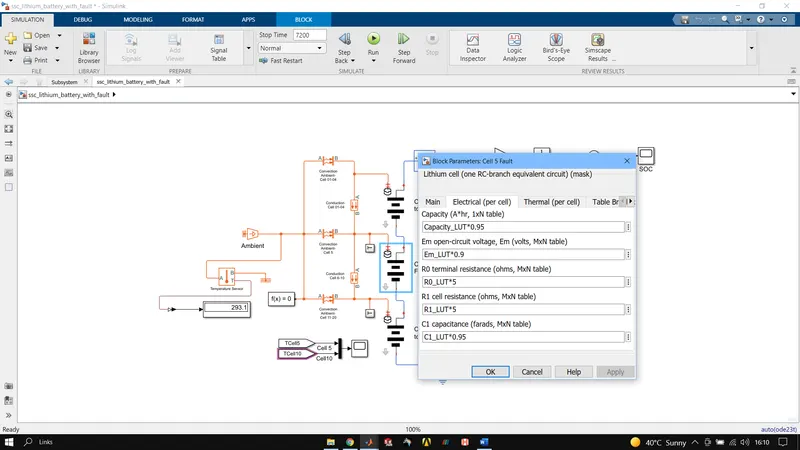
The model simulates a battery pack consisting of 10 series-connected cells in an efficient manner. It also shows how a fault can be introduced into one of the cells to see the impact on battery performance and cell temperatures. For efficiency, identical series-connected cells are not just simply modelled by connecting cell models in series. Instead, a single cell is used, and the terminal voltage scaled up by the number of cells. The fault is represented by changing the parameters for the Cell 5 Fault subsystem, reducing both capacity and open-circuit voltage, and increasing the resistance values.
MATLAB MODEL
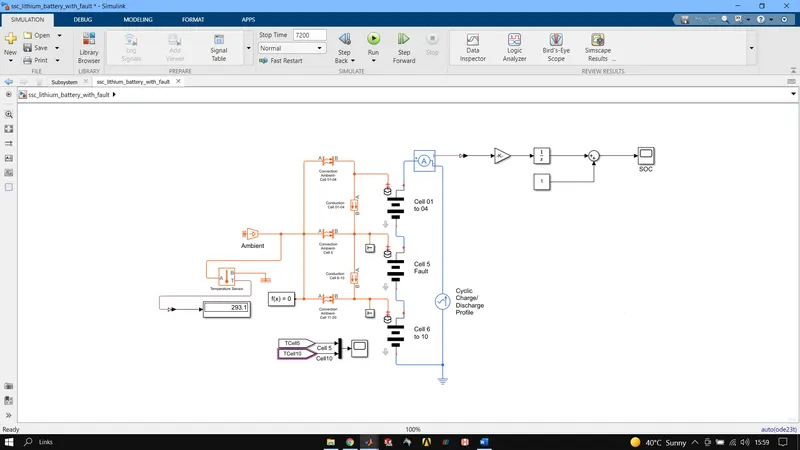
SUBSYSTEM OF CELL 01-04
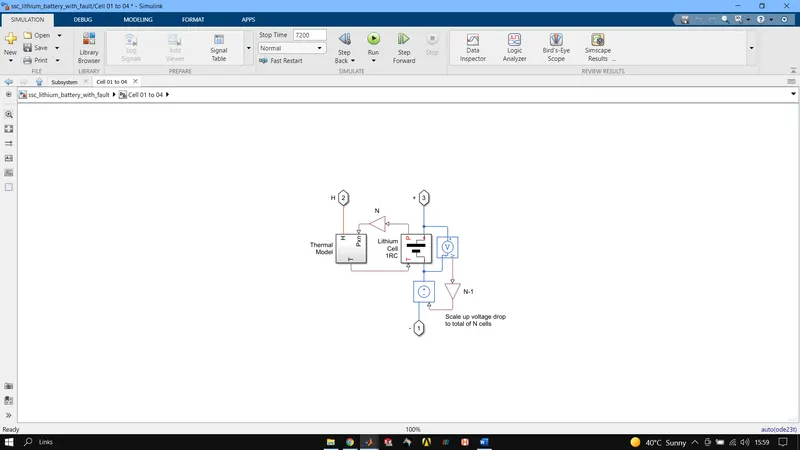
This subsystem consists two more subsystems which are thermal model and Lithium cell 1RC these two are used to calculate the temperature and thermal effect of the cell and hence for the whole battery pack.
THERMAL MODEL
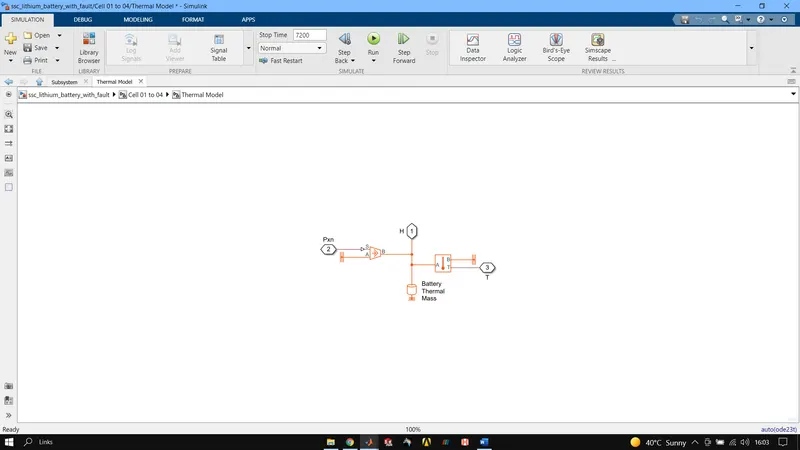
This subsystem has Controlled Heat Flow Rate Source, Battery Thermal Mass, and Temperature Sensor.
LITHIUM CELL 1RC SUBSYSTEM
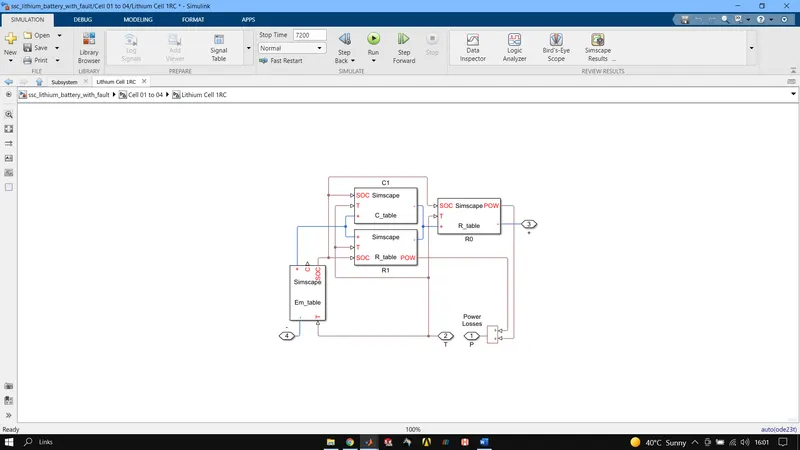
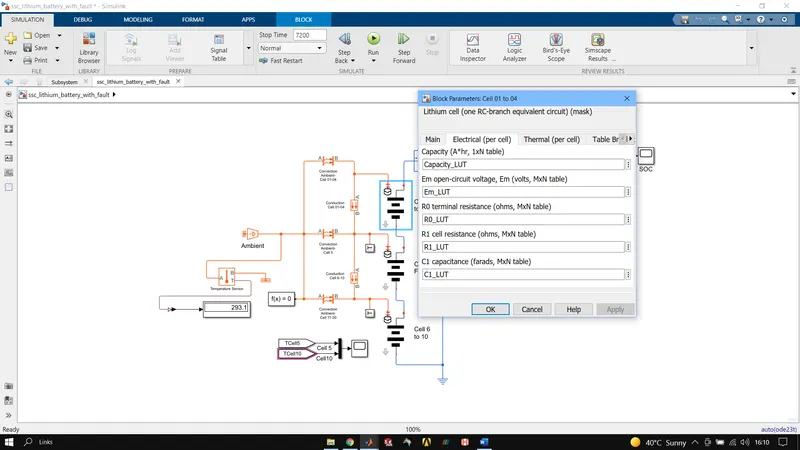
This mainly consists capacitance value table, resistance value table, and voltage value.
CELL PARAMETERS
SOC ESTIMATION
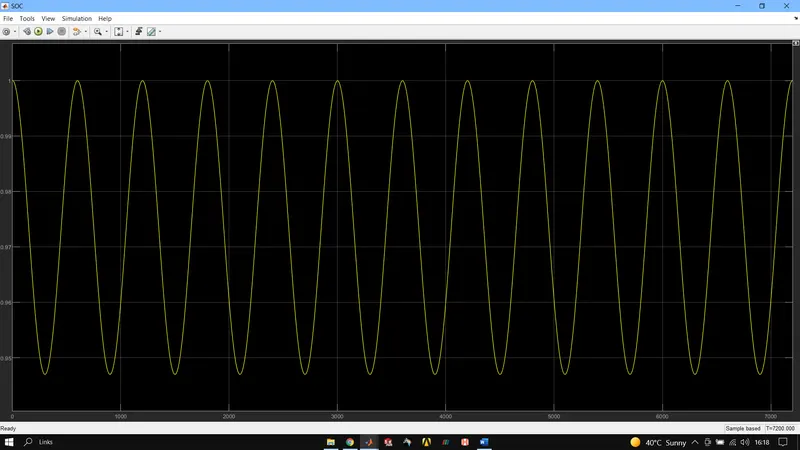
SOC was estimated using coulomb counting method for which gain block, integrator block, and sum block used according to the equation of coulomb counting method.
RESULTS
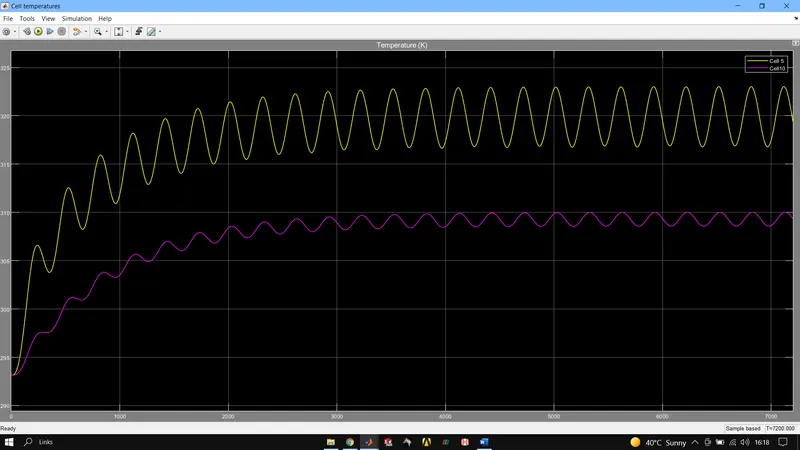
For 293K
For 300K
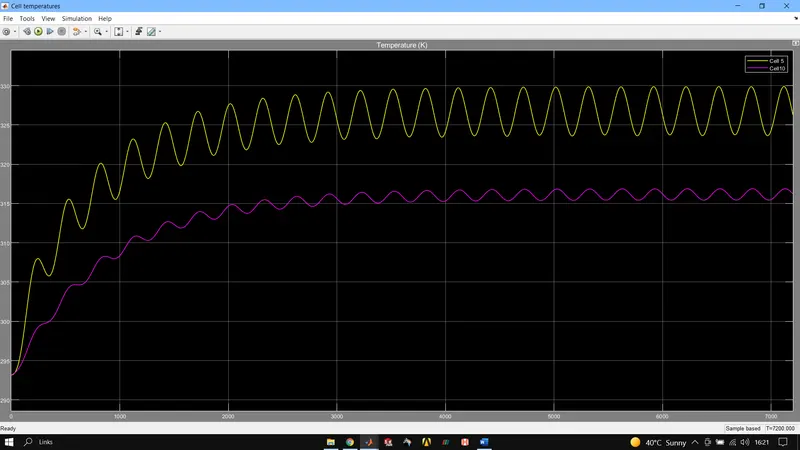
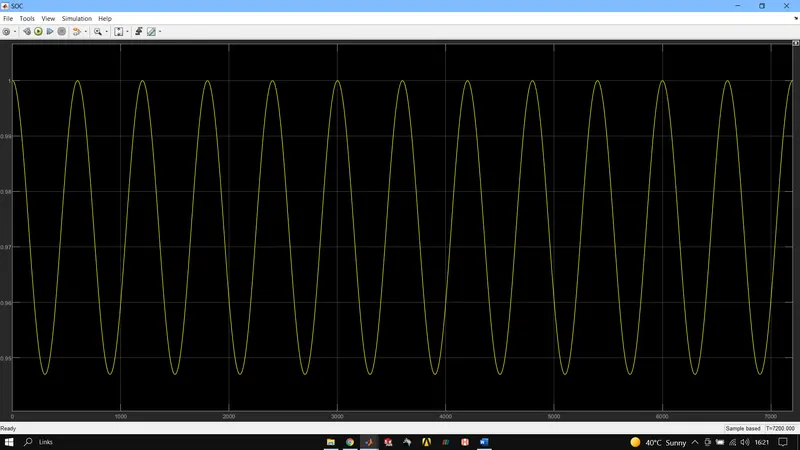
For 320K
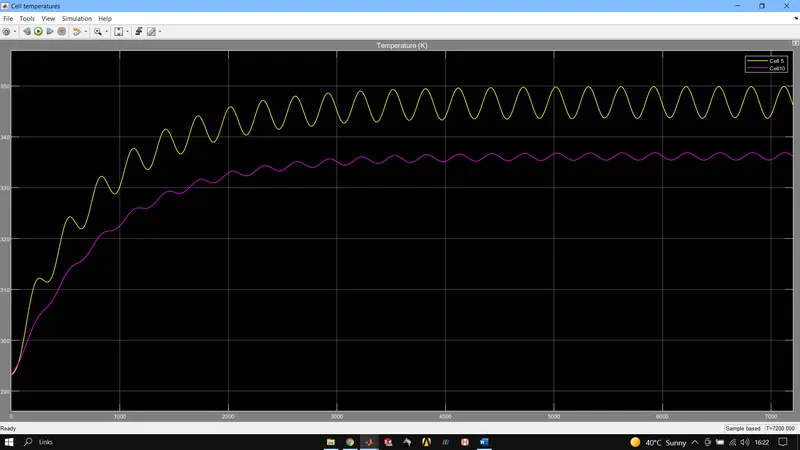
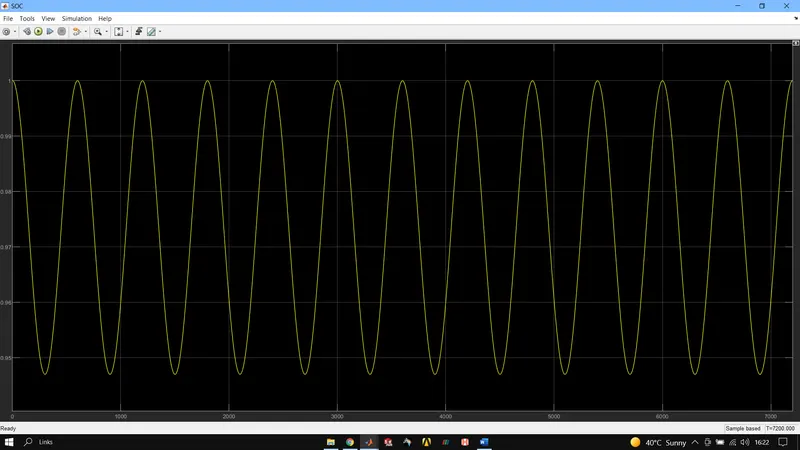
CONCLUSION
For 293K normal cells only reached 310K as peak value while the faulty cell reached 322K
For 300K normal cells only reached 317K as peak value while the faulty cell reached 330K
For 320K normal cells only reached 335K as peak value while the faulty cell reached 350K
After simulating the thermal effect at various temperatures, the rise in temperature value of faulty cell was evidently higher than normal cells which Indicates the under utilisation of the battery pack as the faulty cell becomes the governing cell for charge and discharge operations and does not allow the battery pack to give its peak performance.