Project 2 Thermal modeling of battery pack
AIM:
To simulate the given challenges.
OBJECTIVE:
To deterimne for a 10 cell series lithium ion battery model, simulate the thermal effects and compare life cycle performance at various temperatures, charge & discharge rates using MATLAB.
THEORY:
The lithium-ion batteries are widely used as energy sources in different hybrid vehicle. The operation characterstics of the battery in such vehicle are strongly dependent on the operational temperature and therefore with purpose to improve these characterstics a good thermal control system should be utilized.
The temperature of lithium battery cell is important for its performance, efficiency, saftey and capacity and is influenced by the environmental temperature and by charging and discharging the process itself.
A thermal model of the battery is used in order to calculate and estimate the cell temperature. For 10-cell series lithium ion battery MATLAB Simulink model is used for finding thermal effect and life cycle performance related to the temperature charge and discharge.
SIMULINK MODEL:
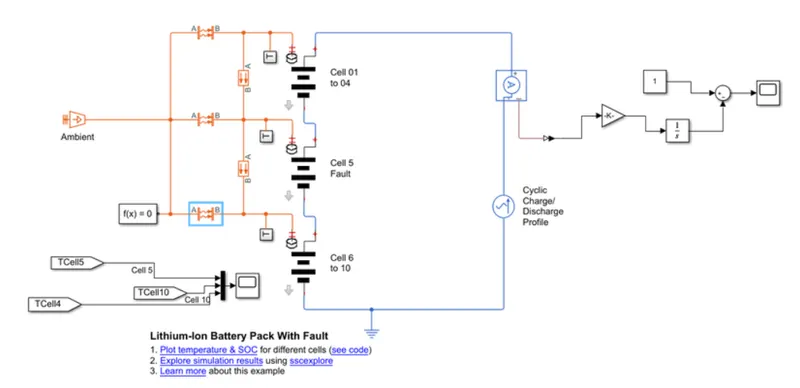
EXPLANATION:
In this circuit we use litihium-ion cell 1 to 10. Temperature sensor, ambient temparature block, state of charge estimation scope, charge discharge profile given to circuit form and goto block.
LITHIUM CELL 1RC SUBSYSTEM:
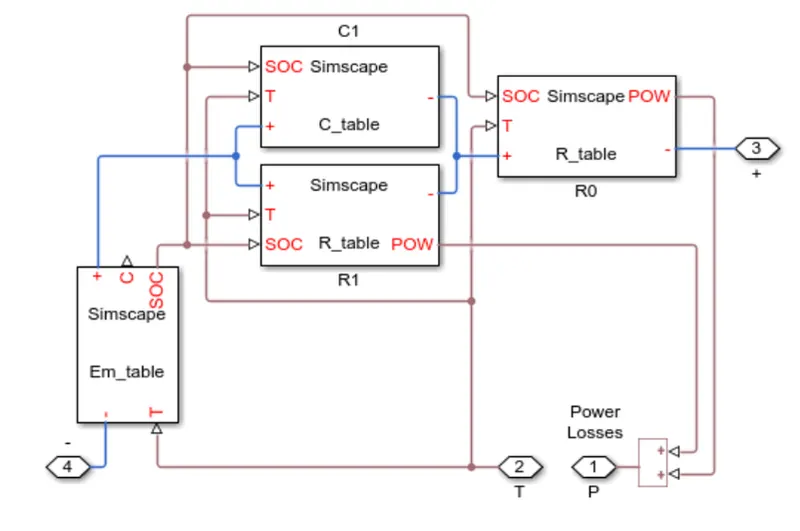
This block consists of capacitance value table which depends on an external physical signal input SOC and T. It is assumed that the capacitance value is slowly varying with time and hence the equation is i = C * dv/dt.
Resistance value(R) table which depends on an external physical signals inputs SOC and T. Voltage value(EM) which implements the cells main branch voltage source and determines values for capacity(C) and state of charge(SOC). The defining equaitons depend on cell temperaure T.
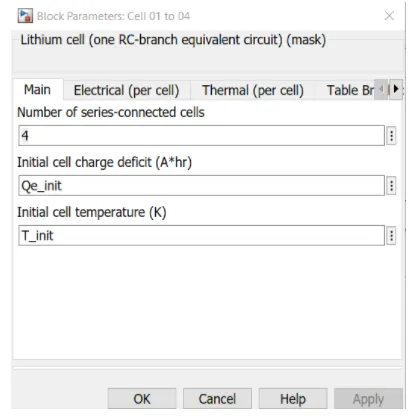
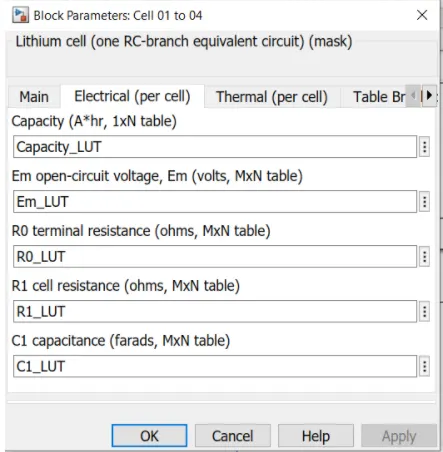
FOR CELL 1-4:
FOR CELL 5:
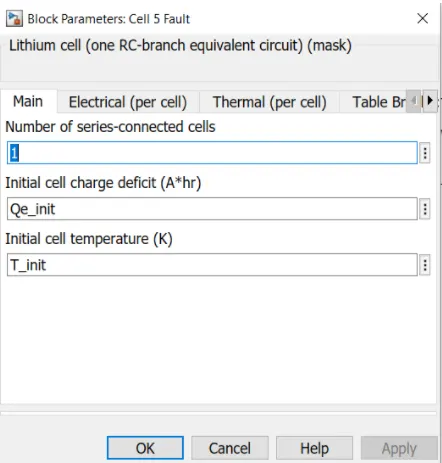
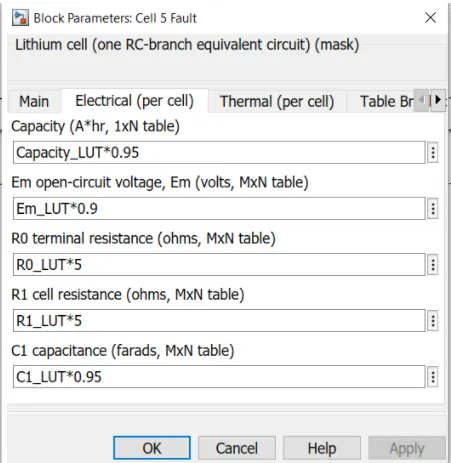
FOR CELL 6-10:
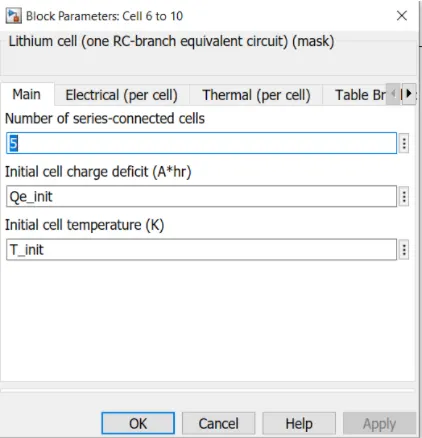
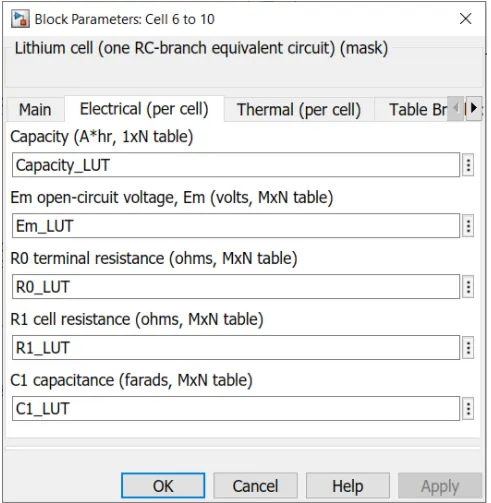
EXPLANATION:
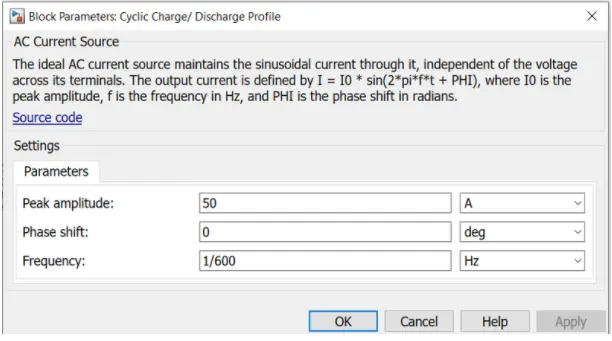
Output of one cell is connected with the SOC estimation whereas other output is connected with AC current source for cyclic charge/discharge profile. The peak amplitudes set to 50 A for cyclic charge and discharge. A basic parameter of AC current souces is
BLOCK PARAMETERS USED:
TEMPERATURE SOURCE:
The temperature sensor block representts a device that determines the temperature differential measured between two points without drawing any heat. Connection A and B are thermal conserving ports that connect to the two points where temperature is being monitored.
Port T is a physical signal port that outputs the temperature differnetial value. The block positive direction is from port A to port B. The measured temperature is determined as T = TA - TB.
CONVECTIVE HEAT TRANSFER:
This block models in a thermal network by convection due to fluid motion. The rate of heat transfer is proportional to the temprature difference, heat transfer coefficient, and surface area in contact with the fluid. This is used for 1-4 cells and 6-10 cells.
FROM AND GOTO BLOCKS:
The goto block passes its input to its corresponding from blocks. The input can be a real or complex valued signal or vector of any data type. From and Goto block allow you to pass a signal from one block to another without actually connecting them.
The from block accepts a signal from a corresponding Goto block then passes it as output. The data type of the output is the same as that of the input from the goto block. From and goto blocks allow us to pass a signal from one block to another without actually connecting them.
STATE OF CHARGE ESTIMATION:
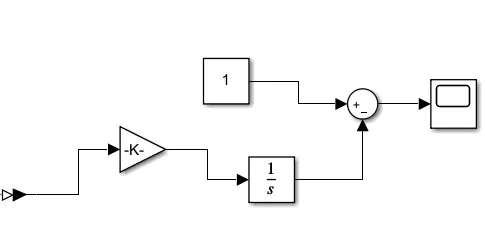
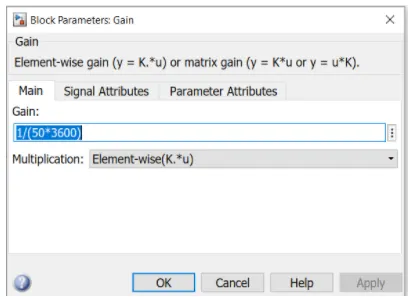
The coulomb counting method measures the discharging current of a battery and integrates the discharging current over time in order to estimate SOC. This subsystem takes current as input and gives the battery SOC% as output. A current sensor block is used and connected for SOC estimation.
The circuit estimates the battery SCO% using coulomb counting method. It takes current as the input and gives SOC% as output. Intially SOC of the battery is assumed to be 100%.
OUTPUTS:
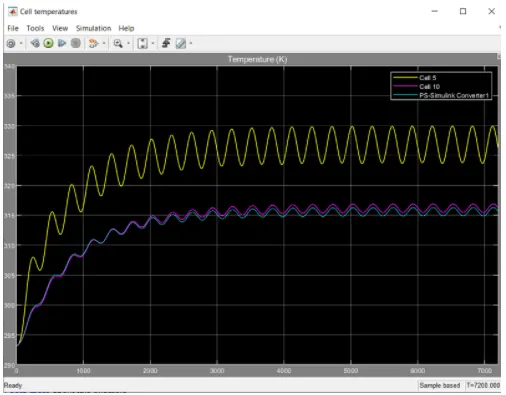
1.At 300K i.e, 26.85°C :
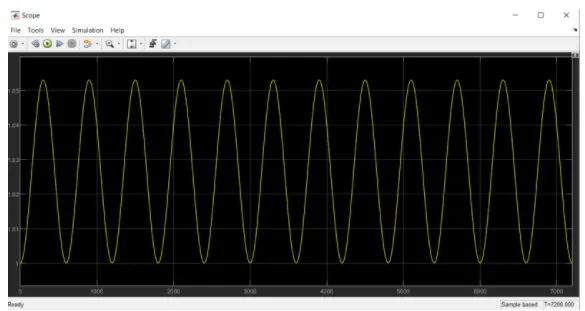
2. At 310K i.e, 36.85°C:
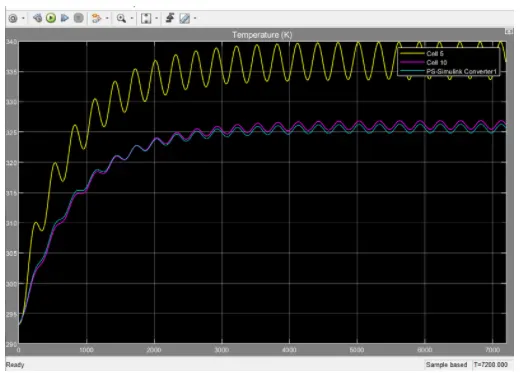
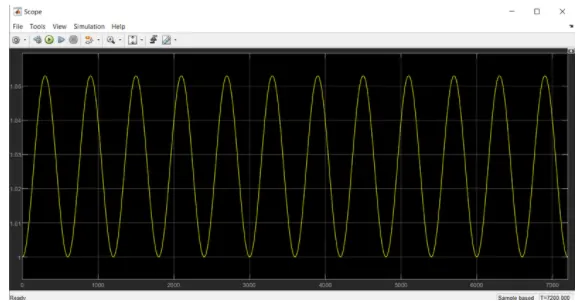
3.At 324K i.e, 50.85°C:
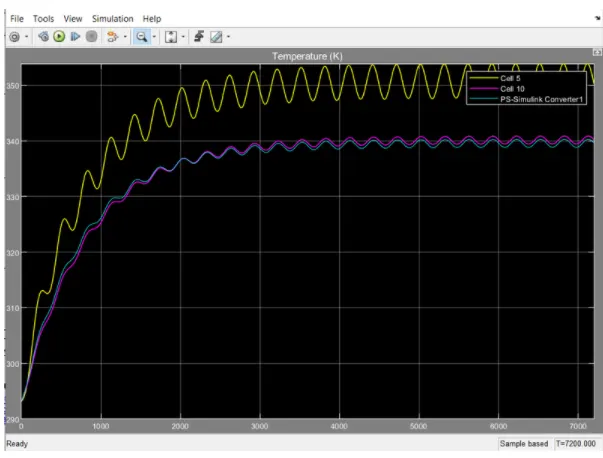
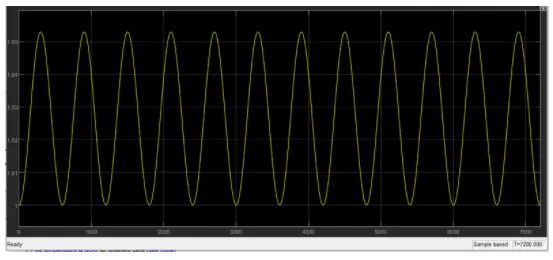
EXPLANATION:
For a 10 cells series lithium ion battery model we simulate the thermal effects and compare life cycle performance at various temperatures, charge & discharge rate using MATLAB results are as follows:
1-4 cells are normal cell 5th cell is faulty 6-10 cell is normal cell as we are simulating thermal effect on we give cyclic charge and discharge profile to circuit the wave form you can see above results all condition it is same but when circuit is run on this drive cycle profile as 5th cell was faulty it will shows temperature rise high than any other cell and other cell and the life cycle of cell get reduced and cell even get damage.
So as we give temperature of results at 300K i.e, 26.85°C the 1-4 and 6-10 cell temperature is near to 316K.
But the faulty cell temperature goes to 330K i.e, 56.85°C and the drive cycle is shown which is cyclic charge / discharge drive cycle. In condition two we give temperature 310K i.e, 36.85°C and 1-4 and 6-10 cell temperture is near to 326K but the 5th faulty cell temperature goes to 340K i.e, 66.85°C and the drive cycle is shown which is Cyclic Charge/Discharge Drive Cycle.
In condition two we give temperature 324K i.e, 50.85°C and 1-4 and 6-10 cell temperture is near to 340K but 5th faulty cell temperature goes to 354K i.e, 80.85°C and the drive cycle shown which is Cyclic Charge/Discharge Drive Cycle.
OBSERVATION:
Thus the 10 cell series lithium ion battery model, simulate the thermal effects and compare life cycle performance at various temperatures, charge & discharge rates using MATLAB is determined sucessfully.
RESULT:
Thus the given challenges is simulated sucessfully.