Project 2 Fender
AIM: To design a Front Fender
OBJECTIVE: To design a Fender mounting on the given model by using a Master sketch by considering the safety and manufacturing feasibility of the possible mounting regions.
Introduction:
Fender: Fender is the US English term for the part of an automobile that frames a wheel well. Its primary purpose is to prevent sand, mud, rocks, liquids, and other road sprays from being thrown into the air by the rotating tire.
When the vehicle is moving, tires pick up stones and others and hurl them in all directions. Fenders are basically present to prevent any injuries to pedestrians and contain the motion of these particles. Most passenger automobiles have four fenders, one over each wheel. For vehicles with a narrow car body that exposes the tire, the fender is an exposed curve over the top of the tire. For wide-body vehicles that cover the tire, the fender forms the wheel well surrounding the tire and is not directly visible from above the car body.
More elaborate designs include fender skins for enclosing the outside edge of the wheel well and stylized pontoon fenders for exposed fenders.
Sticky materials, such as mud, may adhere to the smooth outer tire surface, while smooth loose objects, such as stones, can become temporarily embedded in the tread grooves as the tire rolls over the ground. These materials can be ejected from the surface of the tire at high velocity as the tire imparts kinetic energy to the attached objects. For a vehicle moving forward, the top of the tire is rotating upward and forward and can throw objects into the air at other vehicles or pedestrians in front of the vehicle.
Need of Fender:
- It is designed to provide resistance against wind, mud, and roadside particles.
- It is a sheet of metal covering the car.
- Fender has a plastic part called a Baffle or fender Liner which fits the underside of the fender to protect the metal from corrosion by stopping the flow of mud and water inside from different road conditions.
There are 2 types of fenders.
- Full Bumper Type
- Half Bumper Type
Full Bumper Type: Full Bumper Type is not used nowadays because it requires a large size of blank to produce the part and it occupies more space.
Half Bumper Type: Half Bumper Type Half bumper is used because the waste of material is less & can produce two fenders at the same time by slightly increasing the raw sheet. and to reduce the weight & cost mostly bumper fender is been produced.
Design:
Master Sketch:
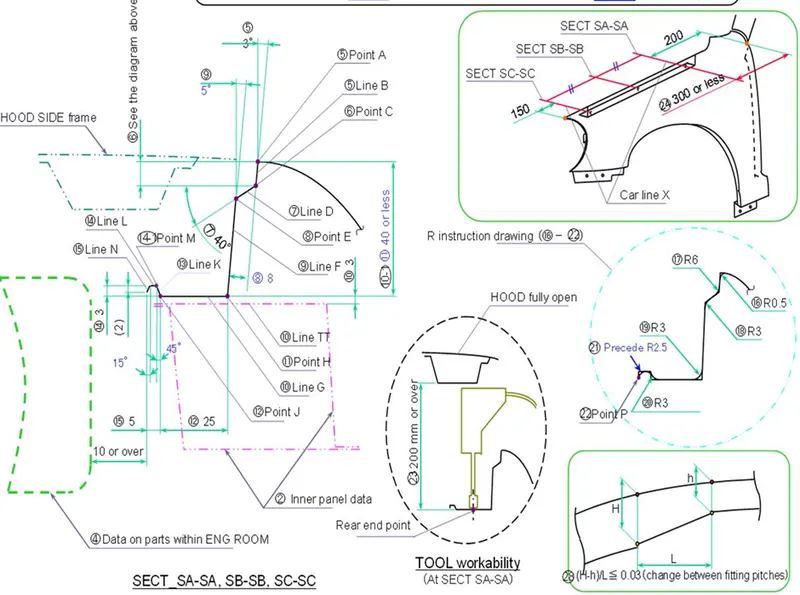
Data Given:
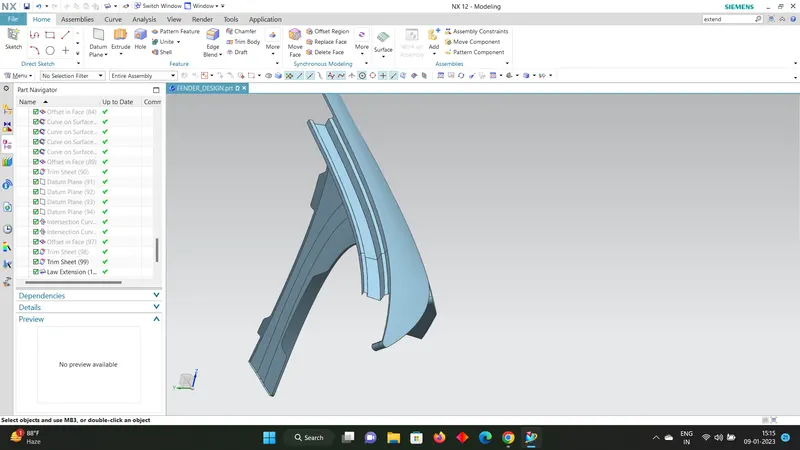
- The drip area should be made after leaving the space of 150mm from the front for headlight mounting and before 200mm from the cowl area and 10mm distance left from the Engine room.
- The angle from the top of the flange is 40 degrees and 8mm long is created to stop the view of the Engine Compartment.
- The radius values of the Drip area at different stages.
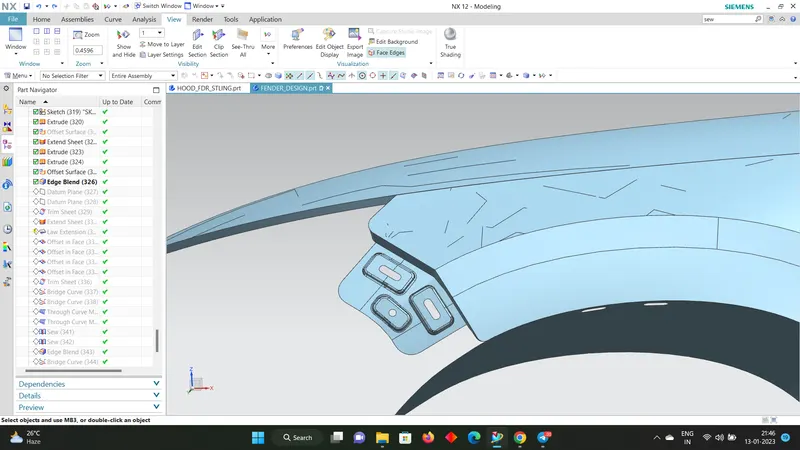
Mountings:
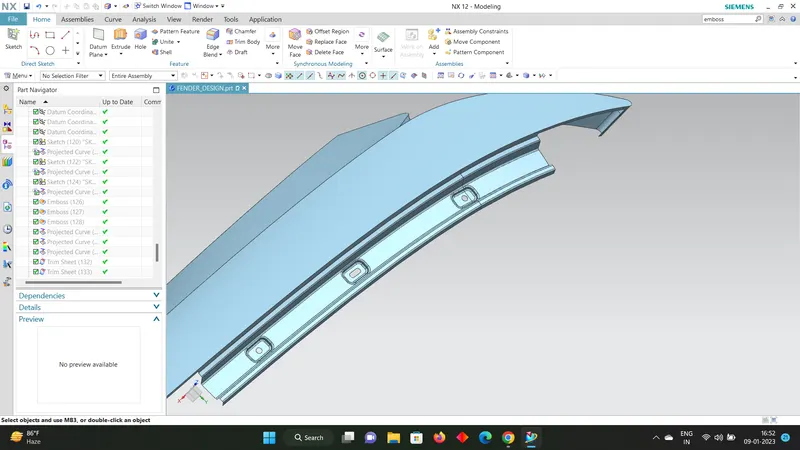
- Drip Mounting Area
- Sill Mounting Area
- A-Pillar Mounting Area
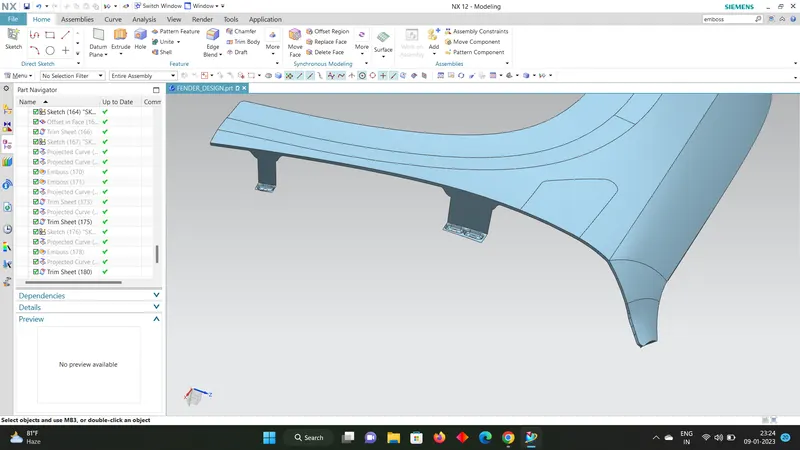
- Bumper Mounting Area
- Baffle or Linear Mounting Area
Design:
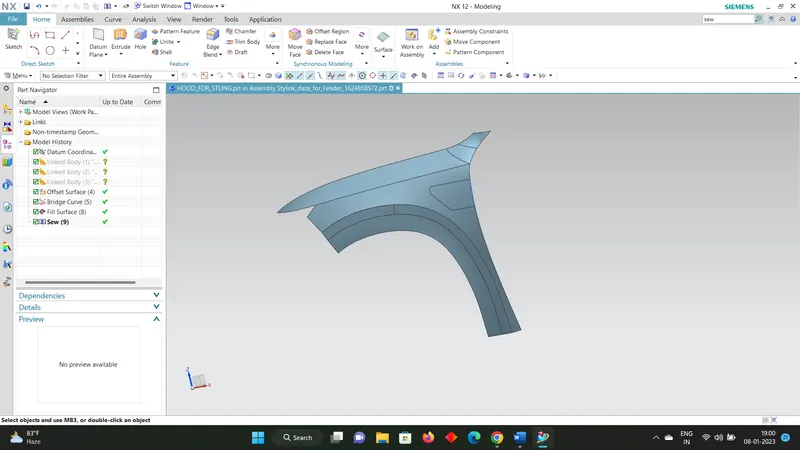
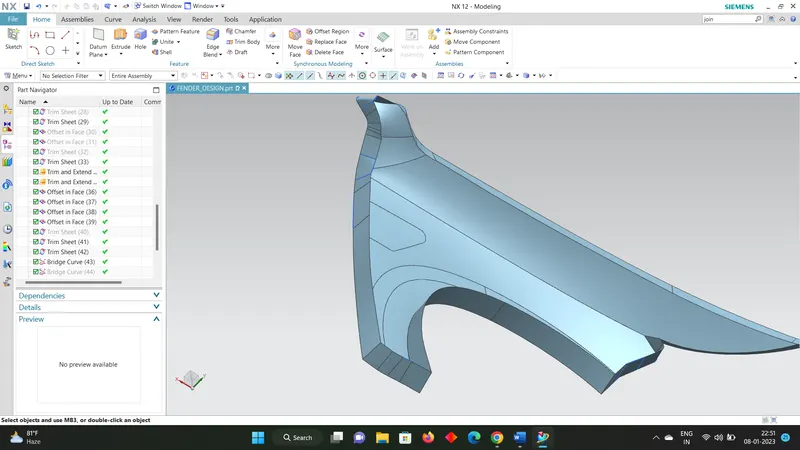
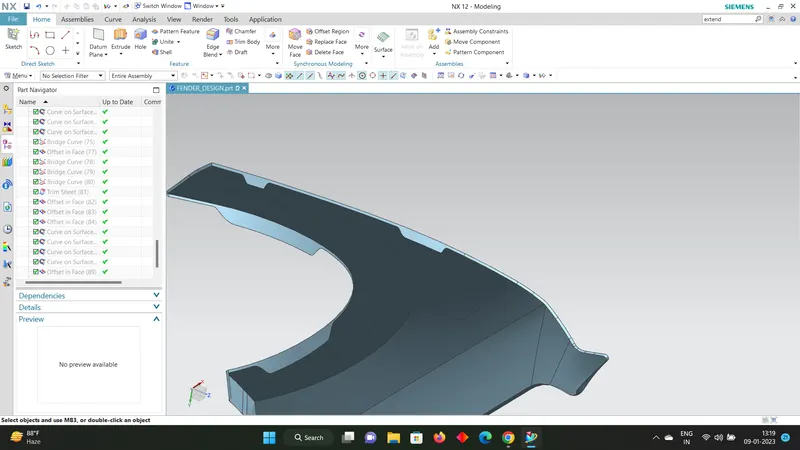
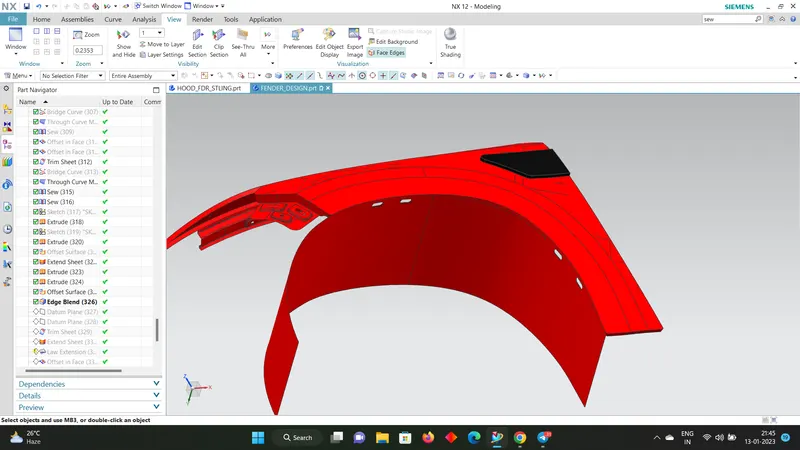
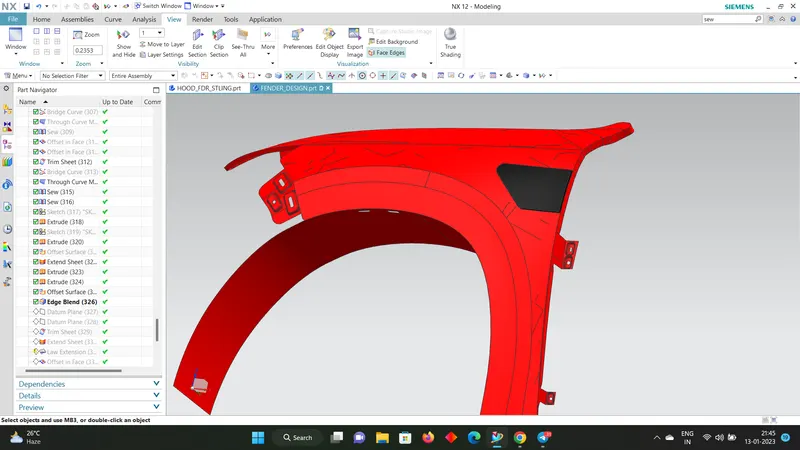
CONCLUSION:
We have successfully learned about the feature and purpose of the front fender and designed it in NX CAD and familiarised the tools involved in the design.