Challenge 4-Windshield Modeling
What Does a Windshield Do?
Windshields have many essential functions. Learn about a few of the most relevant ones.
Maintains a Clear View
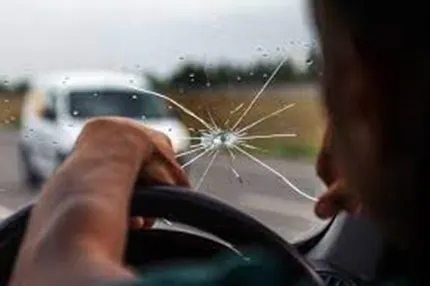
A windshield offers clear and unobstructed views of the road to always give the driver maximum visibility. However, the windshield only gives clear views if it's free from dirt, cracks, and grime.
Provides Protection from Flying Objects
Windshields protect you and your passengers from flying debris, rain, and dust. A windshield makes driving enjoyable as no stones or bugs can come into your vehicle. Further, it offers shelter during rainy or stormy weather.
Supports the Roof
Auto engineers design windshields to primarily enhance a car's structural integrity. Specifically, a windshield prevents the roof from collapsing in case of a rollover accident. Modern vehicles rely on windshields for roof support.
According to SafeWindshields.org, the windshield delivers up to 45% of the cabin's structural integrity during a front-end collision and 60% in a rollover. In other words, the windshield absorbs a lot of impact during an accident and ensures the roof doesn't collapse on passengers.
Supports Airbag Deployment
In case of a front-end collision, your car's airbags burst and provide a safe spot for the occupants to collide with. As a result, you and your passengers escape fatal injuries that can occur if you collide with the car's interior.
Flexible Glass Sandwich
The windshield for cars is typically made of laminated glass or safety glass. Laminated glass is a sandwich of two panes of glass with a polyvinyl butyral (PVB) interlayer in between which is then bonded together to form a single uniform piece for windshield safety. This PVB prevents the windshield from shattering like ordinary glass, thereby safeguarding you and your fellow passengers in the event of a collision.
Prevents Ejection
You and your passengers risk ejection if you don't wear seat belts during a car crash. However, the windshield serves as a barrier that keeps occupants in the vehicle in case of an accident. If the force of a car crash ejects you from a car, you're likely to sustain fatal injuries. A windshield spares you and your passengers from life-threatening concussions or death.
Design Requirement:
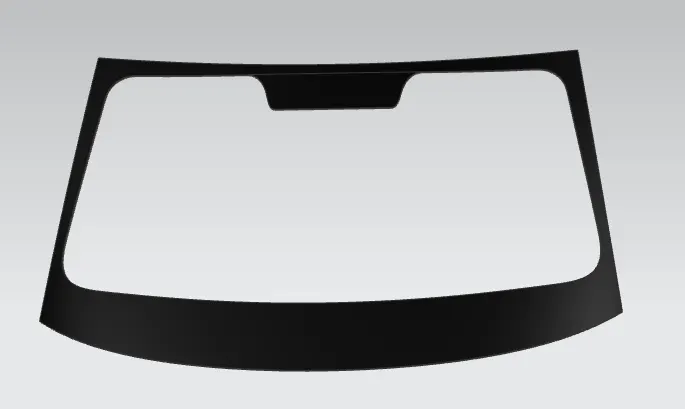
Gradient Lines
- Printed Filaments on the top and bottom of the windshield.
- To hide rubber sealant and metal joints near the roof and cowl area
- To give better aesthetic looks
- Also, to hide IRVM (Inside Rear View Mirror)
- Dotted filaments in the rear windshield get heated up and act as defoggers.
- Most of the windshield has a small sheet in between them
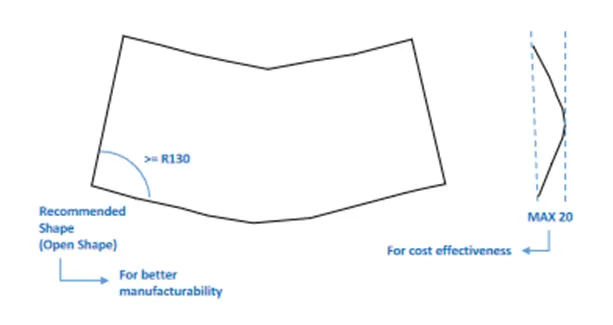
- The Austin Material is used for the sheet in between and the thickness of the sheets will be 2 surfaces of 2.25mm and a sheet of 0.2mm and the total thickness of the windshield will be 4.7mm
- The Gradient lines are present in the car's windshield id to hide the rubber sealants that hold the windshield with the A-pillar and the Hood cowl.
- The Gradient lines are present in the car's windshield id to hide the rubber sealants that hold the windshield with the A-pillar and the Hood cowl.
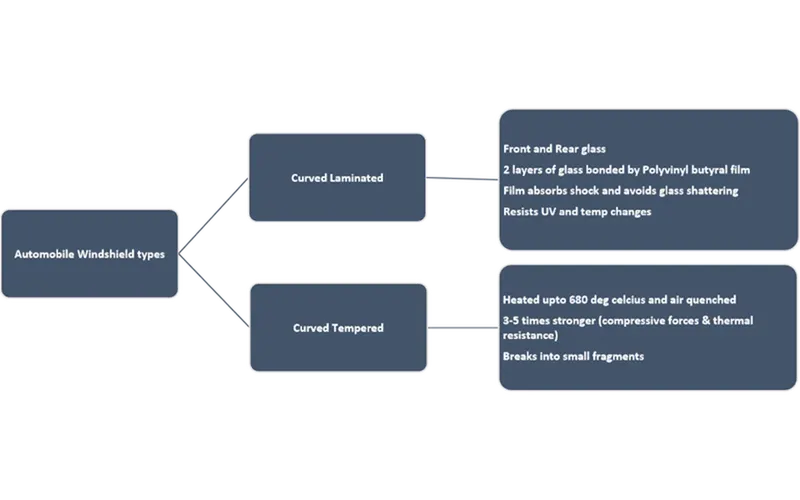
TEMPERED VS LAMINATED GLASS FOR AUTOMOBILES
Tempered glass is mostly used for passenger side windows and the rear window on automobiles while laminated glass is typically reserved for your front windshield. When tempered glass breaks, it is designed to shatter into small pieces that are less likely to cause added injury or damage. Laminated glass is tough to break too as it’s made by creating layers involving glass and a specialized plastic layer, so it tends to bend and flex when hit with any force or blunt object. Both are manufactured for safety and made to absorb impact and break in the safest way possible to minimize the risk of injury.
So Why Use Tempered Glass for Side Windows?
- Tempered glass, also known as” toughened glass ”, is created by heating and rapidly cooling a pre-cut standard piece of glass in a tempering furnace. The term tempering refers to the rapid heating and cooling of the glass to strengthen the glass 5 to 10 times more than it was before it was tempered.
- Tempered glass can also be treated with chemicals and thermal treatments; these treatments help give the piece of glass more balanced internal stress capabilities which makes it ideal to withstand side impacts without shattering.
- Tempered glass makes up the backlight, or back windshield, and the side-lines of the doors, as well as other little slivers of glass. This glass is strong, but not as strong as laminated glass. It can be broken easier while maintaining a smooth break. Keep in mind all glass in your car is shatterproof yet still breakable. Tempered glass doesn’t have a layer of plastic on the inside like laminated. So, in case of emergencies, like locking your animal or children accidentally inside, it can be broken yet will break safely. When it’s broken it shatters into little dull shards that won’t cause any serious harm to a child or animal that may be in the car. Of course, if possible, any occupants of a vehicle should move away from windows and shield their faces if a window is to be broken out.
Why Is Laminated Glass Best for Your Front Windshield?
Laminated safety glass is normally reserved for your windshield only. Because of its maximum durability, it’s more expensive to make. Laminated glass is structurally stronger than tempered glass. It’s composed of 3 layers; the inner layer is made of a plastic called polyvinyl butyral, or PVB. This plastic is inserted between two layers of clear tempered glass.
The PVB on the inside isn’t just for structural integrity, though it does add strength to the windshield; its main purpose is to keep the glass from shattering on impact. Before shattering, laminated glass will bend and flex due to that extra layer of plastic.
The PVB is also usually slightly tinted to protect against UV or ultraviolet rays. Laminated glass blocks around 99 percent of ultraviolet light transmission making it ideal for front glass in a vehicle. In addition, the PVB provides high sound insulation.
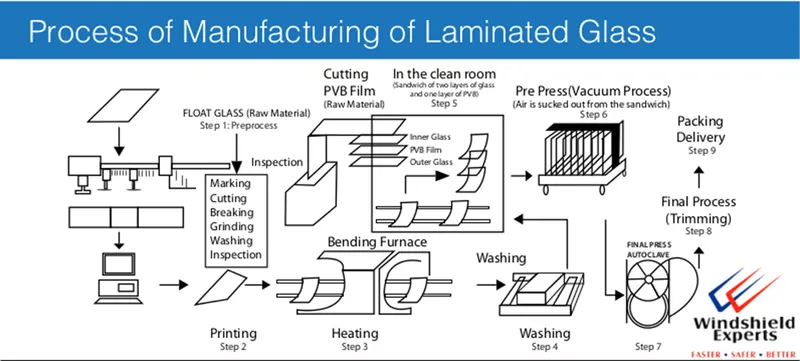
Process of manufacturing Tempered glass
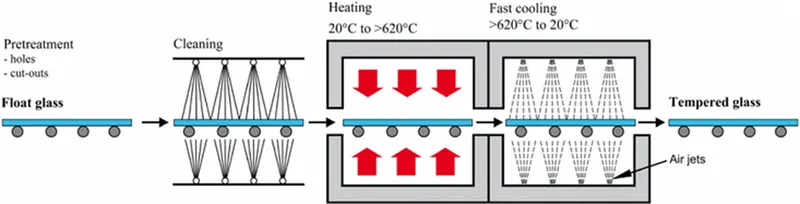
Types of the Tempering process
- New Gravity method
- Press forming
- Gas hearth forming
Modelling the Windshield
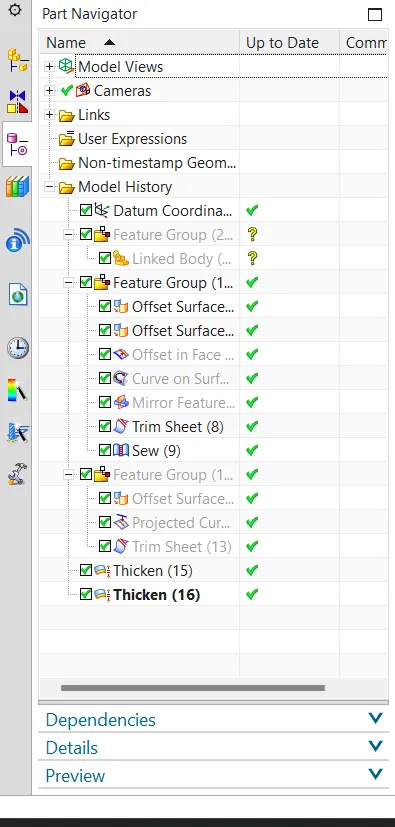
Offset surfaces are created from the styling to create the headliner
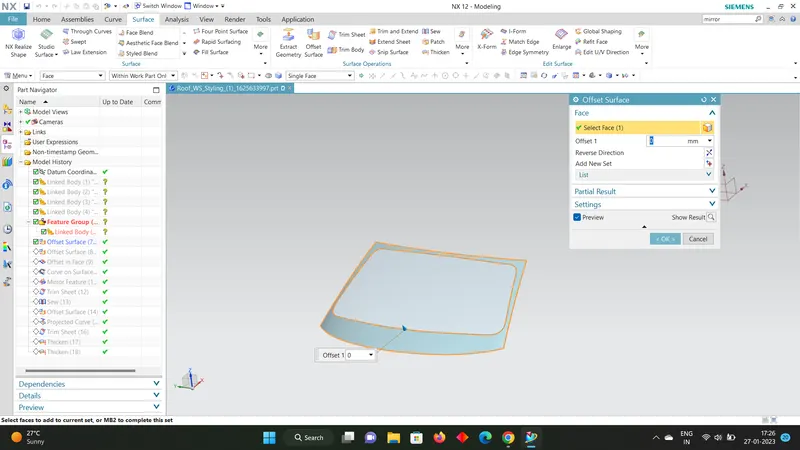
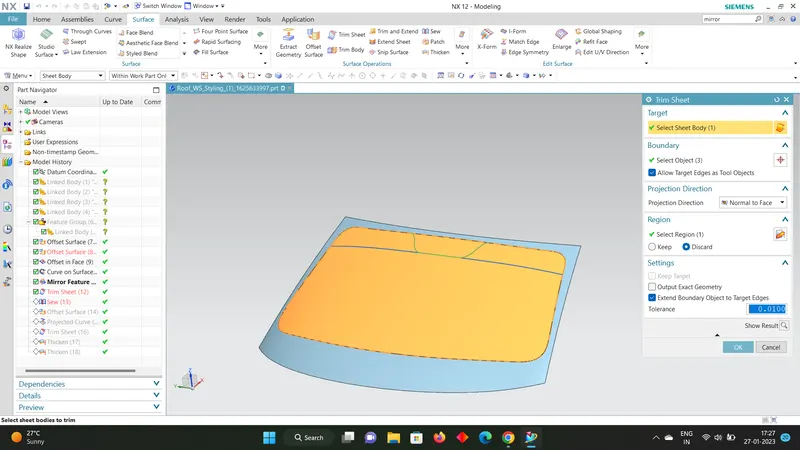
Curve on surface for one half of the covel, the mirror feature is used to generate curve on the other half.
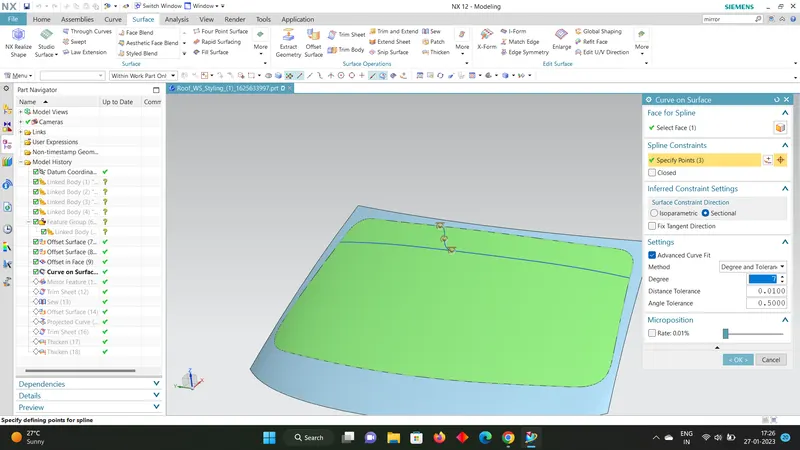
The area covering the glass is trimmed off
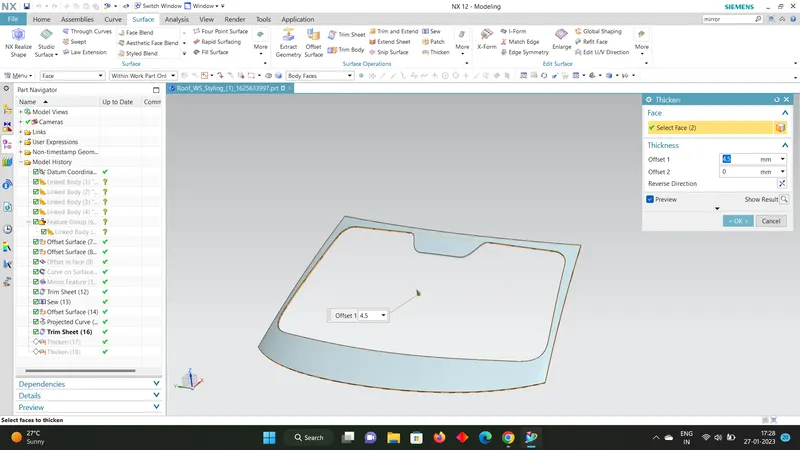
Thicken is applied on both the glass and headliner.
The color change is made to the model.
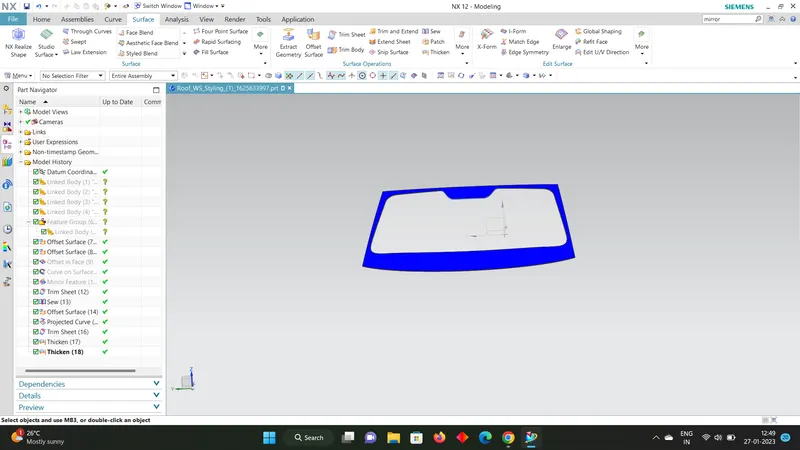
The Windshield is designed using Siemens NX and the necessary thickness is given.