Project 2
Aim and Introduction-
- The aim of this challenge is to determine the impact on the structure due to application of loads like water current load, Centrifugal load, wave load, snow load, temprature load and barge impact load on the bridge structure and to calculate the effect of the loads on the structure as various forces like shear force, bending moment etc using staad Pro.
- So first of all the details calculation for determining the components for calculating the magnitude of the load as per the given data is to be determined with reference to the concern IRC codes and as per the given data.
- Then the model will be analyzed in Staad pro., loads are applied on the the structure as different load cases and the reactions, stresses and bending moments due to the loading is being analyzed for the structure as given.
Data Given:-
- HFL above foundation level - 4m
- Span of bridge - 10m
- Mean Velocity - 2.5 m/s
- Width of carriage way - 9m
- Crest height - 3m
- The deck is supported by - 4 girders
- Height of each girder - 1.6m
- Top and bottom width - 2.0m
- Thickness of web - 0.3m
- Constant r - 5
- Cva - 3
- Strom elevation - 8.5m
- Cr - 0.4
- Bridge subjected to - 70R tracked vehicle
- Radius of curvature in bridge - 2m
- Design Speed of Vehicles - 50 km/hr
- Pier Size - 1.2 x 1.2 m
- Width of deck slab - 10.5m
- Thickness of deck slab - 1.5m
- Depth of accumulation of snow - 1250 mm
- The bridge is subjected to snow load - Setteled Snow
- β <30
- Dead weight of vessel - 25000T
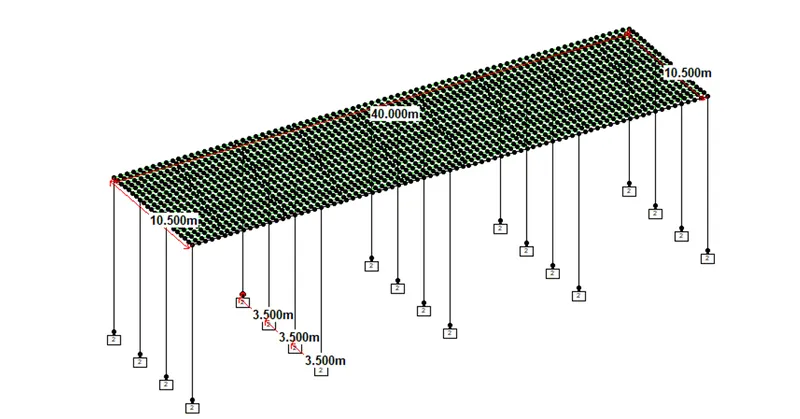
Calculation of the Water current :-
Ht. of pier and abutment subjected to water current = 4m
Vmean= 2.5 m/s
Max. Velocity = V = √2 x Vmean
= √2 x 2.5 = 3.535 m/s
Water current pressure = P = 0.52x k x V ^2
as the abutment and piers are rectangular structure
So, the value of k = 1.5
⇒ P = 52 x 1.5 x 3.535^2
= 975 KN/m2
Calculation of the Centrifugal Forces :-
Considering the impact Load
- For tracked vehicles and spans >9m, the impact load as per IRC-6 code is 25% of the live load.
So impact Load = 25% of 70
i.e.= 17.5 KN
Then,
Radius of curvature , R =2m
Live Load , W = (70 + 17.5)KN =87.5 KN
Design Speed , V = 50 Km/hr
Centrifugal Force = (W x V^2)/127 x R
= (87.5 x 50 x 50) / (127 x 2)
= 862 KN
Calculation of the Wave Forces :-
Total ht. of the super structure = 1.6 + 1.5 = 3.1m
ΔZh = ηmax - centroid of I girder
= (8.5+3.0) - (10+1.6/2)
= 0.7 m
ΔZv = ηmax - elevation of bottom deck
= (8.5+3.0) - (9)
= 2.5m
Vertical Load = Fv=γ x ΔZv x Av
= 10 x 2.5 x (9 x (3.1/2))
= 348.75 KN
Horizontal Load = Fh=γ x ΔZh x Ah
= 10 x 0.7 x (40x 3.1)
= 868 KN
Maximum Verical Load = Fv-max = Cva x Fv
= 3 x 348.75
= 1046.25 KN
Maximum Horizontl Load = Fh-max = (1 + Cr (N-1)) x Cva x Fh
= (1+0.4(4-1)) x 3 x 868
= 5728.8 KN
Calculation of the Snow Load :-
Case -1
Density of Setteled Snow = ρ = 3 KN/m^3
Depth of snow = 1.25 m
Flat deck, β = 0'
i.e., μ =0.8
Snow Load= So = 3 x 1.25 x 10
= 37.5 KN/m
Design Snow Load = S = μ x So
= 0.8 x 37.5
= 30 KN/m
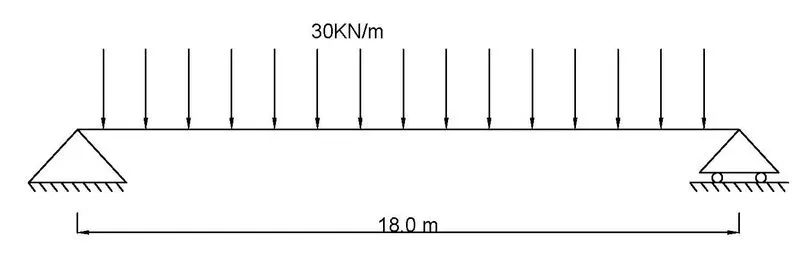
- Also the minimum load on the super structure for snow load as 9 KN/m^3 has to be applied on the structure.
Calculation of the Parapet wall load:-
Considering the parapet wall of RCC wall with 200mm thick
Load due to parapet wall = thickness of parapet wall x ht. of parapet x Density of conc.
= 0.2 x 1.5 x 25
= 7.5 KN/m
Calculation of the Temprature Load :-
- Considering the location of the bridge is at DELHI and the structure is designed for M40.
Maximum temprature at Delhi C.H.O. IRC 6 = 47.8°
Minimum temprature at delhi C.H.O. IRC 6 = -0.4°
Effective temp. = (47.8-(-0.4))/2+10
= 34.1°
Co-ifficient of thermal expansion = 11.27 x 10^(-6)
Stress due to temprature load = α x T x E
=11.27 x 10^(-6) x 34.1 x 5000 √ 40
= 12.15 KN/m2
Maximum permissible stress = (2/3) x 0.7 x √40
= 2.95 KN/m2
∴ the stress restricted to 3KN/m2
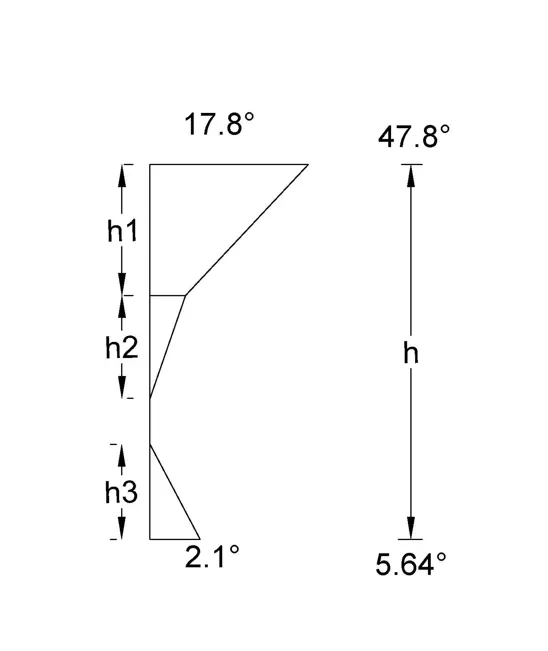
Temprature at top = 47.8°
Temprature at bottom = (2.1/17.8) x 47.8
= 5.64°
Calculation of the componets of barge Load :-
Barge Collision Energy -
KE=500 x CH x W x V^2
Where,
W - Barge Displacement Tonnage (T)
V - Barge impact speed (m/s)
KE - Barge Collision Energy (N-m)
CH - Hydrodynamic Co-ifficient
KE = 500 x 1.25 x 25000 x (60x5/18)^2 (by considering the speed of the barge as 60 Kmph)
= 4.340 x10^9 N-m
Barge Damage Depth ' ab' = 3100 x ( [1+1.3 x 10^(-7) x KE]^0.5-1)
=3100 x ( [1+1.3 x 10^(-7) x 4.340 x 10^(9)]^0.5-1)
= 70602 mm
Barge collision Impact force 'Pb'
For ab>=100 mm, Pb = 6.0 x 10^6 +1600 x (ab)
= 118962486 N
STAAD PRO MODEL:-
- The structure has been modeled as per the given data.
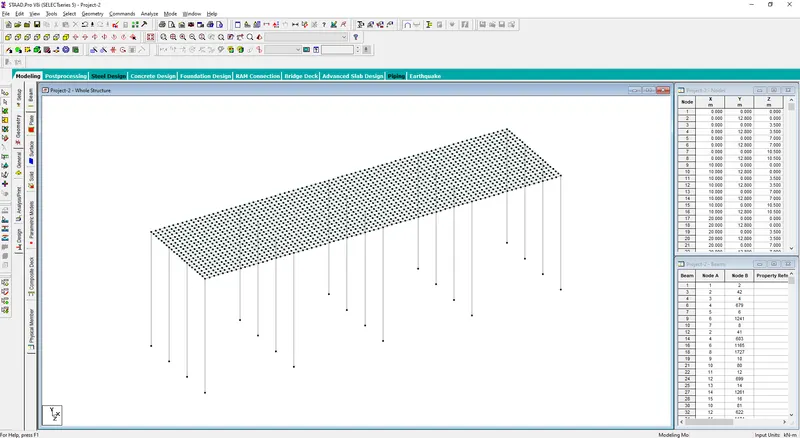
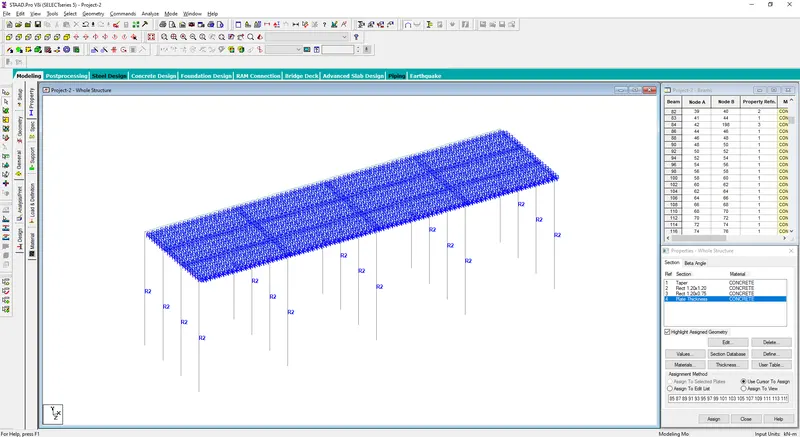
- The properties for the bridge has been defined.
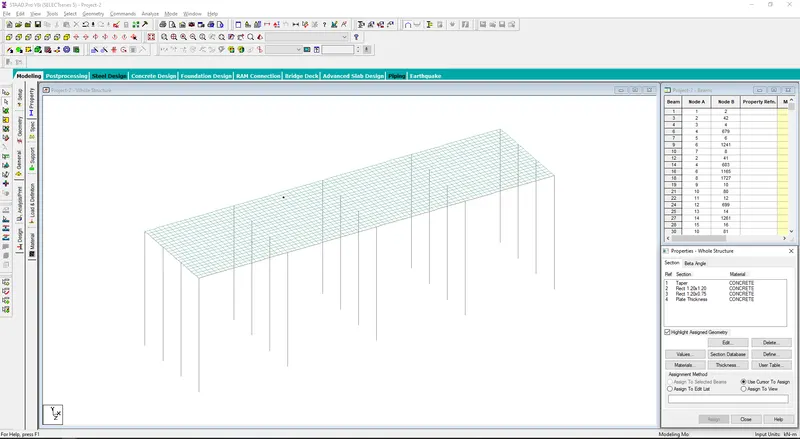
- Properties has been assigned.
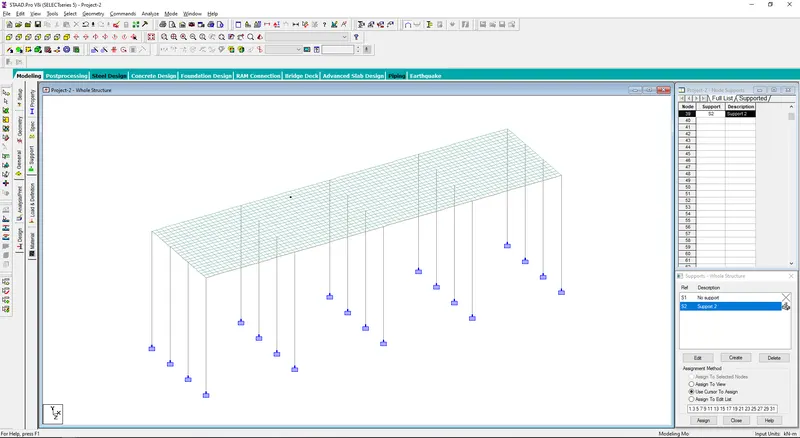
- FIxed support has been considered for the structure and has been applied to it.
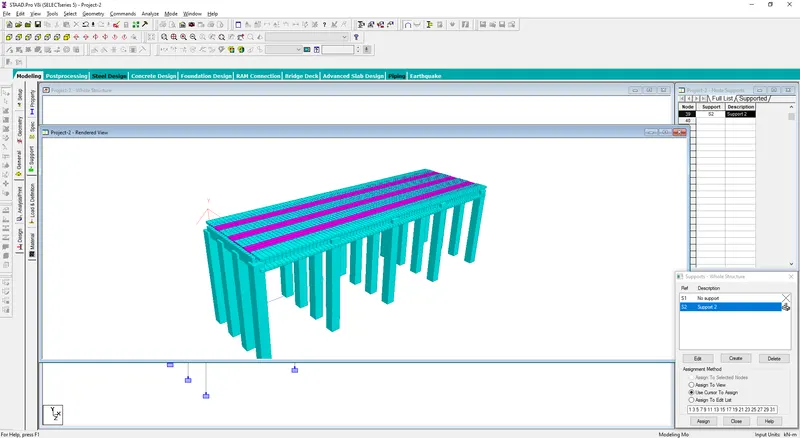
- The 3D render view of the defined structure.
Loads & Definitions:-
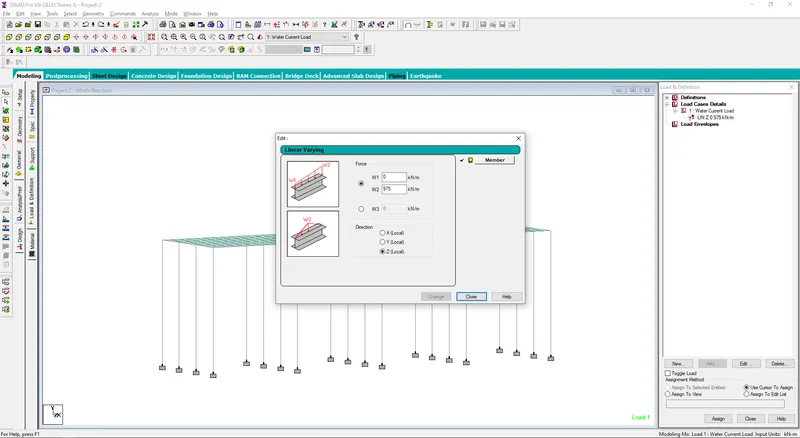
- Water current Load:-
- Considering the flow of stream in only +ve z direction. The details have been defined as per the calculated value.
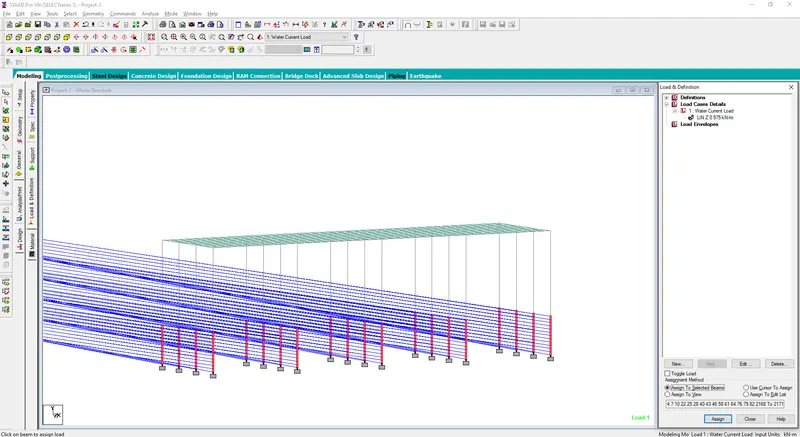
- The water current load has been assigned.
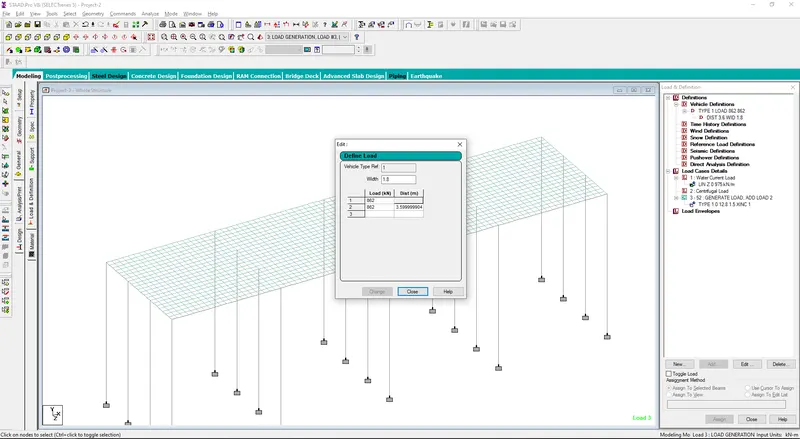
- Centrifugal Load :-
- Centrifugal details has been defined in the model and applied at one node with 1 increament.
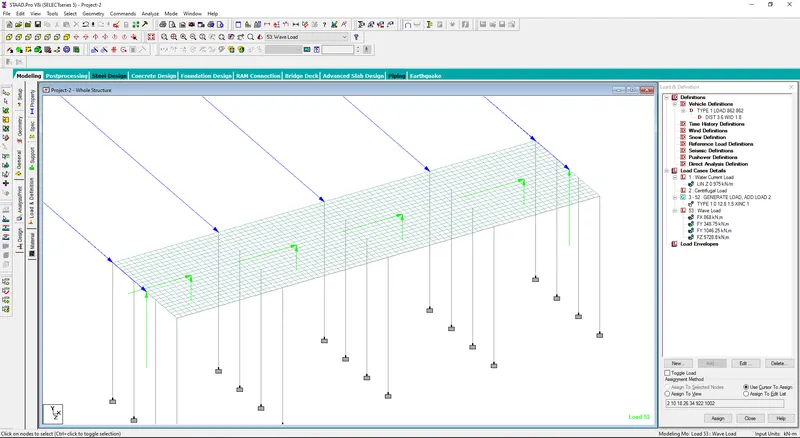
- Wave Load :-
- The Wave load has been defined and assigned to the structure at the mid points of the structure deck.
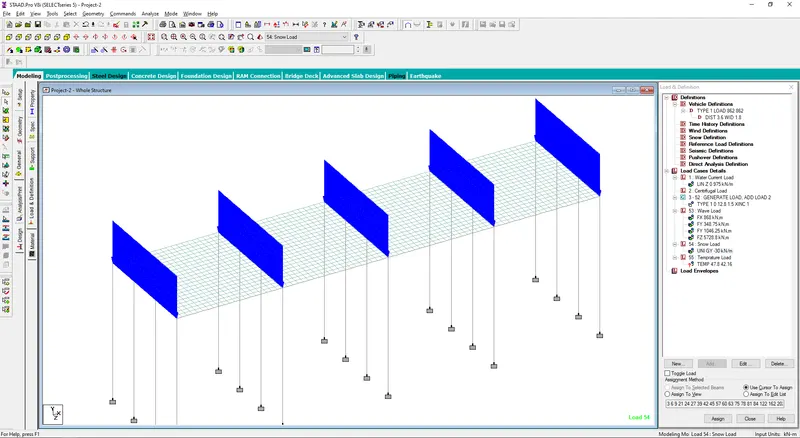
- Snow Load :-
- The snow load is considered as per the calculated value without compairing the value with the minimum value as per IRC. The Load have been defined and assigned to the structure.
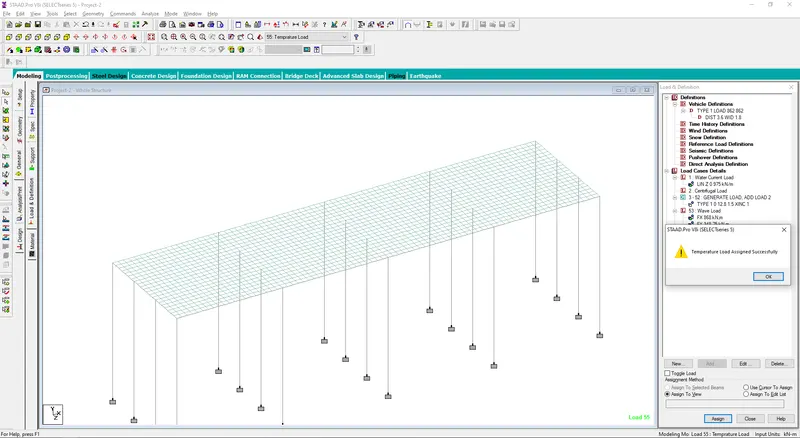
- Temprature Load :-
- The temprature load has been defined and assigned as per the calculated value to the whole structure.
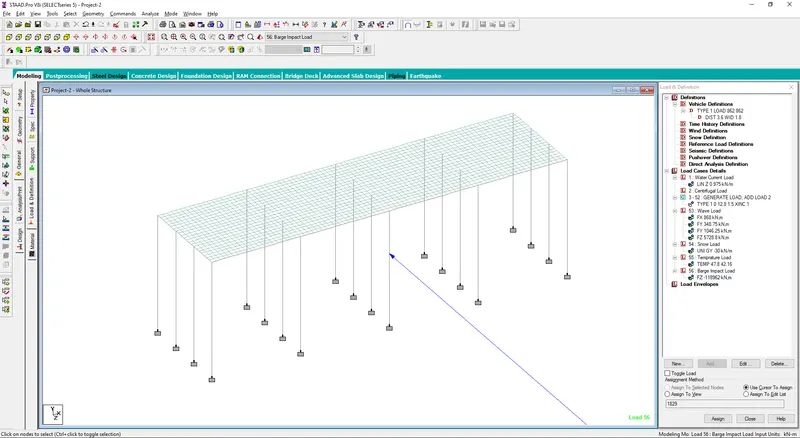
- Barge Impact Load :-
- Considering the draft of the vessel as 8m and any one pier in which the vessel will hit. The accidental load calculated has been defined and assigned to the structure.
Result and Analysis:-
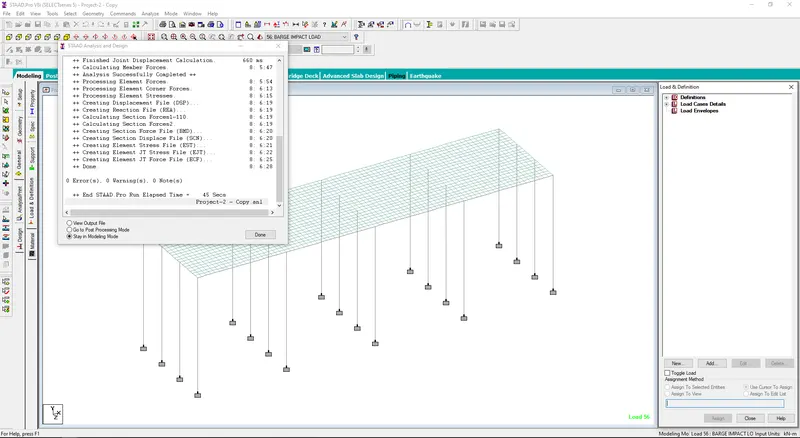
- The structure is being analyzed and the result come out with 0 error and 0 warnings.
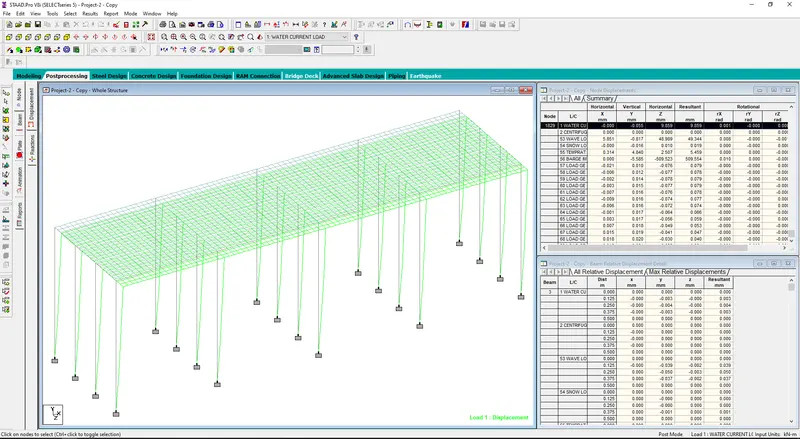
- The deflection due to water current load.
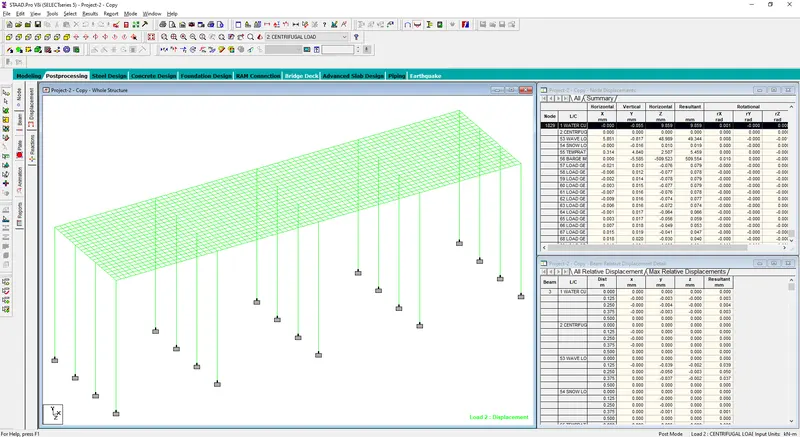
- The deflection due to centrifugal load.
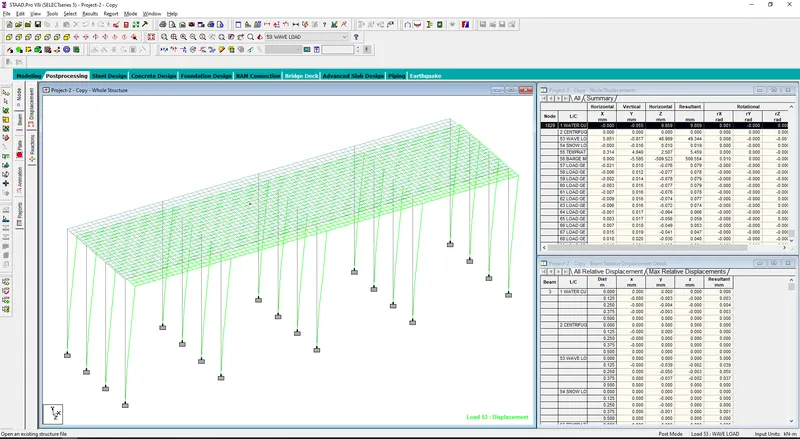
- The deflection due to wave load.
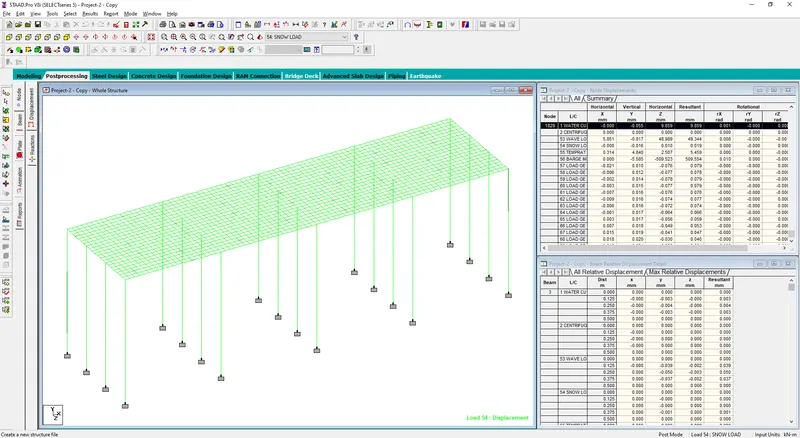
- The deflection due to snow load.
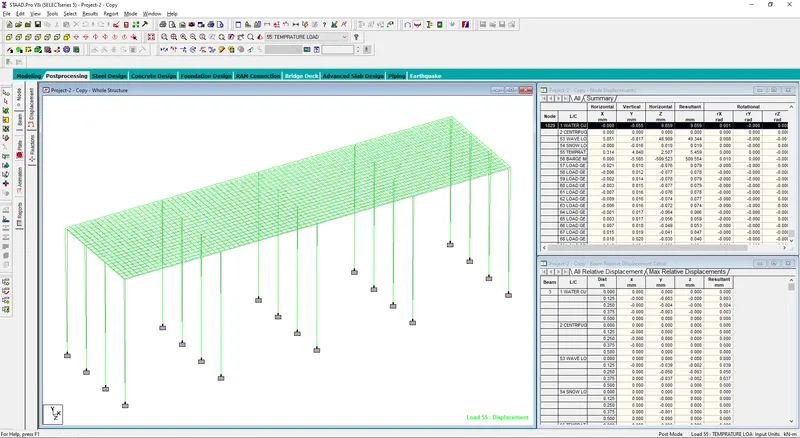
- The deflection due to temprature load.
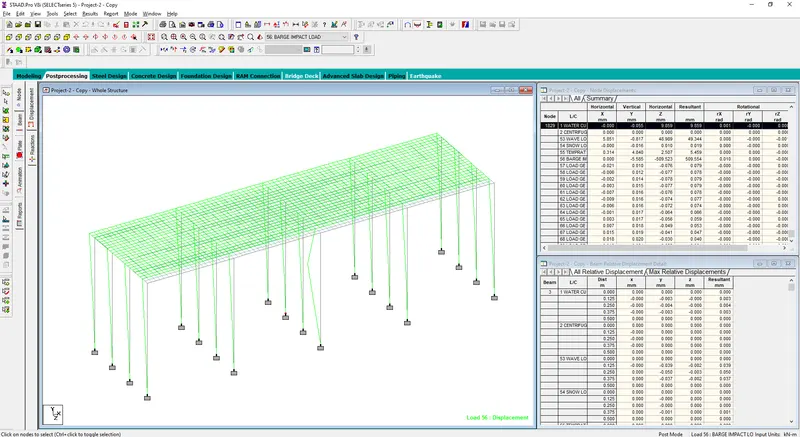
- The deflection due to barge impact load.
- The Reaction at bottom nodes ( foundations) due to water current load.
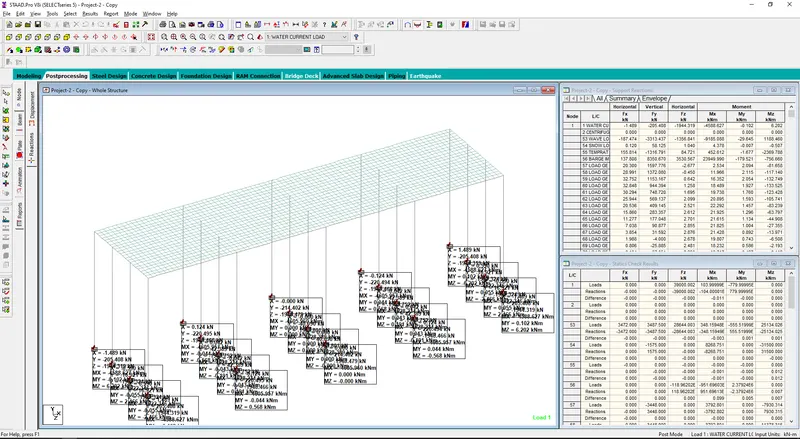
- The Reaction at bottom nodes ( foundations) due to centrifugal load.
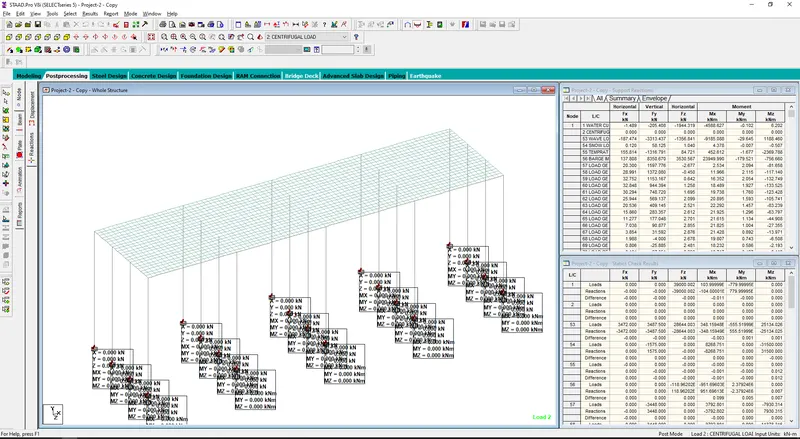
- The Reaction at bottom nodes ( foundations) due to wave load.
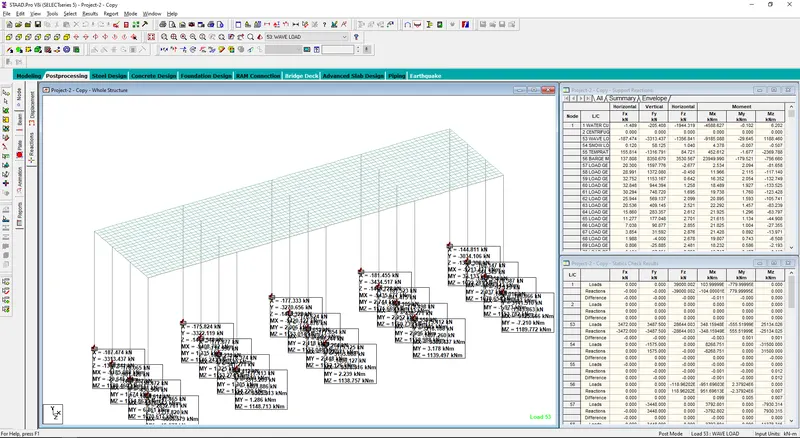
- The Reaction at bottom nodes ( foundations) due to snow load.
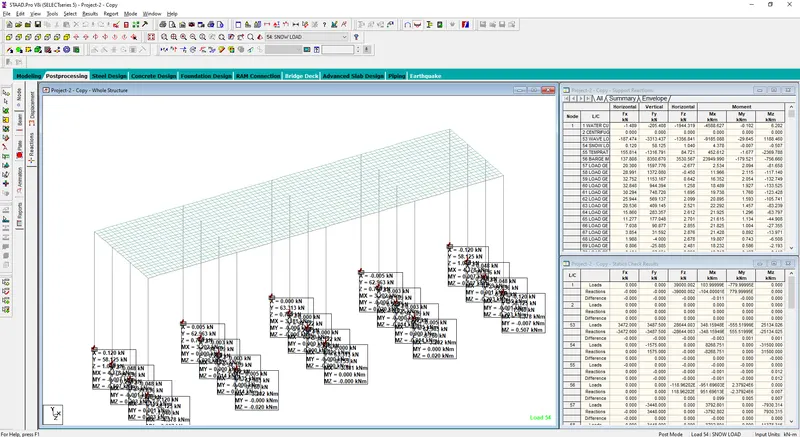
- The Reaction at bottom nodes ( foundations) due to temprature load.
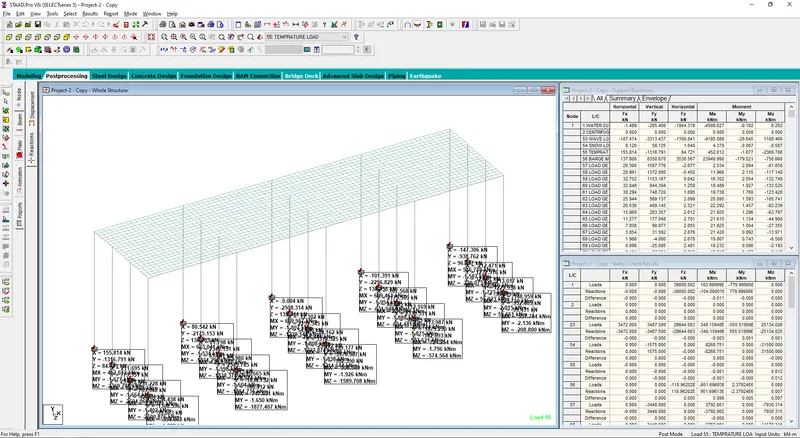
- The Reaction at bottom nodes ( foundations) due to barge impact load.
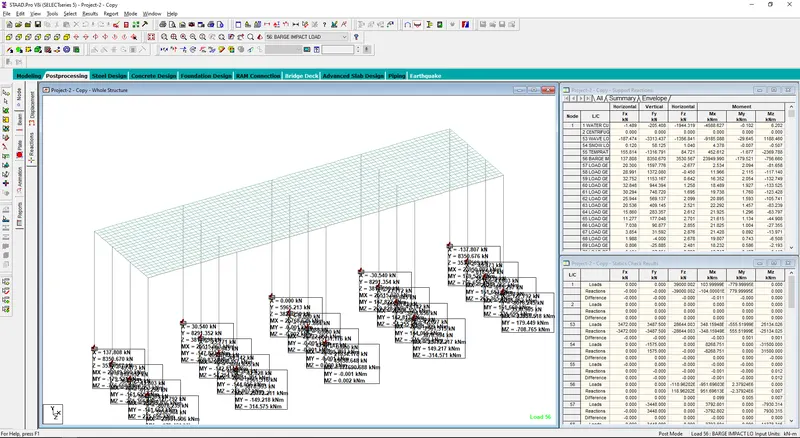
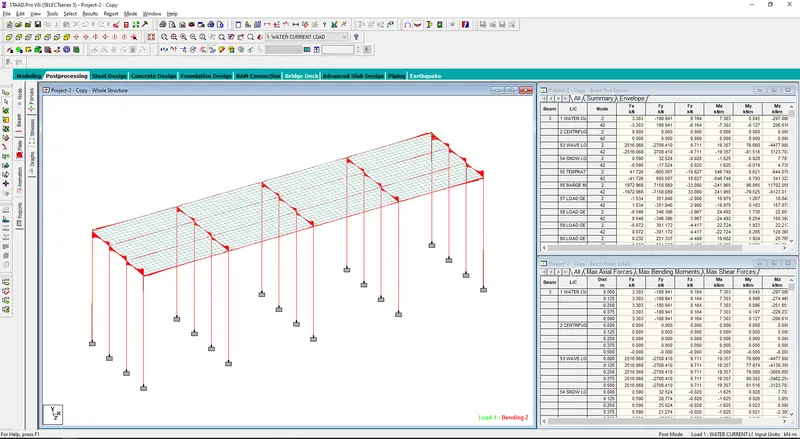
- The value of Mz due to application of water current load.
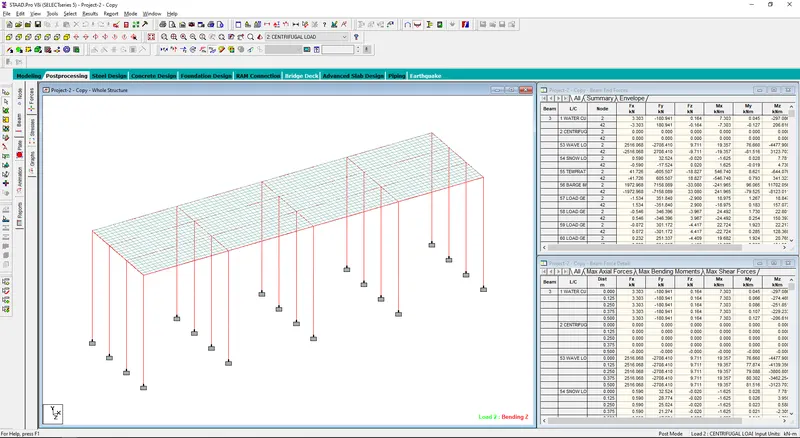
- The value of Mz due to application of centrifugal load.
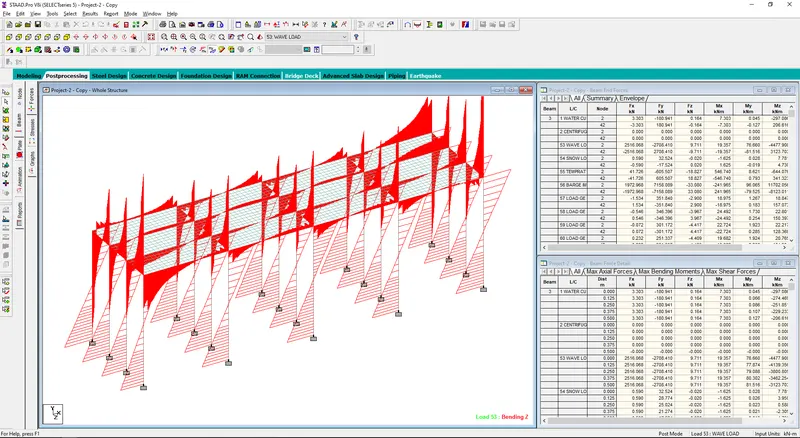
- The value of Mz due to application of wave load.
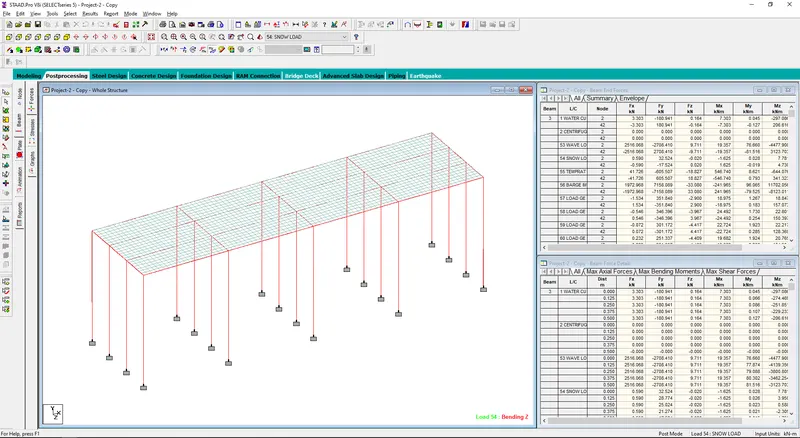
- The value of Mz due to application of snow load.
- The value of Mz due to application of temprature load.
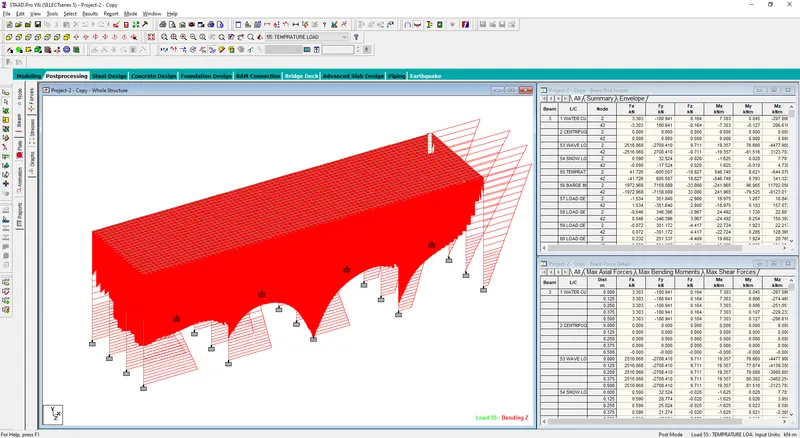
- The value of Mz due to application of barge impact load.
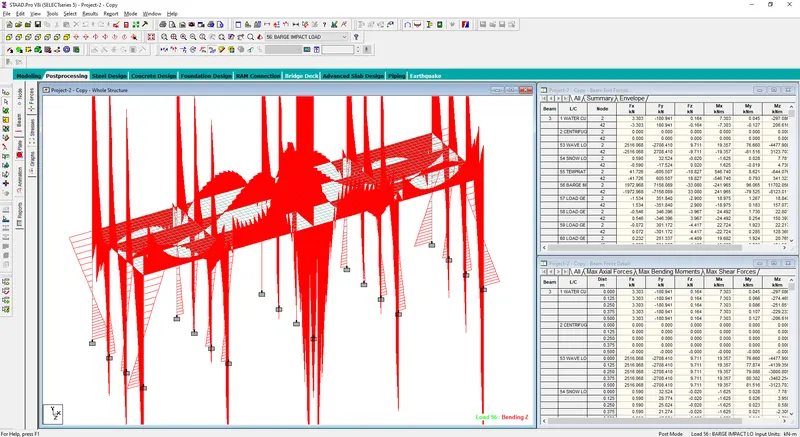
- The forces like Fy & Fz due to application of water current load.
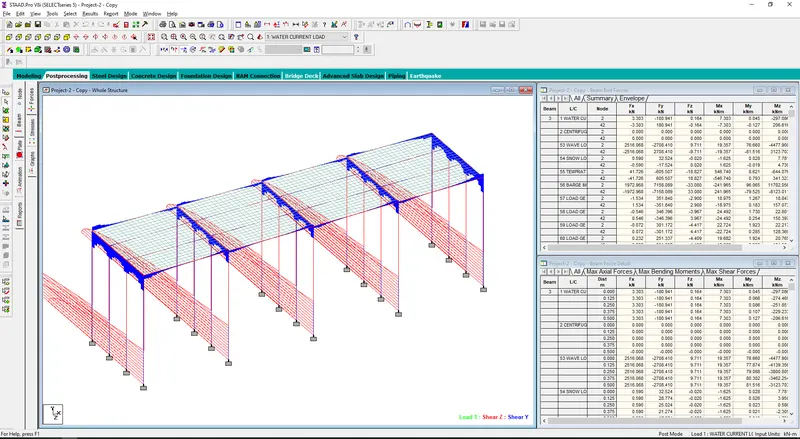
- The forces like Fy & Fz due to application of centrifugal load.
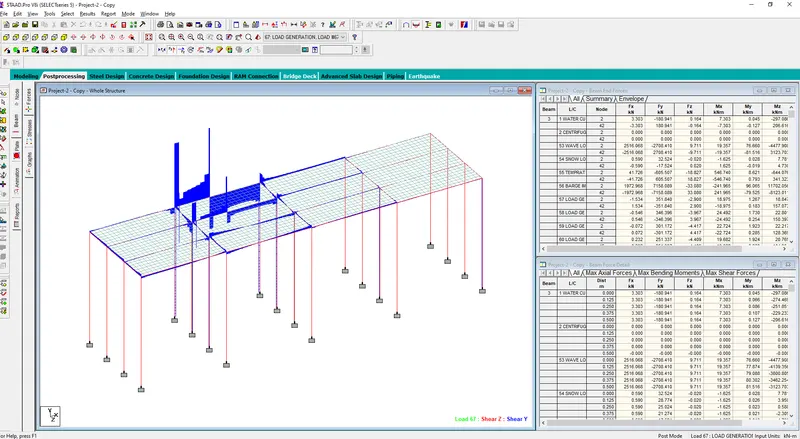
- The forces like Fy & Fz due to application of wave load.
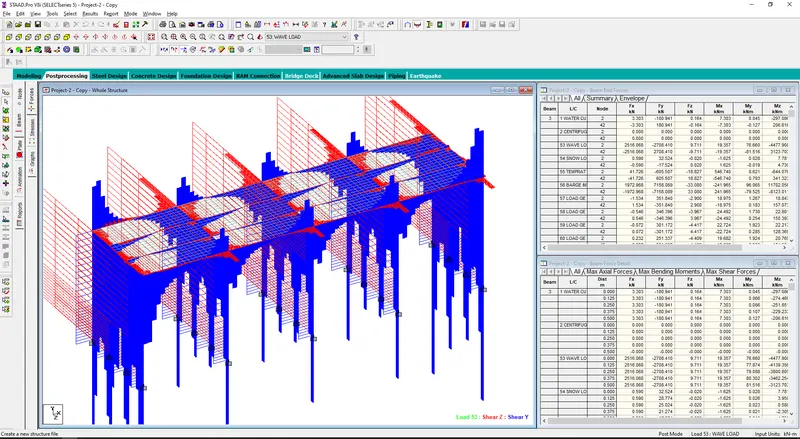
- The forces like Fy & Fz due to application of snow load.
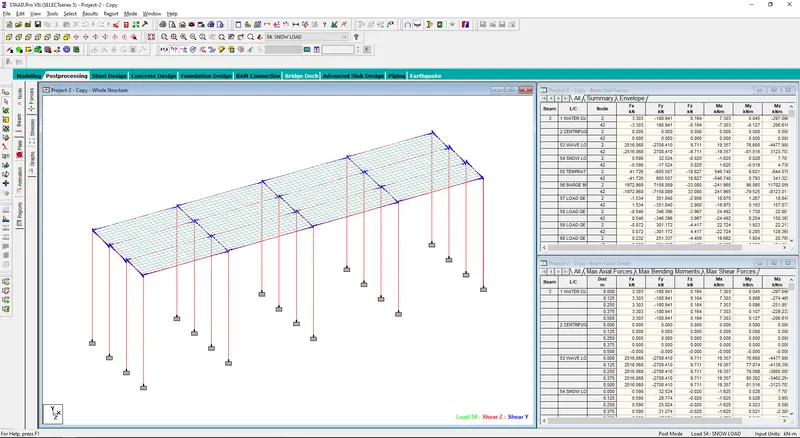
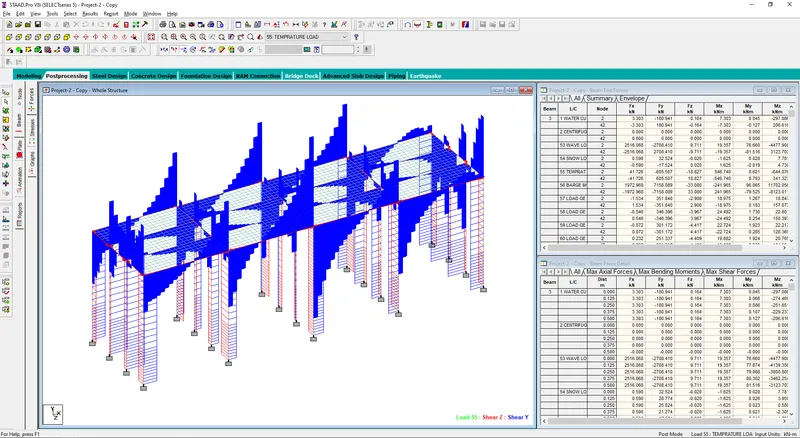
- The forces like Fy & Fz due to application of temprature load.
- The forces like Fy & Fz due to application of barge impact load.
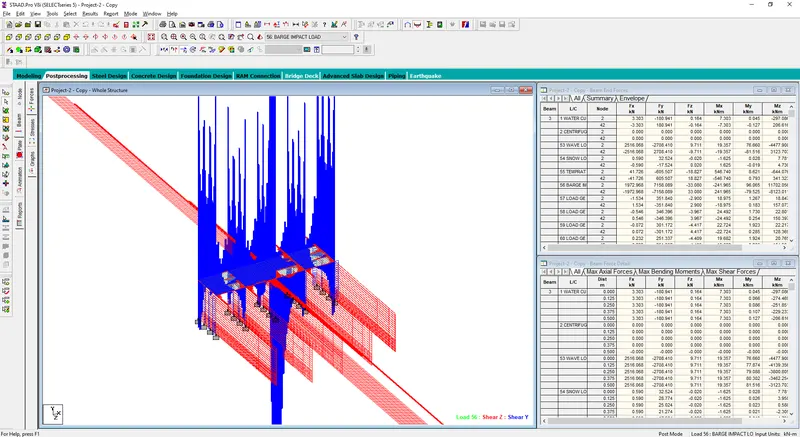
Plate Stress:-
- The plate stress (My) due to water current load on the structure.
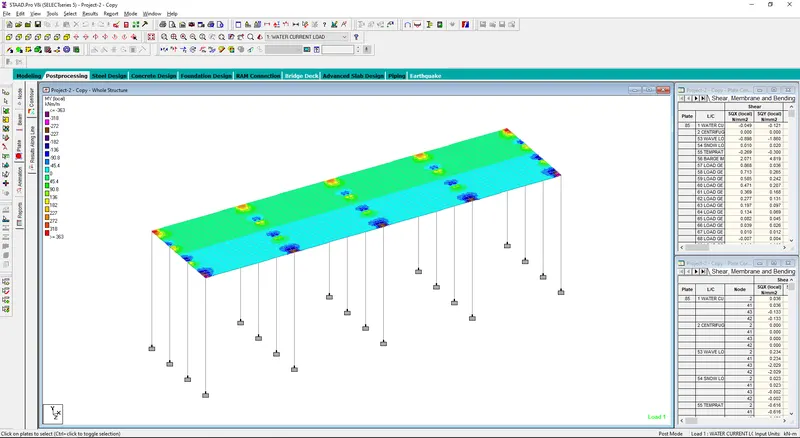
- The plate stress (My) due to centrifugal load on the structure.
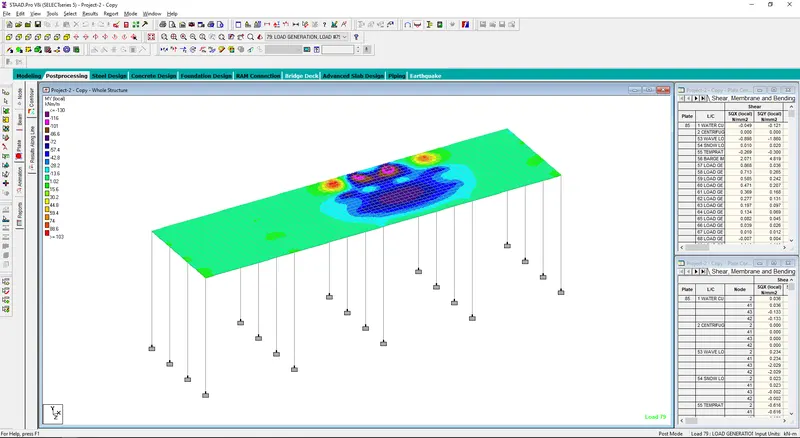
- The plate stress (My) due to wave load on the structure.
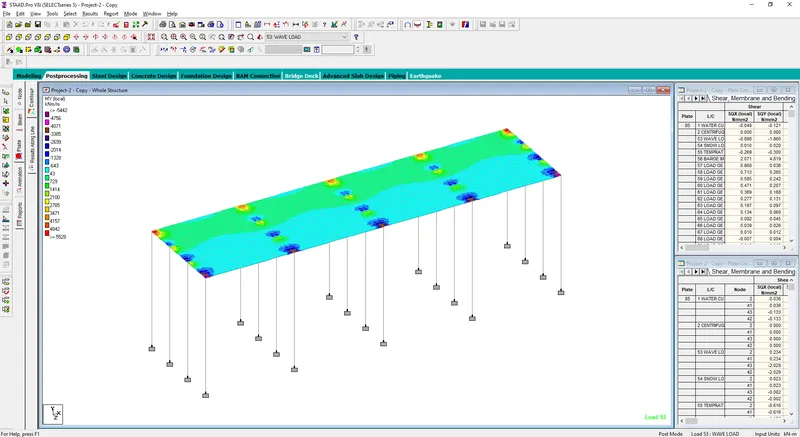
- The plate stress (My) due to snow load on the structure.
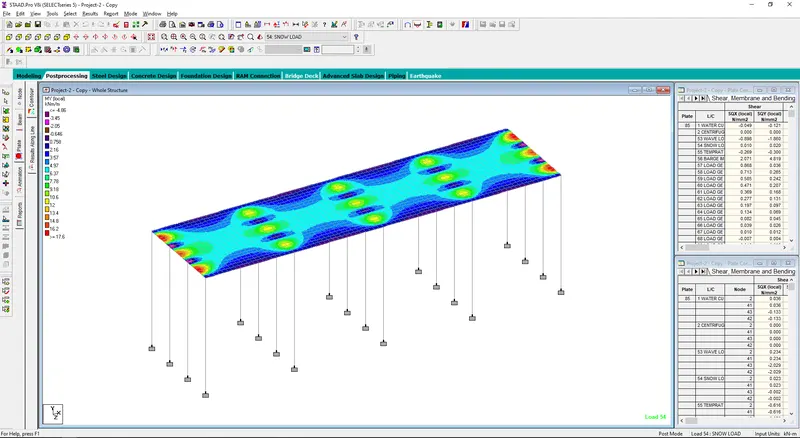
- The plate stress (My) due to temprature load on the structure.
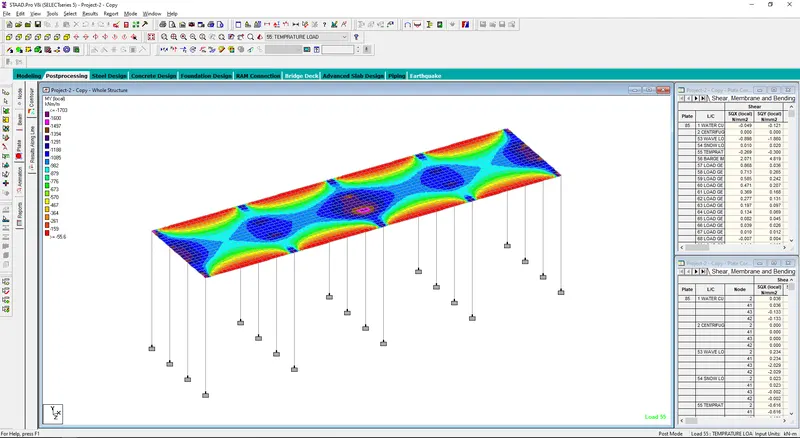
- The plate stress (My) due to barge impact load on the structure.
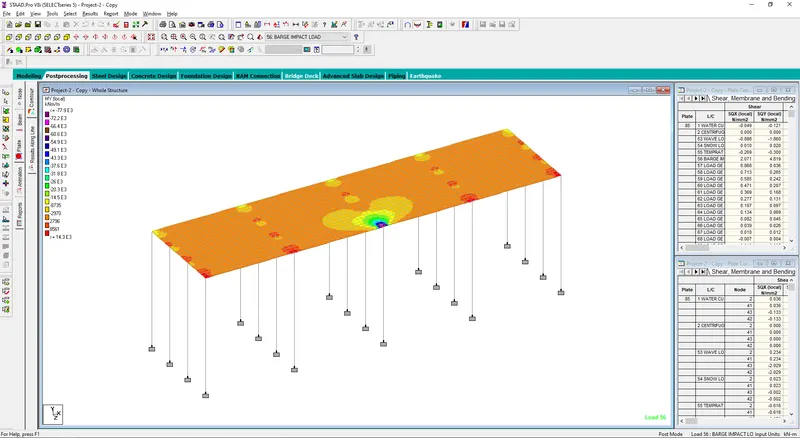
Note:-The reports for the maximum or minimum bending moment, shear forces or axial load in all X, Y & Z direction, the stresses can be generated by generating the report from the Staad Pro. model for all load cases as per requirements.