Project 2
Brief introduction:
Almost all Standards emphasize on Risk Based approach. In addition, there are specific Standards for risk assessment. Establishment of system, extent of controls to be applied, decisions to be taken etc. all these are nowadays being based on risk based approach. Organizations have grown significantly whenever they are implemented the risk management tool effectively.
And for some of the recent Standards, lime in ISO 9001:2015, the Preventive Action has been removed, which is said to be effectively replaced by the risk based approach.
Ability of establishing and implementing the risk management tool is these days considered to be of prime importance, no matter, what field you are in.
Risk assessment is a critical process in the development, manufacturing, and use of medical devices. It involves identifying and evaluating potential risks associated with the device and implementing measures to minimize those risks. The goal of risk assessment is to ensure that medical devices are safe, effective, and reliable for patients, healthcare professionals, and other end-users.
Risk assessment typically involves a systematic approach that includes the identification of hazards, the evaluation of the severity and probability of harm associated with each hazard, and the implementation of risk mitigation strategies. The process may also involve ongoing monitoring and evaluation to ensure that the device continues to meet safety and performance standards throughout its lifecycle.
Regulatory bodies, such as the FDA and the European Commission, require medical device manufacturers to conduct risk assessments as part of the pre-market approval process. Risk assessment is also an essential component of post-market surveillance and quality management programs for medical devices.
Device: Dialysis machine
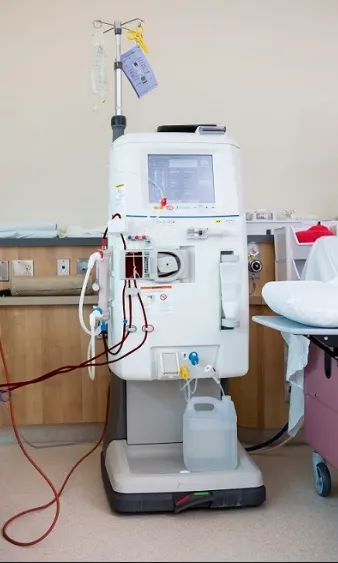
Dialysis is a medical process that removes excess water, salt, and other wastes from the blood. A dialysis machine is a device that performs this process, usually for patients with kidney failure. This report will include a detailed overview of the history, technique, function, components, uses of a dialysis machine, design, manufacturing process of dialysis machine, standards and safety measures.
History: The concept of dialysis was first introduced in the 1940s, and the first successful dialysis procedure was performed in 1945. The initial dialysis machines were crude and required large amounts of blood, but advancements in technology have led to more efficient and compact machines. The first commercially successful dialysis machine was developed in the 1960s and since then, the technology has continued to evolve and improve.
Technique: The dialysis machine works by removing waste products and excess fluid from the blood. The machine pumps blood out of the patient's body and through a series of filters that remove impurities. The purified blood is then returned to the patient's body. The process of dialysis is typically performed several times a week, and each session can take several hours.
Function: The primary function of a dialysis machine is to remove excess fluids and waste products from the blood. The machine accomplishes this through a process known as hemodialysis. During hemodialysis, the patient's blood is pumped out of their body and through a series of filters called a dialyzer. The dialyzer contains a semipermeable membrane that allows waste products and excess fluids to pass through, while preventing blood cells and other important components from leaving the bloodstream.
Components: The key components of a dialysis machine include a blood pump, dialyzer, and control panel. The blood pump is responsible for moving blood from the patient's body through the dialyzer and back into their body. The dialyzer is the key filter that removes waste products and excess fluids from the blood. The control panel allows the healthcare provider to monitor and adjust various aspects of the dialysis process, such as the rate at which blood is flowing through the machine.
Uses: Dialysis machines are primarily used to treat patients with kidney failure. Kidney failure can be caused by a variety of factors, such as diabetes, high blood pressure, and genetic disorders. Dialysis is also used to treat patients with acute kidney injury or poisoning. In addition to treating kidney failure, dialysis can also be used to remove excess fluids from the body in patients with heart failure or other conditions that cause fluid buildup.
Classification:
The dialysis machine is a medical device that comes under the classification of Class II according to the FDA's risk-based classification system. This means that the device is considered to have a moderate risk of harm to patients if it fails or malfunctions.
In terms of safety, the dialysis machine poses several potential risks to patients, including blood access site infections, clotting, air embolisms, blood leaks, and exposure to hazardous substances. Therefore, safety measures should be taken during the design, manufacturing, and use of the dialysis machine to minimize the risk of harm to patients. This includes following safety standards and regulations, properly maintaining and cleaning the machine, and ensuring proper training and supervision of healthcare professionals who operate the machine. Additionally, regular risk assessments should be conducted to identify and address potential safety hazards associated with the use of the dialysis machine.
Block diagram of hemodialysis machine:
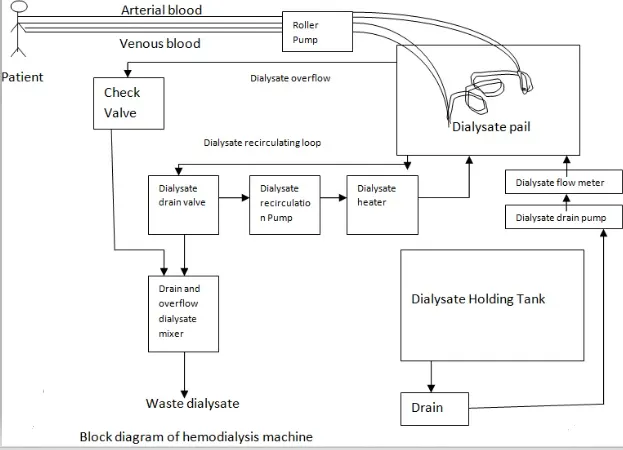
The design of a dialysis machine is a complex process that involves various stages of research, development, and testing. Here are the key steps involved in the design of a dialysis machine:
-
Conceptualization: The design process starts with the conceptualization of the dialysis machine. The design team comes up with ideas on how the machine should look, what features it should have, and how it should function.
-
Research and analysis: After conceptualization, the design team conducts extensive research and analysis to determine the technical requirements of the machine. They review existing machines and technologies to identify potential improvements.
-
Design development: Based on the technical requirements, the design team begins developing the machine's design. This involves creating schematics, blueprints, and 3D models of the machine.
-
Prototyping: Once the initial design is complete, the team creates a prototype of the machine. This allows them to test the machine's functionality and identify any flaws in the design.
-
Testing and validation: The prototype undergoes rigorous testing and validation to ensure that it meets the technical requirements and safety standards. This includes testing the machine's accuracy, durability, and reliability.
-
Manufacturing: After the prototype passes the testing phase, the machine moves into the manufacturing stage. The components are assembled, and the machine undergoes a final inspection before it is packaged and shipped.
-
Quality control: Throughout the manufacturing process, the design team conducts quality control checks to ensure that the machine meets the required standards.
-
Regulatory compliance: The dialysis machine must comply with various regulatory standards and requirements before it can be released to the market. This includes safety standards, performance standards, and environmental standards.
-
Post-market surveillance: After the machine is released to the market, the design team continues to monitor its performance and collect feedback from users. This helps them identify any issues that may arise and make improvements to the design.
Manufacturing Process: The manufacturing process of a dialysis machine involves the following steps:
-
Material selection: The first step is to select the appropriate materials based on the design specifications. The materials selected should be durable, biocompatible, and able to withstand sterilization.
-
Machining and fabrication: The next step is to machine and fabricate the components of the machine. This involves using a variety of manufacturing techniques such as milling, drilling, turning, welding, and laser cutting.
-
Assembly: Once the components are fabricated, they are assembled into the final product. This involves connecting the different components, such as the blood pump, dialysate delivery system, and control system, to create a functional machine.
-
Quality control: During the manufacturing process, quality control measures are implemented to ensure that the product meets the design specifications and regulatory requirements.
-
Testing and validation: Once the product is manufactured, it is tested and validated to ensure that it meets the safety and performance requirements.
Manufacturing a dialysis machine is a complex process that requires collaboration among different disciplines and rigorous testing and validation to ensure safety and effectiveness and the design of a dialysis machine involves various stages, including conceptualization, research and analysis, design development, prototyping, testing and validation, manufacturing, quality control, regulatory compliance, and post-market surveillance.
Standards involved in dialysis machine:
There are several specific standards involved in risk assessment for dialysis machine, including:
- ISO 14971:2019 - Medical devices - Application of risk management to medical devices
- IEC 60601-1-11:2015 - Medical electrical equipment - Part 1-11: General requirements for basic safety and essential performance - Collateral standard: Requirements for medical electrical equipment and medical electrical systems used in the home healthcare environment
- ANSI/AAMI RD5:2013 - Hemodialysis equipment
- FDA Guidance Document for Hemodialysis Blood Tubing Sets
- FDA Guidance Document for Premarket Notification (510(k)) Submissions for Hemodialysis and Peritoneal Dialysis Catheters
These standards provide guidelines and requirements for the risk assessment process, as well as recommendations for mitigating risks associated with dialysis machines.
Here, I have listed some do's and don'ts while operating a dialysis machine:
Do's:
- Always follow the manufacturer's instructions for using the dialysis machine.
- Regularly clean and disinfect the machine and its components as per the guidelines.
- Use the machine only for its intended purpose and in the manner prescribed by the manufacturer.
- Keep the machine and its surroundings dry to prevent electrical hazards.
- Train the operators and healthcare personnel on the proper use and handling of the machine.
- Monitor the machine's performance regularly to identify any malfunction or error.
- Follow proper disposal methods for the machine's components, such as filters and tubing.
Don'ts:
- Do not modify or alter the machine or its components in any way without the manufacturer's approval.
- Do not use the machine if there are any visible signs of damage or wear and tear.
- Do not use the machine if any component or part is missing or not functioning correctly.
- Do not use any chemicals or cleaning agents that are not recommended by the manufacturer.
- Do not operate the machine if there is a power surge or electrical malfunction.
- Do not attempt to fix any issues with the machine unless trained to do so.
- Do not use the machine for any purpose other than its intended use.
Here are some safety measures that can be taken to prevent complications associated with dialysis machines:
-
Regular Maintenance: Dialysis machines should be regularly maintained and serviced to ensure that they are in good working condition. This includes routine checks of the machine's components, such as tubing, filters, and needles, to identify and repair any potential issues before they cause complications.
-
Proper Training: Healthcare professionals should receive proper training on the use of dialysis machines, including the setup and operation of the machine, as well as the protocols for monitoring and responding to any complications that may arise.
-
Sterilization: Dialysis machines and all associated equipment should be properly sterilized to prevent infections. This includes the use of sterilized needles and tubing, and regular cleaning of the machine's components.
-
Monitoring: Patients undergoing dialysis should be closely monitored during treatment to identify any complications, such as hypotension, electrolyte imbalances, or vascular access issues. This may include regular blood pressure checks, monitoring of fluid balance, and frequent laboratory tests to check electrolyte levels.
-
Patient Education: Patients should receive education on the risks associated with dialysis treatment and how to prevent complications, including adherence to fluid and diet restrictions, proper vascular access care, and monitoring of symptoms.
-
Emergency Protocols: Healthcare facilities should have emergency protocols in place for the management of dialysis-related complications, including rapid response teams and access to emergency medications and equipment.
-
Adequate Staffing: Adequate staffing levels are important to ensure that patients receive the attention and monitoring they need during dialysis treatment. Overworked or understaffed healthcare professionals may be more prone to errors or may miss important signs of complications.
-
Proper Documentation: Accurate documentation of dialysis treatment and any associated complications is essential for tracking patient progress and identifying areas for improvement in the delivery of care. Proper documentation also facilitates communication among healthcare providers and helps ensure that patients receive consistent, high-quality care.
Detailed Risk Assessment table for dialysis machine:
| S.No | Activity | Risk (Hazard) |
|
Proposed Action to Reduce Risk | Residual Risk Evaluation | Opportunities | ||||
| 1 | Design and Development | Failure in design elements (e.g. clogging of filters, inaccurate measurement of dialysate) | High probability, high severity |
Conduct design reviews, use established standards and guidelines, perform thorough testing and validation. Thorough testing of the filtration system before approval and periodic inspections of the system to ensure proper functioning. |
Medium to low risk | Opportunities to improve design and performance through continuous improvement and innovation | ||||
| 2 | Marketing and Sales | Misleading or incorrect information provided to customers | Low probability, medium severity | Provide clear and accurate information in marketing materials and during sales consultations, train sales representatives on product knowledge | Low risk | Opportunities to enhance customer satisfaction through clear and accurate communication | ||||
| 3 | Purchase of Raw Materials and Services | Supply chain disruptions, substandard raw materials | Medium to high probability, medium to high severity | Maintain relationships with reliable suppliers, conduct thorough supplier assessments and quality checks, establish backup plans for critical components | Medium to low risk | Opportunities to streamline supply chain and reduce costs through strategic partnerships | ||||
| 4 | Manufacturing | Malfunction or failure of equipment, inadequate quality control | Medium to high probability, high severity | Conduct regular maintenance and calibration of equipment, implement quality control measures and inspections, train staff on proper manufacturing procedures | Medium risk | Opportunities to improve manufacturing efficiency and product quality through process improvements and automation | ||||
| 5 | Packing and Packaging | Damage or contamination during packing and shipping | Low to medium probability, medium severity | Use appropriate packaging materials and methods, implement inspection and testing procedures, train staff on proper handling and shipping procedures | Low risk | Opportunities to improve sustainability and reduce packaging waste | ||||
| 6 | Transporting | Damage or loss during transport | Low to medium probability, medium severity | Use reputable shipping companies with proper insurance, implement tracking and monitoring systems, use appropriate packaging and handling methods | Low risk | Opportunities to optimize shipping logistics and reduce costs | ||||
| 7 | Installation | Improper installation, inadequate training for operators | Low to medium probability, high severity | Provide comprehensive installation instructions and training, perform post-installation inspections, offer ongoing technical support | Low to medium risk | Opportunities to enhance customer satisfaction and product performance through thorough installation and training | ||||
| 8 | Periodic Maintenance | Inadequate or infrequent maintenance, failure to detect and correct issues | Low to medium probability, high severity | Establish regular maintenance schedules and procedures, train staff on proper maintenance and inspection procedures, implement automated monitoring and diagnostic systems | Low risk | Opportunities to increase product reliability and reduce maintenance costs through innovative maintenance approaches | ||||
| 9 | Disposal | Improper disposal leading to environmental harm | Low probability, medium severity | Establish proper disposal protocols and procedures in accordance with relevant regulations, educate staff on proper disposal practices | Low risk | Opportunities to improve sustainability and reduce environmental impact through innovative disposal approaches | ||||
| 10 | Breakdown Maintenance | Delayed or ineffective repair of equipment | Low to medium probability, high severity | Establish rapid response protocols and procedures, maintain adequate inventory of spare parts, train staff on proper repair procedures | Low to medium risk | Opportunities to improve customer satisfaction and minimize downtime through effective breakdown maintenance |
There are several manufacturers of dialysis machines, some of the popular ones are:
-
Fresenius Medical Care: This is a Germany-based company that specializes in dialysis equipment and supplies. They offer a wide range of dialysis machines including the 4008 series, 5008 series, and 6008 series.
-
Baxter International: This is a US-based company that produces medical devices and equipment, including dialysis machines. Their most popular dialysis machine is the AK 98.
-
Nipro: This is a Japanese company that produces a range of medical products including dialysis machines. Their most popular dialysis machine is the Surdial X.
-
B. Braun: This is a German-based company that produces medical devices and equipment, including dialysis machines. Their most popular dialysis machine is the Dialog+.
-
Nikkiso: This is a Japanese company that produces a range of medical products including dialysis machines. Their most popular dialysis machine is the DBB-EXA.
-
Asahi Kasei Medical: This is a Japanese company that produces a range of medical products including dialysis machines. Their most popular dialysis machine is the Prismaflex.
-
Medtronic: This is a US-based company that produces a range of medical products including dialysis machines. Their most popular dialysis machine is the Aquarius.
References:
- https://www.analog.com/en/technical-articles/guide-to-how-does-a-dialysis-machine-works.html
- https://www.electronicsandcommunications.com/2018/04/hemodialysis-machine-block-diagram.html