Project 2
Q1-
ans-
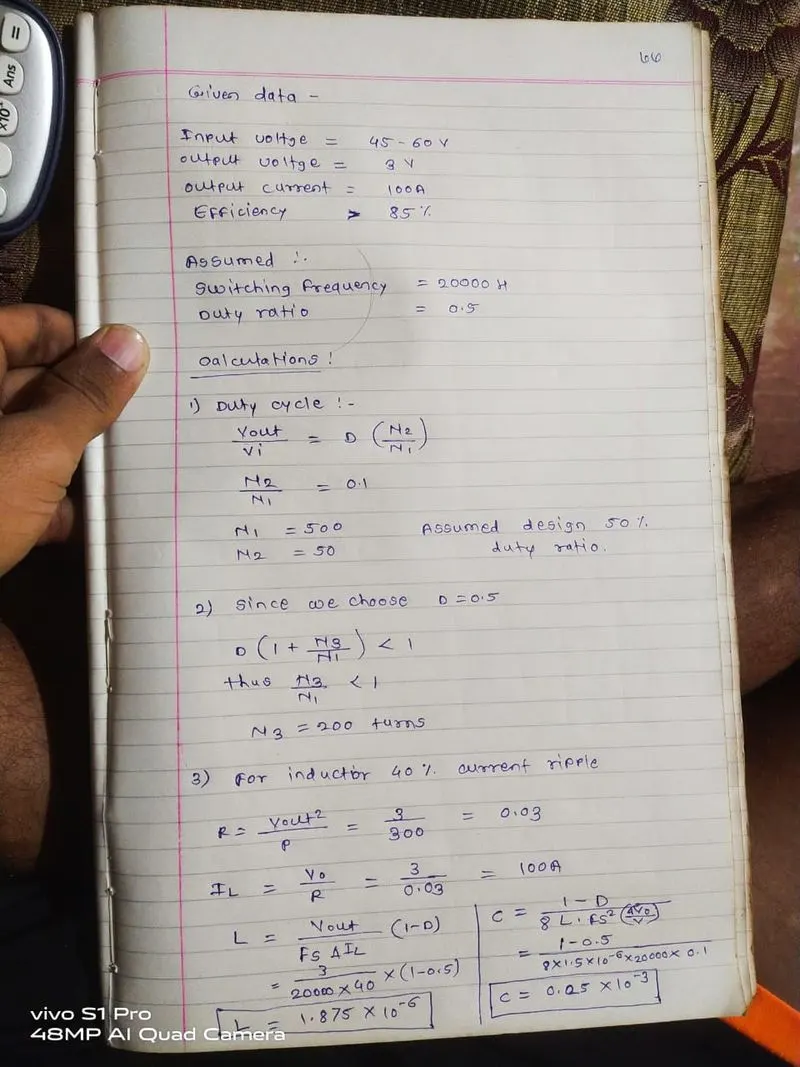
Given data -
• Input voltage: 45 – 60 v
• Output voltage: 3 V
• Output current: 100A
• Efficiency > 85%
The recent development of battery-powered applications is improving the need of efficient step-up dc-dc converters. Nowadays, step up conversion is widely used in many applications like Electric vehicles, Photovoltaic (PV) systems, Uninterruptible power supplies (UPS), and fuel cell systems.
By paralleling the converters, the input current can be shared among inductors so that high reliability and efficiency in power electronic systems can be obtained. In this paper, the conventional boost dc-dc converter and interleaved boost dc-dc converter are simulated using MATLAB/SIMULINK and MULTISIM software. The converters are tested by varying the input voltage with a constant duty cycle in Continuous Conduction Mode (CCM).
The performance parameters of the converters are compared. The converters are controlled by interleaved switching signals, which have the same switching frequency but the shift in phase. Using interleaved converter we can get improved efficiency, reduced ripple voltage, reduced inductor current ripple, fast switching speed.
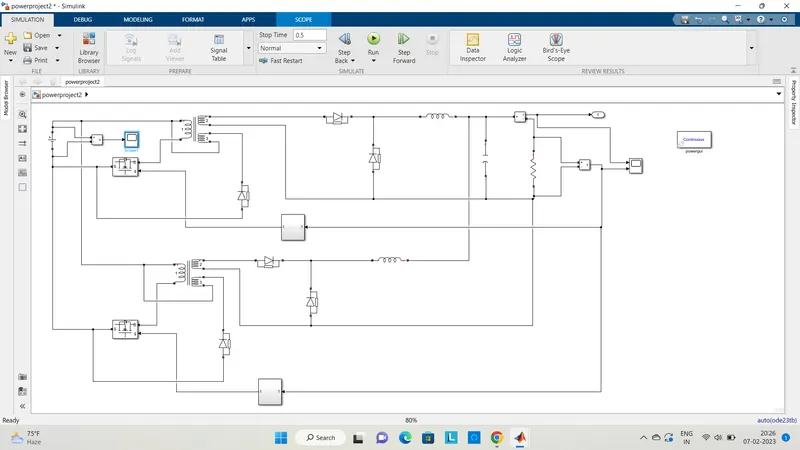
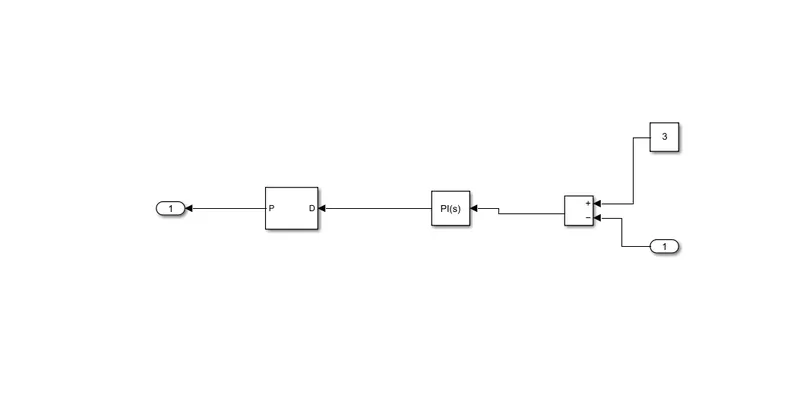
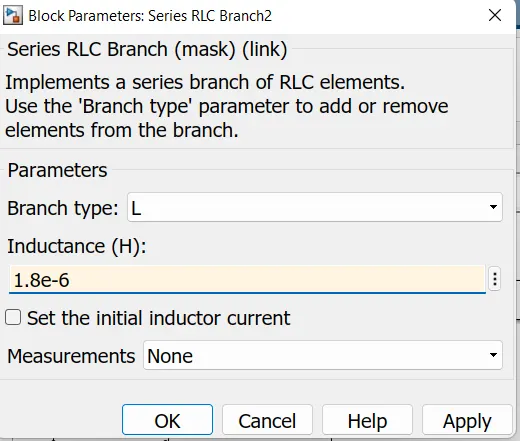
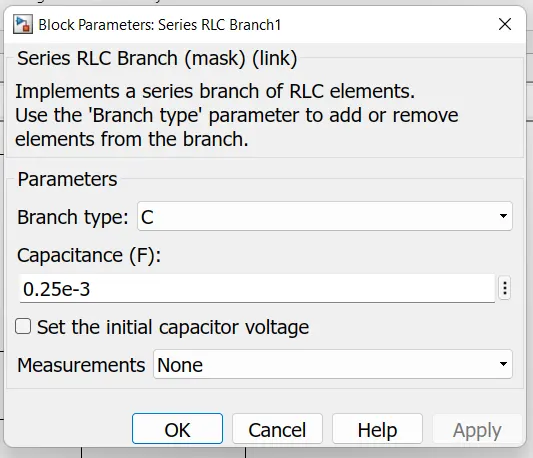
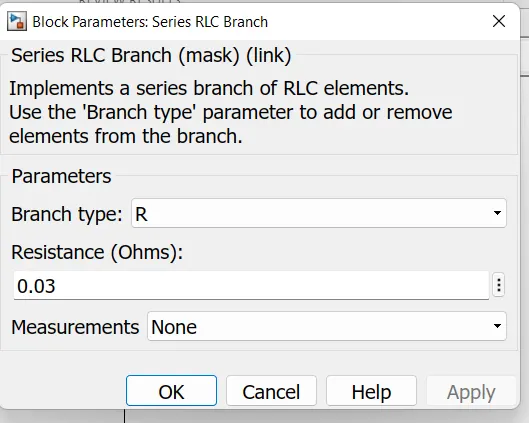
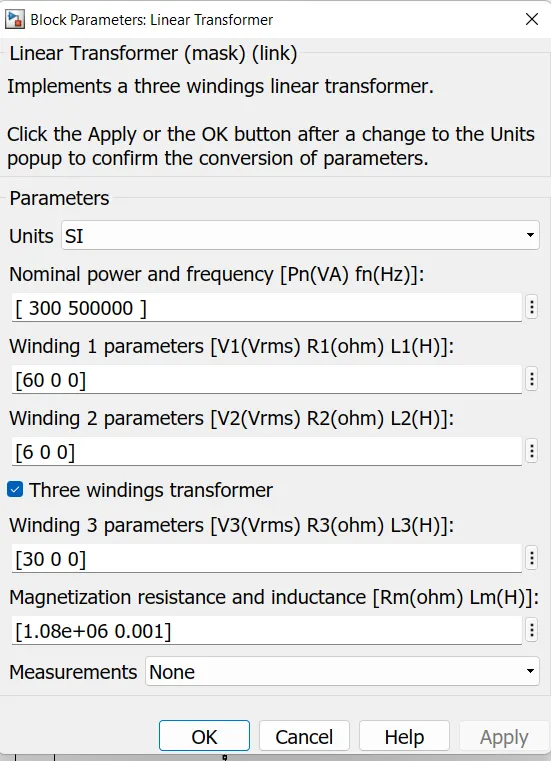
Now we run the model for 0.5 sec and get all outputs :
INPUT CURRENT -
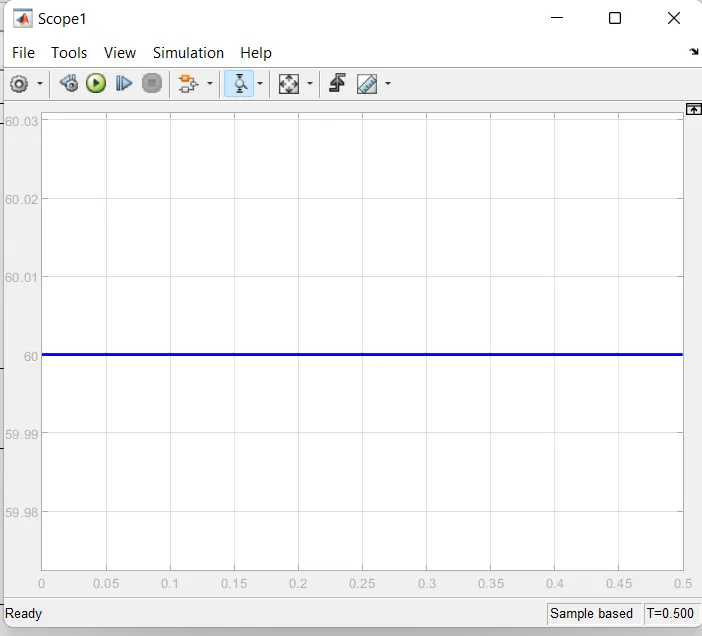
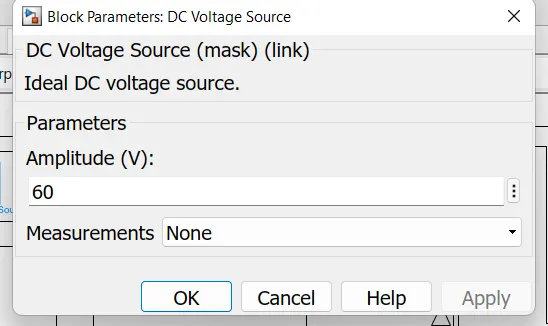
As our input voltage is 60V given to the converter.
OUTPUT CURRENT , OUTPUT VOLTAGE -
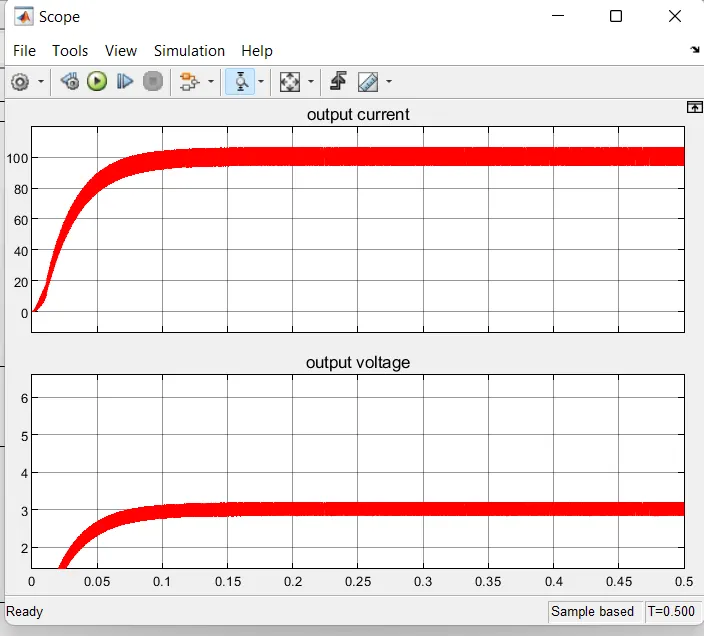
Current is 100A this is because of the isolated system and multiphase system getting the perfect as same as requirements.
1)The main aim is to get efficiency as higher as possible and as you see in our requirement are getting approximately same.
1) As efficiency is calculated from output power/ input power so as we calculated for this converter as following:
Input voltage = 60V
Input current = 5A
Output Voltage = 3V
Output Current = 100A
from all the above data, we get the Input power is 300W and output Power is also 300W
so our efficiency is 100% without considering the ripple in voltage and current, if we consider the ripple also we can get the eifficiency more than 90%.
CONCLUSION -
Those we designed the DC/DC converter with given data and get the required output with more then 90% eficiency.