Project
Aim: To carry out a system-level simulation of an all-terrain vehicle(ATV).
Objective: To study the properties of the BAJA ATV model and simulate it.
Introduction:
The term ATV stands for All Terrain Vehicle. It is also known as a quad or quadricycle type vehicle. An All-Terrain motor vehicle could have three, four or even six wheels. Unlike a motorcycle, generally, the ATVs have more than two wheels. This vehicle runs on low-pressure tyres. An ATV is designed to handle a broader variety of terrain than regular vehicles.
Baja SAE is an Design competition run by the SAE International. Teams of students from Universities all over the world design and build small off-road. The cars all have Engines of the same specifications.
The goal in Baja SAE racing is to design, build and race off-road vehicles that can withstand the harshest elements of rough terrain. Each year as many as 141 Baja cars are entered in the Baja SAE events across the US and around the world. International events are endorsed by SAE International and are held in Brazil, Korea, South Africa and México.
CVT:
A continuously variable transmission (CVT) is an automatic transmission that can change seamlessly through a continuous range of gear ratios. This contrasts with other transmissions that provide a limited number of gear ratios in fixed steps. The flexibility of a CVT with suitable control may allow the engine to operate at a constant RPM while the vehicle moves at varying speeds.
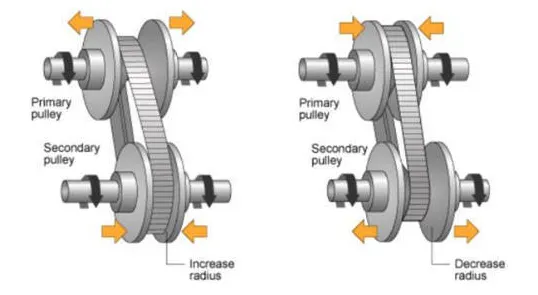
CVTs are used in automobiles, tractors, motor scooters, snowmobiles, and earthmovers.
The most common type of CVT uses two pulleys connected by a belt or chain, however, several other designs have also been used at times.
STUDY-1: BAJA ATV Model without Dashboard.
Model:
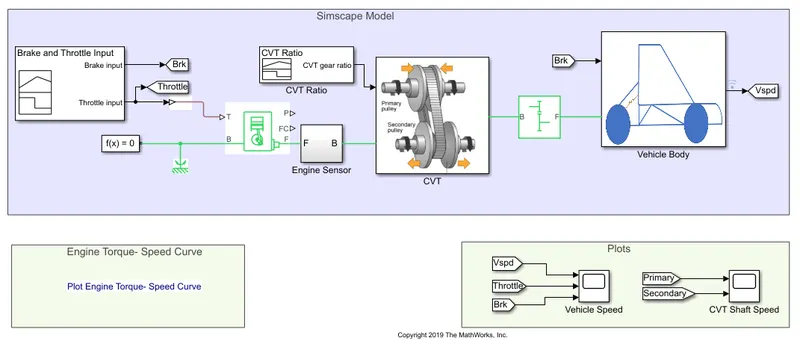
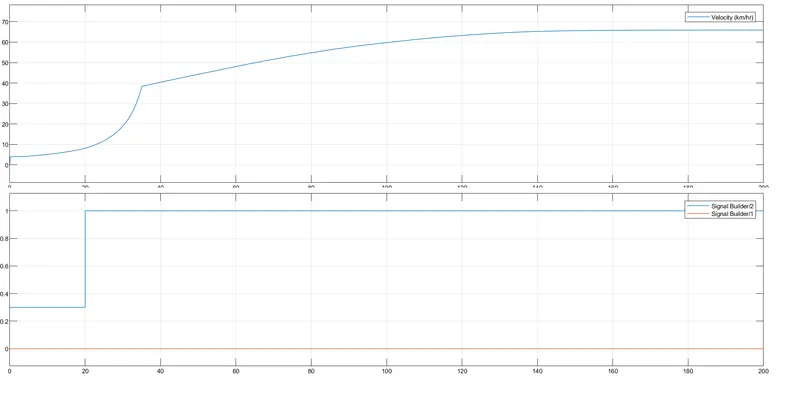
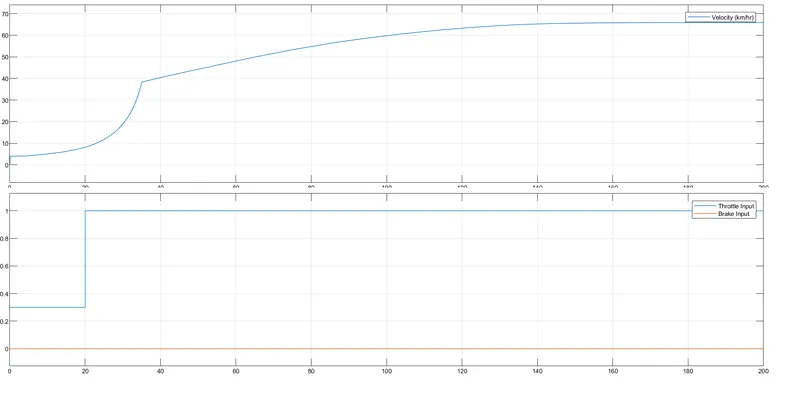
Initially, the throttle is at 30% for the first 20 seconds. After 20 seconds the throttle is 100% for the remaining time and the vehicle is allowed to accelerate. No braking is applied througout the simulation of the atv model.
In this case, the model may run at any speed as there is no feedback present in the model.
Result:
The vehicle is simulated for 200 seconds and the maximum speed attained by the model is 65KMPH.
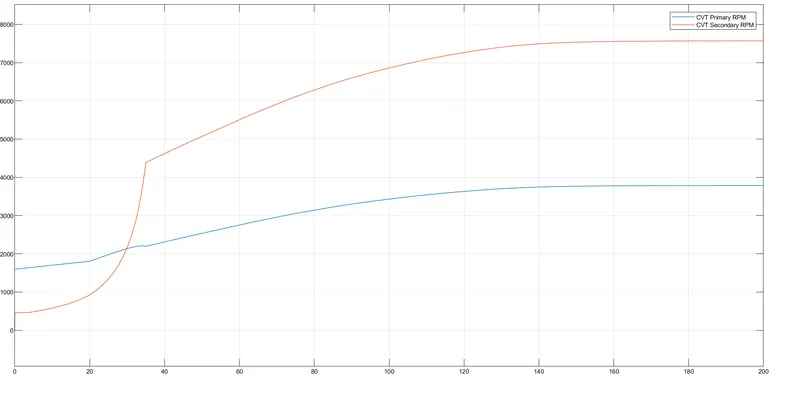
The Max. Shaft speed of the primary pulley is 3900RPM and the Max. Shaft speed of the secondary pulley is 7500RPM.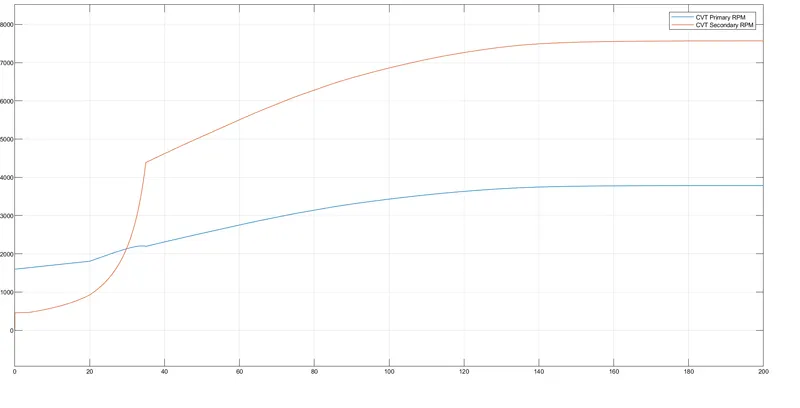
Conclusion:
The motor and CVT shaft speed increase at a higher rate when the throttle is completely open.
STUDY-2: BAJA ATV model with Dashboard.
Model:
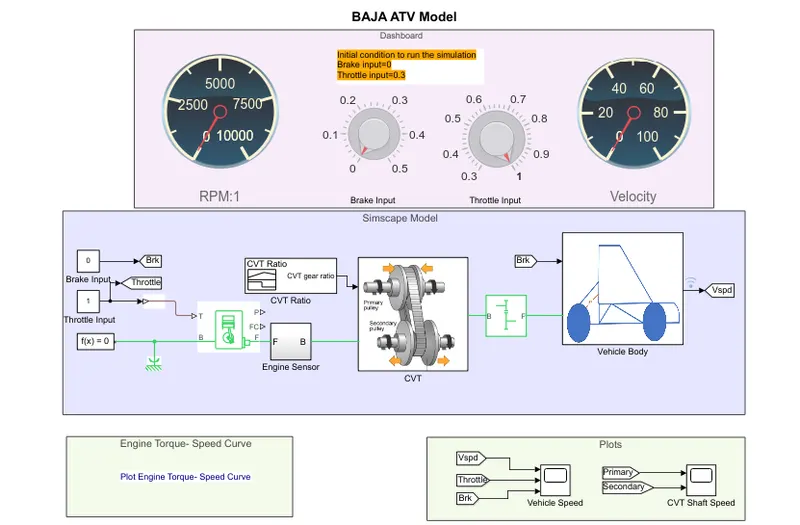
In this model, the Throttle and brakes can be applied manually with the help of dashboard in the model. Initially, the throttle input is set to 0.3 and is changed along with the time. The brake input is not changed during the simulation. The changes in the velocity and motor speed of the ATV Model is observed.
Result:
The max. Speed of the model is 65KMPH when the throttle is completely open.
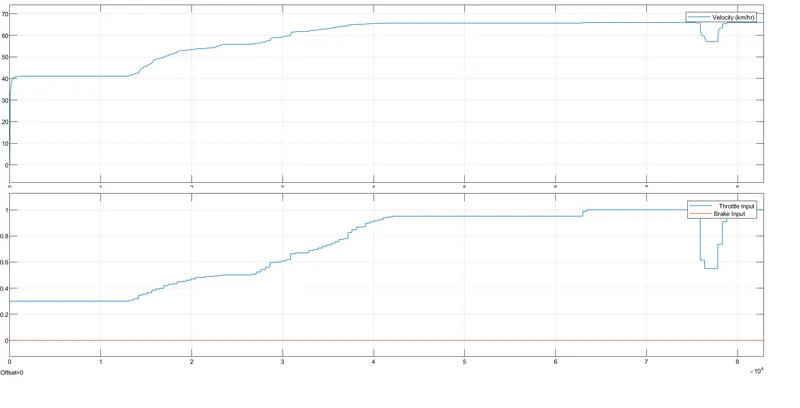
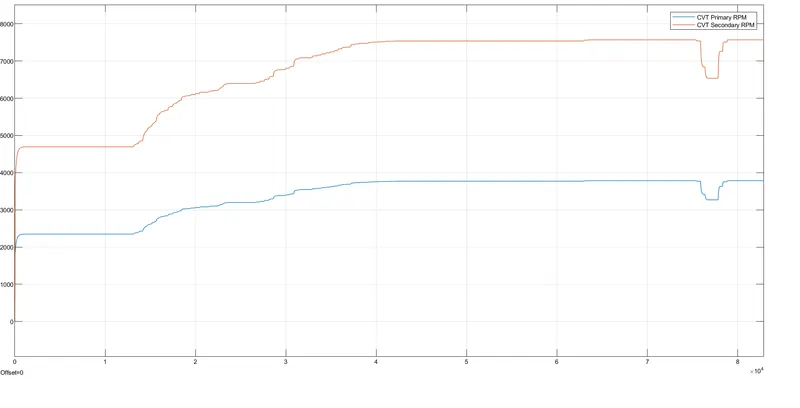
The Max. Shaft speed of the primary pulley is 2800RPM and the Max. Shaft speed of the secondary pulley is 7500RPM.
Conclusion:
When the throttle is increased, the speed of the model also increases and the motor and CVT shaft speed increase at a higher rate when the throttle is completely open.
STUDY-3: BAJA ATV Model Lookup Table Data Extraction
Model:
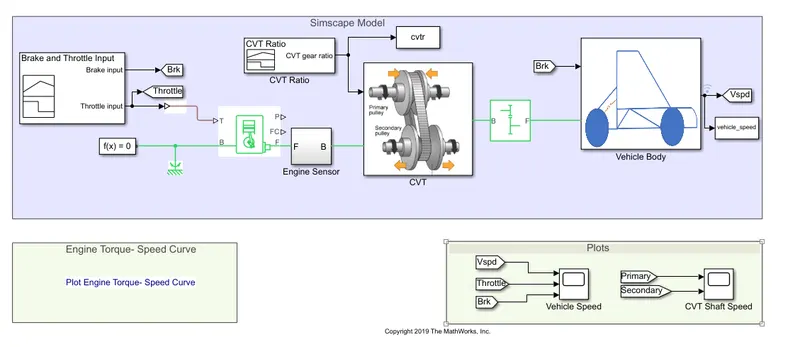
This model uses the input data that is a Standard data(Lookup data). When the model is made to run, the lookup data is extracted from a file to the Workspace and this data is used as a set of inputs for the Model.
Result:
The data is extracted to the workspace from the lookup table data file.
STUDY-4: BAJA ATV Mapped Model
Model:
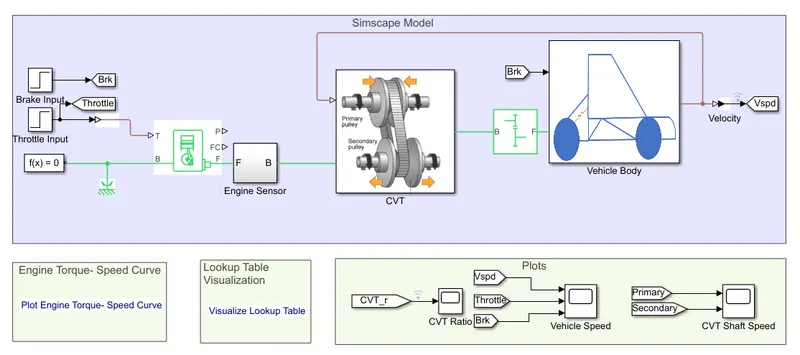
Lookup Table can be observed under the CVT Block:
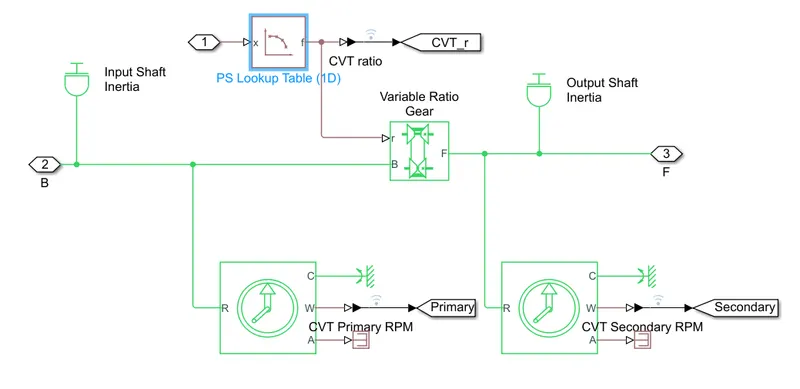
In this Model, the data input to the CVT Block is through the lookup table whereas the throttle input is default. Also, a feedback for the velocity is present in this atv model.
Result:
The vehicle speed characteristics of the model is:
The max. Speed of the model is 65KMP.
The Shaft speed of the model is:
STUDY-5: BAJA ATV Mapped Model with Dashboard.
Model:
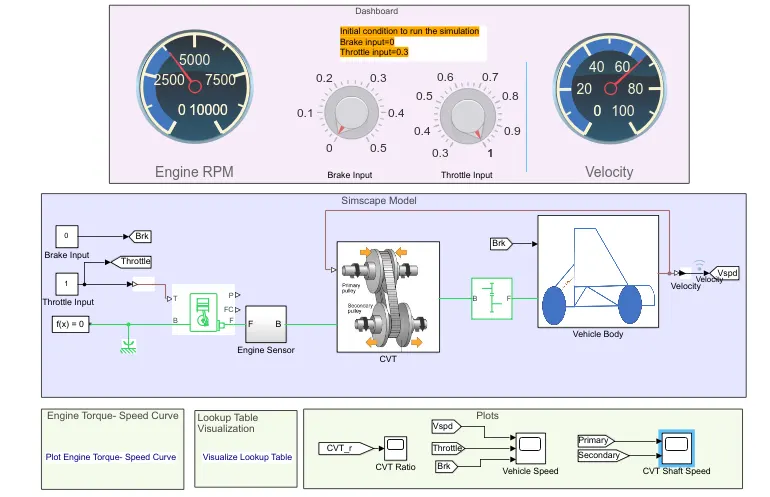
Initially, the throttle is at 0.3, the throttle is then varied along with the time using the controls in the dashboard and the changes in Motor speed and Velocity of the model are observed. The CVT takes the input from the lookup table. In this case, the model may run at controlled speed as there is a feedback present in the model.
Result:
The max. speed of the model is 65KMPH under full throttle.
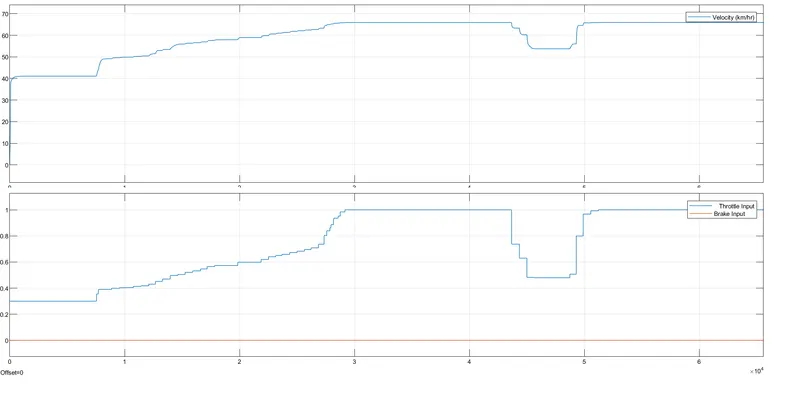
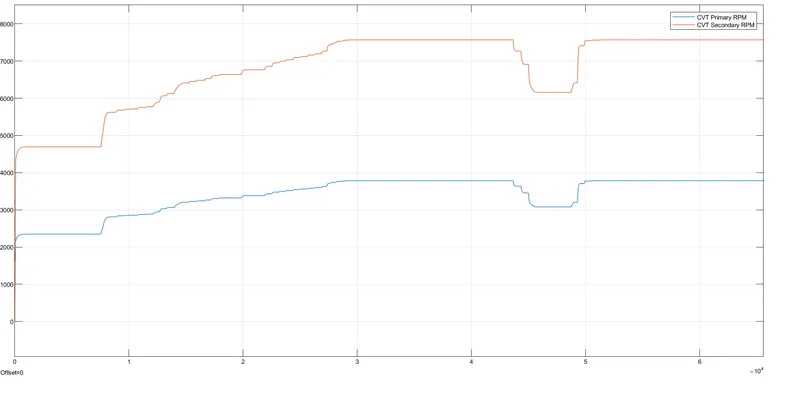
The Max. Shaft speed of the primary pulley is 2800RPM and the Max. Shaft speed of the secondary pulley is 7500RPM.
Conclusion:
When the throttle is increased, the speed of the model also increases and the motor and CVT shaft speed increase at a higher rate when the throttle is completely open.