Project 1 - V&V SW Analysis - I
1.
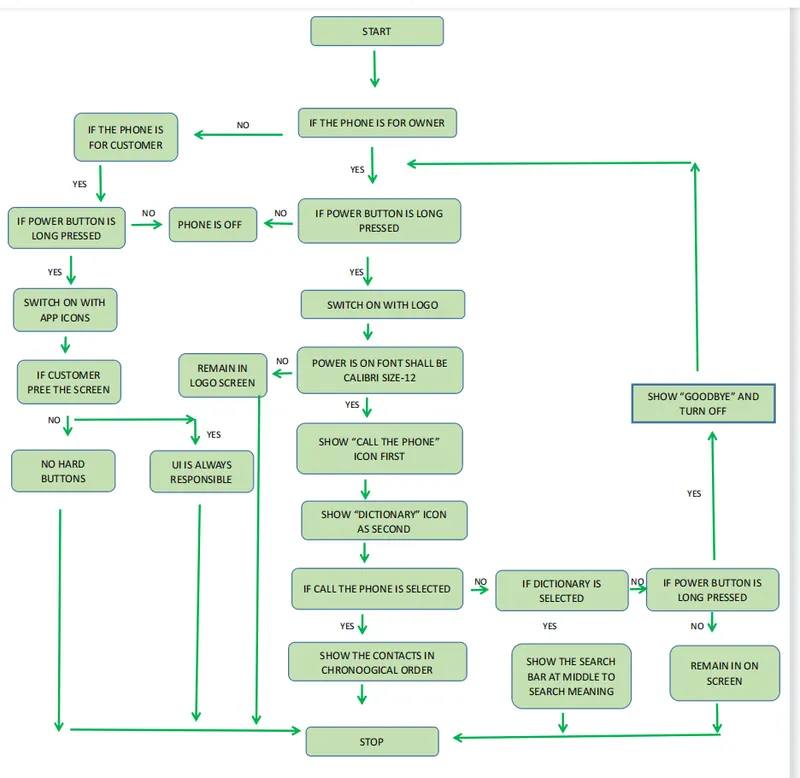
Aim:- To Write a Test plan to test the features of a new mobile phone.
Test plan:
- Test plan is a detailed documentation that provides information about all the necessary resources and activities that will be a part of SW testing. It contains various attributes like test objective, roles, responsibilities, assumptions, risks, test approach, exit criteria, entry criteria etc. All the attributes of the test plans are necessary. Test plans provides the blueprint of testing.
Black box testing:
- Black box testing is a technique of software testing which examines the functionality of the software without peering into its internal structure or coding. The primary source of black-box testing is a specification of requirements that is stated by the customer.
In this method, the tester selects a function and gives input value to examine its functionality, and checks whether the function is giving the expected output or not. If the function produces the correct output, then it is passed in testing, otherwise failed. The test team reports the result to the development team. After completing the testing of all functions if there are severe problems, then it is given back to the development team for correction.
Advantage of a test plan:
- It acts as a quick guide for the testing process.
- It determines the time, cost, and effort.
- Provide a schedule for testing activities.
- Resource requirement and equipment.
- Test Plan Document can be used for similar projects.
- It helps to understand the test details.
- It helps in determining the quality of software applications.
Test Plan Attributes:-
Objective:
- It describes the aim of the test plan,what are the features and functionalities that are going to be tested, whatever the procedure they are going to follow in order to give quality software to customers. The overall objective of the test is to make software bug free.
- The objective in this project is to test the booting of phone and test some functions are responsible.
The scope can be divided into two parts:
In-Scope features: What are the features and functions that are to be tested.
- Power on/off,launching some application functions.
Out-Scope features: The features and functions that are not to be tested.
-Timing to power on,application launching time.
Roles and Responsibilities:
- All the responsibilities and role of every member in a particular testing team has to be recorded.
Test Manager: Manages the project, takes an appropriate test results and makes plan to improvice it like saving project cost.
Tester: Identify the testing technique, verify the test approach.
Team1- Testing the product as product owner.
Team2- Testing the product as a customer.
Testing Methodology:
- The methods that are going to be used for testing depend on application to application. The testing methodology is decided based on the feature and application requirements. Since the testing terms are not standard, one should define what kind of testing will be used in the testing methodology.
- Testing method used here is black box testing.
Scheduling:
- Sheduling will record the start and the end date of each and every testing-related activity.
-planned dates:
- project start date : 10.01.2023 ; project end date:30.01.2023
- testing shedule:15.01.2023 to 25.01.2023.
- documentat verification:28.01.2023 to 29.01.2023.
Assumptions:
- In this stage, certain assumptions will be made, these are not in present but what if they were here and how can we take it
as a advantage.
- what if the testing team complete their task before the given time , so that we can increase the number
of testing products.
Risk:
- All the risks that can happen if the planned resource or availablity of members are lacking.
- Will the new Test trainee could manage the work as the normal testers.
- Will the testing team complete the project on time.
Mitigation Plan:
- If any risk is involved then the company must have a backup plan, the purpose is to avoid errors.
- Test priority is to be set for each test activity.
- Managers should have leadership skills to keep the test team to keep up the work.
- Proper training course for the new testers.
Approach:
- The approach of testing different software is different.The plan to implement the test method.
- Concelting the methods required for various tests with the Q/A team and getting acceptance.
Entry Criteria:
- These determine what are the conditions are required to start the testing.
- Like the product must have enough power to boot on.
Exit Condition:
- Making sure wether every test cases are performed and cleared the acceptance.
- There are no drawbacks in the documentation.
Effort Estimation:
- The amount of man power required for various stages are to be calculated.
- By providing proper number of members we can also cut down the cost of the project.
Test Environment:
- It is the environment which the testing team will use while testing the hardware and software.
- To maintain proper aircoditioning is must,so that there wont be any overheating of product, as well as the software testing systems would perform better.
Defect Tracking:
- It is an important process in testing the bugs that are found in respective phrase should be notified.
- If there is any defect found while testing and that defect must be given to the developer team and documented.
Test Automation:
- It consists of the features that are to be automated or mannually.
- If the feature is frequently tested then it can be automated,then the required scripts for the automation should be
linked.
Deliverables- It is the outcome from the testing team and that is to be given to the customers at the end of the project.
Before the testing phase:
- Test plan document.
- Test case document.
- Test design specification.
During the testing phase:
- Test scripts.
- Test data.
- Bug report.
After the testing phase:
- Test Reports.
- Defect Report.
- Installation Report.