Project-1: Powertrain for aircraft in runways
Project 1: Power Train for Aircrafts in Runways
Aim:
- To search and list of various types of Aircraft along with its gross weight respectively?
Aircraft Gross Weight:
- As per federal aviation department, aircraft gross weight at any moment during flight or ground operation.
- The aircraft gross weight decreases during flight due and oil consumption. In some case gross weight (aircraft) may vary due to drop in payload or in flight refueling, whereas on the other hand when the breaks are released the gross weight will be equal to take off weight.
- During flight an aircraft gross weight will be refereed as in flight weight.
Types of aircrafts weights are the following:
- Manufacture Empty Weight:
It includes the weight of aircraft of the entire flight with its integral working parts, but excludes baggage, passenger and fuels.
- Zero fuel Weight:
It includes the total weight of aero planes including unusable fuels but excludes total weight of useable fuel at board.
- Payload:
It is load carrying capacity of an aircraft which includes passenger, cargo and fuels, but if it is in the case of cargo flight it determines the total load of logistics weight of the container which it needs to transport.
- Maximum takeoff weight:
This is maximum weight at which the aircraft would be made to takeoff.
- Regulated takeoff weight:
Depending on the different factors (flap setting, altitude, and length of runway), RTOW varies for each take off, but can never be high for MTOW.
- Maximum landing weight:
It is maximum weight at which an aircrafts is permitted to land.
- Maximum Ramp Weight:
It is the maximum weight used for maneuvering (towing) aircraft on the ground.
- 2. Difference between Ground speed and Air speed?
Speed: Speed is the distance travelled per unit of time. It is how fast an object is moving. Speed is the scalar quantity that is the magnitude of velocity vector, it doesn’t have a direction. Higher speed means an object is moving faster.
Ground speed:
- They are the air plane speed which is related to the ground
- They are the speed which determines how fast the air plane will reach the destination.
- They are calculated by summing up the air speed and wind speed.
Air speed:
- It refers to the speed which is relative to air which is flying in it.
- They determine whether there is enough airflow around an aircraft to make it lift.
- They are independent of ground speed.
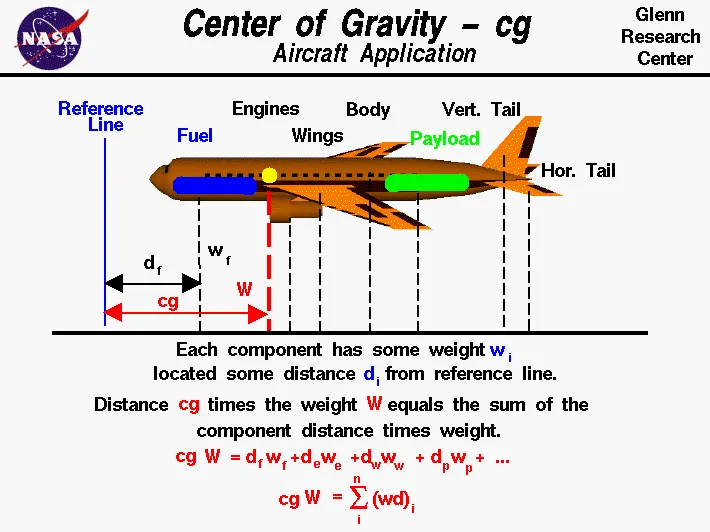
The above two diagram relative velocity with respect to aircraft reference and ground reference.
Wind speed is the vector difference between ground and air speed. On a perfect the wind speed is zero and it is equal to ground speed.
If the measure air speed is greater than the observed ground speed the wind speed becomes positive.
- Why it is not recommended to use aircraft engines to move it on the ground at airport?
Generally most of the airplane can move it in reverse manner by making use of reverse thrust technology. In most of the practical it is not possible because when airplanes start using reverse thrust it will consume lot of fuels as well as causes lot of noise and also hazardous for near working by the people.
The another for not using reverse thrust is that the jet blast can cause damage to terminal buildings or its equipments. Since the engine is also close to the ground it will be blow off the sand and debris forward and sucks it to the engine and causes damage to it.
To solve these kind of issues we use a towing vehicle which helps to tow the vehicle in reverse direction and it will be tugged until it reaches a safe place and form there onwards airplane will move by itself for further take off.
- How an aircraft is pushed to the runway when it’s ready to take off?
The aircraft is used to push to the runway using a taxi vehicle. Taxiing refers to the movement of an aircraft on the ground, under its own power. The aircraft moves on vehicles. The airplane uses taxiways to taxi from one place on airplane to another; for example when moving from a terminal to the runway.
The aircraft always moves on the ground following the yellow lines, to avoid any collisions with the surrounding buildings vehicles or other aircraft. The tax ion motion has a speed limit, before making a turn, the pilot reduces the speed further to prevent tire skids. The aircraft that are landing or taking off have higher priority. The other aircraft have to wait for these before they start or continue taxiing.
The thrust to people the aircraft to forward comes from its propellers or jet engines. Steering achieved by turning a nose wheel or tail wheel or rudder; the pilot controlling the direction travelled with their feet. The use of engine thrust near terminals is restricted due to the possibility of jet blast damage. This is why the aircraft pushed back from the building by a vehicle before they can start their own engines for taxiing.
- To learn about the take off power, tire design, rolling resistance, tire pressure, brake force when landing?
Taxing refers to movement of an aircraft on the ground, under its own power. The aircrafts moves on wheels, an airplane uses taxiways to taxi from one place on an airport to another, for example when moving from a terminal to the runway.
The aircrafts always moves on the ground following the yellow lines, to avoid any collision with the surroundings buildings, vehicles or other aircrafts. The taxiing motion has a speed limit. Before making a turn, the pilot reduces the speed further to prevent tire skids. Just like cars, there is an certain list of priorities during taxiing. The aircrafts that are landing or taking off have higher priority. The other aircrafts have to wait for these aircrafts before they start or continue taxing.
Take off: Take off is the phase of flight in which an aircraft goes through a transition from moving along the ground (taxiing) to flying in the air, usually starting on the runway. Usually the engines are run at full power during takeoff. Following the taxi motion, the aircrafts stops at the starting line of the runway. Before takeoff, the engines, particularly piston engines, are routinely run up at high power to check for engine- related problems. This makes a considerable noise. When the pilot releases the brakes, the aircraft starts accelerating rapidly until the necessary speed for take-off is achieved.
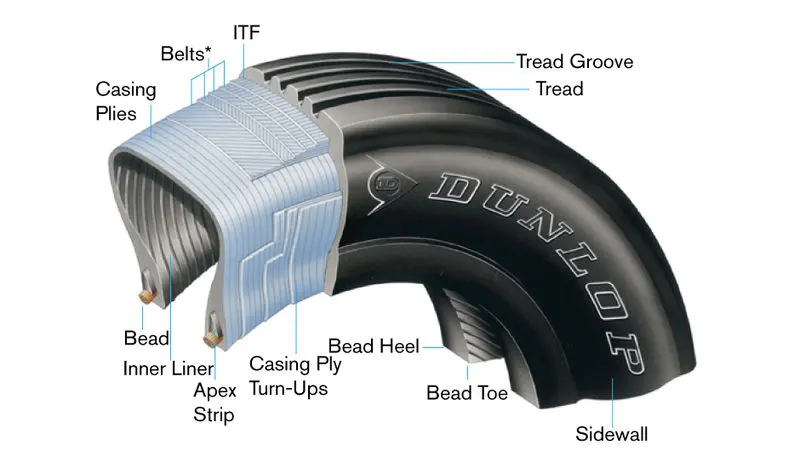
The takeoff speed required varies with air density, aircraft weight, and aircraft configuration (flap and/or slat position, as applicable). Air density is affected by factors such as field elevation and air temperature. Operations with transport category aircraft employ the concept of the takeoff v-speeds, V1 and V2. These speeds are determined not only by the above factors affecting takeoff performance, but also by the length and slope of the runway. Below V1, in case of critical failures, the takeoff should be aborted; above V1 the pilot continues the takeoff and returns for landing. After the copilots calls V, Then, V2 (the safe takeoff speed) is called. This speed must be maintained after an engine failure to meet performance targets for rate of climb and angle of climb.
The speeds needed for takeoff are relative to the motion of the air (indicated airspeed). A head wind will reduce the ground speed needed for takeoff, as there is a greater flow of air over the wings. This is why the aircrafts always takeoff against the wind. Side wind not preferred as it would disturb the stability of the aircraft. Typical takeoff air speeds for jetliners are in the 130-155 knot range (150-180mph, 240-285km/h). For a given aircraft have difficulty generating enough lift at the low speeds, encountered during takeoff. These are greater than speed needed. These are fitted with high lift devices, often including slats and usually flaps, which increase the camber of wing, making it more effective at low speed, thus creating more lift. These have to be deployed from the wing before performing any maneuver.
At beginning of the climb phase, the wheels are retracted in to the aircraft and the undercarriage doors are closed. This operation is audible by the passenger as a noise coming from below the floor.
Climb:
Following take-off, the aircrafts has to climb to a certain altitude (typically 30,000 ft or 10km) before it can cruise at this altitude in a safe and economic way. A climb is carried out by increasing the lift of wings supporting the aircraft until their lifting force exceeds the weight of the aircraft. Once this occurs the aircraft will climb to higher altitude until the lifting force and weight are again in balance. The increase in lift may be accomplished by increasing the angle of attack of the wings, by increasing the thrust of engineers to increasing lift), by increasing the surface area or shape of the wing to produce greater lift, or by some combination of most cases, engine thrust and angle of attack are simultaneously increased to produce a climb.
Because lift diminishes with decreases air density, a climb, once initiated will end by itself when the diminishing lift drops to a point that equals the weight of the aircraft. At that point, the aircraft will return to level flight at a constant phase, it is normal that the engine noise diminishes. This is because the engines are operated at a lower power level also provides to hear a whirring noise or a change in the tone of during climb. This is the sound of the flaps that wing with retracted flap produces less noise.
Cruise:
Cruise is the level of level portion of aircraft travel where flight is most fuel efficient. It occurs between ascent and descent phases majority of a journey. Technically, cruising consists of heading (direction of flight) changes only at a constant as the aircraft approaches the destination where the descent phase of flight commences in preparation for landing. For most commercial passenger aircraft, the cruiser phase of flight consumes the majority of the fuel. As the lightens the aircraft considerably, higher altitudes are more efficient for additional fuel economy. However, for operational and air traffic control reasons it is necessary to stay with the cleared flight level. Typical cursing speed for long distance commercial passenger flights is 475-500 knots (878-926km/h; 547-578mph).
Commercial or passenger aircrafts are usually designed for optimum performance at their cruise speed. There is also an optimum cruise altitude for a particular aircraft type and conditions including payload weight, center of gravity, air temperature, humidity and speed. This altitude is usually where the drag is minimum and the lift is maximum. Any phase of flight the aircrafts in cruise model is always in communication with an Air Traffic Control (ATC) station. Although the general tendency is to follow straight line towards the destination, there may be some deviations from the flight plan for weathers, turbulence or air traffic reasons after receiving clearing from ATC.
Descent:
A descent during air travel is any portion where an aircraft decreases altitude. Descents are essential component of an approach to landing. Other partial descents might be to avoid traffic, poor flight conditions (turbulence or bad weather), clouds (partially under visual flight rules), to see something lower, to enter warmer air, (in the case of extreme cold), or to take advantage of wind direction of a different altitude. Normal descents take place at a constant air speed and constant angle of descent (3 degree final approach at most airports). The pilot controls the angle of descent by varying engine power and pitch angle (lowering the nose) to keep the air speed constant. At the beginning of and during The descent phase, the engine noise diminishes further as the engines are operated at low power settings. However towards the end of the descent phase, the passenger can feel further acceleration and an increase the noise. This is Realize the “final approach” before taking “landing position”.
Landing:
Landing is the last part of flight, where the aircraft returns to the ground. Aircraft usually land at an airport on a firm runway, generally constructed of asphalt concrete, gravel or grass. To land, the airspeed and the rate of descent are reduced to where the object descends at a slow enough rates to allow for a gentle touch down. Landing is accomplished by slowing down and descending to the runway. This speed reduction is accomplished by reducing thrust and/or inducing a greater amount of drag using flaps, landing gear or speed brakes as the plane approaches the ground, the pilot will execute a flare (round out) to induce a gentle landing. Although the pilots are trained to perform the landing operation, there are “instrument landing system” in most of the airports to help the pilots land the aircrafts. An instrument landing system (ILS) is a ground based instrument approach system that provides precision guidance.
Rolling Resistance:
It is the resistance the tire offers against the motion while on the ground. In cases of aircrafts rolling resistance can be experienced while taking off and while landing.
Tire pressure:
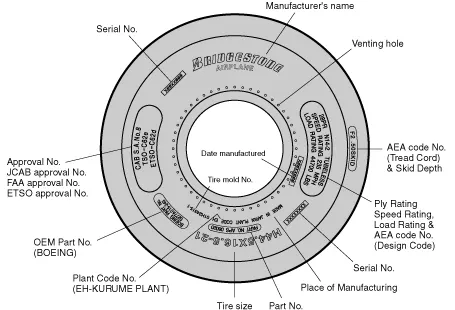
Aircraft tires generally operate at high pressure, up to 200psi for airliners. Overinflating can damage the tires by causing uneven tired wear, reduced traction, and increased susceptibility to cutting, and increased stress on the wheel assemblies under inflation by far more damaging. Under inflation produces uneven tread and wear shortens tire life due to excessive flex heating.
- With necessary assumptions, Calculate the force and power required to push/pull an aircraft by a towing vehicle?
The two forces which are acting on the vehicle drag force &rolling resistance force since the vehicle moves on the plane and parameter for it are assumed.
Thrust:
The Thrust of the gas turbines or turbo fan engines will be relatively constant during the take-off. A good assumption is to use the manufacture value for maximum static thrust for take-off calculations. The Thrust of propeller-driven aircraft can be found from the given shaft horse power data for the engine use of the calculations using propeller efficiency is given in the previous section:
T = P Shaft *n/v
It is critical to correctly estimate the propeller efficiency for the particular aircraft velocity along with runway. At V=0 the efficiency is 0 so the above equation is make no sense. At V=VR the efficiency will be in the range 50% to 80% depending on the propeller system used and thrust value at this point will be easy to obtain. In practical the thrust obtain throughout the take-off roll is roughly constant.
Drag:
The resistance to motion due to the air viscosity will give a drag resistance
Where,
Fad = 0.5*p*cd*A*v^2
Fad = Drag force (N)
P = Density (kg/m3)
Cd = drag coefficient
A = Frontal Area (m^2)
V = Velocity (m/s).
Rolling Resistance:
The friction between aircraft and runway will be proportional to the normal face exerted by the aircraft on the runway. The rate of change of velocity can be predicted at any point on the take-off rolls by substituting results for T, D and F in to the initial equation for the dv/dt. The subsequent velocity at any point can be found by integrating this resulting equation and distance travelled found by integrating the velocity.
The force to move an aero plane on absolute plot runway with no wind at constant low speed is equal to the rolling resistance between the planes and surface. Fr = c * Mr * Ag
Where
Fr = rolling resistance (N)
C = rolling resistance coefficient
Mr = rolling mass (kg)
Ag = acceleration of gravity (9.81m/s)
The normal force will be the difference between weight of aircraft and lift, the friction coefficient will be typical of the magnitude of 0.02 for a standard turmeric runway.
- Design an electric power train with type of motor, it’s power rating, and energy requirement to fulfill aircraft towing application. Estimate the duty cycle range to control the aircraft speed from zero to highest, Make all required assumptions. Prepare a table of assumed parameters. Draw power diagram of power train?
Based on the calculations done above
Force required to push/pull the aircraft = 30.44KN
Required power = 91.33KW
Now, assuming tires radius for the tub to be 25inches = 0.635m
Torque required at wheels = (Total force)*radius=19.3kNm
Motor Torque = (Wheel Torque)/(Gear Ratio. n) [Assuming overall gear ratio of 8 and the transmission efficiency to be 85%]
= 19.3/8.0.85
= 2.89knm
If the motor is considered to be 90% efficient, the motor torque = 2.83/0.95 = 2.97kNm
Similarly power required by the motor considered all the efficiencies = 91.33/0.85*0.95 = 113.1KW
Let us assuming the towing operation runs for 15min (0.25hr)
Total energy consumed = 113.1*0.25 = 28.275kWh
A battery of higher capacity than his need to be selected.
Accordingly, for example a battery of 150KW power rating is selected, the duty cycle range to control the speed from 0 to max speed (3m/s) is
D = (required power)/ (rated power) = 113.1/150 = 0.75
This means, the controller should provide a duty cycle ranging from 0 to 75% in order to control the towing speed.
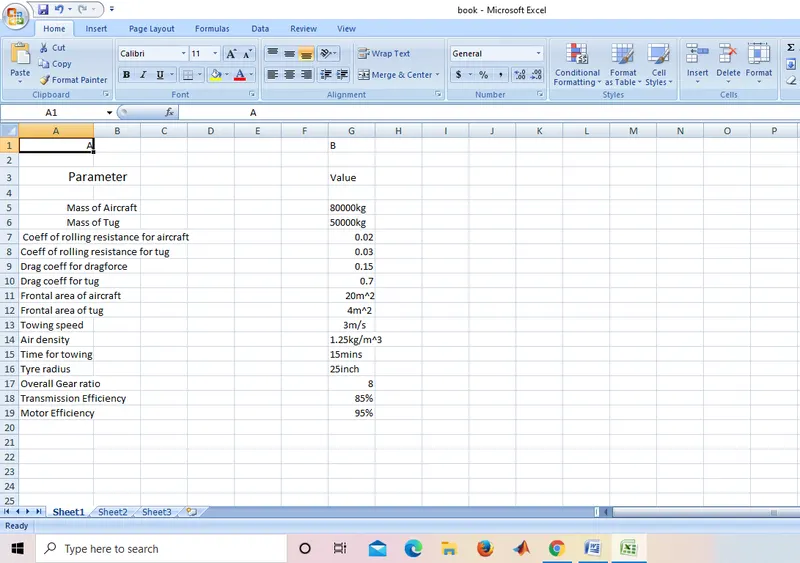
Below the table containing all the assumed parameters and their values:
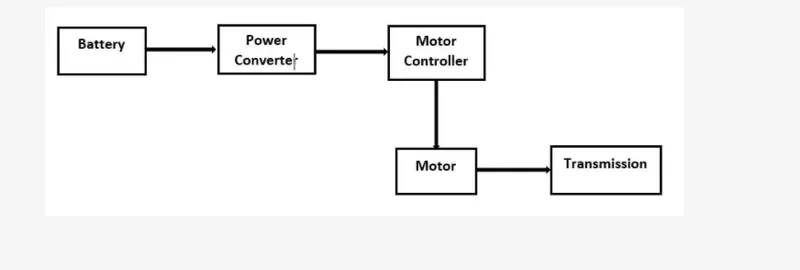
Shown below are block diagram for the power train of the towing machine:
Result:
The reference Aircraft taken here is the heavy Aircraft build and so our designed towing tractor is a heavy duty operational vehicle.
The power requirements are calculated for particular load to be pushed/pulled to be achieved power at the motor output, the motor type and its voltage at the terminals are discussed.
The power converters are used to upscale the battery armature voltage to the desired high voltage value. So that the motor may spin at the full power required torque can be achieved using Bidirectional DC – DC Converter.
Finally the speed control of the vehicle is done with switching techniques, where the duty cycle adjustment can change the motor speed from maximum to minimum.