Project-1: Powertrain for aircraft in runways
PART-A
1. Search and list out the total weight of various types of aircrafts.
- Cessna 172 - Used by many as initial training aircraft (27 feet long) 1450 lbs -> 658 kg empty weight and 2450 lbs -> 1111 kg max weight
- Citation Jet M2 - (42 feet long) 6990 lbs -> 3170 kg empty weight and 10,700 lbs -> 4853 kg max weight
- Boeing 767-300 - (185 feet long) 195,000 lbs -> 88450 kg empty weight and 400,000 lbs -> 181436 kg max weight
- Boeing 747-400 - (232 feet long) 407,000 lbs -> 184612 kg empty weight and 910,000 lbs -> 412769 kg max weight
2. Is there any difference between ground speed and air speed?
YES
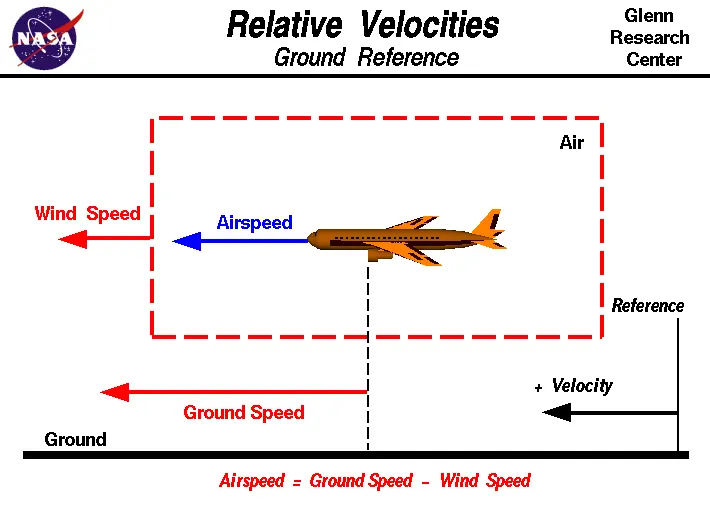
While ground speed is the airplane speed relation to the surface of earth airspeed atleast true airspeed is the speed relation to the air it is flying in
AIRSPEED Vs GROUNDSPEED
True speed is simply the speed at which an aircraft is moving relative to the air it is flying in as such it also the speed at which the air is flowing around the aircraft wings.
Ground speed, on the other hand, is the aircraft speed relation to the ground. one thing that should be noted here is that its, its horizontal speed an aircraft climbing completely vertically would have a ground speed of zero.
Modern aircraft can indeed measure the wind speed independent of any ground equipment. The wind data gets updated almost every second. So, the wind speed shown on the EHSI and FMS of an aircraft is much more accurate than what the air traffic controllers give us. The wind speed and direction is extremely easy to calculate.
Airspeed = Ground Speed - Wind Speed
3. Why is it not recommended to use aircraft engine power to move it on the ground at Airport?
Aircraft can move using their own engine power all the time on the airport apron and taxiways under their own power to go towards runways and after landing taxi to their assigned gate. But the thrust produced resulting jet blast might cause damage to the terminal building or equipment.
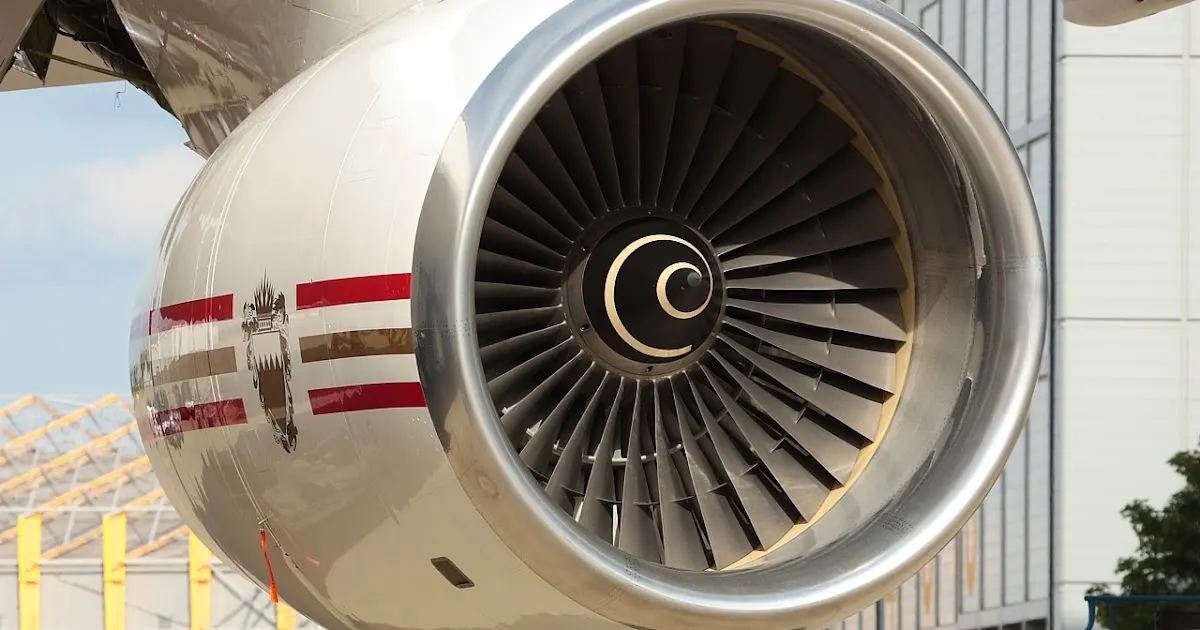
Engines close to the ground may also blow sand and debris forward and then suck them into the engine, causing damage to the engine. A pushback is therefore the preferred method to move the aircraft away from the gate. And also it can reduce the cost for fuel. Taxing can save money.
4. How an aircraft is pushed to runway when its ready to take off?
A so-called pushback truck reverses the aircraft into taxiing position, pushing it with a towbar attached to the nose-wheel strut. Or, in the most modern versions, by actually lifting the wheel. That speeds up coupling and decoupling.
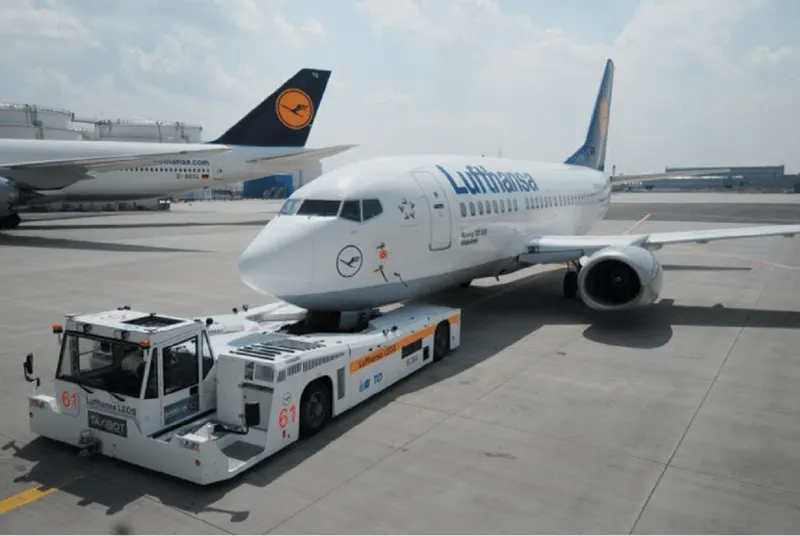
Pushback trucks are used by airlines to reverse airplanes while they taxi. They are a popular option for large cargo and passenger aircraft, but they are not limited to this purpose. In addition to pushback trucks, Heavy Haulers are also available and can move any pushback tractor. These trucks have a pullback force of approximately 334 kN and can be weighed up to 54 tonnes. These trucks are equipped with a towbar that is attached to the aircraft’s nose gear.
5. Learn about take off power, tyre design, rolling resistance, tyre pressure, brake forces when landing.
Take-off Power:
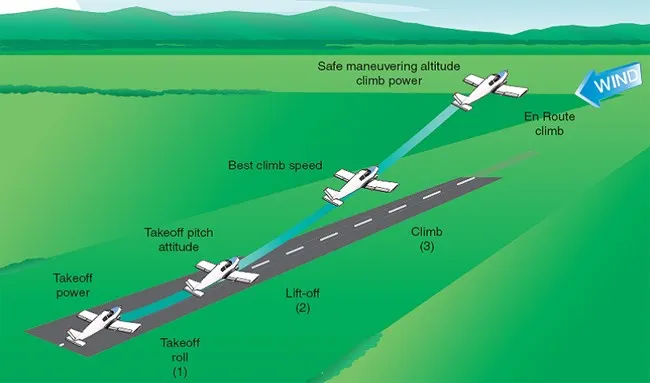
A normal take-off is one in which the airplane is headed into the wind, or the wind is very light. Also, the take-off surface is firm and of sufficient length to permit the airplane to gradually accelerate to normal lift-off and climb-out speed, and there are no obstructions along the take-off path.
There are four forces which helps the aircraft to take off:
Wings keep an airplane up in the air, but the four forces are what make this happen. They push a plane up, down, forward, or slow it down.
Thrust: It is a force that moves an aircraft in the direction of the motion. It is created with a propeller, jet engine, or rocket. Air is pulled in and then pushed out in an opposite direction. One example is a household fan.
T=Pshaft⋅ηV">T=Pshaft*efficiency/voltage
Drag: It is the force that acts opposite to the direction of motion. It tends to slow an object. Drag is caused by friction and differences in air pressure. An example is putting your hand out of a moving car window and feeling it pull back.
D=CD⋅0.5⋅ρ⋅V2⋅S">D=Cd*0.5*rho*V^2*S
Weight: It is the force caused by gravity.
W=mg">W=mg
Lift: It is the force that holds an airplane in the air. The wings create most of the lift used by airplanes.
L=CL⋅0.5⋅ρ⋅V2⋅S">L=Cl*0.5*rho*V^2*s
Therefore Take-off power= Total force*Velocity
For smaller aircrafts like turboprop we use full power for take-off. Because they don’t have take-off power settings. But in aircrafts like Jet plane they have take-off power settings so they don’t have to take the full power.
Rolling Resistance:
The friction between aircraft and runway will be proportional to the normal force exerted by the aircraft on the runway.
F=μ(W-L)">F=μ(W-L)
The normal force will be the difference between Weight (W) of aircraft and Lift (L), the friction coefficient (μ) will be typically of a magnitude of 0.02 for a standard tarmac runway.
Tyre Design
Aircraft tires may be tube-type or tubeless. They support the weight of the aircraft while it is on the ground and provide the necessary traction for braking and stopping. The tires also help absorb the shock of landing and cushion the roughness of takeoff, rollout, and taxi operations. Aircraft tires must be carefully maintained to perform as required. They accept a variety of static and dynamic stresses and must do so dependably in a wide range of operating conditions
Tire Construction
An aircraft tire is constructed for the purpose it serves. Unlike an automobile or truck tire, it does not have to carry a load for a long period of continuous operation. However, an aircraft tire must absorb the high impact loads of landing and be able to operate at high speeds even if only for a short time. The deflection built into an aircraft tire is more than twice that of an automobile tire. This enables it to handle the forces during landings without being damaged. Only tires designed for an aircraft as specified by the manufacturer should be used.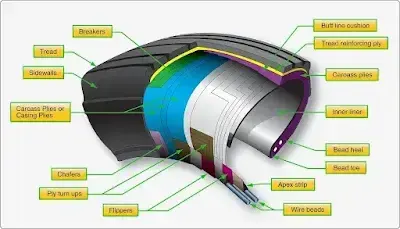
Part-B
6. A. With necessary assumptions, calculate the force and power required to push / pull an aircraft by a towing vehicle.
Sloution:
Let us assume our own parameters values
- Weight of the aircraft = 500000kg
- Rolling Resistance coefficient = 0.005
- Weight of the towing vehicle = 50000kg
- Rolling resistance of the towing vehicle = 0.002
- the velocity of the aircraft while towing = 18kmph => 5m/s
- Density of air medium = 1.225kg/m^2
- The frontal area of the aircraft = 20m^2
- The coefficient of drag of the aircraft = 0.26
- Towing vehicle drag ratio (G- for high torque) = 11
- towing vehicletyre radius (r) = 0.5m
Rolling Resistance:
now here the Rolling resistance for aircraft be
Fr = C.mr.ag
where,
Fr = rolling rersistance
C = coefficient of R.R
mr = rolling mass
ag = acceletion of gravity
Now substitute the value in R.r equation
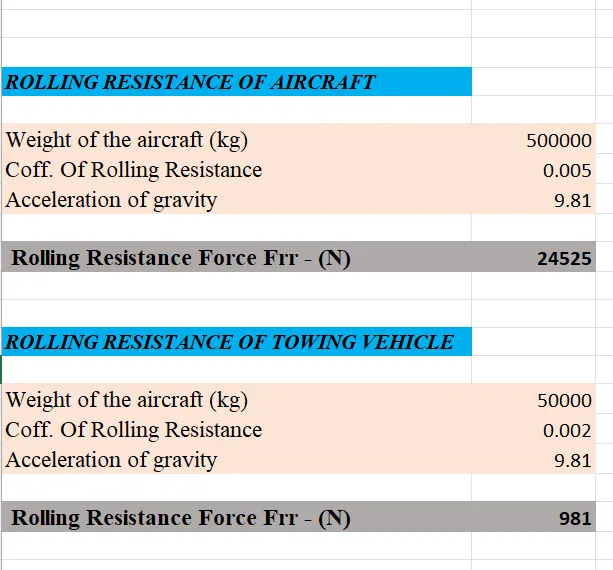
Fr = 0.005*(500000)(9.81)
Rolling Resistance for aircraft Fr = 24525 kN ==> 24.525 N
Rolling resistance of Towing vehicle
Fr = C.mr.ag
where,
Fr = rolling rersistance
C = coefficient of R.R
mr = rolling mass
ag = acceletion of gravity
Now substitute the value in R.r equation
Fr = 0.002*(50000)(9.81)
Rolling Resistance for aircraft Fr = 0.981 kN ==> 981 N
Drag Force:
D = `1/2`*`Cp`*A*`V^2`
Where,
D = Drag force
C = Drag coefficient
V = Velocity of towing vehicle
A = Frontal area
Now substitute the values in equation
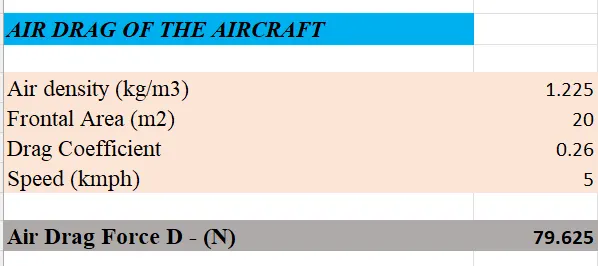
D = 0.5*( 0.26*1.225*20*5*5)
Drag force D = 0.079 kN ==> 79.625 N
now calculate total force to push the aircraft by the towing vehicle
to find total force we need to add Rolling resistance of aircraft and towing vehicle with Drag force
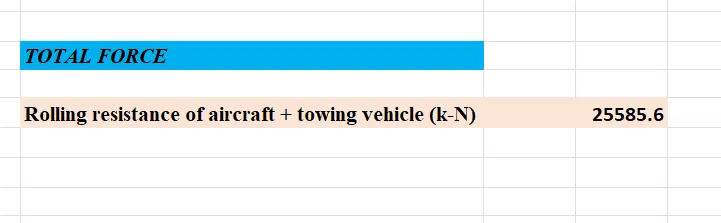
T = Fr of Aircraft+Fr of Towing Vehicle+ Drag force
T = 24.525+0.981+0.079625
T = 25.585625 kN
T = 25585.625 N
Power required to towing vehicle to push/pull the aircraft
P = force*velocity
= 25.585625*5.0
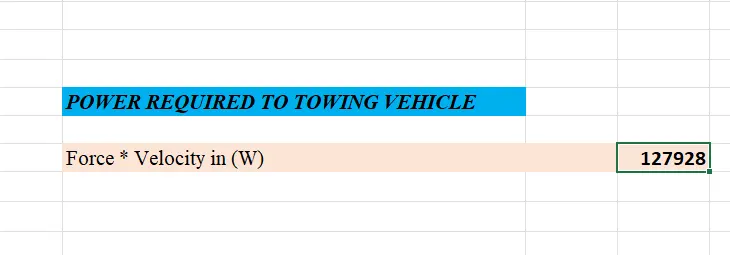
= 127.928125 kW
P = 127928.125 W
Simulink model for above data
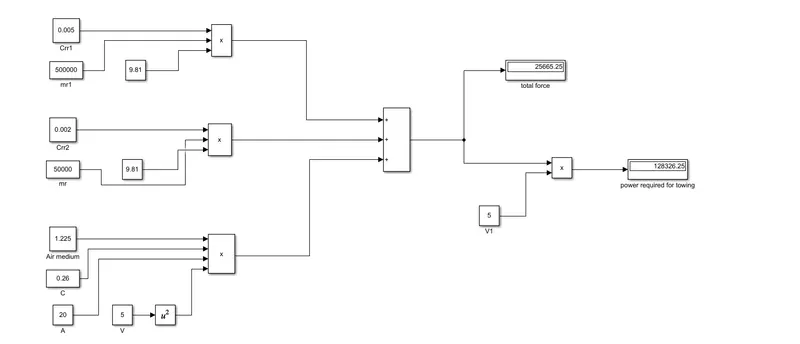
Here the simulation values of total force and powermis similar to the calculated ones
Blocks used
- Constants
- Product
- Display
- Square
- Sum
7. A. Design an electric powertrain with type of motor, it’s power rating, and energy requirement to fulfill aircraft towing application in Simulink. Estimate the duty cycle range to control the aircraft speed from zero to highest. Make all required assumptions. Prepare a table of assumed parameters. Draw a block diagram of powertrain.
Solution:
Let take same data taken to the towing vehicle
- Weight of the aircraft = 500000kg
- Rolling Resistance coefficient = 0.005
- Weight of the towing vehicle = 50000kg
- Rolling resistance of the towing vehicle = 0.002
- the velocity of the aircraft while towing = 18kmph => 5m/s
- Density of air medium = 1.225kg/m^2
- The frontal area of the aircraft = 20m^2
- The coefficient of drag of the aircraft = 0.26
- Towing vehicle drag ratio (G- for high torque) = 11
- towing vehicletyre radius (r) = 0.5m
Rolling Resistance:
now here the Rolling resistance for aircraft be
Fr = C.mr.ag
where,
Fr = rolling rersistance
C = coefficient of R.R
mr = rolling mass
ag = acceletion of gravity
Now substitute the value in R.r equation
Fr = 0.005*(500000)(9.81)
Rolling Resistance for aircraft Fr = 24525 kN ==> 24.525 N
Rolling resistance of Towing vehicle
Fr = C.mr.ag
where,
Fr = rolling rersistance
C = coefficient of R.R
mr = rolling mass
ag = acceletion of gravity
Now substitute the value in R.r equation
Fr = 0.002*(50000)(9.81)
Rolling Resistance for aircraft Fr = 0.981 kN ==> 981 N
Drag Force:
D = `1/2`*`Cp`*A*`V^2`
Where,
D = Drag force
C = Drag coefficient
V = Velocity of towing vehicle
A = Frontal area
Now substitute the values in equation
D = 0.5*( 0.26*1.225*20*5*5)
Drag force D = 0.079 kN ==> 79.625 N
now calculate total force to push the aircraft by the towing vehicle
to find total force we need to add Rolling resistance of aircraft and towing vehicle with Drag force
T = Fr of Aircraft+Fr of Towing Vehicle+ Drag force
T = 24.525+0.981+0.079625
T = 25.585625 kN
T = 25585.625 N
Power required to towing vehicle to push/pull the aircraft
P = force*velocity
= 25.585625*5.0
= 127.928125 kW
P = 127928.125 W
The Duty cycle is given by
Duty cycle = (output power / input power)*100
Assuming input power is 100 kW
So,
Duty cycle = (127.928125/100)*100
D C = 127 %
Block Diagram of Powertrain:-
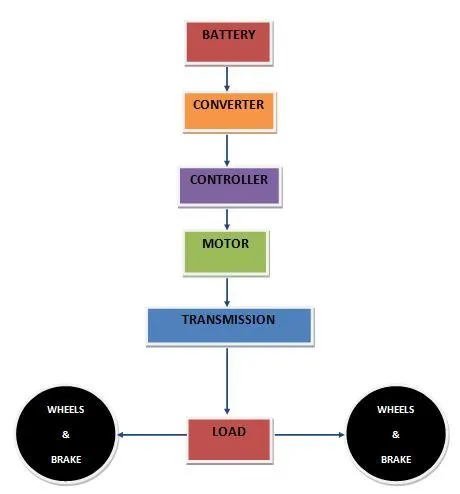
Table of Assumed parameters:
| Weight of the aircraft | 500000kg |
| Rolling Resistance coefficient | 0.005 |
| Weight of the towing vehicle | 50000kg |
| Rolling resistance of the towing vehicle | 0.002 |
| the velocity of the aircraft while towing | 18kmph => 5m/s |
| Density of air medium | 1.225kg/m^2 |
| The frontal area of the aircraft | 20m^2 |
| The coefficient of drag of the aircraft | 0.26 |
| Towing vehicle drag ratio (G- for high torque) | 11 |
| towing vehicletyre radius (r) | 0.5m |
Simulink model:
Excel sheet parameters assumed
For rolling resistance of aircraft and towing vehicle
For airdrag force
For total force
For power required to push/pull an aircraft