Project-1: Powertrain for aircraft in runways
1)
The weight of the aircraft must be determined by the pilot for each flight to guarantee that the aircraft stays within the manufacturer's weight limits. These restrictions are in place to ensure that the aircraft can perform and recover from all flight manoeuvres, as well as endure structural loading.
Weights of Common Airplanes
The following is a list of some of the most prevalent aircraft flying in our skies today:
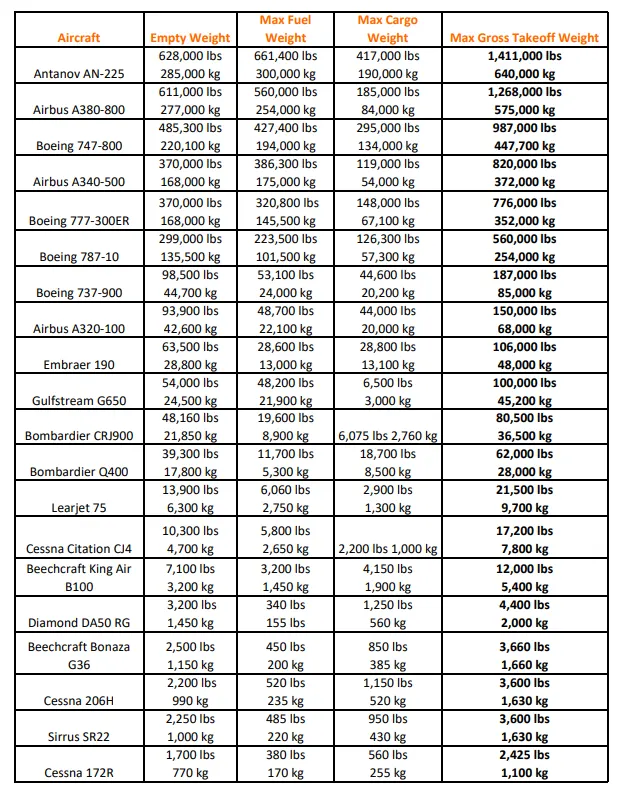
Aircraft Empty Weight (AEW):
- This is also known as OEW - Operating Empty Weight, and it is the weight of the aircraft with all of its equipment but no fuel, passengers, or cargo.
Aircraft Maximum Gross Takeoff Weight (MGTW):
- The greatest weight an aeroplane can have as it takes off from the ground is known as the MGTW, or Maximum Gross Takeoff Weight. The empty weight of the aeroplane, the fuel, the crew, the passengers, and all the cargo are included in this.
- This weight restriction is absolute and was established by the manufacturer. An overweight aircraft has been the root cause of many aviation mishaps because the pilot(s) lacked the strength or dexterity to avoid them.
Aircraft Useful Load:
- The maximum weight that a pilot can carry in an aircraft. Take the MGTW figure and subtract the AEW to get the total useful load that the aircraft can carry.
- This is the fuel, the crew, the passengers, and the cargo.
- The greater the load, the greater the utility of the aircraft to its customers!
How Fuel, Passengers, and Cargo Affect Aircraft Weight:
- Each item of weight added to the aircraft must be accounted for; some items can be omitted from the flight, while others cannot. There are several scenarios we can consider, and for these examples, I'll use the Astar helicopter I fly because the math is simple:
2)
Wind Speed:
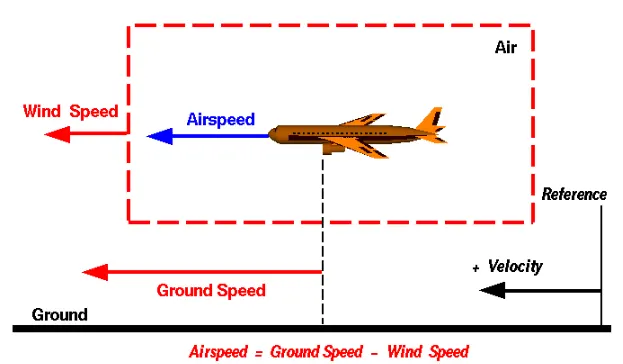
- When a reference point on the ground is selected, the air moves relative to the reference point at the wind speed. It's worth noting that wind speed is a vector quantity with both a magnitude and a direction. Direction is essential. A 20-mph wind from the west is not the same as a 20-mph wind from the east. The wind is composed of elements from all three primary directions (north-south, east-west, and up-down).
- Only velocities along the aircraft's flight path are considered in this figure. A positive velocity is defined as motion in the direction of the aircraft. Cross winds, which occur perpendicular to the flight path but parallel to the ground, as well as updrafts and downdrafts, which occur perpendicular to the ground, are ignored.
Ground speed :
- When a reference point on the ground is selected, the aircraft moves relative to the reference point at ground speed. Because ground speed is also a vector quantity, the comparison of ground speed to wind speed must follow vector comparison rules.
Airspeed:
- The airspeed, or relative velocity between the object and the air, is an important quantity in the generation of lift. Airspeed cannot be measured directly from a ground position, but must be calculated from ground speed and wind speed. The vector difference between ground speed and wind speed is known as airspeed.
Ground Speed - Wind Speed = Airspeed
- On a perfectly still day, airspeed equals ground speed. However, if the wind is blowing in the same direction as the aircraft, the airspeed will be slower than the ground speed.
3)
- The aeroplane utilises its own engine power to move around on the ground, which is known as taxiing.
- In general, most aeroplanes can move in reverse by employing reverse thrust technology. However, in most practical instances, this is not viable because when aeroplanes use reverse thrust, they use a lot of fuel, make a lot of noise, and are dangerous to anyone working nearby.
- Another reason why reverse thrust should not be used is that the jet blast could cause damage to the terminal building or equipment. Because the engine is so close to the ground, it will blow sand and debris forward and suck it into the engine, inflicting damage.
- As a result, there are pushback trucks at the airport. A pushback truck elevates the front wheel of an aeroplane; their duty at most airports is to tow the aircraft away from the parking space and onto the taxiways.
4)
- Pushback is an aviation procedure in which an aircraft is pushed backward from its parking position, typically at an airport gate, by an external power source. Pushbacks are performed by low-profile vehicles known as pushback tractors or tugs.
- Although many aircraft can move backward on the ground using reverse thrust (a procedure known as a powerback), the resulting jet blast or prop wash would cause increased noise, damage to the terminal building or equipment, and injury to airport personnel due to high-speed debris. This debris would also be sucked into the engine during normal operation, causing excessive wear - ground use is a major cause of wear on aircraft engines. When ground-handling aircraft, a pushback is therefore the preferred method.
- Pushbacks at congested airports are typically subject to ground control clearance to allow for ground movement on taxiways. Once clearance is obtained, the pilot will communicate with the tractor driver (or, in some cases, a ground handler walking alongside the aircraft) to begin the pushback. A headset connected near the nose gear can be used to communicate.
- Because the pilots cannot see what is behind the aircraft, the pushback tractor driver steers instead of the pilots. Depending on the aircraft model and airline policy, a bypass pin may be temporarily inserted in the nose gear to detach it from the aircraft's usual steering mechanism.
- When the pushback is finished, the towbar is disengaged and any bypass pins are removed. The ground handler will show the pilots the bypass pin to demonstrate that it has been removed. The pushback is then over, and the aircraft may taxi ahead on its own.
5)
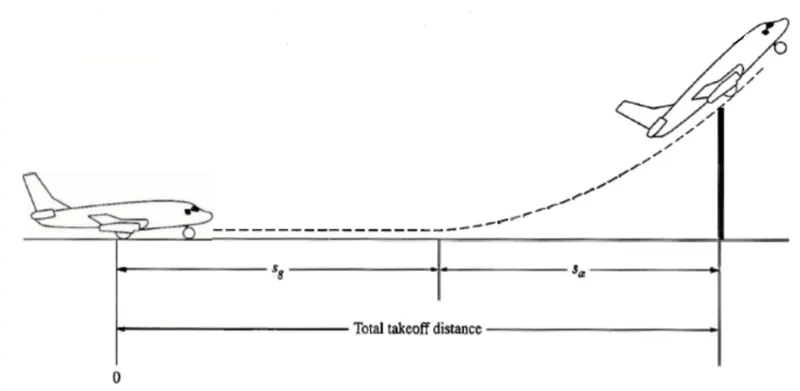
Take-off Power:
The maximum power that an engine can provide at a brief time in order to lift flight. Takeoff power is typically only used for up to 5 minutes with reciprocating engines and up to 212 minutes with gas turbine engines. This could not always be the situation. For reciprocating engines specifically, it refers to the braking horsepower produced under typical sea level conditions, as well as under the highest crankshaft rotational speed and engine manifold pressure permitted for normal takeoff. It can only be used continuously for the time frame indicated in the authorised engine specifications.
Regarding gas turbine engines, the thrust produced under static circumstances at a given altitude and atmospheric conditions of the rotor shaft rotational speed and gas temperature approved for the typical takeoff. It can only be used continuously for the time frame indicated in the authorised engine specifications.
Tyre Design:
- The tryes act as a cushion and assist in absorbing the impact of landing. Additionally, it gives an aeroplane the traction it needs to brake and halt.
- A plane's tyres are made to resist incredibly heavy weights during takeoff, landing, taxing, and parking. As the weight of the aircraft must be distributed more equally, the number of wheels needed to support the aircraft rises as it gets heavier.
- It is not required to carry a weight for an extended period of time while operating continuously, unlike a car or truck tyre. An aviation tyre, on the other hand, can operate at high speeds for a brief period of time when necessary and can also bear the heavy impact loads of landings.
- To enable the earthing of static charges, conducting compounds are added to the tread rubber used to make aircraft tires.
Rolling resistance:
The force restraining motion when a body rolls on a surface is known as rolling resistance, also referred to as rolling friction or rolling drag. It is mostly brought about by non-elastic effects, meaning that not all of the energy required to compress the wheel, roadbed, etc., is recovered when the pressure is released. There are two types of this: hysteresis losses and persistent (plastic) deformation of the object or surface. It is important to note that the slippage between the wheel and the surface leads in energy dissipation. Although some researchers include this word in rolling resistance, others argue that it should be considered separately because it is caused by the applied torque to the wheel and the resulting slip between the wheel and the ground, which is known as slip loss or slip resistance.
Tyre pressure:
- Airplane tyres often run at high pressures, reaching up to 200 psi (14 bar; 1,400 kPa) for commercial planes and even higher for business jets. The Concorde's main landing gear was normally inflated to 232 psi (16.0 bar), while its tail bumper gear tyres could reach 294 psi (20.3 bar).
- Nitrogen is typically used to inflate aircraft tyres in order to decrease expansion and contraction caused by dramatic fluctuations in ambient temperature and pressure experienced during flight. Dry nitrogen expands at the same rate as other dry atmospheric gases (normal air contains roughly 80% nitrogen), however moisture in common compressed air sources increases the expansion rate with temperature.
Landing Brake Forces:
The hydraulics system powers the braking systems on various aircraft types. The flight deck sends an electronic signal to hydraulic actuators near the main landing gear. In this case, 3,000 pound per square inch hydraulic fluid is utilised to press the brake unit against the wheel, slowing it down.
6A)
6B)
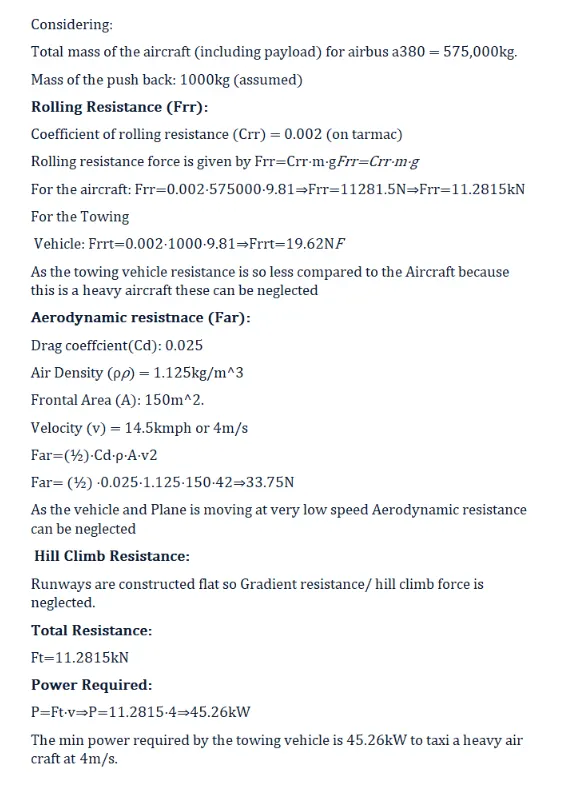
The above calculations are implemented in Simulink environment as shown below.
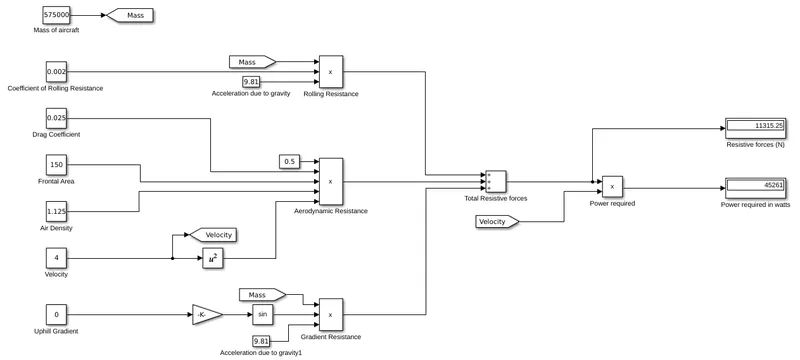
After calculating individual forces, they are added and multiplied with velocity to get total power.
7A)
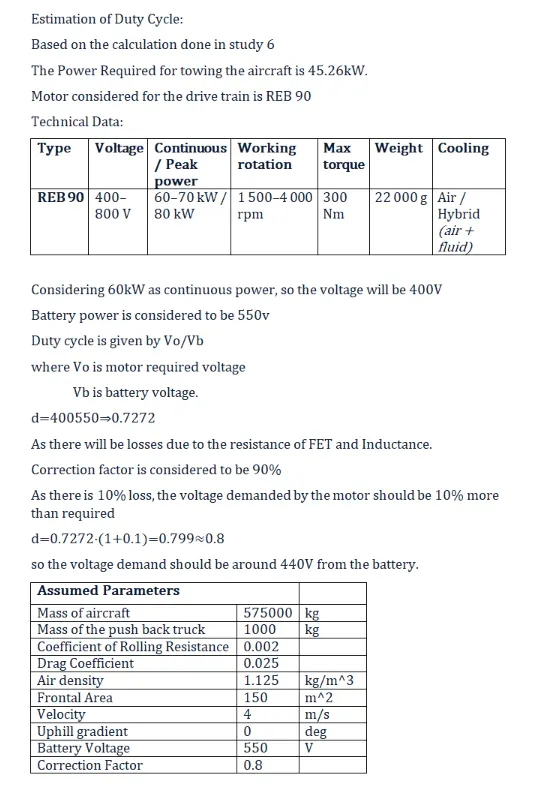
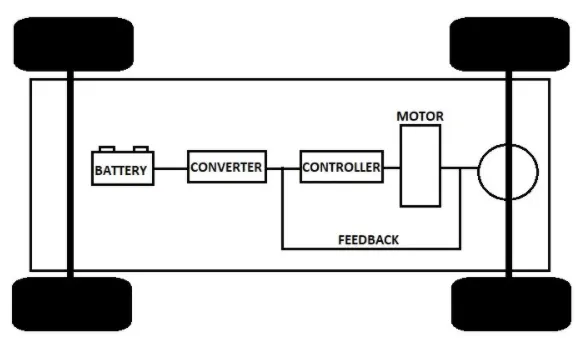
Block Diagram of Power Train
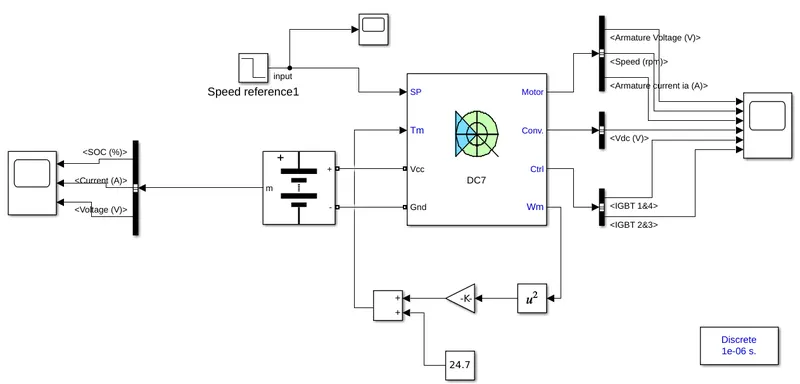
Simulink model is implemented using DC7 block as shown below
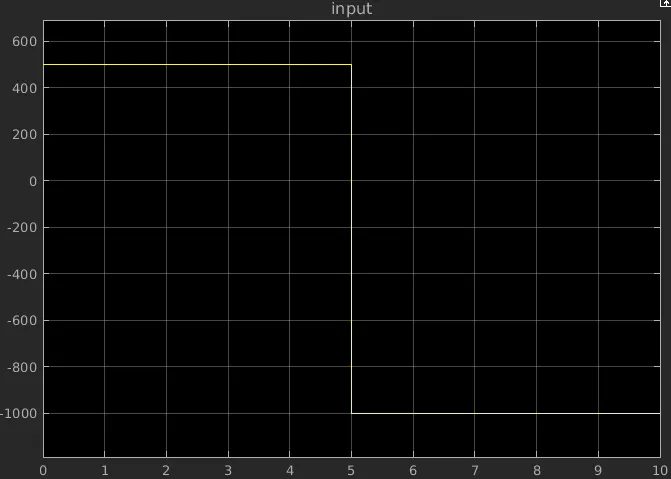
The speed reference input is given as
Output is obtained as
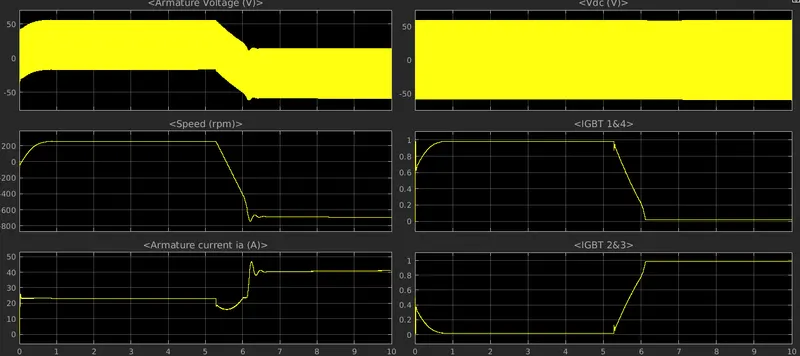
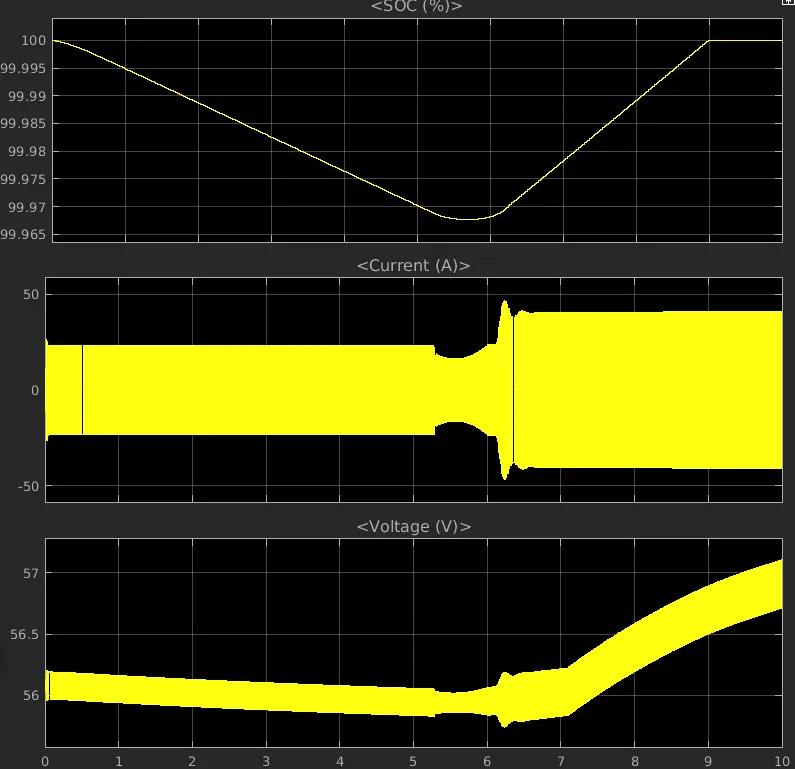
It can be seen that during positive speed, battery is discharged. During negative speed, machine acts as generator. So battery is charged again.
7B)
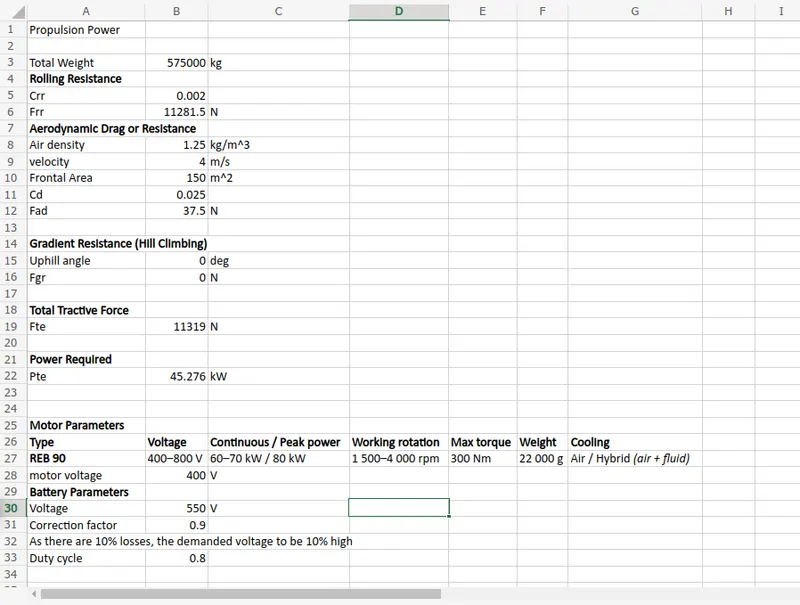
The excel calculations are shown below