Closed loop control of DC motor with fan load
AIM: To design and develop a PWM controlled fan load with DC motor
Let's first examine PWM technology and fan-type loads.
PWM Technique for DC Motor Control
Using "Pulse Width Modulation," often known as PWM, it is possible to alter the voltage across a motor's terminals, which is a straightforward and straightforward method of controlling a motor's speed.
As the name implies, pulse width modulation speed control operates by using a series of "ON-OFF" pulses to drive the motor while altering the duty cycle, or the percentage of time the output voltage is "ON" as opposed to when it is "OFF," of the pulses while maintaining a constant frequency.
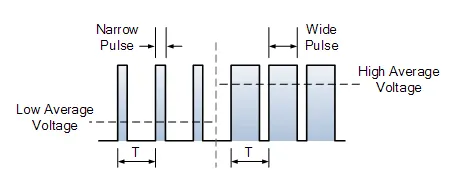
By altering the width of these applied pulses, and consequently altering the average DC voltage provided to the motor's terminals, the power applied to the motor can be changed. The speed of the motor can be altered or modulated by altering the time of these pulses; for example, the longer the pulse is "ON," the quicker the motor will rotate, and conversely, the shorter the pulse is "ON," the slower the motor will rotate.
It follows that the motor will revolve more quickly the larger the pulse width, the higher the average voltage delivered to the motor terminals, the stronger the magnetic flux inside the armature windings, and so on.
Fan load
It is type of load for which torque requirement at any time is proportional to square of speed at that instant.
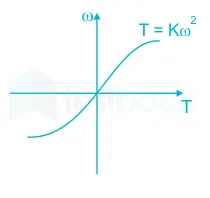
- The torque speed curve of a load is a plot showing its torque requirement on the y-axis versus the speed on the x-axis.
- It's the torque requirement of the load from zero speed to full speed.
- It's application/load specific and varies with different load types.
- Load like centrifugal pumps and fan follows quadratic speed torque curve, where torque varies square times the speed.
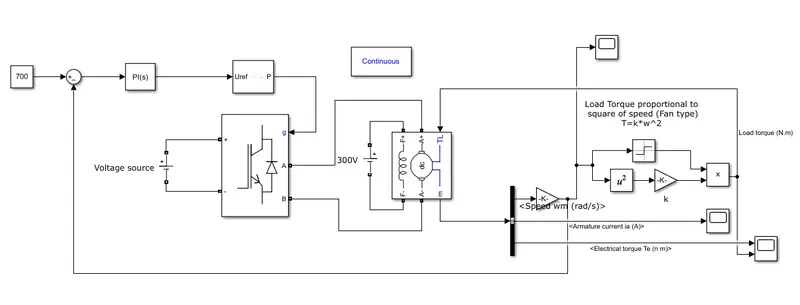
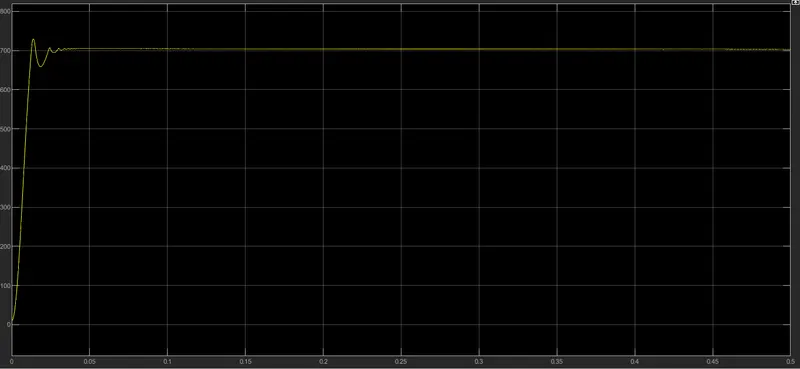
A PI controller has been used as shown below to control the speed of the motor. The simulink block diagram is shown below.
Speed output
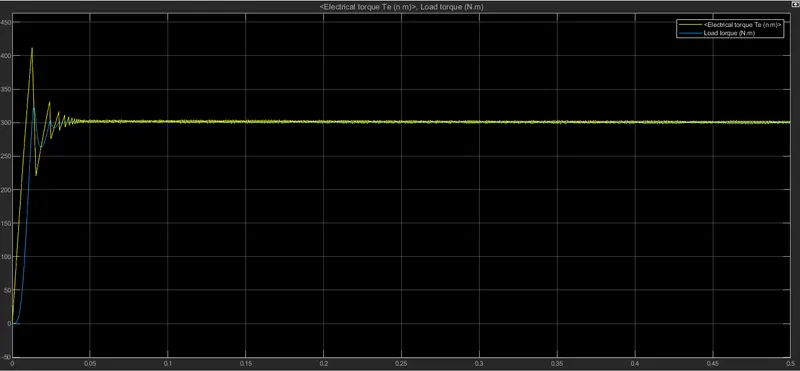
Torque output