Project-1: Powertrain for aircraft in runways
Part A:-
1. Search and list out the total weight of various types of aircrafts.
Aircraft:-
An aircraft is a vehicle or machine that is able to fly by gaining support from the air. It counters the force of gravity by using either static lift or by using the dynamic lift of an airfoil,[2] or in a few cases the downward thrust from jet engines. Common examples of aircraft include airplanes, helicopters, airships (including blimps), gliders, paramotors, and hot air balloons.[3]
The human activity that surrounds aircraft is called aviation. The science of aviation, including designing and building aircraft, is called aeronautics. Crewed aircraft are flown by an onboard pilot, but unmanned aerial vehicles may be remotely controlled or self-controlled by onboard computers. Aircraft may be classified by different criteria, such as lift type, aircraft propulsion, usage and others.
Weight:-
The maximum takeoff weight (MTOW) or maximum gross takeoff weight (MGTOW) or maximum takeoff mass (MTOM) of an aircraft is the maximum weight at which the pilot is allowed to attempt to take off, due to structural or other limits. The analogous term for rockets is gross lift-off mass, or GLOW. MTOW is usually specified in units of kilograms or pounds.
MTOW is the heaviest weight at which the aircraft has been shown to meet all the airworthiness requirements applicable to it. MTOW of an aircraft is fixed and does not vary with altitude, air temperature, or the length of the runway to be used for takeoff or landing.
Maximum permissible takeoff weight or "regulated takeoff weight", varies according to flap setting, altitude, air temperature, length of runway and other factors. It is different from one takeoff to the next, but can never be higher than the MTOW.
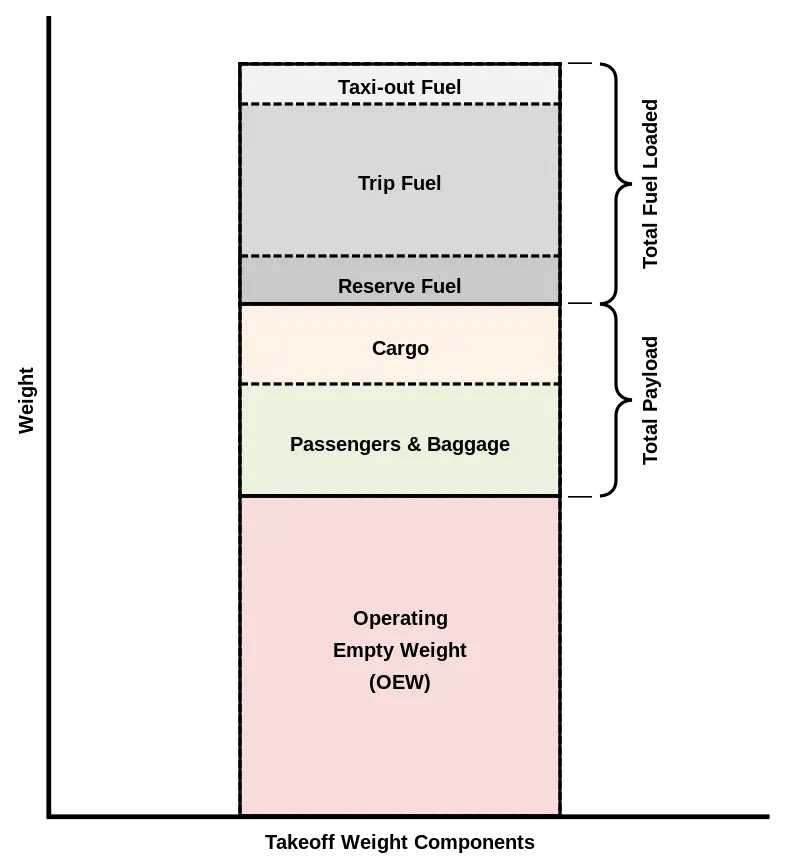
Clasification Of the weight In details.
1. Standard Empty weight.
The weight of an empty airplane including unusable fuel, full operating fluids (hydraulic fluids) and full engine oil.
2. Basic empty weight.
Standard Empty Weight plus optional equipment. This is the starting point of weight and balance calculations.
3. Useful Load.
Useful load is total usable fuel, cargo, passengers, and drainable fuel. Equation: Maximum Ramp Weight - Basic Empty Weight = Useful Load.
4. Payload.
This one is simple. Think of payload as what's "paying" for the flight: passengers, bags, and cargo. It's how much weight you can carry besides basic empty weight and fuel.
5. Maximum Ramp Weight (Taxi wight).
This is the maximum allowable weight mass for ground operations. MRW assures acceptable ground maneuverability and includes fuel for taxi, run-up and start.
6.Maximum Take off wight(MTOW).
Maximum allowable mass for the initiation of a takeoff roll. Depending on how big your airplane is, you may have a variety of MTOWs limited by: structural limitations, runway distance, climb performance, or landing weight limits.
7.Minimum Flight weight(MFW).
Minimum certificated weight for flight as limited by aircraft strength and airworthiness requirements. This weight has a lot to do with the balance of weight considering fuel/payload distribution.
8. Maximum Landing Weight(MLW).
Maximum landing weight is usually a structural limit, but may include calculations based on missed approach climb performance.
MTOW = Maximum take-off weight, MLW = Maximum landing weight
Aircraft Inforamation Link:- https://en.wikipedia.org/wiki/Aircraft
Types of Aircrafts and Weight Link:- https://en.wikipedia.org/wiki/List_of_airliners_by_maximum_takeoff_weight
Clasification Weight Link:- https://www.boldmethod.com/blog/lists/2022/01/8-weight-and-balance-terms-every-pilot-should-know/
2. Is there any difference between ground speed and air speed?
Ground speed is defined as Aircrafts relative speed to the surface of earth.
Air speed is defined as the relative speed of the airplane to the speed of the air in which it is flying.
Air speed determines whether there is enough airflow around an aircraft to make it fly; ground speed is what determines how fast an aircraft will get to its destination. It can be said as,
Ground speed = Air speed + Wind speed
Or Air speed = Ground speed – Wind speed
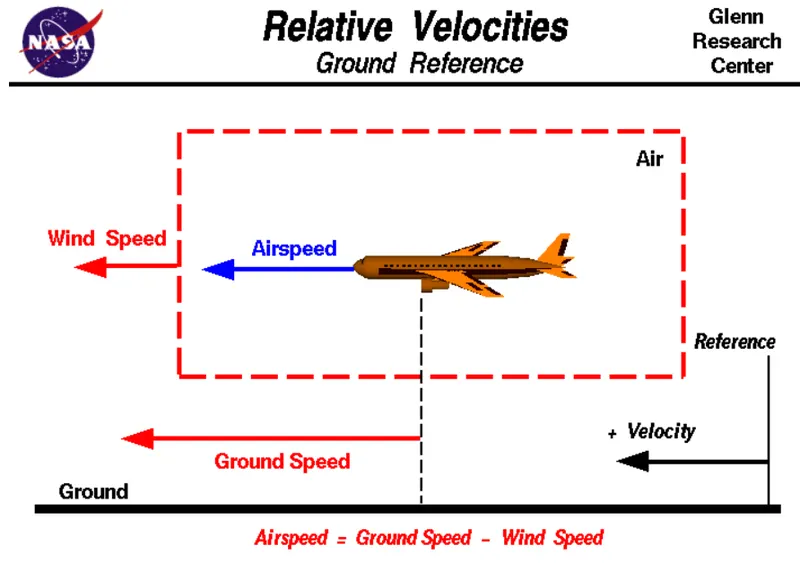
If the aircraft is flying in the same direction as the wind is blowing, the aircraft experiences tailwind, and its ground speed is higher than its airspeed. On the other hand, if the wind is blowing against the direction the aircraft is traveling in, the aircraft experiences headwind, and its ground speed is lower than its airspeed.
Link:- https://www.grc.nasa.gov/www/k-12/airplane/move.html
3. Why is it not recommended to use aircraft engine power to move it on the ground at Airport?
Aircrafts used Engine power but Dont Used because many Critical Reasons are described in following:-
- Line of sight: On moving the aircraft, the pilot need to steer it. The pilot sitting in the cockpit has his eye level at around 5.5m above ground, which creates a big blindspot ahead of him. So, for moving on the ground, planes do not use engine power and rely on towing crew.
- Reverse gear: Unlike vehicles on the ground, planes don’t have reverse gear . So, to get to the runway from the airport gates, they need assistance of pushback tractors.
- Safety Hazard: Even though airplanes can use engine thrust to move in airport, it has some serious disadvantages. The thrust of the engine is very loud and it has the capacity to damage the airport buildings. Also they can suck any debris or sand into the engine which can potentially damage the engine.
- Fuel Efficiency: Aircraft burns too much fuel and responsible for huge amount of pollution. The aviation fuel is also not cheap. So, to save some cost and fuel , it is recommended not use engine power in airport. Some airliners also suggesting the use of tractors all the way to the runway.
Refar The link :- https://eagletugs.com/five-reasons-why-aircraft-towing-equipment-is-necessary-for-airports
4. How an aircraft is pushed to runway when its ready to take off?
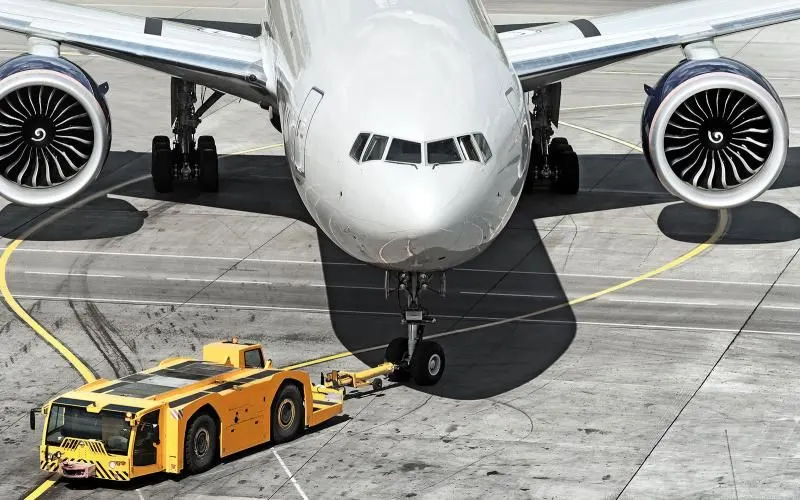
1. Pushbacks at busy aerodromes are usually subject to ground control clearance to facilitate ground movement on taxiways.
2. Once clearance is obtained, the pilot will communicate with the tractor driver (or a ground handler walking alongside the aircraft in some cases) to start the pushback. To communicate, a headset may be connected near the nose gear.
3. Since the pilots cannot see what is behind the aircraft, steering is done by the pushback tractor driver and not by the pilots. Depending on the aircraft type and airline procedure, a bypass pin may be temporarily installed into the nose gear to disconnect it from the aircraft's normal steering mechanism.
Bypass Pin
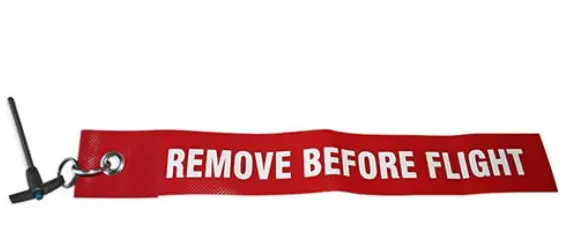
Once the pushback is completed, the towbar is disconnected, and any bypass pin removed. The ground handler will show the bypass pin to the pilots to make it clear that it has been removed. The pushback is then complete, and the aircraft can taxi forward under its own power.
5. Learn about take off power, tyre design, rolling resistance, tyre pressure, brake forces when landing.
Take-Off Power:-
For light aircraft, usually full power is used during takeoff. Large transport category (airliner) aircraft may use a reduced power for takeoff, where less than full power is applied in order to prolong engine life, reduce maintenance costs and reduce noise emissions. In some emergency cases, the power used can then be increased to increase the aircraft's performance. Before takeoff, the engines, particularly piston engines, are routinely run up at high power to check for engine-related problems. The aircraft is permitted to accelerate to rotation speed (often referred to as Vr). The term rotation is used because the aircraft pivots around the axis of its main landing gear while still on the ground, usually because of gentle manipulation of the flight controls to make or facilitate this change in aircraft attitude (once proper air displacement occurs under / over the wings, an aircraft will lift off on its own; controls are to ease that in).
The nose is raised to a nominal 5°–15° nose up pitch attitude to increase lift from the wings and effect liftoff. For most aircraft, attempting a takeoff without a pitch-up would require cruise speeds while still on the runway.
Link:- https://en.wikipedia.org/wiki/Takeoff
Aircraft Tyre:-
An aircraft tyre is designed to withstand extremely heavy loads while landing, take off, taxing, and parking. The number of wheels required for aircraft increases with the weight of the aircraft, as the weight of the aeroplane needs to be distributed more evenly.
Design and Construction of Aircraft tyre-
Carcass plies are used to form the tire. They are sometimes called casing plies. An aircraft tyre is constructed for the purpose it serves.
- They support the weight of an aircraft while it is on the ground.
- It also provides the necessary traction for braking and stopping of an aeroplane.
- Tyre also helps to absorb the shock of landing and provide cushioning the roughness of takeoff, roll-out, and taxi operations.
Unlike an automobile or truck tyre, it does not have to carry a load for a long period of continuous operation. However, an aircraft tyre absorbs the high impact loads of landing, and also it’s operating at high speeds for a short time when required.
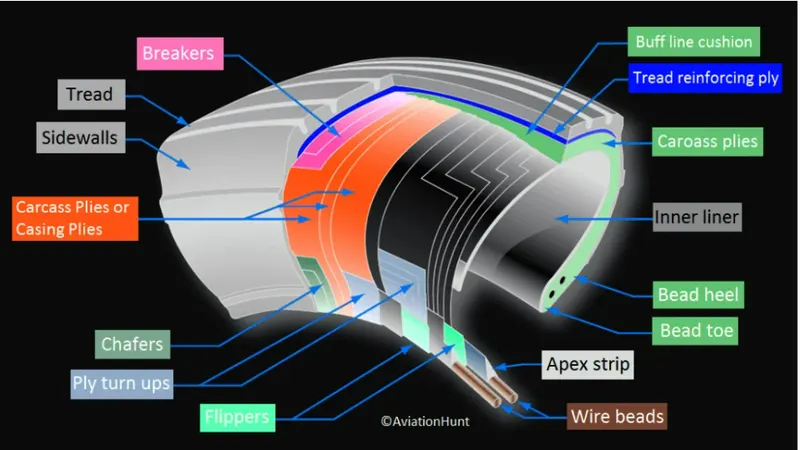
Technical aspects of the tyre:-
Retreading – Retreading is methods of restoring a worn tyre by renewing the tread area or by renewing the tread area plus one or both sidewalls. Repairs are included in the tyre retreading process.
Load Rating – Load rating is the maximum permissible load at a specified inflation pressure.
Ply Rating – Ply Rating is used to identify the maximum recommended load rating and inflation pressure for a specified tyre. It is an index of tyre strength.
Speed Rating – The speed rating is the maximum takeoff speed to which the tyre has been tested.
Skid Depth – Skid depth is the distance between the tread surface and the deepest groove as measured in the mould.
Aircraft tyres must have an approved speed and load rating and have sufficient clearance when retracted through landing gear to allow for tyre growth. Tyre growth is the increase in the size of the tyre due to centrifugal forces at high speed.
Link:- https://www.aviationhunt.com/aircraft-tyre-construction/
Rolling Resistance:
The resistance offered by the tyres against motion of vehicle/aircraft is called as rolling resistance, the rolling resistance is produced during take off/landing in the runway.
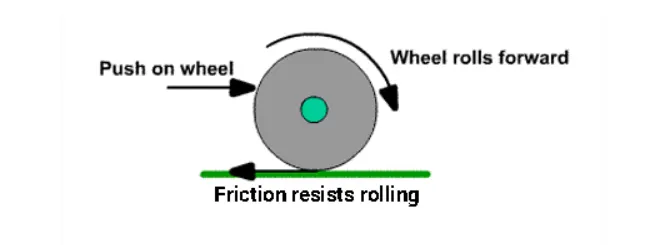
Rolling Resistance Force
Frr=µrr*mg
Where, µrr=coefficient of rolling resistance;
m= mass of the body;
g= gravitational constant
Tyre Pressure:-
Aircraft tires generally operate at high pressures, up to 200 psi (14 bar; 1,400 kPa) for airliners, and even higher for business jets. The main landing gear on the Concorde was typically inflated to 232 psi (16.0 bar), whilst its tail bumper gear tires were as high as 294 psi (20.3 bar). The high pressure and weight load on the Concorde tyres were a significant factor in the loss of Air France Flight 4590.
Aircraft tires are usually inflated at high pressure to sustain the heavy loads during take-off, landing, taxing and parking. The tires are inflated with Nitrogen to minimize expansion and contraction from extreme changes in ambient temperature and pressure experienced during flight. They are typically made of nylon, and more recently a variety known as aramid.
Breck Force when Landing:-
Airplanes rely on a braking system to safely land on runways. At cruising altitude, most commercial airplanes fly at a speed of roughly 500 to 600 mph. When landing, however, they must reduce their speed. A typical 747, for instance, has a landing speed of about 160 to 170 mph. And upon touching the runway, airplanes must quickly brake until they come to a complete stop.
Mainly Three Types To stop The aircraft:-
Wing Spoiler:-
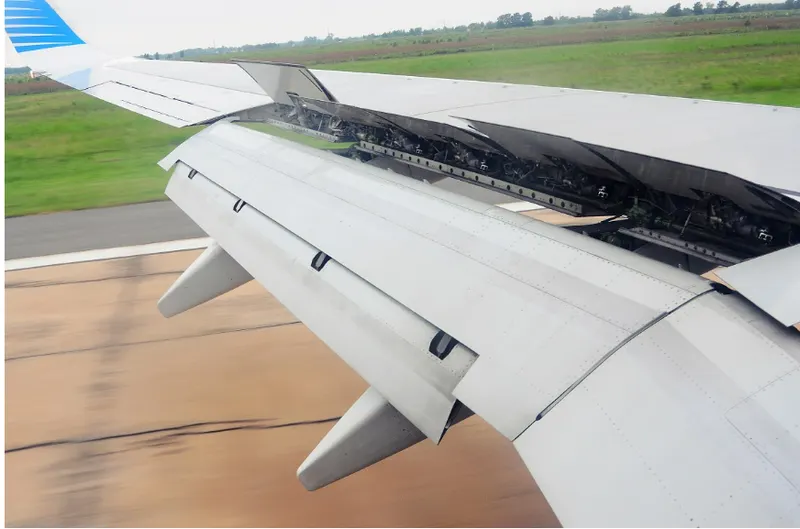
Many airplanes use wing spoilers to assist with braking when landing. Not to be confused with ailerons, spoilers are extendable flaps on the ends of an airplane’s wings. Pilots can raise the spoilers to decelerate the airplane as it approaches the runway. And even while on the runway, pilots will typically leave the wing spoilers raised. Raised wing spoilers create drag, which essentially slows down the airplane so that it’s able to brake more quickly.
Disc Brake:-
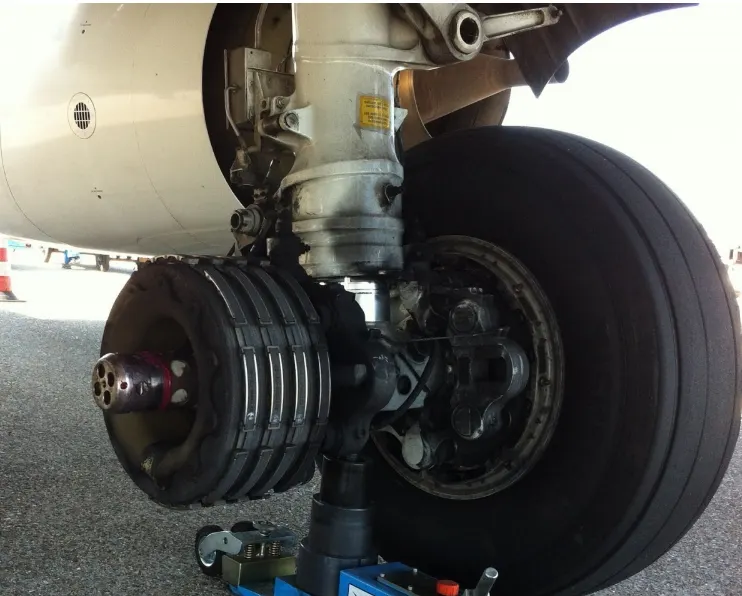
In addition to wing spoilers, airplanes use disc brakes. Airplane disc brakes are similar to the braking system in automobiles. They consist of a pair of calipers that, when engaged, squeeze pads against the rotors of an airplane’s landing gear.
Disc brakes are designed to remain static at all times. In other words, they don’t rotate with the wheels of an airplane’s landing gear. As the wheels turn, the disc brakes will remain static and stationary. They are a vital component of an airplane’s braking system because they are designed to apply pressure to the airplane’s wheels. Disc brakes will squeeze the wheels, thereby slowing down the speed at which they spin. In turn, this reduces the speed of the airplane so that it can come to a complete stop on the runway.
Reverce Thrust:-
Finally, many jet airplanes use reverse thrust to assist with braking during landings. Reverse thrust is a feature in jet engine airplanes that, as the name suggests, involves the reversal of the engines’ thrust. When flying, the thrust is projected out the rear of an airplane’s engines. When landing, however, pilots may use the reverse thrust feature. Reverse thrust changes the direction of the engines’ thrust. Rather than projecting out the rear, the thrust will be projected out the front. This reversal of thrust provides deceleration that allows airplanes to slow down more quickly when landing. This Procces is Impliment with the help of the CLAMSHEEL DOORS.
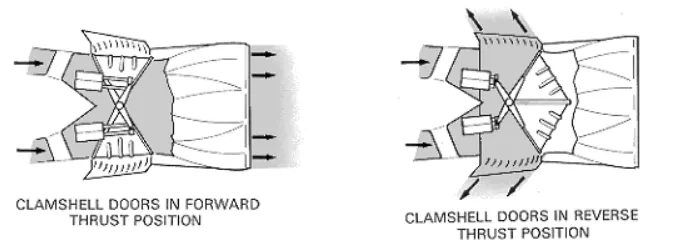
Link:- https://monroeaerospace.com/blog/how-do-airplanes-brake-when-landing/
Part B:-
6.A. With necessary assumptions, calculate the force and power required to push / pull an aircraft by a towing vehicle.
For Push Or pull The vehicle to Runway with aircraft nd which Power requird or Energy Requird are Following asumption:-
First We consider the aircraft is Boeing 747-8i.
Weight If the aircraft (m)=447696 kg.
Weight Of The Towing Vehicle=40000 kg.
Coefficient of rolling resistance µrr= 0.013.
Height=19.5 m.
width= 6.1m.
Drag coifficient Of the aircraft Cd=0.031.
Drag coifficient Of the Towing Vehicle Cd=0.5 .
Speed =6.
To Find The Power in Excel Sheet.
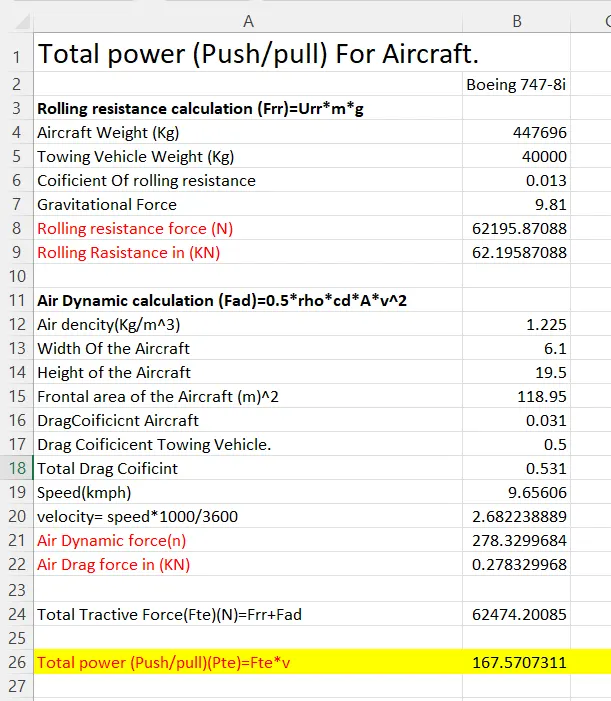
Total Power For Push/Pull The Aircraft is 167.5707 kW.
6 B. Develop the model for the calculated force and power using Simulink.
Simulink:-
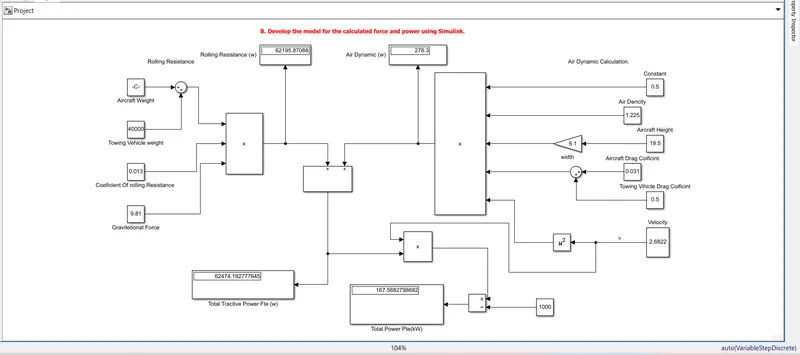
Upon entering the data similar results are achieved as excel calculator.
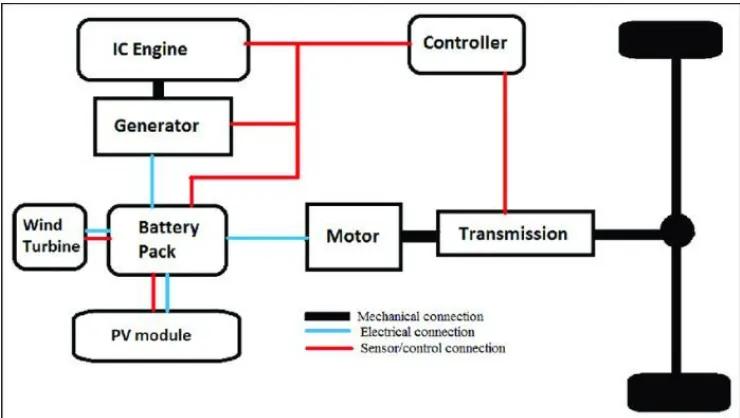
7. A. Design an electric powertrain with type of motor, it’s power rating, and energy requirement to fulfill aircraft towing application in Simulink. Estimate the duty cycle range to control the aircraft speed from zero to highest. Make all required assumptions. Prepare a table of assumed parameters. Draw a block diagram of powertrain.
(Hint :DC7 Block)
To design the powertrain for towing operation, similar conditions are considered as discussed in the above question.
Asume Parameters are Following.
Total Tractive Force Fte(N)=62474.2 N
Total Tractive Force Fte(kN)=62.47 kN.
Total Power Requird (Pull/Push)=167.57 kW.
Radius of tyres of the pushback tug is, r = 0.765 m
Gear ratio G= 8.
Transmission efficiency,µt = 90%= 0.9
Motor efficiency,µm = 92% 0.92.
Therefore, the total Torque at the wheels would be, = Fte*r = 62474.2*0.765 =47792.76 Nm.
So, motor torque = wheel torque/(G*µt) =47792.76/(8*0.9)= 6493.58 Nm.
If we consider motor with 92% efficiency, then the total power required would be = Pte/µm =167.57/0.92 = 182.1kW.
Assuming the towing process lasts for 20 minutes (0.33 hr) then, total energy consumption = (Power*Time)
182.1 *0.33 = 60.093 KWh.
we consider the battery capacity=220 kw is used by the towing vehicle then. The duty cycle range to control the speed from O to max speed (3m/s) is given as
Duty Cycle=Total Requird Power/Rated Power*100=182.1/220*100=82.77%
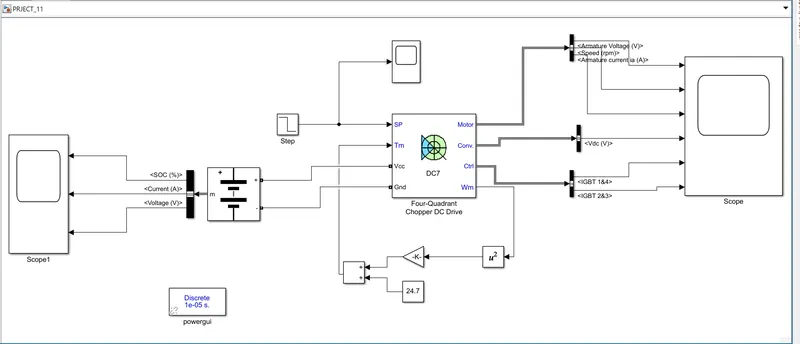
Power Train Bklockset Digram:-
Simulink:-
We creat the simulink Module For the Towing Vehicle Of the Aircraft.
Scope OutPut:-
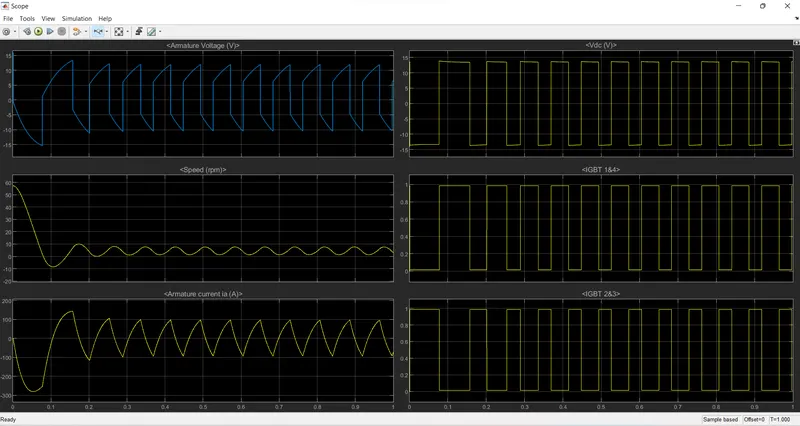
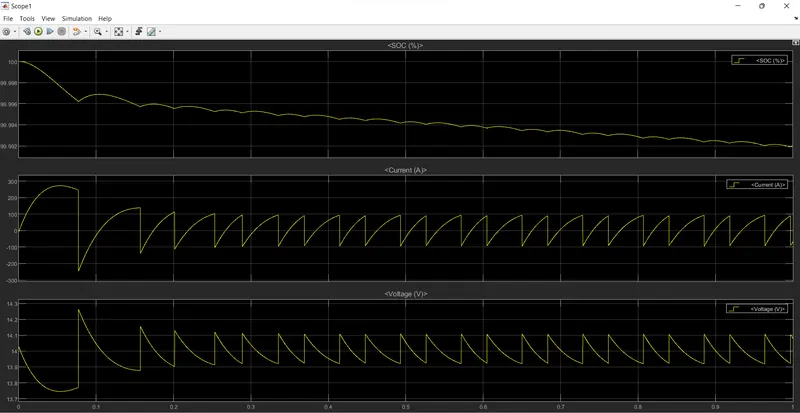
We Observed The scope Output.
When IGBT 1&4 Is On The IGBT 3&4 Is Off also IGBT 1&4 Is Off The IGBT 3&4 On.
B. Also, Design the parameters in excel sheet..
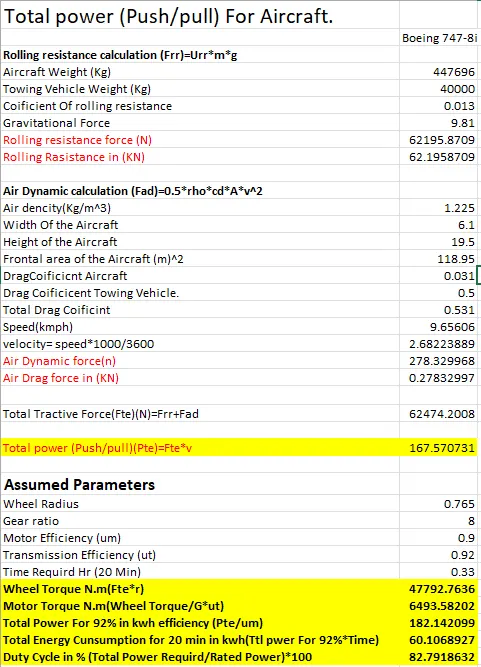
We Stored The Data in Excel Sheet.