Project-1: Powertrain for aircraft in runways
Q.1 ANS -
Aircraft gross weight
The aircraft gross weight (also known as the all-up weight and abbreviated AUW) is the total aircraft weight at any moment during the flight or ground operation.
An aircraft's gross weight will decrease during a flight due to fuel and oil consumption. An aircraft's gross weight may also vary during a flight due to payload dropping or in-flight refueling.
At the moment of releasing its brakes, the gross weight of an aircraft is equal to its takeoff weight. During the flight, an aircraft's gross weight is referred to as the en-route weight or in-flight weight.
An aircraft's gross weight is limited by several weight restrictions to avoid overloading its structure or to avoid unacceptable performance or handling qualities while in operation.
Aircraft gross weight limits are established during an aircraft's design and certification period and are laid down in the aircraft's type certificate and manufacturer specification documents.
The absolute maximum weight capabilities of a given aircraft are referred to as the structural weight limits. The structural weight limits are based on the aircraft maximum structural capability and define the envelope for the CG charts (both maximum weight and CG limits).
An aircraft's structural weight capability is typically a function of when the aircraft was manufactured, and in some cases, old aircraft can have their structural weight capability increased by structural modifications.
Maximum Design Taxi Weight(MDTW)
The maximum design taxi weight (also known as the maximum design ramp weight (MDRW)) is the maximum weight certificated for aircraft manoeuvring on the ground (taxiing or towing) as limited by aircraft strength and airworthiness requirements.
Maximum Design Takeoff Weight(MDTOW)
Is the maximum certificated design weight when the brakes are released for takeoff and is the greatest weight for which compliance with the relevant structural and engineering requirements has been demonstrated by the manufacturer.
Maximum Design Landing Weight(MDLW)
The maximum certificated design weight at which the aircraft meets the appropriate landing certification requirements. It generally depends on the landing gear strength or the landing impact loads on certain parts of the wing structure.
The MDLW must not exceed the MDTOW.
The maximum landing weight is typically designed for 10 feet per second (600 feet per minute) sink rate at touch down with no structural damage.
Maximum Design Zero-fuel Weight(MDZFW)
The maximum certificated design weight of the aircraft less all usable fuel and other specified usable agents (engine injection fluid, and other consumable propulsion agents). It is the maximum weight permitted before usable fuel and other specified usable fluids are loaded in specified sections of the airplane. The MDZFW is limited by strength and airworthiness requirements. At this weight, the subsequent addition of fuel will not result in the aircraft design strength being exceeded. The weight difference between the MDTOW and the MDZFW may be utilised only for the addition of fuel.
Minimum Flight Weight(MFW)
Minimum certificated weight for flight as limited by aircraft strength and airworthiness requirements.
Types of Aircraft and their weights:
There are a number of ways to identify aircraft by type. The primary distinction is between those that are lighter than air and those that are heavier than air.
1.Lighter-than-air:
Aircraft such as balloons, nonrigid airships (blimps), and dirigibles are designed to contain within their structure a sufficient volume that, when filled with a gas lighter than air (heated air, hydrogen, or helium), displaces the surrounding ambient air and floats, just as a cork does on the water. Balloons are not steerable and drift with the wind. Nonrigid airships, which have enjoyed a rebirth of use and interest, do not have a rigid structure but have a defined aerodynamic shape, which contains cells filled with the lifting agent. They have a source of propulsion and can be controlled in all three axes of flight. Dirigibles are no longer in use, but they were lighter-than-air craft with a rigid internal structure, which was usually very large, and they were capable of relatively high speeds. It proved impossible to construct dirigibles of sufficient strength to withstand routine operation under all weather conditions, and most suffered disaster, either breaking up in a storm, as with the U.S. craft Shenandoah, Akron, and Macon or through ignition of the hydrogen, as with the German Hindenburg in 1937.
Balloon - 400kg
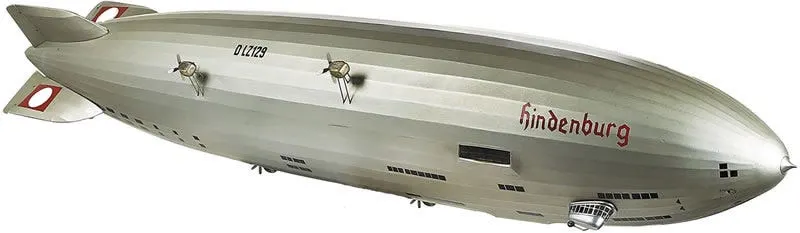
Airship - 130,000kg (Empty weight) , 260,000kg (Full load weight)
2.Heavier-than-air:
This type of aircraft must have a power source to provide the thrust necessary to obtain lift. Simple heavier-than-air craft includes kites. These are usually a flat-surfaced structure, often with a stabilizing “tail,” attached by a bridle to a string that is held in place on the ground. Lift is provided by the reaction of the string-restrained surface to the wind.
Another type of unmanned aircraft is the unmanned aerial vehicle (UAV), commonly called drones or sometimes remotely piloted vehicles (RPVs). These aircraft are radio-controlled from the air or the ground and are used for scientific and military purposes. Unpowered manned heavier-than-air vehicles must be launched to obtain lift. These include hang gliders, gliders, and sailplanes.
Hang gliders are aircraft of various configurations in which the pilot is suspended beneath the (usually fabric) wing to provide stability and control. They are normally launched from a high point. In the hands of an experienced pilot, hang gliders are capable of soaring (using rising air columns to obtain upward gliding movement). Gliders are usually used for flight training and have the capability to fly reasonable distances when they are catapulted or towed into the air, but they lack the dynamic sophistication of sailplanes. These sophisticated unpowered crafts have wings of unusually high aspect ratio (that is, along wingspan in proportion to wing width). Most sailplanes are towed to launch altitude, although some employ small, retractable auxiliary engines. They are able to use thermals (currents more buoyant than the surrounding air, usually caused by higher temperature) and orographic lift to climb to a higher altitude and to glide for great distances. Orographic lift results from the mechanical effect of wind blowing against a terrain feature such as a cliff. The force of the wind is deflected upward by the face of the terrain, resulting in a rising current of air.
Ultralights, which were originally merely hang gliders adapted for power by the installation of small engines similar to those used in chain saws, have matured into specially designed aircraft of very low weight and power but with flying qualities similar to conventional light aircraft. They are intended primarily for pleasure flying, although advanced models are now used for training, police patrol, and other work, including a proposed use in combat.
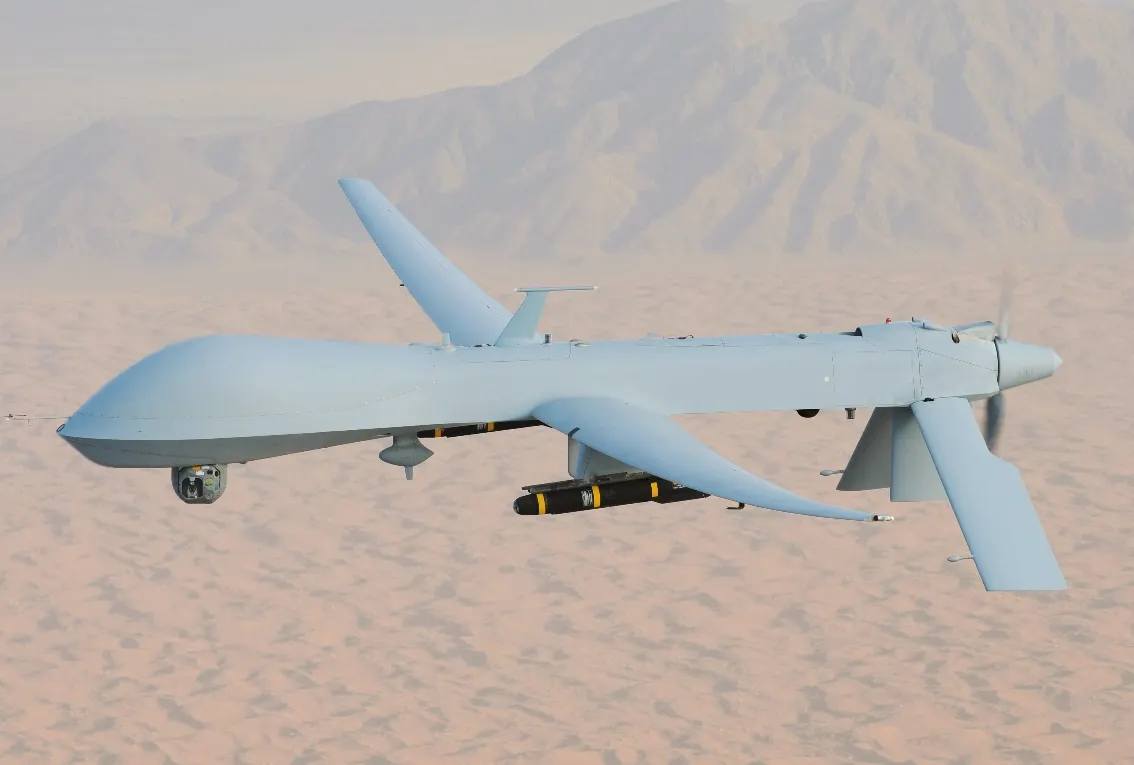
MQ-1 Predator - 1125 kg
RQ-4 Global Hawk - 13325 kg
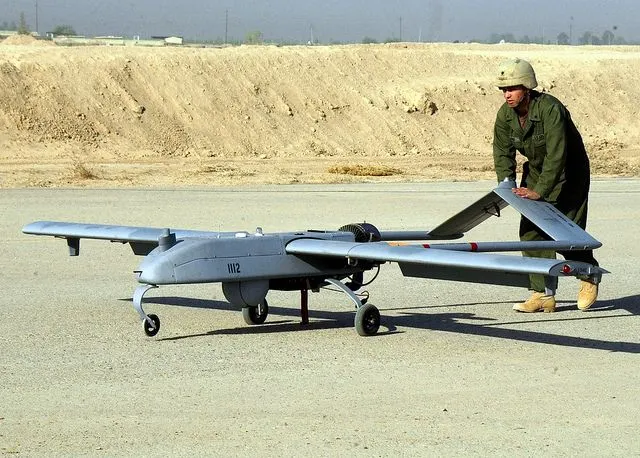
RQ-7 Shadow 200 - 150 kg
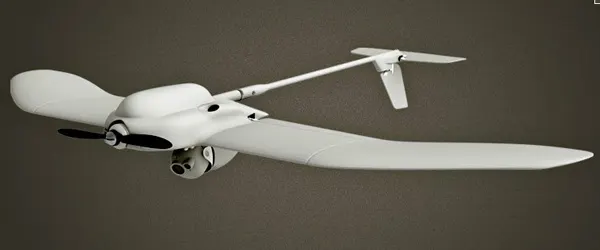
Wasp Aerovironment - 200 g
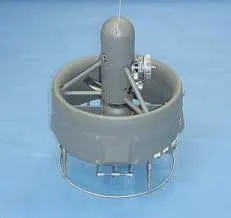
iStar Allied Aerospace - 2.5 kg
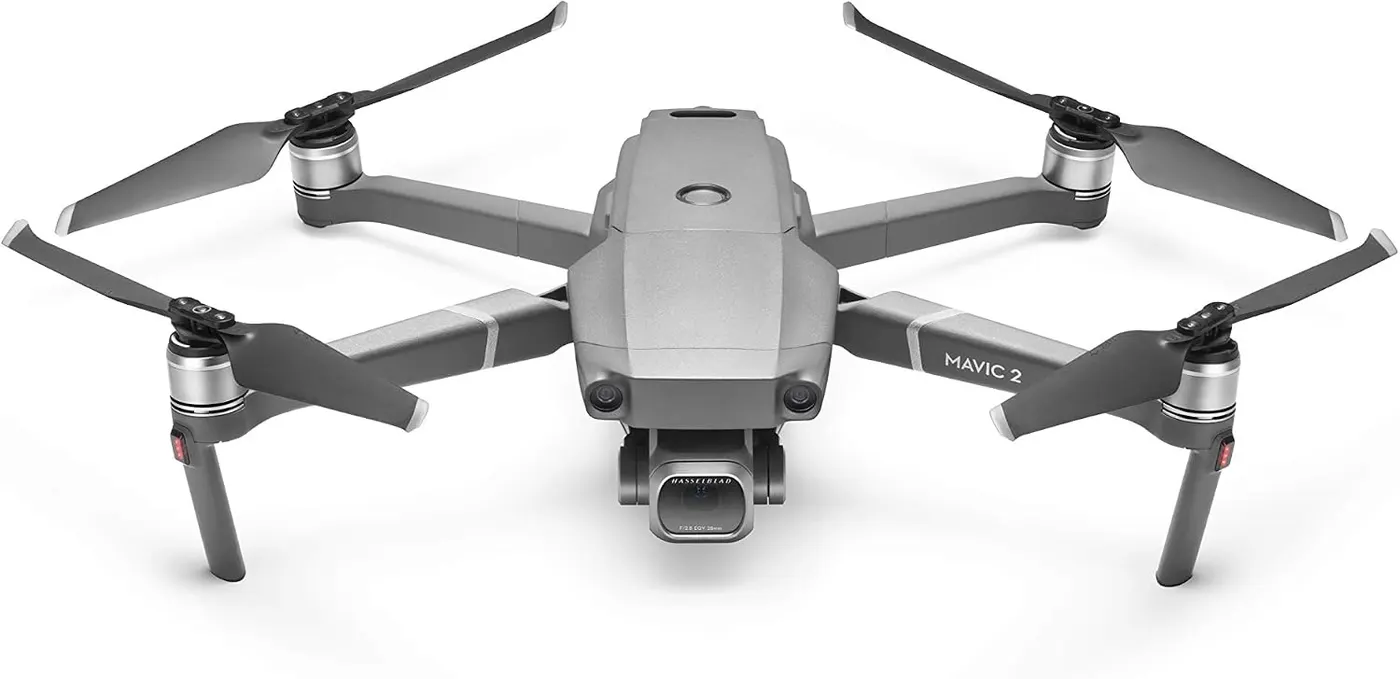
Mavic Pro 2 - 907 g
3.Civil Aircrafts:
All nonmilitary planes are civil aircraft. These include private and business planes and commercial airliners.
Private aircraft are personal planes used for pleasure flying, often single-engine monoplanes with the nonretractable landing gear. They can be very sophisticated, however, and may include such variants as: “warbirds,” ex-military planes flown for reasons of nostalgia, ranging from primary trainers to large bombers; “homebuilt,” aircraft built from scratch or from kits by the owner and ranging from simple adaptations of Piper Cubs to high-speed, streamlined four-passenger transports; antiques and classics, restored older aircraft flown, like the warbirds, for reasons of affection and nostalgia; and aerobatic planes, designed to be highly maneuverable and to perform in air shows.
Business aircraft are used to generate revenues for their owners and include everything from small single-engine aircraft used for pilot training or to transport small packages over short distances to four-engine executive jets that can span continents and oceans. Business planes are used by salespeople, prospectors, farmers, doctors, missionaries, and many others. Their primary purpose is to make the best use of top executives’ time by freeing them from airline schedules and airport operations.
They also serve as an executive prerequisite and as a sophisticated inducement for potential customers. Other business aircraft include those used for agricultural operations, traffic reporting, forest-fire fighting, medical evacuation, pipeline surveillance, freight hauling, and many other applications. One unfortunate but rapidly expanding segment of the business aircraft population is that which employs aircraft illegally for transporting narcotics and other illicit drugs. A wide variety of similar aircraft are used for specialized purposes, as the investigation of thunderstorms, hurricane tracking, aerodynamic research and development, engine testing, high-altitude surveillance, advertising, and police work.
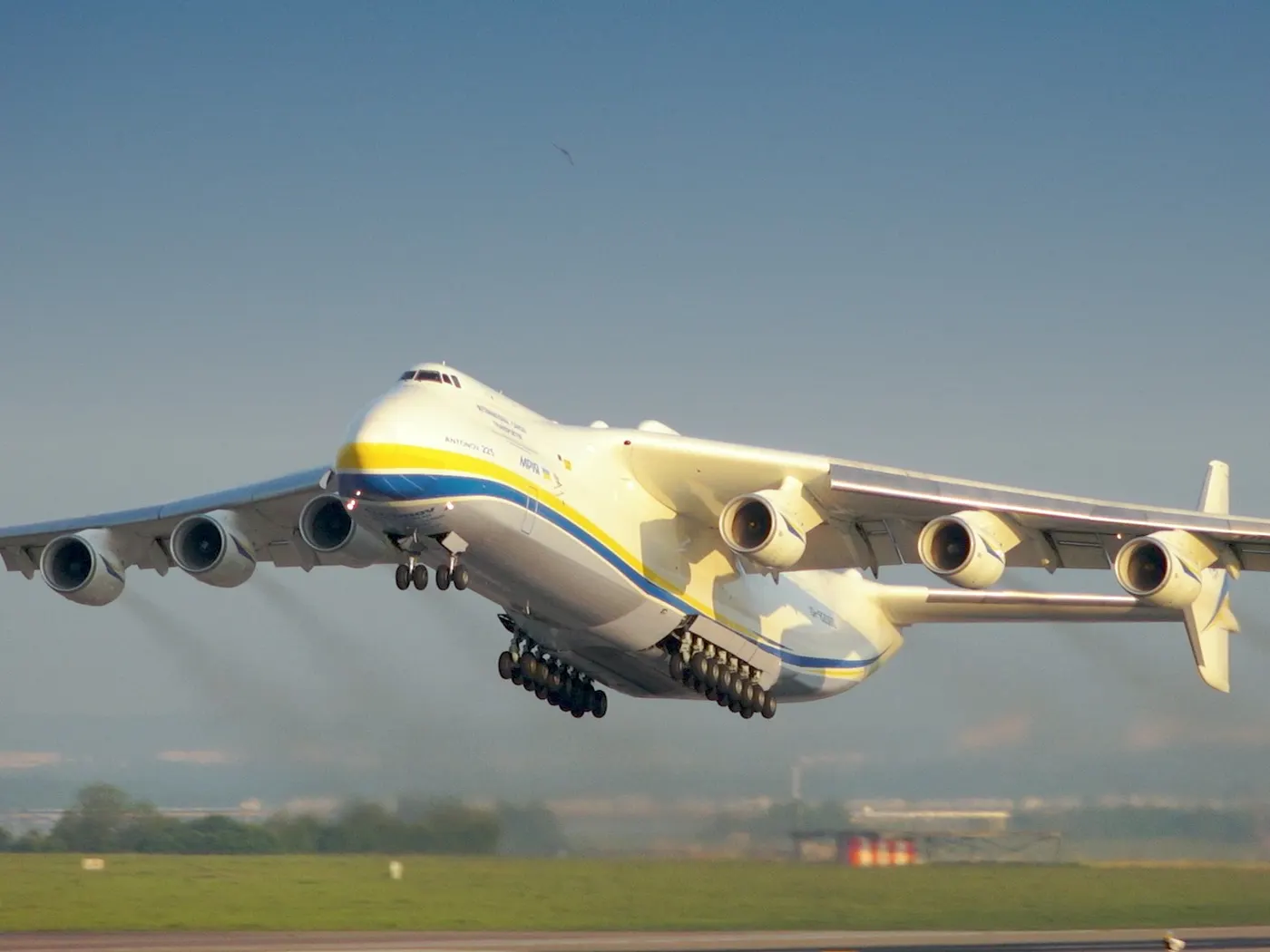
Antonov An-225 Mriya - 640,000 kg
Airbus A380 - 575,000 kg
Boeing 747-8 - 447,700 kg
McDonnell Douglas DC-10 - 256,280 kg
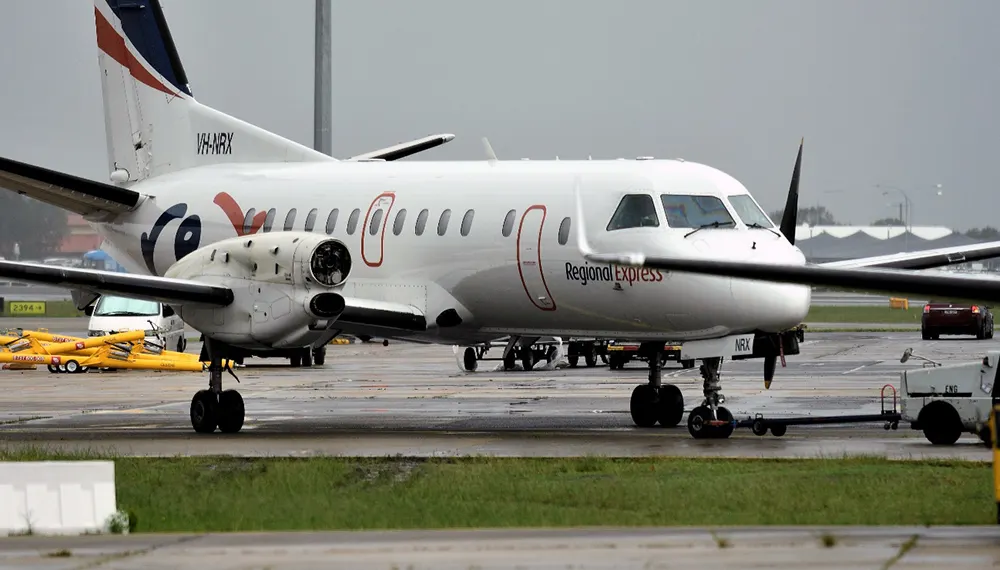
Saab 340 - 13,150 kg
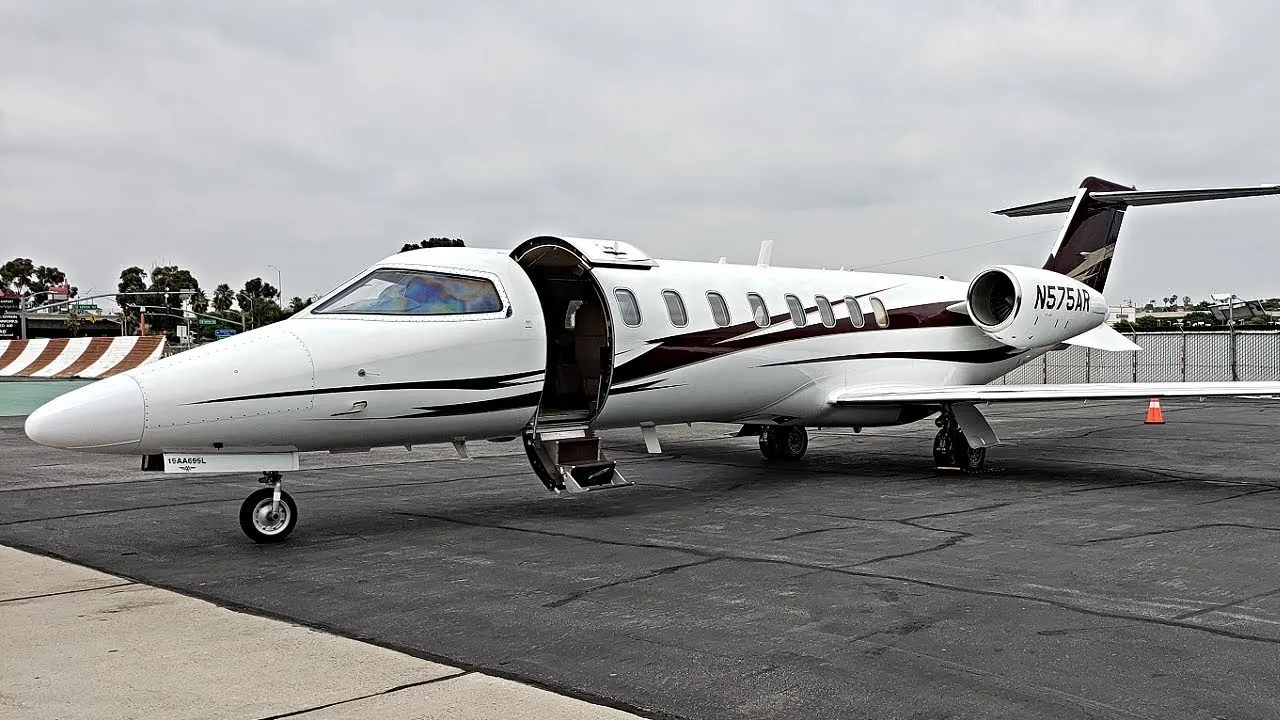
Learjet 70/75 - 9,752 kg
Q.2 ANS -
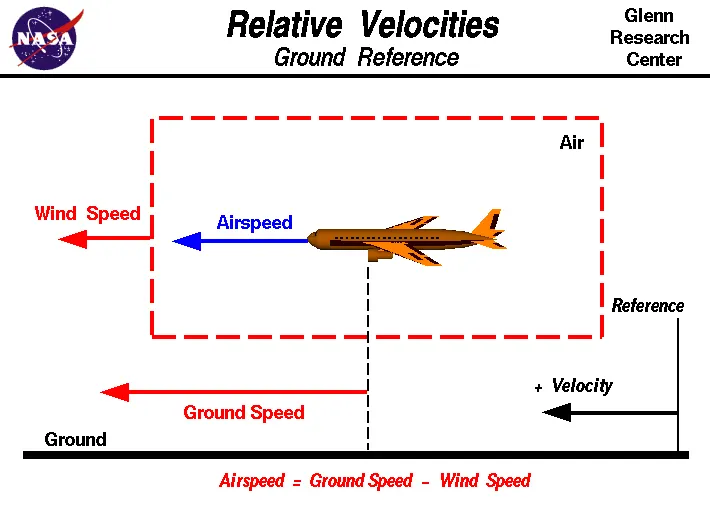
Wind Speed :-
For a reference point picked on the ground, the air moves relative to the reference point at the wind speed. Notice that the wind speed is a vector quantity and has both a magnitude and a direction. Direction is important. A 20-mph wind from the west is different from a 20-mph wind from the east. The wind has components in all three primary directions (north-south, east-west, and up-down). In this figure, we are considering only velocities along the aircraft's flight path. A positive velocity is defined to be in the direction of the aircraft's motion. We are neglecting cross winds, which occur perpendicular to the flight path but parallel to the ground, and updrafts and downdrafts, which occur perpendicular to the ground.
Ground Speed :-
For a reference point picked on the ground, the aircraft moves relative to the reference point at the ground speed. Ground speed is also a vector quantity so a comparison of the ground speed to the wind speed must be done according to rules for vector comparisons.
Airspeed :-
The important quantity in the generation of lift is the relative velocity between the object and the air, which is called the airspeed. Airspeed cannot be directly measured from a ground position, but must be computed from the ground speed and the wind speed. Airspeed is the vector difference between the ground speed and the wind speed.
Airspeed = Ground Speed - Wind Speed
conclusion:-
Yes, there is a difference between ground speed and air speed. Ground speed is how fast an airplane's shadow would move across the land. If there's a strong wind pushing an aircraft, that's reflected in the ground speed. Airspeed, in contrast, is how fast an airplane is really flying strictly under its own power, which is calculated by subtracting the wind speed from the ground speed. On a perfectly still day, the airspeed is equal to the ground speed. But if the wind is blowing in the same direction that the aircraft is moving, the airspeed will be less than the ground speed.
Q.3 ANS -
For movement on the ground the aircraft uses it own engine power, which is called taxing.
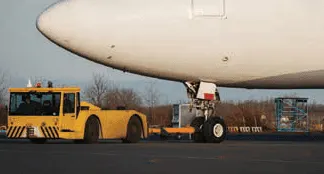
Although many aircrafts are capable of moving in backward using reverse thrust, as result the jet blast or prop wash might cause damage to the terminal building or equipment. Engine close to ground may also blow sand and debris forward and then suck them into the engine, causing damage to the engine.Therefore there are pushback trucks in the airport. A pushback truck lifts the front weel of the aircraft, their role in most airports is to move the aircraft awayfrom the parking spot on to the taxiways, which is called towing.
Unwanted consequences mainly arising from the unintended movement of the aircraft during engine running.
i) Effectively a loss of control can happen, especially during high power engine running. Damage can occur to the aircraft itself, other aircraft nearby or to airsidestructures.
ii) There is a risk of injury to ground support personnel who may be in relatively close proximity to the aircraft.
iii) It is easier for truck driver to see the surroundings better than the pilot sitting in the cockpit with limited window. The pushback driver knows the airport better than the pilot.
iv) It also saves fuel. virgin Atlantic hadproposed a new system in which pushback truck will move the aircraft all the way to runway to save fuel and reduce impact of environment.
v) The plane engines are very loud. When more than one plane will add up their sound, than it will not be pleasent for passangers and others near airport.
Q.4 ANS -
Taxiing (rarely spelled taxying) is the movement of an aircraft on the ground, under its own power, in contrast to towing or push-back where the aircraft is moved by a tug. The aircraft usually moves on wheels, but the term also includes aircraft with skis or floats (for water-based travel).
An airplane uses taxiways to taxi from one place on an airport to another; for example, when moving from a hangar to the runway. The term "taxiing" is not used for the accelerating run along a runway prior to takeoff, or the decelerating run immediately after landing, which is called the takeoff roll and landing rollout, respectively.
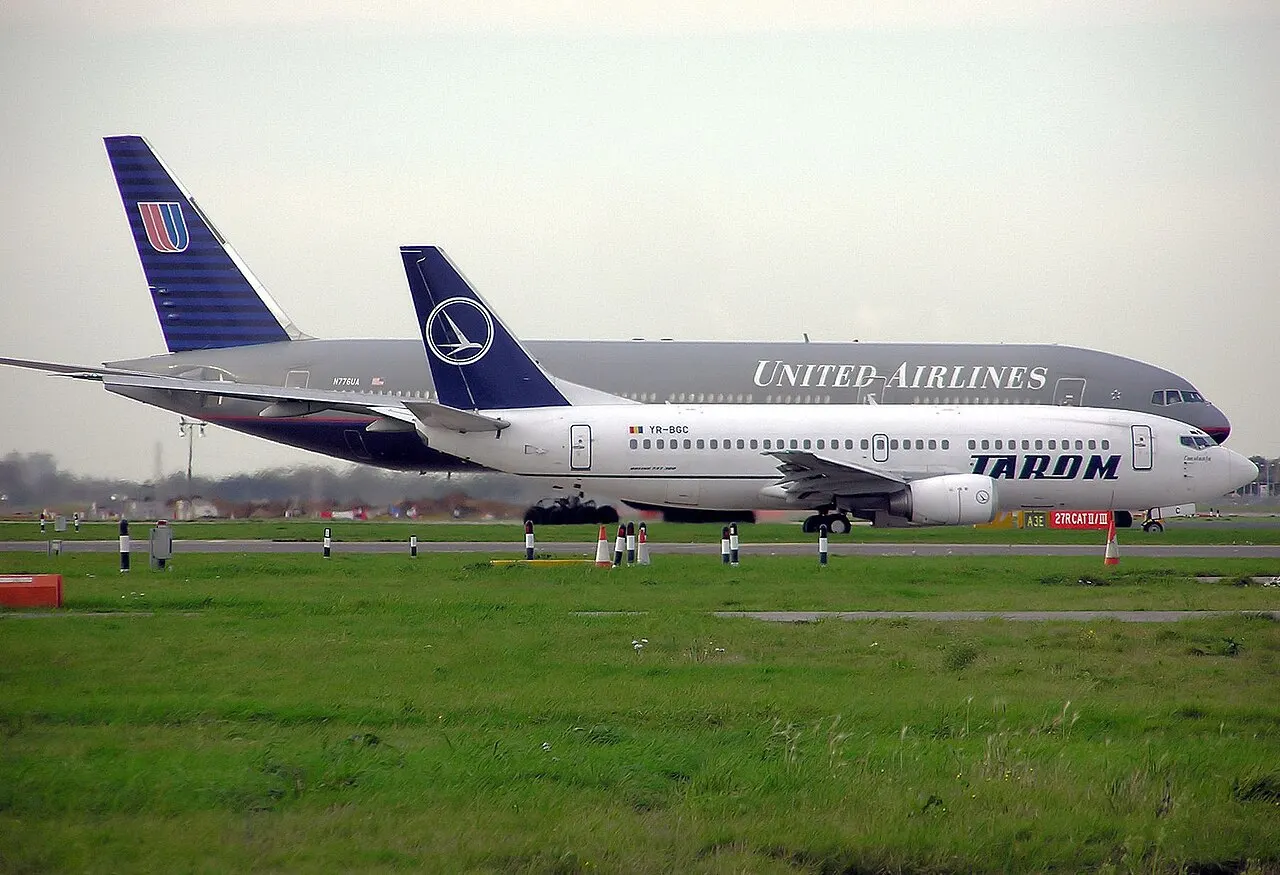
Towing:
Movement of large aircraft about the airport, flight line, and hangar is usually accomplished by towing with a tow tractor (sometimes called a “tug”). In the case of small aircraft, some moving is accomplished by hand pushing on the correct areas of the aircraft. Aircraft may also be taxied about the flight line but usually only by certain qualified personnel.
Towing aircraft can be a hazardous operation, causing damage to the aircraft and injury to personnel, if done recklessly or carelessly. This article outline the general procedure for towing aircraft. However, specific instructions for each model of aircraft are detailed in the manufacturer’s maintenance instructions and are to be followed in all instances.
 |
| Figure 2. Example of a tow bar |
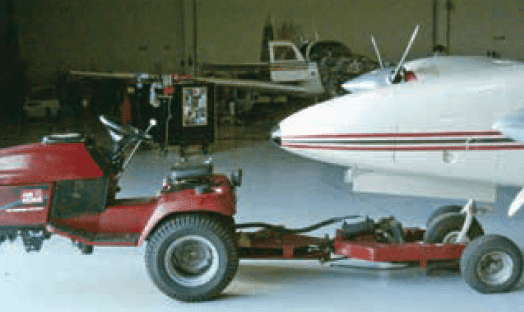 |
| Figure 3. Typical smaller aircraft tow tractor |
a)take off power:- Take off is the phase of flight in which an aerospace vehicle leaves the ground and becomes airborne. For aircraft traveling vertically, this is known as lift off. For aircraft that take off horizontally, this usually involves starting with a transition from moving along the ground on a runway. For light aircraft, usually full power is used during takeoff. Large transport category (airliner) aircraft may use a reduced power for takeoff, where less than full power is applied in order to prolong engine life, reduce maintenance costs and reduce noise emissions.
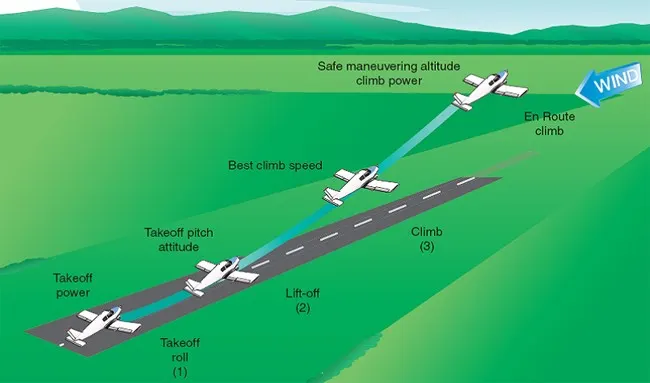
After taxiing onto the runway, the airplane should be carefully aligned with the intended takeoff direction, and the nose wheel positioned straight, or centered. After releasing the brakes, the throttle should be advanced smoothly and continuously to takeoff power. An abrupt application of power may cause the airplane to yaw sharply to the left because of the torque effects of the engine and propeller. This will be most apparent in high horsepower engines. As the airplane starts to roll forward, the pilot should assure both feet are on the rudder pedals so that the toes or balls of the feet are on the rudder portions, not on the brake portions.
Takeoff performance can be predicted by using a simple measure of Acceleration of the aircraft anong the runway based on force equilibrium.
The force involved will be
T- Thrust of propulsion system pushing aircraft along runway
D- Areodynamic Drag of vehicle resisting the aircraft motion.
F- Rolling resistance friction due to the contact of wheels of skids on the ground.
During take –off run the imbalance in these forces will produce an acceleration along the runway
DV/dt = (T-D-F)/m
Where dV/dt is the acceleration along the runway and m is the mass of the vehicle.
b)tyre design:-
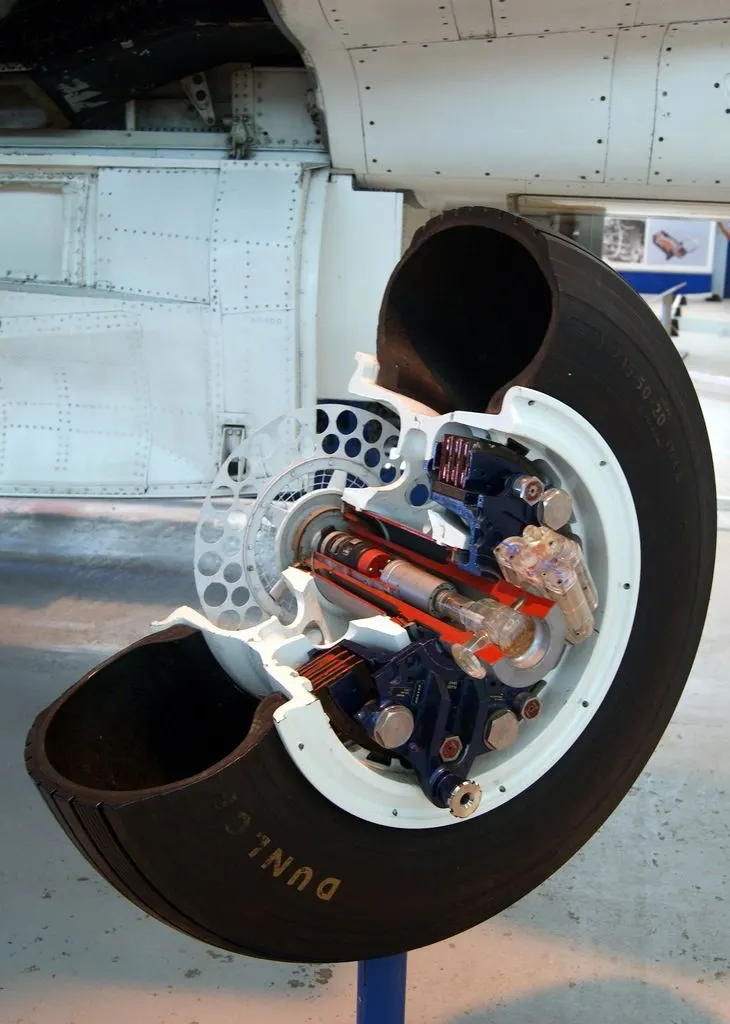
When it comes to safety, Tyres are one of the most important components of aircraft. They help to absorb the shock of landing and provide cushioning. It also provides the necessary traction for braking and stopping of an aircraft. An aircraft Tyre is designed to withstand extremely heavy loads while landing, take off, taxing, and parking. The number of wheels required for aircraft increases with the weight of the aircraft, as the weight of the aero plane needs to be distributed more evenly.
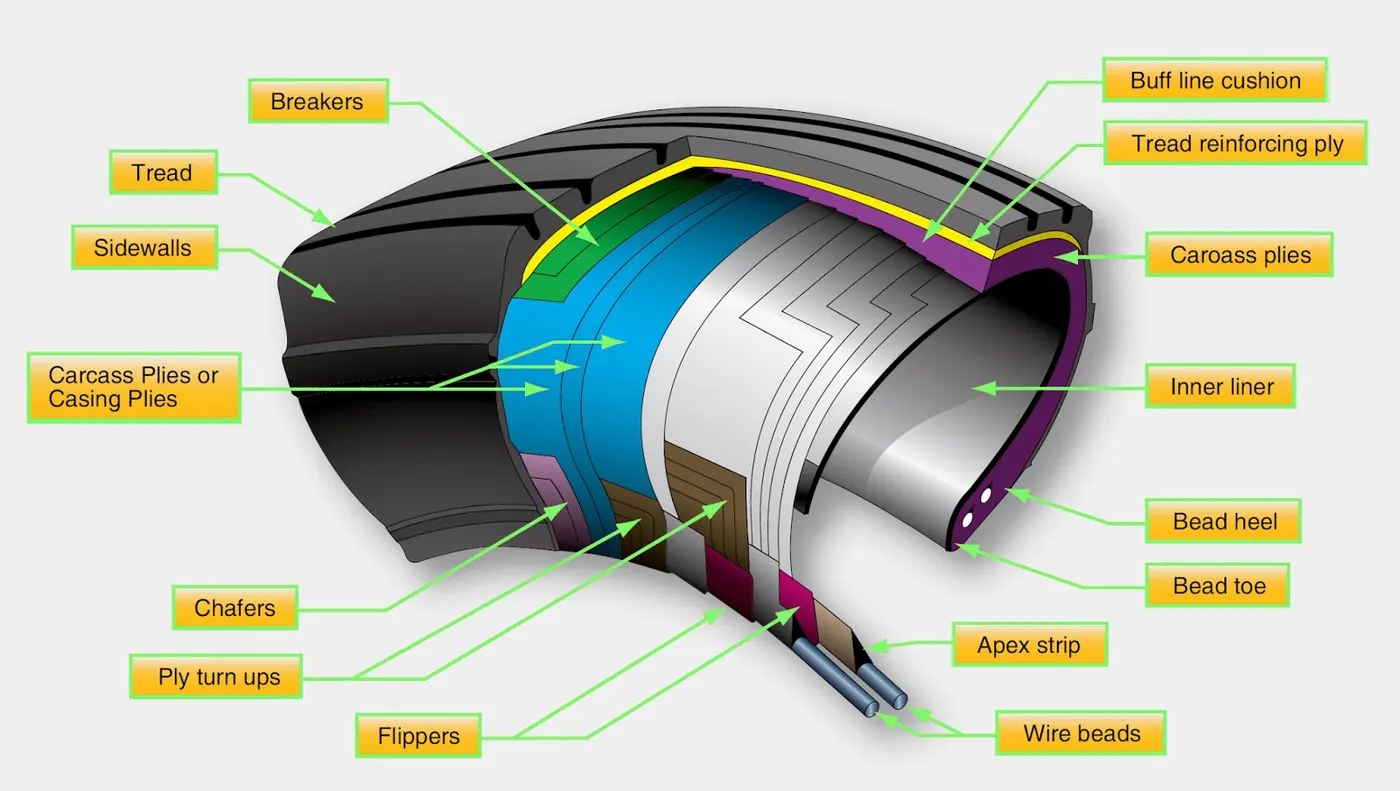
Carcass plies are used to form the tire. They are sometimes called casing plies. An aircraft Tyre is constructed for the purpose it serves.
- They support the weight of an aircraft while it is on the ground.
- It also provides the necessary traction for braking and stopping of an aero plane.
- Tyre also helps to absorb the shock of landing and provide cushioning the roughness of takeoff, roll-out, and taxi operations.
Unlike an automobile or truck Tyre, it does not have to carry a load for a long period of continuous operation. However, an aircraft Tyre absorbs the high impact loads of landing, and also, it’s operating at high speeds for a short time when required.
c)Rolling Resistance:-
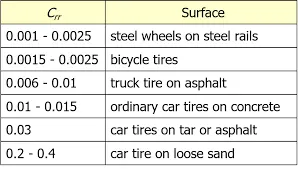
Rolling resistance, sometimes called rolling friction or rolling drag, is the force resisting the motion when a body (such as a ball, tire, or wheel) rolls on a surface. It is mainly caused by non-elastic effects; that is, not all the energy needed for deformation (or movement) of the wheel, roadbed, etc., is recovered when the pressure is removed. Two forms of this are hysteresis losses (see below), and permanent (plastic) deformation of the object or the surface (e.g., soil). Note that the slippage between the wheel and the surface also results in energy dissipation. Although some researchers have included this term in rolling resistance, some suggest that this dissipation term should be treated separately from rolling resistance because it is due to the applied torque to the wheel and the resultant slip between the wheel and ground, which is called slip loss or slip resistance. In addition, only the so-called slip resistance involves friction, therefore the name "rolling friction" is to an extent a misnomer.
The "rolling resistance coefficient" is defined by the following equation:

where
 = Rolling resistance force
 = dimensionless rolling resistance coefficient or coefficient of rolling friction (CRF)
- N = Normal force, the force perpendicular to the surface on which the wheel is rolling.
Tyre pressure:-
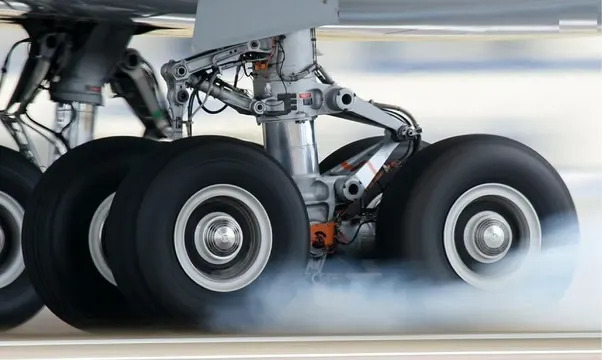
The typical airliner tire can handle a 38-ton load. It can meet the ground 500 times before needing a re-tread, a refresh it can take on seven times in its life. Aircraft tires generally operate at high pressures, up to 200 psi (14 bar; 1,400 kPa) for airliners, and even higher for business jets. The main landing gear on the Concorde was typically inflated to 232 psi (16.0 bar), whilst its tail bumper gear tires were as high as 294 psi (20.3 bar).
d)Brake forces:-
In aircraft types, the brake units are powered by the hydraulics system. An electrical signal is sent from the flight deck to hydraulic actuators near the main landing gear. Here, hydraulic fluid at 3,000 pound per square inch is used to force the brake unit against the wheel, thus slowing it down.
Q.6 a) ANS -
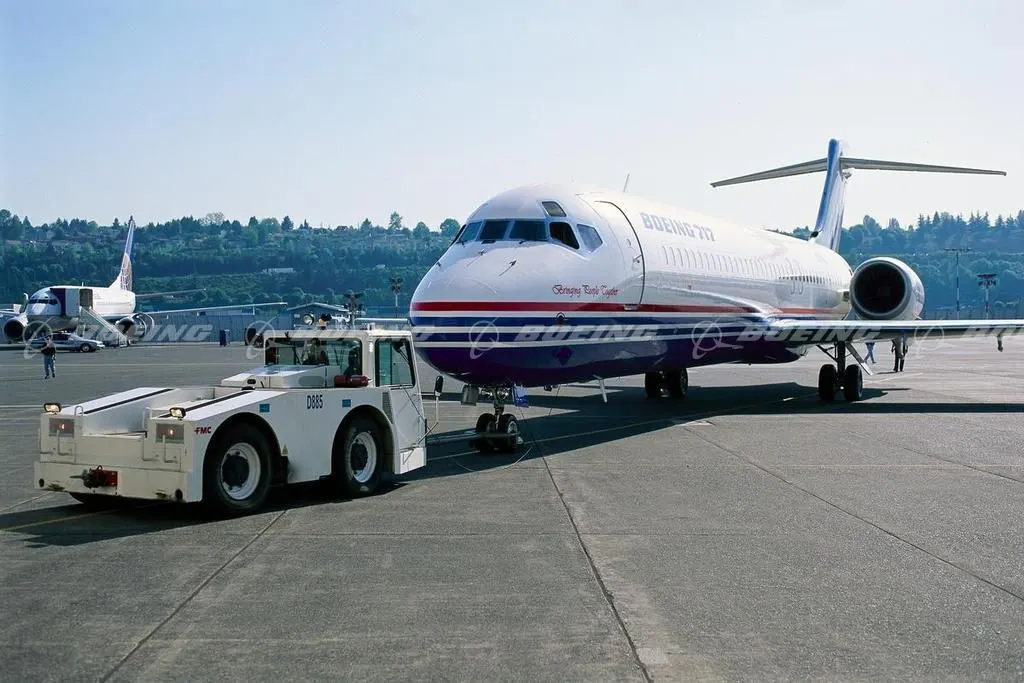
The forces required to push/ pull an aircraft by a towing are rolling resistance force and areodynamic drag force.
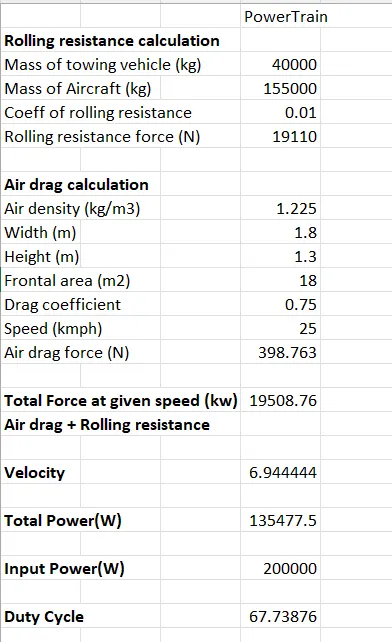
1)Rolling resistance force:- As we have discussed in part-A 5c. It is the force resisting the motion when a body (such as a ball, tire, or wheel) rolls on a surface. Its governing equation is given as
F= *m*g
where,
= Rolling resistance coefficient
m= Mass of the body
g= acceleration due to gravity
2)Aerodynamic Drag Force:-
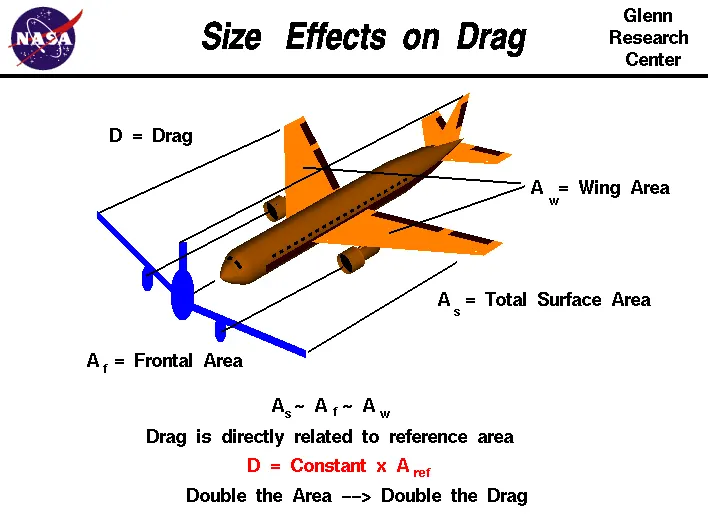
It is the force opposing the motion of the body. The drag coefficient is a common measure in automotive design as it pertains to aerodynamics. Drag is a force that acts parallel to and in the same direction as the airflow. The drag coefficient of an automobile measures the way the automobile passes through the surrounding air. When automobile companies design a new vehicle, they take into consideration the automobile drag coefficient in addition to the other performance characteristics. Aerodynamic drag increases with the square of speed; therefore, it becomes critically important at higher speeds. Reducing the drag coefficient in an automobile improves the performance of the vehicle as it pertains to speed and fuel efficiency. The governing equation of these force is given as following:

where,
 = drag force
 = mass density of the air
 = flow velocity relative to the object
 = drag coefficient
 = reference area
Calculation:-
let us assume that,
Mass of Towing Vehicle= 40,000kg
Mass of aircraft = 155,000kg
Total mass (m)= 40,000+155,000 =195,000kg
Frontal Area of the aircraft (A) =18 m2
Speed of the vehicle ( ) =25Kmph
converting it into m/sec
= 25*(1000/3600)=6.9445m/sec
Drag coefficient (Cd) =0.75
Air density ( ) =1.225Kg/m3
Calculating Rolling resistance Force (Frr) = *m*g
= 0.01*195,000*9.8
= 19,110N
Calculating Aerodynamic Drag Force (Fd)=0.5* * Cd*A* v^2
=0.5*1.225*18*0.75*(6.9445)2
=398.769N
Therefore the total Force required to push/pull the aircrcraft by the towing vehicle (F) = Frr+ Fd
= 19,110+ 398.769
= 19,508.769 N
Calculating the power (p) = Force*Velocity
= 19508.769* 6.9445
=135.478kW
Q.6 b) ANS -
Blocks Used:-
1)Constant
2)Sum
3)Product
4)Square
5)Display
Simulink Model -
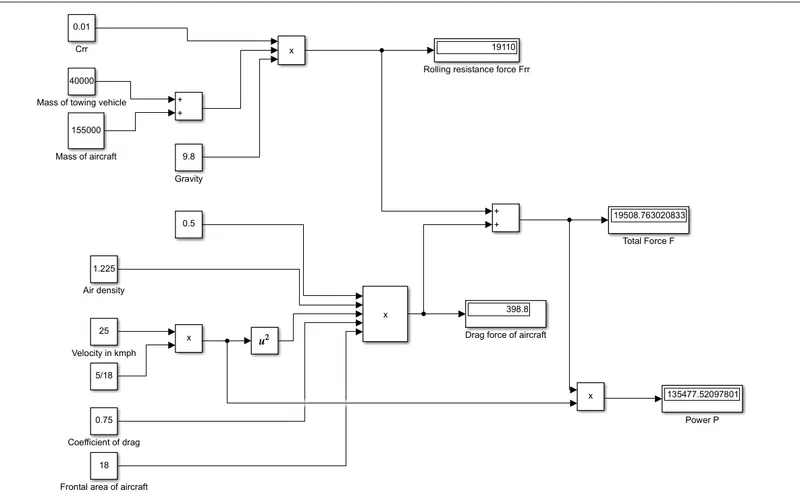
Explaination:-
In order to understand the above simulink model we do reverse engineering.
- For calculating power we have to multiply both total force(F) and velocity in m/sec for this we have used 'product' block (P=F*V).
- For calculating the Total Force(F) we have added both Frr & Fd by using 'Sum' block as shown in the above figure.
- To find the value of rolling resistance (Frr) we used product to multiply the values Crr, Total mass(m) & gravity (g) which are to be entered in the 'Constant' block.
- Similarly for calculating Drag force(Fd) we have to multiply the velocity in m/sec,Drag coefficient, Frontal area of aircraft(A) and a constant value 0.5 which are to be entered in 'constant' block.
- In order to convert velocity in Kmph to m/sec we have multiplied it with 5/18.
Q.7 ANS -
Lets consider the same values that are used previously to develop the electric power train of towing truck.
let us assume that,
Mass of Towing Vehicle= 40,000kg
Mass of aircraft = 155,000kg
Total mass (m)= 40,000+155,000 =195,000kg
Frontal Area of the aircraft (A) =18 m2
Speed of the vehicle ( ) =25Kmph
converting it into m/sec
= 25*(1000/3600)=6.9445m/sec
Drag coefficient (Cd) =0.75
Air density ( ) =1.225Kg/m3
Calculating Rolling resistance Force (Frr) = *m*g
= 0.01*195,000*9.8
= 19,110N
Calculating Aerodynamic Drag Force (Fd)=0.5* * Cd*A* v^2
=0.5*1.225*18*0.75*(6.9445)2
=398.769N
Therefore the total Force required to push/pull the aircrcraft by the towing vehicle (F) = Frr+ Fd
= 19,110+ 398.769
= 19,508.769 N
Calculating the power (p) = Force*Velocity
= 19508.769* 6.9445
=135.478kW
The power required to push/pull an aircraft by a towing vehicle is 135.478 kwh
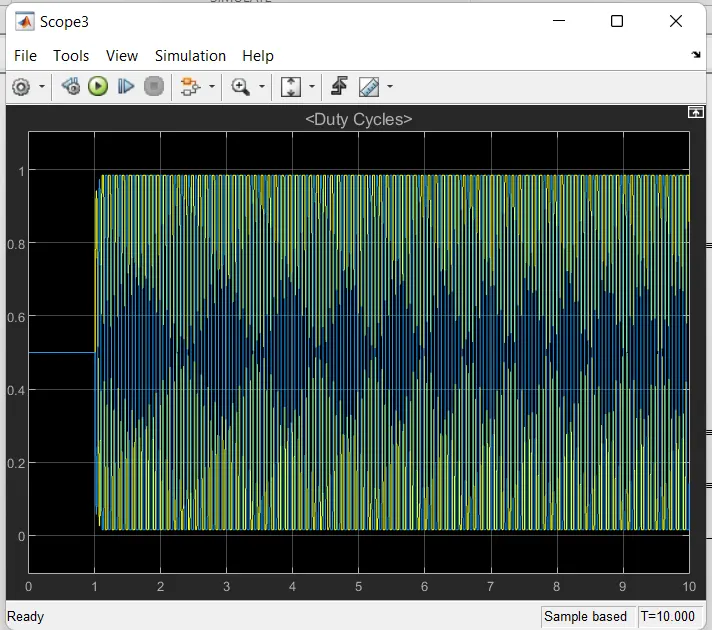
The Duty cycle is given by
Duty cycle = (output power/ input power)*100
Assuming input power of battery is 200 kwh
Duty cycle = (output power/ input power)
Duty cycle = (135.478/200)*100
Duty cycle = 0.677*100
Duty cycle = 67.7%.
Model :
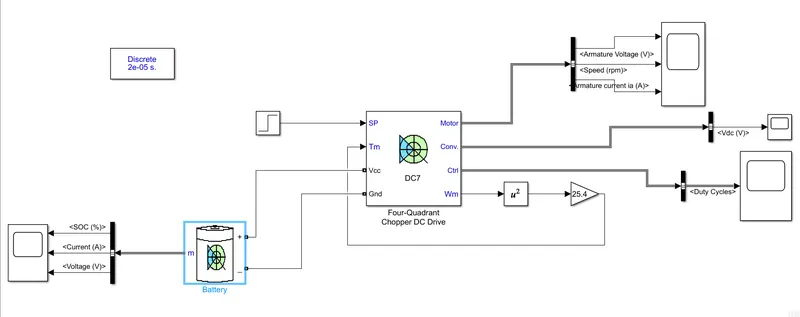
Used Blocks -
1. Battery, 2. Step, 3. Four quadrant chopper DC Drive(DC7 Block), 4. Scope, 5. Bus selector, 6. Power gui, 7. Gain, 8. Square.
Connections -
1. We used Four quadrant chopper DC Drive block in this block included motor, converter, controller, Vcc, Gnd, Torque and SP.
2. SP connected to step block.
3. Vcc and Ground connected to possitive and negative terminal of the battery.
4. Motor connected to scope in which we found Voltage,Speed,Current.
5. Torque connected to speed.
we know the relation of the speed with torque is directly proportional.
6. Output of controller and converter connected to the scope.
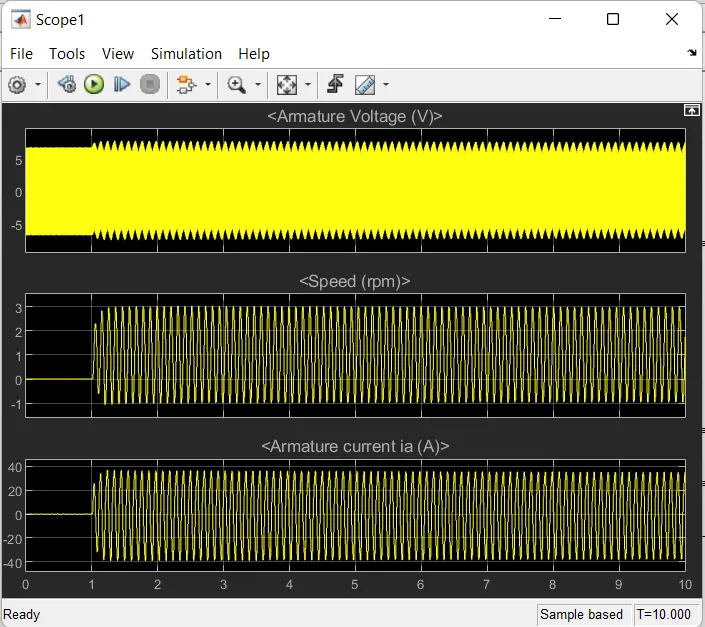
Result -
Motor speed,Current,Voltage -
Duty cycle -
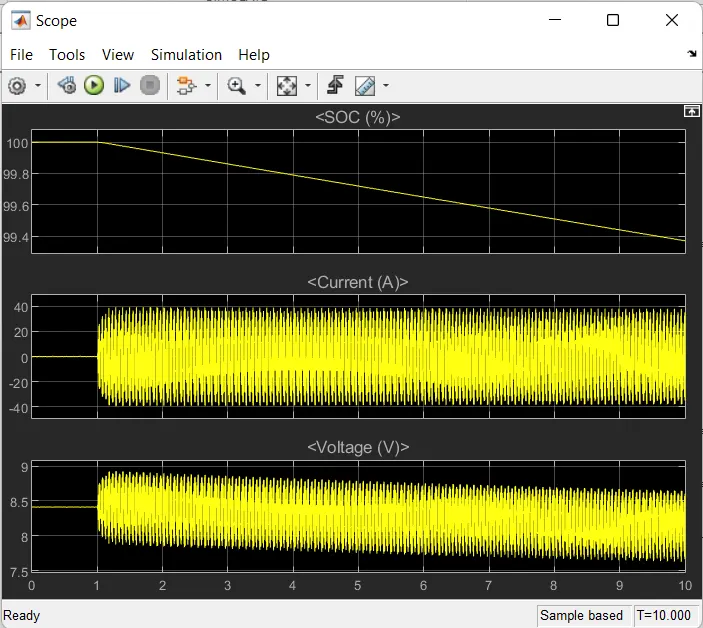
Battery SOC,Current,Voltage -
Q.7 b)