Project-1: Powertrain for aircraft in runways
OBJECTIVES :--
Part A:--
1. Search and list out the total weight of various types of aircrafts.
2. Is there any difference between ground speed and air speed?
3. Why is it not recommended to use aircraft engine power to move it on the ground at Airport?
4. How an aircraft is pushed to runway when its ready to take off?
5. Learn about take off power, tyre design, rolling resistance, tyre pressure, brake forces when landing.
Part B:--
6. A. With necessary assumptions, calculate the force and power required to push / pull an aircraft by a towing vehicle.
B. Develop the model for the calculated force and power using Simulink.
7. A. Design an electric powertrain with type of motor, it’s power rating, and energy requirement to fulfill aircraft towing application in Simulink. Estimate the duty cycle range to control the aircraft speed from zero to highest. Make all required assumptions. Prepare a table of assumed parameters. Draw a block diagram of powertrain.
(Hint :DC7 Block)
B. Also, Design the parameters in excel sheet.
PART-A
QUESTION:1. Search and list out the total weight of various types of aircrafts.
ANSWER:--
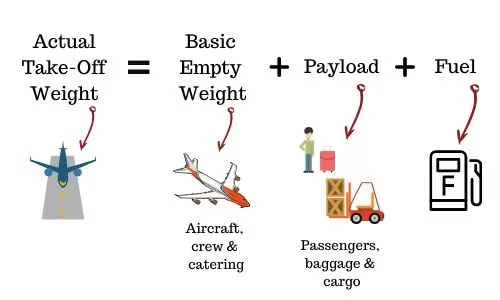
The "Aircraft Gross Weight" (also known as the All-Up Weight And Abbreviated AUW) is the total aircraft weight at any moment during the flight or ground operation.
An aircraft's gross weight will decrease during a flight due to fuel and oil consumption. An aircraft's gross weight may also vary during a flight due to payload dropping or In-Flight ReFueling
At the moment of releasing its brakes, the gross weight of an aircraft is equal to its takeoff weight. During flight, an aircraft's gross weight is referred to as the en-route weight or in-flight weight.
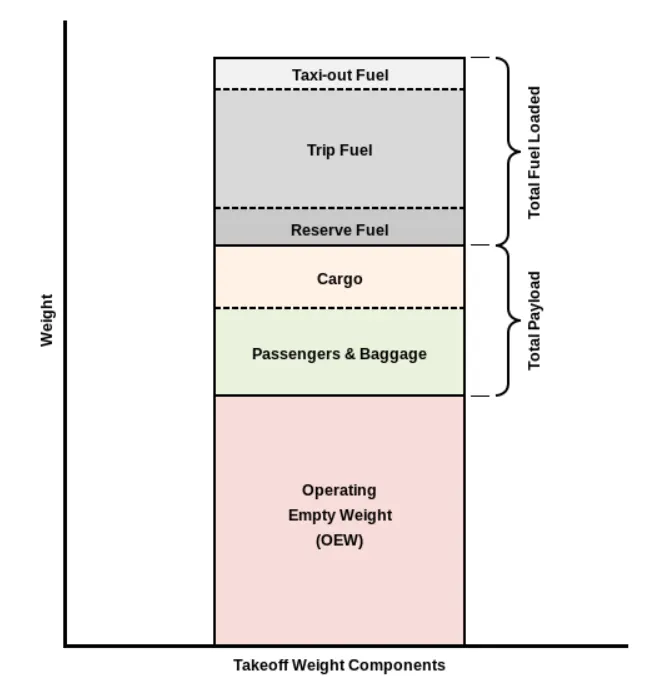
The following image Shows takeoff weight components.
The total weight of various types of aircrafts Are Shown Below :--
"MTOW = Maximum take-off weight, MLW = Maximum landing weight, TOR = Take-off run (SL, ISA+15°, MTOW), LR = Landing run (SL, ISA+15°, MLW)"
| Type | MTOW [kg] | MLW [tonnes] | TOR [m] | LR [m] | ICAO category | FAA category |
|---|---|---|---|---|---|---|
| Antonov An-225 | 640,000 | 591.7 | 3500 | Heavy | Super | |
| Scaled Composites Model 351 Stratolaunch | 589,670 | 3660 | Heavy | Super | ||
| Airbus A380-800[1][2][3] | 575,000 | 394 | 3100 | 1930 | Heavy | Super |
| Boeing 747-8F | 447,700 | 346.091 | 3100 | 1800 | Heavy | Heavy |
| Boeing 747-8 | 443,613 | 306.175 | 3100 | Heavy | Heavy | |
| Boeing 747-400ER | 412,770 | 295.742 | 3090 | Heavy | Heavy | |
| Antonov An-124-100M | 405,060 | 330 | 2520 | 900 | Heavy | Heavy |
| Boeing 747-400 | 396,900 | 295.742 | 3018 | 2179 | Heavy | Heavy |
| Lockheed C-5 Galaxy[4][5][6] | 381,000 | 288.417 | 2530 | 1494 | Heavy | Heavy |
| Boeing 747-200[7] | 377,840 | 285.700 | 3338 | 2109 | Heavy | Heavy |
| Boeing 747-300[7] | 377,840 | 260.320 | 3222 | 1905 | Heavy | Heavy |
| Airbus A340-500[8] | 371,950 | 240 | 3050 | 2010 | Heavy | Heavy |
| Airbus A340-600[8] | 367,400 | 256 | 3100 | 2100 | Heavy | Heavy |
| Boeing 777F | 347,800 | 260.816 | 2830 | Heavy | Heavy | |
| Boeing 777-300ER | 351,800 | 251.29 | 3100 | Heavy | Heavy | |
| Boeing 777-200LR | 347,450 | 223.168 | 3000 | Heavy | Heavy | |
| Boeing 747-100[7] | 340,200 | 265.300 | Heavy | Heavy | ||
| Airbus A350-1000 | 308,000 | 233.5 | Heavy | Heavy | ||
| Boeing 777-300 | 299,370 | 237.683 | 3380 | Heavy | Heavy | |
| Boeing 777-200ER | 297,550 | 213.00 | 3380 | 1550 | Heavy | Heavy |
| Airbus A340-300[8][9] | 276,700 | 190 | 3000 | 1926 | Heavy | Heavy |
| McDonnell Douglas MD-11 | 273,300 | 185 | 2990 | 1890 | Heavy | Heavy |
| Airbus A350-900 | 270,000 | 175 | 2670 | 1860 | Heavy | Heavy |
| Ilyushin Il-96M | 270,000 | 195.04 | 3115 | 2118 | Heavy | Heavy |
| McDonnell Douglas DC-10 | 256,280 | 183 | 2990 | 1890 | Heavy | Heavy |
| Boeing 787-9[10] | 254,000 | 192.777 | 2900 | Heavy | Heavy | |
| Boeing 787-10[10] | 254,000 | 201.849 | Heavy | Heavy | ||
| Airbus A340-200[8][11] | 253,500 | 181 | 2990 | Heavy | Heavy | |
| Airbus A330-900 | 251,000 | 191 | 3100 | Heavy | Heavy | |
| Ilyushin IL-96-300 | 250,000 | 175 | 2600 | 1980 | Heavy | Heavy |
| Airbus A330-300[12][13] | 242,000 | 185 | 2500 | 1750 | Heavy | Heavy |
| Airbus A330-200[12][13] | 242,000 | 180 | 2220 | 1750 | Heavy | Heavy |
| Lockheed L-1011-500 | 231,300 | 166.92 | 2636 | Heavy | Heavy | |
| Boeing 787-8[10] | 228,000 | 172.365 | 3300 | 1695 | Heavy | Heavy |
| Lockheed L-1011-200 | 211,400 | Heavy | Heavy | |||
| Ilyushin IL-86 | 208,000 | 175 | Heavy | Heavy | ||
| Boeing 767-400ER | 204,000 | 158.758 | 3414 | Heavy | Heavy | |
| Airbus A300-600R[14] | 192,000 | 140 | 2385 | 1555 | Heavy | Heavy |
| Boeing 767-300ER | 187,000 | 136.08 | 2713 | 1676 | Heavy | Heavy |
| Concorde | 185,000 | 111.1 | 3440 | 2220 | Heavy | Heavy |
| Airbus A300-600[14] | 163,000 | 138 | 2324 | 1536 | Heavy | Heavy |
| Boeing 767-300 | 159,000 | 136.078 | 2713 | 1676 | Heavy | Heavy |
| Airbus A310-300[14] | 157,000 | 124 | 2290 | 1490 | Heavy | Heavy |
| Vickers VC10 | 152,000 | 151.9 | Heavy | Heavy | ||
| Boeing 707-320B[15] | 151,000 | 97.5 | Heavy | Heavy | ||
| Boeing 707-320C[15] | 151,000 | 112.1 | Heavy | Heavy | ||
| Douglas DC-8-61 | 147,000 | Heavy | Heavy | |||
| Airbus A310-200[14] | 142,000 | 123 | 1860 | 1480 | Heavy | Heavy |
| Airbus A400M | 141,000 | 122 | 980 | 770 | Heavy | Heavy |
| Douglas DC-8-32 | 140,000 | Heavy | Heavy | |||
| Douglas DC-8-51 | 125,000 | Medium | Large | |||
| Boeing 757-300 | 124,000 | 101.6 | 2550 | 1750 | Medium | Large |
| Boeing 707-120B[15] | 117,000 | 86.3 | Medium | Large | ||
| Boeing 757-200 | 116,000 | 89.9 | 2347 | 1555 | Medium | Large |
| Boeing 720B[16] | 106,000 | 79.5 | Medium | Large | ||
| Boeing 720[16] | 104,000 | 79.5 | Medium | Large | ||
| Tupolev Tu-154M | 104,000 | 80 | Medium | Large | ||
| Tupolev Tu-204SM | 104,000 | 87.5 | 2250 | Medium | Large | |
| Convair 880 | 87,500 | Medium | Large | |||
| Boeing 737-900 | 85,000 | 66.36 | 2500 | 1704 | Medium | Large |
| Boeing 737-900ER | 85,000 | 71.35 | 2804 | 1829 | Medium | Large |
| Boeing 727-200 Advanced[17] | 84,000 | 70.1 | Medium | Large | ||
| Airbus A321-100[18] | 83,000 | 77.8 | 2200 | 1540 | Medium | Large |
| Boeing 737-800 | 79,000 | 65.32 | 2308 | 1634 | Medium | Large |
| Boeing 727-200[17] | 78,000 | 68.1 | Medium | Large | ||
| McDonnell-Douglas MD-83 | 73,000 | 63.28 | Medium | Large | ||
| Boeing 727-100[17] | 72,500 | 62.4 | Medium | Large | ||
| Boeing 727-100C[17] | 72,500 | 62.4 | Medium | Large | ||
| McDonnell-Douglas MD-90-30 | 71,000 | 64.41 | 2165 | 1520 | Medium | Large |
| de Havilland Comet 4 | 70,700 | Medium | Large | |||
| Boeing 737-700 | 70,000 | 58.06 | 1921 | 1415 | Medium | Large |
| Airbus A320-100[18] | 68,000 | 66 | 1955 | 1490 | Medium | Large |
| Boeing 737-400 | 68,000 | 54.9 | 2540 | 1540 | Medium | Large |
| de Havilland Comet 3 | 68,000 | Medium | Large | |||
| Boeing 377 | 67,000 | Medium | Large | |||
| Boeing 737-600 | 66,000 | 54.66 | 1796 | 1340 | Medium | Large |
| Airbus A220-300 | 65,000 | 57.61 | 1890 | 1494 | Medium | Large |
| Hawker Siddeley Trident 2E | 65,000 | Medium | Large | |||
| Airbus A319[18] | 64,000 | 62.5 | 1850 | 1470 | Medium | Large |
| Boeing 737-300 | 63,000 | 51.7 | 1939 | 1396 | Medium | Large |
| Boeing 737-500 | 60,000 | 49.9 | 1832 | 1360 | Medium | Large |
| Airbus A220-100 | 59,000 | 50.80 | 1463 | 1356 | Medium | Large |
| Airbus A318[18] | 59,000 | 57.5 | 1375 | 1340 | Medium | Large |
| Boeing 717-200HGW | 55,000 | 47.174 | 1950 | Medium | Large |
- Maximum take-off weight:--
The maximum takeoff mass (MTOM), often referred to as maximum takeoff weight (MTOW), of an aircraft is a value defined by the aircraft manufacturer. It is the maximum mass at which the aircraft is certified for take off due to structural or other limits. MTOW is usually specified in units of kilograms or pounds.
- Maximum landing weight:--
- Maximum taxi weight:--
The maximum taxi weight (also known as the Maximum Ramp Weight (MRW) is the maximum weight authorized for maneuvering (taxiing or towing) an aircraft on the ground as limited by aircraft strength and airworthiness requirements. It includes the weight of taxi and run-up fuel for the engines and the APU (Auxillary Power Unit).
It is greater than the maximum takeoff weight due to the fuel that will be burned during the taxi and runup operations.
- Maximum zero-fuel weight (MZFW):--
The maximum zero fuel weight (MZFW) is the maximum weight allowed before usable fuel and other specified usable agents (engine injection fluid, and other consumable propulsion agents) are loaded in defined sections of the aircraft as limited by strength and airworthiness requirements.
QUESTION,2. Is there any difference between ground speed and air speed?
ANSWER:--
- Ground Speed:--
Ground speed is the horizontal speed of an aircraft relative to the Earth’s surface. It is vital for accurate navigation that the pilot has an estimate of the ground speed that will be achieved during each leg of a flight. An aircraft diving vertically would have a ground speed of zero
- Air Speed:--
The speed of an aircraft relative to the air through which it is moving
Airspeed = Ground Speed - Wind Speed
On a perfectly still day, the airspeed is equal to the ground speed. But if the wind is blowing in the same direction that the aircraft is moving, the airspeed will be less than the ground speed.
Before Going In To The Diffrence In Them The "Wind Speed" Comes Into Picture
- Wind Speed:--
For a reference point picked on the ground, the air moves relative to the reference point at the wind speed. Notice that the wind speed is a Vector Quantity and has both a magnitude and a direction. Direction is important. A 20 mph wind from the west is different from a 20 mph wind from the east. The wind has Components in all three primary directions (north-south, east-west, and up-down). In this figure, we are considering only velocities along the aircraft's flight path. A positive velocity is defined to be in the direction of the aircraft's motion. We are neglecting Cross Wind which occur perpendicular to the flight path but parallel to the ground, and Up drafts and down drafts which occur perpendicular to the ground.
The difference between ground speed and air speed:--
Airspeed is the vector difference between the ground speed and the wind speed. On a perfectly still day, the airspeed is equal to the ground speed. But if the wind is blowing in the same direction that the aircraft is moving, the airspeed will be less than the ground speed.
Here are the major differences between ground speed and true airspeed: An aircraft's true airspeed tells us how fast it moves relative to the surrounding air, while the ground speed is its horizontal speed relative to the earth's surface. In still air, an aircraft's ground speed is equal to its true airspeed.
Example:--
- For example taking wind speed as 20 km/hr and runway is east-west runway the wind blowing towards west and the flight runs at 80 km/hr the wind speed acting in the west and the flight takes off east then the
`Airspeed=Groundspeed(80)- W i n d Speed(-20) =100 kmph`
If the planes runs towards west along the wind blowing direction then
The`Airspeed=Groundspeed(80) - W i n d Speed(20)=60kmph`
Hence there is a difference between ground speed and air speed.
| GROUND SPEED | AIR SPEED |
| 1. Ground speed is the speed of the aeroplane relative to the earth surface. |
1. Air speed is the speed of aeroplane relative to the air it is flying in. |
| 2. Ground speed determines how fast an aircraft will get to its destination. |
2. Air speed determines whether there is enough airflow around an aircraft to make it fly. |
| 3. Ground speed is the sum of air speed and wind speed. |
3. Air speed is independent of ground speed. |
QUESTION,3.Why is it not recommended to use aircraft engine power to move it on the ground at Airport?
ANSWER:--
For movement on the ground the aircraft uses it own engine power, which is called taxing.
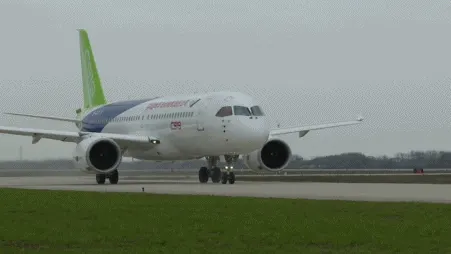
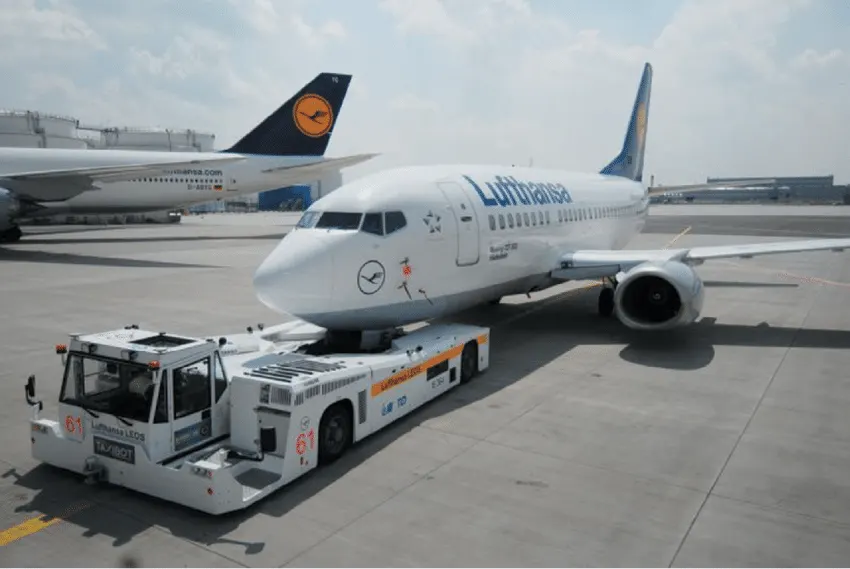
Although many aircrafts are capable of moving in backward using reverse thrust, as result the jet blast or prop wash might cause damage to the terminal building or equipment. Engine close to ground may also blow sand and debris forward and then suck them into the engine, causing damage to the engine. Therefore there are pushback trucks in the airport. A pushback truck lifts the front weel of the aircraft, their role in most airports is to move the aircraft away from the parking spot on to the taxiways, which is called towing.
Unwanted consequences mainly arising from the unintended movement of the aircraft during engine running.
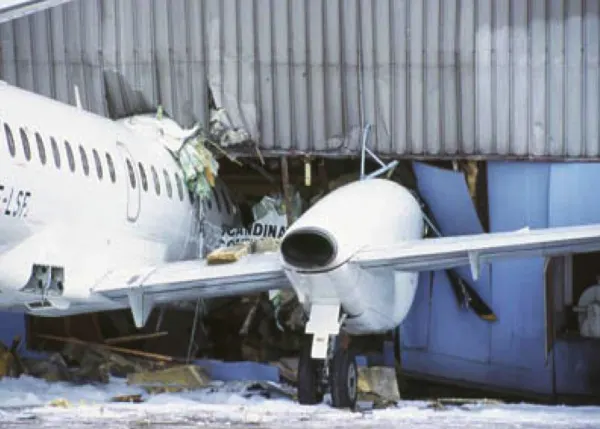
- Effectively a loss of control can happen, especially during high power engine running. Damage can occur to the aircraft itself, other aircraft nearby or to airside structures.
- There is a risk of injury to ground support personnel who may be in relatively close proximity to the aircraft.
- It is easier for truck driver to see the surroundings better than the pilot sitting in the cockpit with limited window. The pushback driver knows the airport better than the pilot.
- It also saves fuel. virgin Atlantic had proposed a new system in which pushback truck will move the aircraft all the way to runway to save fuel and reduce impact of environment.
- The plane engines are very loud. When more than one plane will add up their sound, than it will not be pleasent for passangers and others near airport.
QUESTION,4. How an aircraft is pushed to runway when its ready to take off?
ANSWER:--
Genrelly There are 3 Steps That The AirCraft Has To Gothrugh :--
- Towing
- Taxing
- Takeoff
- TOWING:--
In the parking areas, where taxing the aircraft is not practical or is unsafe, such as moving aircraft in and out of mainteance hangars, or moving aircraft that are not under their own power or moving backward, then towing of aircraft is performed using the power of a specialized ground vehicle attached to or supporting the nose landing gear. The traditional method of allowing the ground vehicle to move an aircraft is to attach it to the aircraft nose landing gear by means of towbar.
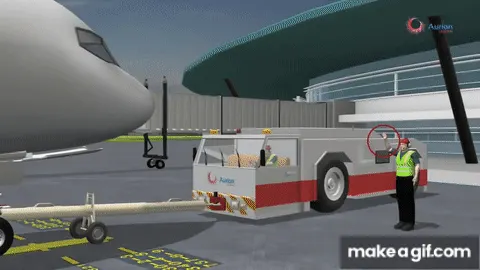
As the pilot can't see what is behind the aircraft, steering is done by pushback tractor driver and depending on the aircraft type and airline procedure, a bypass pin may be temporarily installed into the nose gear to disconnect it from the aircraft's normal steering mechanism. Once the towing is completed, the towbar is disconnected and the aircraft can taxiing forward under its own power.
- TAXING:--
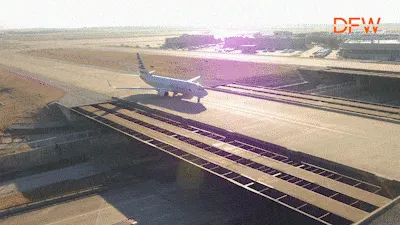
Taxing is the movement of an aircraft on the ground under its own power while on the suface. The aircraft always moves following the yellow lines, to avoid collision with the surrounding buildings, vehicle or other aircrafts. The taxiing motion has a speed limit. Before making turn the pilot reduces speed further to prevent tire skids just like other vehicles. The reason for taxing is to reach the vehicle into runway or from runway to terminal.
- TAKE-OFF:--
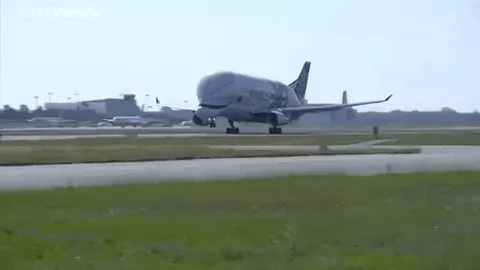
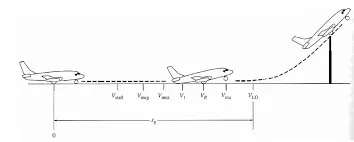
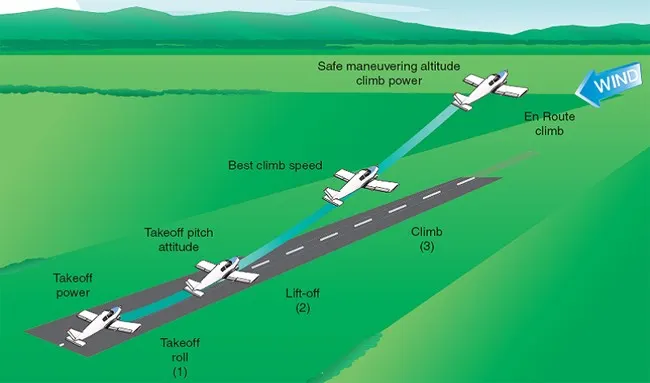
Take-off is the phase of flight in which an aircraft goes through a transition from moving along the ground (taxiing) to flying in the air, usually starting on a runway. Usually the engines are run at full power during takeoff. Following the taxi motion, the aircraft stops at the starting line of the runway. Before takeoff, the engines, particularly piston engines, are routinely run up at high power to check for engine-related problems. This makes a considerable noise. When the pilot releases the brakes, the aircraft starts accelerating rapidly until the necessary speed for take-off is achieved.
QUESTION,5.Learn about take off power, tyre design, rolling resistance, tyre pressure, brake forces when landing
ANSWER:--
- TAKE-OFF POWER:--
For light aircraft, usually full power is used during takeoff. Large transport category (airliner) aircraft may use a reduced power for takeoff, where less than full power is applied in order to prolong engine life, reduce maintenance costs and reduce noise emissions. In some emergency cases, the power used can then be increased to increase the aircraft's performance. Before takeoff, the engines, particularly piston engines, are routinely run up at high power to check for engine-related problems. The aircraft is permitted to accelerate to rotation speed (often referred to as Vr). The term rotation is used because the aircraft pivots around the axis of its main landing gear while still on the ground, usually because of gentle manipulation of the flight controls to make or facilitate this change in aircraft attitude (once proper air displacement occurs under / over the wings, an aircraft will lift off on its own; controls are to ease that in).
The nose is raised to a nominal 5°–15° nose up pitch attitude to increase lift from the wings and effect liftoff. For most aircraft, attempting a takeoff without a pitch-up would require cruise speeds while still on the runway.
- TYRE DESING :--
An aircraft tire is designed to withstand extremely heavy loads for short duration of time. The number of tires required for aircraft increases with the weight of the aircraft, as the weight of the airplane needs to be distributed more evenly. For example -A Boeing 737NG & 737MAX uses 6 wheels, Boeing 787 uses 10 wheels, Boeing 777 uses 14 wheels and Airbus A380 uses 22 wheels.
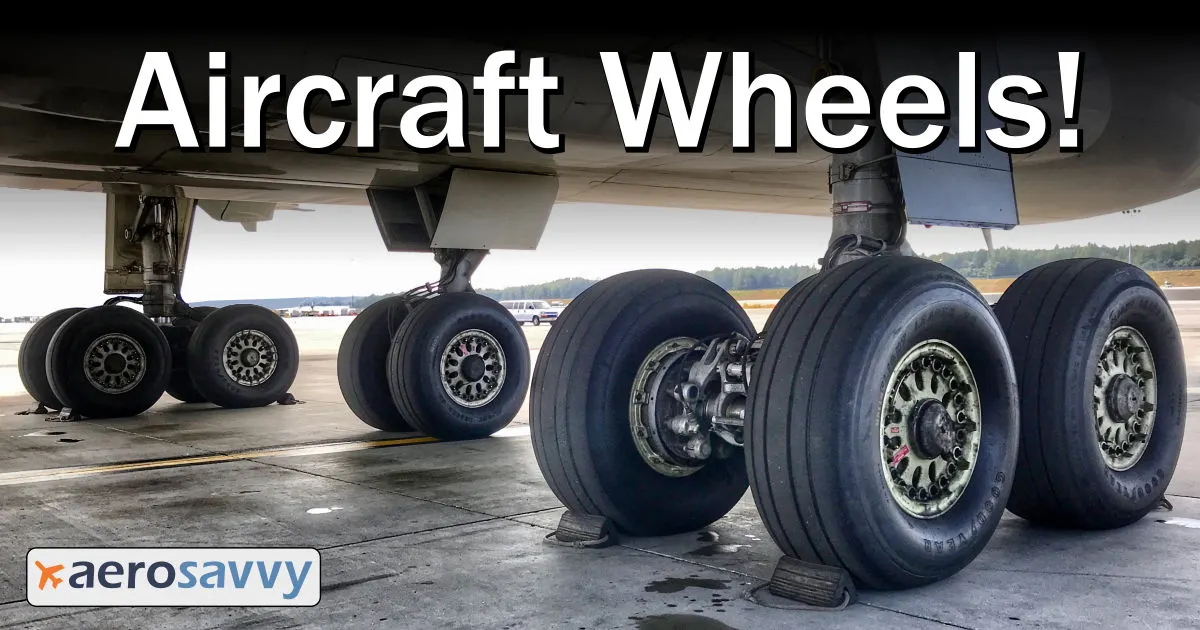
Aircraft tires also include fusible plugs (which are assembled on the inside of the wheels), designed to melt at a certain temperature. Tires often overheat if maximum braking is applied during an aborted takeoff or an emergency landing. The fuses provide a safer failure mode that prevents tire explosions by deflating in a controlled manner, thus minimizing damage to aircraft and objects in the surrounding environment.
Designing aircraft tires is a very intense undertaking. Carcass plies are used to form the tire. They are sometimes called casing plies. An aircraft tyre is constructed for the purpose it serves.
(i)They support the weight of an aircraft while it is on the ground.
(ii)It also provides the necessary traction for braking and stopping of an aeroplane.
(iii)Tyre also helps to absorb the shock of landing and provide cushioning the roughness of takeoff, roll-out, and taxi operations.
Once an aircraft manufacturer goes to the tire manufacturer with the size and weight requirements, the tire manufacturer begins the process of designing a tire that meets the needs of the aircraft manufacturer as well as all regulatory requirements — including foreign regulations in many cases. Engineers are challenged with designing tires with cool running, heat-resistant materials while simultaneously exceeding tire service requirements.
Based on the type of plies used the tyres can be:
Two types of tires are used in aircraft applications — bias-ply tires and radial tires. Although both types of tires share some similarities in design, there are difference between a radial tyre and bias (cross-ply) tyre is the lay of the plies within the tyre carcass. The remainder of the tyre is very similar in construction in both.
Radial ply tires - these tyres feature a flexible casing which is constructed of rubber-coated ply cords which extend around the beads and are substantially at 90° to the centerline of the tread. The casing is stabilized by an essentially inextensible circumferential belt.
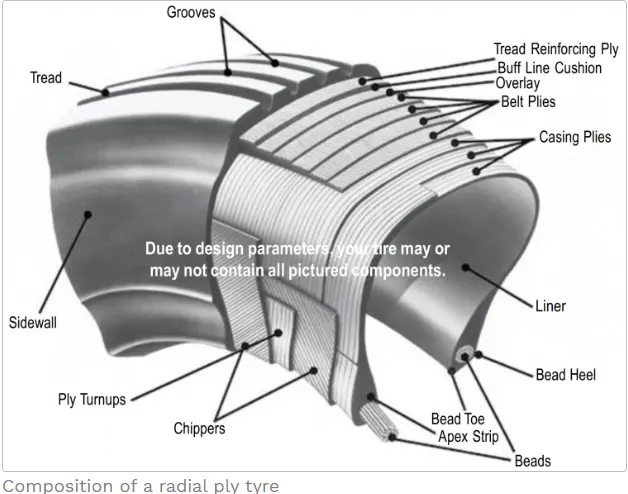
Bias ply tires - these tyres feature a casing which is constructed of alternate layers of rubber-coated ply cords which extend around the beads and are at alternate angles substantially less than 90° to the center line of the tread.
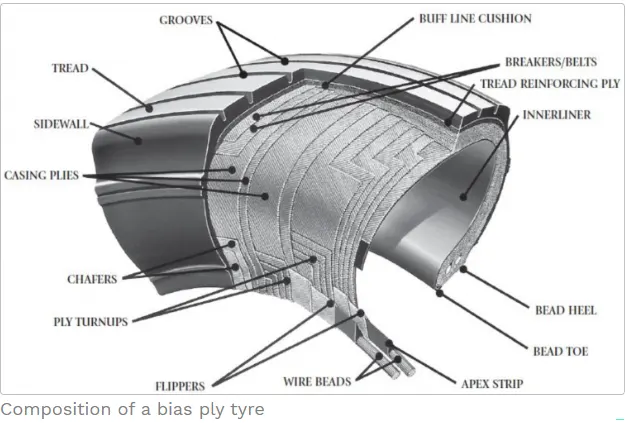
Based on the method for containing the inflation gas the tyres can be:
- Tube-type tyres - these require tubes for inflation retention.
- Tubeless tyres - these do not require tubes. They are constructed with an innerliner (integral rubber lining that is engineered to prevent the diffusion of the inflation gas into the casing.)
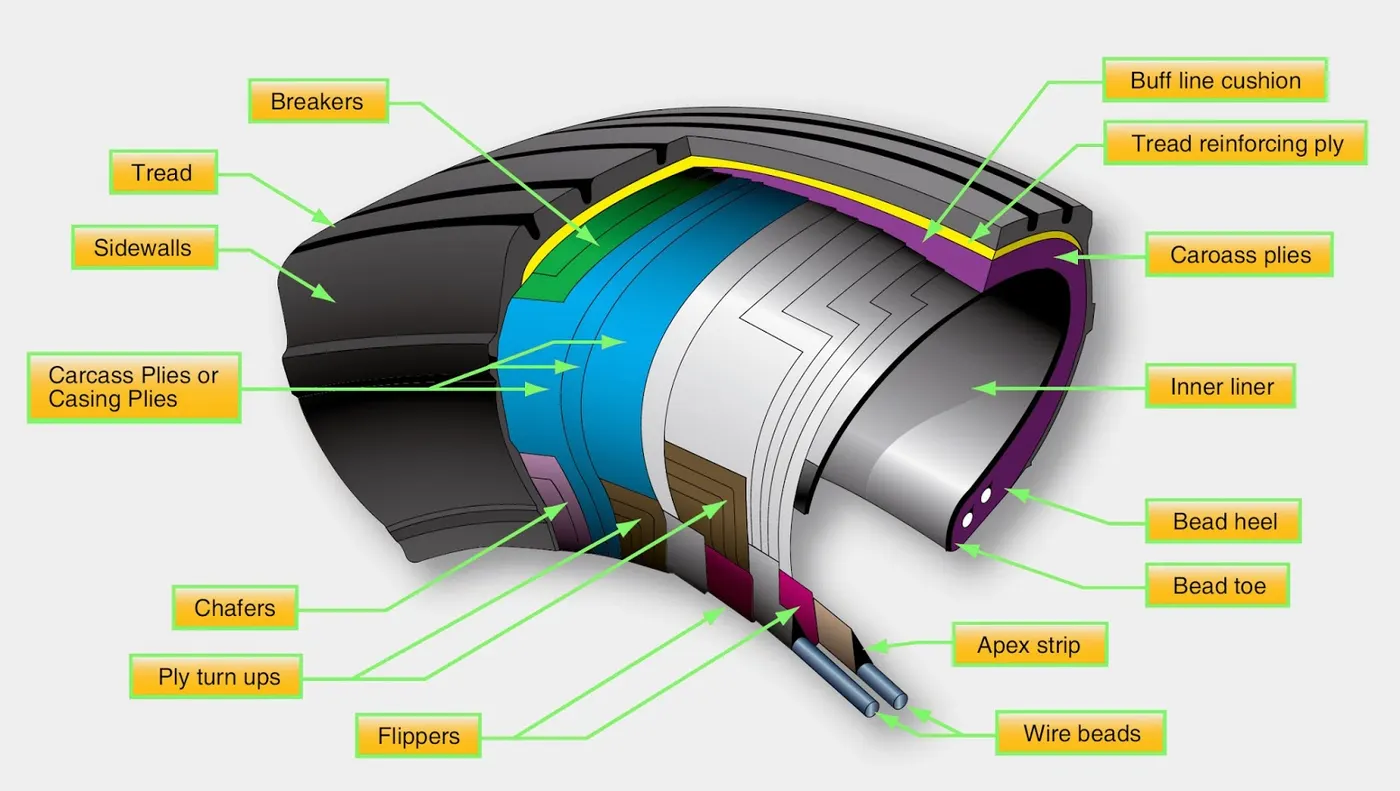
The Tyre Components Are Explained Briefly:--
Breakers:-- Breakers are reinforcing plies of rubber-coated fabric placed under the buff line cushion to protect casing plies and strengthen and stabilize the tread area. They are considered an integral part of the casing construction.
Tread:-- The tread is made of rubber mixed with other additives to obtain the desired level of toughness, durability, and resistance to wear. The tread pattern is designed to aircraft operational requirements, with the ribbed tread design used widely due to its good traction under varying runway conditions.
Sidewalls:-- The sidewall is a protective layer of rubber that covers the outer casing ply. It extends from the tread edge to the bead area.
Casing Plies:-- Alternate layers of rubber-coated fabric (running at opposite angles to one another) provide the strength of the tire
Chafers:-- A protective layer of rubber and/or fabric located between the casing plies and wheel to minimize chafing.
Ply Turnups:-- The casing plies are anchored by wrapping them around the wire beads, thus forming the ply turnups.
Flippers:-- Layers of rubberized fabric that help anchor the bead wires to the casing and improve the durability of the tire.
Wire Beads:-- Hoops of high tensile strength steel wire that anchor the casing plies and provide a firm mounting surface on the wheel. The outer edge of the bead that fits against the wheel flange is called the bead heel. The inner bead edge is called the bead toe.
Apex Strip:-- A wedge of rubber affixed to the top of the bead bundle.
Bead toe:-- It is the inner edge of the bead.
Bead heel:-- It is the outer edge of the heel.
Inner Liner:-- In tubeless tires, the liner is a layer of low permeability rubber that acts as a built-in tube and restricts gas from diffusing into the casing plies. In tube-type tires, a thinner liner is used to prevent tube chafing against the inside ply.
Caroass Plies:-- Layers of rubber-coated fabric piles which have the cords running from bead to bead. These provide the tire with strength in the sidewall area.
Tread Reinforcing Ply:-- One or more layers of fabric that strengthens and stabilizes the tread area for high-speed operation. It also serves as a reference for the buffing process when tires are retreaded.
Buff Line Cushion:-- The buff line cushion is made of rubber compound to enhance the adhesion between the tread reinforcing ply and the breakers or casing plies. It is of sufficient thickness to allow for the removal of the old tread when the tire is retreaded.
Tubeless tyres are more advantageous over tube-type. There is no longer the use of tube-type tyre in recent aviation.
Aircraft tyres must have an approved speed and load rating and have sufficient clearance when retracted through landing gear to allow for tyre growth. Tyre growth is the increase in the size of the tyre due to centrifugal forces at high speed.
Retreading:–- Retreading is methods of restoring a worn tyre by renewing the tread area or by renewing the tread area plus one or both sidewalls. Repairs are included in the tyre retreading process.
Load Rating:-- Load rating is the maximum permissible load at a specified inflation pressure.
Ply Rating:-- Ply Rating is used to identify the maximum recommended load rating and inflation pressure for a specified tyre. It is an index of tyre strength.
Speed Rating:--The speed rating is the maximum takeoff speed to which the tyre has been tested.
Skid Depth:-- Skid depth is the distance between the tread surface and the deepest groove as measured in the mould.
- ROLLING RESISTANCE:--
The resistance offered by the tyres against motion of vehicle/aircraft is called as rolling resistance, the rolling resistance is produced during take off/landing in the runway.
resistance co-efficient = urr (It varries for different types of environment)
| `mu_(rr)` Typical Values For Aircraft- | ||
| SURFACE | BRAKES OFF | BRAKES ON |
| Dry concrete/ asphalt | 0.03-0.05 | 0.3-0.5 |
| Wet concrete/ asphalt | 0.05 | 0.15-0.3 |
| Icy concrete/ asphalt | 0.02 | 0.06-0.10 |
| Hard turf | 0.05 | 0.4 |
| Firm dirt | 0.04 | 0.3 |
| Soft turf | 0.07 | 0.2 |
| Wet grass | 0.08 | 0.2 |
Rolling resistance force `F_(rr) = mu_(rr) * m * g`
- TYRE PRESSURE:--
Aircraft tires are usually inflated with nitrogen to minimize expansion and contraction from extreme changes in ambient temperature and pressure experienced during flight. Dry nitrogen expands at the same rate as other dry atmospheric gases (normal air is about 80% nitrogen), but common compressed air sources may contain moisture, which increases the expansion rate with temperature.
Tests of airliner aircraft tires have shown that they are able to sustain pressures of maximum 800 psi (55 bar; 5,500 kPa) before bursting. During the tests the tires have to be filled with water, to prevent the test room being blown apart by the energy that would be released by a gas when the tire bursts.
The main landing gear on the Concorde was typically inflated to 232 psi (16.0 bar), whilst its tail bumper gear tires were as high as 294 psi (20.3 bar). The high pressure and weight load on the Concorde tyres were a significant factor in the loss of Air France flight 4590
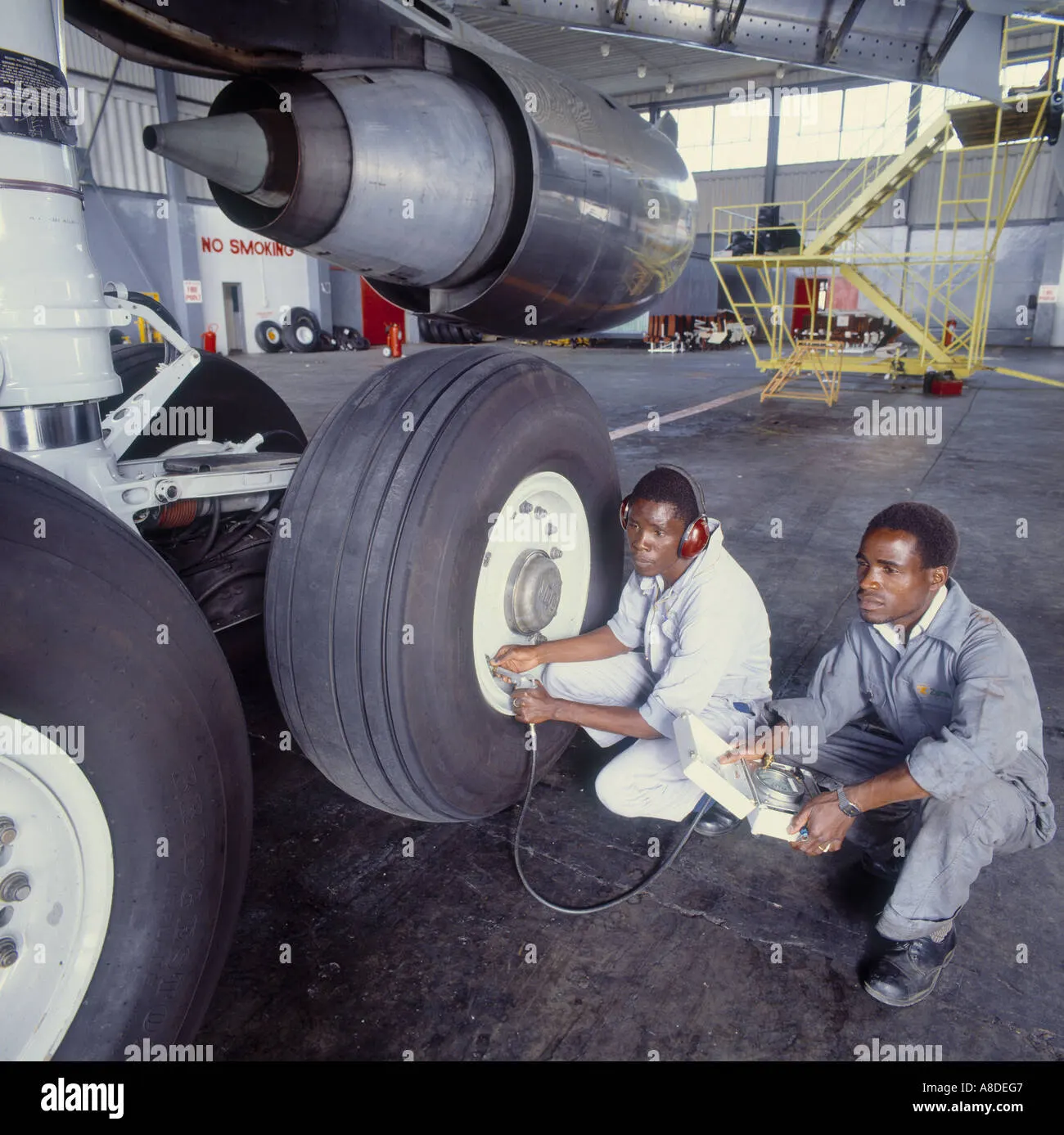
The pressure generally is vert high in an aircraft tire to reduce the rolling resistance and to withstand the weight. Usually the tyre pressure will be arround 190 to 320 psi based on the type of aircraft. Aircraft tyres are usually inflated with nitrogen to minimize expansion and contraction from extreme changes in ambient temperature and pressure experienced during flight.
According to U.S. Federal Aviation Administration(FAA) Technical Standard Order TSO-C62c, the maximum allowable tire pressure loss is 5% per day.
- BRAKE FORCES WHILE LANDING:--
Aircraft braking systems include: Aircraft disc brakes in the landing gear, used to brake the wheels while touching the ground. These brakes are operated hydraulically or pneumatically. In most modern aircraft they are activated by the top section of the rudder pedals ("toe brakes").
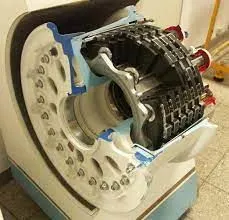
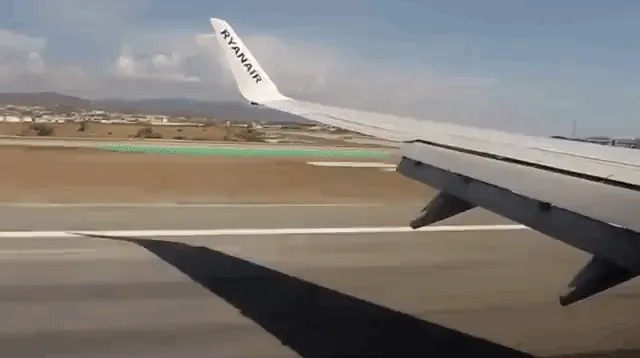
Stopping an aircraft landing at 180-200 mph requires a lot of braking force. To do this, the aircraft has brake unit on each of the wheels on the main gear assembly. On landing, pilots should use aerodynamic braking by applying extra back-pressure on the stick or yoke. Extreme caution should be used when applying brakes at any significant speed, and only when the end of the runway is quickly approaching. Never step on the brakes to make a runway exit. Applying the brakes at too high a speed could burn the tires, wear out the brakes, or result in a ground loop
- Thrust Reverse: that allow thrust from the engines to be used to slow the aircraft.

- Air Brake: It is dedicated flight control surface, that work by increasing drag.
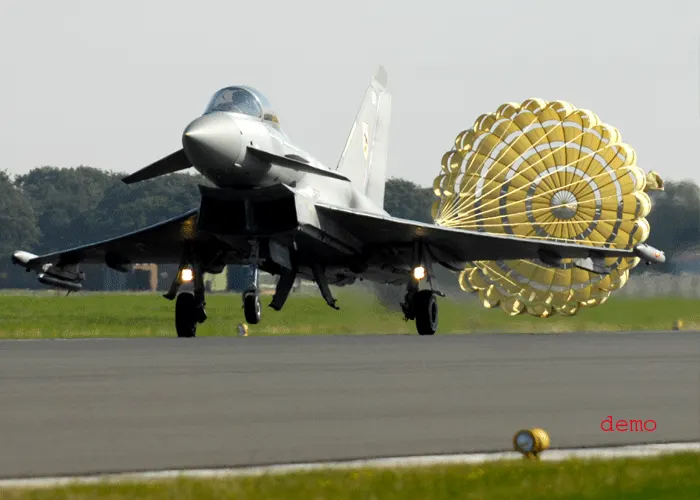
- Drogue Parachute: It is used by several former and current military and civilian aircraft
--------------------------------------------------------*************---------------------------------------------------------
PART-B
QUESTION,6.A. With necessary assumptions, calculate the force and power required to push / pull an aircraft by a towing vehicle.
ANSWERS:--
push or pull an aircraft by a towing vehicle, 3 type of forces will act on that vehicle.
Those are -
- Rolling resistance force
- Aerodynamic drag force
- Hill climbing force.
- Rolling resistance force(`F_(rr))`:--
Rolling resistance is the combination of forces that work against the forward motion of your vehicle. The weight of the vehicle, gravity and inertia, the amount of friction between the tires and the road surface, and air drag all play a part.
`therefore,F_(rr)=mu_(rr)*m*g`
Where,
`F_(rr)`= Rolling resistance
`mu_(rr)`=Rolling Resistance co-efficient
`m`= Total mass of the vehicle (vehicle mass + payload) in kg
`g`=gravitational constant , that is `9.8 m/s^2`
- Aerodynamic drag force(`F_(ad)`):--
An aerodynamic force is a force exerted on a body by the air in which the body is immersed, and is due to the relative motion between the body and the gas.
`thereforeF_(ad)=1/2* rho*A*C_d*V^2`
Where,
`F_(ad)`=Aerodynamic drag force
`rho`= density
`A`= Frontal area of the vehicle in`m^2`
`C_(d)`= Drag Co-efficient
`V`=Velocity
- Hill-Climbing Force:--
Hill climbing force is the force needed to move the vehicle in up gradient. To Hill Climbing force the expression of the equation is given below-
`F_(hc)=m*g*sin(psi)`
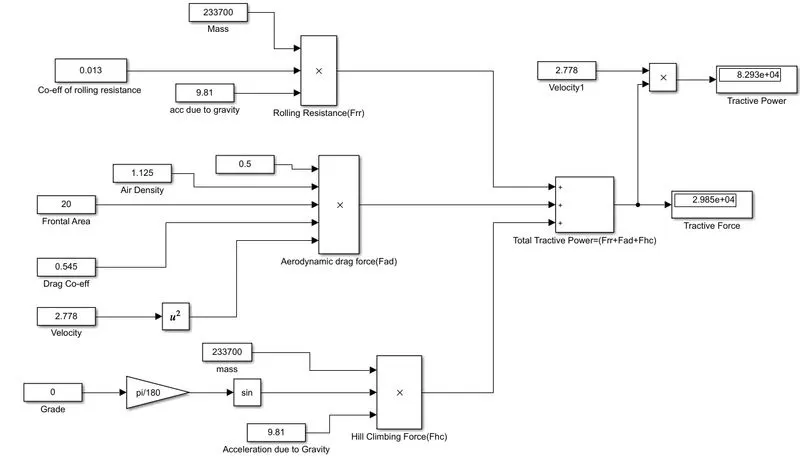
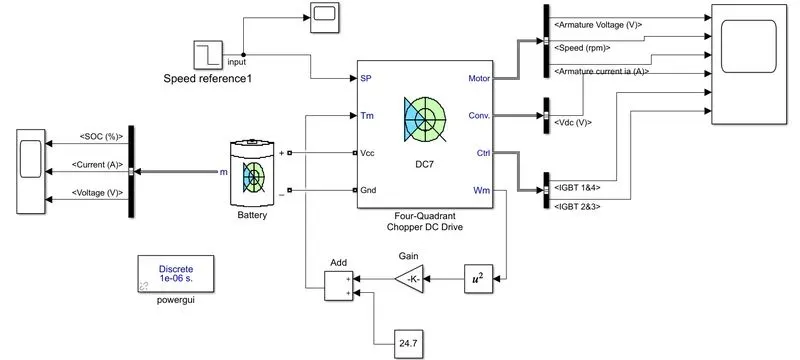
- constant blocks are used to feed the parameters such as mass, coefficients and other parameters
- using product block the resistive forces are calculated.
- using sum block, total resistive forces can be calculated.
- the outputs are visualised using display blocks.
Link For Simulink Model File:--
https://drive.google.com/file/d/1uQxRDY2Yj8CPQMDi5dmr1kIbQaqe4b1I/view?usp=sharing
(Hint :DC7 Block)
ANSWER:--
Estimation of Duty Cycle:
Based on the calculation done in study 6
The Power Required for towing of the aircraft is 45.26kW.
Motor Considred for the drive train is REB 90
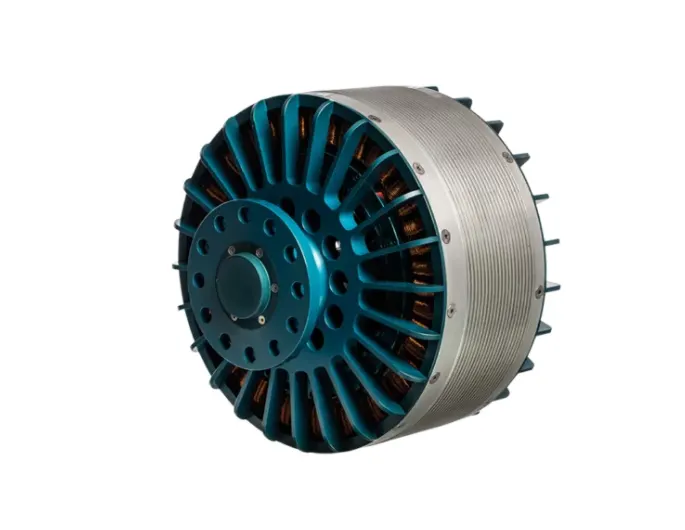
Technical Data:
| Type | Voltage | Continuous / Peak power | Working rotation | Max torque | Weight | Cooling |
| REB 90 | 400–800 V | 60–70 kW / 80 kW | 1 500–4 000 rpm | 300 Nm | 22 000 g |
Air / Hybrid (air + fluid) |
Considering 60kW as continuous power, so the voltage will be 400V
Battery power is considred to be 550v
Duty cycle is given by`V_o/V_b`
where Vo is motor required voltage
Vb is battery voltage.
`d = 400 /550 ⇒ 0.7272`
As there will be losses due to the resistance of FET and Inductance.
Correction factor is considred to be 90%
As there is 10% loss, the voltafge demanded by the motor should be 10% more than required
`d = 0.7272 ⋅ ( 1 + 0.1 ) = 0.799 ≈ 0.8`
so the voltage demand should be around 440V from the battery.
| Assumed Parameters | ||
| Mass of aircraft | 233700 | kg |
| Mass of the push back truck | 1000 | kg |
| Coefficient of Rolling Resistance | 0.013 | |
| Drag Coefficient | 0.545 | |
| Air density | 1.125 | kg/m^3 |
| Frontal Area | 20 | m^2 |
| Velocity | 2.778 | m/s |
| Uphill gradient | 0 | deg |
| Battery Voltage | 550 | V |
| Correction Factor | 0.8 | |
Block Diagram:--
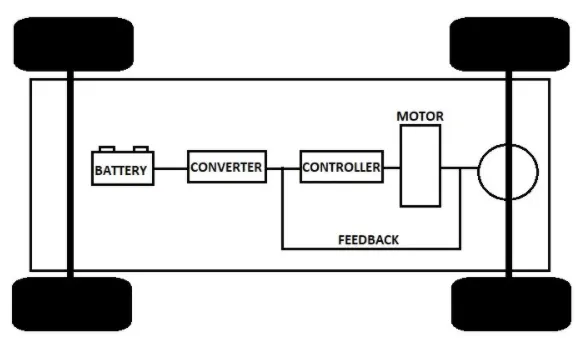
Simulink Model:--
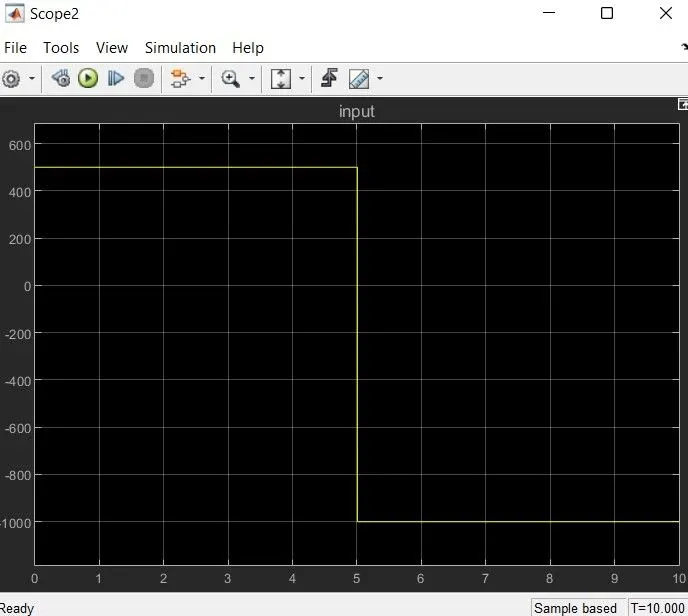
Input Signal:--
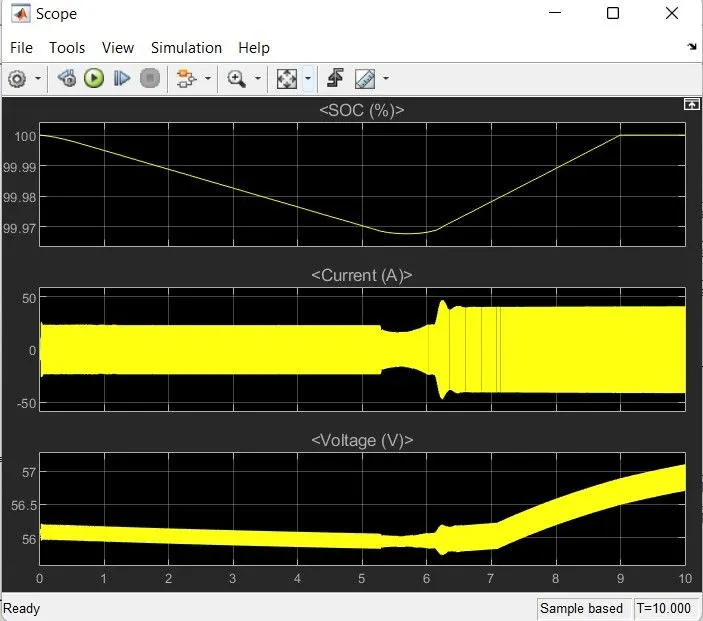
OUTPUT:--
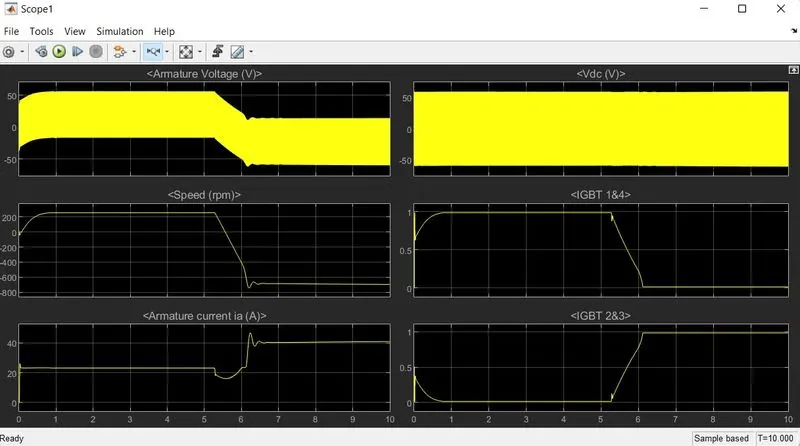
OUTPUT FROM BATTERY:--
LINK FOR THE MODEL:--
https://drive.google.com/file/d/1txY9GSmVyQTil2Nhq9M58Pts_jOqwb37/view?usp=sharing
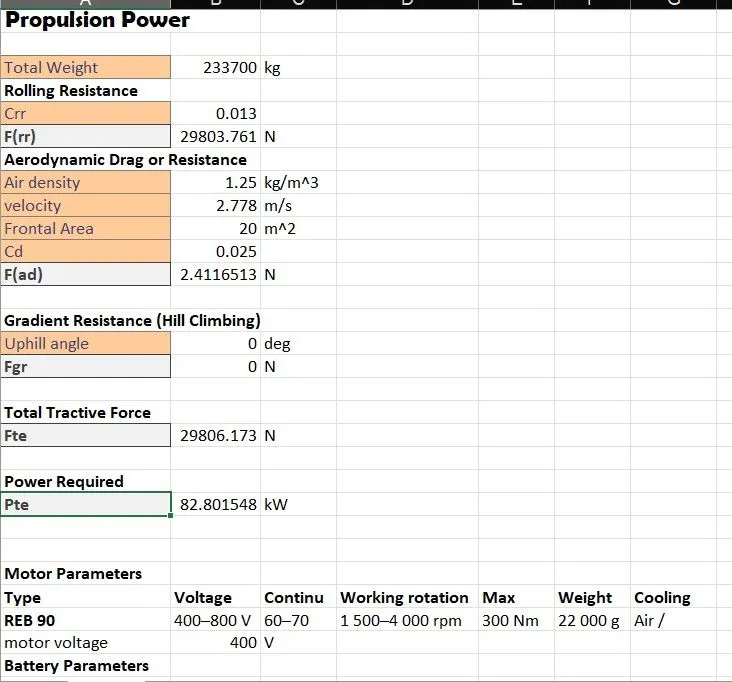
QUESTION,7.B. Also, Design the parameters in excel sheet
Part A:--
1. We have Searched and list out the total weight of various types of aircrafts.
2. We have shown that there any difference between ground speed and air speed?
3. We showed Why is it not recommended to use aircraft engine power to move it on the ground at Airport?
4. we shown How an aircraft is pushed to runway when its ready to take off?
5. Then at last we Learned about take off power, tyre design, rolling resistance, tyre pressure, brake forces when landing.
Part B:--
6. A. With necessary assumptions, We have calculated the force and power required to push / pull an aircraft by a towing vehicle.
B. Then We have Developed the model for the calculated force and power using Simulink.
7. A. Then We have Designed an electric powertrain with type of motor, it’s power rating, and energy requirement to fulfill aircraft towing application in Simulink. Estimate the duty cycle range to control the aircraft speed from zero to highest. Make all required assumptions. Prepare a table of assumed parameters. Draw a block diagram of powertrain.
(Hint :DC7 Block)
B. Also, We Have Designed the parameters in excel sheet and is shown.
8.Then At last we have Added all the required Document links
REFFERANCES:--
https://en.wikipedia.org/wiki/List_of_airliners_by_maximum_takeoff_weight
https://www.grc.nasa.gov/www/k-12/airplane/move.html#:~:text=Airspeed%20is%20the%20vector%20difference,speed%20and%20the%20wind%20speed.&text=On%20a%20perfectly%20still%20day,less%20than%20the%20ground%20speed.